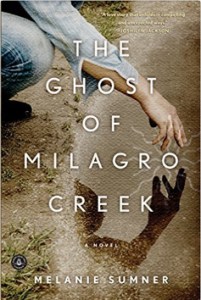
Some books immerse readers into other worlds. This is one of them. Welcome to a New Mexico barrio where love and murder, and ghosts and the living become tangled up in a conscious landscape.
Georgia author Melanie Sumner (“How to Write a Novel,” “The School of Beauty and Charm,” and “Polite Society”) found her inspiration for the novel while living in New Mexico. She researched serial killers for a model for the protagonist for The Ghost of Milagro Creek (Algonquin, 2010) and struck out. Remembering the advice of her creative writing instructor, she realized serial killers are heartless and her protagonist very much needed a heart.
Mister does have a heart and it will make you cry.
From the Publisher
Sumner
“The story of Ignacia Vigil Romero, a full Jacarilla Apache, and the two boys, Mister and Tomás, she raised to adulthood unfolds in a barrio of Taos, New Mexico—a mixed community of Native Americans, Hispanics, and whites. Now deceased, Ignacia, a curandera—a medicine woman, though some say a witch—begins this tale of star-crossed lovers.
“Mister and Tomás, best friends until their late teens, both fall for Rocky, a gringa of some mystery, a girl Tomás takes for himself. But in a moment of despair, a pledge between the young men leads to murder. When Ignacia falls silent, police reports, witness statements, and caseworker interviews draw an electrifying portrait of a troubled community and of the vulnerable players in this mounting tragedy. Set in a terrain that becomes a character in its own right, The Ghost of Milagro Creek brilliantly illuminates this hidden corner of American society.”
Reviewer’s Comment: “[Ghost of Milagro Creek] is a little miracle for the way it bridges and leads and leaps, the way it frustrates and calms and punishes the reader who willingly goes willingly over these stepping stones…I found this novel worth my time, and so feel it will be worth yours, especially if you have an interest in New Mexico, in American Indian cosmology, in narrative structure and approaches, in good storytelling.” – The Rumpus
Beginning of Chapter One: “When I passed away, some people swore that Andre Pettit whould refused me a proper Christian burial. Only in Taos, Mexico, they said, would you hold a wake for a witch. In the barrio at the edge of town, my neighbors called ne Abuela, which means grandmother, but behind my back, their tongues snapped like flags in the wind.”
Bottom line: a wild pilgrimage through forbidden territory.
–Malcolm
Malcolm R. Campbell is the author of “Conjure Woman’s Cat.”
If you’ve heard about magical realism, but haven’t knowingly sampled it yet, the top sellers on Amazon are a wonderful place to start.
The Night Circus, by Erin Morgenstern, September 2011. I read this as soon as it came out and it became one of my favorite books. It edged out The Tiger’s Wife as that year’s favorites as I wrote in this post. The fact that it’s still number one, shows it has staying power and that people continue to find it. It has a long list of starred reviews, telling me the critics also like it. A circus shows up out of nowhere, displays breathtaking feats of real magic as though they are mere illusions, and then disappears. What a joy to read.
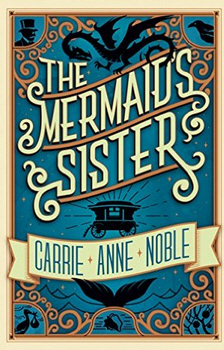
The Mermaid’s Sister, by Carrie Anne Noble, March 2015. This book is the 2014 Winner of Amazon’s Breakthrough Novel Award for Young Adult Fiction. I haven’t read it yet, but I’m impressed with the general tone of the reviews and what I can see via the book’s “Look Inside” feature. The cover is delightful and the publisher’s opening words about the story are tempting: “There is no cure for being who you truly are…In a cottage high atop Llanfair Mountain, sixteen-year-old Clara lives with her sister, Maren, and guardian Auntie. By day, they gather herbs for Auntie’s healing potions. By night, Auntie spins tales of faraway lands and wicked fairies. Clara’s favorite story tells of three orphan infants—Clara, who was brought to Auntie by a stork; Maren, who arrived in a seashell; and their best friend, O’Neill, who was found beneath an apple tree.”
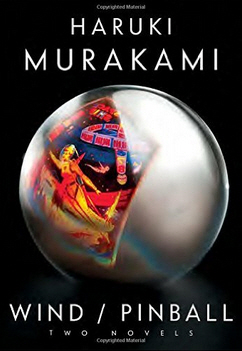
Hear the Wind Sing and Pinball, by Haruki Murakami are two novels issued in this one volume set for release next month. They haven’t previously been available in English. According to the publisher, “These powerful, at times surreal, works about two young men coming of age—the unnamed narrator and his friend the Rat—are stories of loneliness, obsession, and eroticism. They bear all the hallmarks of Murakami’s later books, and form the first two-thirds, with A Wild Sheep Chase, of the trilogy of the Rat.” I am tempted by this book, but more tempted by the book sitting in position number five.
God Help the Child, by Toni Morrison, April 2015. I have read most of Morrison’s work and have this book on order. While the cover is disappointing, the reviews are positive. The publisher describes the book this way: “At the center: a young woman who calls herself Bride, whose stunning blue-black skin is only one element of her beauty, her boldness and confidence, her success in life, but which caused her light-skinned mother to deny her even the simplest forms of love. There is Booker, the man Bride loves, and loses to anger. Rain, the mysterious white child with whom she crosses paths. And finally, Bride’s mother herself, Sweetness, who takes a lifetime to come to understand that ‘what you do to children matters. And they might never forget.’” I’ll stipulate that so far, I’ve only read what I can see via “look inside,” but based on that, I think it will be difficult for any author in 2015 to match the power of this story.
Mr. Penumbra’s 24-Hour Bookstore (audio version), by Robin Sloan, October 2012. I read this book when it came out and found the story and characters strange and compelling. I don’t care for the cover but, like Morrsion’s book, the reviews are positive. And, what can be more tempting for an author than a publisher’s description that (1) starts out like this: “A gleeful and exhilarating tale of global conspiracy, complex code-breaking, high-tech data visualization, young love, rollicking adventure, and the secret to eternal life—mostly set in a hole-in-the-wall San Francisco bookstore” and (2) begins like this: “Lost in the shadows of the shelves, I almost fall off the ladder. I am exactly halfway up. The floor of the bookstore is far below me, the surface of a planet I’ve left far behind. The tops of the shelves loom high above, and it’s dark up there–the books are packed in close, and they don’t let any light through. The air might be thinner, too. I think I see a bat.” I hope the world will always have bookstores that can be described this way. The book kept my attention, but not enough to re-read it as I have The Night Circus.
There’s a lot to like here if you’re of a mind to sample the latest magical realism. Then, stop by Malcolm’s Round Table on July 29 when I’ll be taking part in a magical realism blog hop.
–Malcolm
Malcolm R. Campbell is the author of the magical realism novella set in the Jim Crow era of the Florida Panhandle, “Conjure Woman’s Cat”
“One learns one’s mystery at the price of one’s innocence.” ― Robertson Davies
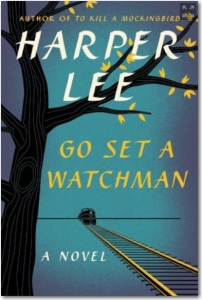
The mockingbird dies again in Go Set a Watchman.
In To Kill a Mocking Bird, Jean Louise “Scout” Finch, Jeremy Atticus “Jem” Finch and Charles Baker “Dill” Harris are among the innocent mockingbirds who suffer when the cruel realities of life intrude into their childhoods after Atticus is appointed by the court to defend a Black man accused of raping a white woman.
The trial and its aftermath represent a defining moment for the fictional Maycomb, Alabama; establish Atticus as the watchman who sees the truth and crusades for justice; and solidifies for young Scout, her faith in a wise and loving father who can do no wrong.
In Go Set a Watchman, the twenty-six-year-old Jean Louise who lives and works New York returns to Maycomb to visit her ailing father at a time when there are increasing tensions in the South after the Supreme Court’s Brown v. Board of Education (1954).
Lee paints a clear picture of the concerns many small town residents had about the ramifications of desegregation. Some reviewers have skewed the point of the book by looking at these not-unusual 1950s beliefs through a 2015 microscope.
While this makes for sensationalistic headlines, it inaccurately clouds the realities of the time period for prospective readers.
Scout, who is basically color blind, believes what she grew up thinking Atticus believed: “Equal Rights for all, special privileges for none.” When it comes to matters of law, he has not wavered. Daily life, though, isn’t the law to his way of thinking. When Scout discovers Atticus thinks Blacks are not yet ready for the full rights of a desegregated society, her world is shattered. The man who wants to marry her has similar views and, along with her father, is attending political meetings aimed at finding ways to fight the Supreme Court’s ruling, The mysterious wonders of her childhood under the patient guidance of her father are suddenly at risk as everything she thought was true is potentially false.
Lost innocence and fallen gods are central themes in this book.
Like many debut novels, Go Set a Watchman contains a fair amount of back-story of “remember-when” discussions and reminiscences. While these passages inform the reader about what was, they also slow the pace of a novel. However, readers of To Kill a Mockingbird will probably also find these passages nostalgic as they shed more light on Mockingbird’s beloved cast.
After Scout learns what she learns about her father and his colleagues, she has a decision to make. She can run back to New York filled with hatred for the family and friends who have destroyed the remains of her innocence and her childhood memories with views she abhors. Or, she can stay in Maycomb, fight for what she believes, and as a watchman tell others the truths she sees among them.
Harper Lee deftly handles Scout’s dilemma in a wonderful novel that will, I hope, survive the perils of the misguided critics who have been shouting that the sky is falling.
–Malcolm
Malcolm R. Campbell is the author of “Conjure Woman’s Cat,” a novella set in the Jim Crow 1950s of the Florida Panhandle in which granny and her cat fight racial injustice with folk magic.
“Who was Tate, you wonder? In Sumatra they still tell his story: how he left the frontier village at dusk a century ago with his two hunting dogs and his puppy Spark, to kill a panther that had been raiding Sumatra livestock. He carried a Long Tom shotgun and a Barlow knife, and he thought he knew where the darkening waters ran.”
– Gloria Jahoda, The Other Florida (1967)
Tate’s Hell is a Florida forest located in the counties of Franklin and Liberty.
When my 1950s-era novella Conjure Woman’s Cat came out, my publisher said that with all the book’s mentions of Tate’s Hell Swamp, how about a Kindle series of stories about the place?
Fortunately I had a bunch of things on hand, including a short story from an anthology and scene from my out-of-print novel The Seeker that just happened to be set there and in nearby Carrabelle.
I couldn’t resist the idea of taking snakes to Eden. Most of all, I enjoyed learning more about the animals and their Florida wild places environments for the folktale collection.
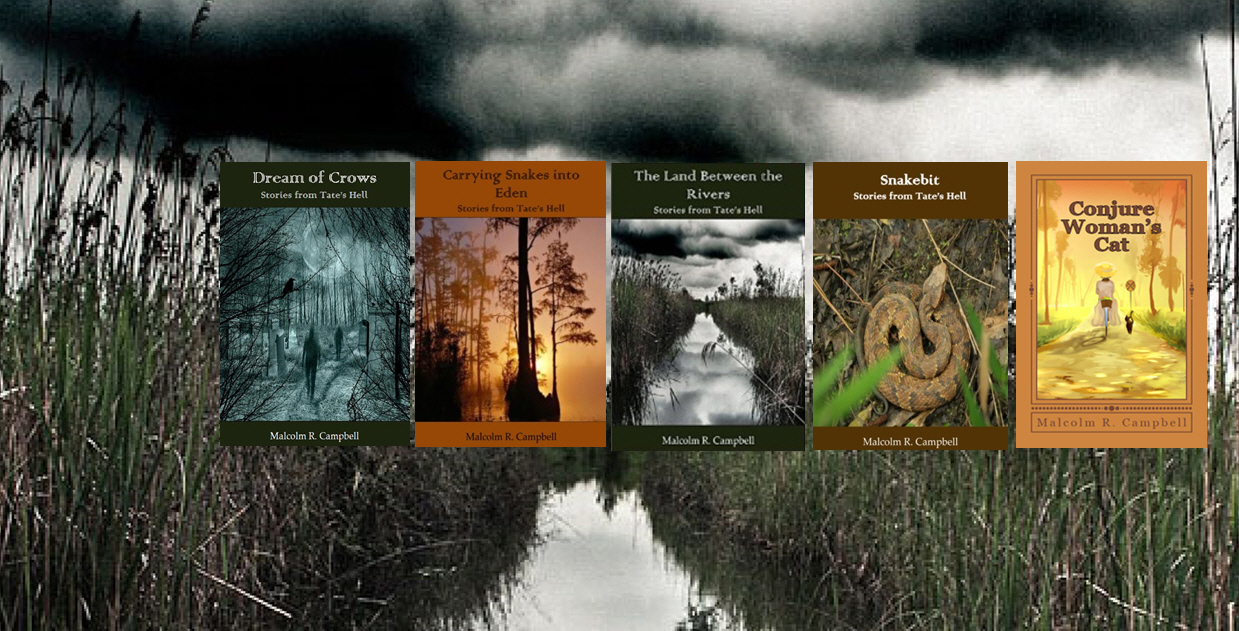
I’ve enjoyed coming up with three short stories and one short collection of folktales for the series.
Dream of Crows: This dark story about a businessman and a sexy conjure woman who lives next to a cemetery on the edge of Tate’s Hell is the most recent. It originally appeared in the Lascaux Prize 2014 Anthology.
If you’re prone to nightmares, be warned that this story is written in the second person and makes the reader the main character. Free June 24-28.
Opening lines: During the coroner’s inquest into the matter of your death, a well-meaning friend or relative will step forward with your affidavit stating that you read Dream of Crows because you saw it in your spouse’s copy of The Lascaux Review, heard several clerks at Barnes and Noble speculating about its deeper meanings, or—more likely—because you were intrigued by the probable connection between the short story and an odd string of assisted suicides in a Florida’s Tate’s Hell Swamp.
Snakebit: This slightly less dark short story came out just before Dream of Crows. Two college students fall in love while working as seasonal employees at a resort hotel in the northwest.
At the end of the summer, they return to their respective colleges that are far apart. When she’s assaulted on a dark street outside the college gates, she refuses to let him visit her. Finally, when he’s allowed to travel to Florida in June, he finds her much changed. The more he sees, the more he thinks he’ll have to sever the relationship. However, before he does so, the magic of Tate’s Hell intervenes.
The Dream: Then the squalling wheels in the coach’s rear truck in a tight curve fetched up the memory of the caterwauling panther of a nightmare that stalked him thirteen miles up the track. He ran between small ponds beneath a bright moon. Coowahchobee sprang out of a dark stand of hat-rack cypress and chased him through shallow water. He was trapped, suddenly, in an unyielding thicket of titi where the small white flowers exploded overhead like a dying constellation. He saw brown eyes above a deep growl that ran through his soul seconds before the claws snagged his left arm when the large cat dragged him away from the water.
Carrying Snakes Into Eden: “Eden” in this story refers to Florida’s former Garden of Eden attraction on the Apalachicola River. It’s rather a tongue in cheek story about two college students who pick up a hitchhiker with a sack of snakes he captured in Tate’s Hell. He says they’re need in the Garden of Eden.
The students learn that skipping church that Sunday morning may have long-term consequences.
Opening Lines: When John and I drove to Carrabelle on a gray Sunday morning for brunch with the Boynton sisters, skipping church was the least of our sins. Julie and Kathy were seniors, cheerleaders, and the most popular blondes in high school. John and I, mere juniors, wore clean sport shirts and Jade East aftershave. Brunch was canceled when the parents returned from New Orleans on Seaboard’s Gulf Wind a week early. They saved us from prospective sins of the flesh. But we weren’t home free. In fact, our transgression on that April day in 1961 was a first for the Florida Panhandle.
The Land Between the Rivers: This series of three folktales set in Tate’s Hell at the dawn of time is introduced by Eulalie, my conjure woman in the novella. They begin where the Seminole creation myth leaves off with stories about Panther, Snakebird and Bear–the first animals to walk the earth in the old legends.
Panthers, of course, are highly endangered in Florida. When I was young, there were panthers in Tate’s Hell. Now they’re gone from the panhandle and can only be found in central and south Florida.
Openning Lines: One day when I was just a piddling kitten no bigger than a crow, I fell into Coowahchobee Creek while helping my conjure woman look for crawfish. The cold water spun me around like pinecone. I sulled up into a snarling fit three times my normal size and swatted the rocks and roots along the bank with my claws. “Hush, little one,” Coowahchobee whispered. “Lena, look directly into Eulalie’s haint blue eyes and your thoughts will tell her you are ready to hear our stories.”
These stories all see for 99 cents and occasionally are featured free in book sales. I hope you enjoy them even if you don’t live in the Florida Panhandle.
–Malcolm
“Conjure Woman’s Cat”is available on Kindle ($2.99) and in paperback ($8.58) and, in addition to Amazon, can also be found at Powell’s, B&N, Smashwords and other online book sellers.
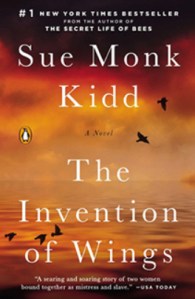
“Alternating between Sarah’s and Handful’s contrasting perspectives…allows Kidd to generate unstoppable narrative momentum as she explores the troubled terrain that lies between white and black women in a slaveholding society… The novel’s language can be as exhilarating as its powerful story… By humanizing these formidable women, The Invention of Wings furthers our essential understanding of what has happened among us as Americans – and why it still matters.” —The Washington Post
Sue Monk Kidd’s powerful historical novel The Invention of Wings returns to the public’s consciousness the effective, famous and infamous abolitionist and feminist orators/authors, sisters Sarah Moore Grimké (1792-1873) and Angelina Emily Grimké Weld (1805 – 1879). (See PBS’ People & Ideas: Angelina and Sarah Grimké.)
Born into a Charleston slaving-holding family that was widely known in the city’s upper levels of society, both girls would–in spite of a stern mother and a resolute father–evolve into outspoken ladies who would ultimately defy their kin, city, and church to speak out against slavery and discrimination against women.
As the PBS article notes, “The sisters’ public speaking and involvement in the political sphere drew condemnation from religious leaders and traditionalists who did not believe that it was a woman’s place to speak in public. The sisters soon found themselves fighting for equality of the sexes and women’s rights, following women like Sojourner Truth in linking the rights of blacks and women.”
The Invention of Wings shows the sisters’ (and Sarah’s Black maid Handful’s) struggles at a close, personal level as the women’s views about themselves and their places in the world evolve during the novel’s 1803 to 1838 time frame. This is the novel’s first great strength.
From Sarah’s perspective:“All things pass in the end, even the worst melancholy. I opened my dresser and pulled out the lava box that held my button. My eyes glazed at the sight of it, and this time I felt my spirit rise up to meet my will. I would not give up. I would err on the side of audacity. That was what I’d always done.”
From Handful’s perspective: “Goods and chattel. The words from the leather book came into my head. We were like the gold leaf mirror and the horse saddle. Not full-fledge people. I didn’t believe this, never had believed it a day of my life, but if you listen to white folks long enough, some sad, beat-down part of you starts to wonder.”
Its second great strength comes through the seamless blend of historical facts and characters and fictional characters and events. You realize how expertly this hand-in-glove fit was accomplished when you read the author’s note at the end of the book. (Kidd also provides a list of references.)
I became a fan of Sue Monk Kidd in 1996 when I read her The Dance of the Dissident Daughter: A Woman’s Journey from Christian Tradition to the Sacred Feminine. I thought of that book again as I read The Invention of Wings. I does not surprise me that an author who wrote about her own escape from religious patriarchy would be drawn to two historical sisters who also took strong issue with the organized church, sexism and racism.
The Invention of Wings is a testament to a wonderful writer’s ability to put herself into the shoes of two unfortunately obscure civil rights and feminist leaders and bring them to back life again in a highly readable story.
–Malcolm
Malcolm R. Campbell is the author of “Conjure Woman’s Cat,” a novel about small-town racism in the Florida Panhandle during the Jim Crow era.
A friend of mine on Facebook whose been watching H. G. Wells movies said that her dreams have turned into H. G. Wells movies.
My dreams never turn into the exact movies: more like some fractured mess of the movie where everyone’s crazy and all hope is lost.
The same thing happens to me with books. I read books most often before falling asleep. I’ve been cursed with “the ability” to see scenes of my own invention out of the book I’m reading if I ever doze off–or even rest my eyes.
My scenes seem real to me as though I’m propped up in bed still reading the book. Then the cat bothers me or I fluff up the pillow and realize I’ve been making it up “reading” something that’s not in the book, but that could be in the book. This happens every time without fail. When my wife finds me dozing, she thinks I’m asleep rather than writing new scenes for another author’s book.
There doesn’t seem to be a cure for this.
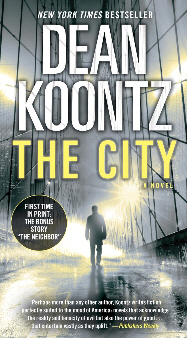
Dreams and reality get fractured when I’m reading more than one book at a time, say, Dean Koontz’ “The City” and Sue Monk Kidd’s “The Invention of Wings.”
So, there I am holding Kidd’s book about life on a plantation and suddenly Sarah and Hetty are walking down Fifth Avenue. That’s rather jarring since the plantation is in Charleston.
The nonsensical scenes that arise out of this jolt me awake faster than cats and twisted pillows.
The plot further thickens (AKA, gets messed up) when I’m working on multiple writing projects, say, one set in a swamp and one set in the mountains. Sometimes I open up the file and find myself planning to write a scene that belongs in the other book.
Fortunately, sentences like “the grizzly bear stood next to the Ponderosa Pine forest” tip me off that I’m not currently in the Florida swamp manuscript. If I see a cottonmouth moccasin, I assume I’m not in the Montana mountains.
I don’t know if readers have this trouble or if it’s just writers. I feel like I’m juggling realities like on of those old-time performers juggle bowling pinson the Johnny Carson show.
There are says when it’s best not to step outside because I don’t know if my front yard will be there or something our of a Stephen King book.
Malcolm
Malcolm R. Campbell is the author of contemporary fantasy and magical realism which explains a lot. His fantasy, coming-of-age novel The Sun Singer is currently on sale on Amazon for 99 cents.
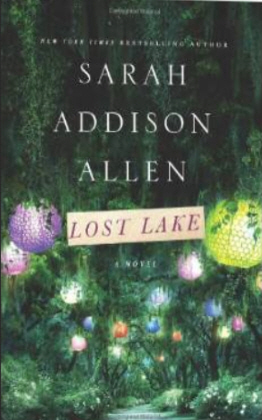
Lost Lake, Sarah Addison Allen (St. Martin’s Press, hardcover, January 21, 2014, paperback January 6, 2015), 304 pp.
Kate Pheris is waking up after the worst year of her life, the year she lost her husband and almost lost herself while her young daughter Devin waited for life to begin again and her mother-in-law Cricket orchestrated their future like a puppeteer with an agenda stronger than love.
But older ties are stronger even though they might have seemed forever lost.
Kate and Devin serendipitously discover a fifteen-year- old postcard in the attic while getting ready to move to Cricket’s house where neither of them wants to be: Greetings from Lost Lake, Georgia: a Magical Experience. Sent by Kate’s great-great-aunt Eby after Kate’s best summer ever at the ramshackle cabins our of another era in South Georgia, the card stirs up old hopes and memories.
Kate’s never seen the card before. Her mother, who had a falling out with Eby that summer, hid it away along with its message, “You’re welcome to come back anytime you’d like.”
It’s too late, isn’t it? Lost Lake and Eby are probably long gone. Yet, Lost Lake really isn’t that far from Atlanta. What if Kate and Devin drive down there and look?
While Cricket organizes the future she wants with indomitable and merciless force, Lost Lake suggests possibilities with a gentle touch, one that pulls on the heartstrings of those who have come back for one last summer before Eby sells the place she can no longer afford to keep and flies away to see the world.
The book features a cast of memorable characters and–inasmuch as this novel is magical realism–a magical setting. Everyone who arrives to say goodbye to Eby and Lost Lake is looking for something, and they all have their secrets and their losses.
Like an oasis that’s almost visible for one moment and gone the next, the magic and the synchronicity of the setting are deftly handled by Allen (Garden SpellsThe Sugar Queen, The Girl Who Chased the Moon, The Peach Keeper), adding mystery and, perhaps, a sense of hope that a seemingly lost future is not altogether lost.
One cannot read Lost Lake without noting a certain predictability in the plot and the syrup of sentimentality it the developing themes and coming-out-of-hiding histories of the characters. One can say the same thing about It’s a Wonderful Life. Nonetheless, movie viewers return to It’s a Wonderful Life every year at Christmas just as the faithful, if not aging, guests return to Lost Lake every summer.
Lost Lake gives those guests what they’re looking for even though most of them are too stubborn to admit it. Readers may know, or think they know, how Kate’s and Devin’s summer at Lost Lake will end. They may be right. Even so, the book casts a spell that’s impossible to resist.
–Malcolm
Malcolm R. Campbell is the author of the magical realism novella “Conjure Woman’s Cat,” set in the Florida Panhandle where folk magic lives deep in the piney woods.
Thomas-Jacob Publishing has released Conjure Woman’s Cat, a novella by Malcolm R. Campbell (“The Sun Singer”), set in the 1950s Florida Panhandle world of blues, turpentine camps, root doctors, the KKK and a region of the state so far away from everywhere else that it’s often called “the other Florida” and “the forgotten coast.”
Lena, a shamanistic cat, and her conjure woman Eulalie live in a small town near the Apalachicola River in Florida’s lightly populated Liberty County where longleaf pines own the world. Black women look after white children in the homes of white families and are respected, even loved as individuals, but distrusted and kept separated and other as a group.
A palpable gloss, sweeter than the state’s prized tupelo honey, holds the spiritual and temporal components of the Blacks’ and Whites’ worlds firmly in the stasis of their separate places. When that gloss fails, the Klan restores the unnatural disorder of ideas and people that have fallen out of favor.
Click her to see the trailer.
Lena and Eulalie know the Klan. When the same white boys who once treated Eulalie as a surrogate parent rape and murder a black girl named Mattie near the saw mill, the police have no suspects and don’t intend to find any. Eulalie, who sees conjure as a way of helping the good Lord work His will, intends to set things right by “laying tricks.”
Eulalie believes that when you do a thing, you don’t look back to check on it because that shows the good Lord one’s not certain about what she did. It’s hard, though, not to look back on her own life and ponder how the decisions she made while drinking and singing at the local juke were, perhaps, the beginning of Mattie’s ending.
All that’s too broke to fix, but beneath the sweet sugar that covers crimes against Blacks, Eulalie’s pragmatic, no-nonsense otherness is the best mojo for righting wrongs against both the world and the heart.
Dance of the Banished, by Marsha Forchuk Skrypuch, Pajama Press (February 1, 2015), young adult, 288 pages. In her sixth book set during the Armenian Genocide, Marsha Forchuk Skrypuch’s Dance of the Banished brings young adult readers a heartbreaking account of the World War I-era ethnic cleansing in the Anatolia region of Turkey and the Canadian paranoia that sent thousands of purportedly dangerous immigrants to internment camps.
Armenians, who are traditionally Christian, and Alevi Kurds, whose religious views differ from those of Sunni Kurds, predate the arrival of the Turks in Anatolia. The discord brought into the region by the Turks is a centuries-old fight. “Dance of the Banished” begins in 1913 on the brink of Turkey’s entry into World War I on the side of the Central Powers with the story of two betrothed Alevi Kurds who are soon separated by hard times and a very wide ocean.
Ali chooses to go to Ontario, Canada where jobs are available. He plans to send money home to his family and to save enough to ultimately pay for Zeynep’s passage to Ontario. She views his departure as a betrayal, as practical as it may be, and wonders if they will ever see each other again.
Subsequently, Zeynep also leaves town to work in a hospital in a Harput, a city between the Tigris and Euphrates rivers, where she is swept up into the horror of revolution, war and poverty. Ali begins work in Canada only to find himself rounded up on trumped up charges and sent to a prison camp where he’s pressed into service at a minimal age. Both wonder why they don’t hear from each other.
The book’s sections, which alternate between Zeynep’s and Ali’s stories, are presented as journal entries written in the form of letters to each other. In time, she learns that the Armenians who have been allegedly drafted to fight in World War I are being exterminated and he learns that he is part a growing group of imprisoned Ukrainians, Turks and others who came to Canada for freedom only to end up without it.
The power of this novel comes in part from the age of its two protagonists and how their view of the world is forced to change. Young and in love, they see life through a different lens than their parents and grandparents. While their focus is on being reunited with each other, their journal entries begin with typical day-to-day activities and then change from initial disbelief at the persecution around them into grim accounts of their own involvement and means of survival.
Their growing horror and their continuing hope and perseverance during the cruel years of 1913 to 1917 combine for a poignant love story and a stark account of genocide close up and very personal.
The book is enhanced by the inclusion of internment camp pictures and an author’s note about the story’s historical background.
–Malcolm Malcolm R. Campbell is the author of the upcoming novella “Conjure Woman’s Cat.”
On the Big Rivers: From Three Forks, Montana to New Orleans Louisiana by Richard E. Messer, with Jerry D. Sanders, Genoa House (Feb 21, 2015), 190 pp., photographs.
Rivers are the veins of the Earth. I’ve seen the Missouri and the Mississippi from my car and from the air. But to travel them: that would be the experience to savor and write about as author William Least Heat-Moon wrote about his trip across the U.S. by boat in River Horse in 1999. Now, here’s a canoe trip to savor.
From the Publisher
“Canoeing from the source of the Missouri River high in the mountains of the Continental Divide down the rapids and over the dams of the upper Missouri to its confluence with the Mississippi and on down its broad waters to New Orleans, 3,800 miles, two young men undertake a voyage of adventure that every young person talks about, but few take. Travel with them in a time before cell phones and GPS as they are initiated into the age old perils of nature and explore the historic river towns along their route.
“Experience through vivid, first person story telling, the physical and emotional challenges they meet and overcome in their encounters on this pioneering journey down the two greatest rivers of America. This exciting narrative provides not only a pristine view of the beauties of these rivers as they were fifty years ago, but also dramatizes the damage we have done in contaminating, straightening, and commercializing our once bounteous water resources. Share this dream of inspiring adventure and experience the pioneering spirit that still lives in every young heart.”
Messer is also the author of Dark Healing, a collection of poems published in 2013.
–Malcolm
Malcolm R. Campbell is the author of the upcoming novella “Conjure Woman’s Cat” set in the Florida Panhandle in the 1950s days of the KKK and Jim Crow.
 Georgia author Melanie Sumner (“How to Write a Novel,” “The School of Beauty and Charm,” and “Polite Society”) found her inspiration for the novel while living in New Mexico. She researched serial killers for a model for the protagonist for The Ghost of Milagro Creek (Algonquin, 2010) and struck out. Remembering the advice of her creative writing instructor, she realized serial killers are heartless and her protagonist very much needed a heart.
 Malcolm R. Campbell is the author of “Conjure Woman’s Cat.”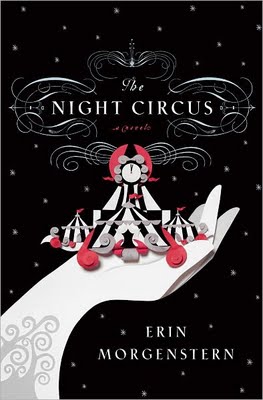












 Malcolm's Round Table