Are you going to read pandemic novels when all this is over

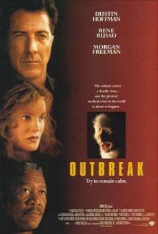
Looking for something to do this afternoon, my wife and I watched an old virus-out-of-control movie on Netflix this afternoon called “Outbreak.” While I suppose a movie about a pandemic in the making was apt for the interesting times we find ourselves in, we picked it because it was better than the other selections.

I read an article this morning about probable post-pandemic novels. One point of view was that we’re all sick of this and don’t want to relive it on the screen or in print after it’s over.

Another point of view was that a lot of people have a lot of free time right now and the daily news is certainly supplying a surge of writing prompts, so, yes, we’ll probably have a lot of fiction, real-life-stories, and political analyses to suffer through.

I think it’s going to be difficult for a fiction writer to put the pandemic in perspective if s/he writes about it “too soon,” unless (of course) the output is a political red state or blue state look at what people did wrong, could have done, etc.

Rushing into print might not be the best choice

–Malcolm

“Lena” is free on Smashwords through April 20.

‘Whisper of the River’: stumbling across an old friend

Sometimes it happens in a bar or on a city street or maybe in a country far away, but there’s little that’s as simultaneously dangerously new and horrifyingly déjà vu as suddenly stumbling across an old friend. They’re the same as they were and yet they’re not, and during all the capsulized updates about everything the two of you have done “since then,” the mind struggles to understand just who this old friend is at this moment.

Now, suppose this old friend is a book, in my case, one that’s sat on my shelf almost unobserved for 36 years.

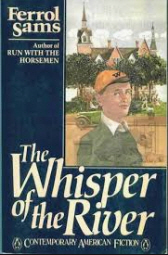
Ferrol Sams, the Georgia doctor who suddenly appeared in bookstores and the press in the 1980s when he published his first novel at 60, writes in richly detailed prose that accurately captures a depression-era age far away. He’s best known for his somewhat autobiographical Porter Osborn trilogy Run with the Horsemen, The Whisper of the River, and When All The World Was Young.

Looking for something to read last night, I pulled The Whisper of the River off the shelf last night and thought about the positive impact his trilogy had on me when I first read the books. I wondered if I’d be disappointed and decide after a few chapters that the book hadn’t aged well.

But I’m enjoying the book. That’s a relief almost even though I’ve changed and the book has not.

Publisher’s Description: Young for his class and small for his age, Porter Osborne, Jr., leaves his rural Georgia home in 1938 to meet the world at Willingham University, armed with the knowledge that he has been “Raised Right” in the best Baptist tradition. What happens over the next four years will challenge the things he holds infallible: his faith, his heritage, and his parents’ omniscience. As we follow Porter’s college career, full of outrageous pranks and ribald humor, we sense a quiet, constant flow toward maturity. Peppered with memorable characters and resonant with details of place and time, The Whisper of the River is filled with the richness of spirit that makes great fiction.

Quotation: “If she hears anything, it’s tambourines, and nobody can march to them. You can’t do anything but dance to tambourines, and the likes of us will never catch the rhythm.”

Even though I’ve inadvertently started in the middle of the trilogy, I think I’ll stick with the book and then read the two others soon afterwards. I expect they’ll also be as good as I remember them.

Malcolm

Now folks can write but they aren’t (hmm)

But are you writing? I noted several remarks online where people are saying they are too worried and frantic to sit and write. They’re anchored to 24-hour news, waiting for the latest body count and what’s happening next.

So. . . let me get this straight. . . when things are busy and normal, you don’t have time to write. Then things are abnormal and locking you at home, you can’t make yourself write.  – Hope Clark

Wikipedia Graphic

It’s really an understatement to say that COVD-19 has disrupted a lot of things. We’re all curious about potential lockdowns and potential vaccines. But sitting in front of a 24-hour news channel watching for updates not only seems like a waste of time, but is the kind of behavior that probably creates more hysteria than what the nation is already coping with.

Frankly, I’m a little tired of people asking why we didn’t have 100000000 testing kits (much less a cure) in stock for a disease nobody knew anything about prior to December. I guess people are watching too many medical dramas on TV and are used to health issues that are solved within an hour.

I agree with Hope Clark, assuming that lockdowns aren’t making us broke or sticking us in long lines to buy toilet paper, we can use our self-quarantines and social distancing to get some other stuff done: tidy up the garden, clean out the garage, finish that novel.

–Malcolm

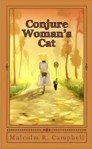
Many of Thomas-Jacob Publishing’s Kindle editions are on sale throughout March for 99₵. The sale includes two of my novels, “Conjure Woman’s Cat” and “Special Investigative Reporter.”


Special Investigative Reporter: it will make you happier during these blue times

A message from your sponsor (AKA, me)

On sale for 99 cents:

This novel is just what you need to get through these difficult times. Why? It’s about an old-style reporter who’s not afraid to say what he thinks even though a lot of what he thinks isn’t politically correct.

From the publisher: In this satirical and somewhat insane lament about the fall of traditional journalism into an abyss of news without facts, Special Investigative Reporter Jock Stewart specializes in tracking down Junction City’s inept and corrupt movers and shakers for his newspaper The Star-Gazer. Since Stewart is not a team player, he doesn’t trust anyone, especially colleagues and news sources. Stewart, who became a reporter back in the days when real newsmen were supposed to smoke and drink themselves to death while fighting to get the scoop before their competition sobered up, isn’t about to change. Stewart’s girlfriend leaves him, the mayor’s racehorse is stolen, people are having sex in all the wrong places (whatever that means), and townspeople have fallen into the habit of sneaking around and lying to reporters and cops. Sure, everyone lies to the cops, but reporters expect gospel truths or else. Stewart may get himself killed doing what he was taught to do in journalism school, but that’s all in a day’s work.

I like this novel because the main character, Jock Steward, says what I would say if I could get away with it. Let’s just say its a comedy with a bite.

Malcolm

Conjure Woman’s Cat is also on sale on Kindle for 99 cents.


Some novels impact me so strongly it’s hard to function

Years ago when I read Erich Maria Remarque’s 1929 novel All Quiet on the Western Front about World War I, I couldn’t function for days because the book plunged its readers into the worst the world can offer. Dalton Trumbo’s 1939 anti-war novel Johnny Got His Gun also had a strong impact on me. Such novels fit into my personal fiction category of too much to bear.

Recently, I’ve been catching up on John Hart’s novels. They are invariably dark, a label that certainly describes The Hush which I finished reading last week. The Hush is a sequel to The Last Child.

The hush is an old hush arbor, a place where slaves worshipped in secret away from the prying eyes of their owners. The slaves’ focus was Christian in orientation with many of the trappings of the religious beliefs they had in Africa.

The Hush impacted me because of the novel’s descriptions of a landscape that’s filled with magic and menace to everyone but its current owner of the 6,000-acred tract. He walks at ease through his property while everyone else becomes lost, confused, or dead.

The lives of slaves and owners are intertwined on this property and the impacts of old terrors are still active in the present day. Since Johnny Merrimon is more or less an outcast, he is blamed for everything that happens on his land. Law enforcement and others want to bring him down even though nobody can prove anything.

I am in awe of Hart’s use of landscape, myths, and stories because he has the grit to do what I cannot bring myself to do. That is, I cannot bring myself to write the kind of horror that appears in All Quiet on the Western Front, Johnny Got His Gun or the novels for which John Hart keeps winning awards. I think it takes great strength for an author to write such books without ending up in an asylum.

I agree with the Washington Post’s review: “Ambitious and surprising… an engrossing, cumulatively disturbing narrative that encompasses murder, magic, madness, betrayal and obsessive, undying love. The result is unlike anything Hart has done before.”

I just wish they’d included a warning that reading the book might kill you.

–Malcolm

Malcolm R. Campbell is the author of “Conjure Woman’s Cat.”


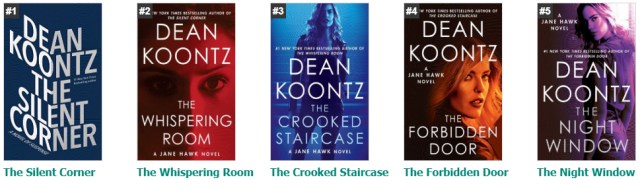
The Jane Hawk novels by Dean Koontz

Koontz is a careful and literate writer who knows how to create complex plots, maintain suspense, and decorate his scenes with weather and landscape imagery that synchronizes with the moods and plights of his characters.

The five-book series about a rogue FBI agent concluded with The Night Window, a book I’ve been looking forward to while patiently waiting for it to come out in paperback.

Hawk, who left the FBI after her husband’s death was ruled a suicide that she believed was murder, began a long trek to clear his name. Law enforcement is after her because they believe she’s operating off a “frontier justice model” and the people who killed her husband–a huge and secret group that’s slowly taking over the country–are after her. Everyone who’s after her is also after her child whom she has to keep hiding. By the time one gets to The Forbidden Door, it’s apparent that Hawk has nine lives and/or the skills of James Bond.

According to the Booklist starred review, “The spectacular finale to Jane’s story…will hit series fans with all the impact of a carefully calibrated hammer blow.”

Yes and no.

Had there not been so many co-opted law enforcement agencies, leaving nobody trustworthy to whom Hawk could turn over her evidence of the conspiracy, the book might have ended with a satisfying black-ops style gun battle after which the authorities take over and put the conspirators in jail. Hawk would then be interviewed on The View and other programs.

However, lacking that, the book–which still includes the nastiness of the bad guys in a tangled plot which look like lose-lose for Hawk–seems less explosive and interesting than the earlier books because there are few (if any) bad guy/Hawk confrontations. Hawk’s time is spent trying to ferret out who the conspirators are and how to expose them in a believable way.

The ending works because the how to tell the world about the conspiracy problem is aptly solved. Nonetheless, I felt a little let down because the focus became more about hacking into databases and less about kicking the shit out of the bad guys. And then, too, I kind of like Hawk and now she’s ridden off into the sunset forever.

Malcolm

You better not hurt that kitty

When I began writing Conjure Woman’s Cat, I didn’t know how it would end, much less that it would lead to the sequel Eulalie and Washerwoman. When I started writing the sequel, I didn’t know how it would end, much less that it would lead to a third book named Lena which–of course–I had no clue what the ending was.

I did know one thing for sure: Eulalie, the conjure woman, and Lena, her cat, weren’t going to get killed no matter what else happened.

So, each time I told people I had started a new book in the series, I began getting comments like, “You better not hurt that kitty,” “Promise me I don’t need to look at the ending first to make sure nobody (you know who I mean) is dead,” and “If anything happens to that kitty, don’t think you can fix it with a bunch of that rainbow bridge stuff and that will make everything okay.”

It was fun hearing that a lot of people had connected with the main characters and were concerned about their welfare. After all, things were always touch-and-go in these books, what with bad cops and noxious KKK thugs. One person said she really liked the Pollyanna character who appeared in Lena and was happy to see she made it to the end of the book without dying.

Then she added, I want to see a Pollyanna book and she better be alive when I get to the last page. Okay, okay, I’m writing the Pollyanna book right now and she doesn’t get killed.  (I hope you’re happy, Linda, knowing you can read the book without worrying about the main character.)

Previously, while I was writing my contemporary fantasy Sarabande, the sequel to The Sun Singer, people started saying “You better not kill off that black horse.” (I didn’t.) You see the pattern here, right? People don’t trust me, assume I’m hard-hearted and cold enough to kill off magical critters. My mama didn’t raise me that way.

I’m tempted to write a novel where all the main characters die on the first page of the book. That will prove I’m not some wimpy author who’s controlled by his readers and doesn’t have any artistic integrity. Perhaps it will begin, “Everybody is dead.” Then, the next chapter will be called SIX MONTHS EARLIER and we’ll see how it happened.

Naah, I don’t think I’ll do that. But I might. I might drink some bad whisky and go over to the dark side at any moment.

Malcolm


Parents Can Put Librarians in Jail if Parents Don’t Like a Library’s Books

Jefferson City, Missouri, March 3, 2020, Star-Gazer News Service–The Missouri House announced here today that when a bill proposing Gestapo-style Parental Advisory Committees is passed and signed into law, your favorite librarian may end up in the slammer.

House Representatives Jack and Monique (not their real names) admit that while it “takes a lot of arrogance to tell other people what they can and cannot read, such people can’t help themselves.”

According to informed spokespersons, the parental committees will be composed of adults who swear on a stack of comic books that “I don’t know anything about books, but I know what I don’t like.”

Dixon Ticonderoga, president of the Broken Pencil Think Tank, told reporters that studies show that teens read banned books sooner than other books.

“The bottom line is this: Banning books ensures that the age groups you don’t want to read the book will read then in greater numbers than they would if you just shut the hell up,” he said.

Librarians–who asked not to be named in print–noted that a “Missouri State Assessment of Adult Literacy (SAAL) conducted in 2003, 35% of Missouri adults have prose literacy skills at or below the basic skill level. In addition, 26% of Missouri adults are at or below the basic skills level in document literacy and 49% are at or below the basic skill level in quantitative literacy.”

Jack and Monique admit that the SAAL assessment shows that the parental committees will be “an example of the blind leading the stupid, and that’s what democracy is all about.”

Story filed by Jock Stewart, Special Investigative Reporter


Time machines really don’t cost that much

In 1960, one of my favorite movies was “The Time Machine” based on H. G. Wells’ novel. Perhaps it was the slight crush I had on Yvette Mimieux (unrequited love) or perhaps it was my attunement with old legends about time travel, but the film remains a favorite even though it’s very dated by now.

Now we’re learning more and more about how astronomers’ observations are verifying Einstein’s theories of space/time. My focus on time is more mystic and speculative than science, but I have always thought that one day we would figure out how to do it without breaking Star Trek’s Temporal Prime Directive that prohibits interfering with cultures in a time frame earlier than our own.

For now, though, I’m content to use my imagination as a time machine when I write as well as when I read. My work in progress is set in 1955. Whether it’s the writing or the ongoing research of the period, I feel like I’m bouncing back and forth between 2020 and the 1950s. I feel the same way when I read whether it’s Southern Gothic, which I like a lot, or mainstream historical novels.

I believe in past lives, though I do think they’re occurring simultaneously with our current lives and “future” lives. Aside from that, books do have a powerful ability to transport us to other times and places. How easy it is to fall under the spell of a book or film set in another time and (while reading/viewing) take everything we see and hear as a reality we want to experience.

Do you feel this way when you read? Do you suddenly “see” a period in our nation’s past (or some other nation’s past) as more real than you did before you began the novel? I usually do. It’s almost like magic.

Malcolm