It’s fun having a website again

I cancelled my old website because it was becoming expensive, truth be told, it cost more than my books were making. Now I have a new one. I’m using Homestead again, and have found an inexpensive plan. It doesn’t include a domain name like my old sites, but at least I can afford it.

You can find the website here: https://malcolmcampbell.homesteadcloud.com/

I know, I know, that URL isn’t memorable. But it’s cheap.

This time out, I’ve resolved not to allow the web site to become as cluttered as my desk. So far, it has a home page, and about me page, books, contact, and audiobooks

I’ve made that resolution before, but then as time went by, I kept tinkering with my websites, adding a little here and a little there, until the whole shebang was quite a mess. “More” turned out to be “less,” a confusing site where visitors didn’t know what the hell they were supposed to do.

Will the new website sell thousands of books? Probably not. But for better or worse, it’s an online presence, something all writers are supposed to have. We’re not sure why we’re supposed to have it, but if we don’t have it, we’re considered wannabees, and good lord, that’s a fate worse than death.

–Malcolm

Okay, Malcolm, what are you going to write next?

Yesterday, I announced the publication of Fate’s Arrows, the fourth novel in the Florida Folk Magic Series. Today, people are asking, “So, what are you going to write next?”

Actually, we have more to do with Fate’s Arrows. We’re still working on the hardcover edition, we’re contacting review sites, and we’re waiting for the printer to finish the edition that will be sold in bookstores.

Asking me what I’m going to do next is like asking a new mom what she’s going to do next 24 hours after she delivered a baby.

Or, it’s like those commercials where a major sport’s figure has just finished a big game. The announcer says, “Hey Bob, you just won the super bowl. What are you going to do now.” The answer was, “I’m going to Disneyland.”

My answer to that question right now, is “I don’t have a clue.” Even if I wanted to go to Disney World, I couldn’t because travel and venues are still restricted. My feet still hurt from our last trip several years ago.

I keep threatening my publisher with another sequel to The Sun Singer. I wrote the first version of that novel in 1980. It’s gone through multiple editions as has its sequel Sarabande. So much time has gone by, I’m not sure I can face returning to that hero’s journey and heroine’s journey world in Glacier National Park and pick up the story again. I’m not the same person I was when I wrote those books, or even the same person I was when I limped back to the car after our last trip to Disney World.

So maybe I’ll just sit here and wait for Viola Davis to call and say that JuVee Productions wants an option on Fate’s Arrows. Davis can play the conjure woman, Cynthia Erivo can play Julia, and Jennifer Lawrence can play Pollyanna. If you know Viola, send her a copy of all four books in the Florida Florida Folk Magic Series.

Meanwhile, I’m watching the grass grow, mowing the grass, and then watching it grow again.

Malcolm

“Fate’s Arrows” is published by Thomas-Jacob Publishing of Deltona, Florida.


New novel released today, ‘Fate’s Arrows’

Click here for Amazon editions.

Thomas-Jacob Publishing and Malcolm R. Campbell announce the 9/3/20 release of Fate’s Arrows in paperback and e-book. The hardcover edition will be available soon, The novel is the fourth in the Florida Folk Magic Series.

The novel is also available at Barnes and Noble (web site),  Apple, and Kobo, and will be available soon to bookstores via their Ingram Catalog.

Fate’s Arrows Description

In 1954, the small Florida Panhandle town of Torreya had more Klansmen per acre than fire ants. Sparrow, a bag lady; Pollyanna, an auditor; and Jack, the owner of Slade’s Diner, step on fire ants and Klansmen whenever they can while an unknown archer fires fate-changing arrows at the Klan’s leadership. They are not who they appear to be, and while they take risks, they must be discrete lest they end up in the Klan’s gunsights.

When Julia and Eldon, a married couple from Harlem, New York, run afoul of the Klan because of Eldon’s pro-union stance at the sawmill, they find themselves down at the ancient hanging tree where two policemen, hiding their identity beneath white robes and hoods, are the ones holding the noose.

Meanwhile, Sparrow seems to have disappeared. When the ne’er-do-well Shelton brothers beat up the Klavern’s exalted cyclops because they think he harmed Sparrow, they, too, find themselves the focus of a KKK manhunt.

Bolstered by support from a black cat and an older-than-dirt conjure woman, Pollyanna persists in her fight against the Klan, determined to restore law and order to a town overwhelmed by corruption.

Malcolm

For the love of Florida pine trees

Readers of the three books in my Florida Folk Magic Series heard a lot about the piney woods because pines (Sand, Slash, Spruce, Longleaf, Eastern White, Loblolly, and Japanese Black) own the Florida Panhandle. We had forty pines in our yard. I grew up with them, came to love them, so that’s what my characters see.

Wikipedia photo

When the fourth book in the series, Fate’s Arrows, is released in the near future, you’ll find more pines, beginning with a quotation from Gloria Jahoda (The Other Florida) that sets the stage for the book:

“Everywhere. . . there were pines, their long needles shimmering in a faint wind under the hot subtropical sun. In the country there were empty dirt roads, rutted by mule carts. In the towns sprawled rows of unpainted shacks without windows. Ancient Negro women sat fanning themselves with palm leaves as they stared drowsily from rickety porches at their zinnias and coral vines and heavy-scented honeysuckle bushes. Moss-draped oaks and lacy chinaberry trees shaded sandy dooryards. Scrawny dogs, the flies buzzing at their noses, slept among ragged-feathered chickens pecking for scratch feed. Locusts whined from tall magnolias with the steady pitch of power saws. But mostly there were those pines and the tang of their resiny branches and the dark straightness of their trunks. All of it looked like the south of the novelists and the poets, heavy with antiquity, romance, and misery.”

Jahoda wrote this in 1967. Living in Florida between 1950 and 1968, I saw the evolution of the world she describes. The panhandle world seemed, even then, to be the complete opposite of what snowbirds found in the peninsula and what people outside the state expected to see anywhere. The appalling Jim Crow racism was hidden away by the exuberant beauty of the land.

Malcolm


‘A Distant Flame’ – the second time through

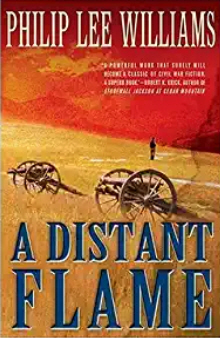
I purchased my copy of this novel about the battle of Atlanta in 2005 when author Philip Lee Williams gave a reading in my small NE Georgia town. He signed the copy, but since the novel had won the Michael Shaara Award for Excellence in Civil War Fiction, he was more interested in my memories of Shaara as my creative writing teacher than talking about the book. I see that I gave the book a positive review on Amazon.

The book is somewhat haunting for a Georgia resident to read simply because the battles happened in the small towns between where I live now and Atlanta–and I’ve visited some of the battle locations.  I-75 carries motorists past sites where thousands were killed. It’s more haunting now because there is so much violence and unrest in the country in addition to the ills of the pandemic.

From the Publisher

In the spring of 1864, the Confederate Army in Georgia is faced with the onrushing storm of General William T. Sherman’s troops. A young sharpshooter for the South, Charlie Merrill, who has suffered many losses in his life already, must find a way to endure—and grow—if he is to survive the battles that will culminate in July at the gates of Atlanta.

From the opening salvos on Rocky Face Ridge near Dalton, through the trials of Resaca and Kennesaw Mountain, Charlie must face the overwhelming force of the Federal army and a growing uncertainty about his place in the war.

Never before has the Atlanta Campaign been rendered—in all its swift and terrible action—with such attention to history or with writing that reaches the level of art. This crucial episode in the Civil War’s western theater comes alive with unexcelled power and drama as it unfolds in soldiers’ hands and hearts.

Throughout the course of the novel, Charlie’s life is laid out in powerful detail. The experiences from his childhood, through the war, and into his twilight years are to a great extent on his mind half a century later when he is to give a major speech in the park of his small Georgia town

A Distant Flame is a book about the cost of war and the running conflict that led Sherman’s Army to the Battle of Atlanta—and the March to the Sea. It stands as a testament to love, dedication, and growth, from the Civil War’s fields of fire to the slow steps of old age.

What impressed me as an author is the fact that Williams made a chart (for research, not to include in the novel) showing where every general and brigade were 24/7 as Sherman moved through North Georgia. I mention this to everyone who says I spend too much time with research.

The novel reads well the second time through, and since it’s been a while since I read it, I don’t remember things just before they happen.

Malcolm


Coming soon: ‘Fate’s Arrows’

Within a couple of weeks, more or less, Thomas-Jacob Publishing will release the fourth novel in my Florida Folk Magic Series, Fate’s Arrows.

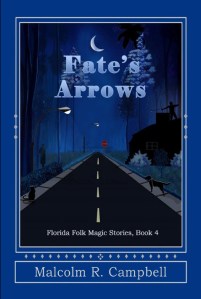
This will be the first book in the series that isn’t narrated by the cat Lena. Instead, Pollyanna–introduced in book three–is the protagonist. Set in North Florida in 1955, this book focuses on Pollyanna’s fight against the Klan. Those of you who’ve read some of the previous books in the series will already know most of the characters.

Here’s a look at the cover:

Once we get to the cover art, formatting, and final proofreading, the book begins to seem to a reality to me.

Malcolm

As ugly as homemade sin

Okay, I stole that heading from a Pat Conroy book. One could spend a lifetime writing posts based on phrases like that out of his books. I like phrases like that because I like catching readers unaware–the flip side of relying on clichés.
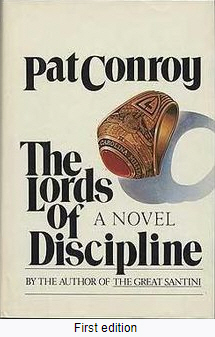
All in all, I don’t think homemade sin is as popular as it used to be. In part, it takes more time than factory fresh sin. And, like those clothes people used to make from patterns or the cakes some people still make from scratch, homemade now seems to cost more than storebought.

Being pragmatic about my use of time, I’m willing to sacrifice a little bit of quality for easier living. Why make a pie crust when people can’t tell the difference between the one you made and the Pillsbury pie crusts next to the eggs and butter at the grocery store?

Unfortunately, most people won’t admit to practicing homemade sin, so it’s hard to compare its costs with the kind of sin that comes out of a can. Plus, a lot of people gave it up for the same reason people gave up homespun clothes–they got looked down on. Then, too, I think the sin consensus is that if it (the sin) can’t be mass-produced, it’s really something we don’t want to talk about, much less advertise on TV or display in a store window.

Frankly, I think sin–including so-called “original sin” is an invention of the church because–without it–we wouldn’t need the church. But that subject’s a whole nother post other than to note that whether you’re a church or a factory, sin is damn good business.

If you’ve read a lot of Pat Conroy’s books, you’ll not only find strong plots and lyrical prose but a fair number of real or imagined Southern expressions.  I grew up in the South, so I’ve heard some of the most twisted, profane, ludicrous, and humorous expressions folks can make up. Those that haven’t turned into clichés, I love to see in novels because they wonderfully define a character–the kind who would say such things vs. the kind that wouldn’t. Of course, the Navy has always been a fine source for beautiful profanity and other phrases most of us didn’t share with our families when we came on on leave.

And when it comes down to it, so-called sin makes better feature films and novels than everyday people being good. All you need is a little homemade sin to stir up the plot a little bit or–if you’re lucky–bring down an empire.

–Malcolm
Satire and sin. It doesn’t get much better than that in a story about an old fashioned reporter stuck in the modern age.

Briefly Noted: ‘The Outsider’ by Stephen King

Like his Mr. Mercedes trilogy, King’s The Outsider begins as a thriller/police procedural, then falls down the rabbit hole of the supernatural. I wasn’t happy with this in Mr. Mercedes, because after two books of standard police work, I thought changing the genre into a supernatural solution in book three was a mistake. However, in this standalone book, it works.

From the Publisher

An eleven-year-old boy’s violated corpse is discovered in a town park. Eyewitnesses and fingerprints point unmistakably to one of Flint City’s most popular citizens—Terry Maitland, Little League coach, English teacher, husband, and father of two girls. Detective Ralph Anderson, whose son Maitland once coached, orders a quick and very public arrest. Maitland has an alibi, but Anderson and the district attorney soon have DNA evidence to go with the fingerprints and witnesses. Their case seems ironclad.

As the investigation expands and horrifying details begin to emerge, King’s story kicks into high gear, generating strong tension and almost unbearable suspense. Terry Maitland seems like a nice guy, but is he wearing another face? When the answer comes, it will shock you as only Stephen King can.

The police seem to have Maitland dead to rights, But then more and more lapses in the investigation begin to occur. Mainly, how could Maitland be in two places at the same time? The star of the show is a private detective who specializes in skip tracer, lost dog, and missing persons work at a small agency called Finders Keepers named Holly Gibney. (She appeared in earlier King novels.)

She has seen doppelgänger cases before and is open to multiple solutions that don’t fit the standard police approach. King does a good job of building tension, showing the frustration of the police investigators, and allowing Gibney to slowly orient the investigation toward a supernatural solution.

I enjoyed the book.

–Malcolm

Malcolm R. Campbell is the author of magical realism, contemporary fantasy, and paranormal novels and short stories.


Book is done: should I throw a wrap party?

Authors react in a variety of ways to the completion of a book.

Some are at loose ends because their days and nights have been filled up with time spent working on the manuscript. Others feel empty: the plot and characters have been on their mind for so long, and now poof, they’re en route to the publisher. Multitasking authors already have a new book in mind and can jump right into it, staying busy rather than fretting about the book’s completion.

I started work on Fate’s Arrows two years ago, then got derailed for a year of cancer treatments, followed up by feeling bogged down by the virus and the nightly riots. I’m a bit of an empath and I write intuitively, so all kinds of stuff can become disruptive before a manuscript if complete.

Typical wrap party

When the production of a film is complete, cast and crew often attend a wrap party to celebrate reaching the finish line. Pat Conroy once said that a team of fifteen or more people helped with his books: editors, cover artists, book designers, fact-checkers, permissions people, publicists, etc. But, here it’s just me. Well, there is my publisher, but she lives in central Florida and probably isn’t going to meet me at the Rome, Georgia Applebee’s for a wrap party with our spouses. (I’ve urged her to buy a company jet to make traveling faster than the family car.)

I can’t very well invite the characters over since they exist in my mind and on paper. There’s probably a state law against having a party with imaginary people. In his novel The Outsider, Stephen King mentioned author Harlan Coben a number of times. Maybe Harlan came over for drinks when the book was done. Sadly, I didn’t mention either Stephen or Harlan in Fate’s Arrows. If I had, I’m sure they’d meet me at the Rome, Georgia Applebee’s. (They probably have their own planes.)

So, I’ll probably boil some water in the Dutch oven, toss in some macaroni, and fix Kraft Mac & Cheese for dinner, and tell my wife and cats, “well folks, that’s a wrap.”

Malcolm


From one culture shock to another

In Real Life

As you can see, some of our grass is more ancient pasture than yard.

In real life, I’m staying inside a lot, wearing a mask when I go shopping, taking a car with 81,000 miles on it to the shop, and constantly mowing our four acres of grass. Yesterday’s mowing, at 95 degrees and sunny, featured cows staring at me from the pasture on the other side of the barbed wire fence, unconcerned about the noise of the riding mower but startled and watchful the minute I sneezed. All of this seems far away from the protests and the pandemic.

Re-reading old books

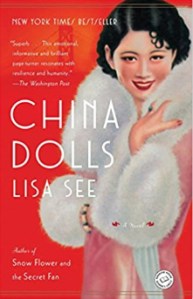
I read fast. Always out of books. So, trying to cut down on my book-buying habit by re-reading old books.  I just finished re-reading John Hart’s gritty The Last Child and The Hush set in a small town in a rural county where bad things happen. Now I’m re-reading Lisa See’s China Dolls, set in San Francisco’s Chinatown. It features three young women who become friends while seeking dancing/singing careers. These books contrast greatly with Dark Arrows, my novel in progress, which is set in the KKK-infested Florida Panhandle where I grew up. I have to re-boot my brain when I switch genres–or watch the news.
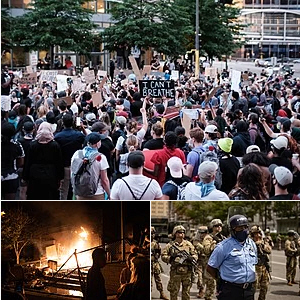
Pandemic and Protests

Wikipedia Photos

As far as I know, I haven’t gotten Covid-19. Nor have I seen protests, looting, attacks against the police, and burning stores on nearby streets. This is, of course, real-life, but as it unfolds on social media and on the news, I feel culture shock again as though I’m looking back to the anti-war protests and race riots of the 1960s. The entire country seems to be torn apart by the multiple issues which we’re confronted with daily. Meanwhile, the Presidential campaign has heated up and we’re all trying to figure out what’s true and what’s an empty (or impossible) promise.

I’ve lived in Chicago, Atlanta, and San Francisco: thank goodness I don’t live in those cities now, much less in Minneapolis (where I once wanted to live) or Portland (where one of my brothers lives). Or St. Louis, Seattle, or NYC. The riot in Atlanta where the Wendys burnt down occurred in an area my wife and I drove through frequently when we worked there and were involved in a non-profit organization that met a few blocks away.

I don’t know where all of this is going to end up, but the polarization and lack of tolerance bother me a lot. So, I continue to read, write, and cut the grass, and when I see images of big cities on fire, I remember a 1960s riot several blocks away from my San Francisco apartment on Dolores Street in the Mission District, and I feel sad for those who are pulled into the horror of protests gone bad. Seeing it all again is the worst of culture shocks.

–Malcolm