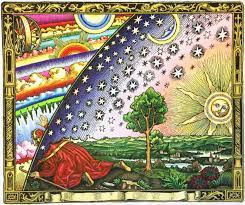
Gnosis

When some people think of religious gnostics, they consider the 12th-century Cathars in Europe who, among other things, believed in truth that came from awareness rather than through the dogma of a hierarchy. The Catholic Church, by edict of Pope Innocent III–who seems to me to be very un-innocent–wiped out this group in 1229 through the genocidal Albigensian Crusade. Rome wanted a hierarchy with engraved-in-stone rules and anything else was called a heresy.

I interpret gnosis as awareness and think that those of us who think that awareness makes more sense that a hierarchy of preachers often get bad PR because people are quick to list the other beliefs of the Cathars which seem very strange to me.  If you watched the TV show “The Waltons” you may remember that the father didn’t feel his beliefs came from a church but through contemplation within nature. I feel the same way.

My distrust of authority included that of the church fathers–the elders and the deacons in the Presbyterian Church where I grew up. Sunday school and vacation Bible school teachers found me a challenge because I thought every person should find the truth in his/her own way and not through the promptings of teachers and pastors.

I was proud of the pastor of our church for threatening to leave if the church did not allow African Americans to attend. The church elders did not fight him on this, and we had a good many African Americans who came, (a) to see if they could, and (b) to see what was happening. Most did not come back because (if I may say so myself, Presbyterians are the most boring of all denominations) “nothing was happening.” They invited us to their church which presented an exciting experience!

At any rate, the Sunday school and Vacation Bible school teachers didn’t want me in their classes because they knew I was “trouble.” My poor parents heard more of their “concern” than I did, their son, for example, saying that the doctrine of predestination was preposterous. I said if the doctrine was true, we were all going to Heaven or Hell no matter what we did because our fate was already decided. The teachers had no answer for that. Now, I think the Presbyterians have moved away from that belief.

My teachers said I came to class to learn how to act within the scope of Christian beliefs. I said I already knew that and didn’t need another person presuming to tell me. That never went well. I maintained that we were taught to pray and to listen for a response. What more could we need?

And like John Walton on the long-running TV show, I found more answers in nature than in a building where I was told what to think and believe.  That’s gnosis and it combines with mysticism for individual transformation and knowledge.

–Malcolm

That old pagan muddle of terminology

I was amused at the semantic chaos a character in a recent novel fell into while trying to explain the various pagan groups to an individual who (a) was a born-again Christian with Baptist-oriented beliefs, and (b) thought anything labelled “pagan” or “witchcraft” was pure and simple “devil worship.”

I blame both the Catholic Church and Hollywood for creating and sustaining the ignorant idea that pagans and/or witches and/or Wiccans and/or hoodoo practitioners all worship the devil. Many of those “charged” with worshipping the devil don’t believe in the devil. The devil is more or less a Christian notion.

I call my series of conjure novels “folk magic” which, in many ways, is like conventional witchcraft. The terms get  muddled because many Wiccans call themselves witches while others mix up Voodoo and hoodoo.

Wicca, like Voodoo, is a religion. Hoodoo and conventional witchcraft are practices usually with a strong link to nature and spells drawn on what is observed in the natural world. Those who practice hoodoo, with its origins in Africa, are often very strong Christians and see no conlflict between the two belief systems.

I find it easy to write stories about conventional witchcraft and hoodoo because they seem to me to be very natural to those who notice the ways and means of the seasons and the natural world. Both allow the practioner to worship the gods and goddesses of their choice, Christian or otherwise.

Creator of Wicca

The Wicca Academy website states that, “Wicca is a contemporary, nature-based, pagan religion. It refers to the entire system of practices and beliefs that comprise the modern pagan witchcraft spectrum. Although people often think that the terms Witchcraft and Wicca mean the same thing, that is not the case. All Wiccans are witches, but not all witches are Wiccans.”

The Green Man website states that “Drawing Witches into a cohesive identifiable group of any sort is truly like herding cats! And Traditional Witchcraft is no exception! So to cover my ass I think it best to state that all I can share is my own perspective based on my own practices, beliefs and understandings. These I have gleaned over more than 4 decades as a Traditional Witch and over two decades of leading a Coven and Tradition as well as teaching and presenting Trad Craft to the general public. All that said, there are many others with valid experiences and credentials who, coming from other Traditional foundations, would present Traditional Witchcraft in quite a different manner. As with all such explorations, look for multiple, diverse sources and find what speaks to you personally. That is in fact an approach that would be perfectly in accord with Traditional Witchcraft practices, as I present it. As Traditional Witchcraft is rooted in one’s personal senses or rather extra-sensory abilities, built upon one’s intuition, we call it “The Sight” aka “The Gifts”. Informed through direct communion with the many forms and expressions of Spirit, a Traditional Witch is then guided by their own sense of right and wrong employing what one might call one’s Ethical Compass. It is this personal and direct communion relationship a Traditional Witch has with Spirit that sets them as a Heretic: meaning outside of all forms of organized religion and circumventing any priesthood authority mediating Spirit or imposing a codified “One and True practice” or belief with regards all things related to Spirit. ”

In general, I like the practices better than the religions because I don’t really trust systems in which others tell me what  I can do or what I must believe. Truth, I think, comes in following what we believe rather than what a hierarchy of leaders and rules say we must believe.

My two cents as a solitary.

–Malcolm

I really don’t want to clean up nice

There’s a scene in the Dolly Parton/James Patterson novel Run Rose Run when an emerging singer with a raw and powerful voice is being styled into clothes, makeup, and a hairdo prior to a publicity shot. When she sees the result, she leaves the room for a few minutes only to return wearing  her comfortable clothes, minimal makeup, and her hair simply brushed out into its natural way of being. The stylists are shocked. She doesn’t care. Even though she looked like a diva, looking like a diva wasn’t for her. It didn’t feel right. That meant it was all wrong.

At this point in her introduction to Nashville and the country music business, AnnieLee Keyes is still learning “how things are done.” However, she’s defiant in a lot of ways and wants her voice and her songs to carry a career in which she can ignore how things are done.

I can identify with that because, as an author, I’ve always felt my words should be what people care about, not the clothes I’m wearing. I like blue jeans and tee-shirts with a denim or a flannel “jacket” depending on the weather. If it still ran, I’d drive up to any gathering in my old Jeep Universal or possibly an ancient 3.2-liter Jaguar Sedan. The cars would never be washed or waxed and I’d look like I hadn’t either.

In the old days, Sunday afternoons were the times when people dropped by each other’s houses unannounced, and that meant that my two brothers and I had to wear church clothes until supper. What a drag. Did anyone really think that was how we dressed day to day? In fact, I kept asking why I had to wear church clothes to go to church. That’s how things are done, I was told.

The only way to live, I always thought, was to ignore “how things were done” I always liked the song “My Way” because what other way was there? But, as many have learnt, that way is a rough way to go. The thing is, cleaning up nice feels like selling out–like how I look and how I act is just being a marionette controlled by the strings of tradition.

One has to be true to himself/herself, I think, and that means not dressing up like somebody you are not just because the wedding planner or the funeral director is claustrophobically traditional.

Good luck to you, AnnieLee Keyes.

–Malcolm

Malcolm R. Campbell is the author of the Florida Folk Magic Series which can be purchased at a savings in this four-in-one Kindle set. Folk magic means hoodoo. And hoodoo means having a weapon for fighting the KKK in 1950s Florida.

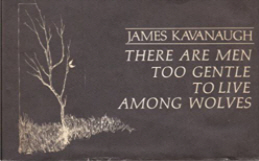
There are Men Too Gentle to Live Among Wolves

original cover

“For wanderers, dreamers, and lovers, for lonely men and women who dare to ask of life everything good and beautiful. It is for those who are too gentle to live among wolves.” ― James Kavanaugh, “There are men too gentle to live among wolves.” Please click the link to see the related poem.

My copy of this classic book looks like the photo displayed here which tells you I’ve had this since the collection was released in 1970. It has been a touchstone. It talks about the kind of men the world needs now more than ever.

Most men are afraid to be gentle. This fear has cost them the ability (should they ever change their minds) to walk gently upon the earth and show genuine and infinite kindness to all others. They fear their toxic masculinity will be doubted should they ever display one moment of gentleness. And so they miss–are completely unaware of–the greater beauty life offers them. The offer is free to those who understand they cannot flex their muscles to obtain it.

They are not the men who kick in store windows during power blackouts or because they feel society has wronged them in some way. They are not the men who threaten women with their words and physical strength. They are not the men who cannot read a poem or see the wonder within a flower.

A gentle man (as opposed to a gentleman) has the power to change the lives of millions and even the failing environment of Earth itself. But he holds back for fear of being called unmanly.

Most of us know what kinds of men we need but fail to stand next to them when we see them for fear the taunts hurled at them will also be aimed at us. And so the world continues downward to hell in a handbasket.

It’s not too late to change who we are if we want to.

Malcolm

‘You’re not who you think you are’

The title of this blog is one of the more provacative statements made by Carolyn Elliott in her exhillarating 2020 book Existential Kink.

Existential Kink: Unmask Your Shadow and Embrace Your Power (A method for getting what you want by getting off on what you don't) by [Carolyn Elliott]It’s tempting to respond, “Oh yeah, well then who the hell am I?”
Students of metaphysics, medicine, psychology, philsophy, and new age ideals–among others–have pondered the who am I really question for years. I don’t really feel competent to write a review of Elliott’s book here. She draws on a lot of areas, many of which we have stumbled across but never put together into a coherent system, about why we aren’t who we think we are and why our positive affirmations don’t seem to work.

One key is that we are more than our ego (in terms of ego, superego, and Id) and that the ego tends to ignore the unconscious part of the Self as though it’s either unimportant or doesn’t exist. So, from Elliott’s perspective–which agrees with Carl Jung–who we really are includes the part of ourselves we tend to deny. When we do this, the unconscious part of ourselves is actually running the show, that is to say, (in Jung’s terms) the shadow.

The answer, which appears counterinitutive, is integrating the Self rather than denying/disliking most of it. I leave that idea here as something to ponder. Jung says that the part your Self that you don’t include in your conscious approach to life will come upon you a fate. Elliott mentions that the whole Self always gets what it wants and that much of what we do in our daily lives amounts to magic we don’t realize we’re practicing.

Personally, I think I need to keep studying her book (or else).

Malcolm

My novel “The Sun Singer” is a hero’s journey book, one means of integrating the Self.

There are Men too Gentle to Live Among Wolves

Do you know such men and women?

I do and I hold them in high esteem if they survive in a world where badass is championed and streetwise is celebrated because such men–and women–are not afraid to say there is much in the world that they do not want.

First edition cover

There are Men too Gentle to Live Among Wolves is of course the title of James Kavanaugh’s first of twenty-six books of poetry, a book that came out in 1970 and has gone through an infinite number of printings.

Kavanaugh (September 17, 1928 – 29 December 2009) was a priest in Flint, Michigan who called for church reform in his controversial 1967 book A Modern Priest looks at his Outdated Church. In his obituary, Aaron Dome said in the “Kalamazoo Gazette” that Kavanaugh “wrote in the book that he felt extreme frustration and confusion about being forced to give advice that was in accordance with the church, but that he felt was not in people’s best interest.”

Wayne Dyer said, “I can think of no living person who can put into words what we have all felt so deeply in our inner selves….”

That is his strength, putting into words what we have all felt, and I first found it in There are Men too Gentle to Live Among Wolves. We know there is a better way of life than the “I’m going to kick your ass” approach to interacting with others. It’s important to acknowledge this and then take a stand on its behalf.

As Kavanaugh wrote, “I am one of the searchers. There are, I believe, millions of us. We are not unhappy, but neither are we really content. We continue to explore life, hoping to uncover its ultimate secret. We continue to explore ourselves, hoping to understand. We like to walk along the beach, we are drawn by the ocean, taken by its power, its unceasing motion, its mystery and unspeakable beauty. We like forests and mountains, deserts and hidden rivers, and the lonely cities as well. Our sadness is as much a part of our lives as is our laughter. To share our sadness with one we love is perhaps as great a joy as we can know – unless it be to share our laughter.”

It’s not easy to stand against the popular tides of confrontation, political polarization, and cynicism, much less the insurrectionist, gun-toting groups that want to scare the rest of us into accepting their bankrupt notions.

But we have to try, don’t you think?

Malcolm

My novels include “At Sea” and “Conjure Woman’s Cat.”

Mary Magdalen Painting in ‘The Little Mermaid’

I saw “The Little Mermaid” (1989) several years after it came out and after I had read Margaret Starbird’s 1993 book The Woman With the Alabaster Jar about Mary Magdalen. Having focused on Mary Magdalen, who would receive a greater public interest after The Da Vinci Code appeared ten years later, I recognized a famous painting of the Magdalen in Ariel’s grotto of treasures and wondered how it came to be there.

Called “The Penitent Magdalene,” (or “Magdalen with the Smoking Flame”) the painting is one of several with that name by French artist Georges de La Tour done in 1640. In the Disney film, Ariel is shown looking at the painting, most especially the candle, as she tries to figure out the nature of fire–not something she would know about under the sea. Was Disney, for reasons unknown, comparing the red-haired Ariel with the red-haired Mary Magdalen?
Not really, at least not intentionally (that we know of). Writing in his blog on uCatholic in 2019, Billy Ryan says that animator Glen Keane “picked out that painting because he wanted a picture, an image, of a fire underwater to go with the lyric.” (Click on the word “blog” above to see a still and a video clip of Ariel looking at the painting.)

Regardless of what Disney and/or Keane intended, Starbird–whose focus is the sacred feminine–saw a deeper meaning in the painting in the film in her 1999 article: “Of all the possible pictures available from art galleries around the world, it is incredibly significant that the directors of the Disney® film chose to place Mary Magdalene at the bottom of the sea, for it is SHE who represents the lost Bride and the archetype of the ‘Sacred Feminine’ as partner in Christian mythology.” (Click on the word “article” to read the entire article.)

Perhaps Keane, who was Catholic, was aware of the painting because of his faith. It would surprise me if, in 1989, he was consciously thinking of the sacred feminine for that terminology and line of thought hadn’t come into the national consciousness (other than scholars) yet.

We may never know whether the painting was a convenient prop or whether it was intentionally used to make a larger point. Starbird thinks the painting’s use was more than coincidental, however it got there. I hope she’s right.

Malcolm

Ain’t got no cigarettes or wisdom either

A commenter on my last post said, “Found a peanut? That’s your wisdom for the day?”
I’m neither a man of means nor the king of the road. That means I’ve made a dreadful mistake if I gave y’all the idea I have any wisdom to dispense. I’m just a country writer, folks, living on the remainder of a farm that’s been in the family for five generations. I’m writing about the South these days partly because I live here, though, with the current political environment, I hesitate to say I’m from the South because people in the social media and on some news programs are accusing those of us living here of starting the Civil War.

That’s absurd, of course, because none of us were here at the time. We’re called a lot of things because the country seems to enjoy making fun of the South, saying we’re all half ignorant and probably bumpkins even though some of the country’s best literature came from our part of the country.

Yes, we like grits and we consider sushi to be only good for baiting one’s hook on a fishing trip. So what?

I’ve been in almost every state in the union, went to college in New York, and lived and worked in the Chicago area. Nothing I’ve experienced or witnessed gives me any reason to think the South is better or worse than any other part of the country. It doesn’t take a guru to come to that conclusion. So, I’m okay with living here–except when the taunts against Southerners get started.

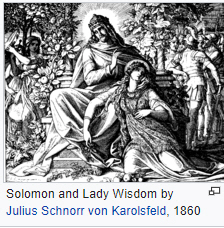
According to Wikipedia, “Wisdom, sapience, or sagacity is the ability to think and act using knowledge, experience, understanding, common sense and insight. Wisdom is associated with attributes such as unbiased judgment, compassion, experiential self-knowledge, self-transcendence and non-attachment, and virtues such as ethics and benevolence.” I don’t even know what that means, but I can tell you this, I ain’t got it.

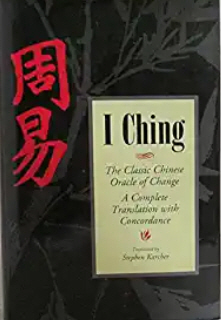
If I need a dose of Wisdom, I get out my copy of the “I Ching” just like everyone else. The oracle always tells me what’s up and what’s going down.

–Malcolm

Malcolm R. Campbell is the author of magical realism and contemporary fantasy novels and short stories, including “Conjure Woman’s Cat.”


As a Man Thinketh

As a Man Thinketh is a self-help book by James Allen, published in 1903. It was described by Allen as “… [dealing] with the power of thought, and particularly with the use and application of thought to happy and beautiful issues. I have tried to make the book simple, so that all can easily grasp and follow its teaching, and put into practice the methods which it advises. It shows how, in his own thought-world, each man holds the key to every condition, good or bad, that enters into his life, and that, by working patiently and intelligently upon his thoughts, he may remake his life, and transform his circumstances. The price of the book is only one shilling, and it can be carried in the pocket.”  It was also described by Allen as “A book that will help you to help yourself”, “A pocket companion for thoughtful people”, and “A book on the power and right application of thought.” – Wikipedia

An original copy of the 1903 edition of James Allen’s remarkable book sat on my father’s bookshelves while I was growing up. The book was thin, the cover was old (nothing like the current cover on Amazon), and the text was written in an old-fashioned style. It took me a long time to discover the book and realize that what is held within it a remarkable prescription. (You can download a free copy here as well as from Project Gutenberg.)

The book, which I’ve mentioned on this blog several times before, contains what used to be called “aphorisms” (suggestions for “right living.”) It can be read that way, that is to say, if you think positive thoughts and avoid negative thoughts, you’ll be a happier, more likeable person.

Or, it can be read literally, as though continued focus on a particular kind of thought will manifest that thought in one’s life. This is the way I read it. Many books, including The Secret and others about the law of attraction, affirmations, and practical meditation owe their existence to this book.

“THE aphorism, ‘As a man thinketh in his heart so is he,” not only embraces the whole of a man’s being, but is so comprehensive as to reach out to every condition and circumstance of his life. A man is literally what he thinks, his character being the complete sum of all his thoughts.'”

That’s not easy to see because we seem to have been programmed to think a lot of negative thoughts. Maybe they’re rants or gripes or poor me notions or the kind of gossip people used to trade at the barbershop. It’s easier to say something is screwed up than to find hope in the world. So, if we think negative thoughts most of the time, that’s who we are even though from time to time we read a book or go to a lecture and spend a few days thinking positive thoughts.

Peer pressure influences us a lot, I think. If everyone around us is saying things are going to hell in a handbasket, it’d hard to step forward and say, no they’re not. So we don’t say it. Who would believe it if we did say it? It takes a lot of effort to see that thoughts are things and that they control what happens in the physical world. One has to give the notion a try and work with it for a while to see any results.

Suffice it to say, when a friend comes on hard times, it’s best not to say, “You caused this to happen.” It’s easier to say that hard times were caused by fate, bad breaks, or God moving in mysterious ways. That places the responsibility everywhere else. And, it obscures the fact that–to paraphrase Marianne Williamson–we are more powerful than we know.  The sad thing is this: if we have been “programmed” since birth to believe that we believe, it’s difficult to change to a new way of seeing the world, much less expect others to accept it. Those who speak out about this are usually mocked one way or another as (according to the old phrase) being a “goodie-two-shoes” or naive or just plain crazy.

I’m lucky. I can insert my beliefs into my fiction without being put in a home because people assume all that comes from my characters or another reality. If you’re in the insurance business or sell cars for a living, I don’t know what you’re supposed to do. Life insurance salespeople really can’t say, “You’ll die whenever your ready” and car salesmen really can’t say, “The next time you decide to wreck your car, come see me for a new model.”

If I could, I would go door to door handing out copies of James Allen’s book. If people read them, the world would be forever changed,

Malcolm

Malcolm R’ Campbell’s hero’s journey novel “The Sun Singer” and the heroine’s journey novel “Sarabande” are based on the principles in James Allen’s book.


What’s really gone with the wind

“The American population is moving toward a minority-majority future, a shift the Census Bureau predicts will occur sometime in the 2040s. Nativists, racists and our president are taking advantage of the browning of America, contrasting it with nostalgia for a perceived better, whiter past, and using that idea to activate citizens into white nationalist thinking.”       – Heidi Beirich

According to the Southern Poverty Law Center, a group that monitors racially based and gender-based hate in the U.S., two statistics stand out: The number of monitored hate groups in 2018 was at an all-time high at 1,020 and hate-based murders conducted by members of the “Alt-Right” made last year the deadliest year ever (presumably, not counting the Jim Crow era when the KKK got rid of more people).

As Beirich notes, the so-called browning of America is leading to a rise in white nationalist thinking. Often-criticized today, the movie “Gone With the Wind” painted the days of slavery with a sad and nostalgic brush for those who owned the plantations and participated in gracious living based on purportedly honorable and sacred traditions. Now there are a lot of people worrying about the fact that, according to the Census Bureau, the United States will become “minority white” by 2045, whith whites comprising 49.7% of the population. At that point, the demographics are expected to be 24.6% Hispanic, 13.1% blacks, and 7.9% Asian.

This is the problem, not the solution. Wikipedia photo.

So it is that what will really be gone with the wind for frightened white people are the times when more whites lived in the U.S. than all other races combined. Hate groups are reacting as though whites will be less numerous than every other group rather than continuing to have nearly a majority. Nonetheless, the predicted demographics represent change and, on the surface, that scares people.

I’ve mentioned on this blog before that when my brothers and I were in junior high school, we used to build sandcastles on the beach during low tide and then make a game out of seeing how long they could hold out against the incoming high tide. This is what white supremacists are doing today–except it’s not a game. It’s a deadly and disgusting war against minority groups that’s being carried out by thugs who believe they will no longer be about to hold their own without relying on the traditionally high percentage of whites in the country.

That is, they fear that on a level playing field, their real or imagined inferiority will make them lose.

Lose what? Control, I suppose. An edge, probably. The luxury of never having to coexist with other races, cultures, and religions, no doubt. Walking down streets, walking into stores and churches and sporting events and backyard barbecues with the confident assurance that everyone one else there is exactly like them, good, bad, and ugly, but safe and understood without having to think.

Those with self-confidence in their own abilities, agility to adapt to changing times, a spirituality that embraces the totality of humankind, and minds that know how to think rather than reacting to every difference as a threat will have no problem with the demographics of 2045. Those who do not are, at best, dinosaurs in their death throes who are resorting to hate as a sand-castle bulwark against the incoming tide.

White supremacists are doomed, and in their heartless hearts, I think they know this. Rather than change or at least graciously step onto ice floes heading out to sea, they are attempting to justify their murder and terrorism as a reasonable response to their demise. They’re not innocent. They’re killing the innocent, though

Which prompts me to say, the country will be much better (more free, fair, exciting, and more creative) when they are gone.

–Malcolm