How a writer sees locations for prospective stories

In How to be doomed as a writer, I mentioned that author Stephen King prefers to look at story possibilities as situations rather than plots.

Over time, a writer becomes attracted to certain kinds of settings and the kinds of situations that might occur there. I’m attracted to natural wonders, especially mountains, as well as old buildings. My novels The Sun Singer and The Seeker both arise from a natural wonders setting, Glacier National Park. When I contemplated writing about the park, my first thoughts were about the kinds of things (situations) that might happen there. My Kindle short story “Moonlight and Ghosts” came to mind when I looked at an abandoned building near the house where I grew up.

Suppose you’re in a writing class and the instructor shows you the following picture obtained from the Florida Division of Historical Resources. All you’re told is that it’s an old and restored opera house in a small north Florida town.

PerkinsOperaHouse

Perhaps the instructor has influenced your brainstorming about this picture by showing you the building on a sunny afternoon with cars along the street. If s/he had shown you a photograph of the same structure as it sat on a moonlit night with the trees missing leaves during December, you’d come up with a different set of situations.

  • If you’re a fan of TV police shows, perhaps this looks like a place where a crime is committed.
  • If you’re drawn to opera and/or to theater, maybe you’ll think of stars, set designers, directors, little theater groups, professional “theater people” or amateurs coming together to put on a play that somebody hopes will fail.
  • Maybe there’s a secret about the building, some old legend or a will uncovered in a dusty attic that describes how, when the building was constructed, several hundred bars of gold were hidden beneath the box seats.
This picture gives you a very different feeling about the building.
This picture gives you a very different feeling about the building. – Florida Division of Historical Resources.

Okay, I’ve withheld some information, so with a few more facts, are your prospective story situations the same or do you change them?

  • The Opera House, which consists of a large second-floor theater and first floor shops, was built in 1880.
  • Traveling productions, including vaudeville groups, put on shows at this theater for a number of years. But then, when the railroads re-routed their lines and there was no easy way for out-of-town visitors to get to town, the theater fell into disuse.
  • Ghost hunters claim the owner died of a broken heart and still haunts the now-restored building. Purportedly, the former owner has been “seen” by the ghost hunters and a glowing orb of light.
  • The building is now used as a venue for weddings, local-area stage productions, and other functions where a seating capacity of 600 is desired.

If your instructor asked you to write a short story about this building, would you see it as just a building where anything might happen, a setting for a theater-oriented tale filled with clashing egos and temperamental stars, or would you try to link the local legends and the history of the building into your story? The only catch is, the instructor will expect you to convey–one way or another–a sense of the building. So, it can’t be a generic structure.

Well, unless you know the building already and/or are a historic preservation specialist, you’rre at a disadvantage when you try to describe it. If I were the instructor, I’d have several information sheets prepared as handouts.

  1. Those who wanted to use the building as a place setting would get a general description of the interior and some architectural information about the architectural style of the building, it’s size, etc.
  2. Those who wanted to use the location for a theater-oriented story, would receive information about the stage, the seating, the lighting, and the dressing rooms.
  3. Those who didn’t know yet what was going to happen but wanted real background, would be told about the building’s history and the ghostly legends.

What do you see here?

Interior as it looks now. - The Florida Center for Instructional Technology, University of South Florida photo.
Interior as it looks now. – The Florida Center for Instructional Technology, University of South Florida photo.

In a classroom exercise, you’re “research”–if you think any is needed–is limited by what you see in the photograph and what the instructor will tell you either in a lecture, a question and answer session, or via handouts. Since I am attracted by legends, especially paranormal stories, I’m going to see this as a place where something ghostly will happen.

How you tend to view real locations, whether they’re lakes, mountains, buildings, or city streets, will influence what “your muse” draws you to consider. Your inclinations may suggest that the instructor should have had several more handouts about the building. One might be how the building is used today. Another might be the kinds of businesses on the first floor and on adjacent streets.

As writers, we look at locations as places where something might happen or where something did happen. Whether you like tying in real history and legends or whether you see locations in terms of what’s happening there in the present day, once you’re attracted to a setting for who knows what reason, story situations may come to mind as you Google (or go to) the setting.

When I first saw pictures of this building, my first thought was, “Good, here’s a cool old building in the Florida Panhandle where I’ve been placing many of my recent stories.”

As I learned about the building–its history, its ghosts, its restoration–ideas began to float around for prospective stories. As this process unfolds, we may never write a story…unless we’re in a classroom and have no choice. If a story comes out of it, the setting was the catalyst and the result was a marriage of the real and the writer’s imagination.

Malcolm

P.S. If the actual building intrigues you, you can learn more about it here.

On location: your childhood growing up place

“Everywhere that July in 1963 there were the pines, their long needles shimmering in a faint wind under the hot subtropical sun. In the country there were empty dirt roads, rutted by mule carts. In the towns, sprawled unpainted shacks without windows. Ancient Negro women sat fanning themselves with palm leaves as they stared drowsily from rickety porches at their zinnias and coral vines and heavy-scented honeysuckle bushes. Moss-draped oaks and lacy chinaberry trees shaded sandy dooryards. Scrawny dogs, the flies buzzing at their noses, slept among ragged-feathered chickens poking for scratch feed. Locusts whine from tall magnolias and the steady pitch of power saws. But mostly it was those pines and the tang of their resiny branches and the dark straightness of their trunks. All of it looked like the south of the novelists and the poets, heavy with antiquity, romance and misery.” – Gloria Johoda in “The Other Florida.”

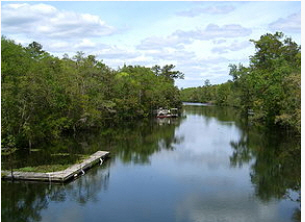
longleafforestI was in college in 1963 when my friend Gloria Jahoda wrote those words. Like me, she wasn’t born in Florida, but in her now-classic book about the state’s panhandle she observed and wrote about what many long-time residents no longer noticed or took for granted. “The Other Florida” was other because it wasn’t filled with tourist attractions, widely known beaches and movie stars.

Other than a few childhood poems, I wouldn’t write about the other Florida until recently. My family moved there from Oregon just in time for me to enter the first grade. Out of the culture shock of the move, I also saw the place I would live for 18 years through the eyes of an outsider.

Yes, my family went to St. Augustine, Tampa, Daytona Beach and Key West, stopping at many gaudy tourist attractions in between. But all that was crowded and nearly fake with an overlay of commercial glitz and I was always happy to be home even though much of the panhandle was considered backward and impoverished in spite of having the state capital in the middle of it.

The place is abandoned now, but this was my favorite place to eat down at the coast
The Oaks is abandoned now, but this was my favorite place to eat down at the coast

I haven’t been back to north Florida since the mid-1980s when my parents died and my brothers and I closed up and sold the house the family had lived (by then) for some 35 years.

In my childhood days, I learned the territory like most kids did…swimming in clear, cold sinkholes, camping with the Boy Scout Troop in the piney woods, hanging out with friends at our pristine and uncommercialized beaches, exploring the Florida Caverns at Marianna, deep sea fishing in boats that went out from St. Marks, learning the voices of Snake Birds and Limpkins at Wakulla Springs, delivering newspapers throughout my neighborhood, marching in parades downtown with the high school band. . .

We lived in Tallahassee in a day when mule wagons were still on the streets and many homes were built on unpaved, red clay roads.

I saw what Jahoda saw, partly because I was new, partly because the outdoors was our playground in days before the Internet, and partly because my folks arranged day trips to may special places within the confines of this map. In the days before high gasoline prices, my best thinking place was my 1954 Chevy on a dark country road at night. I don’t know what I solved anything, but I saw a lot on the hundreds of miles of roads I saw every week.

Looking Back

There were 40 pine trees in our yard. Plenty of pine straw to take.

If you’re a writer, I urge you to look back to your childhood places and ponder what it was like, what there was to do, what the people were like, and what kinds of stories and legends you heard. Whether you were happy, sad, or borderline average during those days, the memories are potentially very potent.

In looking back, I’ve written (or am in the process of writing) stories on that map set in Carrabelle and nearby Tate’s Hell Swamp, Marianna and the nearby Bellamy Bridge and Chipola River, Tallahassee, St. Marks, Wakulla County, and the barrier islands. My novella in progress is set at a fictional town not too far from Weewahitchka. You can probably find a similar handful of towns near your childhood home. Each has its unusual traditions, the stories people hope everyone has forgotten, legends, ghostly tales, and plenty of Mother Nature.

Florida seems strange to those who did not live there. The same can be said for other places I’ve lived, worked or visited: Northern Illinois, Minnesota, San Francisco, Montana, North Carolina, and North Eastern Georgia. For a writer, a lot of the appeal of going home (literally or figuratively) for stories is the differentness of the place. That adds a lot of appeal to a story. Take a Florida tradition, add in the weather and the pines, toss in a ghost story, and pretty soon you are telling something fresh and knew and page-turning.

You can ramp up your stories with old memories, smiling again with the the joys, possibly even finding closure for the sorrows; your issues, your cares, your friends, your slings and arrows, your memories can be puzzled and camouflaged into your story. They bring strength and depth because you lived them and know what they were all about.

I’ve about wrapped up my Weewahitchka-area story. It gets a potent childhood issue off my plate of memories. More about that later if the publisher likes the story. I think I’ve written some of my best stuff about the places where I grew up because there is so much “material” there I can turn into fiction. That’s why I often urge other writers to look at the towns where they grew up with fresh eyes and see if they can find some stories there.

–Malcolm

$1.99 on Kindle
$1.99 on Kindle

My stories with Florida settings include “The Seeker” (Tallahassee, Carrabelle, Tate’s Hell), “Emily’s Stories” (Tallahassee and St. Marks), “Cora’s Crossing” (Marianna), “The Land Between the Rivers” (Tate’s Hell) and “Moonlight and Ghosts” (Tallahassee).


Characters and their themes

As a child, I enjoyed listening to an old recording of Prokofiev’s Peter and the Wolf narrated by Basil Rathbone, with the orchestra conducted by Leopold Stokowski. I liked the music and the story. But something else stayed with me that’s made a big difference to me as a writer.

peterandwolfEach character is associated with an instrument and a melody or theme. String instruments signify Peter and the cat and the bird are a clarinet and a flute. The French horns tell you when the wolf is present and woodwinds and drums tell you when the hunters are around.

The idea of a “theme” can help writers create memorable secondary characters without having to provide them with hundreds of words of description and back story.

In my novel The Sun Singer, for example, I wanted to add depth to the character named Tor who, while a blacksmith who made shields and swords, was fascinated by words. When he got them wrong, it provided a little comic relief in between battle scenes. When he was around, there was usually an on-going gag or riff about his vocabulary.

When I look at secondary characters, I think of things that make them stand out, that can be repeated in various ways throughout the story, and that set them apart from other characters in terms of attitudes, speech patterns and appearance.

While it’s probably a good idea to jot down what each character does and what they look like, past a point, I find that a theme helps me remember them myself and then define them for the readers. If you look at political cartoons, you’ll see that the artists have picked several real physical features from the famous people they’re portraying, and then these become the important part of the drawing each time the person appears in a cartoon.

When you see a cartoon with a President or a movie star or a member of Congress, you know who it is immediately because that person’s mouth, eyebrows, beard, hairstyle, or some other feature has been captured in the drawing.

Like the flute and the bird in Peter and the Wolf, the features in political cartoons and secondary characters’ speech patterns/habits/jokes/gestures become one and the same.  This is what the writer wants. S/he wants the readers to believe the characters are all three-dimensional even though you can’t spend a lot of time with each minor character’s background in most novels.

In my current work in progress, I have a secondary character who is taken with Mamie Eisenhower, the First Lady at the time this story was set. In the 1950s, a lot of people copied Mamie Eisenhower’s hair style, approach to fashion, the soap she used and the perfume she wore. Now, in 2014, I don’t expect my readers to remember this. But I can still pick out several features pertaining to the First Lady at the time and show how this minor character (who is really full of herself) is using them as part of her personality in a way that others don’t find very flattering.

Like Mamie, she loves charm bracelets. Once the theme is “set in motion,” all I have to do is say that her bracelet rattled on a table, got caught in somebody’s hair, or spun circles of sunlight around a room to remind the reader of the whole Mamie Eisenhower affectation.

Some characters use profanity, some mispronounce words, some smell like they’ve never had a bath, some walk with a limp or talk with their hands or smile too often or fail to make eye contact. You can exploit such things as themes.

When all is said and done, these themes help make the minor characters memorable and familiar to readers as the story unfolds. It’s a trick, in a way, because the readers will think they really know your characters when, in fact, they just know that one is a flute and another is a French horn.

Malcolm

Seeker for promo 1Malcolm R. Campbell is the author of contemporary fantasies including “The Seeker,” “The Sun Singer” and “Sarabande.”


Hoagy Carmichael I’m Not

Hoagy Carmichael at piano, with Lauren Bacall in To Have and Have Not - Wikipedia photo
Hoagy Carmichael at piano, with Lauren Bacall in To Have and Have Not – Wikipedia photo

I don’t think my parents shoved me into many years of piano lessons when I was growing so that I’d end up writing songs like “Georgia on My Mind” and “Stardust.”

Their primary hope was that, by learning how to play the piano, I’d be the Hoagy Carmichael they saw in movies like “To Have and Have Not” and “The Las Vegas Story.”

The piano guy was always popular. He’d go into a club or a home where a piano sat idle, sit down, begin to play, and suddenly he was surrounded by people who wanted to listen, sing or dance. Popular, sure, I protested, but he never got the girl.

Bogart always had more going for him than Hoagy.

I Preferred Jazz, Ragtime and Boogie Woogie

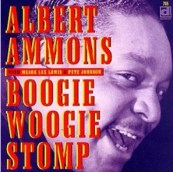
ammons I didn’t want to play exactly like Hoagy Carmichael. I wanted to play more like Scott Joplin (“Maple Leaf Rag”) and Albert Ammons (“Boogie Woogie Stomp”). But my piano teacher, bless her heart, kept giving me classical stuff. I liked it, but I didn’t want to play it. I pointed out to my parents that Hoagy Carmichael never walked into a club and played the Chopin Polonaise Op. 53 in A flat major. (That piece was always beyond my “skills,” as it turned out.)

Even though I was long past piano lessons and no longer living at home when “The Sting” came out in 1973 creating a temporary resurgence in ragtime, I mentioned in a letter to my parents that if they’d allowed me to perfect the “Maple Leaf Rag” when I was growing up, I’d be a popular man about town rather than an unknown writer.

Goodness knows, I tried to perfect ragtime. Trouble was, the family piano was in the living room just in case Hoagy Carmichael dropped by. When I practiced my classical music, my parents heard every note. But when they went outside, I’d morph the stuff into ragtime or boogie woogie. Invariably, a window was open and they’d comment when they came back inside that they’d never heard Bach with an eight-to-the-bar boogie left hand.

First edition cover of the Maple Leaf Rag - Wikipedia photo
First edition cover of the Maple Leaf Rag – Wikipedia photo

My piano playing, such as it was, deteriorated (if that could be possible) down to pretty much nothing but “Chopsticks.” Sure, I listened to Horowitz playing Chopin and occasionally imagined I could play like that. Horowitz probably practiced more than I did. So did Scott Joplin and Albert Ammons, kings of ragtime and boogie woogie.

The characters in my stories often listen to the music I wanted to play. In “Sweetbay Magnolia” (in Emily’s Stories), Emily’s father is a ragtime fan and listens to Scott Joplin in his truck. This gave me an excuse to listen to Joplin as I timed the songs on an album to see how many of them one would hear on a typical trip between Tallahassee and St. Marks, Florida.

Now, I’m working on another Florida-based story, this one set in the 1950s. There’s a juke joint in the story and the customers there want to dance. In those days–and in my story–nothing made people want to dance more than the raw energy of a piano player with–as Peter Silvester called it in the title of his book–a left hand like God. Not that I need an excuse, but now I have a good reason for listening to Pine Top Smith, Albert Ammons and today’s Jools Holland.

Writers often tell their friends to “be good” or they’ll end up in a story. Good advice, I suppose. But there are times when I’m more interested in the skills my friends have that I never could perfect. If you can play Chopin or Bach, I might put you in a story. But seriously, if you sit down at the piano of my childhood which sits seldom-used in my living room now and play “The Entertainer” or “Boogie Woogie Blues,” your music will catch my attention faster than your real or imagined wicked deeds.

Then, as we used to say, we’ll be cooking with gas.

Available on Kindle and as an audio book

Malcolm

“I’ve recommended this audiobook more than any other I’ve listened to.” from M. Stein’s review


How to create a whoopass wall of protection

Did you ever notice how tough guys in movies and brainy guys on science shows are always claiming that a darned good bomb can be made out of the contents of a family’s medicine cabinet?

The first time I heard this I was a kid in the days when kids were still allowed to play with fire, cap pistols, bows and arrows and cherry bombs. How exactly would I make a darned good bomb? Would I mix Preparation H and Vagisil? Or, possibly hydrogen peroxide and codeine. (In those days, the feds allowed people to buy codeine, paregoric and other miracle meds).

The thing is, nobody who claimed to know how to turn a medicine cabinet into a bomb ever explained how.

I have no interest in making a bomb, but I wonder what–as a writer–I should do if a character in one of my books was fighting bad guys, needed a bomb, and ran into the bathroom to throw one together. How should one realistically describe what he does?

Look, I’ve read plenty of thrillers written by people who know everything in the world about bombs, guns, aircraft, submarines, martial arts, police procedures, &c. They never say, “Bob grabbed a gun before he got on the helicopter.” For purposes of reality–and to prove to readers they know their subject matter–they state what kind of gun in was, what kind of helicopter it was, and spout out a bunch of stats like they’ve got the owner’s manuals with them.

What about magic?

Rowling has already confessed to using fake spells in the Harry Potter books. They’re kind of cute, actually. But they don’t do squat. I’m sure a lot of people went around shouting Accio Money and Avada Kedavra  before Jo told the world she didn’t give us the real stuff.

So now, I’ve got an ethical dilemma as I work on my conjure woman novella. I’m a fanatic about realism because I think it’s a wonderful foundation for the magic. If the stuff people already know is obviously real, then they’ll think the stuff they don’t know is also real. (That’s not logical, but it works in books.)

Suffice  it to say, that if Rowling used real spells or if some book called “Mega-Enforcer Dude” gave a step-by-step recipe for making a bomb out out Preparation H, folks would be getting hurt. But, the details have to sound plausible because: (a) you don’t want people who know how to make spells and bombs writing bad reviews on Amazon saying the recipes were a bunch of crap, and (b) you hate being dishonest with your readers.

There’s a wonderful conjuring spell called The Whoopass Wall of Protection (not its real name). As she fights the bad guys, my conjure woman needs to use this spell. But I can hardly say she dumped “a bunch of stuff” out of a sack. Nobody will believe she knows squat or, worse yet, that I (as the author) know squat. I can use footnotes to tell readers that the real Whoopass spell isn’t included, but footnotes turn people off because they start thinking they’re reading a doctoral dissertation and, trust me on this, nothing is more boring that that kind of writing.

Perhaps I should give a few hints to satisfy those craving reality as well as those who really know the spell. “Lucy dumped a sack filled with cornmeal, coffin nails, rue and pepper on her sidewalk.” Okay, that could work, but it doesn’t really plunge the reader into the moment, does it?

This is going to require some careful thought. If you’re a writer, perhaps you can offer some advice about just how much dangerous information should be included in a novel for the sake of accuracy.

If you’re a reader, just how much do you want to know? And, if the novella included the real spell, would you promise not to use in unwisely?

Related Posts

Malcolm

Malcolm R. Campbell, as you may already suspect, writes magical realism, fantasy and paranormal stories and novels.

My Writing Process – A Blog Tour Interview

When Rhett DeVane asked me if I wanted to be in a blog tour in which each author talks about his/her writing process, I laughed and thought, “What writing process?” So, I had to think about it for awhile. . .

What am I working on?

Lucky Mojo Site
Lucky Mojo Site

After writing contemporary fantasy set in the Rocky Mountains, I’ve been having fun going back to the Florida Panhandle for short story settings. I’ve become slightly more ambitious with the novella I’m writing set near the Apalachicola River. The story involves folk magic, nasty people, tragedy and the atmosphere of the piney woods world as it as in the 1950s. I usually work magic into my stories one way or another, but having a protagonist who is a conjure woman is something new for me. And, it’s been a hoot. So has the research!

One thing you see right away when checking into old books or contemporary hoodoo sites is that hoodoo is not the same as Voodoo. Hoodoo is folk magic; Voodoo is a religion. The other thing you’ll see is that while lots of people say they believe in magic, either “The Law of Attraction” on one hand or Harry Potter and Gandalf on the other.  Meanwhile, Hoodoo is written off as a cluster of ignorant superstitions. I don’t intend to treat it that way in the book. My hope is to do justice to another kind of magic while telling an exciting story.

How does my work differ from other of its genre?

MoonLightandGhostsI read a lot of fantasy, but that doesn’t make me a spokesman for the genre. That said, it appears to me that the fantasy most in fashion these days is (like Game of Thrones) set off-world or in our world after some catastrophe has wiped out society as we know it.

My writing focus is contemporary fantasy and paranormal. Contemporary fantasy is set in our world or in a world/universe/region close by. My work probably is probably closer to “reality as we know it” than most.

That is, I’m going to be using real settings and mentioning the differences, let’s say, between those who believe in magic and those who believe in science an technology. When I write paranormal stories, my work differs from others because there’s none of the Hollywood-style occult in it. I’m more likely to focus on ghosts and strange coincidences than vampires, demons, etc.

Why do I write what I do?

Celebrating the magic and wonder of the natural world

I like the interplay of people and the places where they live. Places tend to have an ambiance about them that’s not only tangled up with what’s going on there now, but is also influenced by old legends, tall tales, and the people lived there in the past. Since I believe there is much more to the world than what our scientists and our five senses are showing us, I like writing stories that the readers will see as possible. That is, I try to make the magic as close known techniques (real or imagined) as I can.

How does your writing process work?

When I start a book or a short story, I don’t know where it will end up. I become intrigued with a theme or a place or a prospective character and start fiddling with the idea. Quite often, the story will start to take shape as I look at source information about the place where it will be set, the kind of work the characters do, and the magic they’re familiar with.

The story takes shape while I write it. That means I’m just as in the dark about the outcome of the story as readers will be when they pick up the finished book.

The Tour

RhettA big thank you to Rhett DeVane (Suicide Supper Club), Southern fiction author from Tallahassee, Florida. You can find Rhett at her website: www.rhettdevane.com or on her blogs: www.writers4higher.blogspot.com and www.southernhat-tidude.blogspot.com

Rhett lives in the town where I grew up, so she gets leaned on from time to time to update me on, say, whether a restaurant is still open or if nearby attractions still have one tour or another when I write stories about the Florida Panhandle. (I haven’t been there since the 1980s and there has been a fair amount of change since then.

ClaytonphotoYou may also like hearing about author Melinda Clayton’s writing process. I know I would because she writes wonderful stories including Blessed Are The Wholly Broken. I’m hoping I’ll get some tips that will speed up my “writing process.” She’s blogging over at GoodReads.

Melinda also lives in Florida, but since I haven’t yet come up with a story to set in her part of the state, she’s escaped the kinds of questions I send to Rhett.

Malcolm

$1.99 on Kindle
$1.99 on Kindle

Malcolm R. Campbell’s Florida stories include “The Land Between The Rivers,” “Emily’s Stories,” “Moonlight and Ghosts” and “Cora’s Crossing.”

Let’s connect on Google+


Write sloppy, then cut

penBeginning writers often lack the confidence to write sloppy, anything-goes first drafts. Veterans will tell you these writers have an internal editor that judges every word before it reaches the page or screen.

Sometimes the internal editor looks like Mom, Dad, Reverend Johnson or Professor Smith in the English department. These people have opinions about writing, right and wrong and what you ought to do with your life. If you can hear them saying “tisk tisk” while you write your first draft, that draft is probably going to be anal.

Neither your imagination nor your flow of words needs to be restricted when you write the first draft.

It also takes confidence to cut words. Veteran writers refer to a writer’s favorite scenes and sentences as “your darlings.” These are wonderful in the wrong way. They’re funny, tragic or the best poetry you’ve ever seen. The problem? They don’t fit the story.

Many students in a creative writing or basic news reporting classes are shocked when their short stories and practice news reports come back marked with a red pen. Instructors cut unnecessary words we use in conversation but shouldn’t be using when we write.

Adverbs have a bad reputation. Adjectives are next on the list of suspects. So are weak verbs. Look at each one while you’re cutting words and see if it adds anything to the sentence.

On Facebook these days, it’s rather a fad to say “I’m totally addicted to this TV show.” The word “totally” adds nothing because addicted is addicted. Many TV news reporters didn’t get the message when they took basic reporting in college and heard the instructor say “stop using the words ‘totally destroyed.'” A destroyed condition is already total.

Saying “so totally addicted” might sound “in” on Facebook and at the local mall, but the words slow down your writing. Worse yet, they date your writing; by that I mean, once they do out of style, your story will go out of style, too.

Consider this exercise: Look for short story and creative nonfiction writing competitions with strict maximum word counts. Think of a plot or subject and then write the first draft with the idea that you’re going to have twice as many words as you need. Now cut the first draft so it fits the competition’s requirements. You’ll be amazed at how much stronger the work becomes when the unnecessary words are polished away.

Sculptors have said that creating a statue out of a block of marble is a process of taking away the unwanted stone. You’re doing this when you delete the words you don’t need.  The resulting writing sings just as the sculptor’s best work looks like stone that lives and breathes.

Your first-draft sloppiness gets all the ingredients in place. Editing smooths away everything that will get in the way of the final story.

Malcolm

LandBetweenCoverMalcolm R. Campbell is the author of contemporary fantasies, folktales and paranormal short stories. His latest three-story set, “The Land Between the Rivers,” was released on Kindle September 29.

Your authentic author’s voice is who you are

“When you engage in a work that taps your talent and fuels your passion — that rises out of a great need in the world that you feel drawn by conscience to meet — therein lies your voice, your calling, your soul’s code.” – Stephen Covey, quoted in Terri Windling’s blog

“Each life is formed by its unique image, an image that is the essence of that life and calls it to a destiny. As the force of fate, this image acts as a personal daimon, an accompanying guide who remembers your calling.” – James Hillman, in “The Soul’s Code: In Search of Character and Calling”

“In short, every secret of a writer’s soul, every experience of his life, every quality of his mind is written large in his works.” – Virginia Woolf, in “Orlando”

booksartIn school, we are taught to emulate the great masters and/or to consider many overlapping recipes for how short stories and novels should be written so that it takes most of us a fair amount of time to discover our “author’s voice,” the mix of style and syntax and word choice that makes our writing “us” and not somebody else.

Editors look for a distinctive author’s voice. Without it, the writing is flat or an imitation of authors the writer likes. Sometimes, an editor can tell who a writer’s favorite author is by reading a page or two out of a submitted manuscript. If an author admires Stephen King or J. K. Rowling, the last thing s/he needs to do is try to write like either of them. At best, we end up with a parody. At worst, we have “false fiction,” that is to say, “Joe Doaks pretending to be Stephen King while writing a novel called ‘Carney Land.'”

The real Joe Doaks and what he might have been gets lost in the shuffle. Perhaps, had he allowed himself time to discover his own true voice and to develop his craft into the art that was possible in the beginning, he might have become a better writer than King. Or just as good as King, but different.

As James Hillman might suggest, Joe Doaks is ignoring his own calling, the themes that are really important to him, and spending his talents on other things.

In her post “Craft and Art,” author and college professor Theodora Goss says that in her creative writing classes, she focuses on the craft of writing. When a student with talent applies himself or herself to the writing craft, Goss says that she can then “point the way to art and say, if you wish, that’s where it is, in that general direction . . .” The same is true, I think, of an author’s voice.

Perhaps an author can hide who s/he is from the novels s/he writes, but it’s a lot of trouble. If we hide, we distort our author’s voice and the flow of intuition running through our consciousness as we write. If we’re not hiding, then it’s quite likely that our world view will lurk between the lines of our fiction even if the fiction is about characters that don’t resemble us in any way.

Most of us learned as children that there was a difference between “Dad telling a story,” “Mother telling a story” and “Grandpa telling a story” even when it was the same story. The difference was voice. Dad approached stories like a journalist, Mother like an ever-hopeful teacher, and Grandfather like a farmer who saw life in its most basic form. Their voices turned a potentially flat story into a “story being told by [Dad, Mother, Grandpa].”

We are, I think, drawn back to our favorite authors over and over again because we not only like their plots and characters, but the way they tell their stories. Of course, this factor in the public’s purchase of books makes it hard for young writers to get started. We saw an example of this in the recent revelation that Robert Galbraith (“The Cuckoo’s  Calling”) really wasn’t a debut author, but J. K. Rowling writing under a pseudonym. While, reviewers gave “Galbraith” high marks, few people bought the book before they found out Rowling was the author.

To some extent, those purchases are partially celebrity worship. But they also suggest that a fair number of readers like what they’re reading when the book is “Jo Rowling telling a story about ABC or XYZ.” Whether it’s our stories at bedtime, tall tales told around a campfire, or the novels we buy at the local bookstore, we discover that a hard-to-define mix of genre, craft, art and voice draws us to one storyteller more than another.

Starting out, it’s hard to resist the temptation NOT to write like King or Rowling because, after all, the bestseller list is so clearly telling us that is what readers want.  We might even sell our first book because we’ve written a book kind of like King’s “Joyland” or kind of like Rowling’s “The Cuckoo’s Calling.” But that kind of “success” really represents a great loss, the loss of our own author’s voice and our own storytelling passions.

When we follow our intuition and allow our stories to develop naturally as we write them, there’s a lot of ourselves in them even though they’re not about us. Our author’s voice develops and becomes stronger when we admit (to ourselves) “this novel is ‘me telling a story.'” I’m not talking about vanity here, but authenticity.

Or, more simply said, in being himself or herself while writing, an author is engaged in honest storytelling.

Malcolm

My world view, that each person has unlimited potential, is clearly visible in “The Sun Singer,” “Sarabande,” “The Seeker,” and “The Sailor.” I knew no other way to tell these stories.

Only $2.99 on Kindle.

Old Manuscript: a window in time

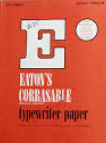
eatonI’ve been looking through a manuscript that I packed away in an Eaton’s Corrasable Bond typewriter paper box 30 years ago. It’s a window into the past.

Eaton’s Corrasable Bond was a popular ease-erase typewriter paper that was popular back in the 1950s through the 1970s because mistakes could be erased easily without smudging. The fact that this old manuscript was created on a typewriter on a kind of paper that’s no longer made reminds me just how old the story on these pages is.

It also reminds me how frustrating it was to create on a typewriter. Unless one was a flawless typist, it was nearly impossible to create a perfect manuscript for submission to a publisher in the days when (a) everything was submitted by mail, and (b) Xerox copies of manuscripts were frowned upon.

eaton2As great as this paper was, it couldn’t be used for the final version. Why? Ease-erase also meant easy-smudge. It didn’t take long for the words to smear and suggest to the publisher that a lot of people had already looked at it. For the submittable version, we shifted over to Berkshire bond. It was hard to erase, but it didn’t smudge.

While we did have correction fluid and correction tape, it had to be used sparingly because it made the manuscript look less than pristine.

Who I Used to Be

My father was fond of the phrase, “Who I am to be, I am now becoming.” I didn’t like the phrase, because the only time I heard it was after being lazy or doing something overly wrong. Yet, it’s got some truth to it because I see hints of my current writing style in the old manuscript.

Things that were funny then, seem lame or pathetic now. But some of the words still sing. I look at this old manuscript and remember the high hopes I had for it at the time. I know when  “the time” was because my return address is typed in the upper left-hand corner of the first page of the MS. That address is five houses old.

From today’s perspective, I’m glad nobody bought the story five houses ago. Chances are, it would be long forgotten by now what with the short shelf life of books that aren’t in the bestseller category. In many ways, finding this old MS is a gift: it’s a chance to see the writer I was and a chance to see if the story still has enough punch to it that would make it worth revising.

It’s too soon to tell. Stepping into the past is a journey of it’s own, something a lot of people do with old photo albums and journals. The old MS is a window on my reality of those years because, like many authors, I insert bits and pieces of “real life” into my stories in a camouflaged fashion.

If you’re a writer–or a non-writer who keeps a personal journal or diary–how do you feel when you find old words packed away in a dusty box in the garage or the attic? Is it bittersweet, pure nostalgia, or”I can’t believe I wrote this”?

Malcolm

Malcolm R. Campbell is the author of satire, paranormal short stories and contemporary fantasy novels including the recently released novel of fate and magic called “The Seeker.”

Only $2.99 on Kindle.

Writers, what brings you feelings of awe?

“The heart of it all is mystery, and science is at best only the peripheral trappings to that mystery–a ragged barbed-wire fence through which mystery travels, back and forth, unencumbered by anything so frail as man’s knowledge.” – ― Rick Bass, The Sky, the Stars, the Wilderness

Montana thunderstorm - photo by chrisdat on Flickr
Montana thunderstorm – photo by chrisdat on Flickr

We often use the phrase awe-inspiring to describe sunsets, powerful storms, scenic mountain vistas, our favorite music, heroes and heroines and all manner of other things that are larger and more wondrous and more powerful than ourselves.

Before we can tell memorable stories, we need to discover what in our lives is awe-inspiring and then hold that close in our hearts and celebrate it and allow it to flavor our writing. When we do this, we link up to the readers’ on-going search for the kinds of plots and themes and characters that add magic and wonder to their lives.

Larger than life characters are part of the mix. So, too, exotic locations, the dangers of wind and sea and storms, tranquility and peace so dear one can almost touch their source, memorable choices that place characters at risk, and love in many forms.

If you, as a writer, feel awe as you think about the subject matter, location, plots, themes and characters of a prospective story, you have a better chance of connecting with readers than you would if everything about the project seemed rather flat and monotonal.

Your story need not be something over the top like Lord of the Rings, The Da Vinci Code, Raiders of the Lost Ark or Game of Thrones to inspire awe as you write it and as readers discover it. Quiet moments can also inspire awe; so can low-key plots. The awe comes from you and on how you react to the world.

If mountains inspire you, then you will write of mountains. If children inspire you, they will find their way into your stories. If something attracts and holds your attention and “asks you” to contemplate its beauty, mystery and power, then you will end up the best kind of nourishment for writers.

Malcolm

I find awe and wonder in mountains. I cannot help but write about them. You will find mountains in The Sun Singer, Sarabande and The Seeker and, I hope, a dash of awe. They also contain magic, but you expect that because they are contemporary fantasies!

A Glacier Park Novel