Changing Writing Hats When the Need Arises

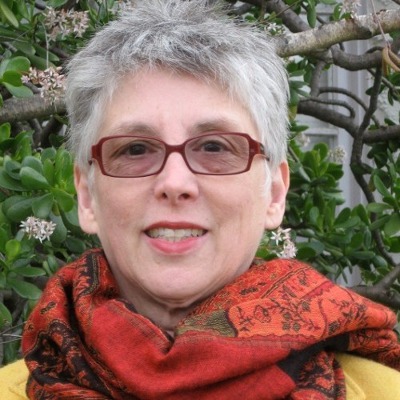
Today’s guest post is contributed by author Phyllis Zimbler Miller

I met Mitch Miller in January of 1967 when I a freshman and he a junior were both writing for the editorial staff of MSU’s college newspaper, the State News.

During Mitch’s time at MSU he wrote, among other things, articles about the Vietnam War, especially as he was a member of R.O.T.C.  I wrote feature articles, such as on the controversy of a college health clinic giving out birth control pills.

Fast forward ahead:  We married in September 1969, and in May 1970 Mitch went on active duty at Ft. Knox, Kentucky,  for Armor Officers Basic.  I went with him although the Army had not officially invited me.  (For a fictionalized account of my experiences, see my novel Mrs. Lieutenant, which was a 2008 Amazon Breakthrough Novel Award semifinalist.)

When we returned to the States in May of 1972, I eventually became a reporter and editor for Philadelphia’s weekly Jewish newspaper, the Exponent.  Mitch went to law school on the GI Bill and then I went to Wharton to get an M.B.A.

In the summer of 1980 we moved to Los Angeles, where we got “bitten” by an interest in writing for the entertainment industry.  We both took several screenwriting courses at UCLA Extension.  And we began writing and  rewriting and writing and rewriting screenplays that did not sell.

Both of us had to learn to go from a newspaper reporting style to a screenplay format where characters’ inner thoughts could not be portrayed.  The only way a screenplay character could convey his/her thoughts was by telling it to someone, talking to himself/herself, or by certain representative body actions.  (Remember when a movie actor would light a cigarette to show nervousness?)

Then I got interested in writing mystery novels – and I again had to learn a new writing style.  I had to write POV (point of view) characters whose thoughts I could convey while being careful not to switch to a different POV in any one section of a novel.

It took me 20 years of writing and rewriting the novel Mrs. Lieutenant, plus hiring an expert to figure out the one thing missing from the story, before I knew the book was ready to go.  And, of course, the book was then rejected by agents and publishers.

I decided to self-publish at the same time I submitted the manuscript to the Amazon Breakthrough Novel Award competition. Being named a semifinalist helped convince me that there was a market for this type of book.

And as ebooks exploded from a slow start by Kindle in late 2007, I got an idea.  Why not take Mitch’s and my screenplay “Lt. Commander Mollie Sanders,” which had been a 2005 Nicholls Fellowship quarterfinalist, and combine the script with a prequel script we had written titled “A Needle in a Haystack” in order to create an ebook?

Now I had to change writing styles again, and some people feel there is not enough character development in the book Lt. Commander Mollie Sanders.  (This is why we call the story a technothriller rather than a novel.) This ebook is meant to be an action/adventure story with a female
protagonist rather than the usual male protagonist.

On the other hand, some of the criticism of the character Mollie Sanders has been revealing of other people’s own issues. In fact, it has been so revealing that I felt compelled to write the post “A Fictional Character Is Fiction.”

In the end, though, I am grateful for having the opportunities to learn different writing styles and to then have the option to determine which ones work best  for me and for the stories I’m telling.

And,  oh, yes, who would have thought my journalism undergraduate degree would be so helpful now in writing short blog posts?

Phyllis Zimbler Miller (@ZimblerMiller on Twitter) is the co-founder of the marketing consulting company Miller Mosaic, LLC.
You can learn about her fiction and nonfiction books at http://budurl.com/PZMbooks
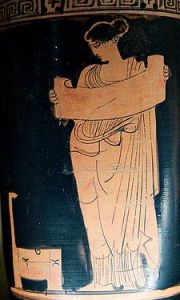
Dark territory: when the novel is done, the muse stops talking

In Garden of Heaven: an Odyssey, my protagonist David Ward is convinced that some of the people we meet on rainy city sidewalks and between the dry-as-dust shelves in ancient libraries began their lives as fictional characters. Whether they first strayed through a writer’s thoughts as a random notion, stalked him along the boundaries of his waking world in twilight dreams, or arrived at the very moment the pen first kissed the paper with their name, such individuals are called into life because an empty space must be filled.

David claims he wrote a novel about a woman who meets his protagonist at an old transfer house where the city’s streetcar lines come together, allowing people to transfer from one city car to another or from a south side local to a north side interurban. It’s impossible to know whether Ward dreamt up a character whose depth and outlook were the very same as the depth and outlook of the soul mate he was seeking or whether his muse was moonlighting as a matchmaker.

At a time when David was lost, the fictional character appeared in his life as a living, breathing woman, and while she was in the process of saving his life, he asked how she happened to meet him by happenstance on a warm, Indian summer afternoon. She said he called her when he wrote what he wrote about the transfer house. Clearly, he needed her too much for her to live out her existence on a printed page. She is, in David’s mind, a very real woman who is filling a very real empty space.

He’s fair certain the gods tampered with the workings of the temporal world on the day when she had her first independent thought. He’s convinced of her reality, and I believe him.

As an author of fantasy novels, I can’t claim what my characters claim. I will not try to convince you that David Ward stepped out of Garden of Heaven: an Odyssey, and became real, much less that a character in one of my character’s stories became real. Speculation along such lines leads to lunacy or into the “many worlds interpretation” of quantum mechanics that suggests that things that can happen, do happen.

Sarabande has entered dark territory

My protagonist in Sarabande was, for the many months I was actively at work on the novel, a very strong presence in my thoughts. She had a story to tell. Like a living and breathing person, it took her awhile to trust me enough to share the most personal events and feelings that had, for so many years, lurked powerfully in her thoughts. Figuratively speaking, I followed her on her journey from Montana to Illinois and back as a silent scribe. I could not intervene because my powers as an author do not allow me to tamper with the workings of my stories.

Now, the novel has been written and published and I feel rather lost because, fictional though she is, Sarabande’s voice—as interpreted by my muse—has been a voice constantly speaking. She needed me to hear her and disseminate her story to those who love fantasy worlds that hover close enough to our world that they rattle the windows as well as our thoughts while we’re reading a story.

When Sarabande was published, Sarabande stopped talking. There was nothing else for her to say. My muse became quiet as well. At the end of the novel, Sarabande understood many things. I understood them, too. Then she stepped into a well-lighted mountain cabin with two friends and closed the door. They have much to discuss, but I am no longer hearing Sarabande’s voice. I have no idea what is being said and done on the other side of that door. In the railroad business, “dark territory” refers to sections of the line where there’s no communication between a train and the outside world. That’s an apt description for Sarabande’s current whereabouts.

Many authors feel a bit lost when the finish writing a short story or a novel. The intense focus on the story for many months or many years is rather hard to replace with the chores of a normal day. The missing story-in-progress leaves an empty space. I can understand why a reader or a writer might speculate about his characters finding the wherewithal to transition from the world of fantasy into the world of reality as we currently understand it.

What’s Next?

Yet, Sarabande ended at a natural place. Tempting as it may be to write past that ending, I think my words would not ring true.
A friend of mine asked, “What next?” I really don’t know. Perhaps I’ll write about stone masons in 16th century France or mountain climbers on the summit of Mt. Everest. Perhaps Sarabande will ask my muse to ask me to write another story about her life in the universe next door. She’s independent of me now and, in that regard, just as real in my memory as the people I’ve met on rainy city sidewalks and between the dry-as-dust shelves in ancient libraries. I can no longer tell you what she’s thinking.

I don’t know what’s next. No doubt, there are a lot of probable fictional characters out there with stories to tell. Hopefully, there are dreamers amongst them who need a scribe who loves mixing fantasy and reality in the same glass. When one of them is ready to talk, my muse knows my phone number and we can talk about what’s supposed to follow the words “once upon a time.”

Coming September 6

Author Smoky Trudeau Zeidel (On the Choptank Shores – A Love Story) will be here with a guest post offering a bit of advice for unpublished authors called “Knock it Off.”

Malcolm

$4.99 on Kindle

Where do writers go when they write?

When I’m working on a novel, I’m not really here in the real world. That’s what my wife tells me.

I’m variously not present, not listening, forgetful, zoned out, in limbo, or in a cocoon.  When I emerge—hopefully with a completed manuscript for a book that will no doubt soar to the top of the New York Times Bestseller list—I hear what I’ve missed:

  • The neighborhood was taken over by rogue ground squirrels.
  • Iran and Iraq both filled out the paperwork to become U.S. states.
  • Jennifer Lopez appeared at the front door in her new snakeskin blouse and miniskirt and asked if Malcolm could go library and museum hopping with her.
  • All the known planets lined up, creating some interesting birth charts and a few more predictions about the end of the world and/or the end of good taste.

My wife is always the first to know when I type the words THE END on a major draft of a manuscript. I’m like a man who’s just come home from the war, amnesia or prison. And trust me, I have a lot of catching up to do.

Meanwhile, as I typed the words THE END on the manuscript for my newest Glacier National Park novel, Sarabande, today I felt like a child on Christmas morning. Those are very exciting words for an author even though they don’t mean the book, much less the work, is done.

They are a new beginning. The manuscript is fine-tuned. An editor takes a serious look at it, weeding out all the misspelled words, punctuation glitches and any inconsistencies the author hasn’t discovered yet. Cover artwork and release dates are discussed.  And, as I wondered when The Sun Singer and Garden of Heaven were in their about-to-emerge-from-the-cocoon status, I thought how will readers react?

After an author lives inside his story for a while, missing J. Lo’s visit to the front door and the ground squirrels romping through the yard, he hopes readers will also enjoy losing themselves in the story as soon as it appears as an e-book and a paperback.

I don’t put a warning label on it, though. You’re on your own recognizance. If you zone out and miss exciting international events or important wedding anniveraries and birthdays, don’t call me. I’ll be zoned out in another universe.

Malcolm

Malcolm R. Campbell is the author of the recently released Bears; Where they Fought: Life in Glacier Park’s Swiftcurrent Valley, a glimpse at the dramatic history of the most beautiful place on Earth. A Natural Wonderland… Amazing Animals… Early Pioneers…Native Peoples… A Great Flood… Kinnickinnick… Adventures… The Great Northern Railway.

“Give a month at least to this precious reserve.  The time will not be taken from the sum of your life. Instead of shortening, it will indefinitely lengthen it and will make you truly immortal. — John Muir, “Our National Parks,” 1901

On Writing as Entertainment

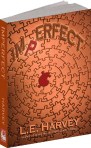
Today’s guest post is by L. E. Harvey, author of “Loving Her,” “Unbreakable Hostage” and “Imperfect.” Lauren posts articles about writing and related joys on her blog “The writings & ramblings of a Philadelphian.”

On Writing as Entertainment

I recently caught a co-worker reading a well-known author’s book. Like any good writer, I asked her if she was an avid reader. She told me she was. My excitement level sky-rocketed. It was when I asked her what her favorite genre was, though, that I was surprised by her answer: smutty romances. The smuttier the better, in fact.

Now, she did have a point in the fact that we work at an intense, high-paced practice and that as medical professionals we deal with death, heart-break and the like. She wants to escape from reality and not think. She wants entertainment.

That caused me to think. As a writer, I’ll admit that I have never considered my books as entertainment. There was always a social or political purpose to them. No escapism here. So now, who is better: the famous author whose work is strictly mind-less entertainment or me, the no-name who writes with the purpose of making people think?

Can you really compare apples to oranges?

Not in my world.

Every writer, ever genre has its place. There is nothing wrong with any genre, nor is one genre better than another. Though not comparable, they are all equal.

I will admit that my bubble had been burst when my co-worker informed me of her lust for entertainment. This person in particular is someone who I would love to have read Imperfect. She still might. I am an optimist, after all.

So what does this mean to me? Do I abandon my genre and personal writing style to simply entertain?

No.

Do I write books and stories that are simply cerebral?

No.

Balancing Purpose and Entertainment

A good writer finds a balance between purpose and entertainment. I may not be there, but it is a good goal; something for which I will continue to strive.

At the same time, I cannot and will not dismiss my works thus far.

Imperfect is very emotional and thought-provoking. It is entertaining too. You can’t tell me that driving a muscle car on a perfect summer day, cranking out the classic rock music isn’t entertaining.

By all accounts, I’m a realist: my writing background is in historical and scientific non-fiction (not to mention the fact that I work in a scientific/medical field). Boring, I know. Black and white. Factual. Not entertaining. I am, however, coming around. Imperfect is my first full-length novel I ever attempted to write. The facts and reality may be in there, but there are definitely elements of entertainment as well.

My bottom line: the truth is, ALL stories are entertaining. My book is just as much a form of entertainment as that famous author’s book. It may not be smut, but it is definitely a story you can get swept into.

Celebrating Earth Day 2011

Lauren’s “A Summer of Butterflies” appears in Celebrating Earth Day 2011 from Vanilla Heart Publishing. Click on the book cover to download a PDF copy of this FREE GIFT from the Giveaway Anthology page at PayLoadz.

The book includes the work of Anne K. Albert, Charmaine Gordon, Chelle Cordero, L.E. Harvey, Malcolm R. Campbell, Marilyn Celeste Morris, Melinda Clayton, Robert Hays, S.R. Claridge, Smoky Trudeau Zeidel, Victoria Howard and Vila SpiderHawk.

The spookiness of written truth

Some people have a built in BS detector. They can see the flaws and scams in the world’s best publicity.

Writers have a spookiness truth detector.

In her excellent book for writers, The Sister from Below: When the Muse Gets Her Way, author Naomi Ruth Lowinsky begins with one of my favorite Robert Graves quotes:

“The test of a poet’s vision,” writes Graves, “is the accuracy of his portrayal of the White Goddess. The reason why hairs stand on end, the eyes water, when one writes or reads a true poem is that a true poem is necessarily an invocation to the White Goddess.”

The experience Graves describes is similar to that spooked feeling one gets while walking down a lonely road at night and pondering what might be watching him from the dark forest, or while walking through an old house at night and thinking of yarns about it being haunted or that people were killed there or that something lurks within that isn’t human.

When a writer reads or writes the truth, the bells and whistles of his spookiness truth detector go off. Now, this detector won’t help him decide whether Mobil or Valvoline is better for his car or even whether he can get the meal his body needs on any given night at Olive Garden or Outback.

No, the spookiness truth detector is usually reserved for matters of the heat and soul, gods and goddesses, sun and moon, and for thoughts and ideas that are only too happy to go bump in the night.

When I read, I want to be spooked either by thrills and chills and excitement or by the truth of important things. When I write, I know my revisions and edits are done when my eyes water and the hairs on my arms stand on end.

If you’re a writer who is in tune with his muse—or, say, with the universe—then you may feel spooked when you read Lowinsky’s book. Truth be told, my BS detector went off while reading certain sections of Robert Graves The White Goddess. But it didn’t go off when I read The Sister from Below: When the Muse Gets Her Way.

But, I’m not here to convince you to buy the book. I’ve been feeling spooked while researching and writing my novel Sarbande and while reading through a lucky haul of good novels lately.

I’m not frightened, mind you. I just wanted to spread out the chills a bit.

You may also like

I’ve started a new web log called Sarabande’s Journey to share some of the heroine’s journey resources I’ve found while working on my novel. If you are reading about, writing about, or on such a journey, I invite you to stop by and see if anything there spooks you.

Malcolm

Fiction: the little true-life details

When I write fiction set in real places, I like including the real names of stores, streets and attractions, both past and present.

These little true-life facts help describe the places even though readers unfamiliar with the areas usually won’t know whether those details are real or made up–especially if the details don’t refer to widely known local attractions and buildings.

For example, in my adventure novel The Sun Singer, I mention Glacier National Park’s Many Glacier Hotel.

Cypress at Tate's Hell
In Garden of Heaven, I mention Florida panhandle locations such as Alligator Point and Tate’s Hell Swamp. The names alone conjure up impressions in the readers’ minds even before my characters get there and experience the beach and swamp locations that aptly characterize the North Florida environment.

In some cases, my details come out of the past, adding to the “historical record” so to speak while functioning in the novel as places to shop and things to see. Set in the 1960s to 1980s, Garden of Heaven mentions the particulars of the family’s 1950 Nash Ambassador as well as the fact that it was purchased at Bopp Motors in Decatur, Illinois.

In this case, it was easy to write about my protagonist David Ward’s family traveling in a Nash since that’s what my family had when I was six years old. As for Bopp motors, I could have called it Smith Motors or Illinois Motors, but our Nash came from Bopp, so I used the real name of the dealership.

The old Nash was part of my experience as a child just as, in Garden of Heaven, it’s part of David Ward’s experience as a child. To some extent, the little true-life details are simply part of “writing that you know.” But they also help nail down both the action sequences and the place settings in the story.

Example from the book:

He was riding with his parents and grandparents in the proud 1950, blue Nash Ambassador equipped with latest of everything from Airflyte Construction to Duo-Servo brakes to Hydra-Matic drive, from Great Falls, where they visited random aunts and uncles to Pincher Creek, Alberta, where they visited assorted cousins. The car was hot, in spite of the Weather Eye ventilating system.

Many Glacier Hotel in Glacier Park’s Swiftcurrent Valley adds ambiance to The Sun Singer whether I made up the name or not. So, too, Tate’s Hell Swamp near the mouth of the Apalachicola River at Carrabelle, Florida. I could have called these locations Glacier Resort Hotel and Murky Waters Swamp, but I like the authenticity of the real names and places.

In some ways, those obscure true-life details give readers who remember the old days and/or who have traveled through an area in my novels, a little something extra.

Malcolm

Related Post: Impeach Earl Warren – About the old signs that used to appear throughout the Florida and Georgia countryside at the time Garden of Heaven is set.

The Sun Singer is gloriously convoluted, with threads that turn on themselves and lyrical prose on which you can float down the mysterious, sun-shaded channels of this charmingly liquid story. –Diana Gabaldon, Echo in the Bone (Outlander)

Take a few notes: you might write about this place some day

In fiction writing, we have the freedom to create settings of our choice. But readers will pick up on phony settings pretty quickly. The more realistic and more interesting your setting, the more likely the characters who inhabit it will be believable and interesting to the reader. — Robert Hays (“The Life and Death of Lizzie Morris”)

Liberty Port in the Philippines
When I was in high school, I tried multiple times to keep a log or journal. But that required more extended discipline than I had. While I began each attempt with the best of intentions, the entries quickly morphed from wordy and detailed into sketchy and infrequent.

A little discipline then could have saved me a lot of trouble when I began writing my novel “Garden of Heaven.” It uses settings I should know well: Glacier National Park, Montana; Tate’s Hell Forest and Tallahassee, Florida; Olongapo, Philippines; the aircraft carrier USS Ranger; Decatur, Illinois; Gronigen, Netherlands.

Each of these places holds memories for me that fit the plot and themes of the novel. Yet, when it comes to nitty-gritty details, memory can be tricky. When exactly did the USS Ranger leave Alameda for Vietnam in 1968 and what stores existed on Tallahassee’s College Avenue a few years before that? What year did the Decatur transfer house get moved and how far was the Galaxy Bar from the main gate?

Fortunately, books, magazines and online research helped fill in the gaps. So did e-mail correspondence with people at Glacier, Tate’s Hell, and Decatur. Frankly, a good journal would have taken me a lot less time. Not that I would have recorded everything I might have needed in a novel written decades later. But recording my observations would have given me a good start.

USS Ranger (CVA-61)
Since it’s quite likely that a writer will end up using places he has a passion for or where defining moments occurred–whether it’s the town where he grew up, the theater where his military service unfolded or the destination for his favorite vacation–I’m thinking it just makes good sense to become a bit more of a packrat.

In addition to photographs, a few notes, brochures, newspaper clippings, ticket stubs, itineraries, and other materials will not only reinforce the writer’s observations when he’s there; they’ll support his memory years later when he puts his protagonist into the deep swamp he saw when he was a kid or the sailor’s liberty town he saw when he was in the Navy.

Such details don’t need to turn into the pages and pages of description readers of today’s novels often skip over. They do bring a place to life. They’re the difference between a setting with depth and one that appears plastic and ill-formed.

And if you have the discipline, keep a diary, log, journal or notebook: your readers will thank you and your writing will be all the stronger for it whether you’re writing about stealing cookies on the mess-decks of an aircraft carrier or the sound a panther makes in a notorious Florida Swamp.

The Refrigerator Door Publishing Company, Ltd.

In a recent writer’s blog post “Helping Your Child Find the ‘Inner Writer,'” author Misha Crews (Homesong) suggests ways parents can encourage children to discover and develop their writing talents. It’s wonderful reading if you’re a parent with a prospective young writer in the house.

One of her points is never criticize. “There are few things on earth more fragile than the creative spirit,” she says. “You’d be amazed at how easy it is to crush a burgeoning artistic impulse. A well-intentioned but careless comment from you could easily put your children off writing for quite some time.”

As I read that wonderful advice, I remembered how nurturing my parents were when they read the poems and other writing experiments my two brothers and I posted on the refrigerator door. Like the pristine refrigerator doors all over town, our’s soon became covered with recipes, notes from friends, doctor’s appointment cards and other memorabilia. At some point, my father began posting poems there. Many were short and humorous like:

Some poems diamonds are
That nothing can surpass,
But the jingles that I write
Are only broken glass.

Others were seasonal, focused on birthdays and anniversaries and current events.

Soon, my brothers and I were doing this, too. We often wrote poems about nature, including the large national forest south of town and the beaches of the north Florida Gulf coast. Even though our efforts didn’t always obey the laws of poetry–to the extent we understood them–they were praised. To our embarrassment, our parents started pointing out the publishing nature of the refrigerator door to friends, family coming through town, and even the TV repairman and others making service calls.

Initially, I think some readers were drawn to the output of The Refrigerator Door Publishing Company, Ltd. by the humorous quatrains of my father.

Like a postage stamp
On the wrong letter,
He married badly,
Knowing no better.

(I’m sure the fact that my mother was a good cook and kept the refrigerator well stocked with quality eating materials probably played in to the door’s high ratings.)

When my brothers and I weren’t feeling especially creative, we transcribed well-known poems from famous poets and posted them on sheets of paper with titles like POEM OF THE WEEK or WEEKLY VERSE or SONNETS FROM OLD BOOKS IN THE HOUSE.

The door was a blank slate, a continuing opportunity, an exciting playground for word games, and–when it came down to it–our first publishing house. Everyone read it and talked about it, and some people even remembered what they read there, especially when my father’s latest humor appeared:

His wife may lack brains,
Her beauty may dim,
But like good glue she’ll
Stick always to him.

The kitchen was a very encouraging environment: it was almost like a writer’s club or round table. The poems on the that door were a constant dance of words for over 30 years. When Crews speaks about a child developing his or her inner writer, she says “There are few things in life more gratifying than helping a child to achieve satisfaction and gain a sense of accomplishment and of his or her own self-worth.”

She could have been talking about my parents and the smiles and kind words that greeted each new work disseminated to the readers of the Betton Hills subdivision–and from there, Tallahassee and the world. Without The Refrigerator Door Publishing Company, Ltd., I might have ended up as a grave digger, street sweeper or a pickpocket.

Poems in this post Copyright (c) by Laurence R. Campbell.

Danger and Magic in the Montana Mountains

Fu Dog Substitute

Allerton Fu Dog
Stone Fu Dogs, displayed in pairs, guarded the entrances of Chinese imperial palaces and temples for years, and now can be found at the entrances of homes and businesses. They serve the same function as gargoyles, figuratively–or perhaps, magically–guarding the structure and those inside from harmful people and evil vibes.

When I visited Robert Allerton Park, in Monticello, Illinois, as a child, I was not only impressed by the statue of the Sun Singer, but with the numerous Fu Dogs. I imagined that one day I would own an estate with a pair of these dogs at the entrance, the female on the left and the male on the right greeting all who might visit.

My estate and my Fu Dogs haven’t materialized. Perhaps it’s fate or the humor of the universe or–more likely–simply a lack of funds.

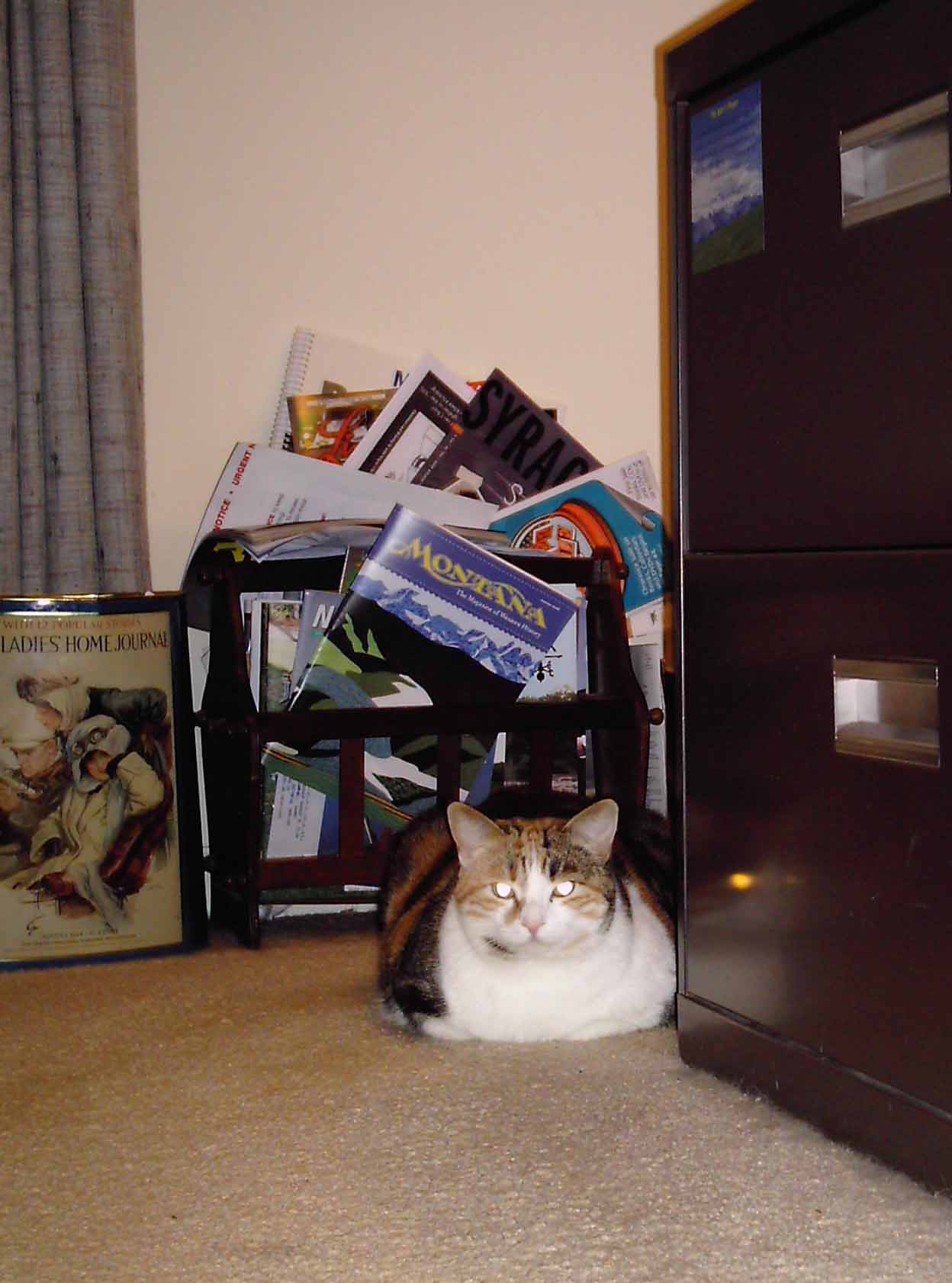
Even so, my den is is guarded by two substitute Fu Dogs. One is a two-inch high gargoyle modeled after those at Asheville’s Biltmore house. The other is Katy, a large–and potentially overweight–calico cat who persists in monitoring everything that happens in my office. She either sits on the back of my large desk chair or positions herself next to the file cabinet so she can see all the way down the hall toward the foyer of the house.

If another cat or my wife or anyone else ventures into my domain, Katy is right there, quick to show her displeasure by either her posture or the flattened-back position of her ears. Fortunately, she doesn’t move on to hissing, growling or biting.

We are all somewhat amused, but not having real Fu Dogs at my front door or even at the door to my den, Katy provides all the protection of need from the slings and arrows of evil spirits to the (probably) malicious intentions of other cats sneaking down the hallway.

I feel so fortunate.

Malcolm