At 88, Marge Piercy, author of 17 volumes of poetry and fifteen novels, just sent a new manuscript to her agent. Time spent on the book had to be juggled with work spent on her prolific vegetable garden and the vicissitudes of life for people in the eighth decade of life.
 When I think of Piercy’s work, I’m always drawn back to Gone to Soldiers, the long, multi-character novel released in 1987. Its impact on me is still large and hunting.
Erin Madison, writing in “Off the Shelf” 2016, said that Gone to Soldiers” is the most complete, complex, and stunning piece of World War II literature I’ve ever encountered.” I have the same viewpoint. The book has nine major characters, and Piercy supplies each with a distinctive voice while weaving their stories through a powerful story.
As we remember 9/11 today, the trials of earlier conflicts are specially poignant.
From the Publisher
The New York Times bestselling novel of humans in conflict with inhuman events, Gone to Soldiers is “a landmark piece of literary prose…the most thorough and most captivating, most engrossing novel ever written about World War II” (Los Angeles Times).
In this “sweeping epic” (The Philadelphia Inquirer) of World War II, Marge Piercy moves from the United States to Europe, from the North African campaign to New Zealand, from Japan to Palestine, brilliantly recreating the atmosphere of the wartime capitals: the sexual abandon, the luxury and deprivation, the terror and excitement.
Gone to Soldiers interweaves the stories of ten remarkable characters: The New York divorcee and writer of romances-turned-war correspondent… her ex-husband, involved in intelligence for the OSS… Daniel Balaban, whose mission is to crack the Japanese codes… Bernice Coates, who escapes life to fly fighters as a Woman’s Airforce Service Pilot… a painter who parachutes into Nazi-occupied France to fight with the Resistance… Zachary Barrington Taylor, for whom war is the most exciting game… Jacqueline Levy-Monot, who leads Jewish children over the Pyrenees to safety… her sister, Naomi, a troubled adolescent… their cousin, Ruthie Siegal, a touching young woman who tries to keep alive her love for her boyfriend, while working on an assembly line in Detroit… These characters wage memorable and passionate public and private battles, as war casts them into their ultimate dreams and nightmares, daring them to act out their brightest and darkest fantasies.
Written with unmatched authority about the cataclysmic events and passions of war, Gone to Soldiers “is a literary triumph for Marge Piercy and a landmark volume in the literature of war” (USA TODAY).
Here’s an apt blurb from the Boston Globe on Piercy’s website that sums up the author’s work well: “Marge Piercy is not just an author, she’s a cultural touchstone. Few writers in modern memory have sustained her passion, and skill, for creating stories of consequence.”
–Malcolm
 Malcolm R. Campbell is the author of the anti-war Vietnam novel, “At Sea.”
 The Anti-Defamation League exists “To stop the defamation of the Jewish people and to secure justice and fair treatment to all.” I don’t think that’s too much to ask. According to the ADL website, “Our values guide our internal culture and shape the approach we take to our programs and initiatives externally. Confronting antisemitism, our founders established ADL based on their Jewish values. We build on their legacy as we speak out on behalf of all marginalized communities across the country and around the globe.”
 The recent attacks against Israel some from a terrorist organization supported by rogue states. Why do so many Americans support this? Apparently, they have been brainwashed by old myths and old fears. I have no tolerance for that any more than I have any tolerance for those who said the 9/11 attacks were justified and proclaimed their support for Bin Laden. They are like those who support the KKK.
 “When your fight has purpose—to free you from something, to interfere on the behalf of an innocent—it has a hope of finality. When the fight is about unraveling—when it is about your name, the places to which your blood is anchored, the attachment of your name to some landmark or event—there is nothing but hate, and the long, slow progression of people who feed on it and are fed it, meticulously, by the ones who come before them. Then the fight is endless, and comes in waves and waves, but always retains its capacity to surprise those who hope against it.” – ― Téa Obreht, The Tiger’s Wife
 My introduction to the realities of war came from reading All Quiet on the Western Front when I was in high school. I found this novel to be so graphic, I could not comprehend how anyone who fought in a war, observed a war or read that book could possibly support any politician calling for war. I won’t read it again.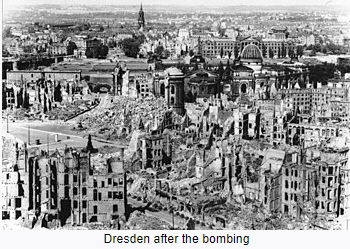

 . . .we said we were killing commies for Christ because in many ways we were. Before that we were killing heathens for Christ and now I suppose we’re killing Jihadists for Christ.
 According to
  Malcolm's Round Table