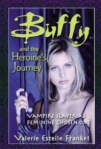
Briefly Noted: ‘Buffy and the Heroine’s Journey’ by Valerie Estelle Frankel

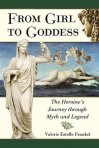
In February 20121, McFarland released a new book for authors and readers interested in the heroine’s journey in fiction and myth and for fans of the Buffy the Vampire Slayer movie (1992) and the subsequent television series (1997 – 2003).  A well-researched book, Buffy and the Heroine’s Journey is a natural extension of Valerie Frankel’s work in From Girl to Goddess: The Heroine’s Journey through Myth (McFarland, 2010).

On her website, Frankel writes that “Though scholars often place heroine tales on Campbell’s hero’s journey point by point, the girl has always had a notably different journey than the boy. She quests to rescue her loved ones, not destroy the tyrant as Harry Potter or Luke Skywalker does. The heroine’s friends augment her natural feminine insight with masculine rationality and order, while her lover is a shapeshifting monster of the magical world—a frog prince or beast-husband (or two-faced vampire!). The epic heroine wields a magic charm or prophetic mirror, not a sword. And she destroys murderers and their undead servants as the champion of life. As she struggles against the Patriarchy—the distant or unloving father—she grows into someone who creates her own destiny.”

A new era in film and fiction for three-dimensional female action characters?
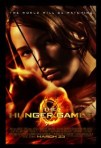
Frankel’s new book appears at a time when readers, authors and reviewers are discussing whether or not Lisbeth Salander (in Stieg Larsson’s Millennium series) and Katniss (in Suzanne Collins’ The Hunger Games series) represent a positive trend in the development of female protagonists that are more than male-gaze eye candy. That is, can authors and film makers step away from the patriarchal idea that women—whether they kick ass or not—are little more than sex objects?

Unfortunately, Frankel—along with author Maureen Murdock (The Heroine’s Journey)—appear to represent a minority view. Most film makers are still trotting out female characters in mini-skirts and bikinis fighting alongside male counterparts who are dressed in normal uniforms or SWAT team gear, while many authors and screenwriters are arguing that the heroine’s journey is no more than a female character following Joseph Campbell’s hero’s journey sequence.

As the author of a contemporary fantasy novel featuring the hero’s journey (The Sun Singer) and another that features the heroine’s journey (Sarabande), I find it refreshing to find another author/researcher who sees a difference between solar and lunar journeys. While I think my heroine’s journey story would make a great film, I don’t want Hollywood to turn my title character into a male-gaze Lara Croft-style protagonist transported to the mountains and plains of Montana in a tight and/or skimpy outfit.
Publisher’s Description: The worlds of Percy Jackson, Harry Potter, and other modern epics feature the Chosen One–an adolescent boy who defeats the Dark Lord and battles the sorrows of the world. Television’s Buffy the Vampire Slayer represents a different kind of epic–the heroine’s journey, not the hero’s. This provocative study explores how Buffy blends 1990s girl power and the path of the warrior woman with the oldest of mythic traditions. It chronicles her descent into death and subsequent return like the great goddesses of antiquity. As she sacrifices her life for the helpless, Buffy experiences the classic heroine’s quest, ascending to protector and queen in this timeless metaphor for growing into adulthood.

The paperback edition, for reasons that are not readily apparent, is priced considerably higher ($35.00) than other paperbacks of a similar length (226 pages ). However, at $9.99, the Kindle edition is more in line with today’s prices.

I bought the Kindle edition even though I didn’t see the Buffy the Vampire Slayer television series or feature film. I liked From Girl to Goddess: The Heroine’s Journey through Myth and am finding Buffy and the Heroine’s Journey to be another very readable and credible look at the heroine’s journey.

Malcolm

contemporary fantasy on Kindle at $4.99

Free e-Book: Celebrate Glacier National Park

During Glacier National Park’s 2010 centennial, I wrote quite a few posts about the history, personalities, facilities and environment of Montana’s shining mountains for this weblog. Now, Vanilla Heart Publishing has compiled a selection of those posts into a free PDF e-book that you can download from PayLoadz.

Highlights of the 49-page e-book

  • Fast Facts and Photographs
  • All Aboard for Glacier National Park
  • Glacier by the Grace of God and the Great Northern
  • Mountains and Rock
  • Remembering James Willard Schultz
  • Glacier’s Long-Ago Mining Town
  • Remembering George Bird Grinnell
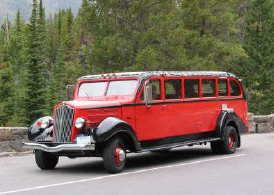
  • Those Historic Red Tour Buses
  • Kinnikinnick
  • Glacier’s First Ranger
  • Heavens Peak Fire Lookout
  • Mary Roberts Rinehart

The Scenery Behind My Stories

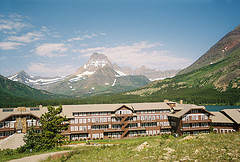
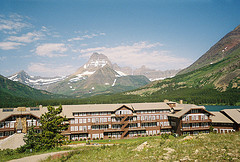
While working as a bellman at a Glacier Park hotel, I fell in love with the park. I’ve been back several times, but it’s too far from northeast Georgia for easy commuting. I returned in my imagination, though, while setting three novels in the park: The Sun Singer (contemporary fantasy, 2004), Garden of Heaven: an Odyssey (magical realism, 2010) and Sarabande (contemporary fantasy, 2011). If you’ve visited Many Glacier Hotel on the east side of the park, you’ll recognize many of the settings in all three books from Swiftcurrent Lake to Grinnell Glacier

I hope you will enjoy Celebrate Glacier National Park and the scenery behind my stories with a bit of the history of how Glacier came to be and who took part in developing it as both a park and a playground. Of course, you need to do more than read about “backbone of the world” in northwestern Montana.

How about a trip? You’ll need to stay for a couple of days so you have time to see both sides of the park, experience Going-to-the-Sun Road, hike to Sperry or Grinnell Glacier, take a launch trip on Lake McDonald, Swiftcurrent Lake or Lake Josephine, and ride in one of those ancient red buses with the top down so you can enjoy the mountain air.

–Malcolm

Kindle edition

Many Glacier Hotel 1963, where the fantasy began

In June, the management of Many Glacier Hotel in Glacier National Park figures out a way to pose the entire staff in front of a photographer for the summer picture. I no longer remember how many takes it took to make the photographer happy. And, though I thought I would always remember the names, home towns, and colleges of all the students in this picture, the details have long since become hazy.

We came from all around the country during the last week in May and spent the summer in the fantasy land of  the Swiftcurrent Valley working as cooks, waiters, desk clerks and bellmen until mid-September. A lot of us came back the following summer, and some the summer after that, as has been the custom with the concessionaire’s summer help since the days when the Great Northern Railway (now, BNSF) owned and managed the facility.

For a Florida boy who had always wanted to see the mountains, Glacier Park’s horn-shaped mountains, stair-step valleys, cool summer nights, and old Swiss-style hotels were a fantasy land in spite of the hard work. We carried luggage, cleared dining room tables, mopped the floors, made the beds, and told guests yarns about the mountains.

Our summer included bridge games, long hikes, fresh fish, romances, twisted ankles, mountain climbing, boating, broken hearts and a lot of pictures more personal than this old black and white that doesn’t quite fit on my scanner.

I studied writing in high school and college and the craft I learned there was well worth the time. While I spent less time in the park, my total of  seven months there over the span of several summers shaped my life and work more than any college course. Perhaps I was more impressionable than most or perhaps it is a writer’s natural focus on experience that has made this place loom larger than life.

For a writer, time neither steals away old joys nor heals old wounds, and I came away from the park with my fair share of both. For better or worse, they have sustained me and defined my outlook, while becoming the setting for my magical realism (Mountain Song) novel and two contemporary fantasies (The Sun Singer and Sarabande).

Virginia Woolf once wrote that all of a writer’s secrets loom large in his work. I think that might be true because this setting impacted me just as much as Hogwarts impacted Harry Potter and “The Land” impacted Thomas Covenant. So it is that this faraway place flows out onto the page in my storytelling as a true love of mountains, wildflowers, bears and all the events that did happen or might have happened in the shining mountains.

Malcolm

Malcolm R. Campbell is the author of paranormal short stories and contemporary fantasy adventure novels, including “The Sun Singer,” and “Sarabande,” both of which are set in Glacier National Park.


Blurring Reality and Fiction

Many Glacier Hotel

As the author of two contemporary fantasies and one magical realism novel, I enjoy blurring the line between the real settings in my novels and the stuff I make up.

Real settings provide a foundation for the magic of my imagination whether they’re well-known locations such as Glacier National Park or personal locations such as the house my parents owned in Eugene, Oregon when I was in kindergarten.

However, the trickster in me wants the reader to always be in doubt where reality begins and ends. When people tell ghost stories around a camp fire, the stories often begin with: “Many years ago in these very woods on a summer night just like this one, a monster watched a patrol of Boy Scouts cooking their evening meal.”

Suddenly, everyone around the camp fire starts hearing strange noises in woods—perhaps it’s just the wind, or perhaps it isn’t. When I set my contemporary fantasy novels Sarabande (2011) and The Sun Singer (2004) in Glacier Park, I not only had a lot of photographs and reference materials helping me make my descriptions accurate, but also the benefit of knowing that many of my readers will have been there or seen pictures or TV programs about the area. (I also had my memories of hiking a good many trails in the park.)

So, is there magic at Many Glacier Hotel in Swiftcurrent Valley? Maybe yes, maybe no.

Garden of Heaven

In Garden of Heaven: an Odyssey (2010), I used well known locations in Glacier National Park such as Chief Mountain and Many Glacier Hotel. For my own personal amusement, I also used the starter-house my parents owned on Alder Street in Eugene. While I barely remember the house, I do have pictures of it. My readers, of course, don’t know anything about an obscure street in Eugene, but they have heard of the town. That’s why I used the name in this stream-of-consciousness, vision quest sequence in the novel:

My mother at the house in Eugene

He woke up in the centre of the prairie where the land lay like a calm sea and the black mountains were small in the west. On his mind there was a predominant thought, ‘I am east of the sun and west of the moon,’ and though that was true, for it was sometime past noon, the thought was on his mind in a strange déjà vu way, pulling him he knew not where.  His memory danced like a frail aspen leaf in the north wind until he was carried southwest by south on more or less a straight course past the grey ice of Api-natósi, the north fork of the Flathead, the Kootenai National Forest, the Bitterroots, south of Couer d’Alene Lake, the boiling confluence of the Columbia and Snake, the Cascades, to Eugene and Alder Street, to the little buff-coloured house with the blue roof and white picket fence and a snowman to the left of the driveway, and then inside to a room bluer than the roof where an inviolate circle of light from the lone lamp encompassed mother and child, she in a chair reading aloud from an old tan book of stories, he sleepy-eyed beneath covers hearing about trolls, witches, winds that talked, a castle, and a prince, the stuff that dreams and futures are made of before seasons matter and life hardens the soul.

In a vision quest, the real and the unreal are often tangled up. I always want the reader to wonder which is which. In this passage, most readers will recognize the real places such as the Snake River and the Cascades even if they’ve never been to the area. I added “Alder Street” just for me because I’m a spinner of tall tales that are occasionally true.

Malcolm

Another Glacier Park Novel

Mt. Gould - NPS Photo

When my next novel Sarabande is released this fall by Vanilla Heart Publishing, it will become my third novel set partially in Glacier National Park. Sarabande’s Glacier Park locations include Mt. Gould, the Angel Wing, Lake Josephine, Swiftcurrent Lake, Many Glacier Hotel, and Chief Mountain.

When the novel begins, my protagonist Sarabande has just finished spending the night on top of the Angel Wing. I’m sure the park service prohibits this practice, but then she lives in a look-alike universe that is accessed via several portals in the park. Her world is the 1970s. Our world, at the time the novel is set, is the 1980s.

99 cents on Kindle

She has much to learn about our world, from electricity, to the existence of a major hotel sitting where there’s an empty space in her world, to cars and highways, and how to travel across country. The Many Glacier area, as I mention in my e-book Bears; Where they Fought: Life In Glacier Park’s Swiftcurrent Valley, is rich in history, trails and mountains to climb.

The popular valley is not only a draw for tourists, but is my favorite place in my favorite park. I can think of no better place for an adventure novel. We have the extremes of weather, of dangerous high places and the chances of meeting grizzly bears or moose or ospreys or wolverines.

I’m looking forward to the release of Sarabande for many reasons. It’s my long-promised sequel to The Sun Singer.  It’s told from a female protagonist’s point of view—a first for me. And it gives me an excuse to write again about Glacier National Park.  I have been posting about the heroine’s journey itself in my Sarabande’s Journey weblog.  It’s been fun to explore the differences between the solar journey in The Sun Singer, which follows Joseph Campbell’s well-known series of mythic steps in The Hero with a Thousand Faces, and the lunar journey which is quite different.

Lunar journeys are usually much darker and much for frightening because they focus on the lore of the night and the unconscious and, as we see in many myths, the domain of the underworld. Nevertheless, Sarabande is an adventure story with its primary scenes in a mountain world that park visitors know so well. The story also unfolds along U.S. Highway 2, the wetlands of northeast Montana’s prairie pothole region, and in Decatur, Illinois where Robert Adams, the Sun Singer lives.

As we get closer to the release date, I’ll begin posting excerpts of the book. It will appear first as an e-book on Amazon’s Kindle and in the other formats available at the smashwords.com site. A bit later, it will also be available as a paperback. If you’re a fan of Glacier National Park, I hope you will enjoy both the story and the location.

Malcolm

NaNoWriMo: Sarabande begins to speak

I am using National Novel Writing Month (NaNoWriMo) as an incentive to get out of the planning stage and into the writing stage for Sarabande, the sequel to my novel The Sun Singer.  Every year, NaNoWriMo participants attempt to write a 50,000-word rough draft of a new novel between November 1 and November 30.

To accomplish this goal, writers must average 1,667 words per day. At 1,938 words written so far, I am 1,396 words behind schedule. I have an excuse. The opening action scene of Sarabande must synchronize perfectly with a battle scene near the end of The Sun Singer. So, I’m having to refer to The Sun Singer a lot, and that’s slowing me down.

Prior to Sarabande’s first action scene, I began the novel with a paragraph that–like an overture for a musical composition–sets the stage for the book. Since the young woman, Sarabande, is going on a “lunar journey,” the introductory paragraph is exactly the opposite of the first words of The Sun Singer. In The Sun Singer, my protagonist was going on a “solar journey.”

Sarabande, Opening Paragraph

Fiery order of day and exuberant sun, young primroses drenched in the light of a long afternoon await like phantoms seeking night, any shade. She traverses a limestone ledge, hears marmots whistle, smells ferns, close, supported into the sky by rock, feels blue bird’s chatter—sweet and dear up from the green mountain valley. Whispers scrape her aura overhead. Scoop throw: like a Judo master, dulled light flings her away. She fights for Mother Earth, would sell her heart for her, and hears, is hearing, “There are numerous ways to live, little girl.” Warm blooded, that voice is the sister of chaos.

The Sun Singer, Opening Paragraph

Cold chaos of night and strangled moon, the great old trees drenched in sap’s perfume rise up like gaunt fingers out of the valley gloom seeking stars, any light. He shoves through tangled vines, hears small creatures running away in the dark, smells bones, close, crushed beneath the weight of eyes, feels owl’s call—sharp and true down off the black mountain’s ridge—hoooo hoo-oooo, hoo hoo, tear through his veins as mocking ice. A twig snaps beneath his boot. Choke hold. Shadows drag him down. He fights for breath, would sell his soul for it, and hears, is hearing, “There are numerous ways to die, little boy.” Cold blooded, that voice is mother of snakes.

Now, Back to Work!

As you can see from these openings, these are very different books. Solar and lunar journeys, in the sense used here, refer to what’s happening within the mind and body of an individual while on an adventure of some kind.

For more information about solar journeys, take a look at Joseph Campbell’s The Hero With a Thousand Faces, where he describes the “hero’s journey” structure found in many myths as well as movies and novels.

For more information about lunar journeys, refer to Maureen Murdock’s The Heroine’s Journey, Sylvia Brinton Perera’s Descent to the Goddess: A Way of Initiation for Women, and Demetra George’s Mysteries of the Dark Moon.

Now that I’ve procrastinated for a few more minutes by writing this post, it’s time to get back to chapter one of Sarabande.

Malcolm

E-Book Available for $4.99 until November 16th!

Novel excerpts Copyright (c) 2004 and 2010 by Malcolm R. Campbell. Moon artwork Copyright (c) 2010 by Jupiter Images.

All That Is, Is Light

“All that is, is light.” – Erigena

“In a very real sense, we’re all made of sunlight.” – Thom Hartman

“Light gives of itself freely, filling all available space. It does not seek anything in return; it asks not whether you are friend or foe. It gives of itself and is not thereby diminished.” — Michael Strassfeld

“When you possess light within, you see it externally.” — Anaïs Nin

“Ever since we crawled out of that primordial slime, that’s been our unifying cry, ‘More light.’ Sunlight. Torchlight. Candlelight. Neon, incandescent lights that banish the darkness from our caves to illuminate our roads, the insides of our refrigerators. Big floods for the night games at Soldier’s Field. Little tiny flashlights for those books we read under the covers when we’re supposed to be asleep. Light is more than watts and footcandles. Light is metaphor. Light is knowledge, light is life, light is light.” — Diane Frolov and Andrew Schneider

“Death is not extinguishing the light; it is putting out the lamp because dawn has come.” — Rabindranath Tagore

“There is a muscular energy in sunlight corresponding to the spiritual energy of wind.” –Annie Dillard

“If you are in a spaceship that is traveling at the speed of light, and you turn on the headlights, does anything happen?” — Steven Wright

“Truly, it is in darkness that one finds the light, so when we are in sorrow, then this light is nearest of all to us.” — Meister Eckhart

“Our deepest fear is not that we are inadequate. Our deepest fear is that we are powerful beyond measure. It is our Light, not our Darkness, that most frightens us.” — Marianne Williamson

“God’s first creature, which was light.” — Francis Bacon

“The original religion of the Blackfeet was the worship of light personified.” — James Willard Schultz

Coming soon in a new edition from Vanilla Heart Publishing, “The Sun Singer,” a celebration of light.

See the book trailer!

Malcolm

When Did the Realization “I Am an Author” Hit?

Author Pat Bertram (“More Deaths Than One” and “A Spark of Heavenly Fire”) wrote a post with this same title today. She’s been assisting her publisher, Second Wind, with projects while working on pre-publication publicity for “Daughter Am I” and on edits for “Light Bringer.” So today, the realization it: She feels like an author.

I left a comment on her post, saying that I felt more like a writer when I worked as a corporate communications director and a technical writer than I do now. Partly, that was because my work produced an income that made a difference to my family’s financial well being. Now, I can’t say that. On some days, I feel like writing is a very expensive hobby and I look at Pat Conroy who’s two years younger than I with another bestselling novel and I think, “there’s an author.” Most authors, though, remain obscure.

Many traditionally published books sell a thousand copies or less; most self-published books sell a hundred copies or less. The income produced is less than publicity costs. Hence, it becomes easy to say writing is a hobby–like having aquariums all over the house, a dozen stamp albums in the den, or a huge model train layout in the basement–because it uses up income while producing many interesting hours rather than paying the rent.

Yes, I am an author. Yes, I enjoy writing, planning novels, doing reviews, posting here on this web log, researching new project ideas, and keeping up with the profession. Yet, the reality of being an author is so much different than I expected when I looked ahead to my career when I was in high school. And, I think it’s probably a lot different than the public believes as well. For the public, if they’ve heard of you, you’re and author. If they haven’t, you’re not. The public is very blunt about whether one is or isn’t what he claims to be.

It comes down to self-satisfaction, then, being happy with what one is doing and feeling that the output, however obscure, is also what he is supposed to be doing. We all hope our books reach readers who will enjoy them and who might also derive value from them. But we’re seldom omniscient enough to know when and where that happens.

But we keep writing because–in our warped imagination–there’s no better way for us to spend our lives.

Malcolm

To view my “Wonderful Books” FriendFeed posts, click on the icon below.

Subscribe to me on FriendFeed