Twelfth Night Blessings

“Love sought is good, but giv’n unsought is better.”
― William Shakespeare, Twelfth Night

The play, my favorite from Shakespeare, was written in celebration of Twelfth Night
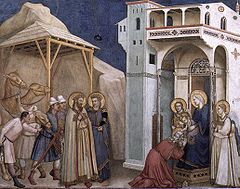
The Adoration of the Magi by Edward Burne-Jones

Twelfth Night, January 5th, marks the ending of the Twelve Days of Christmas that begin on December 25th, the first day of Christmas. Twelfth Night is also called Epiphany Eve since it occurs the night before Epiphany (Three Kings Day which coincides with the visit of the three wise men).

I like the entire Yuletide season that begins with the solstice and runs through the twelve days because, in my beliefs, limiting the celebration to Christmas Day, would give me less time to absorb the beauty and the blessings of the holiday’s meanings and decorations. Each day brings new inspiration.

When my wife and I were first married, we often celebrated Christmas Day at her folks’ house an hour’s drive away. When we returned to your neighborhood before nightfall, a fair number of people in our subdivision had already finished their Christmas and thrown their trees out by the curb for the trash truck. I used to be furious with these people. Now, having improved with age, like a fine red wine (I hope), those trees make me sad.

Perhaps my focus on Yuletide from start to finish began with my parents’ Yule Log which sat on the mantle every season with three burning candles. Over time, the drippings built up and were a spectacular record of a wealth of Christmases. Likewise, over the Twelve Days of Christmas, the wealth of blessings builds up–even if your true love never gives you twelve drummers drumming.

–Malcolm
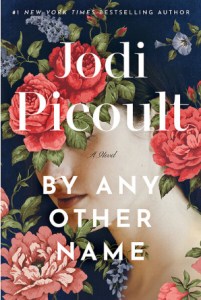
Jodi Picoult: ‘By Any Other Name’

Many real and imagined authors have been suggested as the true geniuses behind Shakespeare’s plays. I have always believed they were written by Francis Bacon. Nonetheless, it’s exciting to see Picoult’s proposal.

From the Publisher

From the New York Times bestselling co-author of Mad Honey comes an ‘inspiring’ (Elle) novel about two women, centuries apart—one of whom is the real author of Shakespeare’s plays—who are both forced to hide behind another name.

“’You’ll fall in love with Emilia Bassano, the unforgettable heroine based on a real woman that Picoult brings vividly to life in her brilliantly researched new novel.’—Kristin Hannah, author of The Women

“Young playwright Melina Green has just written a new work inspired by the life of her Elizabethan ancestor Emilia Bassano. But seeing it performed is unlikely, in a theater world where the playing field isn’t level for women. As Melina wonders if she dares risk failure again, her best friend takes the decision out of her hands and submits the play to a festival under a male pseudonym.

“In 1581, young Emilia Bassano is a ward of English aristocrats. Her lessons on languages, history, and writing have endowed her with a sharp wit and a gift for storytelling, but like most women of her day, she is allowed no voice of her own. Forced to become a mistress to the Lord Chamberlain, who oversees all theatre productions in England, Emilia sees firsthand how the words of playwrights can move an audience. She begins to form a plan to secretly bring a play of her own to the stage—by paying an actor named William Shakespeare to front her work.

“Told in intertwining timelines, By Any Other Namea sweeping tale of ambition, courage, and desire centers two women who are determined to create something beautiful despite the prejudices they face. Should a writer do whatever it takes to see her story live on . . . no matter the cost? This remarkable novel, rooted in primary historical sources, ensures the name Emilia Bassano will no longer be forgotten.”

From Christian Since Monitor

“A question underlying “By Any Other Name” is whether it’s more important for your work or your name to endure. Picoult argues in this substantive novel that, while a rose by any other name would smell just as sweet, even sweeter is being recognized for your achievements.” (See Review)

Malcolm

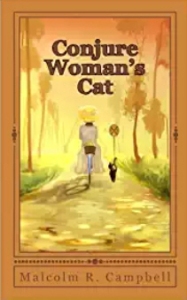
Malcolm R. Campbell is the author of magical realism and contemporary fantasy novels and stories, including “Conjure Woman’s Cat.”

Satire’s getting harder and harder to write

Why?

First, I’ll leave Andy Borowitz’s satircal column in the New Yorker out of that point of view. He’s a pro and manages to keep turning out good stuff.

Most of my satirical books disappeared when my former publisher suddenly closed without assiging the rights to its authors works to the authors.

Otherwise, I find that a lot of the real news sounds like satire (and might be) or is too grim to satirize. Even if it were funny, satire aboud the Israeli  war in Gaza and the latest mass shooting would be in very poor taste.

I tended to write satire about the parts of government I don’t like, the TSA and Homeland Security, for example. The most fun-to-write satire (for me) took something the government was actually doing and maded it worse than it was–assuming that was possible.

But now I find most of the news so grim, it’s hard to place a humorous spin on it. That’s too bad because satire has been a time-honored  method of  poking fun at inept leaders and  their policies. “MAD Magazine” was a favorite of mine when I was in highschool.  Even better was “Punch Magazine” (1841 – 1992 with a short-lived revival between 1996 and 2002) from Britain. I found it amusing even thouh I was never really up to dte about British politics.
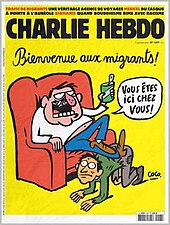
I’m also a fan of France’s Charlie Hebdo which features work that’s a bit edgy.

The Shakespeare plays are filled with statire, lines that work within the context of the story and also poke at the existing monarchy. My favorite comes from Hamlet in the lines: “The play’s the thing/ Wherein I’ll catch the conscience of the king.”

In satire, we’re always trying to catch the conscience of the king or the president or the head of some agency.

To my mind, government lends itself to satire because it’s so inept at everything.  That’s my Libertaian point of view. Like Jonathan Swift, we all want to write a modest proposal.

–Malcolm

What Macbeth’s Witches Were Really Mixing Up

Wikipedia graphic

Fillet of a fenny snake, 
In the cauldron boil and bake; 
Eye of newt and toe of frog, 
Wool of bat and tongue of dog, 
Adder’s fork and blind-worm’s sting, 
Lizard’s leg and howlet’s wing, 
For a charm of powerful trouble, 
Like a hell-broth boil and bubble. 

Macbeth, Act 4, Scene 1

When you read Macbeth and hear the witches chanting about the eye of newt and tongue of dog, don’t worry. Most of those ingredients are the folk names of herbs, not critters’ body parts. Here are those added by the second witch.

  • Fenny Snake – Fenny refers to fens (swamps).
  • Eye of Newt – Seeds of Black or Brown Mustard (Brassica juncea), which–in hoodoo- are used to confuse enemies. They are often mixed with sulfur powder.
  • Buttercup: Steve Matson photo from Califlora

    Toe of Frog – Yellow Buttercup, including within the United States, the Western Buttercup (Ranunculus occidentalis Nutt), the seeds of which were ground up by Indians with other seeds for making a flour-like staple called pinole. The flowers themselves are considered poisonous.

  • Wool of Bat – Holly (Ilex aquifollium), meaning “holy,” used by Druids and other ancient Europeans. Holly symbolized male and female and Yule and is still considered in conjure as not only a blessing to the household and as protection for the home.
  • Tongue of Dog – Houndstongue (Cynoglossum officinale), also called dog’s tongue and gypsy flower. It was once considered a cure for madness and has been used by herbalists for a variety of ailments, including venereal disease and inflammations.
  • Dog-tooth Violet – Wikipedia photo.

    Adder’s Fork – Dog-Tooth Violet (Erythronium americanum) and related species. It’s also referred to as rattlesnake violet and serpent’s tongue. It’s not related to the violet. In conjure, it’s used to stop slander and gossip and those who are using it against you. It is placed on the doorsteps of enemies or when meddling inlaws are the problem, mixed with slippery elm into a body wash.

  • Blind Worm’s Sting – This is a lizard that looks like a worm. It’s sting is it’s bite. Perhaps they used the poison or tossed in the worm.
  • Lizard’s Leg – Ivy, genus (Hedera) and other creeping plants. Potentially, might include poison ivy and poison oak. Ivy is for binding things together as well as for ensnarring unwelcome desires (including drinking too much.) One can spend days trying to unravel the folklore and symbolism of ivy throughout the ages, including the use of the plant as a crown. Holly and ivy are among the evergreens used to decorate houses for Christmas and Yule as symbols of rebirth.
  • Howlet – That is to say, an owl.

–Malcolm

Florida Folk Magic Stories: Novels 1-4 by [Malcolm R. Campbell]Florida Folk Magic series of four conjure novels. Save money buying them together in this set.

Hope you enjoy the novels.

What happens to the world if this post goes viral?

You are reading a post called “What happens to the world if this post goes viral” with a disquieting sense of deja vu that it has already gone viral and you are just now finding out about it (having been in prison or having sex or simply busy at work) and/or that the whole thing hasn’t happened yet and is coming to you from the future. Either way, if it goes viral and/or already has gone viral, what in fact will be the result?

Here are the probabilities:

  1. It (this post which, in your reality, you think you are reading right now even though–as you will see–you probably aren’t) will pick up speed and become so ubiquitous nobody will remember where they saw it first or if they just heard about it so often they began to believe they saw it, to the extent that some people will become alarmed and start warning about the world tilting on its axis or frogs falling from the sky or various magic men coming down from their mountains to tell us once and for all the meaning of life.
  2. Sappho on a vase found years ago in an attic.
    Sappho on a vase found years ago in an attic.

    The speed of this post will exceed the speed of light and, as Einstein predicted, will become younger and younger until it ends up appearing on MySpace or an ancient CompuServe forum, ultimately to be discovered mixed into the poetry of Sappho that will be discovered 200 years ago on a papyrus long thought to have been lost or mixed up with the Nostradamus prediction about rogue photons calling out of the sky on a summer evening in 1566 or 1966 (depending on the translation).

  3. It goes without saying that all of you who leave pithy comments will become either famous or infamous (perhaps both) and will start getting movie deals, hearing from old flames, learning that you forgot to pay a parking ticket in Carson City 15 years ago and now (with interest) you owe more money than most people earn in a lifetime even though, quite possibly (fate being what it is) time will move backwards and you’ll be talked about on the streets of London and Paris years before you are born, completely tangling up the records at Ancestry.com.
  4. Once something becomes ubiquitous, people (especially conspiracy theorists) begin debating whether it’s a blessing or a curse with everyone pointing fingers at the top Presidential contenders and demanding that if they are responsible, they apologize or lamely say they misspoke or, if elected, have new laws ready to put on the books to contain the real or imagined dangers that may or may not occur either now or in the past.
  5. As a famous scientist will say in the future or past, depending on which universe you hang you hat in, there is no containing rogue photons that spin off into lives of their own when a viral post collides with the sides of voynichbent space, causing people who we’ve always thought to have lived in the past to have not lived there, or if they did, did things differently so that the future changed in ways that could not be predicted, one of them being that this post ended up never being written at all.
  6. Once this post flows backward in “time” to 1916, Einstein will see things differently or even dream things differently so that the general theory of relativity takes on either new meanings or collapses altogether depending on whether one is there to observe the event or not (like that darned cat that may or may not be dead in the box).
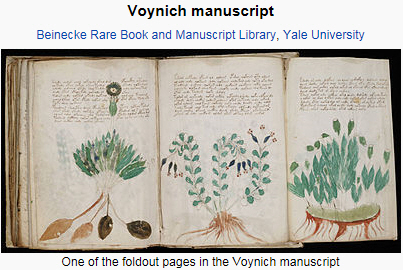
  7. People–and we don’t yet know who they are except that they probably live in Nebraska–will start decoding this post with the same fervor similar people have hopelessly tried to decode the Voynich manuscript, and there will be among them advanced code breakers who will begin to find that when the letters in this post are shaken up and mixed with every other word from Finnegans Wake the result is a new set of theories for the meaning of life, how to achieve immortality, and even who will be standing outside your house every Bloomsday to see if you’re reading Joyce or, heaven help you, Barbara Cartland.

    Cartland
    Cartland
  8. New religions and political parties will be born out of the chaos of dreams and the dreams of dreams that have no beginning and no end, advocating on one side of the coin that this post is total nonsense and that everyone who left a comment on it is a daft buffoon, and on the other side of the coin, that this post is part of the great shift in consciousness predicted by seers and soothsayers and what this means for you–the innocent reader–is that your will be swept up into arguments and/or country songs and/or various legends that will show everyone just how silly and/or profound beliefs can be when everyone is talking about them at once.
  9. You will discover that you’re not the same person that you were when you started reading this post and that, depending on how the magic hidden within it impacts your psyche, you will either join new causes and help save the world or you will hide in a cave until the world blows over (figuratively speaking, perhaps) and in the final analysis you will wonder what kind of synchronicity exists in a world where a post like this appears seemingly out of nowhere (unless you think Sappho wrote it) and comes to your attention on a day when you had no reason to be logging on to WordPress, MySpace or CompuServe (depending on which time period you ended up in).
  10. Bacon
    Bacon

    Assuming that all of this is true, chances are optimal that you are either not reading this post right now or–just as likely–you are a sage living at the time of Frances Bacon who is quite certain that whether Shakespeare wrote the plays or not, some of the lines in this missive were hidden away in misplaced early draft of “All’s Well That Ends Well,” or on the other hand, assuming that none of this was true while the post was being written, once it’s ubiquitous it will become true, proving once and for all that cause and effect isn’t quite what we thought it was, but true or false, it appears that there’s nothing we can do about anything that becomes viral.