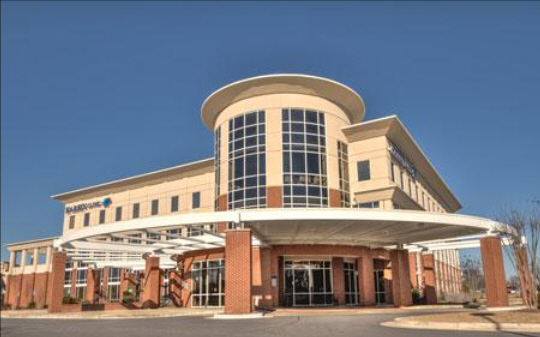
My last radiation treatment was yesterday. The nurses and techs congratulated me for sticking with the 40-day program. I told them I felt like I was being let out on parole. The main tech said, “Aw, it wasn’t that bad.” I told her it was the commute that was tedious because I had to drive 35 minutes each way. (Nothing like my one-hour Atlanta commutes in the old days.) I think I’ll probably end up being the most wild and crazy patient they ever had since I see the world differently and am liable to say anything–and did. (When they asked me what the doctor said about the chills I had recently, although he said it had nothing to do with the therapy, I told the techs he said somebody put a hex on me but I wasn’t allowed to say who it was.)
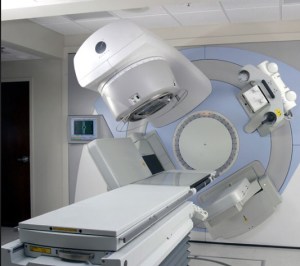
 The treatments, which lasted about 10 minutes each, were done with one of the clinic’s three Varian Linear Accelerators. Very high tech. I’ll have a follow-up appointment at the clinic in a month, presumably to go over everything.
Hormone therapy continues with my next appointment in January, three months after the last radiation treatment. This takes away what the cancer cells need. It could be three to six months before we know about remission. The hormone therapy provides false readings on the tests until the therapy is complete.
A breakthrough with the MRI about five years ago that can see cancer cells based on the sugars surrounding them is not yet out of testing (presumably) and in the field. If it passes muster, it should make all or most biopsies unnecessary. And, for my purposes, would tell me exactly where I am right now.
The treatment program I’m following is usually successful. I got a certificate from the clinic saying I’d undergone that therapy. One of the nurses grabbed me by the hand and dragged me out into the waiting room where there’s a mounted bell on the wall, along with a plaque that says patients should ring this when they finish a therapy program.
I asked if there was any particular approved way to ring it. She said “no.” I looked at my watch and said, “It’s 2:30. In the Navy, that’s five bells,” and I proceeded to ring it briskly in the proper manner: Ding Ding. . .Ding Ding. . .Ding.
I heard a lot of applause, but have no idea whether or not there were any former sailors there who understood I gave the time I was leaving the clinic.
It’s nice to be done with this phase.


 So any good thing that’s completely unexpected can make a great difference in their mood. In my case, it was the box I found on my front porch when I got home from my 40th cancer radiation treatment. It was a wonderful gift basket containing a quart of soup (kept cold in a special bag), granny’s cookies, granny’s dinner rolls, and a giant label to get the heated-up soup out of the pot.
 t’s my understanding that while the radiation beam is fairly well defined, the machine can’t actually see the cancer cells. The biopsy said there they were, to the beam goes into that area.

 When I mentioned on Facebook a week ago that my 40 days of radiation therapy had begun, one of my long-time online friends wrote, “Thank you for not giving up.” She’s a feisty New Yorker and deals with issues and events that are quite foreign to me–as I’m sure my Georgia farm life is to her–so we don’t communicate often. But this comment was almost too much for me to take in and to process.
 I’m already a survivor–from kidney cancer and successful surgery–two years ago. It was caught by coincidence when I suddenly came down with appendicitis and the CT scan and MRI found the tumor. Fortunately, it was on the outside of the kidney and could be removed before it invaded the kidney. I ended up with a six-inch scar that took a long time to fade away, but I feel hesitant to mention that I’m a survivor because I didn’t undergo the long and painful journeys that many survivors face.
 Malcolm's Round Table