I’ll be your fantasy server this evening

Welcome to the world of fantasy. My name is Malcolm, and I’ll be your server this evening.

Today’s special is Sarabande, a bone-chilling new adventure about a young woman named Sarabande who risks a dangerous journey into her own past. With the help of the Sun Singer, she plans to raise Dryad from the dead so that her cruel sister’s ghost can no longer cause pain and suffering throughout a peaceful mountain valley.

Fantasy is a Dangerous Place

You’ll be reasonably safe in the world of fantasy while I am here to guide you. Otherwise, may I suggest that you read Sarabande during the daylight hours in the company of others. Do not read the novel at night unless the doors are locked.

Like abandoned mines, fantasy leads deep into the heart of strange landscapes, forbidden worlds and dreams, places where everyday reality fears to tread. Be careful and do not wander off alone, for the mysterious world of fantasy can be dangerous. That’s why I’m posting a warning sign here just like the one I saw recently in Virginia City, Nevada where gold and silver were once extracted from the earth.

Mining Fantasy Novels for Gold and Silver

While growing in a house full of books, I discovered high-quality ore in such fantasies as The Once and Future King and Lord of the Rings. Recently, others have discovered gold and silver in the Harry Potter books. The gold of dreams and the silver of mystery are not only exciting—they jump start the imagination.

I hope you’ll enjoy Sarabande. It’s available today in multiple e-book formats at Smashwords. Other editions will follow soon, including paperback. Dig deep, enjoy the ride, but please, read safely in well-lighted places.

Malcolm

Review: ‘When the de la Cruz Family Danced’

When the de la Cruz Family DancedWhen the de la Cruz Family Danced by Donna Miscolta

My rating: 5 of 5 stars

The slice-of-life scenes in Donna Miscolta’s tightly written “When the de la Cruz Family Danced” create an elegant portrait of a Southern California family suspended between its first and second generation Filipino origins, its “Little Manila” neighborhood and the outside world, and between familial cohesiveness and individual freedom. As the novel begins, the family is mired in a stasis that has crept uninvited into its home through the dynamics of time, illness, aging and lack of attention.

Also uninvited, a young man named Winston comes into their home because he believes he might be Johnny de la Cruz’s unacknowledged—and perhaps, unknown—son. Nineteen years earlier, Johnny made his only return trip to the Philippines to visit his family. While there, he had an unplanned sexual encounter with an old flame. Since they never spoke again, Johnny didn’t know Bunny Piña subsequently separated from her husband and moved to California with her son Winston. Winston didn’t know about the de la Cruz family until he found an un-mailed letter to Johnny hidden among his mother’s mementos when she died.

Lost after his mother’s death, Winston wants to know more about Johnny even though he cannot articulate exactly why. He wonders whether Bunny meant to mail the letter and simply forgot it or whether she chose to remain silent. The sentiments include “since you so gallantly made your escape from my couch that afternoon” and “we each had our reasons for what happened.” Does this suggest that Johnny is Winston’s biological father? While Winston isn’t sure, he wants to get to the heart of the secret Bunny never shared.

When he finds Johnny dying of cancer and the rest of the family suspicious of his motives for appearing on its doorstep, Winston simply says he’s Bunny’s son. He says he didn’t know if Johnny heard that Bunny moved to the U.S. or that she had recently died. At this point, readers might expect Winston to leave after suffering through a few days of the de la Cruz family’s polite but disinterested company or that he will produce the letter and ask, “Johnny, are you my father?”

Instead, Miscolta carefully inserts Johnny into the family’s life. None of them are quite sure why he’s still there, but he’s nice enough. He helps Tessie look after Johnny, partly by keeping him company. While the slice-of-life details about family life, shown from the viewpoints of each of the family members, do slow down the development of the plot, they paradoxically add great depth to the novel and to the reader’s understanding of the family itself.

Miscolta has created poignant story about a family (with secrets) that very much needs to find itself within the multicultural world of Southern California. The story revolves around one dual question: will Winston come and go and soon be forgotten or will he be the catalyst for something more long term and meaningful? All of the characters step close and then step away from that question like awkward beginners at a club who haven’t yet learned how to dance.

“When the de la Cruz Family Danced” is a highly recommended waltz of well-crafted prose and endearing characters.

Malcolm

Malcolm R. Campbell is the author of “The Sun Singer,” “Garden of Heaven: an Odyssey” and “Jock Stewart and the Missing Sea of Fire.”

Coming this Fall

Novel samplers – Examples of a writer’s work

1760 Sampler - Wikipedia

Students learning needlework used to demonstrate their skills in samplers that showed examples of what they could do. Traditional samplers included motifs, borders and alphabets in various kinds of stitches. Those of us who like chocolate see the same approach in the famous Whitman’s Samplers, the boxes of candy with a representative assortment of the company’s many varieties.

Vanilla Heart Publishing is taking the same approach to its novelists’ and short story writers’ work. The publisher is bringing together samples of a writer’s work in free PDF documents that can be easily downloaded and then sampled.

I like the idea. As publishing transitions from bricks and mortar bookstores to online bookstores that provide either paperbacks or e-books, it’s nice having a way to see what we’re buying before we click on the BUY button. In a neighborhood bookstore, you can pick up a book and see what it’s like, browsing, reading a bit here and a bit there. Amazon has addressed the issue of excerpts with its READ INSIDE service. Smashwords gives readers a free look at the first chapter or so of each book.

Malcolm's Sampler

The samplers, though, bring multiple works together in one document. My sampler, for example, includes examples of my Jock Stewart stories, excerpts from my two Glacier Park novels (“The Sun Singer” and “Garden of Heaven: an Odyssey”) and some of the lunacy from my satirical “Jock Stewart and the Missing Sea of Fire.”

I can’t demonstrate my skill with the many variations of chain stitches on a decorative square of fabric. But my publisher’s sampler brings a bit of humor, adventure, description, and excitement together in one file. In an e-book world, it’s a good way to get the feel for a book before you decide to put it on your Kindle or your Nook, or order the paperback version for your shelf.

Malcolm

You can find more novel samplers for Vanilla Heart Publishing’s authors here.

Zen and the Art of Editing

“When you seek it, you cannot find it.” — Zen Proverb

When editing and revising a novel in progress, I try not to seek anything. While I sometimes jot down things to consider, I don’t make lists of characters, events, dialogue snippets or internal monologues as I ponder the latest draft of my manuscript. If I do, I suddenly can’t see the forest for the trees.

Like a hiker on an unknown trail, I try to get a sense of the place–in this case, that place is the world created by the novel. Casually, I wonder: What is going on here? Who are these people? What do they want?

If I were to look too hard for specifics, it would blind me to what is missing, what could have been said, what might have been done. In many ways, I’m reading my manuscript the way I would read another author’s novel for the first time—with as few expectations as possible.

In my Sarabande’s Journey blog, I have been writing about some of the issues, symbols, motifs, and themes that are often found in a heroine’s journey story.  While my novel in progress, Sarabande, is a heroine’s journey, I do not read my manuscript looking for those issues, symbols, motifs and themes.

First, I need to internalize all of that before I begin writing; otherwise, the novel sounds like I’m simply pasting ideas into a story say, the way somebody might randomly use words in a language they don’t know in a conversation with a native speaker. Second, I don’t intend for my fiction to be a demonstration of the heroine’s journey theme or to explore everything that has been written, say, about women in a man’s world. The novel is a story before it’s anything else.

I know before I begin writing where my character is going and why. I know how the novel will end. I try to keep everything in between loose and flexible until I begin to write. Then, I go where the story carries me. When I edit and revise a manuscript, I try not to have a destination. I want to see where I am being carried by the currents and tides of the work. Editing this way is relaxing if you don’t fret about it.

Worrying about whether one ought to be doing one thing or another thing with the story doesn’t help the work. Actually, nothing helps the work more than staying out of the way of the story as much as possible. When I put on my editing hat, I’ll “fix” a lot of things and re-do a lot of things without being heavy handed.

Does this sound chaotic? Not at all. When you’re not actively looking for a result, the novel begins to edit itself.

Malcolm

Malcolm R. Campbell is the author of the recently released Bears; Where they Fought: Life in Glacier Park’s Swiftcurrent Valley, a glimpse at the dramatic history of the most beautiful place on Earth. A Natural Wonderland… Amazing Animals… Early Pioneers…Native Peoples… A Great Flood… Kinnickinnick… Adventures… The Great Northern Railway.

“Give a month at least to this precious reserve.  The time will not be taken from the sum of your life. Instead of shortening, it will indefinitely lengthen it and will make you truly immortal. — John Muir, “Our National Parks,” 1901

Where do writers go when they write?

When I’m working on a novel, I’m not really here in the real world. That’s what my wife tells me.

I’m variously not present, not listening, forgetful, zoned out, in limbo, or in a cocoon.  When I emerge—hopefully with a completed manuscript for a book that will no doubt soar to the top of the New York Times Bestseller list—I hear what I’ve missed:

  • The neighborhood was taken over by rogue ground squirrels.
  • Iran and Iraq both filled out the paperwork to become U.S. states.
  • Jennifer Lopez appeared at the front door in her new snakeskin blouse and miniskirt and asked if Malcolm could go library and museum hopping with her.
  • All the known planets lined up, creating some interesting birth charts and a few more predictions about the end of the world and/or the end of good taste.

My wife is always the first to know when I type the words THE END on a major draft of a manuscript. I’m like a man who’s just come home from the war, amnesia or prison. And trust me, I have a lot of catching up to do.

Meanwhile, as I typed the words THE END on the manuscript for my newest Glacier National Park novel, Sarabande, today I felt like a child on Christmas morning. Those are very exciting words for an author even though they don’t mean the book, much less the work, is done.

They are a new beginning. The manuscript is fine-tuned. An editor takes a serious look at it, weeding out all the misspelled words, punctuation glitches and any inconsistencies the author hasn’t discovered yet. Cover artwork and release dates are discussed.  And, as I wondered when The Sun Singer and Garden of Heaven were in their about-to-emerge-from-the-cocoon status, I thought how will readers react?

After an author lives inside his story for a while, missing J. Lo’s visit to the front door and the ground squirrels romping through the yard, he hopes readers will also enjoy losing themselves in the story as soon as it appears as an e-book and a paperback.

I don’t put a warning label on it, though. You’re on your own recognizance. If you zone out and miss exciting international events or important wedding anniveraries and birthdays, don’t call me. I’ll be zoned out in another universe.

Malcolm

Malcolm R. Campbell is the author of the recently released Bears; Where they Fought: Life in Glacier Park’s Swiftcurrent Valley, a glimpse at the dramatic history of the most beautiful place on Earth. A Natural Wonderland… Amazing Animals… Early Pioneers…Native Peoples… A Great Flood… Kinnickinnick… Adventures… The Great Northern Railway.

“Give a month at least to this precious reserve.  The time will not be taken from the sum of your life. Instead of shortening, it will indefinitely lengthen it and will make you truly immortal. — John Muir, “Our National Parks,” 1901

Light Conquers All

Today’s guest post is by Pat Bertram, author of the recently released novel Light Bringer (Second Wind Publishing, March 27). She is also the author of “More Deaths Than One,” “A Spark of Heavenly Fire,” and “Daughter Am I.”

Pat and I discussed “Daughter Am I” here on Malcolm’s Round Table on October 19, 2009 and October 20, 2009

Planet X

The Sumerians believed there were twelve celestial bodies in our solar system: the sun, the moon, the planets we know — including poor demoted Pluto — and one other. This twelfth planet goes by many names. Astronomers today call it planet X. Sumerians called it Nibiru, Babylonians Marduk, Greeks Nemesis, Hebrews the Winged Globe. Prophets called it the Fiery Messenger and the Comet of Doom. They also called it Lucifer, which means light bringer, because it brought its own light rather than reflecting the light of the sun like the moon does.

Light Bringer

Hence, the title of my latest book: Light Bringer. Though it doesn’t make an appearance, this Planet X, this bringer of light and destruction, is the reason for the happenings of the story.

Light Bringer is not only the title; it is also a statement of the theme, or at least one of them. All of my novels explore the same themes, such as love in its various guises and a search for identity, but Light Bringer has one theme uniquely it’s own: bringing light. This light is both figurative and metaphorical. During the course of the story, light is brought to hidden places, both in the world and in my characters’ hearts. Light is brought to truth, or at least the possibility of truth. Light, as love, is brought into the lives of my characters.

Harmonics of Light and Sound

This theme of bringing light also refers to different aspects of light itself, including the harmonics of light and sound (where sound becomes light and light becomes sound) and color (different wave lengths of reflected light).

Light Bringer took years of research, of enlightenment. The plot demanded extensive information about mythology, conspiracies, UFOs, history, cosmologies, forgotten technologies, ancient monuments, and color. Especially color. Color is the thread connecting all the story elements, and all the colors have a special meaning. (You can find a brief listing of color meanings here: The Meaning of Color.)

Auras

Rena’s dark eyes brighten to amber when she is delighted, (yellow denotes joy and intelligence). The auras that envelop her and Philip show their moods: a magenta cloud of distrust, a mauve of confusion, a pale pink of love and devotion. And the world itself reflects their growing love: After the sun set, they headed home in a rich, warm alpenglow that turned the world to gold. (Gold counteracts feelings of loss, enhances feelings of security.)

Because of this theme of light, it is fitting, then, that Light Bringer begins with a bright light in the sky and ends with a new clarity of light in my little town. Perhaps the novel will even bring a bit of light into your life.

You May Also Like

Sandra Shwayder Sanchez’s review of Light Bringer on Bookpleasures.

A free preview of the first chapter of Light Bringer is available here.

Review: ‘The Templar Salvation’

The Templar SalvationThe Templar Salvation by Raymond Khoury
My rating: 4 of 5 stars

Raymond Khoury’s The Templar Salvation (2010) sequel to The Last Templar (2006) is better than the original. Like the original, The Templar Salvation presents a story of lost/hidden church secrets with dual time lines, a lot of historical detail, and plenty of action.

In the present day, Khoury brings back FBI agent Sean Reilly and archeologist Tess Chaykin in a race with terrorist Mansoor Zahed to find a cache of early Christian documents. In 1203, while the Fourth Crusade siege of Constantinople is in progress, a small band of Templars sets out to rescue and then hide the same set of documents. In both time lines, the Catholic church doesn’t want the documents to come to light.

The Last Templar featured an amazing opening scene. The Templar Salvation’s opening, while slightly less spectacular is action-oriented and inventive. Tess is in danger. Sean rushes to the rescue and, in spite of the law enforcement resources available in Turkey and at the Vatican, becomes the point man in a search for Tess, Mansoor, the documents, and a variety of people who end up dead.

The Templar Salvation is more tightly woven than The Last Templar. It also contains fewer “talky scenes” where Tess and/or Sean explain elements of the 1203 story to present day police officers as though 800-year-old information trumps current evidence or the need to get out of the squad room with some sense of urgency. The Templar Salvation might be called “The Book That Will Not End.” Tess, Sean and Mansoor find themselves within nanoseconds of being killed (or worse) numerous times throughout the story only to escape/survive and keep on searching, fighting or running.

Nonetheless, the improbable story somehow makes for more exciting reading than The Last Templar. The Templar Salvation is a violent, tangled, twisted, groaner kind of escapist read that features the kind of over-the-top, don’t-worry-about-civilian-deaths-and-collateral-damage law enforcement that viewers of the TV series “24” tuned in every week to see.

Like agent Jack Bauer in “24,” Sean Reilly is as relentless as a Terminator in his quest for neutralizing the bad guys and possibly obtaining justice. And, like Jack, Sean keeps going, going and going even though his wounds would have killed ten normal men.

The book is a guilty pleasure.

View all my reviews

Malcolm R. Campbell is the author of “Jock Stewart and the Missing Sea of Fire,” “Garden of Heaven: an Odyssey,” and “The Sun Singer.”

All Aboard for Glacier National Park

When Glacier National Park, Montana, celebrated its centennial last year, 2.2 million visitors came to the park, setting a new attendance record. While Amtrak’s Empire Builder serves the park, most of today’s visitors arrived by plane and automobile.

The park’s hotels and early infrastructure were developed by James J. Hill’s Great Northern Railway (GN), now a part of the Burlington Northern Santa Fe (see downloadable history), as a means of increasing passenger rail traffic on the route between Minneapolis and Seattle. The route, which went through North Dakota, Montana and Idaho, is the northernmost transcontinental railroad in the United States. Hill and his railroad prided themselves in the fact that, unlike other transcontinental railroads, GN used no federal land grants to built the track.

Before Amtrak took over most U.S. intercity passenger rail service in 1971, Great Northern delivered visitors to East Glacier and West Glacier via many named trains over the years, the last of which were its premier Empire Builder and the Western Star. Considered a secondary passenger train, the Western Star (train #27) left Minneapolis daily for the west coast, arriving in East Glacier before breakfast the following day. When Amtrak took over passenger service on the route in 1971, it kept the Empire Builder and discontinued the Western Star which had been in operation since 1951.

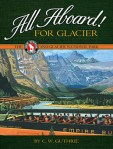
Carol Guthrie’s All Aboard for Glacier National Park (2004) captures the heady days of passenger rail travel and the park.  Even though the trains are mostly gone, you can still see the Great Northern Railway’s influence throughout the park, especially in the hotels managed by Glacier Park, Inc. (The company was owned by the railroad until 1960.)

When I worked as a bellman at the park’s Many Glacier Hotel in the 1960s, I traveled from my home in Florida to the park by rail, and that included the Western Star. The railroad still offered hotel employees reduced-fare tickets even though most railroads’ passenger trains were, by then, operating at a loss. Since the train ride was part of my Glacier National Park experience, I couldn’t help but include the Great Northern Railway and the Western Star in my novel Garden of Heaven. (Now out of print.)

Garden of Heaven Excerpt

In the novel, my main character David Ward gets to do what I always wanted to do: run the Western Star for a few miles just east of Glacier National Park:

“Climb up, Mr. Ward, it’s only 24 miles, and I’ll be close by.”

“You run like a god damned freight engineer,” said Jim as he lit another cigarette, “and there will be hell to pay.”

“I won’t spill a drop of coffee,” said David.

They followed him up into the cab. Jim slouched in the fireman’s seat with his newspaper and Big Ed stood by silently while David sat, noted the positions of the brake handles and the needles on air gauges, then looked out the window at the track ahead of them. There was seldom any rust on these rails lying easy on the fine, well-drained roadbed, and now as the day wound down, the tracks were becoming a true hi-line into night. Ahead, in the middle distance, two tall trees stood equidistant from the center of track—the right bathed in full sun, the left now in shade—a gate to the future, all aboard for Blackfoot, Sundance, Cutbank, Shelby, and points east with connections to RTC Great Lakes and Vietnam. He stepped on the dead man’s pedal and looked back at Ed and said he was ready.

“It’s 5:12 and we are clear to proceed,” Ed said. “You won’t need the transition lever, go easy out of here and then one day tell your grandkids you ran the Western Star.” Ed punctuated the sentiment with two loud blasts of the horn.

He put the reverser lever in forward, pushed the throttle into notch 1 and felt the engines load as he carefully feathered off the independent brake.

“Good,” said Jim. “Big Ed didn’t leave any slack in the train.”

“Damn sure didn’t,” said Ed. “I care very deeply about those Pullman passengers and their eagle eyes conductor back there.”

David eased the throttle out a notch at a time, slowly, so far so good, he hadn’t jostled anybody, felt the automatic transition as they passed between the two trees and throttled back to avoid any wheel slip, then began easing the throttle forward again until they reached track speed.


SunSinger4coverMalcolm R. Campbell is the author of “Conjure woman’s Cat” and “The Sun Singer.” “The Sun Singer” is set in Glacier National Park.


Vila SpiderHawk’s Books Reflect a Love of the Natural World

Vila SpiderHawk is the author of three magical novels that follow the coming-of-age adventures of protagonist Judy Bauman in the disputed German-Polish border territories prior to and during World War II: Forest Song: Finding Home (2008), Forest Song: Little Mother (2009) and Forest Song: Letting Go (2010). Vila is also the author of the Forest Song Cookbook (2009), featuring recipes from the series, and Hidden Passages: Tales to Honor the Crones (2007), a collection of stories about old women and their celebration of life and wisdom. Vila and her husband live in a log house in the Pennsylvania forestland.

Malcolm: Welcome to Malcolm’s Round Table, Vila. You introduced readers to protagonist Judy Bauman in Forest Song: Finding Home set in 1929 to 1933 in territory claimed by both Germany and Poland on the eve of World War II. What attracted you to this time and place for your novel’s setting?

Vila: Thank you for your hospitality and thoughtful questions, Malcolm. It’s very kind of you to do this interview with me.

Why the World War II era in the Polish-German Corridor? I am of German descent and was born in 1945. I grew up in careful silence about the horror of the Holocaust. We didn’t even learn it in school, since it was still too new to be in the history books. It wasn’t until I went to high school that I got my introduction to the period, and that was very sketchy. Nonetheless, I have always felt a pull to the time and place. Call it racial guilt. Call it something else. Whatever it is, I needed to know what caused a people to do such terrible things. And so I studied the era in college.

However, I was never satisfied with the answers the books gave for that terrible time, and so I have carried this need around all these years. Therefore, when I met Judy and she turned out to have lived in that time, I invited her in to tell me her story.

You see, I do not create my characters. They come to me, fully formed and talkative. Judy is downright overbearing sometimes. In any case, I channeled her, since she, too, cares deeply about the “whys” of things.

But there is an additional reason. I worry that our country could become the Germany of the Holocaust. I worry about Guantanamo and the attitude we generally have about Muslims just now. While I am sure some Jews in Germany fit the Nazi stereotype, since all stereotypes have a glimmer of truth to them, I believe and indeed have found that most Jews were just hardworking people trying to live decently and to raise their children well while keeping the bills paid. And, while some Muslims fit the stereotype we have created for them, most, I believe, are like the majority of German Jews. All they want is to live decent lives, to raise moral and educated children, and to pay the bills. It’s not rocket science. People are people. Most are, at bottom, very conscientious.
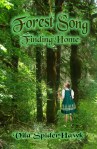
Malcolm: As I read Forest Song: Finding Home, I discovered an interwoven mix of history, German and Polish life and culture, Craft traditions and rituals, and faerie magic. When prospective writers ask what you write about, how do you describe the Forest Song books’ genre and overarching themes?

Vila: Oh boy it’s really difficult for me to place the Forest Song series into a tidy little box. I have classified it as historical fiction, since it has elements of that. I have also classified it as fantasy, since it has aspects that people like to call fantasy. But in truth, it doesn’t really fit tidily into any single category.

When people ask me what I write about, I usually tell them I write about life, in all its complexities. As is true of all of us, Judy’s is a creature of her culture and her era. Her spirituality is an important aspect of her attitudes as well, as it is with most of us. Sometimes she believes she’s going from point A to point B and she ends up at point H, as often happens in life. My stories are not straightforward, because life isn’t straightforward. This becomes more obvious in the later volumes of the Forest Song series but is already visible in Finding Home.

Malcolm: Fairy tales and myths frequently use the forest outside the city gates as a dangerous and/or magical realm of non-ordinary reality where characters go for heroes’ adventures and seekers’ coming of age stories with a strong focus on the protagonist’s transcendent or psychological “the inner journey.” Did a life-long appreciation of myths and folktales greatly influence your approach to Judy’s story and her drive to leave the claustrophobic and limiting world of her parents’ farm for the freedom of the forest?

Vila: Fairy tales are highly allegorical. The forest in fairy tales usually symbolizes the darkness and the space in which people reflect and learn, acquiring wisdom. Thus Persephone goes into the Underworld as a child and emerges with a woman’s wisdom and responsibilities. The forest is our Underworld.

Having said that, I did not grow up reading and loving fairy tales. That came later. But I have always felt the pull of the woods. I always felt I would not satisfy my destiny until I had escaped the clatter, stench, and hustle of the city and had moved into the green serenity of the trees. And, in truth, I didn’t. Though I have always written, it wasn’t until I had moved here and had explored my inner wisdom that I finally felt ready to write for publication.

Malcolm: I am amazed at the breadth and scope of the Forest Song books insofar as the author’s personal knowledge and research required for the plot and setting. How did you approach and organize the books’ details so that they fit hand in glove with recorded history, actual trees and plants available (and seasonally, when they bloomed) in the disputed territories, local customs, Craft traditions specific to Germany and Poland at that time, relevant folktales, and even kinds of clothing, furnishings and products available in a typical farm family’s house?

Vila: I don’t organize my books. My characters do that. They tell me their basic stories in bare bones language. Then it’s up to me to make art of their tales. Once I have the basic facts, I spend a great deal of time researching. One of the reasons I am such a slow writer is that I try to check every little detail to be sure it’s true. Judy opens herself up to me. She lays herself bare. That requires a great deal of trust. I need to be worthy of that trust. That means that I have to be sure that every detail I include in her story is true. I read many books before I sat down to write this series, and I have read many more along the way.

Malcolm: Your pseudonym combines “Vila,” a goddess, with “Spider” and “Hawk.” How did you choose this unique pseudonym and how does its meaning correlate with the intentions and perspectives behind your writing?

Vila: I chose Vila SpiderHawk very carefully. Vila is an eastern European Goddess of the woods. She is a shape shifter and the protector of the forest and all who live there. She heals with herbs. I identify with all that. She also dances hunters to death. There are times when I really identify with that as well, since I am a vegan. I chose the name long before I realized I’d be telling Judy’s story, though.

Spider is a contemplative creature. Spider spends her time between earth, the concrete, and air, inspiration. She chooses not to hunt. Instead she waits for food to come to her. She is patient. She knows that the Universe will provide her daily needs. She reminds us to see the importance of patience and spirituality. She reminds us to see the divine in all creatures, however small, however mundane.

Hawk, on the other hand, is aggressive. Her vision is sharp, and her reflexes are quick. She is a merciless hunter. She soars. She spreads her wings and touches the clouds. She is as free as it is possible to be in this life.

I am both Spider and Hawk. I am contemplative and introspective. I understand that the Universe will provide what I need as long as I have the wit to ask for it and the patience to accept that it will come in its own good time. But I am also Hawk. I can be aggressive and merciless. I tend to see sharply. And there are times when I positively soar. The Spider in me tempers the Hawk. The Hawk in me reminds me that sometimes it is necessary to be aggressive and to see sharply. And, while it’s wonderful to experience a meditative state, it is such a delight to soar.

Malcolm: In addition to exciting stories, what memories, dreams and reflections do you hope your readers will carry away with them after reading the Forest Song novels?

Vila: What the reader takes away from my books is really up to the reader. Each person brings her own experience, her own baggage, her own spirituality, and her own longings to the books she reads. Each person will take away an individual package of dreams and reflections. I don’t feel I can dictate or even suggest the “right” hopes, the “right” insights for the reader. I simply hope that each book sings to each individual in a way that feeds her soul.
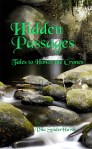
Malcolm: The use of the word “crone” in your Hidden Passages collection of stories straddles a paradox. In mainstream society, the seldom-used word is generally used to malign and discount older women in a patriarchal society. Yet, in historical matriarchal societies and in the Craft and goddess traditions, the word is used as a reverent term of endearment and respect. Did you have any second thoughts or concerns about using the word “crone” in your title or was it especially appropriate to the book’s theme and intent in spite of some mainstream connotations?

Vila: I was very adamant about using the word “Crone” in the title of Hidden Passages. I deeply resent the fact that we dismiss old women in particular but old men too as useless dead weight when, given their experience and wisdom, they have so very much to offer. I think we would be a better society if we actually respected more the feminine principle of giving and nurturing life and if we understood down to the marrow of our bones how very much we owe those wonderful women who raised us.

I grew up in the company of old women. I have always treasured them. And now that I am one, I value old women even more. I understand now that, while those wonderful women who raised me were old and wise and generous and dear, they still had all the eagerness and, yes, insecurities of youth. To me the word “Crone” encapsulates all that is woman—the maiden who is brash and flirty, fearless yet vulnerable; the mother who will sacrifice anything to give her child a better life, the woman who teaches and nurtures and worries and rejoices in and about her children; and the creature we see superficially as the Crone who knows pain, who has experienced death and loss and has endured anyway. The word Crone to me is not simply a title of respect. It is, in my opinion, the finest appellation anyone can call a woman.

Malcolm: Your characters use a lot of herbs found growing naturally in the woods where they live. If one chanced by your log cabin, would they find you out in the woods gathering and drying herbs, and then using them in the teas and meals you serve at your table?
Vila: Oh boy would they ever! Of course, I have an herb garden. Well, I wouldn’t exactly call it that. I’m not sure it’s organized enough to warrant the name “garden”. But I grow all kinds of culinary and other herbs as ground covers instead of grass. And I do cut from the herbs for cooking and other purposes during growing season. I dry herbs in autumn for winter use as well. My house smells like vegetable soup through the autumn with all the herbs drying. But I also harvest herbs from the woods. Mostly that’s just an excuse to go out into the trees and to feel the woodland energy all around me. But yes, herbs are very important to me. Not only do they make food taste fantastic, they have enormous healing power that many European countries still recognize. Hopefully, we’ll get back to more natural healing methods in this country too.

Malcolm: Thank you so much for stopping by and chatting today.

Malcolm

L. E. Harvey’s novels focus on women’s strengths

L. E. Harvey, author of “Loving Her” (2009), a collection of short stories and “Unbreakable Hostage” (2010), a suspense/thriller, turns her attention in her latest novel “Imperfect” to the love and chaos of a relationship between life partners who are not only confronted with small-town prejudice against interracial gay couples, but are also coping with AIDS. As a sickly child, Carol Mathers received a blood transfusion in the early 1980s before blood donors were screened as they are now. When she is diagnosed with AIDS in her mid-30s, she fears she may have unknowingly infected Alexandria, her partner of twelve years. The e-book addition of “Imperfect” is available now from Vanilla Heart Publishing. The trade paperback is scheduled for a November release.
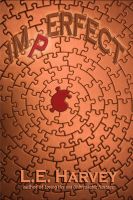
Malcolm: Welcome to the Round Table, Lauren. In Unbreakable Hostage, released earlier this year, your protagonist, a PhD candidate in algebra, is kidnapped by one of her classmates and ends up using algebra-related messages to get word to the outside world. How difficult was it to shift gears from the life of a hostage to the world of a young couple who meet in Imperfect, fall in love and decide to share their lives together?

Lauren: Thanks so much for having me, Malcolm! I’m thrilled to be here! There was actually no real transition for me. The intensity of Unbreakable Hostage mirrors the intensity an interracial lesbian couple would face in a not-so-gay-friendly environment. Granted the situations are different, but on an emotional level, they’re actually quite similar. Fear is fear, hatred is hatred and love is love, no matter what situation you’re in.

Malcolm: To what extent is the tone of your daily life affected by the joys, sorrows and challenges of the fictional characters you’re writing about? That is, did you feel tense while writing about the kidnapping and angry and sad while writing about Carol and Alexandria?

Lauren: Very much so. I’m a very emotional person as it is, and I get swept up into my characters’ emotional states as well. To boot, I typically play music that’s reflective of what I’m writing, so I am very much engrossed and enveloped in their lives and emotional states. My books can easily sway my emotions! LOL. I’m sure that can’t be easy on my family! 🙂

Malcolm: What do you hope your will take away from reading Imperfect?

Lauren: My hope is that this book really causes people to stop and think. I want them to throw out any stereotypes or judgments they may have had after reading Imperfect. Perhaps it’s a lofty goal, but I really want my readers to walk away from this book seeing us all as human beings, hopefully diminishing some prejudicial thoughts/assumptions.

Malcolm: To what extent does your women’s rights and gay rights activism shape the plots and themes in your fiction?

Lauren: I think it shapes my books tremendously. If you look, I have very strong heroines. Not that the male characters are weak, mind you, but the women definitely take the spotlight! Whether intentional or subconscious, my three current titles all have themes regarding the strength and capabilities of women, equality for all people, etc. I guess I have a hard time separating my various passions & work!

Malcolm: I haven’t met many authors who also work as “pin-up girls.” How did you get started in that business? Are you finding any good story material in your modeling experiences?

Lauren: LOL. I kind of accidentally fell into modeling. I’m only 5’1″ and don’t look “model-ish” at all! 🙂 But for some reason, people like taking my picture! It’s fun, so I won’t stop ’em! 🙂 As far as pinup work goes, I just happen to be naturally inclined to make those silly, over-the-top cheesecake pinup facial expressions, so it all just kind of worked itself out. 🙂 You know, I haven’t thought to look at my modeling work for inspiration, but now that you said that, I’m going to start thinking about that! 🙂

Malcolm: Your website is promising a sequel to Imperfect. What can you tell us about that without giving away too many spoilers?

Lauren: Well, what I can tell you that is that Impeccable, the sequel to Imperfect, lives up to its name. I hate to sound like an ego maniac, but I am just so proud of this book! I really think it’s going to touch people’s hearts. You will have the same cast of characters, but you get to know them on a much deeper level. You’ll learn things about them that you never could have imagined. It gives you a more clear and defined understanding of the entire story and all of the players involved. Impeccable is very cerebral and also very emotional. If you liked Imperfect, you’ll love Impeccable! 😉

Malcolm: When you’re not writing and not modeling, do you find time to relax and smell the roses?

Lauren: Do I find the time to relax and smell the roses? LOL. Ummm…I am a self-admitted workaholic. Actually, working with my partner on our house or her sculptures is very relaxing for me. Doing anything with my family is really the best down time I can ask for. Whether it’s sanding wood or making dinner with our little one, family time is my down time. So, I do stop and smell the roses, in my own unconventional kind of way.

Malcolm: I’ve enjoyed our conversation, Lauren. I must tell you that after your powerful ending for Imperfect, I’ll be waiting to read Impeccable as soon as it’s hot off the press.

You can also find Lauren’s work in Vanilla Heart’s With Arms Wide Open anthology of poems and prose celebrating living and loving. You can read excerpts from “Loving Her,” “Unbreakable Hostage,” and “Imperfect” on fReado. Lauren’s books are also available to coalition troops serving overseas via Operation E-Book Drop.

To keep up with Lauren and her work, visit her blog “The writings and ramblings of a Philadelphian.”

Malcolm