Every time a feature film set in the past is released, it doesn’t take long for the press to start finding research gaffes from minor stuff like cars on the street before they were made, songs being sung before they were released, and then major problems such as battles being fought in the wrong country and world leaders showing up after they were dead.
It’s hard to explain how such things happen to our readers and viewers. Hollywood, of course, is more of a problem because so many people are involved with each production. Major authors have multiple editors and fact checkers. Small press authors usually have to roll their own research and hope for the best.
When authors write novels, they are primarily concerned with the storyline and the characters. Yet, as one writes, there are dozens of things to check:
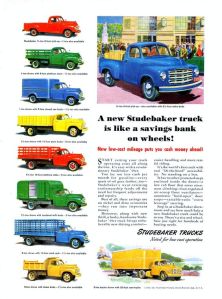
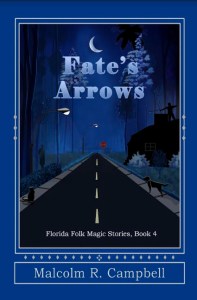 The characters, such as my protagonist in Fate’s Arrows drive cars. Okay, what makes were they and when were they available?
- My protagonist is an archer. What kind of bow did she use and what kind of damage would an arrow inflict when it hit a person?
- My protagonist, Pollyanna, was a Marine who learned Karate in Okinawa like a lot of other soldiers at the end of WWII. So, what techniques will she use when attacked back in the states?
- Most people know little or nothing about the Korean War. Fortunately, I had a good source book and that allowed my character to mention things that happened, along with the exploits of the forerunner of the CIA.
- In the novel, she’s auditing the books of a small grocery. Fine. What products are in the store?
- And since the KKK is involved–this is Florida in 1954–that means reading more about that group than anyone would want to.
Basically, if somebody coughs in your novel and grabs for a bottle of cough medicine, you have to find out whether that cough medicine even existed when the novel was set.
If you were around at the time and place your novel is set, you can’t even rely on your memory. Most people don’t remember nitty gritty specifics. They know they grew up listening to a song on the radio, but do they know what date it was released? Probably not.
When we write our novels, everything is open to question even though we’re writing fiction.
 What would I do there, she wondered. I said that I’d hire on at a sheep ranch and/or drive concessionaire busses trucks in Glacier National Park.
 Adults are hard to buy for unless they all live in the same house like the Waltons. When we’re living far flung around the country, we seldom know what people might want, and should we guess wrong and send something without checking, they’ll probably already have it or they won’t like it.
 But, the adults can do nothing for each other without a list. For better or worse, the older I get, the less “stuff” I want. If I need it, I’ve already bought it. So, that leaves books. I give the list to my wife, she picks something and gives the rest of the list to my brother and his wife.
  I’ve read most of Shaara’s books and like them a lot. When this book about Pearl Harbor first came out, an early reviewer on Amazon said Shaara’s research on To Wake a Giant was sloppy. Fortunately, another reader reviewer proved that the first reviewer was incorrect. Thank goodness! Shaara tells readers in most of his books that he’s a novelist rather than a historian. Yet, he takes special care to be accurate. Authors are not supposed to take on reviewers, but I hoped he would correct the Amazon reviewers who offered up fake history to prove he didn’t know what he was talking about.
 John Hart writes tough, detailed novels such as The Hush. While I’m looking forward to The Unwilling, a book Hart held back a year due to the pandemic, it’s still in pre-order status. So, I opted for Down River for my list. You’ll notice I only have books from major publishers here.


 “It was a dark and stormy night” is a cliche, one used so often that it’s often pointed at with laugher and derision whenever it shows up. Stormy nights are often included in a series of tropes that used to appear in old movies: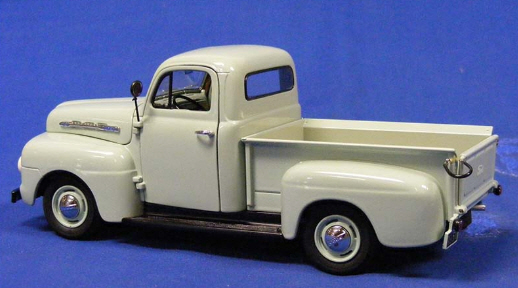



 The last scene took place at a grocery store. Okay, when somebody entered the store, what kinds of posters, die-cut signs, and hand-written specials did they see on the window sill or window? I found a great Noxzema suburn cream sign, a nice Planters Peanuts poster, and a list of the meat prices per pound.
 What are they having to eat? I knew part of this already, but did a bit of online checking. The menu: porterhouse steak, corn, collards with ham hocks, baked potatoes, corn bread, and macaroni salad. The men are drinking either Jax Beer or Old Overholt Rye whiskey. I would enjoy all of this except for the Rye which I never liked.
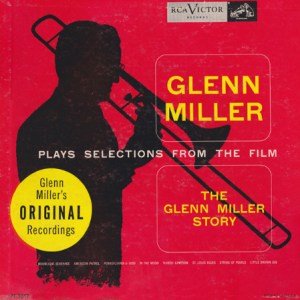 had a three-in-one (78, 45, and 33 and 1/3 rpm) record player, I needed to make sure they had something to listen to. Since the men in the family are KKK members, they won’t be listening to jazz, blues, or gospel. Glenn Miller seemed like a safe choice.
 Just to get it out of the way, “Elmer Gantry was drunk.” is my favorite first line because it so aptly sets the stage for Sinclair Lewis’ 1926 satire. It’s likely there aren’t a lot of people reading that book these days, though there was probably an upsurge when the powerful 1960 film starring Burt Lancaster, Jean Simmons, and (in a role like no other in her filmography) (Shirley Jones. I enjoyed both the book and the movie even though they’re very different.
 Malcolm's Round Table