What happens to the world if this post goes viral?

You are reading a post called “What happens to the world if this post goes viral” with a disquieting sense of deja vu that it has already gone viral and you are just now finding out about it (having been in prison or having sex or simply busy at work) and/or that the whole thing hasn’t happened yet and is coming to you from the future. Either way, if it goes viral and/or already has gone viral, what in fact will be the result?

Here are the probabilities:

  1. It (this post which, in your reality, you think you are reading right now even though–as you will see–you probably aren’t) will pick up speed and become so ubiquitous nobody will remember where they saw it first or if they just heard about it so often they began to believe they saw it, to the extent that some people will become alarmed and start warning about the world tilting on its axis or frogs falling from the sky or various magic men coming down from their mountains to tell us once and for all the meaning of life.
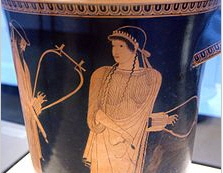
  2. Sappho on a vase found years ago in an attic.
    Sappho on a vase found years ago in an attic.

    The speed of this post will exceed the speed of light and, as Einstein predicted, will become younger and younger until it ends up appearing on MySpace or an ancient CompuServe forum, ultimately to be discovered mixed into the poetry of Sappho that will be discovered 200 years ago on a papyrus long thought to have been lost or mixed up with the Nostradamus prediction about rogue photons calling out of the sky on a summer evening in 1566 or 1966 (depending on the translation).

  3. It goes without saying that all of you who leave pithy comments will become either famous or infamous (perhaps both) and will start getting movie deals, hearing from old flames, learning that you forgot to pay a parking ticket in Carson City 15 years ago and now (with interest) you owe more money than most people earn in a lifetime even though, quite possibly (fate being what it is) time will move backwards and you’ll be talked about on the streets of London and Paris years before you are born, completely tangling up the records at Ancestry.com.
  4. Once something becomes ubiquitous, people (especially conspiracy theorists) begin debating whether it’s a blessing or a curse with everyone pointing fingers at the top Presidential contenders and demanding that if they are responsible, they apologize or lamely say they misspoke or, if elected, have new laws ready to put on the books to contain the real or imagined dangers that may or may not occur either now or in the past.
  5. As a famous scientist will say in the future or past, depending on which universe you hang you hat in, there is no containing rogue photons that spin off into lives of their own when a viral post collides with the sides of voynichbent space, causing people who we’ve always thought to have lived in the past to have not lived there, or if they did, did things differently so that the future changed in ways that could not be predicted, one of them being that this post ended up never being written at all.
  6. Once this post flows backward in “time” to 1916, Einstein will see things differently or even dream things differently so that the general theory of relativity takes on either new meanings or collapses altogether depending on whether one is there to observe the event or not (like that darned cat that may or may not be dead in the box).
  7. People–and we don’t yet know who they are except that they probably live in Nebraska–will start decoding this post with the same fervor similar people have hopelessly tried to decode the Voynich manuscript, and there will be among them advanced code breakers who will begin to find that when the letters in this post are shaken up and mixed with every other word from Finnegans Wake the result is a new set of theories for the meaning of life, how to achieve immortality, and even who will be standing outside your house every Bloomsday to see if you’re reading Joyce or, heaven help you, Barbara Cartland.

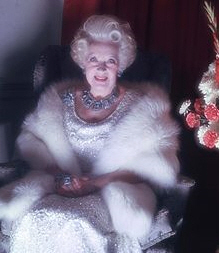
    Cartland
    Cartland
  8. New religions and political parties will be born out of the chaos of dreams and the dreams of dreams that have no beginning and no end, advocating on one side of the coin that this post is total nonsense and that everyone who left a comment on it is a daft buffoon, and on the other side of the coin, that this post is part of the great shift in consciousness predicted by seers and soothsayers and what this means for you–the innocent reader–is that your will be swept up into arguments and/or country songs and/or various legends that will show everyone just how silly and/or profound beliefs can be when everyone is talking about them at once.
  9. You will discover that you’re not the same person that you were when you started reading this post and that, depending on how the magic hidden within it impacts your psyche, you will either join new causes and help save the world or you will hide in a cave until the world blows over (figuratively speaking, perhaps) and in the final analysis you will wonder what kind of synchronicity exists in a world where a post like this appears seemingly out of nowhere (unless you think Sappho wrote it) and comes to your attention on a day when you had no reason to be logging on to WordPress, MySpace or CompuServe (depending on which time period you ended up in).
  10. Bacon
    Bacon

    Assuming that all of this is true, chances are optimal that you are either not reading this post right now or–just as likely–you are a sage living at the time of Frances Bacon who is quite certain that whether Shakespeare wrote the plays or not, some of the lines in this missive were hidden away in misplaced early draft of “All’s Well That Ends Well,” or on the other hand, assuming that none of this was true while the post was being written, once it’s ubiquitous it will become true, proving once and for all that cause and effect isn’t quite what we thought it was, but true or false, it appears that there’s nothing we can do about anything that becomes viral.

Looking for lust in all the wrong places

While doing research for another short story that  includes a few conjuring tricks, I came across a lust potion.

lustclipartTraditionally, a fair number of people stop by their local root doctor’s house for a little help getting lucky in love or gambling (which are pretty much the same thing, at times). While you can pick up powders and oils such as “Follow Me Boy (or Girl)” to persuade others to find you attractive, many practitioners don’t like tampering with a prospective lover’s free will.

It’s one thing to cast a spell to keep your spouse from cheating on you; it’s another thing to compel somebody to fall in love with you–that wouldn’t be true love, right?

This lust potion is powerful stuff. Heck, right after reading it and visualizing how it might work, I chanced to see a picture of the late Grandma Moses and my immediate reaction was, “Whoa, that chick is hot.”

Some writers have been criticized for, say, putting too many details in their work about how to cause death and destruction, that I feel I must say that causing lust in ones readers might be almost as dangerous.

Just as a responsible writer wouldn’t put the directions for making an A-bomb out of the stuff in a medicine cabinet, a merciful storyteller shouldn’t put the directions for causing lust in a story. Heaven help us if somebody rushed into a Walmart and sprinkled this stuff around or threw it out the car window on I-75.

Where would we be today if Jerry Leiber and Mike Stoller had listed the ingredients in their “Love Potion No. 9” classic back in 1963? We know the stuff smells like turpentine, but (fortunately) dowsing oneself in paint thinner doesn’t cause amorous feelings in normal passersby. But thank goodness we don’t know the complete recipe.

So, I’ll mention the potion in the story without the recipe and let all my readers who are looking for lust in all the wrong places create their own opportunities. Oddly enough, the potion includes nutmeg. Using nutmeg by itself won’t cause lust, though it might make a person remember their favorite pumpkin soup.

–Malcolm

KIndle cover 200x300(1)Malcolm R. Campbell is the author of Conjure Woman’s Cat, a 1950s-era novella about a black cat named Lena who helps  her best friend do magic.

Perhaps we’ve lost too much of the magic

“‘The ancient world was full of magic,’ writes novelist C.J. Cherryh.  ‘Most everyone north and northwest of the Mediterranean believed that standing barefoot on the earth gave you special knowledge, that the prickling feeling at the back of your neck meant watchers in the wood, and that running water cleansed supernatural flaws.'”

–On Myth and Magic in Terri Windling’s post

Since we, as a world, have grown up, most people no longer believe this; or, if they do, they don’t admit it.

Ignorant superstition or pagan religion: that’s how such ideas are often categorized.

fantasyartIn one of my novels, I said that we’d exchanged magic and wonder for science and technology. Goodness knows, there have been benefits to some of that. But it seems a little skewed to me.

Too little magic. Too much technology. Some say, that our technology will one day rule us (literally, not figuratively as it does now) and will become so self-aware that it (the computers and machines) will decide that humans are no longer needed.  Kind of like the Terminator movies.

I’m subversive when it comes to magic. I put it in my fantasy novels where it seems almost natural enough to be real. I hope some readers think it’s real by the time they finish the books. If not that, I hope they are willing top ponder the question of its reality with open minds.

Perhaps we’ve most too much of the magic because we never believed enough in ourselves as individuals. Did we assume scientists, inventors, governments and corporations knew more about everything than we did? Did we see ourselves as too small to trust what our hearts suggested to us?

Hard to say. The magic discussion can get very circular because it’s often said, you won’t find magic if you don’t believe in it. That may be true, but it’s also convenient because it’s a false method of trying to prove a point.

Maybe we don’t have to believe in magic to find it. Maybe all we have to do is entertain the possibility that it’s there. It’s not too difficult to walk barefoot across a field or a beach and see what happens. Naturally, doing that with our arms crossed and our minds cynical isn’t going to help. Better to play. To dance there or enjoy the scenery with all of our logic on hold.

In my stories, I suggest magic is there waiting for characters to see it. Some do, some don’t. Maybe those who see it are crazy fools, but what if they’re not? If we dismiss things out of hand, we’ll never know.

–Malcolm

Malcolm R. Campbell is the author of the upcoming folk magic novella “Conjure Woman’s Cat.”

How to create a whoopass wall of protection

Did you ever notice how tough guys in movies and brainy guys on science shows are always claiming that a darned good bomb can be made out of the contents of a family’s medicine cabinet?

The first time I heard this I was a kid in the days when kids were still allowed to play with fire, cap pistols, bows and arrows and cherry bombs. How exactly would I make a darned good bomb? Would I mix Preparation H and Vagisil? Or, possibly hydrogen peroxide and codeine. (In those days, the feds allowed people to buy codeine, paregoric and other miracle meds).

The thing is, nobody who claimed to know how to turn a medicine cabinet into a bomb ever explained how.

I have no interest in making a bomb, but I wonder what–as a writer–I should do if a character in one of my books was fighting bad guys, needed a bomb, and ran into the bathroom to throw one together. How should one realistically describe what he does?

Look, I’ve read plenty of thrillers written by people who know everything in the world about bombs, guns, aircraft, submarines, martial arts, police procedures, &c. They never say, “Bob grabbed a gun before he got on the helicopter.” For purposes of reality–and to prove to readers they know their subject matter–they state what kind of gun in was, what kind of helicopter it was, and spout out a bunch of stats like they’ve got the owner’s manuals with them.

What about magic?

Rowling has already confessed to using fake spells in the Harry Potter books. They’re kind of cute, actually. But they don’t do squat. I’m sure a lot of people went around shouting Accio Money and Avada Kedavra  before Jo told the world she didn’t give us the real stuff.

So now, I’ve got an ethical dilemma as I work on my conjure woman novella. I’m a fanatic about realism because I think it’s a wonderful foundation for the magic. If the stuff people already know is obviously real, then they’ll think the stuff they don’t know is also real. (That’s not logical, but it works in books.)

Suffice  it to say, that if Rowling used real spells or if some book called “Mega-Enforcer Dude” gave a step-by-step recipe for making a bomb out out Preparation H, folks would be getting hurt. But, the details have to sound plausible because: (a) you don’t want people who know how to make spells and bombs writing bad reviews on Amazon saying the recipes were a bunch of crap, and (b) you hate being dishonest with your readers.

There’s a wonderful conjuring spell called The Whoopass Wall of Protection (not its real name). As she fights the bad guys, my conjure woman needs to use this spell. But I can hardly say she dumped “a bunch of stuff” out of a sack. Nobody will believe she knows squat or, worse yet, that I (as the author) know squat. I can use footnotes to tell readers that the real Whoopass spell isn’t included, but footnotes turn people off because they start thinking they’re reading a doctoral dissertation and, trust me on this, nothing is more boring that that kind of writing.

Perhaps I should give a few hints to satisfy those craving reality as well as those who really know the spell. “Lucy dumped a sack filled with cornmeal, coffin nails, rue and pepper on her sidewalk.” Okay, that could work, but it doesn’t really plunge the reader into the moment, does it?

This is going to require some careful thought. If you’re a writer, perhaps you can offer some advice about just how much dangerous information should be included in a novel for the sake of accuracy.

If you’re a reader, just how much do you want to know? And, if the novella included the real spell, would you promise not to use in unwisely?

Related Posts

Malcolm

Malcolm R. Campbell, as you may already suspect, writes magical realism, fantasy and paranormal stories and novels.

My Writing Process – A Blog Tour Interview

When Rhett DeVane asked me if I wanted to be in a blog tour in which each author talks about his/her writing process, I laughed and thought, “What writing process?” So, I had to think about it for awhile. . .

What am I working on?

Lucky Mojo Site
Lucky Mojo Site

After writing contemporary fantasy set in the Rocky Mountains, I’ve been having fun going back to the Florida Panhandle for short story settings. I’ve become slightly more ambitious with the novella I’m writing set near the Apalachicola River. The story involves folk magic, nasty people, tragedy and the atmosphere of the piney woods world as it as in the 1950s. I usually work magic into my stories one way or another, but having a protagonist who is a conjure woman is something new for me. And, it’s been a hoot. So has the research!

One thing you see right away when checking into old books or contemporary hoodoo sites is that hoodoo is not the same as Voodoo. Hoodoo is folk magic; Voodoo is a religion. The other thing you’ll see is that while lots of people say they believe in magic, either “The Law of Attraction” on one hand or Harry Potter and Gandalf on the other.  Meanwhile, Hoodoo is written off as a cluster of ignorant superstitions. I don’t intend to treat it that way in the book. My hope is to do justice to another kind of magic while telling an exciting story.

How does my work differ from other of its genre?

MoonLightandGhostsI read a lot of fantasy, but that doesn’t make me a spokesman for the genre. That said, it appears to me that the fantasy most in fashion these days is (like Game of Thrones) set off-world or in our world after some catastrophe has wiped out society as we know it.

My writing focus is contemporary fantasy and paranormal. Contemporary fantasy is set in our world or in a world/universe/region close by. My work probably is probably closer to “reality as we know it” than most.

That is, I’m going to be using real settings and mentioning the differences, let’s say, between those who believe in magic and those who believe in science an technology. When I write paranormal stories, my work differs from others because there’s none of the Hollywood-style occult in it. I’m more likely to focus on ghosts and strange coincidences than vampires, demons, etc.

Why do I write what I do?

Celebrating the magic and wonder of the natural world

I like the interplay of people and the places where they live. Places tend to have an ambiance about them that’s not only tangled up with what’s going on there now, but is also influenced by old legends, tall tales, and the people lived there in the past. Since I believe there is much more to the world than what our scientists and our five senses are showing us, I like writing stories that the readers will see as possible. That is, I try to make the magic as close known techniques (real or imagined) as I can.

How does your writing process work?

When I start a book or a short story, I don’t know where it will end up. I become intrigued with a theme or a place or a prospective character and start fiddling with the idea. Quite often, the story will start to take shape as I look at source information about the place where it will be set, the kind of work the characters do, and the magic they’re familiar with.

The story takes shape while I write it. That means I’m just as in the dark about the outcome of the story as readers will be when they pick up the finished book.

The Tour

RhettA big thank you to Rhett DeVane (Suicide Supper Club), Southern fiction author from Tallahassee, Florida. You can find Rhett at her website: www.rhettdevane.com or on her blogs: www.writers4higher.blogspot.com and www.southernhat-tidude.blogspot.com

Rhett lives in the town where I grew up, so she gets leaned on from time to time to update me on, say, whether a restaurant is still open or if nearby attractions still have one tour or another when I write stories about the Florida Panhandle. (I haven’t been there since the 1980s and there has been a fair amount of change since then.

ClaytonphotoYou may also like hearing about author Melinda Clayton’s writing process. I know I would because she writes wonderful stories including Blessed Are The Wholly Broken. I’m hoping I’ll get some tips that will speed up my “writing process.” She’s blogging over at GoodReads.

Melinda also lives in Florida, but since I haven’t yet come up with a story to set in her part of the state, she’s escaped the kinds of questions I send to Rhett.

Malcolm

$1.99 on Kindle
$1.99 on Kindle

Malcolm R. Campbell’s Florida stories include “The Land Between The Rivers,” “Emily’s Stories,” “Moonlight and Ghosts” and “Cora’s Crossing.”

Let’s connect on Google+


On Location: Decatur, Illinois

Current Central Park Location

The Decatur I knew from many childhood vacations to visit my grandparents on West Wood Street no longer exists. My grandparents house, featured in novels The Sun Singer and Sarabande, has been torn down for reasons unknown.

The interurban trains and the streetcars are long gone and the old transfer house where people changed trains and buses in Lincoln Square is now an heirloom in a city park. Since I haven’t been to Decatur for years, I don’t know whether the pungent odors from the Staleys plant still blanket the city when the wind is blowing the wrong direction.

Fairview Park is still there–minus the passing interurbans–and I see from maps and park brochures that it has evolved over the years. It still sits a few blocks away from the place my grandparents’ house once stood. It was perfect for day trips and–a half century later–equally perfect as a location setting in my novels. As children, my brothers and I hiked in nearby Spitler Woods.

Greenwood
Greenwood

I’ve heard that the notorious Hell Hollow has been cleaned up, but that on certain evenings one can still see ghostly lights in Greenwood Cemetery. The Haunted Decatur website claims that the dead still walk and, quite frankly, that is something I would like to see. A few miles down the road, the trails of the widely known Allerton Park echo in my memory as well as in my novel The Sun Singer which was named after the famous statue in the park.

Childhood’s Magic Calls Me Back

As an author of contemporary fantasy–that is to say, fantasy mixed into real locations as in the Harry Potter series–I have variously used Glacier Park, Florida’s Tate’s Hell Swamp, Decatur and other locations as story settings. I have mixed the old and the new by tangling up personal memories and the histories of these locations in my work.

historicdistrictRobert Adams in The Sun Singer visits Allerton Park and has a psychic experience–as I once did–beneath the Sun Singer statue. In my upcoming short story “The Lady of the Blue Hour” for “Aoife’s Kiss  Magazine,” I blend myths and history from the days when Illinois was a French Province with a young man who lives on West Wood Street next to my grandparents’ house. And, in my soon-to-be-released novel The Betrayed, I set much of the action at a fictional college and tangle that up with the streets and houses in Decatur’s West End Historic District (not too far from where the Transfer House once stood).

While I enjoy mixing contemporary fantasy, location setting history and personal memories together in my stories, I  don’t necessarily advise other writers to do it. It makes it difficult at times to separate real memories from one’s fiction. The real location settings make fantasy more believable, I think. The real-life experiences–readers don’t know which events those are in the story–make fantasy more dear to the author during the writing process.

Sun Singer at Allerton Park in nearby Monticello

This quote from author P. L. Travers (author of the Mary Poppins books and a primary character in the new feature film Saving Mr. Banks) closely approximates my beliefs about the stories I set in Decatur: “We cannot have the extraordinary without the ordinary. Just as the supernatural is hidden in the natural. In order to fly, you need something solid to take off from. It’s not the sky that interests me but the ground. . . . When I was in Hollywood the [script] writers said, surely Mary Poppins symbolizes the magic that lies behind everyday life. I said no, of course not, she is everyday life, which is composed of the concrete and the magic.”

Naturally, my stories about ghosts, flying horses, magic avatars’ staffs and alternate realities and universes cannot be published under the banner of realism or mainstream fiction. So, while much of what I write about Decatur and Glacier Park and Florida Panhandle swamps is real, I’m officially a contemporary fantasy author. I don’t mind: I read a lot of fantasy.

And, when I read fantasy, I wonder how much of the magic is real and how much of it is truly fiction. However, since this is another of my “on location” posts, I assure you that Decatur, Illinois is real–or mostly real, depending on who you ask.

–Malcolm

Malcolm R. Campbell is the author of Conjure Woman’s Cat

Writers, what brings you feelings of awe?

“The heart of it all is mystery, and science is at best only the peripheral trappings to that mystery–a ragged barbed-wire fence through which mystery travels, back and forth, unencumbered by anything so frail as man’s knowledge.” – ― Rick Bass, The Sky, the Stars, the Wilderness

Montana thunderstorm - photo by chrisdat on Flickr
Montana thunderstorm – photo by chrisdat on Flickr

We often use the phrase awe-inspiring to describe sunsets, powerful storms, scenic mountain vistas, our favorite music, heroes and heroines and all manner of other things that are larger and more wondrous and more powerful than ourselves.

Before we can tell memorable stories, we need to discover what in our lives is awe-inspiring and then hold that close in our hearts and celebrate it and allow it to flavor our writing. When we do this, we link up to the readers’ on-going search for the kinds of plots and themes and characters that add magic and wonder to their lives.

Larger than life characters are part of the mix. So, too, exotic locations, the dangers of wind and sea and storms, tranquility and peace so dear one can almost touch their source, memorable choices that place characters at risk, and love in many forms.

If you, as a writer, feel awe as you think about the subject matter, location, plots, themes and characters of a prospective story, you have a better chance of connecting with readers than you would if everything about the project seemed rather flat and monotonal.

Your story need not be something over the top like Lord of the Rings, The Da Vinci Code, Raiders of the Lost Ark or Game of Thrones to inspire awe as you write it and as readers discover it. Quiet moments can also inspire awe; so can low-key plots. The awe comes from you and on how you react to the world.

If mountains inspire you, then you will write of mountains. If children inspire you, they will find their way into your stories. If something attracts and holds your attention and “asks you” to contemplate its beauty, mystery and power, then you will end up the best kind of nourishment for writers.

Malcolm

I find awe and wonder in mountains. I cannot help but write about them. You will find mountains in The Sun Singer, Sarabande and The Seeker and, I hope, a dash of awe. They also contain magic, but you expect that because they are contemporary fantasies!

A Glacier Park Novel

What if Harry Potter Bought the House Next Door to You?

WHAT IF?

Few questions are more important to a writer. So, what if Harry Potter bought the house next door and wasn’t shy about who he was and what he could do? Really, Harry Potter himself, not Daniel Radcliffe.

Of course, the real Harry Potter—if there is one—is part of a secret world that “in real life” we would never know anything about. There’s a reason for that: people who are different are usually shunned, persecuted or worse.

The first traditional rule for the adept—alchemist, psychic, shaman, wizard—is KEEP SILENT. If he lived next door to any of us, the real Harry Potter would probably appear as unassuming as Clark Kent in the Superman stories.

But, as long as we’re playing WHAT IF?, let’s say Harry is sick and tired of staying in his figurative closet. (Actually, he did stay in a closet at his foster parents’ house—what a nice touch of symbolism on Rowling’s part).

Time for the Welcome Wagon

When a new family moves into a neighborhood, people are curious. They drop by with pies and casseroles partly as a way of starting things off with a friendly “hello” and partly as a way of getting a look at the new folks to assess how they’re going to fit in. Times might be changing, but even today there are many neighborhoods in which the “welcome committee” will be displeased if a Black, Jew, Muslim, or Gay answers the door. In other neighborhoods, Whites, Catholics, and Japanese “don’t belong.”

In scholarly literature, those who don’t belong are often referred to as The Other. They are outside the mainstream. In the Harry Potter books, witches, elves, wizards and giants are outside the mainstream of English society. Even within the magical world itself, there’s a hierarchy about who’s “in” and who’s “out.”

Fantasy offers readers unlimited opportunities to come to terms with what’s different, what goes against the mainstream scheme of things, and to consider whether the consensus reality of “real life” must be engraved in stone or not. Fantasy lets us safely question “what is.” While reading a Harry Potter book or watching a Harry Potter movie, it’s easy to feel simpatico with Harry, Ron, Hermione,  and Dumbledore, and perhaps even to feel a bit sorry for the everyday people in London who don’t know anything about the magic in their midst. Just think of all they’re missing!

But What Happens When We Get to the End of the Book and the Last Movie?

Here come Harry’s friends!

Picture this. The moving van has pulled away and the new family—who looked normal enough while carrying boxes into the house—has gone inside. So, you put together your best cherry pie or your favorite Hamburger Helper meal (depending on your skill in the kitchen), and you go next door and ring the bell.

A dark-haired guy comes to the door. He’s wearing well-aged dungarees and a polo shirt. He smiles and says “Hello.” But, before you can introduce yourself, his son—whom you can see down the entry hall in the living room—shouts Avis! and a flock of pigeons appears out of nowhere and flies past you en route to the wide open sky.

What happens now?

  • The guy who answered the door says, “Hi, I’m Harry,” and acts like the thing with the birds didn’t happen.
  • You ask, “How did he do that” and Harry says, “No big deal, it’s just James Sirius having a bit of fun.”

It’s not quite like seeing it in the movie, is it? As I play with this WHAT IF question, I like to think that the world has progressed a lot between the time when TV viewers were watching Rob and Laura Petrie at 148 Bonnie Meadow Road in the Dick Van Dyke Show and all the Wisteria Lane families on Desperate Housewives. We are more likely to welcome Harry today than we were in the 1960s, aren’t we?

What do you think happens if Harry Potter moves in to your neighborhood and, along with his wife Ginny, makes no secret of his skill with spell casting and potions? Will the neighbors accept him with open arms the way they did while reading Rowling’s books, or will they stay away?

This is not a WHAT IF question I plan to use for the plot of my next novel. If I were Dan Brown, I might show that Rowling’s books weren’t fiction at all and that the guy next door is probably attracting the wrong kind of attention from, say, Homeland Security, the mob, and various terrorist groups. If I were Katherine Neville, I might show that in spite of his skills, Harry needs the help of my protagonist, say, Bill Smith, who has to go on a search for the real Nicholas Flamel to save the neighborhood. Or, if I were Tom Clancy, I’d probably have a couple of CIA operatives show up to assess “which side” Harry was planning to help “win” with his most powerful spells.

Do We Want the Fantasy Characters to Just Stay in Their Books Where They Belong?

We love fantasy whether it’s epic, contemporary, urban, steampunk, heroic or another sub-genre. In the books, Harry Potter was viewed as the hero who saved the magical world and (by readers) as one of the most-loved characters in fiction.

But WHAT IF Harry, Ginny and the kids moved into your neighborhood. Would it all become one happy family with baseball games on Saturdays and Quidditch matches on Sundays? Or, would Harry, Ginny, and their friends from Hogwarts and Diagon Alley remain separate in their house and yard as The Other?

What I think would happen and what I would like to see happen don’t match up here. Even so, I like asking the question WHAT IF?

Malcolm

Malcolm R. Campbell is the author of contemporary fantasy, including the 2011 novel Sarabande from Vanilla Heart Publishing.

Allowing your story to happen

“Leopards break into the temple and drink to the dregs what is in the sacrificial pitchers; this is repeated over and over again; finally it can be calculated in advance, and it becomes a part of the ceremony.” – Franz Kafka, from his Zürau aphorisms

When I first read Kafka’s temple ritual aphorism in high school, I was enchanted with logic. I believed that including the leopards either suggested that the ritual was meaningless and/or that the leaders were simply lazy and expedient. In high school, we were taught to plan, outline and research our fiction and nonfiction in advance to ensure that we said what we meant. Stray leopards in our prose might suggest otherwise.

Over the years, intuition and a love of apparent chaos have replaced logic in my life–and in my writing–as the primary inspiration behind what I’m doing and saying. Now, when I see Kafka’s aphorism, my thought is that the leopards had, in fact, been missing from the ceremony from day one.

Had the temple leaders maintained security and vigilance, the leopards couldn’t have gotten into ritual. The same is true, I think, for writing. Too much logic and too much planning can keep out the very things your story needs. Needless to say, if you allow something to enter and decide it really doesn’t help the story, you can edit it back out.

Author  Diana Gabaldon once mentioned during a research discussion on a writers’ forum that while doing research about ABC she would inadvertently stumble across XYZ. Once she investigated XYZ, it turned out to be vital to the plot and theme of her book even though she had never considered it before. Was her discovery magic, synchronicity, a butterfly-effect phenomenon, or an example of her subconscious mind “knowing” the material was there and leading her to it?

I’m not sure. And really, I’m less likely to stumble over the leopards trying to get into the temple if I don’t worry about how they found the temple or managed to appear at the proper time.  So, I leave my work open to chance. In his book Voice of the Muse: Answering the Call to Write, Mark David Gerson suggests that the stories we tell are already out there (don’t worry about where), just waiting for us to listen. If we don’t listen, we won’t hear them or, perhaps, if we do hear them, we’ll censor out the leopards because they weren’t included in the original plan.

Over the years, I’ve come to think that events and ideas that seemingly come out of nowhere are often the most meaningful. And, they can send our lives and our stories off on the most surprising pathways. In her post How an African Intruder Taught Me a Lesson on Magic and Writing, author Smoky Trudeau Zeidel wrote about a guineafowl that wandered into her neighborhood. She named the bird Gertie. Its appearance there was probably just as unlikely as a leopard in the local temple.

“All sorts of Gerties have popped up in my Work In Progress (WIP), The Storyteller’s Bracelet. Not guineafowl, these Gerties, but surprises that seem to have materialized out of nowhere,” she said. (She and I were content to label the appearance of a Gertie of any kind as magic.) Her view is that “when magic enters your life, be it through an unexpected visitor from another continent or through your words, it is best to go with it.”

I agree. Going with it is part of allowing your story to happen.

Malcolm

Malcolm R. Campbell is the author of magical realism and contemporary fantasy novels, including “Sarabande.”

The Magic of Harry Potter

from Sarabande’s Journey:

J. R. R. Tolkien is credited with bringing epic fantasy back into the lives of mainstream readers. We can also claim that J. K. Rowling’s popular Harry Potter books not only fired up the reading public’s love of contemporary fantasy, but introduced the concept of books to people who seldom read novels at all.
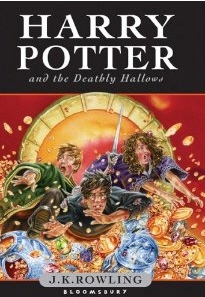
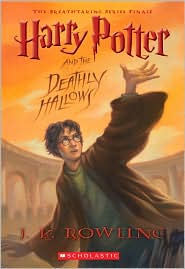
Fourteen years after her U. K. publisher (Bloomsbury) released the first, tentative thousand copies of  Harry Potter and the Philosopher’s Stone (renamed in the U.S.), her fans continue to wait for word, any word, that there might be another Harry Potter novel. In 2007, the release of Harry Potter and the Deathly Hallows sold a record 8.3 million copies in the United States in the first 24 hours.

Any other author would have been told not to use the word “hallows” in a book title since the term wasn’t in the public’s consciousness. But Potter fans lined up and bought the book while debates raged on about what “hallows” might be.

The popularity of  Rowling’s books has been called a “black swan event.” Developed by Nassim Nicholas Taleb and explained in his book The Black Swan: The Impact of the Highly Improbable, the theory examines rare events that could never have been predicted or planned and that even in hindsight, usually cannot be duplicated. Taleb himself considered Harry Potter, as a publishing event, a black swan.

Journalist Will Hutton believes Rowling’s success transcends the quality of the books themselves. “Rowling is repeating the Da Vinci Code effect – but much more shrewdly,” he writes. “In the creative industries success always begets more success, but in an era of globalisation the success can be very big indeed, as both Rowling and Dan Brown can testify.”

Hutton, and others, think globalization and the viral phenomenon of ideas, books, movies songs suddenly becoming popular seemingly everywhere is more responsible for Harry Potter’s popularity than the quality of Rowling’s books.

Is Harry Potter’s Success Simply Books Going Viral Around the Globe?
U.K. cover

Based on Hutton’s theory of why a Da Vinci Code Effect book does so well we could, let us say, create a look-alike universe without television, cell phones, satellites providing news in real time, and the Internet, and then display the Harry Potter books (one person at a time) to 8.3 million readers. Hutton would say that Rowling’s sales in that universe would be a fraction of what they are here. He may be right.

But that still leaves us with the question of: “If the outside influence of millions of people saying the books are great is what caused each reader to pick up a Harry Potter book, what caused them to enjoy it so thoroughly and read and re-read it so passionately?”

While peer influence is a powerful thing, reading is a solitary act. Top ten songs are easy to share in a way that further leads to their enjoyment and popularity. People listen to them together in cars and break rooms and parties and hear them in large groups at concerts. While the Harry Potter movies were shared by theater audiences in real time, the books were not. Each reader had to choose to sit in a chair, curl up in a hammock, or prop up in bed and read the book by himself and herself. Like all reading, Harry Potter represented an investment in time.

Many have said that in addition to Rowling’s creative and imaginative mix of characters, themes, and settings, the books’ success comes in part through their believable account of a rather geeky (yet lovable) underdog becoming so empowered, he was able to effectively battle against the adult, experienced and highly skilled bad wizards in the book. Noticeably, the good adult wizards teaching magic at Hogwarts had very little to do with the triumph of good over evil in each book.

In a world where most of the news is bad and most of the global issues seem impossible to solve, the prospective readers of the Harry Potter books found a wonderful antidote in Rowling’s books to the negativity, hopelessness and alienation prevalent in so many people’s lives and world views. Rowling’s stories are inspirational: even the most hard-hearted and logical adult can read them with a sense of wonderment and empowerment.

Far from being escapist reading that captures readers’ imaginations while they are reading, the Harry Potter books—through some we-don’t-really-understand-it mix of Rowling’s genius and a black swan publishing event—continue to delight and inspire readers after they finish the books.

In Fantasy, Magic is a Positive Symbol for What You Can Do in the Everyday World

While J. K. Rowling’s Voldemort is just as nasty as the bad guys found it occult horror books, the Harry Potter series illustrates one important difference between fantasy and other so-called paranormal books. In fantasy, magic is viewed as normal and a capability that the book’s protagonist can become allied with and even learn. This is the case even when there are Voldemort-type characters who are using the magic for evil reasons. In occult horror books, the magic, whether its seen as a typical component of the location or not, is something that is nonetheless alien and evil and to be feared. In supernatural horror stories and most mainstream fiction, the occult is considered abnormal, evil and threatening.

In fantasy, magic is seen as normal, as a talent both good guys and bad guys can utilize, and as something to be embraced. In many respects, the acceptance of and learned proficiency with magic represents a character’s personal transformation either figuratively or literally. Transformation is an important theme in fantasy. As such, we view it in fantasy fiction as symbolic of the non-magical transformations we can seek out an attain in our non-magical real world.

This is part of the empowerment one feels, I think, when they read Rowling’s books. The books stimulate the readers’ imagination, and they begin to feel the first inklings of wonderment about the prospects for their own success in becoming the best people they can be. They may still have a “Heart of Darkness,” as Joseph Conrad suggested in his novella published in 1902, but they can transcend it.

The Harry Potter books weren’t written as guides for living or as recipes for personal success. However, the magic (real and figurative) that readers discover in them and then internalize is a large part of their power.

–Malcolm

a contemporary fantasy of the dark moon