 Quite likely, most readers know Alice Hoffman through her “Practical Magic” series as well as The Dove Keepers. There’s such a variety in her work, that one might wonder if there are multiple Alice Hoffmans out there crafting her thirty novels. If so, her latest book The Invisible Hour, released on August 15th, which may or may not come from yet “another” Hoffman is a tempting treat.
From the Publisher
“From the beloved New York Times bestselling author of The Marriage of Opposites and the Practical Magic series comes an enchanting novel about love, heartbreak, self-discovery, and the enduring magic of books.
“One brilliant June day when Mia Jacob can no longer see a way to survive, the power of words saves her. The Scarlet Letter was written almost two hundred years earlier, but it seems to tell the story of Mia’s mother, Ivy, and their life inside the Community—an oppressive cult in western Massachusetts where contact with the outside world is forbidden, and books are considered evil. But how could this be? How could Nathaniel Hawthorne have so perfectly captured the pain and loss that Mia carries inside her?
“Through a journey of heartbreak, love, and time, Mia must abandon the rules she was raised with at the Community. As she does, she realizes that reading can transport you to other worlds or bring them to you, and that readers and writers affect one another in mysterious ways. She learns that time is more fluid than she can imagine, and that love is stronger than any chains that bind you.
“As a girl Mia fell in love with a book. Now as a young woman she falls in love with a brilliant writer as she makes her way back in time. But what if Nathaniel Hawthorne never wrote The Scarlet Letter? And what if Mia Jacob never found it on the day she planned to die?
“Nathaniel Hawthorne wrote: “A single dream is more powerful than a thousand realities.”
“This is the story of one woman’s dream. For a little while it came true.”
Reviews
Kirkus says that it’s “Not one of Hoffman’s best, but it may spark a desire to reread Hawthorne.” The Washington Post writes, “Alice Hoffman’s ‘The Invisible Hour’ is the latest fervent tribute to the power of literature and libraries.” The New York Journal of Books says, “With a truly imaginative structure, Alice Hoffman delves into what has become her trademark theme of magic. The Invisible Hour asks a grand ‘What if?’ Not so much the question posed on the book’s jacket: What if Mia Jacob never found the library or The Scarlet Letter by Nathaniel Hawthorne? The larger question the novel contemplates is whether a young woman can escape so deeply into a book, and fall so deeply in love with its author that she time travels to 1837 to be with him? “
Even though the reviews are a bit mixed, Hoffman fans care what they think, not what the critics think. Having read most of her work, that’s my approach to The Invisible Hour.
–Malcolm


 All the class websites have a FAQ section. I seldom look at these because I don’t have any questions and/or suspect the page will be a marketing ploy. So this post is for the bold, those willing to go where no one has gone before.

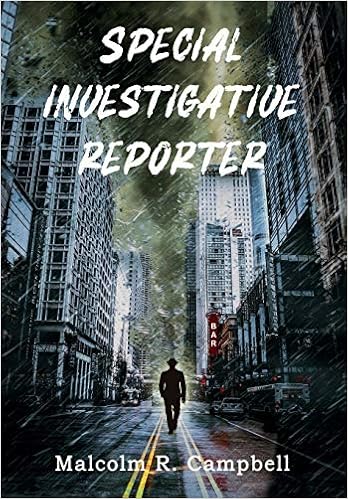
![Fate's Arrows (Florida Folk Magic Stories Book 4) by [Malcolm R. Campbell]](https://m.media-amazon.com/images/I/41wFeBTyGHL._SY346_.jpg) Fate’s Arrows. For your friends who like mystery/thrillers. Pollyanna is a bookkeeper at the mercantile in a small Florida town in the 1950s. Quite possibly, she’s more than she seems. The KKK has been a problem in this town for years. Now, somebody is fighting back with one calling card: an arrow with a hunting head.
Fate’s Arrows. For your friends who like mystery/thrillers. Pollyanna is a bookkeeper at the mercantile in a small Florida town in the 1950s. Quite possibly, she’s more than she seems. The KKK has been a problem in this town for years. Now, somebody is fighting back with one calling card: an arrow with a hunting head.
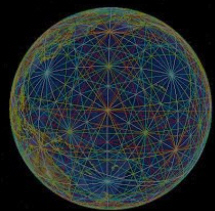 “Ley lines (/leɪ/) refer to straight alignments drawn between various historic structures and prominent landmarks. The idea was developed in early 20th-century Europe, with ley line believers arguing that these alignments were recognised by ancient societies that deliberately erected structures along them. Since the 1960s, members of the Earth Mysteries movement and other esoteric traditions have commonly believed that such ley lines demarcate “earth energies” and serve as guides for alien spacecraft. Archaeologists and scientists regard ley lines as an example of pseudo-archaeology and pseudo-science.” –
 ![Florida Folk Magic Stories: Novels 1-4 by [Malcolm R. Campbell]](https://m.media-amazon.com/images/I/51JM4A8GQFL.jpg)
 The ladders are known to have been around since the 1870s, but I suspect practitioners of the craft have used them for centuries. Typically, one sings, chants, or recites a specific of general spell element with the tying of each knot. A “simple” ladder often has nine knots and often uses this chant:
 Praise the universe for crooked roads.
 Malcolm's Round Table