 My stomach infection is about four months old because the GP decided to refer me to a specialist whose first available appointment was two months away. When I complained, the GP did a test, found an infection, and gave me antibiotics. They seemed to be working but the infection came back after they ran their course. I didn’t tell him because by now, I was at the specialist’s practice. She ran an upper GI which came back normal, then sent me back to the lab for the same test the GP ran many weeks ago. I like the specialist, but think the infection would be gone for good if the GP had handled the whole process. I love modern medicine. <g>
 I guess I’m watching “Yellowstone” because all my regular shows are still off for the summer and/or stalemated by the actors’ and writers’ strikes. The series is gritty and well-written but seems to be composed of all the possible cliches about life in Montana, including large ranchers being evil, the rez being a bad place, and all levels of state and tribal government being corrupt. I hate to say that I’ve become addicted.
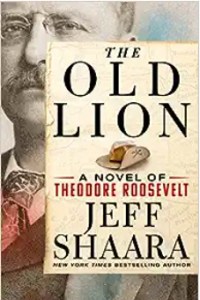 I liked Jeff Shaara’s historical novel about Teddy Roosevelt called Old Lion. Very readable, and also compelling even for those of us who’ve read TR biographies such as Mornings on Horseback. Up to now, Shaara’s novels have focussed on wars and battles. I guess he finally ran out of wars to write about. His battlefield novels are always told via the points of view of some of the major players. It took me a while to adjust to an omniscient narrator point of view in a Shaara novel.
- Years ago, I learned that food poisoning was a “great way” to lose weight. As it turns out, so is a stomach infection. They work faster than all those diet plans advertised on TV. They’re a no pain, no loss kind of thing.
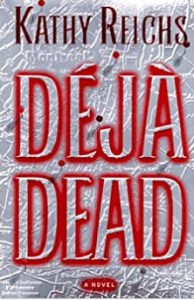 Well, it seems that most of the books I want to read haven’t come down in price yet. So, I’m re-reading many of my Kathy Reichs (Bones) thrillers, including her 1997 novel Déjà Dead. These are well-written and compelling even if you’ve read them before because there’s no way one can remember all the plots and subplots. Since her novels stem from her profession, one learns a lot about dead people and morgues. Like the TV series, the Temperance Brenan in the books likes skipping out of the lab and investigating what the police seem slow to focus on. Déjà Dead is her first novel. If you read enough of these, you’ll become well-versed in Quebecois profanity that you don’t hear in France such as “Tabernac.”
- Nice to see a little rain today in NW Georgia.
–Malcolm, author of “Conjure Woman’s Cat”

 As adults, some of us still do that. We watch movies multiple times. We re-read books multiple times. Each time that happens, we learn or notice something new. Right now, I’m re-reading Jeff Shaara’s A Chain of Thunder about Grant’s siege of Vicksburg and George Wald’s Therefore Choose Life (first mentioned in my blog
  One interesting point in the book is that man has no specifications and continues to evolve. Technological creations always have specifications and–not counting where AI might take us– technology is engraved in stone once it’s become a product. That is, it cannot evolve. Wald was well-known outside of scientific circles during the 60s and 70s because he was an outspoken opponent of the Vietnam War.
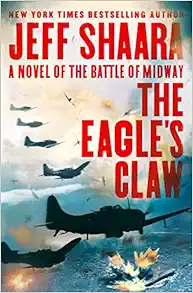 I have enjoyed all of Jeff Shaara’s books, but The Eagle’s Claw had a flaw in it, that being that Raymond Spruance, who commanded both the Enterprise and the Hornet in the battle, was not in the book. This left many questions about the last part of the battle unanswered in the novel. It seems unlike Shaara to omit a major character and/or part of a battle. So, I would have to give this book three stars if I were writing an Amazon review. As always, I enjoyed the book and the approach to the story.
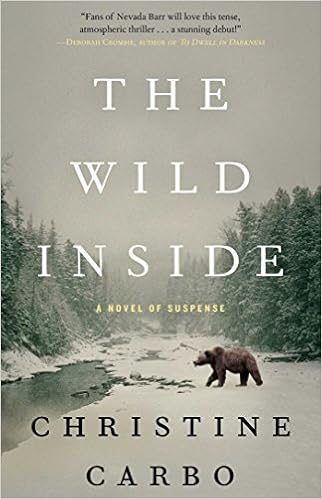 I’m reading an interesting suspense novel by Christine Carbo set in Glacier National Park called
 When General Billy Mitchell wrote a report in 1924 that not only predicted the Japanese would attack Pearl Harbor but how they would do it, it was rejected out of hand.
Those who've seen documentaries and feature films such as "Tora! Tora! Tora!" know before they pick up Jeff Shaara's accurate and well written "To Wake the Giant: A Novel of Pearl Harbor" that military commanders and diplomats in the late 1930s and early 1940s continued to reject a Japanese attack out of hand.
Having read all of Jeff Shaara's historical novels, often about subjects I've studied, I'm accustomed to his impeccable research as well as the fact he makes history so human and readable that by the end of each novel, one feels like s/he was there. Unfortunately, some early Amazon reader reviews said Shaara's research on "To Wake the Giant" was sloppy. Subsequently, those reviews were shown to be inaccurate.
Unlike battles that last for days or weeks or months, the attack itself was short. So this book had to be a little different, focusing for many pages on the events leading up to 8 a.m. (25 minutes later than Mitchell's prediction) on the morning of December 7th, 1941. The events prior to the attack not only demonstrate the viewpoints of the major political and military players but show the attitudes of men serving onboard the Arizona and other ships in Pearl Harbor. Shaara shows the attitudes and emotions of those involved months in advance but while the attack is underway.
The human factor looms large in this novel and that's one of its major strengths. Once again, Shaara has put us into the action in a way we'll never forget.
When General Billy Mitchell wrote a report in 1924 that not only predicted the Japanese would attack Pearl Harbor but how they would do it, it was rejected out of hand.
Those who've seen documentaries and feature films such as "Tora! Tora! Tora!" know before they pick up Jeff Shaara's accurate and well written "To Wake the Giant: A Novel of Pearl Harbor" that military commanders and diplomats in the late 1930s and early 1940s continued to reject a Japanese attack out of hand.
Having read all of Jeff Shaara's historical novels, often about subjects I've studied, I'm accustomed to his impeccable research as well as the fact he makes history so human and readable that by the end of each novel, one feels like s/he was there. Unfortunately, some early Amazon reader reviews said Shaara's research on "To Wake the Giant" was sloppy. Subsequently, those reviews were shown to be inaccurate.
Unlike battles that last for days or weeks or months, the attack itself was short. So this book had to be a little different, focusing for many pages on the events leading up to 8 a.m. (25 minutes later than Mitchell's prediction) on the morning of December 7th, 1941. The events prior to the attack not only demonstrate the viewpoints of the major political and military players but show the attitudes of men serving onboard the Arizona and other ships in Pearl Harbor. Shaara shows the attitudes and emotions of those involved months in advance but while the attack is underway.
The human factor looms large in this novel and that's one of its major strengths. Once again, Shaara has put us into the action in a way we'll never forget.
 Adults are hard to buy for unless they all live in the same house like the Waltons. When we’re living far flung around the country, we seldom know what people might want, and should we guess wrong and send something without checking, they’ll probably already have it or they won’t like it.
 But, the adults can do nothing for each other without a list. For better or worse, the older I get, the less “stuff” I want. If I need it, I’ve already bought it. So, that leaves books. I give the list to my wife, she picks something and gives the rest of the list to my brother and his wife.
  I’ve read most of Shaara’s books and like them a lot. When this book about Pearl Harbor first came out, an early reviewer on Amazon said Shaara’s research on To Wake a Giant was sloppy. Fortunately, another reader reviewer proved that the first reviewer was incorrect. Thank goodness! Shaara tells readers in most of his books that he’s a novelist rather than a historian. Yet, he takes special care to be accurate. Authors are not supposed to take on reviewers, but I hoped he would correct the Amazon reviewers who offered up fake history to prove he didn’t know what he was talking about.
 John Hart writes tough, detailed novels such as The Hush. While I’m looking forward to The Unwilling, a book Hart held back a year due to the pandemic, it’s still in pre-order status. So, I opted for Down River for my list. You’ll notice I only have books from major publishers here.
 I do the same thing with movies because trying to set up closed captioning at a theater is a who needs it, so I seldom see any film before it reaches TV with closed captioning. I guess this is just part of getting old. By the time I read a book or see a film, the discussion has moved on to something newer. Sigh.



 Malcolm's Round Table