While writing yesterday’s post about the I Ching, I thought of that long-ago phrase that was once very popular: “One with the Universe.” Unfortunately, “everyone” used that phase so extensively that it became trite and that didn’t matter because most people weren’t really applying it, they were just saying it.
Those of us who have studied Huna (Hawai’ian mysticism) see no difference between the universe and the Creator. Some Huna scholars put it this way: “There is nothing that’s not God.”
 Whether you see all that is as a Huna mystic or as a member of a group with another approach to the “Cosmic,” it seems clear that if we are all doing our best to synchronize our lives with the universe–perhaps via the I Ching–we would not have the spectre of climate change hanging over our heads like the sword of Damocles.
It’s a shame we have left the world in an apparently perilous condition for our children and our children’s children. This reminds me of those novels where a once proud family falls into ruin because the older generation didn’t manage the estate properly. We are not managing the World’s resources properly, evidence enough in my view that most of us are not one with the universe.
If you look up “one with the universe” in Google, for example, you’ll find multiple commentaries on how to synchronize your life, thinking, and work with the universe. The best of these tend to say that doing so will make a difference in ourselves and then in the state of the World. It’s easy to get discouraged and think, “okay, I’m doing my bit, but what difference can it possibly make?” the answer is always “More than you know.” When you think of the “six degrees of separation” concept, then it becomes clear that we aren’t all that far apart when we decide to act or change the way we think.
Many of us are fed up trying to get the “powers that be” to do something realistic about climate change. Not that we should stop trying. But we can increase the odds of success by synchronizing ourselves with the universe. Doing so is more powerful than all the letters we can write to government agencies.

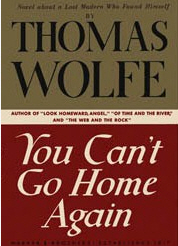 “You can’t go back home to your family, back home to your childhood … back home to a young man’s dreams of glory and of fame … back home to places in the country, back home to the old forms and systems of things which once seemed everlasting, but which are changing all the time – back home to the escapes of Time and Memory.” – Thomas Wolfe in You Can’t Go Home Again



 Sometimes people who have been drunk wake up and can’t believe they did the things sober people claim they did while they were drunk. Since they don’t remember it, they can claim in the middle of their hangovers that they’re not responsible for whatever happened. Do you suppose we might do this even when we’re not drunk?
 I suspect so. Being drunk is a crutch, I think, as is going through life acting like we’re drunk even when we’re sober. I wonder: are we afraid to make commitments, to take this job rather than that job, adopt viewpoint ABC rather than viewpoint XZY? As long as we don’t commit, we probably feel free to make another choice later. Some people like keeping their options open, often until “outside forces” start eliminating those options.
 “Fate’s Arrows,”
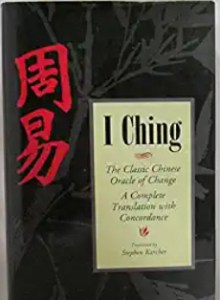
 While the I Ching (book of changes) seems fairly remote from hoodoo, it emphasizes aligning ones life and choices with the natural flow of change, the direction the universe is heading at the moment you ask the oracle a question. The idea here, which is deeply understood by conjurers, works (for spells, gathering/planing herbs, collecting rain water) and by old farmers and fishermen is that success is more likely when you go with the flow rather than against it.
 I was happy that C. LaVielle contributed a
  Malcolm's Round Table