On location: Glacier Park’s Iceberg Lake

I used Glacier National Park’s Iceberg Lake in “High Country Painter,” of the three short stories in my family-oriented e-book/audio book Emily’s Stories.

Where Is It?

icebergmapIceberg Lake is a 5.9- mile hike from Many Glacier Hotel on the east side of Montana’s Glacier National Park. The lake, which is frozen over during the winter months, is named for the chunks of ice that float in it throughout the summer. It’s one of the most popular trails in the area.

En route to the lake from the hotel, the elevation increases 1,200 feet, however most of the uphill sections of the trail are gradual. For those who haven’t yet gotten used to the elevation or long walks, the hike provides a half-day of exercise.

In his book The Best of Glacier National Park, Alan Leftbridge lists Iceberg Lake as one as one of Glacier’s seven best day hikes. His level of difficulty for the hike is moderate. Hiking in Glacier calls the hike strenuous. (I guess it depends of whether or not one is out of shape!) If you don’t have a hiking guidebook, this web site provides a good overview of the trip.

How I Used it In the Story

Trail to Iceberg Lake - Photo by GlacierGuyMT
Trail to Iceberg Lake – Photo by GlacierGuyMT

Young Emily Walker and her family travel from Florida to Glacier National Park for a family vacation. She accompanies her father on the hike while her mother spends the day around  the hotel. Since she occasionally talks to birds and spirits, she knows something unusual will happen at the lake.

Why I Used the Lake
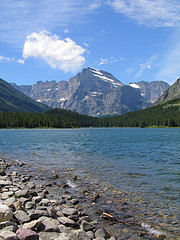
Iceberg Lake
Iceberg Lake

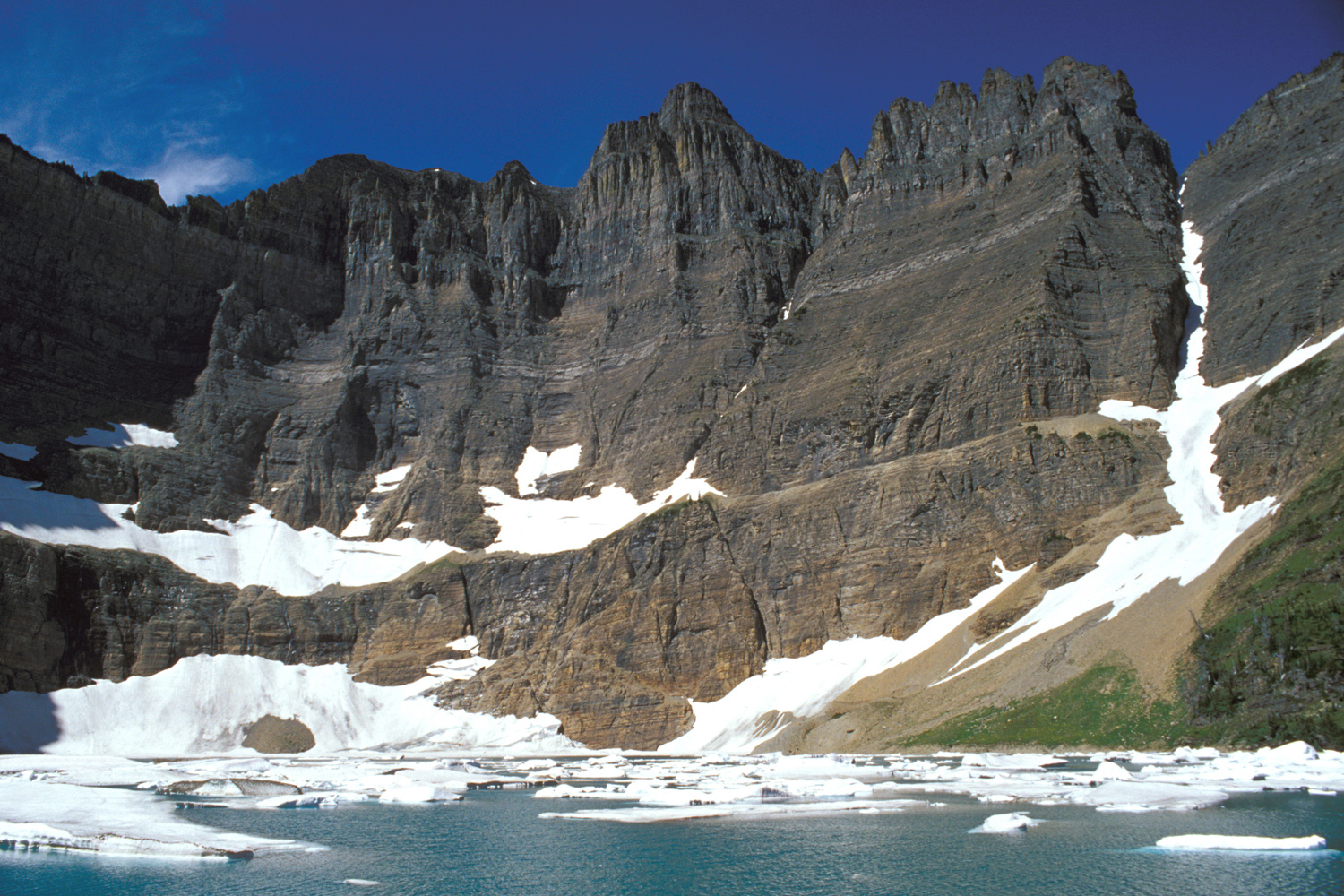
Emily and her father are used to the sinkhole lakes and blackwater rivers in the Florida Panhandle. I wanted to put them into a new environment. The arête in the picture is called the Garden Wall and it not only provides a lot of ice and snow to look at, but frequent mountain goats as well.

The lake sits in a cirque, a carved-out bowl left by ancient glaciers, and since it’s such a popular spot, hikers will  almost always find ground squirrels and chipmunks there begging for food. The lake sits in bear country, so it’s always good to check with the rangers for to see if there have been any grizzly bears in the area before you begin your hike.

The hike also features many wild flowers as well as some very different views of the mountains than one sees from the hotel. There are good views of many rock formations and other features of glaciation,

The first mile of the hike is on the paved road that connects the hotel complex to the camp store and the campground; park your car at the store to save a bit of walking.

Excerpt from Emily’s Stories

Available on Kindle and as an audio book

The horizon was hidden by a grey wall of rock which, according to the pack, also concealed incoming storms; now, carrying rain jackets on a sunny day made sense. By the time they passed the noisy waterfall and strolled through lacey-white bear grass (without bears) and scattered Indian paintbrush that gentled the grey rock (“limestone,” her dad said, descriptively), Emily was ready for lunch.

Deep snow lay hard-packed around the lake’s far shore where the limestone wall created a playground for mountain goats running across their grey and white world as nimbly as Southern chameleons ran along the Walters’ brick house. Sunny Florida was, as advertised, sunny and hot, but here deep summer had only melted the ice off half of the lake’s surface.

“I am astonished,” said Emily, dropping her knapsack on the ground and running down to the water. The water was as cold as it looked.

“Punkin, ‘astonished’ is a new word for you,” her dad said. He knelt down and splashed water over his
face.

Summing Everything Up

My teenaged protagonist talks to birds and spirits, so her stories are always set outdoors. Like other visitors to the hotel, the hike to the lake is one she would probably take. It provides great scenery for Emily to experience with her father as long with the possibility a bear might appear.

I worked at the hotel as a bellman for two summers and walked up to this lake many times. Using it in the story is an example of a writer writing what he knows.

Malcolm

Glacier: looking forward to a visit with a few mixed feelings

Long-ago days
Long-ago days – the employee picture

Although my novels (The Sun Singer, Sarabande, and The Seeker) are set in Glacier National Park, I haven’t set foot in the park for many years. (I worked there as a seasonal employee in the 1960s and visited in the 1970s and 1980s.)

Later this summer, I’m looking forward to seeing the place I have always thought was the most beautiful place on Earth. All my photographs and slides are old and faded, so I hope to capture some new memories along with some new pictures.

And yes, I plan to take a red bus ride up to Logan Pass and back, have a nice meal in the now-renovated Many Glacier Hotel dining room, and walk around Josephine and Swiftcurrent Lakes on a trail I once knew like the back of my hand.

I’ll be there with my wife and my brother and his wife. We travel well together and pretty much take a casual approach to sightseeing, dining and hanging out in scenic locations with a variety of activities.

But, like anyone going back anywhere, I worry about it being anticlimactic or that it will be changed more than I want to know.

The worst of the here and now

I already know that there are fracking operations on the Blackfeet Reservation a stone’s throw from the park’s eastern boundary. I want to say, “I told you so” about such problems because after Glacier was called the most threatened park in the system in the 1980s, I campaigned strongly for legislation that would keep certain kinds of development farther away from pristine wilderness areas. This is worse than having a tar factory go up in city subdivision.

The response was, “we can only protect the park itself.” My reply was, “if you don’t restrict development outside the park, you’re not protecting the park.” And so it went.

Also, I already know there are 300 miles fewer trails than there were when I worked in the park. Inadequate funding is the main cause. On the plus side, Many Glacier and other park structures have been seeing some renovation work through various campaigns and grants. That makes our historic, National Register structures last longer so more people can enjoy them.

I can tell I’m out of touch. When I called reservations at Many Glacier Hotel, I asked for the Alpine Suite. That was the hotel’s best suite when I worked there. Nobody had ever heard of it. I described where the two Alpine Suites were, and learned they’d been converted into regular rooms.

The lure
The lure

The first few times I went back, the bellmen would always show me that the wall of names in the bellman room was still there. My name was there along with many other familiar names from past years. I already know this space has long-since been converted into a restroom.

If we stay on an upper floor in the main section of the hotel, we’ll appreciate the standard elevator that took the place of the old manually operated, cage-style elevator that guests were seldom allowed to ride. It was a great old elevator, one that probably would fail most building codes in the country if it were still there.

The last time I was in the Swiftcurrent Valley, my knee went out on a hike up to Grinnell Glacier. I was astounded. Those of us who worked at the hotel used to stroll up there dozens of times during the summer. Since then, my knees and ankles have grown weaker, so I wonder how much hobbling around I’ll be able to do.

In the past, I’ve always seen people there that I know. This time I won’t. It was fun having the manager, fishing guide, houskeeper, wranglers and others remember me on past return trips. This time, it will be rather like going back to your old high school long after the teachers, coaches, bus drivers, and administrative staff have all retired.

So, how will it go? I think we’ll all come home with some genuine new memories, memories of Glacier and ourselves in the here and now rather than Glacier as it was or might have been. And if that means our pictures show a bunch of weak-kneed, out-of-shape people sitting on the balcony watching the boats on the lake and the ospreys flying high over the nearby peaks, so be it. Maybe a young couple will talk by and ask, “have you folks ever been here before.”

Maybe I’ll say, “Sure, I used to jog up to the glacier and back after dinner and climb with the mountain goats.”

They’ll pretend to believe me.

Malcolm

A Glacier Park novel for your Kindle

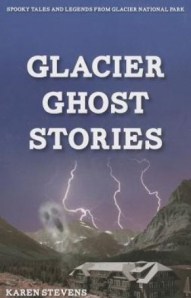
Review: ‘Glacier Ghost Stories,’ by Karen Stevens

“Glacier Ghost Stories,” by Karen Stevens, Riverbend Publishing (May 7, 2013), 103 pages, trade paperback.

GlacierGhostStories2Karen Stevens (“Haunted Montana,” “More Haunted Montana”) has been collecting Montana ghost stories for thirty years and has been visiting Glacier National Park for forty years. Glacier Ghost Stories brings her passions together in a slim, but informative volume that follows her search for strange and inexplicable events at the park’s historic hotels.

Steven’s book is, in one sense, a reporter’s travelogue: she talks about her investigative trips, the weather, the accommodations, and her interviews with hotel personnel. In the process, she includes a fair amount of park history with details for each hotel: Apgar Village Inn, Belton Chalet, Glacier Park Lodge, Lake McDonald Lodge, Many Glacier Hotel, Prince of Wales Hotel and Sperry Chalet.

Glacier Park Lodge celebrated its 100th anniversary this summer. The other hotels are elders in the lodging business as well. The hotels are busy during their short summer seasons. They’re isolated from the world throughout the rest of the year. The schedule and the wild country are, it seems, the perfect recipe for legends, yarns and a long list of things that defy logical explanation.

While they don’t advertise ghosts in travel brochures, hotel managers and long-time employees had a lot to day about things that go bump in the night: people who suddenly disappear, objects that move when nobody’s looking, doors that lock by themselves, music and other sounds from unoccupied rooms, footsteps in the dark. Stevens includes the room numbers where things seem to happen. Take note of these before your next visit.

Glacier Ghost Stories includes legends about Marias Pass, Going-to-the-Sun Road, Two Medicine Valley and the Belly River. In the book’s postscript, Stevens writes that visitors to Glacier and Waterton parks “follow in the footsteps o those who came before us: Native Americans, trappers, hunters, explorers and others whose spirits even today may roam the land they loved so much in life.”

Stevens does not hear about or witness the over-the-top paranormal happenings we associate with Edgar Allan Poe and Stephen King. She did uncover enough to make us wonder and to look over our shoulders the next time we visit any of the park’s hotels. The book is an engaging portrait from a ghostly point of view.

Malcolm

Malcolm R. Campbell is the author of paranormal short stories and four contemporary fantasy novels partially set in Glacier National Park.

A Glacier Park Novel

Protecting Parks from Fracking

“From the eastern boundary of Glacier National Park in Montana, visitors can throw a stone and hit any of 16 exploratory wells and associated holding tanks, pump jacks, and machinery used to force millions of gallons of pressurized water, sand, and chemicals into shale rock formations thousands of feet beneath the surface.”  – James D. Nations, Ph.D., Vice President for NPCA’s Center for Park Research

Center for Park Research

The existence of wells and the infrastructure of fracking within a stone’s throw of Glacier National Park is unacceptable. Some have said we are powerless to prevent it because those wells are within the sovereign Blackfeet Nation. To that, I ask, does sovereignty extend outside a nation’s borders?

Some years ago, the proposed Cabin Creek mine in British Columbia was stopped, in part, because it was likely to pollute rivers flowing from Canada into the U.S. The same is likely to be true of groundwater outside the immediate proximity of those wells on Blackfeet land.

James D. Nations writes in “Fracking and National Park Wildlife” that a third of the nation’s national parks are within twenty-five miles of shale basins. This means that a great number of wildlife habitats are potentially at risk. These risks come primarily in the areas of habitat fragmentation, water quality and quantity, and noise and air pollution.

There’s an old fashioned Libertarian principle that may finally be taken seriously as we realize more and more that the Earth is one community. The principle is that you cannot do anything on your land that harms your neighbor or your neighbor’s land.

The dangers of fracking and other forms of pollution are not restricted to the property where the industrial development occurs. Air and water carry the negative impacts many miles away. This is not acceptable.

While we may not be  able to quickly wean ourselves away from older coal fired power plants where no alternatives are quickly available, fracking is relatively new. The complete nature of its threats and risks are not yet known. We don’t need it any more than we need new coal fired power plants.

We need, I think, to look not only at the threats to Glacier and other national parks, but to the places where we live and work. If we take life seriously, we can no longer permit one company or one nation or one developer to do as he wishes on the land he owns or leases when his actions affect people, habitats and wildlife many miles away.

parksandfrackingYou May Also Like:

Malcolm

Review: ‘Glacier Park Lodge: Celebrating 100 Years’ by Christine Barnes

Glacier Park Lodge: Celebrating 100 Years, by Christine Barnes, photography by Fred Pflughoft, David Morris, and Douglass Dye, Farcountry Press (May 2013), 64 pages.

GlacierParkLodgeThe Swiss-style Glacier Park Lodge on the eastern side of Montana’s Glacier National Park was built by the Great Northern Railway (now BNSF) one hundred years ago as a tourist destination for railroad passengers. While the railroad sold its lodging facilities in 1957 and ended its passenger service in 1971, the rustic hotel with its central roof supported by massive Douglas firs has endured through the years as the “Gateway to Glacier.”

Christine Barnes has captured the spirit of the historic hotel with an accurate overview of “Big Tree Lodge” accompanied by an extravagant collection of archival and color photographs in Glacier Park Lodge: Celebrating 100 Years.

If the Great Northern Railway’s transcontinental route from Minnesota to Washington was the grand dream of tycoon James J. Hill in the late 1800s, the hotels and chalets built by the railroad at the dawn of the new century were the great vision and legacy of Hill’s son Louis W. Hill.

“Louis had taken over from his father, James J. Hill, in 1907, but temporarily stepped down in December 1911 to devote his time to railway-financed projects in and around Glacier National Park,” writes Barnes. “‘The work is so important I am loath to [entrust] the development to anybody but myself,’ he explained to the press.”

As a book of memories, Glacier Park Lodge: Celebrating 100 Years describes the establishment of the park in 1910, the building of the hotel in 1912 and 1913, the railroad’s back-country chalets, and the area’s mountains and wildlife. The book includes a bibliography of standard Glacier references, recipes from the hotel dining room and travel information.

With the help of three talented photographers, Barnes’ experience as a veteran chronicler of old hotels allows her to distil salient facts and images into this small-format book in an accessible style. Her other books include Great Lodges of the West, Old Faithful Inn at Yellowstone National Park and Great Lodges of the Canadian Rockies. She was the senior consultant and historian on the PBS series Great Lodges in the National Parks which included two companion books.

Glacier Park Lodge: Celebrating 100 Years is a perfect introduction to the hotel for first time visitors and a keepsake for long-time hikers, climbers and other enthusiasts of the Crown of the Continent.

In addition to three novels partially set in the park, Malcolm R. Campbell is the author of Bears; Where they fought: Life in Glacier Park’s Swiftcurrent Valley and “High Water in 1964” in the National Park Service’s Glacier centennial volume A View inside Glacier National Park: 100 years, 100 Stories.

Budget Falls Short for Parks; Glacier Plowing Facilitated by Donation

from the National Parks and Conservation Association

NPCAlogoBackground: The release of President Obama’s 2014 budget April 10 proposes that the National Park Service budget would increase by $56.6 million over FY12, but the increase is partially offset by programmatic decreases to park base operations. The proposal includes important investments but also provides a reduction of nearly a hundred staff in park operations.

“The National Park Service is experiencing deep impacts from the sequester and other continued reductions. This year will be the most challenging in some time for national park superintendents who will have fewer rangers and smaller budgets to manage each park from Yellowstone to Acadia. Funding the operations of the National Park Service needs to be more of a priority than it has been to date. We’re pleased that the President recognizes the need to reverse the mindless sequester, but it will take more than that recognition to address the reality facing national parks.”

“The sequester has already cut more than $130 million from the National Park Service budget, forcing places like Yellowstone, Acadia, Independence Hall, and Cape Cod National Seashore to delay seasonal openings, close visitor centers, picnic areas, and campgrounds, and eliminate ranger positions that are critical to protecting endangered species and historic buildings, as well as greeting park visitors and school groups. Further cuts will only impair the national park experience.

“National parks draw international tourists and are economic engines that support more than $30budget billion in spending and more than a quarter million jobs. Yet they suffer from an annual operating shortfall exceeding half a billion dollars and a maintenance backlog of many billions more. And in today’s dollars, the Park Service budget has now declined by more than 20 percent over the last decade.

“We need the President and Congress to make sure America’s national parks are open and well-staffed and nothing in this budget provides us with any confidence that will happen. Our national parks are not just great destinations to visit, they are our national treasures that should be treated with honor. They drive the economy for many rural and urban communities. The severe under-funding of our most prized places needs to be reversed. We hope to work with the President and Congress as they debate how to repair a failed federal budgeting process to better address the true causes of the nation’s deficits and better serve our national parks and the American people.”

Glacier National Park

NPS Glacier Photo
NPS Glacier Photo

According to NPS Glacier, “The park’s base budget of approximately $13.5 million was reduced by $682,000. The park must absorb that cut in the remaining months of this fiscal year that ends September 30.”

Due to Congress’ failure to adequately support the parks, budgets were already far short of basic infrastructure and operating requirements. Cutting funding further through a failure of the federal budgetary process adds insult to injury. Inasmuch as jobs and tourism income in areas with parks benefit greatly, any reduction of park hours, season dates, and attractions impacts more than the parks themselves.

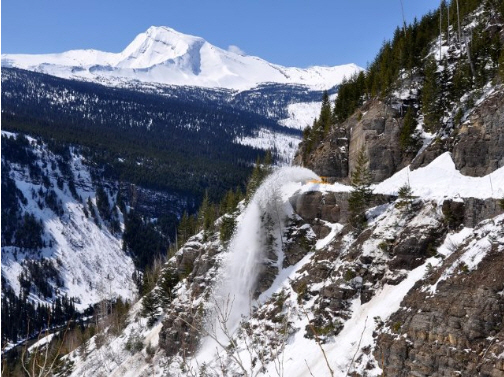
Fortunately, a donation to NPS Glacier by the Glacier National Park Conservancy has kept budget cuts from delaying the spring plowing of the Going to the Sun Road. However, visitors will see impacts elsewhere:

  • Delayed trail access and decreased trail maintenance,
  • Reduction in native plant restoration,
  • Reduced shoulder-season access to campgrounds and visitor centers,
  • Decrease in entrance station hours,
  • Less maintenance work on park facilities, roads and utility systems,
  • Limited and delayed emergency response outside the core season,
  • Decreased educational programming and ranger-led activities,
  • Less back-country volunteer coordination,
  • Reduction of revenue from impacted campgrounds, and
  • Reduced partner financial aid assisting interpretive programs resulting from loss of revenue of partner bookstores in park.

What a pity.

Malcolm

Will NPS Split Up Glacier’s Red Bus Fleet?

from the Glacier Park Foundation

NPScommercialThe National Park Service is seeking tenders for a concessioner to operate its facilities in Glacier National Park. The proposed concession contract would see 18 of the 33 Red buses decommissioned and replaced with new vehicles. This decision was made without any consultation with the public.

The Glacier Park Foundation wants to see the Red bus fleet remain intact. Bidding for the concession closes March 14. The foundation urges all its members and fans of Glacier to raise their voices in any manner they can, including contacting the National Park Service, and Montana state and federal officials. Let them know you oppose any breakup of the Red bus fleet and are requesting a delay in the concession contract process until the matter has been aired in public.

NPS proposal: http://www.concessions.nps.gov/glac002-14.htm

I agree with the Foundation’s suggestion that the contract process should be put on hold until the public is fully informed about the rationale behind the plan as well as the other alternatives available. If you agree, please let the Park Service and your Senators and Representatives know of your concerns.

Malcolm

Glacier Park Fund Lists Park Funding Accomplishments and Needs

The Glacier National Park Fund has supplemented the park’s declining federal funding to the tune of $3.5 million dollars for the past 13 years. After looking at the rationale for the Fund’s merger with the Glacier Association (reported in September), I believe the combined organization will offer increased support for the park during the next 13 years,

As a member, I enjoy the late-in-the-year mailings that detail how the Fund’s support has helped Glacier National Park during the recent season as well as getting a heads-up on emerging projects.

In 2012, contributions from the Fund helped the park complete repairs on Sperry Chalet (see 2011 avalanche damage post), the lookouts on Scalplock and Swiftcurrent, and the Belly River ranger station. Year-to-year maintenance on trails continues (as always), with an emphasis on the Ptarmigan Wall, Avalanche Lake, and Loneman Lookout trails. Some 3,500 grade school students participated in the Winter Ecology School Program and the Teacher-Ranger-Teacher training. Research work went forward on harlequin ducks, fishers and bats, bear-proof food storage containers were added to campground, and the citizen science program kept up its use of volunteers for countless projects.

Highline Trail – David Restivo, NPS

Upcoming Needs

You can see a list of the Fund’s 2013 projects online. Here are a few of the highlights:

  • The creation of a Glacier Conservation Corps youth group to assist with trail maintenance, weed control and restoration. If the Fund raises $50,000 by December 31, it will receive a matching grant from the National Park Foundation.
  • Damage to the popular Highline Trail during a July thunderstorm will require $20,000 in additional repairs in order to safely open the trail during 2013. (I agree with those who say that if visitors take one hike in the park, this should be it.)
  • The well-received Citizen Science and Adopt a Trail programs both need additional funding.

Exciting and much needed projects, I believe, that support the Crown of the Continent’s natural beauty and cultural heritage.

Malcolm

Malcolm R. Campbell is the author of nonfiction and fiction focused on Glacier National Park, including “The Sun Singer” which is set in the Swiftcurrent and Belly River valleys.

A Glacier Park Fantasy Novel

and now a word from our fantasy sponsor

My book reviews, interviews and posts on Malcolm’s Round Table, Magic Moments and Literary Aficionado are brought to you by, er, me.

Speaking of myself now in the third person, Malcolm R. Campbell is the author of magical realism, contemporary fantasy and satire published by Vanilla Heart Publishing of Washington State. While my noir satire, Jock Stewart and the Missing Sea of Fire, is set in a fictional Texas town with a really screwed up fictional newspaper, my three other novels are set in Glacier National Park, Montana and other places where I have lived or visited.

Last summer brought the release of Sarabande, a harrowing heroine’s journey and contemporary fantasy about a young woman who is haunted by the ghost of her sister. Sarabande seeks the help of a young man who has, on one previous occasion, bent time to “raise the dead.” The solution to the problem is not without its nasty down side.

Satire for your Nook

In 2004, I came out with the first edition of my novel The Sun Singer, the story of a young man whose psychic dreams ultimately lead him into a dangerous mountain world where it will take all of his skills to survive. First things first: he had to figure out who the good guys are and who the bad guys are and, as it turns out, who exactly he is. The second edition of The Sun Singer was released in 2010. College students at Lone Star College, Texas, read and discussed the novel this past Spring as part of a Wayfaring Heroes course.

Garden of Heaven: an Odyssey (also released in 2010) is magical realism about a man who grows up on a Montana ranch who loses his way when a failed love affair sends him down dangerous roads along which is is betrayed multiple times by those he cares about the most. The book is also available as an $4.99 e-book from OmniLit.

Where To Find Malcolm R. Campbell on the Internet

Excerpt from Sarabande

Only $4.99 on Kindle

Gem pulled her hands away and stood up so quickly she knocked over her spinning wheel. She didn’t appear to notice. She walked to the window and leaned out as though making sure no one else would hear her words.

“I was shamed by the king.” Gem pulled up her left sleeve to reveal the letters SJ in a bold pink scar that contrasted with her walnut-colored skin.

“Your strike brand!”

“I bore Justine’s mark as well as his child. Both were conceived in pain in a dark cell covered with urine and rat droppings.” Sarabande went to her, but Gem rolled down the sleeve, covering the ugly mark that signified Sovereign Justine. “No, my friend, I cannot abide your seeing it close at hand. My daughter, though, this doting mother will speak of her at great length if allowed to do so.”

“Cinnabar has shown me her brand,” said Sarabande.

“Discretion is a lesson I was never able to teach her. But listen: on your journey to Osprey’s house, you won’t walk through the domains of kings.”

Sarabande gasped and sat down, suddenly lightheaded when she understood why Gem showed her the scar.

“If there are no kings, what dangers have you seen?”

Gem put her hands on Sarabande’s shoulders and kneaded out the growing knots. Her touch always felt like a touch of power, and she wondered if she shared Osprey’s way with healing magic.

“I have seen a dark creek beneath a bridge on a foggy night. I have heard screams and howls outside my comprehension. I don’t understand it,” said Gem, holding their eye contact as though she understood more than she would say. “Sarabande, you know without my lecturing at great length about the ways of the world. A a woman on a lonely road can be a target. Travel with a sharp knife.”

The impromptu massage felt good. The unclear warning did not. Vague predictions were worse than silence. They stirred up what did not need to be stirred up.

“Yes, I know that, Gem. I will carry a knife and take care to have it handy.”

“With due care, you can avoid your fate, but destiny is the way you’ve already written your life’s story.”

“I wanted to walk the sixteen hundred and fifty miles to Osprey’s house long before it occurred to me I would ever do so. If there is to be shame in it, then I will live or die with whatever I find on that lonely road.”

Thank you for stopping my Malcolm’s Round Table today!

–Malcolm