CBS news reports that “Three dozen endangered Florida panthers died this year, the most in nearly a decade, according to the state’s Fish and Wildlife Conservation Commission. It’s the most panther deaths since 2016, when 42 panthers were killed.”
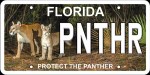 All the more reason to read this 2023 book, follow panther-related conservation organizations such as Wildpath, for FL residents purchase a protect the panther license plate, and keep up with news about Florida conservation efforts.
From the Publisher
 “The panther is the state animal of Florida, the last big cat surviving east of the Mississippi River, and an emblem of the Endangered Species Act. It was driven to extinction in the eastern United States, except for a small remnant population that persisted in Florida’s Everglades. Panther numbers had dwindled to fewer than 20 individuals by the 1980s, but heroic conservation efforts have helped panthers come back to nearly 200 today. The biggest obstacle for the panther’s continued recovery is access to enough of its historic territory throughout Florida and beyond.
“The tale of the Florida panther has grown from the unlikely survival of a rare cat to a story of hope for all of wild Florida. Path of the Panther in now a call to action to recognize and protect the Florida Wildlife Corridor – a network of public and private land that connects the panther’s current range in south Florida to suitable habitat throughout the state of Florida and adjoining states.
“The Florida Wildlife Corridor is the panther’s path to recovery and a western-scale conservation opportunity that remains largely hidden in the east. It is now as a Last Wild Places partnership with the National Geographic Society. With 27 percent of Florida already protected as public land, this project aims to inspire the additional one million acres of conservation needed over the next decade so that Florida can be a leader in the goal of protecting 30 percent of the planet by 2030.
“Photographer Carlton Ward helped put the Florida Wildlife Corridor on the map by trekking from the Everglades to Georgia in 2012 and from the Everglades Headwaters around the Gulf of Mexico to Alabama in 2015. Through these National Geographic–supported expeditions, he and his team have witnessed that a path for the panther’s recovery still exists. But with 1,000 new residents moving to Florida every day, and more than 100,000 acres of habitat lost to development each year, to window to save it is closing quickly. Through Ward’s intimate photographs, expert essays and compelling maps, the Path of the Panther book, combined with a National Geographic magazine article, National Geographic Society Last Wild Places campaign, and feature documentary film, is poised to awaken people to wild Florida and inspire them to save it.”
Happy New Year
–Malcolm


 Among other things, the freewheeling approach makes writing the book as much fun as reading the book. Every time I start a new chapter, I have no idea what’s coming.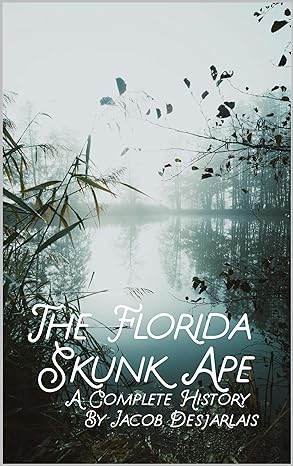

 Asking about the western-most state gets you a lot of answers. A lot of peole will blurt out “California” and then sheepishly say, “oh yeah, it’s Hawai’i.” Both answers are wrong. Alaska’s islands stretch out farther west than Hawai’i. If you compare the location of the Aleutian Islands on a map–better yet, a globe–you’ll see they’re farther west than Hawai’i. Once you see the map, it’s obvious that Alaska is farther west than Hawai’i.
 The amended suit, led by the free expression organization PEN America, Penguin Random House and a diverse group of authors and parents of Escambia County students, seeks to ensure access to books on a wide range of topics with a wide range of viewpoints. The plaintiffs are represented by Ballard Spahr LLP and Protect Democracy, a non-partisan, pro-democracy group. Read the amended complaint, filed today,
  If I believed in omens, I would see it as a good sign that my riding mower started on the first try when I mowed the yard earlier this week. Now I have to get the older car started after it sat idle all winter. I don’t want the newer car smelling like gasoline after I refill the gas cans for the next lawn mowing adventure–coming soon to a blog post near you.
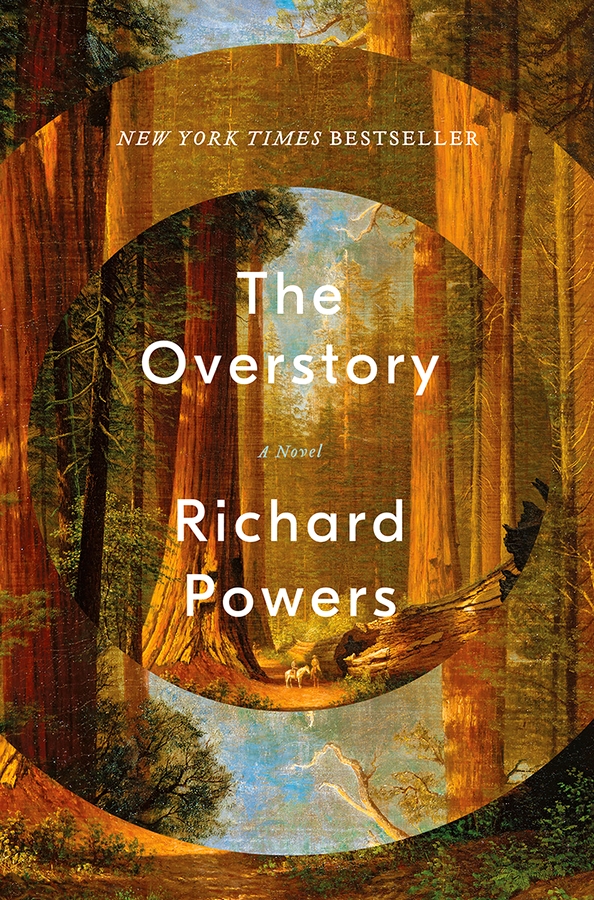 As I finally finished re-reading Richard Powers’ The Overstory, my favorite quote is: “You and the tree in your backyard come from a common ancestor. A billion and a half years ago, the two of you parted ways. But even now, after an immense journey in separate directions, that tree and you still share a quarter of your genes. . . .” I also liked: “This is not our world with trees in it. It’s a world of trees, where humans have just arrived.”
 In her post,
 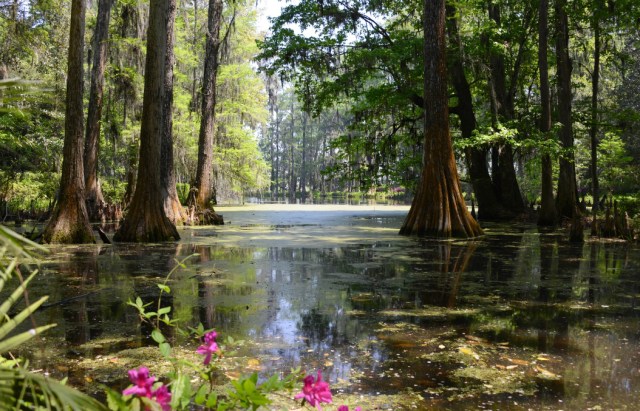 I often use my Facebook headers for pictures of the locations of my books. This one shows a scene very typical of Florida Panhandle where I’ve set
  When I used the name chow chow in my novel in progress, I wondered how many people–even in the South–know anything about this traditional Southern relish made from the last vegetables (except hot peppers) in the garden. Years ago, everyone here knew what it was and put up a lot of veggies by making it. In “real life” the relish looks just like Sally Vargas’ photo. If you want to experiment, you can find a good recipe
 Malcolm's Round Table