Some of my favorite ending lines from novels.

Some novels end with a bone-crushing final line that drives the story home. Other novels’ final lines seem to be a simple slice of life, reminding me of Woody Allen movies where the screen goes black and he rolls the credits. Huh? Did we lose a reel? How is the show over? While I don’t think novels need to end with anything akin to the punch line of a joke that–were it missing–the rest of the thing would fall away, I do like something memorable.

When I did first lines several posts ago, I made it a quiz. Well, heck, it’s the weekend, so I’ll just tell you straight out where these gems came from. I think that’s more than fair.

  • So we beat on, boats against the current, borne back ceaselessly into the past. –F. Scott Fitzgerald, The Great Gatsby
  • He loved Big Brother. –George Orwell, 1984
  • Before reaching the final line, however, he had already understood that he would never leave that room, for it was foreseen that the city of mirrors (or mirages) would be wiped out by the wind and exiled from the memory of men at the precise moment when Aureliano Babilonia would finish deciphering the parchments, and that everything written on them was unrepeatable since time immemorial and forever more, because races condemned to one hundred years of solitude did not have a second opportunity on earth. –Gabriel García Márquez, One Hundred Years
    of Solitude
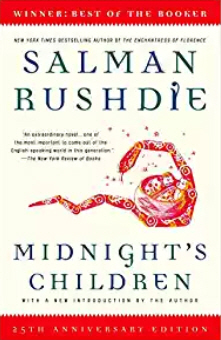
  • Yes, they will trample me underfoot, the numbers marching one two three, four
    hundred million five hundred six, reducing me to specks of voiceless dust, just as,
    in all good time, they will trample my son who is not my son, and his son who will
    not be his, and his who will not be his, until the thousand and first generation, until
    a thousand and one midnights have bestowed their terrible gifts and a thousand
    and one children have died, because it is the privilege and the curse of midnight’s
    children to be both masters and victims of their times, to forsake privacy and be
    sucked into the annihilating whirlpool of the multitudes, and to be unable to live or
    die in peace. –Salman Rushdie, Midnight’s Children
  • The creatures outside looked from pig to man, and from man to pig, and from
    pig to man again; but already it was impossible to say which was which. –George
    Orwell, Animal Farm
  • But wherever they go, and whatever happens to them on the way, in that
    enchanted place on the top of the Forest, a little boy and his Bear will always be
    playing. –A. A. Milne, The House at Pooh Corner
  • Go, my book, and help destroy the world as it is.” –Russell Banks, Continental Drift
  • But that is another tale, and as I said in the beginning, this is just a story meant to be read in bed in an old house on a rainy night. –John Cheever, Oh What a Paradise It Seems
  • Tomorrow, I’ll think of some way to get him back. After all, tomorrow is another day. –Margaret Mitchell, Gone With the Wind
  • . . . and then he asked me would I yes to say yes my mountain flower and first I put my arms around him yes and drew him down to me so he could feel my breasts all perfume yes and his heart was going like mad and yes I said yes I will Yes. –James Joyce, Ulysses

I’m ending with the last line of Ulysses because Joyce is my favorite author and I especially like the way this line brings the story to a very suitable conclusion. We all know the last line of Gone With the Wind. And, even if we don’t remember reading Animal Farm, that ending will make us cringe. Márquez and Rushdie are a bit long-winded, but in both cases, by the time you get to the ends of their stories, you see that these lines are fitting.

If you were writing this post, what last lines would you have included?

–Malcolm

Malcolm R. Campbell is the author of Conjure Woman’s Cat and Eulalie and Washerwoman.


Writers, ‘If you want immediate money, get a job’

“Write because you enjoy it. Write for the long term. If you want immediate money, get a job. This writing career is about loving to tell stories. Readers want to hear about how great your story is, not how many copies you sold or how brilliant your promotion campaign was. Readers want to be lulled and drawn into a new world they love, not sold a popular fad.” – Hope Clark

If you’re on the staff of a magazine or newspaper, write news releases for a profit-making corporation or non-profit organization, write advertising copy, are among the listed writers for a television series, create computer documentation, or are employed in other positions that require you to create strings of words for pay, then you have a writing job and receive paycheck and possibly even have a benefits package.

However, none of those positions are on people’s minds when they dream of becoming a writer. They’re dreaming of the Pulitzer Prize or the Nobel Prize or the New York Times bestseller list or of seeing the words “based on a story by. . .”in the credits of a blockbuster movie.
As Hope Clark said in a recent Funds for Writers newsletter that for most writers, sometimes it seems like nobody’s out there because few readers write Amazon reviews or comment on writers’ blogs. So that’s why she advises dreamers to write because they enjoy it.

When we’re young, and don’t know any better, we see our current novel in progress as the next bestseller published by a major New York Publisher. Subsequently, we’re depressed to learn they don’t look at unsolicited manuscripts and that most of the agents who send work to those publishers also don’t look at unsolicited manuscripts.

If you’re a Hollywood star or even a famous serial killer, you’ll probably get a contract from a major New York Publisher because they think your book will sell 50,000 copies or more. Seems unfair, doesn’t it? But then, publishing is a business. Yes, that seems unfair, too, doesn’t it? Perhaps it will seem less unfair if we acknowledge that most people in other professions don’t start at the top. They work their way up. Other than famous people, I think the same is true of writers.

We really have to like what we do. And when it comes down to the words on paper, we need to enjoy putting them there and acknowledge those words are there for our prospective readers. Those readers need to find something that inspires them, takes them into exciting places with exciting characters, or provides a respite from a long days at the office.

Yes, it’s hard to know what readers might want. I think that means that we have to do the best we can as writers and hope we connect with somebody out there who enjoys reading our words. Looking at writing as a lottery where we might strike it rich usually dooms us to failure. If it happens, it happens. Until them, telling stories is what inspires us more than seeing our names up in lights.

Malcolm

Coming this year: ‘Lena,’ the third novel in my Florida Folk Magic Series

We hear that books in series tend to sell better than standalone books. But, we also hear that if the first book in a series is well liked, the author might have trouble keeping readers’ interests in subsequent books.

Early reviewers who liked “Conjure Woman’s Cat,” said they though book two, “Eulalie and Washer Woman” was even better. The readers were happy and I was relieved that I hadn’t botched up the whole thing by writing a sequel.

The odd thing is, the sequel has sold fewer copies than the original and has a fraction of the reviews. Go figure.

So, I had mixed feelings writing a third book. On one hand, I thought that with the declining interest shown for book two, it was kind of silly to write book three. However, I had a few things left to say. Or, perhaps, the characters did. Book three was harder to write than the previous books. So, it took longer.

But finally, Lena is almost ready to send to my publisher. We’ve already been having conversations about the cover. As far as the cover goes, our artist for books one and two has moved onto other things. So, we’ll need somebody new.

What’s left to do? Well, this is the polishing the manuscript phase. That means going through the story page by page to get rid of any inconsistencies, typos, continuity problems, or stupid mistakes I can find before sending the DOC file to Thomas-Jacob Publishing. Fortunately, we have a great editor who will catch 99 and 44/100 percent of the mistakes I miss.

I have no idea how long it will take to get everything squared away. Several months, perhaps. Like most authors who get to know their characters throughout a series of books, I will miss these people. But, I suspect it’s time to move on to other themes and other stories. (I reserve the right to change my mind.)

For years, I wondered if I would ever find the characters and story lines to write about the racism in Florida during the years when I was growing up. For prospective readers, I hope I did.

Malcolm

Click on my name for my website.

Get your 99¢ Kindle copy of ‘Eulalie and Washerwoman’ before the promotion ends

My Florida Folk Magic series novel Eulalie and Washerwoman has been available on Kindle this spring for only 99¢. However, we’re wrapping up this Kindle promotion soon, so this is a great time to get your copy before we return to the regular price.

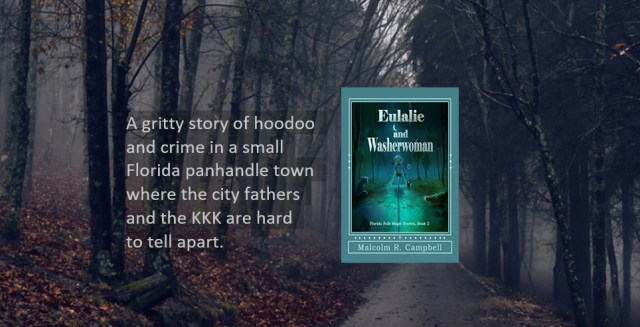
Description: Torreya, a small 1950s Florida Panhandle town, is losing its men. They disappear on nights with no moon and no witnesses. Foreclosure signs appear in their yards the following day while thugs associated with the Klan take everything of value from inside treasured homes that will soon be torn down.

The police won’t investigate, and the church keeps its distance from all social and political discord. Conjure woman Eulalie Jenkins, her shamanistic cat, Lena, and neighbor Willie Tate discover that the new “whites only” policy at the once friendly mercantile and the creation of a plantation-style subdivision are linked to corrupt city fathers, the disappearing men, rigged numbers gambling, and a powerful hoodoo man named Washerwoman. After he refuses to carry Eulalie’s herbs and eggs and Willie’s corn, mercantile owner Lane Walker is drawn into the web of lies before he, too, disappears.

Washerwoman knows how to cover his tracks with the magic he learned from Florida’s most famous root doctor, Uncle Monday, so he is more elusive than hen’s teeth, more dangerous that the Klan, and threatens to brutally remove any obstacle in the way of his profits. In this follow up to Conjure Woman’s Cat, Eulalie and Lena face their greatest challenge with scarce support from townspeople who are scared of their own shadows. Even though Eulalie is older than dirt, her faith in the good Lord and her endless supply of spells guarantee she will give Washerwoman a run for his ill-gotten money in this swamps and piney woods story.

Editorial Review: Told through the narrative voice of Lena, Eulalie’s shamanistic cat, the fast-paced story comes alive. The approach is fresh and clever; Malcolm R. Campbell manages Lena’s viewpoint seamlessly, adding interest and a unique perspective. Beyond the obvious abilities of this author to weave an enjoyable and engaging tale, I found the book rich with descriptive elements. So many passages caused me to pause and savor. ‘The air…heavy with wood smoke, turpentine, and melancholy.’ ‘ …the Apalachicola National Forest, world of wiregrass and pine, wildflower prairies, and savannahs of grass and small ponds… a maze of unpaved roads, flowing water drawing thirsty men…’ ‘…of the prayers of silk grass and blazing star and butterfly pea, of a brightly colored bottle tree trapping spirits searching for Washerwoman…of the holy woman who opened up the books of Moses and brought down pillars of fire and cloud so that those who were lost could find their way.'” – Rhett DeVane, Tallahassee Democrat


Enjoy the story!

–Malcolm

‘Mountain Song’ book giveaway

My Kindle novel Mountain Song will be free on Amazon April 5-April 7, 2018.

Description: David Ward lives in the Montana mountains where his life was impacted by his medicine woman grandmother and his utilitarian grandfather. Anne Hill suffered through childhood abuse and ultimately moved in with her aunt on the edge of a Florida swamp. Their summer romance at a mountain resort hotel surprises both of them. But can they make it last after the initial passion wears off and they return to their college studies far apart from each other especially after an attack on a college street changes Anne forever?

This story begins and ends in the high country of Montana where David and Anne meet as college students working as seasonal employees at a resort hotel. In today’s terms, they would probably call themselves soul mates. Yet  summer romances are usually fragile, almost as though they’re a part of the places where they occur.

Add to that, an attack on a dark street corner while Anne is walking from a movie theater back to her dorm. She won’t let David help her because she believes that to become whole again, she must recover on her own. Both of them make mistakes at an emotional time when there’s no room for making mistakes,

I know this story well because–other than changing names, locations, and moments, it’s true.

Malcolm

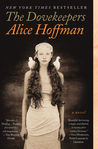
Review: ‘The Dovekeepers’ by Alice Hoffman

The DovekeepersThe Dovekeepers by Alice Hoffman
My rating: 5 of 5 stars

“Masada The last bastion of the Jewish freedom fighters against the Roman army symbolizes the end of the Kingdom of Judah at the end of the Second Temple period and its violent destruction. On the mountaintop there are remains of magnificent palaces from the reign of King Herod and silent committees for the Roman siege and the bitter end. The mountain that became a symbol.” – Masada National Park Website

Our knowledge of the siege of Masada by the Roman legion comes to us primarily from the chronicle written by Josephus, a Jewish rebel leader who was captured by Rome in an earlier battle, became a Roman Citizen, and was commissioned to write about the Jewish-Roman war. Josephus’ account, which some consider problematic and likely to have a Roman bias, has been enhanced by conservation, restoration, geographical, and archaeological work that’s ongoing at the site in modern-day Israel.

Alice Hoffman’s imagined and heavily researched retelling of those final days at Masada through the eyes of four strong and complex women characters, Aziza, Yael, Revka, and Shirah, breathes new life into our understanding of what has been called the Giant Revolt as well as the freedom fighters’ culture, daily lives and spiritual beliefs. These four women are Masada’s dovekeepers, looking after massive dovecotes where the birds are fed and cared for, the eggs gathered for food, and the excrement taken to enrich the mountain’s gardens and fields.

The storyline follows these women–who to varying degrees follow the outlawed practices of witchcraft–as they travel to the mountain, become part of the daily life and commerce of the community there, and as the Roman Legion approaches and begins its siege, how they coped with the developing reality of a Roman victory.

These four women, as well as many other players in the story, are deeply developed by Hoffman to the extent that we know their inner-most thoughts and dreams and the secrets of their souls. Hoffman’s penchant for magic plays a strong role here. Since the outcome of the novel cannot go against history, the magic will not defeat the Romans. But it will play a role in the characters’ lives.

Magical realism ties the book together in many respects because magic cannot be separated from the four women’s view of the world or their daily practices. Also, like modern-day traditional witchcraft and conjure, magic cannot be easily separated from the place where it lives. The result for the reader is an immersion into Masada. What we know after reading the novel may not be wholly factual (thought Hoffman defers to Josephus’ account), but it is definitely true.

The truth of the matter is that we come away from this wondrous book, having read a compelling story and with a greater understanding of what it might have been like to be trapped within that mountain fortress nearly 2000 years ago. Some critics say The Dovekeepers is Hoffman’s masterpiece. That’s an understatement. You must read it when you’re ready to read it, for it’s not an easy story. It will probably change you. Some day–but not today–I will forgive Alice Hoffman for plunging me into the horrors and triumphs of that faraway world.

–Malcolm

Malcolm R. Campbell is the author of two Florida folk magic novels, “Conjure Woman’s Cat” and “Eulalie and Washerwoman.” Learn more on his website.

View all my reviews

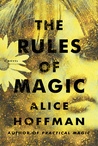
Review: Alice Hoffman’s ‘The Rules of Magic’

The Rules of MagicThe Rules of Magic by Alice Hoffman
My rating: 5 of 5 stars

“The Rules of Magic,” the prequel to Alice Hoffman’s 1995 bestseller “Practical Magic,” sparkles with the same wisdom and magical realism as the witching story of Sally and Gillian Owens did twenty two years ago. The characters, stories and writing style of this stunning prequel fit hand-in-glove with the characters, stories and writing style of “Practical Magic,” not an easy bit of conjuring for an author to face when going back to a story she told before she truly knew the magical rules when she first wrote about them.

This backstory about Sally and Gillian’s aunts Franny and Bridget (AKA “Jet”) focuses on a theme about life’s curses and blessings and what individuals wish to make of the fate and destiny they are given. Early on, Franny and Jet’s mother asks the sisters whether they’re opting for courage or caution in their unfolding lives. Their answers make for a cohesive story. Clearly, Alice Hoffman opted for courage when she traveled back to 1995 to continue the story of the Owens family.

The book contains wonderful surprises, making it much deeper than a family tree tacked on to the front of a famous novel many years later. The book offers its own multiple levels of depth and angst and joy while changing in positive ways the way many of us who read it will view the characters and themes of the original novel. (Emerging writers considering magical realism as a potential genre for their work will find both novels to be a demonstration of how an author can utilize magic and realism seamlessly in novels set in today’s world.”

While the ending of “The Rules of Magic” represents the best of all possible worlds for the two novels and their characters, turning the last page might be depressing for some readers. The reason is simply this: nobody wants the story to end because when it comes down to it, we need these characters, their joys and sorrows, and their magic in our lives.

View all my reviews

–Malcolm

Malcolm R. Campbell is the author of the magical realism novels “Conjure Woman’s Cat” and “Eulalie and Washerwoman.

Autumn Price List for My Kindle Books

Prices on the following books have been reduced in time for the vast amount of shopping you plan to do for the holidays.

  • Eulalie and Washerwoman (novel) – $2.99 – conjure, crime, and magic in Florida
  • The Sun Singer (novel) – $1.99 – contemporary fantasy in the Montana mountains
  • Mountain Song (novel) – $1.99 – realism with a splash of magic in the Montana mountains
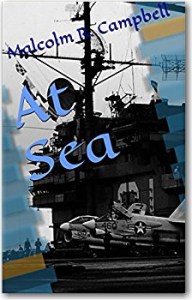
  • At Sea (novel) $1.99 – realism with a splash of magic on an aircraft carrier in the Vietnam War
  • “Waking Plain” (short story) $0.99 a very fractured fairy tale

Happy shopping!

–Malcolm

To learn more about my books, please visit my website.

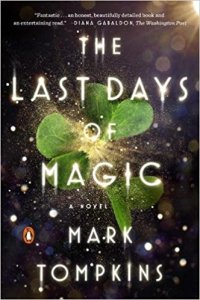
Review: ‘The Last Days of Magic’

Mark Tompkins’ The Last Days of Magic is a mixture of the historical record of the 1300s and an imagined prospective history based on legends. The history focuses on Richard II’s designs on Ireland and on the Catholic Church’s designs on unifying Christianity by driving out magic, pagans, and others who did not follow the dictates of Rome.

The book contains a wealth of history about the real power players of the era. It also contains a wealth of myth and legends about the opposing magical forces in Ireland. If you’re interested in the history of the times, this is not “alternative history” because–by the end of the novel–what happens is what history gave us. If you’re interested in the wealth of magical beings that opposed the English and the power of the Catholic church, the author has taken great pains to remain true to the stories about the Morrigna, Nephlim, Sidhe, witches and others who were presumed to be active in Ireland at the time.

Here’s the problem: The book is confined by history, so there is little suspense here because we know–or can Google–the historical outcome: Ireland is lost to Richard II. While it’s interesting to imagine what the Morrigna, Sidhe and others were doing to keep Ireland as it was, we know they will fail. This kills the suspense.

The book is not cohesive because there were so many players involved. This adds multiple characters and points of view. As Brown did in The Da Vinci Code, Tompkins has included a modern day prologue/epilogue that suggests that the magical bloodline continues into the modern era. While this is hopeful if you like magic more than the organized church, it lends nothing real to the story line. Interesting, yes, but otherwise it has little active association with the events of the 1300s.

The book is interesting for those of us who believe in magic. Otherwise, it’s standard history with a “what if” approach to what the opposition in Ireland might have been doing when the English and the Vatican invaded.

–Malcolm

Malcolm R. Campbell is he author of novels filled with magic including Sarabande, Conjure Woman’s Cat, and Eulalie and Washerwoman

Take our characters into your hearts, minds, souls and worst nightmares

“Publishing is hard. No doubt about it. But sometimes authors get so caught up in the publishing aspect of the profession that we forget the reader doesn’t give a darn how the book was made, researched, written, published, or promoted.” – Hope Clark

 We really don’t want to tell you all that because why would you want to know that any more than you want the details about how your prospective new lawnmower was made? Instead, we much prefer you knowing that we hope you’ll enjoy a good story and then take our characters into your hearts, minds, souls and worst nightmares.

Hope Clark wants to be persuaded a book has a story that will probably interest her more than that it’s cheap or free or the author’s hard-fought debut novel. I feel the same way.

On the other hand, unless a writer is well known and can fill his or her blog with news about upcoming book signings, conventions and other appearances, or–perhaps–the progress of a feature fill that’s being made from one of his/her books, the rest of us don’t have bookish information to provide in a weekly blog.

So, we talk about the subject matter in our books hoping, for example, that people who love mountain climbing will read a post about it and then see that the author has written a novel with a mountain climbing theme with a plot sounds interesting and a story fits within one of the genres the individual likes. The gurus say that if an author writes weekly posts–or even tweets–that say nothing but “buy my book” s/he is spamming his/her own readers. I agree.

That leaves us with talking about the subjects and genres we love and hoping that our posts attract the kinds of discerning readers who are will see possibilities in our books. However, I’ve learned a few cautionary things about this idea:

Caution

  • Murderers don’t read mystery thrillers about murder and mayhem unless the novelist includes how-to-do-it tips.
  • Using a lawnmower in your story line doesn’t attract people who mow yards or sell lawnmowers.
  • If you whine to prospective readers that writing your latest novel made you insane, they will be too superstitious to buy it.
  • Footnotes attached to everything in the novel you researched (cited with sources) or experienced (cited with names of witnesses) do not “ramp up” your story’s appeal. (I know, Lincoln in the Bardo breaks this rule.)
  • Forget about the idea of committing a sensational crime and then writing a based-on-a-true story novel about it. Most jurisdictions have laws that won’t let you profit from the bad that you do unless you only imagined it.)
  • If you put spells or subliminal messages in your books that force your readers to buy more of your books, it’s probably best not to mention it.
  • Saying your novel is just like the novel of a famous writer will cause (a) more people to read the famous person’s novel,  and (b) people to ask why your novel isn’t also on the bestseller list and the well-known review sites.

When it comes down to it, I don’t even know why I read what I read, much less how to write something that somebody else will read. My reading habits are all over the map, so how anyone would include me in their target audience is beyond me. Most advertising/promotion software has probably figured out by now that the words “free” and “cheap” really turn me off. I suppose it’s possible that the NSA/CIA/FBI track the books I read and sell that information to publishers. If so, thanks for spying because I keep coincidentally finding plenty of wonderful stuff to read.

As for my own writing, I write about what interests me and hope that I’m not the only person on the planet who finds such stories fascinating.

Malcolm

Since so many people love fast food, I based my latest e-book short story, “En Route to the Diddy-Wah-Diddy Landfill While the Dogwoods Were in Bloom” on fast food. So far, McDonalds hasn’t agreed to included a copy with each Happy Meal.