Review: ‘Snare’ by Deborah J. Ledford

SnareSnare by Deborah J Ledford
My rating: 5 of 5 stars

Deborah J. Ledford’s “Snare,” book two of the Deputy Hawk/Inola Walela Thriller Series quickly entangles readers who believe young Katina Salvo’s broken past will remain long ago and far away. A popular California songwriter and recording star, Katina has never released photographs and videos or appeared in a live concert because she doesn’t want her fans to know what happened in Valentine, Nebraska on August 29, 1995 at 11:29 p.m.

After convincing her twenty-three-year-old Native American signing sensation she owes her fans a live concert, business manager Petra Sullivan hand-picks a small theater in North Carolina so Katina can debut in a nonthreatening environment.

However, before they leave for the Great Smoky Mountains, Katina discovers that Petra has been hiding threatening fan mail from her. Both overprotective and nurturing, Petra is the mother Katina was never allowed to have. Katina asks if the series of letters is coming from the father she wants to forget.

While Petra maintains the nasty letters are simply a nuisance downside of being famous, Katina is less certain, and wonders what else Petra has been keeping from her. The concert goes forward as scheduled because, as Petra tells Katina, “you can’t hide out forever.” Plus, Katina’s safety is a top priority through the efforts of the sheriff’s point man on the security detail, Deputy Steven Hawk. Hawk also appeared in Ledford’s stunning debut novel “Staccato” (Second Wind Publishing, 2009).

The concert appears to be a triumph until Katina is attacked by a shadowy man in the audience who escapes leaving few clues behind. Katina thinks she knows who it was. Hawk thinks he is responsible for the security lapse. Together, they plan to ensnare the perpetrator. Against the advice of Petra, Hawk’s girl friend and sheriff’s department colleague, Inola, and veteran officer Kenneth Stiles, they fly to the Taos Pueblo in New Mexico where Katina’s past lies hidden.

In “Snare,” Ledford brings her readers a novel of contrasts: Katina’s horrible childhood vs. a successful recording career, people who can be trusted vs. those who follow their own agendas, Native American beliefs vs. mainstream spiritual viewpoints, and the lush beauty western North Carolina vs. the stark beauty of central New Mexico. “Snare” has been nominated for a Hillerman Sky Award, an honor presented to the mystery that best captures the landscape of the Southwest.

While “Snare” does not quite match the bone-chilling punch of “Staccato,” it excels in other ways with deeper character development, a realistic presentation of Native American society and beliefs, and the role of family and friends in the choices one makes. By no means legato, “Snare” provides an ever-tightening story with a realistic, satisfying and unpredictable conclusion

View all my reviews

If you like the Pueblo influences in SNARE, you may also like the Blackfeet influences in GARDEN OF HEAVEN

Books on the Nightstand

My nightstand has so many books on it, there’s hardly enough room left over for the reading lamp and the alarm clock. I sleep better when there are plenty of yet-to-be-read books there. When they’re gone, I’m worse than a chain smoker who’s run out of cigarettes.

Running out of books is not an option. After finishing Stieg Larsson’s “The Girl Who Played with Fire,” I started reading two books simultaneously since one of them is on my computer. Yes, I know, if I had a Kindle, I could read e-books in bed.

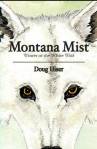
By night, I’m reading Montana Mist: Winter of the White Wolf by Doug Hiser. In addition to the wolves, this novel is filled with memorable characters and mountains. I couldn’t resist.

Publisher’s Description

In the remote Montana wilderness, a mountain man, once a professional athlete, lives his life in seclusion protecting and raising orphan wolves until he gives his heart to Sassy, a young woman hitchhiking across America. He guards his secrets and the other woman in his life, a beautiful blind woman, known as “Shy Girl.” The wolf pack roams the mountains as he searches for the white wolf, Mist; that he raised and released into the harsh snowy forested peaks, his ties with the wolves as close as the bond with his new love. Montana Mist is the story of one man’s secrets, the two women in his life, and the wild world of wolves of the remote forest in the last untamed region where man has not put his imprint on the land. A man shaped by the mystery of his past and the complication of his future while the adventure of his heart threatens to destroy his solitary precious world of mountain, wolverine, moose, elk, and wolf.

By day, I’m reading Razor’s Revenge by Paul Chandler. I enjoyed Chandler’s previous novel Peeper, and was happy to see the new release. This is very different (as its cover suggests) from Montana Mist, but equally absorbing.

Publisher’s Description

In 1958, a group of unscrupulous men use fabricated evidence, perjured testimony, and a crooked judge to steal Samuel Razor’s company. For ten years Razor allows them to believe they’ve gotten away with their crime. They continue to believe it until the day Razor comes for them.

Five decades later, Samuel Razor is a billionaire and an icon in the business world. His revenge taken, his youth long gone, and his health rapidly failing, there is one last important thing he wants to accomplish before he leaves this world, one more villain he needs to deal with.

The legal justice system-the very system that made the theft of his company legal and binding-is laughably easy to deceive. All it takes to defeat it is something that any human being can do: tell a lie. And from that lie come lawyers, trials, incompetent verdicts, and inevitably, unsatisfying compromises.

To ensure that the law only serves and does not victimize, there can be no lies, no lawyers, no biased judges. Samuel Razor has the money, the influence, and the motivation to reinvent the system. It will be his last and final act of revenge.

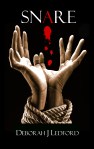
Coming up next, Snare by Deborah J. Ledford. The novel has has been nominated for The Hillerman Sky Award and follows Ledford’s outstanding 2009 novel Staccato.

Publisher’s Description

Native American pop singer/songwriter, Katina Salvo’s career is about to take off. There’s one problem: someone wants to kill her. Katina and her bodyguard, Deputy Steven Hawk, are attacked during an altercation at her first live concert. Could the assailant be a mysterious, dangerous man from her youth? Or her estranged father recently released from prison for killing her mother?

Performed against the backdrop of the picturesque Great Smoky Mountains of North Carolina , and the mysterious Taos Pueblo Indian reservation, SNARE is a thriller fans of Tony Hillerman will appreciate.

These will keep me busy for a little while, though I’m already looking for more so I don’t run out. What great books are waiting on your nightstand that I ought to be considering?

You might also like: Quick Sex, Weekend Relationships and Short Books

Malcolm

$4.99 on Kindle

Review: ‘The Templar Salvation’

The Templar SalvationThe Templar Salvation by Raymond Khoury
My rating: 4 of 5 stars

Raymond Khoury’s The Templar Salvation (2010) sequel to The Last Templar (2006) is better than the original. Like the original, The Templar Salvation presents a story of lost/hidden church secrets with dual time lines, a lot of historical detail, and plenty of action.

In the present day, Khoury brings back FBI agent Sean Reilly and archeologist Tess Chaykin in a race with terrorist Mansoor Zahed to find a cache of early Christian documents. In 1203, while the Fourth Crusade siege of Constantinople is in progress, a small band of Templars sets out to rescue and then hide the same set of documents. In both time lines, the Catholic church doesn’t want the documents to come to light.

The Last Templar featured an amazing opening scene. The Templar Salvation’s opening, while slightly less spectacular is action-oriented and inventive. Tess is in danger. Sean rushes to the rescue and, in spite of the law enforcement resources available in Turkey and at the Vatican, becomes the point man in a search for Tess, Mansoor, the documents, and a variety of people who end up dead.

The Templar Salvation is more tightly woven than The Last Templar. It also contains fewer “talky scenes” where Tess and/or Sean explain elements of the 1203 story to present day police officers as though 800-year-old information trumps current evidence or the need to get out of the squad room with some sense of urgency. The Templar Salvation might be called “The Book That Will Not End.” Tess, Sean and Mansoor find themselves within nanoseconds of being killed (or worse) numerous times throughout the story only to escape/survive and keep on searching, fighting or running.

Nonetheless, the improbable story somehow makes for more exciting reading than The Last Templar. The Templar Salvation is a violent, tangled, twisted, groaner kind of escapist read that features the kind of over-the-top, don’t-worry-about-civilian-deaths-and-collateral-damage law enforcement that viewers of the TV series “24” tuned in every week to see.

Like agent Jack Bauer in “24,” Sean Reilly is as relentless as a Terminator in his quest for neutralizing the bad guys and possibly obtaining justice. And, like Jack, Sean keeps going, going and going even though his wounds would have killed ten normal men.

The book is a guilty pleasure.

View all my reviews

Malcolm R. Campbell is the author of “Jock Stewart and the Missing Sea of Fire,” “Garden of Heaven: an Odyssey,” and “The Sun Singer.”

All Aboard for Glacier National Park

When Glacier National Park, Montana, celebrated its centennial last year, 2.2 million visitors came to the park, setting a new attendance record. While Amtrak’s Empire Builder serves the park, most of today’s visitors arrived by plane and automobile.

The park’s hotels and early infrastructure were developed by James J. Hill’s Great Northern Railway (GN), now a part of the Burlington Northern Santa Fe (see downloadable history), as a means of increasing passenger rail traffic on the route between Minneapolis and Seattle. The route, which went through North Dakota, Montana and Idaho, is the northernmost transcontinental railroad in the United States. Hill and his railroad prided themselves in the fact that, unlike other transcontinental railroads, GN used no federal land grants to built the track.

Before Amtrak took over most U.S. intercity passenger rail service in 1971, Great Northern delivered visitors to East Glacier and West Glacier via many named trains over the years, the last of which were its premier Empire Builder and the Western Star. Considered a secondary passenger train, the Western Star (train #27) left Minneapolis daily for the west coast, arriving in East Glacier before breakfast the following day. When Amtrak took over passenger service on the route in 1971, it kept the Empire Builder and discontinued the Western Star which had been in operation since 1951.

Carol Guthrie’s All Aboard for Glacier National Park (2004) captures the heady days of passenger rail travel and the park.  Even though the trains are mostly gone, you can still see the Great Northern Railway’s influence throughout the park, especially in the hotels managed by Glacier Park, Inc. (The company was owned by the railroad until 1960.)

When I worked as a bellman at the park’s Many Glacier Hotel in the 1960s, I traveled from my home in Florida to the park by rail, and that included the Western Star. The railroad still offered hotel employees reduced-fare tickets even though most railroads’ passenger trains were, by then, operating at a loss. Since the train ride was part of my Glacier National Park experience, I couldn’t help but include the Great Northern Railway and the Western Star in my novel Garden of Heaven. (Now out of print.)

Garden of Heaven Excerpt

In the novel, my main character David Ward gets to do what I always wanted to do: run the Western Star for a few miles just east of Glacier National Park:

“Climb up, Mr. Ward, it’s only 24 miles, and I’ll be close by.”

“You run like a god damned freight engineer,” said Jim as he lit another cigarette, “and there will be hell to pay.”

“I won’t spill a drop of coffee,” said David.

They followed him up into the cab. Jim slouched in the fireman’s seat with his newspaper and Big Ed stood by silently while David sat, noted the positions of the brake handles and the needles on air gauges, then looked out the window at the track ahead of them. There was seldom any rust on these rails lying easy on the fine, well-drained roadbed, and now as the day wound down, the tracks were becoming a true hi-line into night. Ahead, in the middle distance, two tall trees stood equidistant from the center of track—the right bathed in full sun, the left now in shade—a gate to the future, all aboard for Blackfoot, Sundance, Cutbank, Shelby, and points east with connections to RTC Great Lakes and Vietnam. He stepped on the dead man’s pedal and looked back at Ed and said he was ready.

“It’s 5:12 and we are clear to proceed,” Ed said. “You won’t need the transition lever, go easy out of here and then one day tell your grandkids you ran the Western Star.” Ed punctuated the sentiment with two loud blasts of the horn.

He put the reverser lever in forward, pushed the throttle into notch 1 and felt the engines load as he carefully feathered off the independent brake.

“Good,” said Jim. “Big Ed didn’t leave any slack in the train.”

“Damn sure didn’t,” said Ed. “I care very deeply about those Pullman passengers and their eagle eyes conductor back there.”

David eased the throttle out a notch at a time, slowly, so far so good, he hadn’t jostled anybody, felt the automatic transition as they passed between the two trees and throttled back to avoid any wheel slip, then began easing the throttle forward again until they reached track speed.


SunSinger4coverMalcolm R. Campbell is the author of “Conjure woman’s Cat” and “The Sun Singer.” “The Sun Singer” is set in Glacier National Park.


Eagle Scout Goes to Hell

Olongapo as it was then

Everyone aboard every Navy ship that cruised between California and Vietnam in the late 1960s knew about liberty in Olongapo, Republic of the Philippines. The city stood just outside the main gate of the U. S. Naval base at Subic Bay, a regular port of call for Western Pacific (WESTPAC) ships.

Old salts called the town “hell” and promised Seaman Recruits coming on board the carrier USS Ranger out of bootcamp that anyone leaving the main gate of the base on liberty would be corrupted immediately by booze, drugs, girls, gambling and crime. They called the drainage ditch separating the base’s main gate from the town “the shit river,” though I saw it as the River Styx.

I crossed the shit river multiple times and found the world there to be everything the old salts described. As a former Eagle Scout, it crossed my mind on more than one occasion, “if only my Scout master could see me now.” Our Scout troop was sponsored by a church, so the Scout master was the least of my worries when I thought of how the deacons, elders and Sunday school teachers should they ever see a photo taken on Magsaysay Drive.

As a writer in training, I saw Magsaysay Drive and the Galaxy Bar and the touts and the constant ruckus in the streets as “research.” But I doubt my Scout master would have understood, or anybody else I knew, for that matter. Luckily, webcams and cell phones hadn’t been invented yet. There was no Facebook either in 1968. This meant that no pictures of me crossing the shit river appeared anywhere–and since a lot of time has gone by since then, I doubt they ever will.

Everyone who might know the Eagle Scout and paperboy who went to hell and then put his research into a novel called Garden of Heaven is long gone by now. So, I think I can safely post this excerpt without word getting back to the old neighborhood.

Excerpt from Garden of Heaven:

Standing on the bridge over the Shit River listening to the half-naked children in flimsy boats below shouting for a handful of centavos, the city in his face was—with more pride than apology—very much a city with its tattered underwear showing. If Magellan only knew what was here now. If Dad only knew David was here now.

Night was settling down over the hazy first lights of the bars and hourly rate hotels along Magsaysay Drive and the razor-sharp edges of Kalaklan Ridge like an old whore.

David dropped several 25-centavo coins over the railing, heard an explosion of whitewater, heard the laughter and the shouting, ‘Salamat, Joe, Salamat.’

He crossed Perimeter Road, ignored the hopeful greetings of the money changers behind their well-caged windows, then dodged a badly mixed throng of sailors, girls and honking multi-coloured jeepneys that swelled out into the Gordon Avenue intersection. He cut across the street, smiling, waiving at imagined friends in the distance, and moved with the deliberate intent of a man who had crossed this street hundreds of times.

‘Casual alertness, that’s the key to surviving Olongapo’s jungle of thieves, gangs, girls, high-strung Marines, bored Shore Patrol and Hard Hats, and drunk boatswain’s mates and snipes,’ Lowell had said.

“Hey Joe, cold beer cold beer cold beer, nice girls.”

Touts were everywhere below the slapdash smorgasbord of disheveled signs and awnings, leaning telephone polls, and the rag-tag assortment of buildings with upper floors stacked up in odd strata.

Assorted conversations flew past, barely audible in the close heat… ‘Hintayin mo aki,’ …‘Magandang amaga, Carlo, kumusta ang bagong sanggol?’… ‘Hey Joe’… ‘Tao po! Tao po!’… ‘Hoy, tulungan mo akong magdiskarga sa trak na ito, pwede ba?’… ‘Good food here, Joe!’…Galing akong Maynila. Nasaan ang Zambales Bank?’… ‘Balut, Balut!’… ‘Tayo na’t kumuha ng makakain’ ‘Magandang ideya, handa na ako sa napunan’… ‘Nagustuhan mo ba ang bago kong kamera?’

The sign for the Galaxy Bar was plainer than most. An unadorned interior stairway led to the second-floor club, a large room strewn with tables occupied by sailors, many with girls whose eyes caught the low light like predators or gods. David didn’t see anyone he knew. He had a small envelope in his back pocket for Maria.

Two girls who had bathed in perfume and spackled their faces with makeup were leaning against the bar watching a waitress organise a tray full of San Miguel beer bottles.

“Maria, tingnan mo itong malambing na lalaki.”

“Lamayo ka sa kanya, Adelaide.”

Assuming he’d actually heard her name in those quick Tagalog comments, Maria was the one wearing a red dress, thrusting herself forward to him as he approached, posing her sweet curves, allowing her long hair to seductively frame her face, smiling as though they were friends with a history. He could almost see himself in the high gloss of her lipstick.

Copyright (c) 2010 by Malcolm R. Campbell

USS Ranger (CVA-61)

Ranger - Wikipedia Photo

The USS Ranger has been decommissioned. The USS Ranger Foundation is working diligently to convert the aircraft carrier into a museum on the Columbia Driver near Portland, Oregon.  The effort requires multiple phases, the next being a comprehensive environmental site analysis of the propose mooring location.

The Foundation is seeking donations to help pay for its on-going work. If you would like to contribute to the $15 million dollar fund raising project to bring a historic ship to Oregon as a museum, please click on the link above. Once you’re there, you’ll find some handy PayPal buttons.

Vila SpiderHawk’s Books Reflect a Love of the Natural World

Vila SpiderHawk is the author of three magical novels that follow the coming-of-age adventures of protagonist Judy Bauman in the disputed German-Polish border territories prior to and during World War II: Forest Song: Finding Home (2008), Forest Song: Little Mother (2009) and Forest Song: Letting Go (2010). Vila is also the author of the Forest Song Cookbook (2009), featuring recipes from the series, and Hidden Passages: Tales to Honor the Crones (2007), a collection of stories about old women and their celebration of life and wisdom. Vila and her husband live in a log house in the Pennsylvania forestland.

Malcolm: Welcome to Malcolm’s Round Table, Vila. You introduced readers to protagonist Judy Bauman in Forest Song: Finding Home set in 1929 to 1933 in territory claimed by both Germany and Poland on the eve of World War II. What attracted you to this time and place for your novel’s setting?

Vila: Thank you for your hospitality and thoughtful questions, Malcolm. It’s very kind of you to do this interview with me.

Why the World War II era in the Polish-German Corridor? I am of German descent and was born in 1945. I grew up in careful silence about the horror of the Holocaust. We didn’t even learn it in school, since it was still too new to be in the history books. It wasn’t until I went to high school that I got my introduction to the period, and that was very sketchy. Nonetheless, I have always felt a pull to the time and place. Call it racial guilt. Call it something else. Whatever it is, I needed to know what caused a people to do such terrible things. And so I studied the era in college.

However, I was never satisfied with the answers the books gave for that terrible time, and so I have carried this need around all these years. Therefore, when I met Judy and she turned out to have lived in that time, I invited her in to tell me her story.

You see, I do not create my characters. They come to me, fully formed and talkative. Judy is downright overbearing sometimes. In any case, I channeled her, since she, too, cares deeply about the “whys” of things.

But there is an additional reason. I worry that our country could become the Germany of the Holocaust. I worry about Guantanamo and the attitude we generally have about Muslims just now. While I am sure some Jews in Germany fit the Nazi stereotype, since all stereotypes have a glimmer of truth to them, I believe and indeed have found that most Jews were just hardworking people trying to live decently and to raise their children well while keeping the bills paid. And, while some Muslims fit the stereotype we have created for them, most, I believe, are like the majority of German Jews. All they want is to live decent lives, to raise moral and educated children, and to pay the bills. It’s not rocket science. People are people. Most are, at bottom, very conscientious.
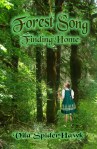
Malcolm: As I read Forest Song: Finding Home, I discovered an interwoven mix of history, German and Polish life and culture, Craft traditions and rituals, and faerie magic. When prospective writers ask what you write about, how do you describe the Forest Song books’ genre and overarching themes?

Vila: Oh boy it’s really difficult for me to place the Forest Song series into a tidy little box. I have classified it as historical fiction, since it has elements of that. I have also classified it as fantasy, since it has aspects that people like to call fantasy. But in truth, it doesn’t really fit tidily into any single category.

When people ask me what I write about, I usually tell them I write about life, in all its complexities. As is true of all of us, Judy’s is a creature of her culture and her era. Her spirituality is an important aspect of her attitudes as well, as it is with most of us. Sometimes she believes she’s going from point A to point B and she ends up at point H, as often happens in life. My stories are not straightforward, because life isn’t straightforward. This becomes more obvious in the later volumes of the Forest Song series but is already visible in Finding Home.

Malcolm: Fairy tales and myths frequently use the forest outside the city gates as a dangerous and/or magical realm of non-ordinary reality where characters go for heroes’ adventures and seekers’ coming of age stories with a strong focus on the protagonist’s transcendent or psychological “the inner journey.” Did a life-long appreciation of myths and folktales greatly influence your approach to Judy’s story and her drive to leave the claustrophobic and limiting world of her parents’ farm for the freedom of the forest?

Vila: Fairy tales are highly allegorical. The forest in fairy tales usually symbolizes the darkness and the space in which people reflect and learn, acquiring wisdom. Thus Persephone goes into the Underworld as a child and emerges with a woman’s wisdom and responsibilities. The forest is our Underworld.

Having said that, I did not grow up reading and loving fairy tales. That came later. But I have always felt the pull of the woods. I always felt I would not satisfy my destiny until I had escaped the clatter, stench, and hustle of the city and had moved into the green serenity of the trees. And, in truth, I didn’t. Though I have always written, it wasn’t until I had moved here and had explored my inner wisdom that I finally felt ready to write for publication.

Malcolm: I am amazed at the breadth and scope of the Forest Song books insofar as the author’s personal knowledge and research required for the plot and setting. How did you approach and organize the books’ details so that they fit hand in glove with recorded history, actual trees and plants available (and seasonally, when they bloomed) in the disputed territories, local customs, Craft traditions specific to Germany and Poland at that time, relevant folktales, and even kinds of clothing, furnishings and products available in a typical farm family’s house?

Vila: I don’t organize my books. My characters do that. They tell me their basic stories in bare bones language. Then it’s up to me to make art of their tales. Once I have the basic facts, I spend a great deal of time researching. One of the reasons I am such a slow writer is that I try to check every little detail to be sure it’s true. Judy opens herself up to me. She lays herself bare. That requires a great deal of trust. I need to be worthy of that trust. That means that I have to be sure that every detail I include in her story is true. I read many books before I sat down to write this series, and I have read many more along the way.

Malcolm: Your pseudonym combines “Vila,” a goddess, with “Spider” and “Hawk.” How did you choose this unique pseudonym and how does its meaning correlate with the intentions and perspectives behind your writing?

Vila: I chose Vila SpiderHawk very carefully. Vila is an eastern European Goddess of the woods. She is a shape shifter and the protector of the forest and all who live there. She heals with herbs. I identify with all that. She also dances hunters to death. There are times when I really identify with that as well, since I am a vegan. I chose the name long before I realized I’d be telling Judy’s story, though.

Spider is a contemplative creature. Spider spends her time between earth, the concrete, and air, inspiration. She chooses not to hunt. Instead she waits for food to come to her. She is patient. She knows that the Universe will provide her daily needs. She reminds us to see the importance of patience and spirituality. She reminds us to see the divine in all creatures, however small, however mundane.

Hawk, on the other hand, is aggressive. Her vision is sharp, and her reflexes are quick. She is a merciless hunter. She soars. She spreads her wings and touches the clouds. She is as free as it is possible to be in this life.

I am both Spider and Hawk. I am contemplative and introspective. I understand that the Universe will provide what I need as long as I have the wit to ask for it and the patience to accept that it will come in its own good time. But I am also Hawk. I can be aggressive and merciless. I tend to see sharply. And there are times when I positively soar. The Spider in me tempers the Hawk. The Hawk in me reminds me that sometimes it is necessary to be aggressive and to see sharply. And, while it’s wonderful to experience a meditative state, it is such a delight to soar.

Malcolm: In addition to exciting stories, what memories, dreams and reflections do you hope your readers will carry away with them after reading the Forest Song novels?

Vila: What the reader takes away from my books is really up to the reader. Each person brings her own experience, her own baggage, her own spirituality, and her own longings to the books she reads. Each person will take away an individual package of dreams and reflections. I don’t feel I can dictate or even suggest the “right” hopes, the “right” insights for the reader. I simply hope that each book sings to each individual in a way that feeds her soul.
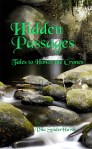
Malcolm: The use of the word “crone” in your Hidden Passages collection of stories straddles a paradox. In mainstream society, the seldom-used word is generally used to malign and discount older women in a patriarchal society. Yet, in historical matriarchal societies and in the Craft and goddess traditions, the word is used as a reverent term of endearment and respect. Did you have any second thoughts or concerns about using the word “crone” in your title or was it especially appropriate to the book’s theme and intent in spite of some mainstream connotations?

Vila: I was very adamant about using the word “Crone” in the title of Hidden Passages. I deeply resent the fact that we dismiss old women in particular but old men too as useless dead weight when, given their experience and wisdom, they have so very much to offer. I think we would be a better society if we actually respected more the feminine principle of giving and nurturing life and if we understood down to the marrow of our bones how very much we owe those wonderful women who raised us.

I grew up in the company of old women. I have always treasured them. And now that I am one, I value old women even more. I understand now that, while those wonderful women who raised me were old and wise and generous and dear, they still had all the eagerness and, yes, insecurities of youth. To me the word “Crone” encapsulates all that is woman—the maiden who is brash and flirty, fearless yet vulnerable; the mother who will sacrifice anything to give her child a better life, the woman who teaches and nurtures and worries and rejoices in and about her children; and the creature we see superficially as the Crone who knows pain, who has experienced death and loss and has endured anyway. The word Crone to me is not simply a title of respect. It is, in my opinion, the finest appellation anyone can call a woman.

Malcolm: Your characters use a lot of herbs found growing naturally in the woods where they live. If one chanced by your log cabin, would they find you out in the woods gathering and drying herbs, and then using them in the teas and meals you serve at your table?

Vila: Oh boy would they ever! Of course, I have an herb garden. Well, I wouldn’t exactly call it that. I’m not sure it’s organized enough to warrant the name “garden”. But I grow all kinds of culinary and other herbs as ground covers instead of grass. And I do cut from the herbs for cooking and other purposes during growing season. I dry herbs in autumn for winter use as well. My house smells like vegetable soup through the autumn with all the herbs drying. But I also harvest herbs from the woods. Mostly that’s just an excuse to go out into the trees and to feel the woodland energy all around me. But yes, herbs are very important to me. Not only do they make food taste fantastic, they have enormous healing power that many European countries still recognize. Hopefully, we’ll get back to more natural healing methods in this country too.

Malcolm: Thank you so much for stopping by and chatting today.

Malcolm

Book Review: ‘Song of the Twice Born’

Song of the Twice Born: Book 1 The Mirror of SirrusSong of the Twice Born: Book 1 The Mirror of Sirrus by Seth Mullins
My rating: 5 of 5 stars

Seth Mullins has followed his mythic quest novel “Song of an Untamed Land” (2005) with “Song of the Twice Born – Book I: The Mirror of Sirrus.” Set in a mythical land reminiscent of America’s wild west during the age of discovery, this first installment of an epic fantasy trilogy tells the individual stories of a small group of characters who live in a veritable oasis of calm in a world of warring peoples.

This ambitious novel shows what happens to individuals living within perilous times when they are confronted with the more perilous truths about themselves. A dwarf named Sirrus has introduced a magic mirror into the temporary serenity of Aspen Meadows. When an individual gazes into the mirror, s/he sees an unflinchingly accurate portrayal of his or her bedrock truths and goals. In as much as truths are quite startling, if not potentially debilitating, Sirrus provides commentary and spiritual advice.

Since Sirrus’ advice to Eden, Galya, Marek, Brieran, Ejol, Jin and Enofor (whom we met in “Song of and Untamed Land”) is often more blunt than comforting, he asks each of them to spend time contemplating the revelations by recording his or her spiritual experiences in a journal. Like any journal, each entry records the spiritual and psychological truths unearthed via the mirror within the context of memories and day-today life and struggles. Each character must not only come to terms with past triumphs and losses, but with the seeming inevitability of death or capture when either the Assymyan or Churan army overruns their sanctuary.

Mullins paints landscapes, cultures, peoples and spirituality on a wide canvas that may remind readers of such classics as Stephen R. Donaldson’s “The Chronicles of Thomas Covenant” and J. R. R. Tolkien’s “Lord of the Rings.” The epic scope of this story is made human and vibrant by the very personal journal entries of each character. In less capable hands, “Song of the Twice Born” might have become a collection of indirectly related character studies or short stories. Instead, the character’s points of view link together well into a very real and readable transcendent adventure.

View all my reviews

–Malcolm R. Campbell is the author of the hero’s quest novels, “The Sun Singer” and “Garden of Heaven: an Odyssey.”

L. E. Harvey’s novels focus on women’s strengths

L. E. Harvey, author of “Loving Her” (2009), a collection of short stories and “Unbreakable Hostage” (2010), a suspense/thriller, turns her attention in her latest novel “Imperfect” to the love and chaos of a relationship between life partners who are not only confronted with small-town prejudice against interracial gay couples, but are also coping with AIDS. As a sickly child, Carol Mathers received a blood transfusion in the early 1980s before blood donors were screened as they are now. When she is diagnosed with AIDS in her mid-30s, she fears she may have unknowingly infected Alexandria, her partner of twelve years. The e-book addition of “Imperfect” is available now from Vanilla Heart Publishing. The trade paperback is scheduled for a November release.
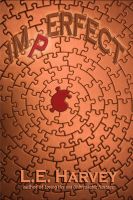
Malcolm: Welcome to the Round Table, Lauren. In Unbreakable Hostage, released earlier this year, your protagonist, a PhD candidate in algebra, is kidnapped by one of her classmates and ends up using algebra-related messages to get word to the outside world. How difficult was it to shift gears from the life of a hostage to the world of a young couple who meet in Imperfect, fall in love and decide to share their lives together?

Lauren: Thanks so much for having me, Malcolm! I’m thrilled to be here! There was actually no real transition for me. The intensity of Unbreakable Hostage mirrors the intensity an interracial lesbian couple would face in a not-so-gay-friendly environment. Granted the situations are different, but on an emotional level, they’re actually quite similar. Fear is fear, hatred is hatred and love is love, no matter what situation you’re in.

Malcolm: To what extent is the tone of your daily life affected by the joys, sorrows and challenges of the fictional characters you’re writing about? That is, did you feel tense while writing about the kidnapping and angry and sad while writing about Carol and Alexandria?

Lauren: Very much so. I’m a very emotional person as it is, and I get swept up into my characters’ emotional states as well. To boot, I typically play music that’s reflective of what I’m writing, so I am very much engrossed and enveloped in their lives and emotional states. My books can easily sway my emotions! LOL. I’m sure that can’t be easy on my family! 🙂

Malcolm: What do you hope your will take away from reading Imperfect?

Lauren: My hope is that this book really causes people to stop and think. I want them to throw out any stereotypes or judgments they may have had after reading Imperfect. Perhaps it’s a lofty goal, but I really want my readers to walk away from this book seeing us all as human beings, hopefully diminishing some prejudicial thoughts/assumptions.

Malcolm: To what extent does your women’s rights and gay rights activism shape the plots and themes in your fiction?

Lauren: I think it shapes my books tremendously. If you look, I have very strong heroines. Not that the male characters are weak, mind you, but the women definitely take the spotlight! Whether intentional or subconscious, my three current titles all have themes regarding the strength and capabilities of women, equality for all people, etc. I guess I have a hard time separating my various passions & work!

Malcolm: I haven’t met many authors who also work as “pin-up girls.” How did you get started in that business? Are you finding any good story material in your modeling experiences?

Lauren: LOL. I kind of accidentally fell into modeling. I’m only 5’1″ and don’t look “model-ish” at all! 🙂 But for some reason, people like taking my picture! It’s fun, so I won’t stop ’em! 🙂 As far as pinup work goes, I just happen to be naturally inclined to make those silly, over-the-top cheesecake pinup facial expressions, so it all just kind of worked itself out. 🙂 You know, I haven’t thought to look at my modeling work for inspiration, but now that you said that, I’m going to start thinking about that! 🙂

Malcolm: Your website is promising a sequel to Imperfect. What can you tell us about that without giving away too many spoilers?

Lauren: Well, what I can tell you that is that Impeccable, the sequel to Imperfect, lives up to its name. I hate to sound like an ego maniac, but I am just so proud of this book! I really think it’s going to touch people’s hearts. You will have the same cast of characters, but you get to know them on a much deeper level. You’ll learn things about them that you never could have imagined. It gives you a more clear and defined understanding of the entire story and all of the players involved. Impeccable is very cerebral and also very emotional. If you liked Imperfect, you’ll love Impeccable! 😉

Malcolm: When you’re not writing and not modeling, do you find time to relax and smell the roses?

Lauren: Do I find the time to relax and smell the roses? LOL. Ummm…I am a self-admitted workaholic. Actually, working with my partner on our house or her sculptures is very relaxing for me. Doing anything with my family is really the best down time I can ask for. Whether it’s sanding wood or making dinner with our little one, family time is my down time. So, I do stop and smell the roses, in my own unconventional kind of way.

Malcolm: I’ve enjoyed our conversation, Lauren. I must tell you that after your powerful ending for Imperfect, I’ll be waiting to read Impeccable as soon as it’s hot off the press.

You can also find Lauren’s work in Vanilla Heart’s With Arms Wide Open anthology of poems and prose celebrating living and loving. You can read excerpts from “Loving Her,” “Unbreakable Hostage,” and “Imperfect” on fReado. Lauren’s books are also available to coalition troops serving overseas via Operation E-Book Drop.

To keep up with Lauren and her work, visit her blog “The writings and ramblings of a Philadelphian.”

Malcolm

Book Review: ‘The Last Templar’

The Last TemplarThe Last Templar by Raymond Khoury
My rating: 3 of 5 stars

Raymond Khoury’s “The Last Templar” (2006) is part of a deluge of novels and nonfiction to step outside mainstream history to explore the real, prospective and imagined secrets about alchemy, the Knights Templar, and the origins of Christianity.

One cannot help but think of Katherine Neville’s “The Eight” (1997) which focused on present-day people fighting over and/or guarding the secrets of the Philosopher’s Stone and Dan Brown’s “The Da Vinci Code” (2003) which speculated about the true meaning of the Holy Grail and the bloodline of Christ. Many of Neville’s, Brown’s and Khoury’s fans were also attracted to such nonfiction as “Holy Blood, Holy Grail” (Baigent, Leigh and Lincoln, 1982) and Lynn Picknett’s “The Templar Revelation” (1997).

It is difficult to read, much less discuss, Neville, Brown and Khoury without acknowledging the fact that fact that they are part of a rather unique genre of spiritual conspiracy fiction that seemed to fill a need in the public psyche for truths thought to be missing from the tenets of Catholic and Protestant theology.

Neville’s “The Eight” was, perhaps, the first to popularize this “genre’s” style and focus: hidden wisdom, long-time conspiracies, compelling present-day mystery/thriller action, and numerous (and lengthy) history lessons. Since her focus was alchemy, Neville’s “The Eight” didn’t ignite the kind of controversy generated by Brown’s “The Da Vinci Code” which, some might say, hit us where we lived if not where we worshipped.

Like Neville, Khoury tells his story with a modern-day and a historical timeline. “The Last Templar” begins with what Booklist called “one of the most gripping opening scenes among recent thrillers.” Four horsemen dressed in Knights Templar regalia steal artifacts from a Metropolitan Museum of Art show of Vatican treasures, including a “decoder.” The other story line focuses on the last days of the Knights Templar as the Holy Land is “lost” with the fall of Acre in 1291 and the subsequent pilgrimage of a few surviving knights to safeguard the Templars’ treasure.

Publisher’s Weekly was less kind than Booklist, saying that the “war between the Catholic Church and the Gnostic insurgency drags on in this ponderous ‘Da Vinci Code’ knockoff.” Many readers criticized Dan Brown in “The Da Vinci Code” for constantly stopping the otherwise full-speed action of the book while one character filled in another character about the secrets of Mary Magdalene, the Grail, the actions of the Catholic Church, and Jesus’ bloodline.

In my view, “The Last Templar” carries such backstory diversions to an extreme. Picture, if you will, whether it’s plausible that FBI operatives investigating the raid on the museum, the stolen treasurers, and the continuing deaths would spend hours discussing Templar history in great detail.

The greatest fault with “The Eight,” “The Da Vinci Code,” and “The Last Templar,” is the fact that some characters must provide other characters with long-winded and unrealistic diversions into history, philosophy and theology because general readers are not likely to know the facts and the latest theories involved. The authors have felt that without these history lessons, the plots wouldn’t make sense.

I liked “The Last Templar” better than Publisher’s Weekly, but not as much as Booklist. The history was interesting, though I’d seen it all before. The plot was imaginative and included some page-turner action scenes involving the church, the thieves, the FBI and protagonist Tess Chaykin, an archeologist who witnesses the raid. The ending, while not wholly unreasonable was, I think, unsatisfactory, especially for those readers who not only want to know what the Templars’ secret but are angry that a real or a fictionalized church would deem it necessary to suppress the truth at all costs.

The romantic feelings between Tess and the head FBI agent add a variety of complications to the story, some of which lead into exciting action scenes even though the relationship within the book is rather forced and tedious.

For readers who have enjoyed the fiction and nonfiction in this wave of spiritual conspiracy books, “The Last Templar” is interesting escapist reading even though those who have seen it all before may speed-read through some of the Templar history.

View all my reviews

Siobhan – a ‘Garden of Heaven’ excerpt

E-Book only $5.99
“Garden of Heaven: an Odyssey” is the story of a man’s spiritual journey through the mountains of Pakistan, the swamps of North Florida, the beaches of Hawaii, the waters of the South China Sea and the ivy-covered halls of an Illinois college as he attempts to sort out the shattered puzzle of his life.

In this excerpt, David Ward’s significant other, a woman well-practiced in the old Huna magic of Hawai’i, is ready to discuss the clues, if any, she found in his journals about who has been trying to kill him.

David sits on a fence post, a comfortable, familiar spot, and looks across the creek to the house. The creek is the same; the house has shrunk with time. Too perfectly symmetrical when it was new, the structure’s roofline, doors and walls have aged randomly and grown more natural into the place.

Complacent while Siobhan keeps the Komondor puppy inside, the remaining Dominique chickens peck at the hard path between the kitchen door and the clothes line. The path turns west into a gravel road that leads to an old house lying down in weeds and ruin where his grandparents lived until one became too frail and the other became too psychotic to be left alone, where they said that his mother was born on a cold January night in 1914, where lies and truths were sown and bore hybrid fruit.

Along the road between the houses, grey sheds linked by fences lean into the earth. Dry and empty, like old nooks and crannies and secret places, they were always the first full focus of spring–humid and rich as sea fog, dripping with the juices of birth and new life. Jayee’s timing was as precise as nature allowed. Today he would be moving the last of the lambs from the jugs to the bunch pen if he was on schedule, or the first of them if nature wasn’t.

From this vantage point, David sees the pros and cons of dreams; he views his visions from the other side, and—remembering everything that has happened between then and now and then and now and then and now—must decide how much of history is too broke to fix. Siobhan refuses to tell him who tried to kill him and why because he’s not ready to hear it, much less re-live it; Sikimí will take them back to the scene of the crime soon enough.

She steps out the back door carrying old notebooks, an envelope labeled remnants, and grandmother’s blue-on-white eight-pointed star quilt. The door slams, stirring memories. She smiles and her pony tail dances when she nods at the circle of box elders where she heads at a brisk walk.

In her khaki cargo shorts and light blue sleeveless crew shirt, she radiates a well-toned athletic health that sings of perfectly managed energy conceived in Aries fire and transformed into infinite zest down through her well-developed shoulders and sun-browned legs. Siobhan is Wind’s daughter. Grandmother would love her for that alone. It’s a matter of breath control, he thinks. When Siobhan is open to the world, she inhales those she meets into her presence, pulling them in with her smoky eyes and the fluid caresses of her hands. At such times, she drags out the first syllable of her name in a shhhhhhhhhh of light breezes. David heard that endearing shhhhhhhhhh when she ran into him like a pro-football lineman on the day they met. When Siobhan is closed to the world, she exhales those she meets outward beyond the reach of her hands. At such times, when there is no still escape from her eyes, she clips off the first syllable of her name into a harsh shh that shushes even the most determined people into quiet.

She flips the quilt out into an even rectangle and sits in the centre of it surrounded by Blue Horses and Silver Bears, knowing Katoya stood on that very spot in the tall bluebunch wheatgrass 33 years ago and told him the secret of the universe before they watched the stars rise into the sky. When he stops at the northern boundary of the eight-pointed starry night lying across the grass, Siobhan looks up from an open composition book as though she’s surprised, but pleased, to see him there.

–I’ve finished reading almost all your journals.

As he takes off his boots, he’s enveloped by the scent of her lavender bath soap. He shrugs. What is there to say? He feels naked in spite of her smile which is so unwaveringly natural it seems to be borne up out of the grass.

–You know almost everything, then, and you’re free to run for the hills, he says.

Siobhan frowns and looks at him with her eyebrows raised about as high as she can get them. She waves an older Blue Horse in his face.

–Talk like that chased Anne Hill away, didn’t it?

–It seemed a logical thing to say at the time.

–How logical does it seem now? she asks.

He sits next to her and studies her face while she watches the noisy water of the creek bunching up at the base of the limestone bedrock.

–Hell, I was looking for reassurance.

She turned toward him now and her breath was warm and sweet on his face.

–No need and you know it, she says and kisses him. When he starts to speak, to say some inane self-deprecating thing, she kisses him again. Shhhhhhhhhh, she whispers, Anne is Anne, Siobhan is Siobhan, and you and I are the yin and the yang fitting precisely together.

She hugs him, wrapping him snugly in lavender.

–I see what you mean, he tells her. This hug could easily lead to more, much more, but I think you have things to say.

–I do.

My publisher, Vanilla Heart Publishing, interviewed me and posted the result in AUTHOR SPOTLIGHT – Malcolm R. Campbell.