Thomas-Jacob Publishing is releasing a new edition of Sarabande just in time for the 2015 holiday season.
The second book in the “Mountain Journeys” series, the novel sweeps a young woman along a dark and ill-fated trek from the high country of Montana to the prairie of Illinois to escape a ghost. While the novel’s official release date is November 1, the Kindle edition is available for pre-order on Amazon now.
Haunted by her powerful sister Dryad from beyond the grave, Sarabande leaves the world of Pyrrha from its hiding place within Montana’s Glacier Park, and travels on horseback to Illinois to seek the help of Sun Singer Robert Adams. Sarabande almost dies trying to reach him and it’s soon obvious that evil has followed her from the western mountains to Robert’s small town in a world of soybeans, corn, brick streets and old homes.
Click here to see the trailer on YouTube
Robert saved Sarabande’s life in the first book of the series, The Sun Singer. Truth be told, he doesn’t think he can do it again. His magic is weak, all but forgotten. Worse yet, he remembers Dryad’s moon magic and hypnotic voice and fears that he can’t resist her seductive charms another time.
–
Sarabande, a contemporary fantasy, was written so that it can be read as a standalone novel about a woman’s perilous journey. It can also be read as a sequel to The Sun Singer, which was the story of Robert’s journey to Pyrrha. The Sun Singer ended on a positive note, but there were a few loose ends.
–Malcolm
Malcolm R. Campbell is also the author of “Conjure Woman’s Cat,” “Emily’s Stories,” and “Jock Stewart and the Missing Sea of Fire.”
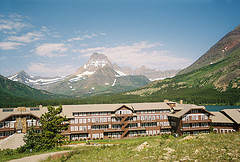
Those who have followed this blog for years know that I worked as a hotel bellman at Glacier National Park’s Many Glacier Hotel while in college and that I’ve returned to the park when finances permit.
I suppose many people have a favorite beach, romantic city, mountain range or scenic highway they call my favorite place, and that for reasons they may not be able to explain, are drawn to it time and again.
Glacier is my favorite place, though it hasn’t been easy falling in love with it inasmuch as I live in the Southeast and travel to and from the park in northwestern Montana takes time and/or money. The historic hotels, many of which were constructed by the Great Northern Railway many years ago, are only open between June and September. This means the primary park season is short and room rates are high.
Most people reach the park by car via U. S. Highway 2 or by air via Kalispell which is near the west entrance to the park. Some people fly in via Calgary, Alberta and then visit Jasper, Banff, and Waterton parks in Alberta before driving south past Chief Mountain into Montana to tour Glacier. Glacier is named for its glacier-carved mountains with a geography featuring horn-shaped peaks, narrow aretes, cirque lakes and stair-step valleys. Existing glaciers add glacial flour (finely ground rock) to the water and that makes for turquoise colored lakes.
Due to an ancient thrust-fault, there are places where you’ll see older rock on top of younger rock. Many rock strata are visible throughout the park. If you take a launch trip on Swiftcurrent Lake, Lake Josephine, St. Mary Lake, Lake McDonald or Two Medicine lake, the guides will point out the rock strata along with glaciers (slowly melting away), waterfalls (a lot, especially early in the summer), primary peaks, wildlife (including grizzly bears), and other points of interest.
If you like hiking, there are 700 miles of trails for you to choose from. My favorite is the Highline Trail which you can use to go from Logan pass on Sun Road to Granite Park Chalet to Many Glacier Hotel on the east side. Many trails remain closed due to snow throughout June, so check with the park service about trail closures if you go early in the summer.
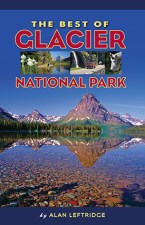
If you have time, take a red bus trip on Sun Road or up to Waterton. These 1936 restored tour buses are fun to ride in and, when the convertible tops are rolled back, give you a great view of the mountains. If your time in the park is short, consider including one bus tour, a launch trip, and scheduling in some time for short hikes around the hotel where you’re staying. Alan Leftridge’s book (shown here) lists the best places to see, grouped by category. It’s a valuable guide for people who only have a day or so for a quick trip.
If you have problems with stairs, you should know that while Many Glacier Hotel has an elevator in the main section, the four floors of rooms in the annex are accessible only by steep stairs. Glacier Park Lodge has no elevators, so try to get a room at ground level. I found the foods served in the main dining rooms of the hotels to be tasty, but overly rich. (Be sure to try at least one of the deserts, drinks or ice creams made with Huckleberries.) If you’re there for a few days, you can venture out to Swiftcurrent if you’re staying at Many Glacier, multiple private restaurants at East Glacier if you’re staying at Glacier Park Lodge, several restaurants at St. Mary if you’re staying at Rising Sun, and a variety of restaurants at Apgar and Kalispell if you’re staying at McDonald Lodge. Bison Creek Ranch a few miles for East Glacier is a favorite of mine for steaks and chicken.
If you’re a light sleeper, take a white noise machine. The walls of these old hotels are thin and the doorways are not tight fitting–you won’t want to hear people talking or snoring in adjoining rooms. WiFi in the hotels is only available in a few areas and is overloaded by multiple guests trying to log on. Cell phone reception is spotty or not available. Take multiple layers of clothes. You may need a jacket at night in August and the wind in the higher elevations can be chilly all through the summer. If you have a small umbrella or a fold-up poncho, take it: rain comes out of nowhere.
Yes, the 2014 season only has about a half a month left to go. Had you been at the park a few days ago, you would have seen a great display of the northern lights. The wind at Logan Pass and elsewhere will be getting noticeably colder. You may see some snow in the higher elevations. If you like to ski or hike with snow shoes, the park is open throughout the Winter.
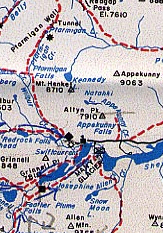
Glacier is on my mind this month with the release of the new paperback* edition my contemporary fantasy adventure novel which is set in and around Many Glacier Hotel. The reality comes from faithfully including what I remember about the Swiftcurrent Valley, Lake Josephine and the Ptarmigan Tunnel. The fantasy comes from a look-alike universe reached via a portal (which you won’t see from the Lake Josephine Launch) hidden near a shelter lean-to used by hikers. If they only knew how close they were to a very dangerous world–as my young protagonist discovers. He’ll have to learn how to use magic if he wants to make it back to the world of Glacier National Park.
When Rhett DeVane asked me if I wanted to be in a blog tour in which each author talks about his/her writing process, I laughed and thought, “What writing process?” So, I had to think about it for awhile. . .
What am I working on?
Lucky Mojo Site
After writing contemporary fantasy set in the Rocky Mountains, I’ve been having fun going back to the Florida Panhandle for short story settings. I’ve become slightly more ambitious with the novella I’m writing set near the Apalachicola River. The story involves folk magic, nasty people, tragedy and the atmosphere of the piney woods world as it as in the 1950s. I usually work magic into my stories one way or another, but having a protagonist who is a conjure woman is something new for me. And, it’s been a hoot. So has the research!
One thing you see right away when checking into old books or contemporary hoodoo sites is that hoodoo is not the same as Voodoo. Hoodoo is folk magic; Voodoo is a religion. The other thing you’ll see is that while lots of people say they believe in magic, either “The Law of Attraction” on one hand or Harry Potter and Gandalf on the other. Meanwhile, Hoodoo is written off as a cluster of ignorant superstitions. I don’t intend to treat it that way in the book. My hope is to do justice to another kind of magic while telling an exciting story.
How does my work differ from other of its genre?
I read a lot of fantasy, but that doesn’t make me a spokesman for the genre. That said, it appears to me that the fantasy most in fashion these days is (like Game of Thrones) set off-world or in our world after some catastrophe has wiped out society as we know it.
My writing focus is contemporary fantasy and paranormal. Contemporary fantasy is set in our world or in a world/universe/region close by. My work probably is probably closer to “reality as we know it” than most.
That is, I’m going to be using real settings and mentioning the differences, let’s say, between those who believe in magic and those who believe in science an technology. When I write paranormal stories, my work differs from others because there’s none of the Hollywood-style occult in it. I’m more likely to focus on ghosts and strange coincidences than vampires, demons, etc.
Why do I write what I do?
Celebrating the magic and wonder of the natural world
I like the interplay of people and the places where they live. Places tend to have an ambiance about them that’s not only tangled up with what’s going on there now, but is also influenced by old legends, tall tales, and the people lived there in the past. Since I believe there is much more to the world than what our scientists and our five senses are showing us, I like writing stories that the readers will see as possible. That is, I try to make the magic as close known techniques (real or imagined) as I can.
How does your writing process work?
When I start a book or a short story, I don’t know where it will end up. I become intrigued with a theme or a place or a prospective character and start fiddling with the idea. Quite often, the story will start to take shape as I look at source information about the place where it will be set, the kind of work the characters do, and the magic they’re familiar with.
The story takes shape while I write it. That means I’m just as in the dark about the outcome of the story as readers will be when they pick up the finished book.
Rhett lives in the town where I grew up, so she gets leaned on from time to time to update me on, say, whether a restaurant is still open or if nearby attractions still have one tour or another when I write stories about the Florida Panhandle. (I haven’t been there since the 1980s and there has been a fair amount of change since then.
You may also like hearing about author Melinda Clayton’s writing process. I know I would because she writes wonderful stories including Blessed Are The Wholly Broken. I’m hoping I’ll get some tips that will speed up my “writing process.” She’s blogging over at GoodReads.
Melinda also lives in Florida, but since I haven’t yet come up with a story to set in her part of the state, she’s escaped the kinds of questions I send to Rhett.
With all the high-energy buzz surrounding books like Donna Tartt’s The Goldfinch, Amy Tan’s The Valley of Amazement, and John Grisham’s Sycamore Row, I have to look a little harder to find new fantasy fiction, especially contemporary fantasy.
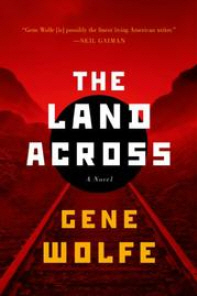
So, I’m happy to see that Gene Wolfe’s (“The Book of the New Sun” tetralogy) new release from Tor Books will appear a few days before Thanksgiving filled with corruption, supernatural powers and a Kafkaesque flavor. The Land Acrossunfolds in an imaginary Balkan country that’s difficult to visit and more difficult to leave–in part because of the secret police and in part because of a cult called the Unholy Way.
Teaser Excerpt from the Novel
Like most countries it is accessible by road or railroad, air or sea. Even though all those are possible, they are all tough. Visitors who try to drive get into a tangle of unmarked mountain roads, roads with zits and potholes and lots of landslides. Most drivers who make it through (I talked about it with two of them in New York and another one in London) get turned back at the border. There is something wrong with their passports, or their cars, or their luggage. They have not got visas, which everybody told them they would not need. Some are arrested and their cars impounded. A few of the ones who are arrested never get out. Or anyhow, that is how it seems.
Wolfe
Reviews
Kirkus Reviews says The Land Across “seamlessly blends mystery, travelogue, authoritarianism and the supernatural.”
Publishers Weekly says “Wolfe evokes Kafka, Bradbury, and The Twilight Zone in combining the implausible, creepy, and culturally alien to create a world where every action is motivated by its own internal logic, driving the story forward through the unexplored and incomprehensible.”
According to Library Journal’s starred review, “Wolfe, in masterful mood, builds his characters, explores the puzzles, links the elements together and contrives to render the backdrop both intriguingly attractive and creepily sinister. Sheer enjoyment.”
And Booklist writes, “Master fantasist Wolfe feeds into every tourist’s worst fears in this cleverly constructed travelogue though a country figuratively accessed through a looking glass. When an American travel writer, Grafton, sets out to document his experiences traversing a small, exceedingly obscure Eastern European country (the land across the mountains), he winds up in a nightmarish predicament from which there appears to be no escape.”
I like contemporary fantasy because, in blending magic into the real world, it brings us plots and characters that seem somewhat more plausible than swords and dragons on far-away planets. Almost everyone who has traveled has worried about being lost in an unfamiliar and unfriendly place. Wolfe’s protagonist is a travel writer who should know his way around the risks, but he’s nonetheless trapped in a place where mere unfriendliness would be a plus.
Malcolm R. Campbell is the author of contemporary fantasy novels, including “The Seeker,” “The Sailor and “The Betrayed.” Released this month, “The Betrayed” features a young English teacher at a small campus where lies and deceits take precedence over literature, history and science.
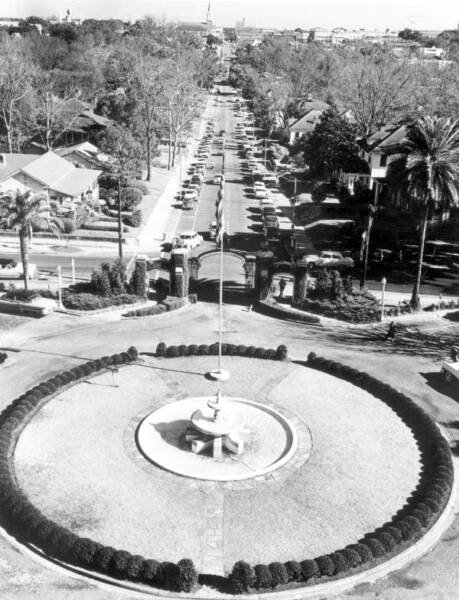
College Avenue in 1964 looking from the unniversity toward downtown
I grew up in a town where College Avenue led straight from the main business district to the university’s main gate. I liked the sweeping hill, the brick paving, and the older homes that owned the street as it drew closer to the university’s administration building. As I wrote The Seeker, College Avenue at night looked like the perfect place for a stalker.
And I knew exactly where that stalker would come from: the university library. I worked there as a student assistant to help pay the bills. It was my favorite place on campus except for the fact somebody there was spying on young women. He pushed books out of the shelves in a signature way so he could, apparently, look up dresses and ogle legs.
We never caught him. One minute an aisle leading through the open stacks was pristine; the next minutes there were books on the floor. I often wondered what kind of a sick person was on the loose. I never knew, but my imagination supplied plenty of details for the 1960s-era College Avenue chapter of The Seeker.
Protagonist David Ward is there in the dream world because he fears the stalker is following his girl friend Anne Hill. There’s little he can do, though, but watch the night unfold. He feels as powerless as I did in the library trying to get “the library guy.”
Except from The Seeker
Kindle Version
David stood at the corner of College and Monroe in Tallahassee, Florida. To the north: the primary downtown business area, including the Florida Theater, which was showing Send Me No Flowers with Rock Hudson and Doris Day. To the west: the State Theater presented Elvis Presley in Roustabout. Farther west, College Avenue grew dark as it approached the university and the night beyond.
He dreamt and he knew he was dreaming. The sounds of the city were clear and, so, too, the conversations of the people on the sidewalk between the theaters, and some of their thoughts as well, expectations of popcorn, concerns about recent exams and questions about who they would see this evening and whom they would be with. Unlike his standard dreams, David walked like a ghost, unseen and unheard among the students and family groups and scattered grandparents. Yes, he could follow Anne or Nick or even RC without their knowledge. But if danger threatened, he could shout no warnings nor take any action.
He walked north and found Anne in front of the Florida Theater with Marta and Karen. Karen and Marta wanted to go out to a hamburger place with three students in a double-parked car. Anne didn’t.
“I’m fine, just a bit of a headache,” she said.
“We should stay together,” said Marta.
Staying together is smothering me.
“The streets are crowded,” said Anne. “It’s a safe night for walking back to the dorm.”
The car pulled away and Anne walked toward College Avenue with David, though she didn’t know it. Her hair was in a ponytail and she wore a light blue sweater against the gentle chill of the evening. The rivers of people coming and going from the theaters converged at College Avenue with cars driven by dates, friends, and parents in a clamor of horns and shouted greetings.
Very few people are walking toward the campus. The hill is dark past Schwobilt’s Department Store and the Baptist Church. Not good. Somebody’s whistling off key across the street. Maybe I should see Roustabout. Afterwards, perhaps a group of students will head back toward from front gate.
David also heard the whistling, but he saw no one there, heard no thoughts to follow within the rag-tag, repetitive “Lord, I Want to be a Christian” that swirled like an ill wind around the YMCA building and several small clothing shops across the street.
Anne hovered hear the ticket booth within the safe glow of light beneath the marquee.
“Go inside, Anne,” he said. While she didn’t hear him, David heard her think of him, wishing she had invited him down for Thanksgiving. The young woman in the glass booth looked up, smiled.
David would hate Roustabout, but at least he would be here.
“I’m thinking about it,” said Anne.
This is silly.
She looked at the movie posters in the glass cases. Glanced across the street, and then walked away, comforted—he could tell—by the elderly couple standing in front of the jewelry store. She heard them talking about wedding rings and didn’t want to intrude. The Big Bend Bookstore caught her eye. She tried the door. It was locked.
Why are they closed so early? A good night for strolling, movies, and bookstores. I could pick up a copy of Herzog even though Marta thinks it’s strange.
Except for the wedding ring couple and the two girls looking at clothes in the Schwobilt’s window, people were disappearing into the night. The lady in the ticket booth turned off her light after putting up a SOLD OUT sign. Anne stood in front of the bookstore looking at the stacked up bestsellers for ten minutes. David saw a few tempting titles, but then, he wasn’t really there.
But he who whistled that song was there.
He’s watching me.
David stared past the clothing shops toward Monroe Street. Nobody. The notes we louder now and more off key, rather like the sound from a poorly made slide whistle prize out of a cereal box.
“Anne, go inside the theater.”
In my heart, in my heart, in my heart. Damned mocking notes, it’s “Nick of Time” Nick looking for girls to pray with him and then what, a private communion?
The song unsettled her. She hurried across Adams Street and tried the locked door at Schwobilt’s as the notes of the song grew closer, then farther away; there were no polices car in sight, no wedding ring couple, and no RC.
The dorm will be safe. No men in the hall.
David walked through every shadow and looked around all the corners, but the tune was everywhere at once.
The church was locked.
No sanctuary here. Just: “ … be a Christian, to be more loving, to be more holy, to be like Jesus,” over and over like a 45 rpm record stuck on a turntable replaying until the power fails.
–
If I were to visit my old hometown today, I seriously doubt I’d feel comfortable walking down College Avenue at night: I’ve seen that stalker scene so many times, the street has changed.
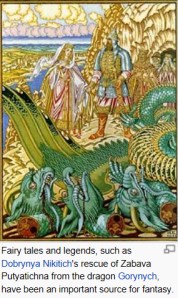
“Fantasy: A general term for any kind of fictional work that is not primarily devoted to a realistic representation of the known world. This category includes several literary genres describing imagined worlds in which magical powers and other impossibilities are accepted.” – The Concise Oxford Dictionary of Literary Terms
When I tell people I write contemporary fantasy, sometimes they say, “wow, cool” and sometimes they say, “I read the Chronicles of Narnia when I was little, but know little about the genre.”
There are so many types, styles, flavors an sub-genres in fantasy, the wealth of material out there to read is often hard to explain to those wanting to know more. I agree with Terry Pratchett when he says that “Fantasy is an exercise bicycle for the mind. It might not take you anywhere, but it tones up the muscles that can. Of course, I could be wrong.” However, here are a few links and ideas that are a bit more specific.
Wikipedia has a decent article on fantasy that works as a starting point. (Click on the graphic to read it.) The main article branches off into a series of additional links for sub-genres, books, and authors.
When people want to know more about the types of fantasies, I often send them to sites like Focus on Fantasy for a quick overview and Top 50 SciFi & Fantasy Novels blogs where they can sample some of the viewpoints and commentary out there.
I like Best Fantasy Books because it introduces newcomers to fantasy by listing books in various groupings and then, for each book, showing others that are similar to it. If you look at this site, you’ll find stand-alone books, books in a series, influential books, and a cool list called “Fantasy That Blows Your Mind.”
To keep up with recent books and new titles, you can subscribe to Amazon’s list via RSS. This puts it on your browser where you can click on it easily and see the names of the titles. You’ll find recent fantasy book reviews on Fantasy Book Critic. This site also displays an excellent blogroll that will send you off on an exploration of fantasy blogs, most of which links you to more blogs.
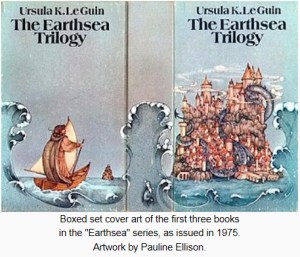
Once you find a favorite author and genre, s/he will often be another source via comments, interviews and viewpoints in a personal blog or web site. Fantasy is so diverse, that it’s really hard to nail it down and say that any one book of series is representative of the genre. Personally, I like contemporary fantasy the best because it overlaps are known world as J. K. Rowling did with her Harry Potter series. Rowling, though, is apples and oranges different from, say, Tolkien, or Erin Morgenstern’s recent The Night Circus or Ursula K. Le Guin’s classic Earthsea series.
Kindle, Nook and other e-readers make it easy to sample a variety of fantasy books at a lower cost before adding your newly discovered favorites to your bookshelf in hardcover or paperback. You can even find some of the older fantasies available on Project Gutenberg and other sites as free downloads. Happy exploring!
–Malcolm
Malcolm R. Campbell is the author of contemporary fantasy, including “The Sun Singer,” “Sarabande,” and the upcoming “The Seeker” (March 2013).
“The Raven Boys” has a compelling premise” and a very interesting set of characters in a contemporary fantasy playing off “locals” (including a family of psychics) against the ultra rich male studens at a local upscale school.
The life of protagonist Blue Sargent, who is the adolescent member of that psychic family of readers, intersects with several of the young men from Aglionby Academy when she learns that one of them is about to die–and he might be the one she’ll fall in love with.
I enjoyed the premise and the characters, but didn’t like the ending or the pacing. Inasmuch as this book is the beginning of the series, the ending seemed abrupt, skewed off on a secondary character, and more designed to prepare readers for the next installment than to properly wrap of Blue’s involvement. The pacing dragged because the rich students had a heavy, but essential, backstory about a search for ley lines and (possibly) to keep the book from straying too far into the territory reserved for the next book.
This is a young adult book that also works for adult readers.
Malcolm R. Campbell is the author of two contemporary fantasies, “Sarabande” and “The Sun Singer,” both of which are available in paperback, Kindle, Nook, and multiple e-book formats at Smashwords.
“A long time ago there lived a poor woodsman. One day he was walking in the forest when a man came out of the trees and hailed him. ‘Good day,’ the man said. ‘And how are you doing today?’
“‘Very poorly,’ the woodsman said. ‘My family and I have not eaten for three days, and if I do not find food for them soon I fear we will all die.’
“‘I can help you,’ the man said. ‘But you must promise to give me the first thing you see when you return home today.'”
All long-time readers of fairy tales are familiar with stories that begin like this, or similar to this, and they all involve people who are down on their luck who are mysteriously offered a great boon. The boon isn’t free because it involves a bargain that may change the lives of a family throughout time forever.
Just stories, of course, with morals in them about getting something for nothing, being too quick to give away something not clearly specified, and trusting anything that happens at crossroads, boundaries and other undertain places.
In Lisa Goldstein’s wonderful contemporary fantasy “The Uncertain Places,” protagonist Will Taylor looks back on the events that occurred after his college roommate Ben introduced him to Livvy Feierabend in 1971. Will is smitten with Livvy; Ben is smitten with Livvy’s sister Maddie. Livvy and Maddie live with their mother Sylvie and younger sister Rose in an odd and rambling house in the Napa Valley.
Will notices on his first trip to Napa that Sylvie is rather scattered. On subsequent visits, it becomes more and more obvious that the house and the family are, in ways that cannot be pinned down, also scattered as though they aren’t quite living in the here and now, or that if they are present in the here and now, that the line between the family’s house and vineyard on one hand and their secrets on the other hand is not altogether well defined.
Will and Ben slowly discover that stories they always believed were “just stories” might be more than that. How exactly did the Brothers Grimm come by old fairytales about woodsmen and witches in their famous books of “Children’s Tales” published in multiple editions beginning in 1812? Growing up, the Feierabend sisters were not allowed to read fairytales. How odd. But Will finds out why, and that “why” has to do with the kinds of fortune and fate that befall those who find themselves confronted by friendly helpers in the uncertain places.
The consequences of decisions made in such places are forever. There’s good fortune, to be sure. But it comes at a price, one that Will doesn’t want Livvy to pay. All of this happened in California during the rather abnormal times of the 1960s and early 1970s, and Will narrates the events that followed the weekend when he became smitten with Livvy Feierabend as though he’s telling a fairytale that contains fairy tales.
Will’s telling of the story is one of the novel’s greatest strengths, but also a lingering weakness. Looking back, as he is, Will places Ben, Livvy, Rose, Maddie and Sylvie into the world of “once upon a time,” and this adds to the ephemeral nature of “The Uncertain Places.” The Feierabend sisters’ world is vague in all the secret ways magic and boundary areas are vague, and that makes them all the more plausible and delightful.
The flasback structure of the novel also blurs the impact of the story because there periods of normal reality in between the odd events Will is telling us about. Readers who are more accustomed to constantly forward-moving plot might say, “get back to the story.” While these gaps filled with normacy are not large, they are somewhat distracting.
Nonetheless, the novel sparkles like stars and faerie lights in the woods and old secrets on the cusp of revelation, and is highly recommended for all lovers of fantasy whose ancestors didn’t make long-term bargains with those they met in uncertain places.
In June, the management of Many Glacier Hotel in Glacier National Park figures out a way to pose the entire staff in front of a photographer for the summer picture. I no longer remember how many takes it took to make the photographer happy. And, though I thought I would always remember the names, home towns, and colleges of all the students in this picture, the details have long since become hazy.
We came from all around the country during the last week in May and spent the summer in the fantasy land of the Swiftcurrent Valley working as cooks, waiters, desk clerks and bellmen until mid-September. A lot of us came back the following summer, and some the summer after that, as has been the custom with the concessionaire’s summer help since the days when the Great Northern Railway (now, BNSF) owned and managed the facility.
For a Florida boy who had always wanted to see the mountains, Glacier Park’s horn-shaped mountains, stair-step valleys, cool summer nights, and old Swiss-style hotels were a fantasy land in spite of the hard work. We carried luggage, cleared dining room tables, mopped the floors, made the beds, and told guests yarns about the mountains.
Our summer included bridge games, long hikes, fresh fish, romances, twisted ankles, mountain climbing, boating, broken hearts and a lot of pictures more personal than this old black and white that doesn’t quite fit on my scanner.
I studied writing in high school and college and the craft I learned there was well worth the time. While I spent less time in the park, my total of seven months there over the span of several summers shaped my life and work more than any college course. Perhaps I was more impressionable than most or perhaps it is a writer’s natural focus on experience that has made this place loom larger than life.
For a writer, time neither steals away old joys nor heals old wounds, and I came away from the park with my fair share of both. For better or worse, they have sustained me and defined my outlook, while becoming the setting for my magical realism (Mountain Song) novel and two contemporary fantasies (The Sun Singer and Sarabande).
Virginia Woolf once wrote that all of a writer’s secrets loom large in his work. I think that might be true because this setting impacted me just as much as Hogwarts impacted Harry Potter and “The Land” impacted Thomas Covenant. So it is that this faraway place flows out onto the page in my storytelling as a true love of mountains, wildflowers, bears and all the events that did happen or might have happened in the shining mountains.
Malcolm R. Campbell is the author of paranormal short stories and contemporary fantasy adventure novels, including “The Sun Singer,” and “Sarabande,” both of which are set in Glacier National Park.
While I was working as a seasonal, college-student employee at Glacier National Park, my father said, “One day you’ll write a book about this.” As I walked the mile between the hotel and the camp store for Cokes, candy bars and other “health foods,” I visualized long nature articles about the park for National Geographic Magazine that would combine with proposed climbs of K2 and Mt. Everest and canoe rides down the Amazon into a hiker’s guide to exotic trails.
Little did I know I would one day set three novels in the park.
Like most college students, I was used to walking—and sometimes running—across a campus to get from one class to another. While working at the park, I not only walked around every lake near the hotel, but hiked to every waterfall, tunnel, mountain pass, and alpine meadow. Why? For a lot of reasons. For a Florida boy, the mountains were an exciting new environment. Plus, in those days, seasonal employees weren’t allowed to bring cars into the park. So, we talked. Going to the camp store was child’s play. By the end of the summer, a 25 mile hike as an easy stroll.
A Sack of Guidebooks
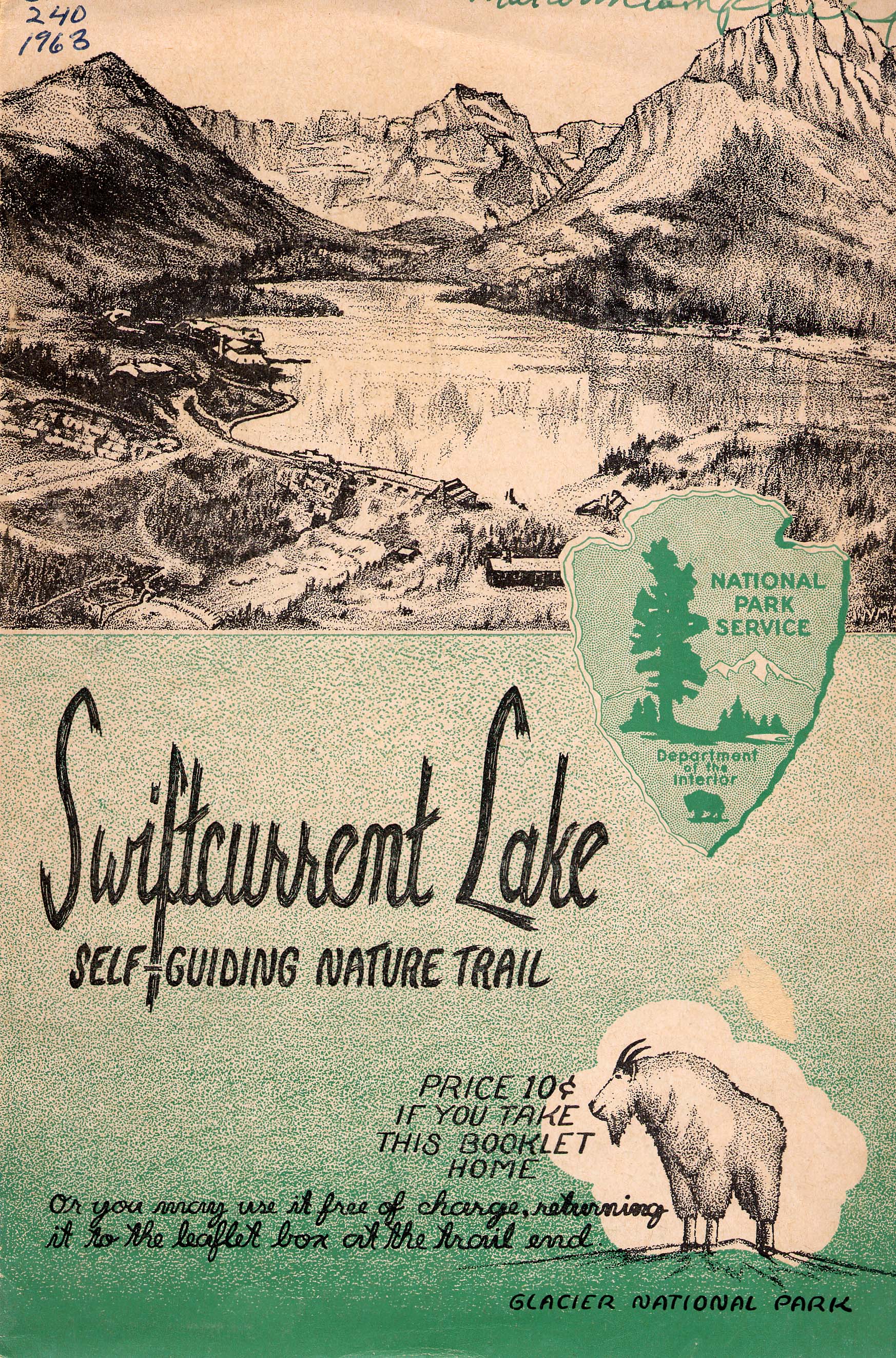
There used to be a wood box on a post near Many Glacier Hotel with a handfull of walking guides for tourists taking their first hike around Swiftcurrent Lake. If you wanted to keep the guide, you put a dime in a slot. If not, you put the guide into a similar box where the trail neared the camp store. I kept mine and along with it, brought home a sack full of guidebooks.
These materials are a writer’s dream. They allow me to merge my imagination and memories of the trails and mountains with specific factual information about the trees (subalpine fir, willow), wildflowers (fireweed, beargrass), and mountains (Grinnel, Allen). Even though I write contemporary fantasy, I want the setting to be as realistic as possible, and while I didn’t know it when I was a hotel bellman, all thosde after-work hikes were taking place in a world that would one say be part of The Sun Singer, Garden of Heaven: an Odyssey, and my new novel Sarabande.
I never wrote those National Geographic Magazine articles, much less climbed K2 or Everest, but I did write a few articles and essays about the Swiftcurrent Valley in Glacier National Park. Looking at the valley from a journalist’s or feature writer’s perspective helped me collect my thoughts for the fiction I would set there later. Unfortunately, I haven’t been back to the park for many years, but all that time walking around in the setting of my future novels rather engraved the sights and sounds in my memory.
Sarabande Excerpt – from a Fictional Cabin at the Park’s Lake Josephine
Lake Josephine and Mt. Gould - twbuckner photo
The bright yellow of a late morning sun filled the bedroom when Sarabande awoke. She felt the light move before she opened her eyes and pulled the tangled folds of the quilt away from her face. A summer breeze followed the light, fluttering the blue curtains with a breath that smelled of fir trees, larkspurs, gentians, and stones from snow-melt streams. Pine siskins chirped to each other amongst the ferns and mosses, olive-sided flycatchers pipped from tree-top perches, and children laughed. The laughter came and went with the coming and going of a rumbling, technology-sounding hum. Sensing no threat in the sound, she projected outside and found that a boat traveling up and down the lake with visitors was powered by whatever made the pervasive hum. The visitors got off the boat, looked around, laughed, and then got back on the boat and went away. They surrounded the cabin with their smells of strange soaps and fabrics, completely unaware of the magic in their midst. Whether it was the good night’s sleep or the rhythms of the water in the box of warm rain, her normally sharp senses intensified while she slept. Within the quilt of interlocking rings, she acquired—or was acquiring—Bear’s sense of smell, Eagle’s sight, and the quivering alertness of chipmunks and butterflies.
 Thomas-Jacob Publishing is releasing a new edition of Sarabande just in time for the 2015 holiday season.
















 Malcolm's Round Table
