In the movie “True Lies,” Tom Arnold’s character says, “Women. Can’t live with ’em. Can’t kill ’em!”
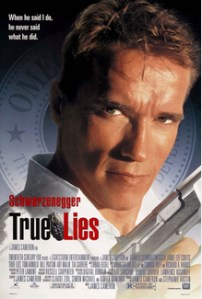 I feel that way about characters because, what the hell, I’m drinking Scotch and writing the book while they (the characters) do whatever they want.
People think the author is in charge. Yeah, right.
This time out, I threw that dirty cop Vance McNaughton in the slammer in the last chapter, and then, in this chapter, two ladies are talking about this and that over breakfast at the diner when McNaughton shows up. He’s even driving his squad car when, at the very least, he’s supposed to be riding a desk or sitting in a cell until the nefarious stuff he’s charged with goes to trial.
This kind of thing would happen even if I used outlines because characters are in the book and outlines are outside the book in another universe that people like McNaughton don’t know about. If they did, they’d claim it was something the Presbyterian Church would dream up which is why they’re Southern Baptists.
I guess I can make do, however, if McNaughton figures out who one of those ladies is, he’s going to kill her because he didn’t hear the Tim Arnold quote in the movie.
Actually, fiction is all true lies anyway, so whatever happens, doesn’t really happen. Or, if it does, it’s not the author’s fault.
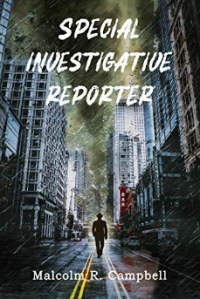 While Malcolm was raised as a Presbyterian, he thought the predestination stuff was a bunch of hooey. Actually, a lot of stuff in this old world of ours is a bunch of hooey. That’s why we have writers who write about that hooey so readers will know which lies are true and which aren’t.


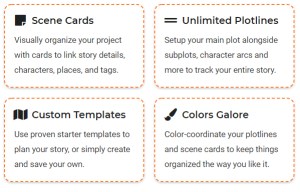 I cruised through the website and what I saw reminded me of the note cards, outlines, and other annoyances that English teachers used to force on us every time we wrote a paper. My answer to Plottr is the same as my answer to English teachers 50 years ago: Nobody thinks like this.
 Little-known authors seem to do better with sites featuring non-fiction than fiction because non-fiction usually focuses on subjects people are trying to learn more about and, in fact, are often just a portion of a larger site that promotes the business itself.


 A long-time online friend of mine is an acclaimed Canadian author. I’ve read most of her books. What bothers me about her publisher’s decision making is the fact that those books have different Canadian and U.S. Titles. Sometimes this is necessary. But in her case, those differing titles cause a lot of reader confusion about what book they’re buying. Frankly, I don’t think the U. S. and Canadian audiences are so different that a book requires separate titles for Amazon and Amazon.ca. I think this kind of thing hurts the author.
 Once upon a time, Publisher’s Weekly asked for a review copy of a children’s book our small press had in the works. We were new to the business then and had no clue how to accommodate them, so we lost the opportunity for a high-profile review. Ouch! Now that I know better, I won’t make the same mistake again. Better still, I’ll share what I’ve learned so you won’t, either.
 Malcolm's Round Table