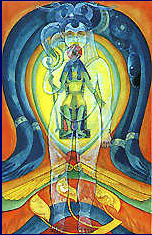
How many crutches do we need?

Aeon Trump Card. Thoth Deck

Some say that Tarot cards, I Ching hexagrams, thrown bones, and other methods of uncovering the future only tell us what we already know, showing us that we do not trust what we know or that it’s buried deep in our minds and needs to be remembered. So we have these crutches, then.

In general, I think many of us know what we should be doing, but put it off by leaning on various other crutches while we decide whether or not to do it. It’s as though the thing we know we should do seems risky and we need to make sure one way or another that it’s not as dangerous as it appears.

I Ching Hexagram 1

So we do research–books, websites, experts, college courses, etc.–all of which are good to a point but then, as we delay moving ahead, become more crutches. Spouses can become crutches, so too, siblings and parents and our next-door neighbors and colleagues and best friends. They don’t want us to change, leave town, become involved in a cause they’re less sure of, or even miss bowling night.

Most people who employ the usual crutches to “see” the future agree that the future is not fixed, but that it represents what will probably happen if nothing is done to alter it. I think that’s probably true, but add that I also think we’re creating that future knowingly or unknowingly. It’s better I think to realize we’re doing that rather than blundering ahead and then being “surprised” at what happens. Pretending that we don’t know we did it–created that future–is another crutch or, perhaps, a civilized form of plausible deniability.

Sometimes people who have been drunk wake up and can’t believe they did the things sober people claim they did while they were drunk. Since they don’t remember it, they can claim in the middle of their hangovers that they’re not responsible for whatever happened. Do you suppose we might do this even when we’re not drunk?

I suspect so. Being drunk is a crutch, I think, as is going through life acting like we’re drunk even when we’re sober. I wonder: are we afraid to make commitments, to take this job rather than that job, adopt viewpoint ABC rather than viewpoint XZY? As long as we don’t commit, we probably feel free to make another choice later. Some people like keeping their options open, often until “outside forces” start eliminating those options.

A belief in fate is, perhaps, a large crutch. We say the cruel hand of fate caused whatever it caused or that life got in the way, believing that’s absolution. A comforting thought, but I don’t buy it. Who caused this “fate,” I want to ask?

We don’t need Tarot cards or coins/yarrow stalks and an I Ching book to tell us the answer because we already know.

–Malcolm
“Fate’s Arrows,” the latest novel in the Folk Magic Series, is on sale on Kindle today for only 99₵.

Everyone matters except who you’re with

The first time I learned how invasive cell phones can be, happened when we invited an old friend over to dinner. We had no sooner dished up the food, when his phone rang and he said, “I’ve got to take this.” I wish I’d said, “No you don’t.” So he talked for a while about unimportant things, without having enough sense to step into another room or outside, so we couldn’t talk to each other or, if we’d had multiple guests, to anyone else at the table.

I don’t know enough about cellphones to know whether there’s a way to call somebody that indicates whether the call is urgent or whether the call is just to chat. As an old codger, I think it’s rude when cell phone users allow incoming calls to take precedence over the people they’re talking to in person–unless there’s an “emergency” ringtone or symbol.

Years ago, I worked for a company in which managers and others were required to always answer their work cellphones. Picture this. Eight of us are having a department meeting while three of those attending are talking on their cellphones while the rest of us do what–sit and wait, I guess.

When it comes to family groups and friends, I don’t understand the point of meeting for dinner at an expensive restaurant if three or four of the people are busy texting rather than participating in the conversation. No wonder people say we’re all turning stupid: we’re not listening.
I often think we’re being heard. I invite you out for coffee to tell you about a problem, your phone rings, and you say, “I’ve to take this.” From what I can hear of your side of the conversation, it’s just chit chat. What I want to do is throw down enough money on the table to cover the bill and leave.

If I stay, what’s to be gained? The people who say “I’ve got to take this” are stealing time from the people they’re with, and discounting them as well. No wonder so many people feel alone and isolated in our brave new world of instant communication.

Malcolm

The Kindle version of Malcolm R. Campbell’s novel “Fate’s Arrows” will be on sale on October 4th for 99 cents.

The delightful snares of ambiguity

There’s the lame of joke that has to do with a husband asking his wife “What’s wrong” and she says, “Nothing.” In this case, “nothing” means “something.”

If somebody laughs and says, “You’re the world’s greatest lover” it means you aren’t.

Satire, sarcasm, irony, words with multiple meanings: these things can be a writer’s greatest joys and for others the greatest hell.

If you live in North Florida, then you know that if my response to you is, “No, yeh” it means yes, but that if it’s “Yeh, no” it means no. Slang and dialect and passing language fads ad to the mix of joys and hells.

Years ago, if somebody was called “badass,” that meant nasty, trashy, murderous, unkempt. Now, it’s a badge of honor. The changing meanings of words and phrases through time add to the fun as well as the snare of language. And then there are all those words and phrases that are perfectly fine in the U.S. will get you in big trouble in England, another example of two countries separated by a common language.  (That phrase doesn’t quite tell you if “common” means low class or if it means “the same.”)

And heaven help us if parents try to understand what their children are talking about, especially if they’re texting.

No wonder people have trouble communicating with each other when they have the best of intentions.

I always have fun yanking people’s chains when they say things like “nothing is sacred.” I know what they mean, that is, that people are not treating sacred words, songs, motions, ceremonies, etc. as sacred. But if I pretend to take the person who says that literally, I ask how it’s possible for nothing itself to be sacred. Or, when they say, “Nothing’s certain,” I ask how it can be that the only certainty comes from nothing.

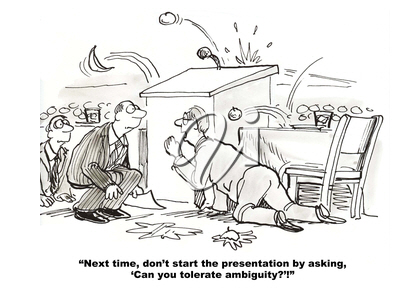
“Nothing” is one of those words that begs to be played with.

The delightful snares in language work to a writer’s advantage if s/he is writing mysteries, satire, comedy, and ghost stories. The snares are also quite common in the hands of politicians. Meanwhile, the reader assumes the writer (or politician) is writing to reveal when they’re writing to conceal.  ‘Struth, maybe none of us are any better than PR flaks.

The only way I can think of to end this post is: “Can you see what I’m saying.”

Malcolm

If you love double meanings and nasty wordplay, you’ll enjoy “Special Investigative Reporter.”


‘Fate’s Arrows’ – Update

  • The Kindle edition of Fate’s Arrows will be 99₵ on October 4th from Amazon.
  • The novel is available on these sites: Amazon, Amazon UK, Barnes & Noble, Kobo, Bookshop, Scribd, IndieBound, Powell’s, Google Books, Apple, and as a B&N Nook book.
  • We are still waiting on the printer for the hardcover edition.
  • Bookstores can order the paperback via their Ingram Catalog.
  • Listed on the NewPages website’s new releases.
  • You can watch the trailer on the home page of my website.

Malcolm

From one magic to another

When I wrote my contemporary fantasies, The Sun Singer and Sarabande, I was following the tropes of the hero’s journey and the heroine’s journey. The magic infused in these books was hermetic, that is to say, it followed old western magic traditions that were (and still can be) found in mystery schools, Tarot, the Tree of Life, and–in general–the western esoteric traditions.

Aeon Trump Card. Thoth Deck

There was supposed to be a third book named Aeon, yet I was unable to write it when I finished Sarabande because the protagonist was an avatar and I didn’t know enough to write a book from his point of view. I still don’t. But it’s time, now, to give it a try.

Meanwhile, I’ve written four novels–the folk magic series–that focus on conjure, also known as hoodoo. This magic follows some traditions that came out of Africa and, in this country, became blended with Christianity and Witchcraft. There are too many practices and beliefs here so summarize them, but suffice it to say, they are not part of western mysticism and traditions that go back to the Greco-Roman mysteries.

Apples and oranges, in some respects. Different ways of approaching the same truths, in other respects. I have a great appreciation for all the paths leading to transformation into being at one with the universe and understanding the powers we all have if we take time to find them.

I’ve been taking some time researching western esoteric traditions again as well as what I wrote in the two earlier novels so that events and intentions are consistent. I view the Aeon Tarot card (XX) as a step past the Sun card (XIX) where the seeker on the path has stepped into the arena of the actual universe “behind” the illusory universe we see with our physical senses.

Needless to say, I’m not an avatar, so I’m going to be relying on my imagination and intuition and a lifetime of experience with the Thoth Tarot deck to get this new novel into shape. Don’t hold your breath.  At any rate, I’m enjoying getting back the magic I started out with.

Malcolm

Malcolm R. Campbell’s latest folk magic novel is “Fate’s Arrows.


Twelve years of hooey

A writer friend of mine posted on her blog that this year marked the blog’s 13th anniversary. I said 13 years + 2020 = play the Twilight Zone theme song.

I have no idea when this blog began because it started out on blogger–with a few posts on several other sites–before it began here in 2008. That sure is a lot of hooey.

I no longer have this old Jeep, but I wish I did.

Perhaps there have been a few interesting reviews, writers tips, and other ideas mixed in with the hooey. Occasionally, I go through old posts, updating links, and as I do that, I’m not sure which blogs are hooey and which posts make valuable contributions to “real life” as we know it.

Maybe that doesn’t matter since the word on the street is “nobody reads blogs anymore.” That means you’re not reading this post. That’s reassuring, isn’t it?

The good news is this: this post is not “real life.” I always put “real life” in quotes because I don’t know where dreams begin and end. So, chances are, you’re asleep now and when you wake up you might have thoughts of “hooey” on your mind but you won’t know why. (Don’t blame your spouse.)

Hooey or not, this blog has been fun, mainly because it gives me a place to talk about my books, other people’s books, and my crazy view of “real life.” I also enjoy the comments, other than the SPAM, that people make. You’ve probably noticed that I don’t write many political posts. Mainly that’s because those kinds of posts usually start fights and a bunch of comments filled with profanity. Not my idea of a good time.

Most of my books deal with magic because that’s the way I see the world. You’ve probably noticed that if you’ve been reading this blog for a while. But then, I think magic is a more viable way of viewing the world than subscribing to most of the political beliefs floating around lately.

The bottom line here, I suppose, is hooey. How much can you accept? And how much is the truth presented in outlandish terms? I may never know. But perhaps the hooey here will lead you to come of my contemporary fantasy and magical realism novels. Or perhaps it will lead you to drink moonshine. Either way, it’s got to be better than watching CNN and FOX news every day while eating Moonpies.

Malcolm

Malcolm R. Campbell’s latest book is “Fate’s Arrows,” a novel in which a young woman in the Florida Panhandle of 1955, fights the KKK.

Review: ‘Piranesi’ by Susanna Clarke

PiranesiPiranesi by Susanna Clarke
My rating: 5 of 5 stars

Imagine this: You live in a huge, seemingly infinite house filled with statuary and ocean tides; you have never been outside the house because the house is all you know and all you can know; your life’s mission, as you see it, is exploring this house to length and breadth of possibility and, as you walk and climb and stay away from the highest of those tides, you catalogue everything you see in a series of journals that may potentially become infinite in number and detail.

The protagonist is called Piranesi–perhaps in deference to the great printmaker of the 1700s, though Piranesi doesn’t know this–by the other living human being in the house. Piranesi doesn’t believe “Piranesi” is his real name, nor does he know the real name of the other man in the house, so he calls him “The Other.” Their researches into the ways and means of the house are, at first, beneficial. However, their co-operation begins to wear thing when Piranesi discovers that The Other is seeking advanced and secret knowledge he believes to be hidden inside the house. Piranesi thinks nothing can be more important that the beauties and scope of the house itself.

There are some dead in the house, not many, and where and when they died is unclear. Piranesi has taken care to arrange them in an orderly fashion and to keep them out of reach of the tides. The Other says there’s somebody else in the house, a person who hides, perhaps, in unknown rooms, and he suggests that that person wishes to harm Piranesi. They refer to him or her as “16,” since–when you include the dead–that’s the number of people in the house.

There’s deep and quiet magic in this masterpiece, and it becomes more evident as Clarke’s novel unfolds. There are hints that there may be a past Piranesi has forgotten or misconstrued. He becomes unsure of some of the entries in meticulously kept journals. There’s a growing worry about The Other’s truthfulness in some manners. Is anything what it seems? Piranesi can only wonder and proceed from room to room and tide to tide with due care.

For those who don’t require fire-breathing dragons or the snap of lethal energies flung from the hands of protagonists and antagonists in epic battles, this book is a treasure to be savoured like fine wine.

–Malcolm

Malcolm R. Campbell is the author of magical realism, including the novels “Conjure Woman’s Cat,” “Eulalie and Washerwoman,” “Lena,” and (NEW) “Fate’s Arrows.”

View all my reviews

Police Bulletin Excerpts from ‘Special Investigative Reporter’

Jock Stewart, a reporter in the small town of Junction City, logs on to the police department website daily to keep up with the bulletins, any one of which might lead him to an exciting front-page story.

Excerpt 1

  • 07:30 – Marcus Cash reports his Black 2008 GMC Sierra Denali pickup truck was stolen or borrowed from the loading dock behind Elroy’s Wide Screen shop while Cash was joking with police across the street at the Krispy Kreme.
  • 08:45 – Officer Parker House is resting as comfortably as possible at Lord Have Mercy Hospital after shooting off his left nut while polishing his weapon while watching a gun safety video in the squad room.
  • 09:50 – Councilman Calvin Knox was injured in a purported two-car accident on County Road 3724 when a “sports car of some kind” ran his vintage Packard off the road into a pasture on the Staunton farm. Knox
    reported he was injured when he slipped on a fresh meadow muffin and wrenched his knee.
  • 10:30 – Clarification of 08:45 item. House’s “left nut” is to be interpreted as his remaining nut prior to the incident as opposed to the nut on the left side of his body. After the incident, no nuts were present other than House.
  • 11:15 – Police responded to the home of author Cane Molasses and took an enraged and yet to be identified woman wearing a Kroger sack over her head into custody when she wouldn’t stop hitting the author with her purse. Molasses states that he answered the door, she started screaming at him for making Judy, the beloved but naughty slut in his recent novel just like me.
  • 11:16 – Clarification of 11:15 item. The word “me” is to be interpreted as the enraged woman and not as Officer Betty Powers who types these bulletins.

Excerpt 2

The 11:15 item led to the following news story:

After the press conference, he went home and slapped together a news story while waiting for a goat cheese and anchovy pizza to arrive:

LOCAL AUTHOR APOLOGIZES FOR MAKING VIXEN IN NOVEL TOO MUCH LIKE NEIGHBORHOOD VIXEN

Cane Molasses apologized at a hastily called press conference here this afternoon to “any and all women” who believe they are or might be the Judy Miracle character in his prizewinning 2008 novel “Miracle on 35thStreet.”

Molasses called held the press conference and book signing at the Main Street Book Emporium after an unidentified woman accosted him at his home this morning and accused him of basing the Miracle character on secrets she told him when they stopped for drinks on the way home from an AA meeting.

“I’m involved with dozens of women a year for research purposes,” said Molasses, “and all of them are well compensated. Miracle is a composite character based on Carl Jung’s reformed hooker archetype which is extensively described in his collected works.”

Molasses told the crowd of some 500 adoring fans and one heckler that Miracle is a beautiful fictional character who sees the light just in time to be buried in a high-brow cemetery on 35thStreet.

While many of his fans purportedly model their lives on Miracle’s story, it was not his intent to suggest Miracle is either every woman or any specific woman.

According to Police Sergeant Wayne Bismarck, nobody was seen leaving the Kroger Store on Edwards Street wearing a sack over their head “any time in recent memory.” their head “any time in recent memory.”

-30-

As he finished the story, the pizzeria called and apologized for not sending out the pizza he wanted. Apparently, everyone who tried to make such a thing got sick. He thanked them for their trouble, canceled the order, and ate two diet TV dinners with a glass or two (he lost count after two) of Cabernet.

Copyright © 2019 by Malcolm R. Campbell


Too Many Cows in the Yard

When we first built a house on a portion of the farm where my wife grew up, we frequently had cows in the yard because the old fence around the pasture had seen better days. Now, our neighbor has a new fence and we seldom see cows out on the road or our garden or the driveway.

The worst thing is when they get out at night. Black cows are hard to see in the dark, and they don’t mind running into people who are out in the roads and yards with flashlights trying to get them all moving back toward the break in the fence.

Cows are heavy. When the ground is wet, it doesn’t take them long to create a mud hole or put a lot of foot-sized holes in the yard for the riding mowers to get stuck in.

Since it’s 2020, I keep expecting to see cows in the yard again. Knock on wood. So far, nobody’s rung the doorbell and said those fateful words “Your cows are out” even though they’re not our cows.

Malcolm

Malcolm R. Campbell is the author of “Fate’s Arrows,” in which a young woman fights the KKK in the Florida Panhandle of the 1950s.