If I treated this blog like a newspaper columnist with a daily column, I would say (as “they” do in the theater), “the show must go on.” But I get distracted. This time the distraction is “the fault” of a book about the Kennedy assassination, Lee Harvey Oswald, Jack Ruby, J. Edgar Hoover, the Warren Commission, the “magic bullet,” and various conspiracy theories about what really happened.
Personally, I don’t think we know the truth about what happened. The book I’m reading arrives at the same conclusion. Suffice it to say, I’ve been stuck reading the book and looking up stuff on Google from time to time. I’ll talk about the book later, but I want to finish it first.
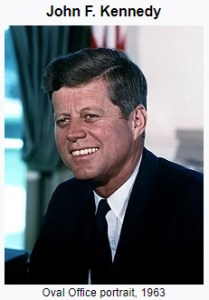 Goodness knows I’ve seen enough fiction and quasi-documentaries about the assassination from Oliver Stone’s work to Jim Garrison’s approach. And then, too, there’s 111/22/63 by Steven King. That novel was freaky enough to make one wonder about the whole thing even if they never wondered about it before.
I have a feeling that the lack of closure, aside from concrete evidence, comes from the fact that the federal government botched every part of its response beginning with forcibly extracting Kennedy’s body from Parkland Hospital before the M.E. was done, to Hoover’s declaration that Oswald acted alone before he could have known one way or the other, to the slipshod work of the Warren Commission.
People wondered: Is the government scared senseless, completely inept, or pretending to be inept because there’s something going on it wanted to cover-up? And, years from now, will files ultimately be declassified that tell us which of these scenarios is true?
 When I was in high school, I read a lot of stories about time travelers heading into the past to try and undo crimes and other unfortunate events in the past. Early on in his genre, people were usually trying to save President Lincoln. Recently, tinkering with the past became more multifaceted on the TV series “Timeless.” King, as readers of 11/22/63 know, sends his main character back in time to try and save President Kennedy.
When the protagonist returns from the past, he finds the world in one hell of a gosh-awful mess. We can debate, of course, whether or not that mess is a horror story from King’s imagination or the reality we’re currently living in. I don’t believe that gosh-awful mess was likely, so I think the U.S.A and the world would have been much better off if Oswald (or whoever) had missed or had never been in Dallas at all.
So, seeing all the parts to this story again, I was pulled away.
–Malcolm
Malcolm R. Campbell
Publisher: Thomas-Jacob Publishing
 Perhaps wonderment is the most powerful state of mind we can achieve, the ability to see the universe in a grain of sand and excitement in each new discovery. Water fountains, ice cream, a kiss, our beautiful differences, unexpected humor, the sea and the sky, love that’s true.
 My example to my parents was that since my Spanish teacher’s children were bilingual, they were not expected to take basic Spanish courses because they were already fluent. My folks thought that made sense. Then I said, I’m already fluent in English. Why am I forced to take it?
 Nonetheless, as I think of this now, I remember a shouting match–via snail mail–I had with a widely a known writers magazine many years ago. The magazine purported to offer everything a prospective writer might need, from learning the craft to the techniques necessary for finding a magazine editor or a book publisher. They did a reasonable job of covering the basics of creating a salable work and understanding how and when to pitch it to the right place at the right time.
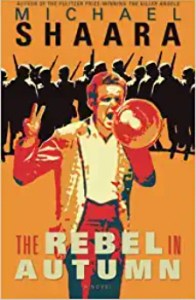 But that’s not the half of it. His best novel The Rebel in Autumn, written prior to The Killer Angels, never found a publisher in his lifetime. Written about the protests of the 1960s, it was (perhaps) too current for publishers to accept. Like his baseball novel For The Love of the Game, which became a Kevin Costner film in 1999, Rebel was published through the influence of his children Jeff and Lila (both are authors) posthumously in 2013.


 I had to work to keep from seeing the movie in my mind’s eye while reading the book. I’d rather let my imagination create “what things look like” as I read, but that’s difficult to do when you’ve already seen the movie. So, I kept seeing Sean Connery and Alec Baldwin.


 When I was a college English department instructor, my “Bible” was The End of Intelligent Writing: Literary Politics in America (1974) by Richard Kostelanetz. My colleagues thought it was overly grim, though they didn’t worry about literary politics because they weren’t teaching their students how to become writers. Their students were simply supposed to enjoy literature and then if they enjoyed it enough, teach it to others.
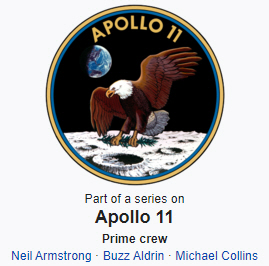 As NASA prepares for a return to the moon and looks ahead to a manned flight to Mars, we learned today that 90-year-old Apollo 11 astronaut Michael Collins died has died after a long battle with cancer.
 Malcolm's Round Table