They should he heaven, but somehow, many of them just don’t quite work. Publishers pretend that they work because they (the publishers) often include discussion questions in the back of he books. Nothing starts an argument faster that choosing what the club will read during the year. Some want all Nora Roberts. Some want all Tom Clancy. Some want a mix of mainstream bestsellers. Others want prize winners.

Logistics are a problem. Some people want the latest books off the press while others can’t afford to buy them until they’re finally issued in mass market paperback a year later. The public library may or may not have enough copies for everyone in the club.
The best clubs seem to be focused on a specific genre, one that’s decided upon at the begining of the year. That way, the members know what they’re getting into and nobody has to feel put-upon when it comes time to read and discuss books they don’t like or care about.
Staying on the plan is difficult when–as often happens–most of the people in the club are behind on their reading. Sometimes they skip meetings because they’re embarrassed and sometimes they skip because if they’re on chapter 3 and most of the club is on chapter 7, the discussion will be filled with spoilers. And then, too, those who keep up with their reading often get ticked off at those who can’t keep up due to numerous real and imagined excuses.
Discusssing the books one likes sounds like fun, like a good way so spend the evening, but then when it’s time to start talking, it turns out that reading really isny a priority in people’s lives. After all, the statistics are pretty grim when portraying reading habits. Trying to make it a priority seems like having to go back to school and being saddled with homework.
What’s your experierience? Have you been a member of a club that really worked? If so, what did the moderator do to make it work?
–Malcolm
Malcolm R. Campbell is the author of contemporary fantasy and magical realism stories and novels.
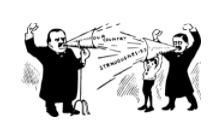 I’m reading a novel by a well-known author that is supposedly his best yet, but 1/3 of the way through I’m finding it really slow in spite on an inventive plot. So, I went over to Amazon to see what the readers were saying and they were saying that it was pretty good. What I noticed, though, was the large number of negative reviews that criticized the author for injecting his political ideas into the novel when they had nothing to do with the story line.
 We keep paraphrasing the paraphrases we hear until the end result is fake news even though that wasn’t the intention. Granted, their are networks and reporters who put their own particular spin on stories so that in the end it’s hard to tell how much is opinion and how much is fact.
 When YouTube first showed up in 2005, I thought all it was good for was as a place to watch old band concerts, book promotion trailers, and old TV shows. Over time, my wife (who likes to repair stuff) found that almost anything you want to fix–from a complex shower faucet to a riding mower carburettor–has a how-to video on YouTube. My granddaugher, who’s into crafts, showed me that almost anything she wanted to make had step-by-step YouTube instructions. Heck, YouTube is now hooked up to our TV so we can watch old episodes of our favorite old shows.
 One thing that just wasn’t making sense to me was tailing a packtrain, that is, connecting each horse in the train via a rope to that tail of the horse in front of it. I couldn’t believe that in 2021 there would be a YouTube video showing how to do this. Now it makes sense. No, it doesn’t hurt because the rope leads rather than pulls the following horse.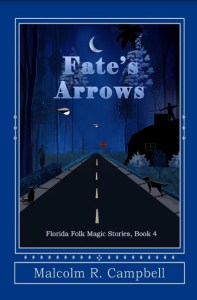
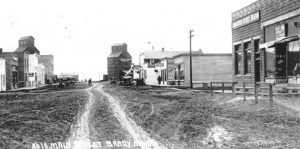
 Since I grew up in Florida, I know that kumquats are harvested between October and February. Yet every year, my Georgia grocery stores have (a) never heard of kumquats, (b) don’t really know when the season is so they make something up, and (c) had one grower a year or two ago who shifted over to something else and so just wrote off ordering them from somebody else.
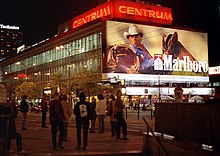
 In the future, people will look back on the western wildfires and, perhaps, speak of them in the way we refer to the dustbowl now. And perhaps analysts of the future will find parallels between our current pandamic and the dark times of 1918. People are already writing books and essays about their experiences that may form the foundation for how people in 75-100 years believe we’ve handled these crises.
 Malcolm's Round Table