Speaking of pencils

I’m a firm believer in #3 pencils because they make crisper lines on the page than the teachers’ favorite #2 pencil and don’t smudge as badly if you accidentally rub your hand across the paper or while pryring homework out of a dog’s mouth.

These days, most people don’t know what a pencil is, much less what the numbers on pencils mean. Miniature golf courses still hand out pencil so you can keep an accurate score card. Everyone but braggarts does crossword puzzles with a pencil. Bankers told us never to write checks with a pencil because evil-doers could change a $10 check into a $100 check. But that’s about it.

My daughter and granddaugters have been doing a lot of sketching lately, so when I saw them last Thanksgiving, they had boxes of multicolored pencils. These pencils come in colors I’ve never heard of and cannot be used to take standardized tests or write checks or sign wills.

Personally, I’ve always thought large pencils were better than small pencils and–unlike carpenters’ pencils–they had to be round. (See photo) During the days when I was forced to wear church clothes to work, one needed a large pencil to scare away the riffraff.

When I was younger, I bought pencils in tourist attraction giftshops. When I was in the Navy and told to carry a pen or pencil at old times on the off chance the top brass said anything important, I ended up with a surplus of U.S. Governent pens and pencils at home. This wasn’t intentional. You left the base, drove home, and took the pencils and pens out of your pocket. The next day, you forgot about them and so you needed a fresh pen and pencil once you got to the office.

Navy chiefs loved catching people without sharp #2 pencils. Especially in boot cap, the chiefs wanted you to constantly be taking “a good set of notes.” So, we all wrote stuff down because we’d get demerits or would be put on report if we were caught not writing stuff down.

Many wartime casualties occured because sailors were writing down “abandon ship” rather than getting the hell off the ship.

Out of curiosity, does anyone reading this post even own a pencil?

Malcolm

Since my father was a journalist, I learned to type before I learned what a pencil was for. This means I don’t write my books one a yellow legal tabled with a pencil. 
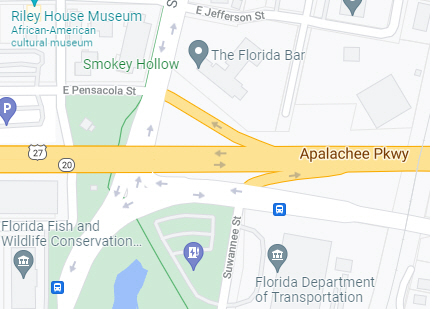
Dear Google Maps: Here’s what writers need

Dear Google,

I know you don’t make your online maps for writers, but they sure come in handy when I’m researching city streets  or the routes between cities for a story or novel set in the present day.

But I want more. I want to be able to “age” those maps to see what the streets and highways looked like 5, 19, 15, 20, etc. years ago.
Most older city and county maps aren’t very legible when viewed online. Or, if you’re looking for them on eBay, you’ll find them folded up. (No help there.) Buying paper copies is time-consuming and expensive.

I’ve found apps that show what the land around my house looked like in the past–sometimes for hundreds of years back. But streets and highways, nothing, unless I want to drive to a dusty archive and get them to allow a Xerox of their ancient paper maps.

I’m not really sure how it helps Google to post current maps and directions online. And then to maintain them year by year. So probably for a one-time investment of several million bucks, your crack staff could merge in older and older paper maps to give us an aging application.

Just a thought.

Malcolm

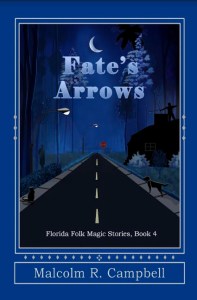
Malcolm R. Campbell is the author of the Florida Folk Magic Series that beings with “Conjure Woman’s Cat” and extends through three more novels to “Fate’s Arrows.”

New look because I got bored with the old look

My wife and I once had a friend who had a lot of free time on her hands after work and spent most of it giving the inside of her house a new look. Every time we went over there, the walls and ceilings were adorned with fresh paint and the shelves and tabletops and walls were freshly accessorized like the re-done homes on HGTV. She was constantly bored with the old look so consistenly that when her husband–who traveled on business–came home, he must have wondered if had drunkenly staggered into the wrong house.

When HGTV’s home and hearth designers swoop in and re-do a house, the finishing touch is decorating every thing with knicknacks which–while they give the rooms a high-end look on TV, probably end of in the attic within months because they aren’t the look and feel the homeowners are used to and, when it comes down to it, take up a lot of room.

I wonder if our decorating-oriented friend found a Knicknacks to go kind of business where she could swap out rooms filled with old clutter for brand new clutter.

I take that approach to my blog and website, but prefer that my house looks like my house from month to month and year to year. Writers are supposed to find a niche for every component of their online presence and stay there because, as the gurus tell us, doing that builds audiences. When readers arrive on a site, they know where they are rather than wondering if they typed the URL incorrectly or drunkenly staggered into the wrong online enclave.

If I thought one look and feel forever and ever on my website would sell books, I might keep it. And if I kept it and sold more books, I could afford professional designers to keep each place fresh, yet comforting to readers who like exciting stories in the novels they read while reading them on the same frayed old couch.

I guess I should put a warning on the homepage of my website that says: “Youve probably been here before though you won’t rememeber it because I got bored with the old look again and don’t even recognize this place myself. Get used to it.”

Malcolm

Click on my name to see what my website looks like today, but maybe not next week.

If the U.S. were overrun by a repressive regime, would we resist and hide targeted groups?

As I read Alice Hoffman’s The World That We Knew and Kirstin Hannah’s The Nightingale, I was impressed by the risks taken by people who hid Jews and others and/or led them across borders and/or blew up bridges, death trains, and other Nazi facilities.

Naturally, these novels are inspired by a minority of the people living in occupied countries. Even so, the dedication of those “fighting” or fighting against the Nazis is impressive. I couldn’t help but wonder if the U.S. would have such dedicated resistance fighters if it were overrun.

Yes and no, I suppose.

Our gun ownership levels are the highest per capita in the world, so we would have the weapons necessary for resistance. Our dedication–as a nation–for helping minority races has not been very good and is definately under debate now with, I think, a potential for positive change. Yet, if we were conquered by a Nazi Germany-style invader, would we shield, say, Jews, African Americans, American Indians, and other groups?

The brutality of the situation might inspire us to oppose it even though under peacetime, we aren’t doing a lot to help those groups now. When we turned away Jews fleeing occupied Europe during World War II, we didn’t know how bad conditions were becoming. But we did know they were bad. We were not unaware of vandalism against Jews or evem about Kristallnacht in 1938.

Many people are saying that while the Internet connects lots of people, it allows them to stay at arms’s length from each other. (The typical cartoon shows groups of people at dinner tables with no communication amongst them because everyone is texting.) So, would we keep ourselves at arm’s length from those groups an invader might repress?

I hope not, but I suspect we would react like the people who inspired The World That We Knew and The Nightengale. Those actively fighting the invader (one way or another) would be in the minority just as they were in occupied WWII countries.

So many people think that if they keep quiet, things will get better. If we’re conquered and believe keeping quiet works best, we haven’t learned anything from history.

Malcolm

Click on my name to find my website and my novels.

When silence is wisdom

My friend Pat Bertram is more consistent with bloggin than I am, but often says thinking of something to post about isn’t always that easy.  She’s right. As I pondered today’s post, I kept thinking of things I shouldn’t say. I decided keeping silent about them would be considered a sign of wisdom. So here is today’s list of discarded topics/questions:

  • How many hookers can you squeeze in a typical ice-fishing shanty?
  • If you’re a priest and say a wrong word in your baptism sacraments for twenty years making them invalid, can all those people sue?
  • Why the “Jeopardy” producers can’t make up their minds and hire a permanent host.
  • If a person has a 3G life support system in a 5G world, does s/he need to call a priest for last rites and then hope the guy doesn’t say a wrong word?
  • What “personality” rocked a slinky dress at an event last night.
  • Drug testing at the Olympic Games.
  • Protesters clogging up U.S./Canadian border crossing. Hell, you couldn’t even get into Sweet Grass, Montana from Alberta.
  • Does an airliner captain really need to make an emergency landing because somebody saw a snake?
  • Are those Viagra starter packs really safe?
  • Or perhaps, offer a eulogy for the last A&W restaurant closing in Atascadero?

There is a lot of rant-ready material here, but my Tarot cards told me you didn’t really want to hear it.

Malcolm

Check out my Publisher’s website for the latest must-read prose and poetry. (More on the way.)

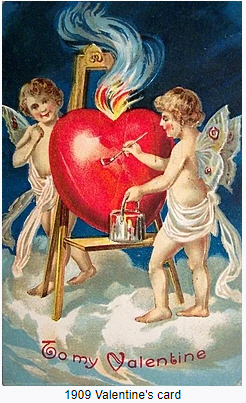
Happy Valentine’s Day

If you celebrate, or give Valentine’s Day, I hope it’s everything you hoped it would be whether you spend $10000000000000 at your favorite spa/hotel/restaurant or buy a cheap card for your significant other from CVS.

The holiday began as a pagan holiday (Lupercalia, a Roman Festival dedicated to fertility) like many of the year’s other celebrations. I’m okay with that. I often think the pagan folks of yore had the most realistic take on what love and life are all about.

I read an article somewhere today that said Americans are getting together, having sex, becoming parents and bothering with Valentine’s Day less than ever. If the U.S. fails, it will probably be because of such a low number of rolls in the hay we no longer have enough children to look after us when we’re old and grey.

And yet, I’n encouraged by the fact that fewer people are sending e-mails and text messages these days that lazily say, Happy VD. Excuse me, is VD something we want to celebrate?

After leaving a liberty port, navy ships used to have a VD line that snaked halfway through the boat to sick bay where a lot of people got a lot of penicillin. Fortunately, you don’t see those kinds of lines at CVS or the local urgent care “doc-in-a-box facilities” on February 15th and 16th.

I did notice at the grocery store this morning that a lot of people (not just guys) were buying flowers, cards, and Valentine’s Day balloons. That’s a good sign, ya think?

Of course, St. Valentine was a martyr. That alone should make us pause and ask whether love and all that stuff are worth the risks. I’m not sure. How about you?

Malcolm

another guilty pleasure: Patterson and Parton

Little, Brown and Company has announced that internationally beloved entertainer Dolly Parton has teamed up with the world’s bestselling author, James Patterson, to write a new book. “Run, Rose, Run,” Dolly’s first-ever novel, will be published March 7, 2022. An album of the same name, consisting of twelve original songs by Dolly, will be released in conjunction with the book. The novel also includes lyrics to the songs, which are essential to the story. This dual release will mark the first time a #1 bestselling author and an entertainment icon who has sold well over 100 million albums worldwide have collaborated on a book and an album. – Dolly’s Website

Of course I’m going to read this. Then I’ll put it on my guilty pleasures bookshelf.

Shocked? Listen, I know you think I spend my days reading James Joyce, Virgina Woolf, Proust, and Baudelaire. I do, but never on Sunday.

I’m a fan of James Patteron’s Alex Cross series that began in 1993 with Along Came a Spider and continues with Patterson as the sole author for 29 books to Fear No Evil released in November of last year. According to Wikipedia, Alex Cross is an African American detective and psychologist based out of the Southeast quadrant of Washington, D.C. He started in the homicide division of the Washington, D.C. Metropolitan Police Department (MPDC), but eventually becomes a Senior Agent with the Federal Bureau of Investigation (FBI). Cross returns to private psychology practice, but continues to work with the police as needed, ultimately rejoining the MPDC as a special consultant to the Major Case Squad.
If I were going to join the FBI, I would love a resume like that. And if I did join the FBI or the CIA, I would tell you that I didn’t.

There are some other guilty pleasure books hidden in my closet that I generically refer to as “grocery store books.” The angst of the plots and characters pulls me away from the angst of daily life and makes it much easier to do my own work without a lot of Xanax.

As for Run, Rose, Run, it will be fun because–up until my hearing disappeared, I was a Dolly Parton fan. Great voice and the nerve to say, “It costs a lot of money to look this cheap.”

Malcolm

Today’s Depot Cafe Blog talks about my work in progress:

that Ned Buntline rascal

“Ned Buntline is the only American novelist who was lynched by an angry mob and lived to tell the tale, although he preferred telling fictitous tales that made him seem heroic.” – Peter Carlson in “Tall Tale Teller,”American History Magazine April 2022.

It all started when he killed the husband of the young lady he was romancing. Her husband started a gunfight but didn’t live to tell the tale, at which point the husband’s friends became an angry mob.

Buntline began his life as Edward Zane Carroll Judson in 1821 and since he survived being lynched by that Nashville mob in 1846 when somebody cut the rope, lived until 1886 turning out newspapers (most of which failed) and dime novels (which made him the bestselling author of his day). A buntline is one of many ropes used to furl a sale on a square rigged ship. Judson started using the pseudonym when writing about his seafairing exploits on merchant and naval vessels.

His sucess was probably due to the fact that he, as Carlson notes, “never let truth get in the way of a ripping good story, ad when he made a dime-novel of his pal William Cody.”

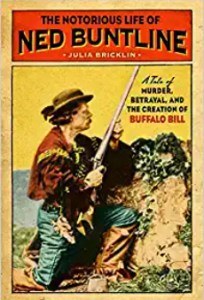
Julia Bricklin, the author of The Notorious Life of Ned Buntline: A Tale of Murder, Betrayal, and the Creation of Buffalo Bill, suggests that Buntline wrote between 400 and 600 novels. Carlson quotes him as saying, “I once wrote a book of 610 pages is 62 hours.”

When he wasn’t writing, he supported the Know Nothing Party. When he wasn’t drunk, he gave lectures on temperance. During the Civil War, he fought for the Union until he was kicked out of the army for being drunk.

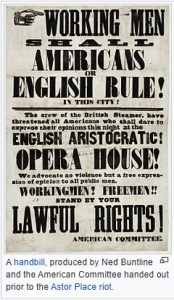
He was married, but his wife Annie Bennett (one of six) divorced him when he went to jail for a year when one of his anti-immigrant articles led to a melee in which 21 people were killed. He was famous and infamous, a winning combination in those days.

Bricklin writes that then he died of heart failure, 800 people attended his funeral and that special trains were required to bring all the mourners. She quotes the London American Register as saying, “It is evident from the numerous widows that have appeared that E. S. C. Judson was a Buntline which had frequently been spliced.”

As to his style, you can read Wild Bill’s Last Trail at project Gutenberg. It begins like this:

“Bill! Wild Bill! Is this you, or your ghost? What, in great Creation’s name, are you doing here?”

“Gettin’ toward sunset, old pard–gettin’ toward sunset, before I pass in my checks!”

The first speaker was an old scout and plainsman, Sam Chichester by name, and he spoke to a passenger who had just left the west-ward-bound express train at Laramie, on the U.P.R.R.

That passenger was none other than J. B. Hickok, or “Wild Bill,” one of the most noted shots, and certainly the most desperate man of his age and day west of the Mississippi River.

“What do you mean, Bill, when you talk of passing in your checks? You’re in the very prime of life, man, and—”

“Hush! Talk low! There are listening ears everywhere, Sam! I don’t know why, but there is a chill at my heart, and I know my time has about run out. I’ve been on East with Buffalo Bill and Texas Jack, trying to show people what our plains life is. But I wasn’t at home there. There were crowds on crowds that came to see us, and I couldn’t stir on the streets of their big cities without having an army at my heels, and I got sick of it. But that wasn’t all. There was a woman that fell in love with me, and made up her mind to marry me. I told her that I was no sort of a man to tie to–that I was likely to be wiped out any day ‘twixt sunrise and sunset, for I had more enemies than a candidate for President; but she wouldn’t listen to sense, and so–we buckled! Thank Heaven, I’ve coaxed her to stay East with friends while I’ve come out here; for, Sam, she’ll be a widow inside of six weeks!”

“Bill, you’ve been hitting benzine heavy of late haven’t you?”

He made the west what we thought it was in books, movies, and TV series. Even now, we’re still trying to untangle the tall tales from the reality.

Malcolm

‘Welcome’ a new book by Scott Zeidel

Thomas-Jacob Publishing has released Welcome, a colletion of poems by Scott Zeidel. The collection is available in paperback and e-book.

From the publisher

These poems are peaceful celebrations of the Southern California desert, Scott Zeidel’s home. He writes about the desert’s profound beauty found in simple, unassuming plants and critters like desert dandelions, blue agaves, monarch butterflies, mockingbirds, kestrels, verdins, and doves.

But Zeidel’s poetic voice has room for other things, too—a nostalgic tribute to his youth in “Childhood Quintet,” a sweet whimsical cycle in “Four Love Songs,” the humorous satire of “Headless Chicken Fish” and “The State of the Union Address,” and the political anger of “To Be Exact.”

Zeidel often uses a poetic language that’s simple and direct, inspired by the Japanese haiku. He uses this concise language to discuss big things like birth, death, rebirth, and time. In Welcome you are invited to enter Zeidel’s world of big questions with no answers, his world of bewilderment and wonder.

The title poem begins:

I have eyes in the back of my head,
see things living and dead,
sense things like the cat sneaking
out the back door.

Zeidel, who painted the cover art also contributed artwork for Who’s Munching My Milkweed by his wife Smoky Zeidel. Scott Zeidel is a retired music professor and classical guitarist.

Nobody knows the troubles I’ve seen

Actually a lot of people know even though they might not know that they know. The troubles I’ve seen, experienced, and caused often end up in my novels and short stories.

Naturally, I take out the names of the guilty except my own which is on the cover.

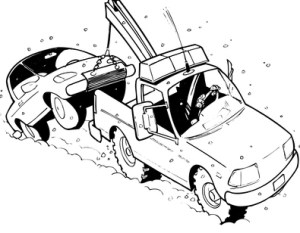
When the troubles are really bad, I call a tow truck and have them hauled into a cut-rate body shop where they (the purported experts) knock out the worst dents, fix the tail lights (so the cops have no excuse for pulling me over), and get rid of the blood. Once the trouble is dumped back in my driveway, nobody recognizes it for what it was.
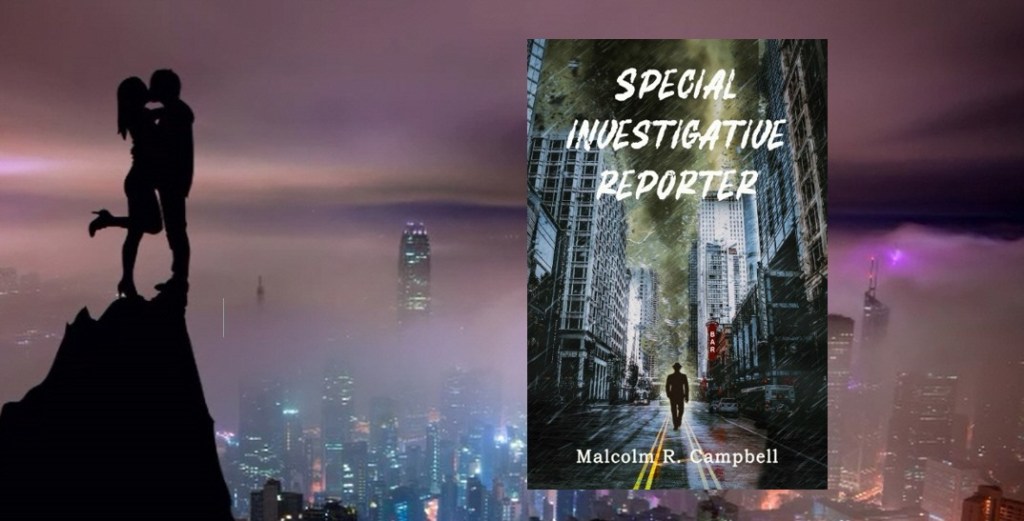
People love reading about troubles because they want to vicariously experence the fear, angst, thrills, loathing, and sickness unto death without walking the walk. That’s why there’s always more bad news than good news, and why King, Grisham, and Patterson sell a lot of books. People always seem to be attracted to bad things that happen to other people and, when they can, they go on TV and say, “He seemed like such a nice kid.”

But for heaven’s sake, don’t keep a diary because long after you’re dead, dead, and gone, some Wikipedia writer will say, “Hey, you know all those murder mysteries Lucy Lake wrote about? She really killed all those people, changed their names, and laughed all the way to the bank to deposit her royalty checks.” That revelation wil increase sales after you’re dead, but the blemish to your legacy will probably delete your legacy.

So, what have we learned?

  1. Tidy up your troubles.
  2. Change the names of the guilty.
  3. Turn your troubles into riveting page turners.
  4. Destroy all diaries, letters, and Facebook entries that will haunt you and/or your heirs.
  5. Act like the kind of person who would never do the stuff you write about.

With this advice, James Patterson will be calling you soon to collaborate on a bestseller from Grand Central Publishing. No doubt, it will be a riveting page turner.

Once you’re rich and famous, feel free to list me as a mentor in your acknowledgements.

Malcolm

Sometimes, you can turn troubles into satire: