I got potpourri, so it must be Sunday

  • If you like the artist Edward Hopper as much as I do, you might enjoy this article in The Guardian about an upcoming documentary film, “Artist of ‘loneliness’ Edward Hopper depended on his wife, says film-maker.” “Hopper: An American Love Story” will be in theaters on October 18th. According to the article, “Hopper himself relished solitude, preferring a hermit-like existence – albeit with his wife, Josephine Nivison Hopper, also an artist – to social gatherings. The volatile relationship between the laconic Ed and the spirited but resentful Jo is at the heart of a new documentary film made by the British director Phil Grabsky, opening in cinemas this month.”
  • If you subscribe to the many worlds interpretation of quantum mechanics, you’ll find the concept running front and center through Matt Haig’s novel The Midnight Library which I’ve been re-reading this week. Imagine that, instead of dying, you end up in a library with an infinite number of books about your probable lives. These books will lead you to samples of other lives you could be living, mainly when you give up the regrets you’ve accumulated in your current life. Interesting premise for a novel. I think there’s a bit of a flaw in the library’s system, but pointing it out here might be a bit of a spoiler. Read. and hope for the best.
  • My wife is now in that limbo period between her cataract surgery (on Wednesday) and the time when the eye has healed up enough for her to get a new prescription. Right now, she has a plain glass lens in her glasses since her previous prescription wouldn’t work with her “new eye.” She says her vision is much better out of that eye even though seeing things clearly has a bit of weirdness to it. I know what she means since I went through all this several years ago.
  • As a pacifist, I really shouldn’t say this, but I think the world would be a whole lot safer if Vladimir Vladimirovich Putin met with an unfortunate “accident.” Maybe Abby and Martha, the aunts in “Arsenic and Old Lace” can invite him over for spiked “elderberry wine.”

–Malcolm

That fried egg for breakfast

Before falling asleep at night, I have grand plans to cook a fried egg for breakfast. After all, that’s what I got used to as a child, eggs and bacon in a cast-iron frying pan with the grease saved in a small metal container on the stovetop for later.

Looks good, but over easy would look better – Wikipedia photo

But then when morning comes, I’m too sleepy to cook an egg–over easy with a few red pepper flakes scattered over it–much less having to wash the frying pan afterward. So, I toss two Jimmy Dean sausage biscuits in the microwave for 58 seconds and there’s breakfast.

A lot of things are like that fried egg for breakfast. The idea sounds good, but then when it comes time to do it, it’s simply too much trouble. When it comes down to it, most chores are too much trouble as are the more important things in life.

After a trip to Scotland, my brother said that nobody there knows how to cook a fried egg over easy or over medium. If you ask for it, they don’t know what you’re talking about–and still “don’t get it” after you explain how to do it. “Lads, it’s like anything else you fry on both sides!”

This probably explains why Scotland has been under the English thumb for so long. When a chance came to vote for independence, the idea sounded good but nobody quite knew how to flip a government.

But, I digress.

–Malcolm

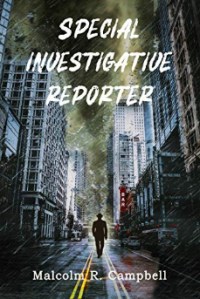
Malcolm R. Campbell is the author of the comedy/satire Special Investigative Reporter.

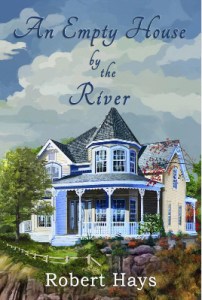
New Title: ‘An Empty House by the River’ by Robert Hays

New from Florida Publisher Thomas-Jacob on October 4–in spite of Hurricane Ian–a new novel by colleague Robert Hays (“An Inchworm Takes Wing,” “Blood on the Roses”).

From the Publisher

Life has been good in the old Prather house on the bluff overlooking Singleton’s Branch. Then the second “once in a hundred years” flood in a decade brings changes that will affect the Prather family for years to come. Lacy, who sees beauty wherever she looks and expects others to be as good as she is, can no longer count on her big brother to protect her from an abusive husband, and the family learns a hard truth: No one is immune to the quirks of fate, be they blessings or tragedies, and the river takes more than it gives.

The book is currently available in paperback and e-book.

–Malcolm

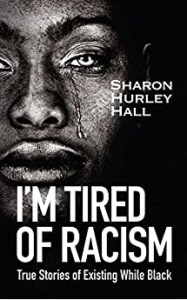
New Title: ‘I’m Tired of Racism: True Stories of Existing While Black’ by Sharon Hurley Hall

Writer and educator, Sharon Hurley Hall (Exploring Shadeism), released this book of essays on October 1, bringing the information and wisdom of her Anti-Racism Newsletter to a wider audience.

From the Publisher

To feel empathy, you need to walk a mile in someone else’s shoes. If the experiences of racism in a white supremacist system seem too far away from your daily reality, I’m Tired of Racism will change that. If you think of racism as something that only happens where you are, I’m Tired of Racism will change that, too. And if you’re wondering how you can be a true ally and avoid performative nonsense, this book is an excellent starting point.

“I’m Tired of Racism” collects many of Sharon Hurley Hall’s anti-racism essays, sharing her global perspective on racism, anti-racism, anti-Blackness, and white supremacy, born out of experiences in the Caribbean, the UK, the US, and elsewhere. Hurley Hall has lived and worked in multiple countries, enabling her to accurately reflect what’s the same and what’s different about experiences of racism in different locations.

The foreword, by Ashanti Maya Martin, says: “Because Sharon’s experience is rooted in the U.S., the Caribbean, and Europe, she’s able to tell us how the U.S. looks from the outside in (not great at the moment), and explain how even being a citizen of a Black-majority country comes with its own layered burdens rooted in colonialism and white supremacy.”

The book is available on Kindle and in hardcover. The audiobook and paperback editions will be available soon. I have known Sharon online for possibly 20 years and look forward to seeing her newsletter in my in-basket.

Malcolm

Malcolm R. Campbell is the author of the Florida Folk Magic Series about a conjure woman fighting the KKK in a 1950s-era town in the Florida Panhandle. The series begins with “Conjure Woman’s Cat.”

Random Stuff for Saturday

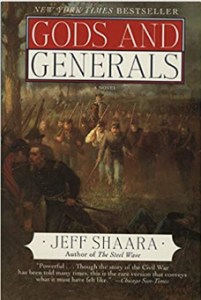
  • Sometimes I look at the latest books on Amazon and don’t feel like reading any of them. That means returning once again to the comfort zone of books on my shelves where there’s always something to re-read. This week it’s Gods and Generals, Jeff Shaara’s prequel to his father’s book about Gettysburg, The Killer Angels. Gods and Generals follows the Union and Confederate principals at the point when secession occurs as a knee-jerk response to Lincoln’s election.
  • Finally, after months of trying to get a company to commit to the job and then actually schedule it, we have plumbers working to redo all of the major pipes at the other house on our property, the one that was occupied by my wife’s late parents. I hope we’re making real progress with this necessary part of the process of getting the house to the point where we can lease it or sell it.
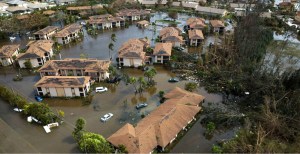
  • Grist ran a strong article called “Hurricane Ian was a powerful storm. Real estate developers made it a catastrophe.”  It points out that the so-called dredge and fill process of preparing the land for new housing development is environmentally unsound and creates an unsafe (vulnerable to storm surge) location for the homeowners who flock to new homes near the coast. I posted a link on my Facebook profile and so far nobody has looked at it. The article points out that “These vulnerable cities only exist thanks to the audacious maneuvers of real estate developers, who manipulated coastal and riverine ecosystems to create valuable land over the course of the 20th century. These attempts to tame the forces of nature by tearing out mangroves and draining swamps had disastrous environmental consequences, but they also allowed for the construction of tens of thousands of homes, right in the water’s path.”
  • I know your eyes will glaze over, but we’ve been making a squash casserole for years that fits our comfort food addiction. It’s easy to make and lasts for three dinners with only two of us in the house–not counting the cats. Years ago, we used it as a side dish. But as we’ve aged, we have less room for big meals.
–Malcolm

Growing Up With Hurricanes

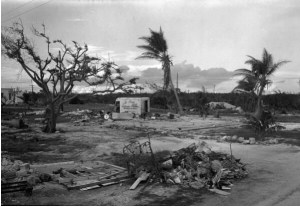
Debris from Donna – Florida Memory Photo

I lived in Florida during the years from the first grade through college in Tallahassee which saw very few up-close storms of note, though we did worry about hurricane Donna in 1960. Since then, the state has been hit quite a few times by major storms, primarily in the peninsula on tracks similar to Ian’s.

As a child, I was always somewhat stunned when newscasters said that slight changes in the storm’s path meant we were safe even though it was (apparently) okay if a town fifty miles away was wiped out.

We didn’t have the kind of reporting available today, so we were never quite sure where the hurricane was when we went to bed at night. Now, until the power goes out we have live pictures showing a hurricane’ track and impact, being out of touch in the 1960s was a far cry from watching the Weather Channel today and seeing Jim Cantore standing in the storm and getting knocked down by a branch.

Nights were the worst time for storms since we never knew where they were or which way they were headed. Now we can log on and learn that the storm is on our street heading for our house.

When hurricanes hit Florida these days, I feel sorry for the people who are impacted by the winds and storm surges. When I was a kid, there was a certain excitement when hurricanes were near. As I’ve grown older, that excitement has morphed into worry and dread. While I live in north Georgia and don’t have much to worry about, having family and friends in central Florida anchors me to the real-life impact of storms. I’m just too old to find any excitement in it.

Malcolm

Weak, unintelligent people are trying to control the books you and your children read

  • From July 2021 to June 2022, PEN America’s Index of School Book Bans lists 2,532 instances of individual books being banned, affecting 1,648 unique book titles.
  • The 1,648 titles are by 1,261 different authors, 290 illustrators, and 18 translators, impacting the literary, scholarly, and creative work of 1,553 people altogether. —Banned in the USA

PEN America’s “Banned in America” summarizes what many of us have seen more and more often in the news: book bans.
They are a weapon used by weak people and weak groups who have so little confidence in their beliefs, they are fearful of what might happen if people are free to read about alternatives. The German government, controlled by the Nazi party, burnt the books in town squares, a more uncouth version of the book bans.

Book bans in government schools and government libraries are, of course, unconstitutional since they run counter to the Bill of Rights. And yet, how easily people flock to this method of stifling the free flow of ideas when a particular book bothers them.

In a September 22 news release, PEN said, “With free expression and the freedom to read being undermined in America’s schools, Congressman Jamie Raskin today introduced a resolution in the U.S. House of Representatives condemning the spread of book bans in schools nationwide, as Senator Brian Schatz leads a companion resolution in the U.S. Senate. PEN America commends the lawmakers’ efforts, which reaffirm Congress’ commitment to upholding free expression in the classroom and beyond.”

While I think this is good, I doubt that most people will even know that it happened, much less change their gutless, book-banning behavior if they did hear about it. I would like to hear more protests from those who abhor the book bans. Let’s put the banners under a microscope and embarrass the hell out of them for being too weak to admit they are weak.

–Malcolm

Malcolm R. Campbell is the author of the Florida Fok Magic Series.

Rest in Peace, Hilary Mantel

“Hilary had a unique outlook on the world – she picked it apart and revealed how it works in both her contemporary and historical novels – every book an unforgettable weave of luminous sentences, unforgettable characters and remarkable insight. She seemed to know everything,” her editor Nicholas Pearson said. “For a long time she was critically admired, but the Wolf Hall trilogy found her the vast readership she long deserved.”The Guardian

Website Photo

I will miss her and her words, but then, I’m an expedient reader and so what I really miss is what her next novel might have been. I read a fair number of news stories about her death but don’t remember seeing whether or not she had a novel in progress.

Personally, I found the Wolf Hall Trilogy the best series of books I ever read. Everything about it was impeccable. And, as often happens with historical fiction, it clarified a lot of events and viewpoints that weren’t covered in our history classes unless we had a strong focus on Henry VIII.

Then, too, it (the universe) gives me a nudge when authors younger than I suddenly die. When I was young, I wasn’t alarmed when old writers died because, well, they were old. But now, I’m less casual about the notion of old authors who are here today and gone tomorrow.

I have a strange feeling that while she was a famous, respected, bestselling author, most readers wouldn’t recognize her name. When I said RIP Hilary Mantel on my Facebook profile, nobody responded. Not that I expect everyone out there to follow the Booker Prize; I do think everyone should recognize her name. Apparently not. Maybe that’s because she was British and outside the realm of the people, American audiences follow–not counting the royal family and rock stars.

I’ll keep my fingers crossed. Maybe someday a new novel will appear that was in progress when she died. That would be good.

Malcolm

Briefly Noted: ‘Cold Cold Bones’ by Kathy Reichs

I enjoyed reading this novel about forensic anthropologist Temperance Brennan in Reichs’ twenty-first novel in the series that inspired the TV show “Bones.” While I have probably seen most of the 246 episodes of the TV program, this is the first time I’ve read one of the books which are categorized as “suspense thrillers.”

I don’t think I can fairly review the book because I’m strongly influenced by the TV version of the character. However, this book kept my attention, the characters were real and fully drawn, and the suspense was constant.

From the Publisher

“Winter has come to North Carolina and, with it, a drop in crime. Freed from a heavy work schedule, Tempe Brennan is content to dote on her daughter Katy, finally returned to civilian life from the army. But when mother and daughter meet at Tempe’s place one night, they find a box on the back porch. Inside: a very fresh human eyeball.

“GPS coordinates etched into the eyeball lead to a Benedictine monastery where an equally macabre discovery awaits. Soon after, Tempe examines a mummified corpse in a state park, and her anxiety deepens.

“There seems to be no pattern to the subsequent killings uncovered, except that each mimics in some way a homicide that a younger Tempe had been called in to analyze. Who or what is targeting her, and why?

“Helping Tempe search for answers is detective Erskine “Skinny” Slidell, retired but still volunteering with the CMPD cold case unit—and still displaying his gallows humor. Also pulled into the mystery: Andrew Ryan, Tempe’s Montreal-based beau, now working as a private detective.

“Could this elaborately staged skein of mayhem be the prelude to a twist that is even more shocking? Tempe is at a loss to establish the motive for what is going on…and then her daughter disappears.

“At its core, Cold, Cold Bones is a novel of revenge—one in which revisiting the past may prove the only way to unravel the present.” 

Book Lover Reviews’ viewpoint is apt: “Cold Cold Bones could glibly be described as a mixed tape of Brennan’s best hits, akin to those photo boards or slideshows parents typically rollout at 21st birthday celebrations. This 21st novel certainly features several of Tempe’s most grisly past cases and pulls together many of her past colleagues and acquaintances, but does so in a way that I think enhances, and perhaps reinvigorates the anthropologist’s characterisation.”

Kirkus writes, in part, “Reichs supplies a great hook, a double helping of homicides past and present, and all the meticulous forensic details and throwaway cliffhanger chapter endings you’d expect from this celebrated series, though the motive behind the murders is significantly less interesting than the ghoulish crimes themselves.”

If you like books labeled as suspense thrillers and/or police procedurals, this novel might bring you just what you’re looking for at night after most of the lights are out and the world is quiet except for the kinds of perps this book brings to life.

Malcolm

Malcolm R. Campbell is the author of the Florida Folk Magic series that begins with “Conjure Woman’s Cat.” 

Sunday’s this and that, often called hash

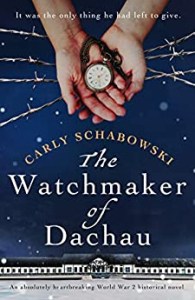
  • I just finished Carly Shabowski’s The Watchmaker of Dachau. For my taste, the book wasn’t as strong as The Rainbow, but I wasn’t disappointed. The story differs from most concentration camp novels in that the principal characters work at the commandant’s house rather than in work details. Coming up next is her novel The Note as soon as I finish Kathy Reichs’ Cold Cold Bones (my change of pace novel and a first look at a story from the Temperance Brennan series that inspired the TV show “Bones”).
  • In my 1950s-era novel in progress, my main character, and secret agent Pollyanna Hoskins is changing her disguise from a grey-haired, elderly bag lady to a young woman with strawberry blonde hair. Back to the research biz: what kind of make-up and clothes would she wear? This takes a while to figure out, especially for a man, because Internet searches for vintage products often lead to retro sites featuring takeoffs on the originals.
  • I was intrigued by Charles Passy’s article “Why Americans should think twice about watching Queen Elizabeth II’s funeral.”  The subhead reads: “Yes, it’s an occasion to mourn a respected global leader, but let’s not forget why the U.S. fought to free itself from Great Britain.” Apparently, half of the world’s population will be watching. Passy points out that Americans live in a country that doesn’t need kings and queens, even figureheads with limited power, so why do we love the Brit’s monarchy?  I wonder about this, too. Even the BBC was a bit puzzled over our fixation on the Monarchy. (I have no plans to watch it.)
  • My wife’s birthday is today. Her age is, of course, classified. She has told me to stop referring to her as my trophy wife. The photograph, with my granddaughter Freya, was taken at Disney World several years ago. We’re kind of low-key about our birthdays. We exchange cards but stopped buying birthday gifts some years ago because both of us order the stuff we need/want Online and don’t need a separate birthday list. So, we’ll have some comfort food for supper and find something interesting on TV to watch other than anything about the monarchy. Our next “road trip” is scheduled for Thanksgiving when we visit my daughter, her husband, and my two granddaughters in Maryland.
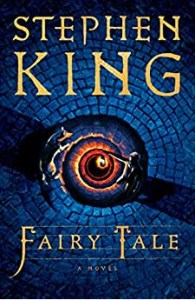
  • I’m looking forward to Stephen King’s latest novel Fairy Tale in which “King goes into the deepest well of his imagination in this spellbinding novel about a seventeen-year-old boy who inherits the keys to a parallel world where good and evil are at war, and the stakes could not be higher—for that world or ours.” His books are well written, though I usually avoid the industrial-strength horror stuff. I haven’t read a King novel for several years since I got ticked off at the third book in his “Mr. Mercedes” trilogy because he changed genres from police procedural to fantasy, something I considered out of line and probably illegal.

–Malcolm