Yes, I still watch ‘Survivor’

If you’re still watching “Survivor,” then perhaps you’ll understand that since I did not grok Yam Yam that meant, according to my experience with this show, he would end up winning. And now we read that the next season will feature 90-minute episodes instead of one-hour episodes. I’m not sure I can cope with that much “reality.”

However, I want to quickly point out that we do watch quality programs like the three-day documentary about FDR. The producers and directors did, I think, a great job capturing many hours of a man’s Presidency and the years leading up to it. We learned about him many years ago in school, but documentaries with actors playing the lead roles clarify those dusty memories from history class.

Upcoming is another Ken Burns film.  I think we’ve seen all of them because we enjoy the superb storytelling and great cinematography.  The “American Buffalo” will air on October 16 and 17. According to Burns’ website, “This film will be the biography of the continent’s most magnificent species, an improbable, shaggy beast that nonetheless has found itself at the center of many of our nation’s most thrilling, mythic, and sometimes heartbreaking tales. It is a quintessentially American story, filled with a diverse cast of fascinating characters. But it is also a morality tale encompassing two important and historically significant lessons that resonate today.”

I don’t think American TV is all schlock even if we watch some of that. If you have some guilty TV-watching pleasures, feel free to confess them in your comments.

–Malcolm

Malcolm R. Campbell is the author of the four-book series of novels that focus on Florida Folk magic, i.e., hoodoo. Save money by purchasing all four novels in one Kindle volume.

Climate Change – Is Resistance Futile?

If you watched Star Trek, you saw the spaceship built like a giant cube. You know that this cube attacked everyone in order to assimilate them into the cube. Those in the Borg gun sites were told: “Resistance is futile.”

I think of this when I think of climate change. Individually, have we decided that resistance is futile; or, as Robert Swann said, “The greatest threat to our planet is the belief that someone else will save it.”

I do not think Marianne Williamson has a chance of becoming President. But I do think her statement on her website about climate change is worthy of consideration:

“Our biggest crisis regarding the climate emergency is humanity’s massive state of denial that it exists on the scale it does. Yet a willingness to recognize the depth of the problem is a prerequisite to our solving it. It is a psychological and moral challenge to face the horror of what stands before us over the next ten years should we not act; yet there – in our standing raw before the truth that it confronts us with – lies our only hope for surviving it.
“And our environmental crisis is not only climate; it is also water, air, food, and soil. Our earth is like a body beginning to experience an all-systems breakdown. The glacial ice melt is so extensive that the sheer weight of melted polar water is changing the shape of the earth’s crust.”

The problem is so huge, all most of us can do is hope that some smart person will come along and fix it. We balk, though, at many of the proposals because they are inconvenient and ask us to greatly change our habits and our attitude about what the environment needs to survive. In some respects, people use a similar excuse to the one they use when they don’t vote: “My vote won’t make any difference.” And so we say, my “green car and green house” won’t make any difference.

When millions of people think this way, then we’ve basically written off the planet and decided that while the planet will support us, it won’t be here for our children and grandchildren. “Kids, it was just too much trouble to leave you a viable world.”

So, we’re sitting here watching it happen as though doing anything about it is futile.  I have to say, I don’t understand this attitude.

Malcolm


‘The Old Lion,’ by Jeff Shaara

The television documentary “FDR” is a wonderful introduction for those who aren’t familiar with the events leading up to Franklin D. Roosevelt’s election as President or the programs he instituted to end the Depression. Since his fifth cousin Theodore Roosevelt is part of that documentary, it bought to mind Jeff Shaara’s latest historical novel about Teddy Roosevelt, The Old Lion which was released on May 16.

Shaara’s historical fiction makes no pretense of serving as autobiographies of the primary characters nor even a definitive history of people and events. This book is no different. It brings to life a man and his times in the way well-written historical fiction does best: through a story, or multiple stories, that show readers what happened in an understandable way.

From the Publisher

“In one of his most accomplished, compelling novels yet, acclaimed New York Times bestseller Jeff Shaara accomplishes what only the finest historical fiction can do – he brings to life one of the most consequential figures in U.S. history – Theodore Roosevelt – peeling back the many-layered history of the man, and the country he personified.

“From the mid-nineteenth century to the early twentieth century, from the waning days of the rugged frontier of a young country to the emergence of a modern, industrial nation exerting its power on the world stage, Theodore Roosevelt embodied both the myth and reality of the country he loved and led.

“From his upbringing in the rarefied air of New York society of the late 19th century to his time in the rough-and-tumble world of the Badlands in the Dakotas, from his rise from political obscurity to Assistant Secretary of the Navy, from a national hero as the leader of the Rough Riders in the Spanish-American War to his accidental rise to the Presidency itself, Roosevelt embodied the complex, often contradictory, image of America itself.

“In gripping prose, Shaara tells the story of the man who both defined and created the modern United States.”

Kirkus Reviews wrote, “A glowing tribute to a Rushmore-worthy president. The Old Lion himself would have called it “dee-lightful!”

The Historical Novel Society wrote, “Readers will find no surprises in the plot of the novel, but they will come away with a greater understanding of Roosevelt and his place in history. Highly recommended for fans of historical fiction and those interested in the Gilded Age and Progressive Era.”

Newsday wrote, “Midway through Jeff Shaara’s ‘The Old Lion: A Novel of Theodore Roosevelt,’ Roosevelt, “a tornado of energy,” whirls about the White House on Christmas Day, 1901. He entreats his wife, Edith, his children and others gathered there to dance along. As one guest, Sen. Henry Cabot Lodge, observes, “It is apparent to those of us who love him that the president is 6.”

“Roosevelt’s childlike enthusiasms enliven Shaara’s appealing and spirited portrait of the 26th President of the United States. Replete with the author’s vividly imagined Western showdowns, cavalry charges and jungle expeditions, “The Old Lion” entertains the 6-year-old in all of us.”

The book is a welcome addition to the libraries of fans of historical fiction.

–Malcolm

There are Men Too Gentle to Live Among Wolves

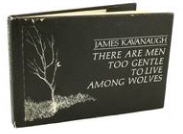
original cover

“For wanderers, dreamers, and lovers, for lonely men and women who dare to ask of life everything good and beautiful. It is for those who are too gentle to live among wolves.” ― James Kavanaugh, “There are men too gentle to live among wolves.” Please click the link to see the related poem.

My copy of this classic book looks like the photo displayed here which tells you I’ve had this since the collection was released in 1970. It has been a touchstone. It talks about the kind of men the world needs now more than ever.

Most men are afraid to be gentle. This fear has cost them the ability (should they ever change their minds) to walk gently upon the earth and show genuine and infinite kindness to all others. They fear their toxic masculinity will be doubted should they ever display one moment of gentleness. And so they miss–are completely unaware of–the greater beauty life offers them. The offer is free to those who understand they cannot flex their muscles to obtain it.

They are not the men who kick in store windows during power blackouts or because they feel society has wronged them in some way. They are not the men who threaten women with their words and physical strength. They are not the men who cannot read a poem or see the wonder within a flower.

A gentle man (as opposed to a gentleman) has the power to change the lives of millions and even the failing environment of Earth itself. But he holds back for fear of being called unmanly.

Most of us know what kinds of men we need but fail to stand next to them when we see them for fear the taunts hurled at them will also be aimed at us. And so the world continues downward to hell in a handbasket.

It’s not too late to change who we are if we want to.

Malcolm

Thinking of Memorial Day

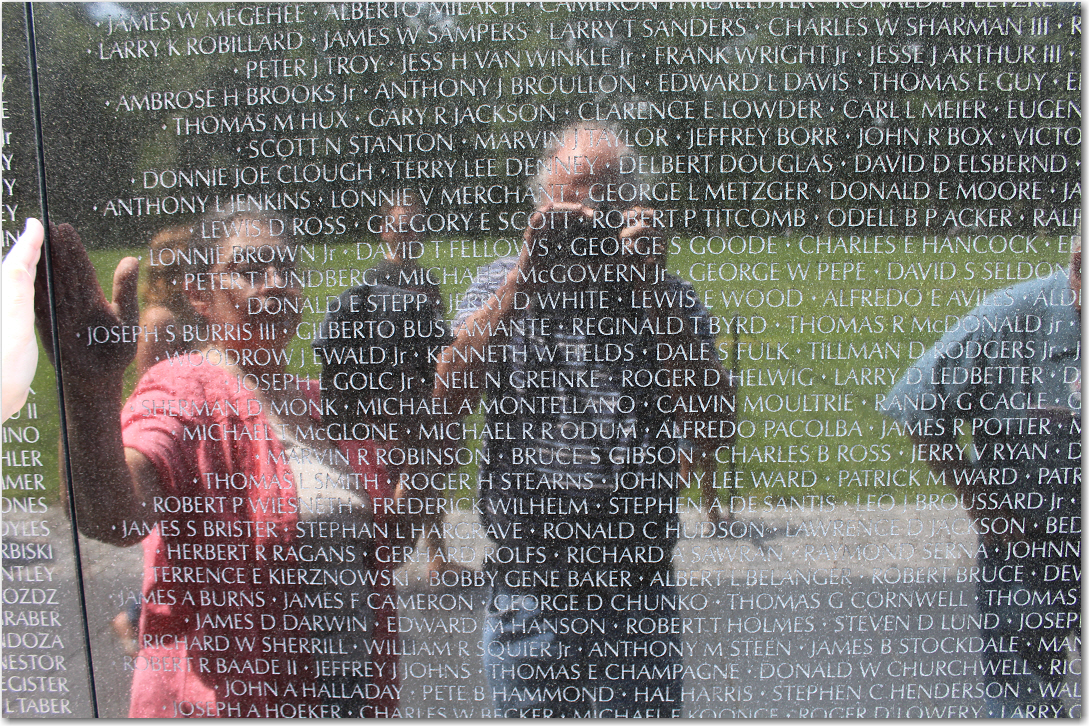
If I lived in Washington, D. C., I would visit the Wall again because of all the memorials and monuments I’ve seen, this holy place hits me the hardest, and that’s the feeling we need on this holiday.

Reflected her in my photograph, my wife and I are looking at the name of a former high school classmate of mine.

We hear that many men die and fall to the ground before they know they are dying. Others know, and the accounts of their thoughts are varied–some focus on getting medical help, and others most likely are thinking of their families or possibly that the spot where they have fallen is the spot where they belonged at that moment because falling is part of the sacrifice that is an integral rite of passage many endure to keep our country free.

No doubt few believed their deaths would be celebrated by people spending money on holiday sales.

Dying soldiers often have little time for contemplation because their time is too short and/or their pain is too intense. We can hope they wanted the best for those at home: family and friends who would mourn their passing longer than it took the soldier to reach his/her last breath. That “best” might be a wonderful life in a free country where happy times fill their days in the day-to-day art of living.

Perhaps that life, in the soldiers’ thoughts, included barbecues, time at the beach, and flag-waving parades with bands and color guards and music. Perhaps that fife included sitting in a bar with three fingers of Jack Daniels with or without the trite words, “Do you come here often?”

Whether the dead were conscripts or volunteers, they probably didn’t think that their hardships proscribed what those back home should be doing with their time, paid in full as it was by the men who march away.

But a Memorial Day sale? That still seems inappropriate even though the dead paid the price so that we could go out and save a buck in their memories. As long as we don’t forget them while getting 30% off on a new extravagance.

–Malcolm

The Amazing Schlock on the Doorstep

No, it’s not a box from Amazon, though that’s possible when I post orders while drunk. In reality, the schlock is no longer on the doorstep because  (a) fewer people have doorsteps these days, (b) postal rates make schlock promotions expensive, and (c) e-mail is simply easier even though SPAM filters toss most of it into a virtual bent shitcan (a navy phase for stuff that’s seriously FUBAR).

My in-basket is constantly filled with psychic schlock. I’m not sure why because, like you, when I see it I use my vast psychic powers to “see” that it (the schlock) is a grain of truth at best and something that will cost a lot of money at worst. The e-mail begins with a personal story that supposedly tells me about an amazing secret that, in just a few minutes, will be given to me and that once I have it all the abundance, money, good health, free passes to brothels, influence, love, and influence I have ever wanted will be mine.

“Dear Malcolm,” the pitch begins, “years ago when I was as drunk and sick as you probably are today, I sat next to the statue of an angel of grief in a dark cemetery in Paris’ 20th arrondissement on All Saints Day smoking my way through a pack of Gauloises–a patriotic pastime in France in those days–pondering how to return my life to the holy promise it had been when I was born. My vision–or perhaps it was reality–showed me how to fix all the broken places of my life and I was surprised then beneath a light rain how easy it was to do that. I will show you how my life became defined by unlimited joy, health, and wealth if you will subscribe to my daily e-mail letter ‘Bonne Chance’ for a mere pittance.”
Everything I’ve always wanted. What an addictive temptation that might be. But then I read that even though the seller has $100000000 in his checking account, he wants to charge me $29 per month to learn the secret. I wonder, if he’s rich, who does he need my $29? I wonder, if the secret was revealed to him on All Saint’s Day, is it really his to sell and does it really take many many months to explain what he learnt in moments?

So, I say “no.” Sometimes the sellers of psychic schlock reply by saying something like, “Malcolm, how can you pass up our wonderful offer?”

I say I already know the secret (like I care) and don’t need to pay a monthly fee to hear about it. I don’t hear from them again after that.

But I wonder how many thousands of people are on the psychic schlock e-mail list and how many start dutifully sending in their $29 every month to learn what boils down to a few generalities about positive thinking, biorhythms, quantum theory, and meditation. Sooner or later people cancel their subscriptions without achieving any of the promised abundance.

Such promises are hard to ignore even though the secrets behind them are not secrets at all, but well-known principles that go back centuries before James Allen published As a Man Thinketh (now free online) in 1903.

It’s all quite simple and doesn’t cost $29 a month. The difficulty, as always, is believing that such easy concepts really work.

–Malcolm

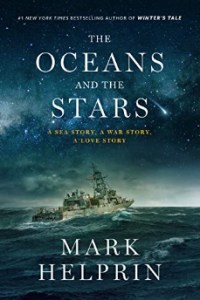
‘The Oceans and the Stars,’ by Mark Helprin

The Oceans and the Stars: A Sea Story, A War Story, A Love Story, by Mark Helprin, The Overlook Press (October 3, 2023), Kindle and Hardcover available for pre-order.

All of Mark Helprin’s novels are on my shelf. It’s an understatement to say that, as a former Navy man and fan of his work, I much enjoyed this book–and was inspired by a 75-year-old author who is still at work.

From the Publisher

“Mark Helprin, the #1 New York Times, best-selling author of Winter’s Tale and A Soldier of the Great War, returns with a fast-paced, beautifully written novel about the majesty of the sea; a life dedicated to duty, honor, and country; and the gift of falling in love.
     
“A Navy captain near the end of a decorated career, Stephen Rensselaer is disciplined, intelligent, and determined always to do what’s right. In defending the development of a new variant of naval ship, he makes an enemy of the President of the United States, who assigns him to command the doomed line’s only prototype­––Athena, Patrol Coastal 15­­––with the intent to humiliate a man who should have been an admiral.
     
“Rather than resign, Rensselaer takes the new assignment in stride, and while supervising Athena’s fitting out in New Orleans, encounters a brilliant lawyer, Katy Farrar, with whom he falls in last-chance love. After failed marriages for both, this is a completely unexpected and exhilarating last chance. Soon thereafter, he is deployed on a mission that subjects his integrity, morality, and skill to the ultimate test, and ensures that Athena will live forever in the annals of the Navy.
   
“As in the Odyssey, Katy is the force that keeps him alive and the beacon that lights the way home through seven battles, mutiny, and court martial. In classic literary form, an enthralling new novel that extolls the virtues of living by the laws of conscience, decency, and sacrifice, The Oceans and the Stars is nothing short of a masterpiece.”

From the Author’s Website

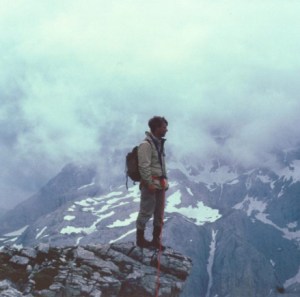
Helprin in the Italian Alps

“Mark Helprin belongs to no literary school, movement, tendency, or trend. As many have observed, and as Time Magazine has phrased it, “He lights his own way.” His three collections of short stories (A Dove of the East and Other Stories, Ellis Island and Other Stories, and The Pacific and Other Stories), seven novels (Refiner’s Fire, Winter’s Tale, A Soldier of the Great War, Memoir From Antproof Case, Freddy and Fredericka, In Sunlight and in Shadow, and Paris in the Present Tense), and three children’s books (Swan Lake, A City in Winter, and The Veil of Snows, all illustrated by Chris Van Allsburg), speak eloquently.”

Helprin’s plots are solid and his writing is among the most beautiful on the planet. This book is also action-packed and filled with much food for thought about contemporary themes.

–Malcolm

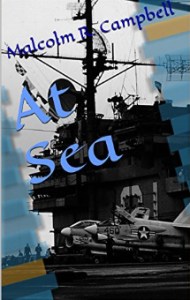
Malcolm R. Campbell is the author of the Vietnam War novel “At Sea.” The author’s cover photo is of the USS Ranger (CVA-61).

Mama Don’t Allow No Writin’ Prompts ‘Round Here

Trouble is, websites, magazines, and other purported supporters of writers in training keep saying,  “Well, we don’t care what Mama don’t allow, Gonna create those prompts anyhow.”

Lord preserve us from such people and the greatest time wasters they foist upon us rather than providing articles that actually help.

In fact, a poke in the ass with a #4 pencil would be more useful.
If an aspiring writer needs a prompt before s/he can write something, perhaps s/he should consider another line of work, like crime or politics.

Writing prompts appear for one reason only: they are easier for a website or magazine editor to create than an article.  All you gotta say is something like, “Five people walk into a restaurant and order burgers and then get into an argument about the condiments that need to go on them (the burgers). All hell breaks out. Marriages fail. Ultimately the cops are called and interview the five people while eating the burgers.”

Sure, you can write a short story or a novella or possibly a novelette from this prompt, but why waste your time even if the website (like one place I know) wants you to submit your work so others can vote on the best story. Let’s say you win. So what? You don’t get a check or even any resume material.

Waste of time. Should have listened to Mama or watched Yam Yam win Survivor 44.

Might as well have spent the time watching the grass grow because, while doing that, you might have come up with your own story idea maybe for practice, maybe for submission to a little magazine, or maybe to develop into a novel with or without NaNoWriMo.

Good work arises out of our own passions and interests and experiences. It’s that simple.

–Malcolm

Malcolm R. Campbell is the author of the Florida Folk Magic Series, four books about conjure and the Klan in the Florida of the 1950s.

What writers don’t say

Look for what writers don’t say and you’ll find their greatest truths or, if not that, important clues to what the story is about, indications that beyond the shallow waters of the obvious, there’s depth and knowledge for readers to discover, and a prickly feeling on the back of your neck that your subconscious mind is being visited by things half-remembered that when found shine a steady light on what the writer didn’t spell out.

Those reading my short story “Moonlight and Ghosts” in the short story collection Widely Scattered Ghosts know that the main character takes a dim view of the state of our mental health system, in part the fact that the centers using the group home approach (that was working) gave way to the cheaper “let’s turn the mentally ill out into the community where, in reality, few people will help them.”
My view, as I wrote the story, was that those released from group homes were basically left for dead. I assert this in the story’s opening lines (copyright (c) 2018 by Malcolm R. Campbell):

“THE LIGHT OF the harvest moon was brilliant all over the Florida Panhandle. It released the shadows from Tallahassee’s hills, found the sandy roads and sawtooth palmetto sheltering blackwater rivers flowing through pine forests and swamps toward the gulf, and, farther westward along the barrier islands, that far-reaching light favored the foam on the waves following the incoming tide. Neither lack of diligence nor resolve caused that September 1985 moon to remain blind to the grounds of the old hospital between the rust-stained walls and the barbed wire fence, for the trash trees and wild azalea were unrestrained, swings and slides stood dour and suffocated in the thicket-choked playground, humus and the detritus of long-neglect filled the cracked therapy wading pool, and fallen gutters, and shingles and broken window panes covered the deeply buried dead that had been left behind.”

One thing I didn’t say in the story was that the hospital was real, one I’d visited in one of its earlier incarnations when it was brightly lit and clean and well staffed but then, as funding cuts showed our true feelings about the mentally ill and the developmentally disabled, the care and facilities ran into a downward spiral until the facility was eventually abandoned. Later it would be razed and the property turned into a neighborhood of upscale homes where it’s my profound hope that the residents hear ghosts on quiet nights.

To reinforce the focus of the story, the opening lines quoted here are a close paraphrase of the style of the opening lines of  “The Dead,” a 1914 short story by James Joyce, a favorite writer of mine. My intent was not to gain notoriety by paralleling a famous writer’s work but to drop a subliminal guidepost into my story.  Goodness knows, folks like T. S. Eliot said “The Dead” was one of the greatest short stories ever written. It would be vain of me to compete with that, but more likely that a few people who read my story might have read “The Dead” and would see that my intent was to reinforce my main character’s belief–and my own as well.

Such clues are left for readers to find. Those who “get it,” “get it.” Those who don’t find the clue don’t lose anything as they read other than a clue they won’t miss. Writers do this a lot and then English teachers (unfortunately) tell students what they did not see. So it goes.

Nonetheless, I think I’ve mentioned here before that writers often conceal the most important parts of their work.

–Malcolm

Interview with You Know Who

Today’s guest is, at best, infamous.

Reporter: Just who the hell do you think you are?

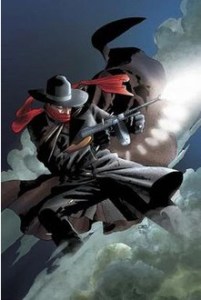
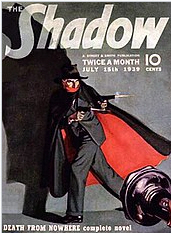
Shadow

Me: The Shadow.

Reporter: So you’re the guy who knows what evil lurks in the hearts of men.

Me: Right.

Reporter: Now that we’ve established your creds, let’s get down to what my readers want to know. When did you first decide o be a writer?

Me. God, that is so lame.

Reporter: Sorry, I’m not God, but I pretend to be when writing hardboiled, ass-kicking copy for the local mullet wrapper.  According to my notes, my readers want to know if you are a plotter or a pantser.

Me: I put my trousers on two legs at a time.

Reporter: How do you do that?

Me: I jump off the bed.

Reporter: That’s better than telling me I’d asked another lame question.

Me: It was lame, but I think you knew that already. Look, nobody reads interviews like this unless the subject is Tina Turner (may she rest in peace) or maybe John Grisham.  Then, the research staff comes up with better questions.

Reporter:  So, where do you get your ideas?
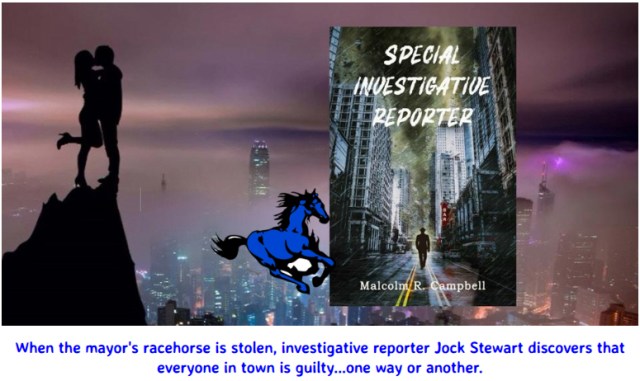
Me: When I’m rolling on the river.

Reporter: I’ve never heard that phrase before.

Me: You were born yesterday.

Reporter: At high noon.

Me: Figures.

Reporter: Look, I have a deadline coming up and that bastard editor of mine is going to want a scoop, maybe two scoops if you like raisin bran.

Me: Plastics.

Reporter: I’ve never heard that before.

Me: Good, then you’ll get an above-the-fold headline with this story. And seriously, if you need the true facts for your story, I knew I was going to be a writer in a past life and I never plot anything I write unless it’s a lie.

Reporter: Off the record, is there any evil in my heart?

Me: The weed of crime bears bitter fruit!

–Malcolm