Flying with Crows

Use your imagination and you can fly with crows. Since you won’t be able to speak to unimaginative people about such things, your magic flights can be transformed into poems and scenes in novels.

David looked the crow in the eye while concentrating on the drum beat of his of his own heart until the apartment slipped away and he found himself flying, one crow among many, across the clear sky of the lower world, watching the city with brown eyes as it slid southward into the morning and disappeared.

Wind, the Creator’s breath, we found it sweet and held it as tentatively as flight required with effortless, almost lazy, caresses of our wings. The city before us, north along our route, did not exist until we manifested it out of dream and then perceived our creation, now then, West Wood Street coming out of nothing, then returning, the same, now then Eldorado and the railroad tracks followed by Central and King healthy with people wrapped against the cold, hurrying after their morning tasks unaware they owed their lives to crows, more common and libeled than alchemy’s prima materia, yet mothers of gold in all its forms, then Marietta and Orchid and Packard, less jammed with cars where the city centre held less sway, soon, then Division and the IC tracks until, in the slim distance we gave birth, were birthing without effort or preoccupation with means, a White Rolls Royce Corniche crossing the intersection with Shafer, the top was down and
Eve’s hair was flapping like a crow’s wing, and as we descended, I could just hear the whisper of the car’s 6¾ litre V-8 engine when she passed a ploughed field, reached forward, and made the call.

The harsh ring of the phone tore me out of the air; I hit hallway floor next to the Chippendale claw-and-ball candlestand on the 4th ring. Somewhere between the field and the apartment, reality twisted inside out and expected Siobhan to be calling from the police station.

–I’m here, Cat.

–No, David, it’s Eve. I’m glad you’re up.

–I couldn’t sleep, he said, disoriented and heavy.

–Sweet Jesus, all these birds in my face.

–Perhaps they’re looking for fallen corn in that field to your left.

–You did this?

–Don’t be silly. Nobody controls crows.

–Copyright (c) 2010 by Malcolm R. Campbell; excerpted from Garden of Heaven, a novel in progress.
National Parks Off the Beaten Track

Well-known parks such as Yosemite and Yellowstone often get more attention than the 56 other national parks. Here are ten others to consider as you make this summer’s vacation plans:

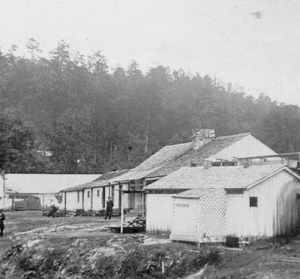
Smallest: Hot Springs, Arkansas. Only 5,549 acres, but it has 47 thermal springs. Jump in a tub and enjoy.

1860s bath house, Hot Springs - NPS


Least Visited: Kobuk Valley, Alaska. While Grand Canyon had 4.4 million visitors in 2008, Kobuk Valley only had 1,565. Why? It’s far away and there are no roads. Get a plane, boat or snowmobile and see what it’s like north of the Arctic Circle.

Most Bears: Great Smoky Mountains, Tennessee. The park has an average of two black bears per square mile. No wonder there are often bear-sighting traffic jams along park roads.

Most Prehistoric: Petrified Forest, Arizona. Once upon a time it was a tropical floodplain. Now you can see 225 million years of history in the fossilized trees.

Tallest or Thickest: Your call. It’s either the Redwoods or King’s Canyon/Sequoia in California. The Redwoods include trees 38 stories high. While Sequoia has tall trees, too, they include the General Sherman tree that’s wider than three lanes of traffic.

Most Isolated: Isle Royale, Michigan. It takes a 3-5 hour boat ride to reach this primitive wilderness in Lake Superior.

Wettest: Olympic, Washington. You’ll find many ferns, mosses and lichens in this rain forest with an annual precipitation of twelve feet.

Darkest: Big Bend, Texas. In this remote and relatively cloud-free desert, the Milky Way is bright enough to cast a shadow.

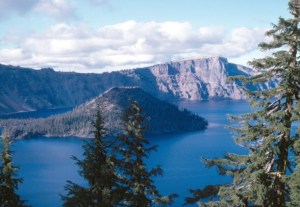
Deepest: Crater Lake, Oregon. The lake in this volcanic basin is the seventh deepest lake in the world at 1,943 feet.

Crater Lake - NPS Photo


Newest: Great Sand Dunes, Colorado. This 30-square mile dune field was switched from a national monument to a national park in 2004. You’ll find short-horned lizards, bighorn sheep and mule deer here as well as some wonderful dunes to slide down.


Source: “National Parks Less Traveled” in AARP Magazine, May/June 2010

Purchases benefit the Glacier Park Centennial Program

What are spammers like in real life?

Suppose you’re at a backyard barbecue. Everyone’s having a good time enjoying the food, the beer, and the afternoon.

Your good friend, Bob, comes over to tell you about his trip to Yellowstone. Turns out, he had a great time except for the fact that while he and his wife were there, they started wondering if they’d left the coffee pot on.

As the two of you talk about Yellowstone, a guy neither of you really knows stands there with a Pabst listening. As soon as Bob mentions the nagging coffee pot worry, this guy blurts out: I OWN A COFFEE POT STORE.

While that’s a little awkward, you turn to him and say, “great,” to which he responds that modern coffee pots automatically shut off after two hours and maybe y’all could come down and look at them after the barbecue.

Even with today’s lower standards about what’s rude and what’s not rude, I’m guessing that most people at the barbecue are not there to be badgered to death by sales talk.

But that’s what SPAM is when we see such behavior on line. Sometimes I wonder if spammers are as rude in real life as they are in the blogging world. But then I think, well, spammers aren’t real people. Maybe they are bots that go out and find a key word in a post and then dump complete gibberish into a comment field as though that’s going to help sales.

Sometimes I’m amused by what I find in the SPAM filter. If I mention Glacier Park on this blog, there’s probably going to be a comment caught in the SPAM filter that links back to a site selling tours, gear, or something randomly connected with glaciers and parks.

Though it’s all so blatantly obvious, it must generate sales or it wouldn’t be happening. Logically, it would seem that more sales would result from comments that actually have something to do with the post like, “Jim and I have gone to Glacier for 20 years in a row, and we’ve never see a bear do what that grizzly did on the Hi-Line Trail.” And then you see its posted by JIM&JOES TOURS.

Heck, I’d probably go and take a look at what they offered. Maybe they want my business just as much as the guy at the barbecue who owns a coffee pot store. But with me, they’re more likely to see me on their site or in their store because they know what’s polite and what’s not.

I’m thinking of addressing all of this in my prospective SPAMMING FOR IDIOTS book. It will be so lighthearted, you can even read it around the camp fire at Glacier or Yellowstone.

See how casual that was. I didn’t hit you over the head with it!

Malcolm

Glacier Centennial: Altyn, a mining boom town

“In its one and only issue, Altyn’s Swift Current Courier on September 1, 1900 observed the high-pitched activity within the ceded strip and headlined: ‘NO DOUBT ABOUT THE PERMANCY AND PRODUCTIVENESS OF THE SWIFT CURRENT MINES.’ And also: ‘THE GROWTH OF ALTYN ASSURED.'” — Malcolm R. Campbell, “Bears, Where They Fought,” in NATURE’S GIFTS.

As you drive into the east side of Glacier National Park from Babb, MT to Many Glacier Hotel on Glacier Road 3 alongside Swiftcurrent Creek, picture how different this valley would be today if the early 1900s mining boom town of Altyn had survived within a strip of mountain wilderness ceded to the U.S. by the Blackfeet Indians in 1895.

Geologists, prospectors, developers and entrepreneurs were convinced that, while the scenery in the valley was lovely and didn’t put food on the table, that a great mining center would develop at the head of today’s Lake Sherburne. The speculators thought they would find enough silver, gold, quartz and oil to put a lot of meals on a lot of tables, and they braved the harsh winter elements and bad road conditions to see if what was under the ground proved to be more valuable than the natural wonder of the place.

Altyn in 1911 - W. T. Stanton Photo, USGS

According to a reporter on the nearby Dupuyer Acantha, “the road up to Swift Current in its present condition has been known to make a preacher curse, and I have my opinion of the man who makes the trip over this road road (!) without breaking the 3rd commandment or perhaps all ten of them.”

It was all for nothing: the mineral deposits weren’t commercially viable. By 1906, only a few people remained in Altyn hoping against hope that the mining shafts and test wells would strike pay dirt. Today, the remains of Altyn–such as they are–lie beneath the water of Lake Sherburne.

Lake Sherburne is a man-made reservoir that filled the valley in 1921 where once there was a forest and several smaller lakes and a saloon and a barber shop and a hotel and a fair number of businessmen who could never imagine the centennial we’re celebrating in the park this year.

Malcolm

The Sun Singer is set in Glacier Park's Swiftcurrent Valley

Bears, Where They Fought

from Nature’s Gifts Anthology from Vanilla Heart Publishing

Lake Sherburne from Glacier Road 3 - Photo by Andrew Kalat
When Hudson’s Bay Company agent Hugh Monroe and a Piegan hunting party rode up the Íxikuoyi-yétahtai (Swiftcurrent Creek) into a U-shaped valley that would become part of Glacier National Park a half century later, they saw two male grizzly bears fighting next to two small lakes. They named the place Kyáiyoix ozitáizkahpi (Bears-Where-They-Fought-Lakes) because that’s what happened there and that’s how they would speak of it later when they told their stories.

A hiker following Glacier Route Three west into the valley from the plains along lateral moraines left behind when the valley glaciers melted off 8,000 years ago will hear no residual growls from those fighting bears. No sign marks the spot. The wise aspen, spruce and pine keep their counsel. On a quiet day, however, those walking alongside the relatively recent Lake Sherburne reservoir may hear the voice of grandfather rock whispering a secret: within the scope of geologic time, all rivers are new, and the men and women who follow them are as ephemeral as monarch butterflies on a summer afternoon.

From the perspective of Glacier National Park’s Proterozoic rock born in a great sea 1.6 billion years ago, the immortality man acquires here in the Shining Mountains comes through his stories.

Nature’s Gifts Anthology

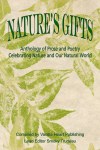
My essay “Bears, Where They Fought” about the stories surrounding Glacier National Park’s Swiftcurrent Valley from the days of Hugh Monroe to the short-lived mining boom town of Altyn to the 1975 flood is one of many contributions in Vanilla Heart Publishing’s 2010 Earth Day anthology, “Nature’s Gifts.” You can read the remainder of this 4,500 essay I wrote in commemoration of the park’s 2010 centennial in the e-book in multiple formats or on Amazon as a trade paperback.

The anthology offers readers more than twenty pieces, from haiku to villanelles, from essays to short stories. Take a walk in a garden or hike in a national park. Reflect on the moon. Learn something new. Laugh and cry with our writers as they discover the beauty, the joys, and the raw power of nature.

Nature Conservancy Contribution

The Nature Conservancy will receive a donation of 50 percent of the profits for every book sold in both print and e-book editions for one year. Dedicated to protecting our rapidly vanishing natural environment, The Nature Conservancy has protected more than 117 million acres of land in 28 countries.

Essay copyright (c) 2010 by Vanilla Heart Publishing

Our cats think we’re stupid

Our four cats are convinced that the cruel claw of fate has stuck them with the two stupidest servants on the face of the earth.

For one thing, we don’t realize there’s a schedule. If we did, what the hell’s the deal when it’s obviously supper time and we’re not even here. The day’s winding down, and nobody’s in the kitchen. Look at the clock, for goodness sakes.

When our cats express their disdain in the strongest possible terms, they become what we lovingly call Halloween Kitties. That is to say, fur fluffed out, eyes wild and heavily dilated, hisses and growls, you’ve probably seen this in cartoons where it was supposed to be funny.

Our cats, though, assume we’ve lost all our marbles when we calmly watch them having tantrums and don’t flee in fear. We usually say, “stop being screwed up” or “awww, what cute little Halloween kitties, bless your hearts.”

Food is another thing. Quite obviously, we’ve got cheese or pot roast or tuna on the counter, and while it sounds like we’re chopping it up into feline-sized pieces, we’re just playing with our food and/or are slower than Christmas. How long can it possible take to cut up a piece of cheese, open the door to the bedroom so something orange and furry can camp out on the bed, or throw a toy across the living room?

If cats could sigh, roll their eyes, and shake their heads in order to show their high level of being flabbergasted and put upon, ours would.

They have further questions about our sanity when they hear phrases like “the cat’s pajamas,” it’s raining cats and dogs” or “when the cat’s away, the mice will play.” Mice, you clowns have mice?

It’s all enough to make sweet kitties caterwaul with despair. But they don’t–for one simple reason. No thumbs. They can’t quite figure out how to work the can opener.

Malcolm

Clip Art from Jupiter Images

Book Review: ‘Let’s Play Ball’

Let's Play Ball Let’s Play Ball by Linda Gould

My rating: 3 of 5 stars
If author Linda Gould isn’t an avid baseball fan, she covers it well, for her descriptions of plays, players, locker rooms, owner’s suites and game-time tension in Let’s Play Ball will easily take readers out to the ball game. But the games between the Washington Filibusters and the Florida Keys feature more than pitchers’ duels and homeruns. A conspiracy is brewing during the game that will decide the National League championship. Fraternal twins Miranda and Jessica are at the stadium, Miranda as a guest in one of the owner’s suites and Jessica to cover the came for her sports magazine. Jessica’s fiancé, Manual Chavez is at the game, too. He’s the Filibusters right fielder.

The highly competitive sisters snipe at each other during the game. Perhaps Jessica is envious of Miranda’s marriage and her high-paying career as a budget analyst for a government agency. Perhaps Miranda is jealous of Jessica’s high-profile job and her engagement to a handsome baseball star with an exciting past in Cuba. After the game, while the teams are in their locker rooms, Manual is the victim of a crime. As the true scope of this crime looms larger and larger in the days that follow, logic might suggest that the sisters should work together, to support each other and help the police find out who’s behind the outrage.

Instead, Gould ramps up the tension with twins who become openly hostile. Miranda’s marriage to Tommy, an attorney with political ambitions, is less than perfect, so she has her own distractions. Yet, she thinks Jessica’s shock over what happened to Manuel is impairing her reporter’s instincts about the case. After all, how realistic is it to suggest that the owners of the Washington Filibusters and the Florida Keys, the President of the United States, the Cuban dictator and an assortment of baseball players and shooting range friends who are actively racist and/or promoting an invasion of Cuba were all in bed together plotting against Manual Chavez?

Jessica is convinced the police and the FBI aren’t handling the investigation properly and that everything will be swept under the rug if she doesn’t get personally involved. When Miranda urges caution, Jessica suggests that Miranda and Tommy, who both have agendas as well as skeletons in their closets, may even be involved in the conspiracy and the cover-up.

Gould’s inventive plot features feuding sisters who become tangled up with baseball strategies, high-profile officials and international politics. Jessica thinks criminals lurk in every shadow. She follows real and imagined leads with a vengeance. Ultimately, when she goes on bed rest because of her pregnancy, she must ask Miranda to help uncover the secrets behind the crime. This forces Miranda to risk her well-paying job and step outside her comfort zone.

However, the novel’s potentially taut pacing bogs down, in part by the insertion of back story information during the police investigation to cover the twins past history and partly because the conspiracy’s probable ringleaders are outside the sisters’ amateur investigative reach. Without the authority or resources for confronting government officials or engaging in private undercover operations, Miranda and Jessica spend a great deal of time speculating about the involvement of major suspects while trying to maneuver the more minor suspects into making inadvertent confessions.

The action leads toward a dangerous confrontation that fittingly unfolds during another tense ballgame. Most of the suspects are near at hand with a lot more than a game to lose, and Miranda is in a position to either act with courage or to pretend the FBI will eventually figure everything out. Gould handles the resulting showdown well. But it’s not closure. Most readers will expect the novel’s next chapter to show how the feisty twins will resolve the rest of the story.

Instead, the author appends a 23-page epilogue. Since the twins are interesting characters, some readers will come away from this epilogue feeling that Miranda and Jessica have successfully navigated a major crisis as well as many crucial personal issues and can now get on with their lives. No longer in the forefront of the action required to bring the conspirators to justice in the epilogue, Miranda and Jessica are suddenly—figuratively speaking—sitting on the bench as Let’s Play Ball wraps up the fortunes of the good guys and bad guys at some distance in summary fashion well after the fact. Action-oriented readers may feel cheated when Let’s Play Ball lifts its primary characters from the game before the final inning.

View all my reviews >>

Malcolm R. Campbell is the author of “The Sun Singer” and “Jock Stewart and the Missing Sea of Fire.”

Fighting the Scrambled Mandala

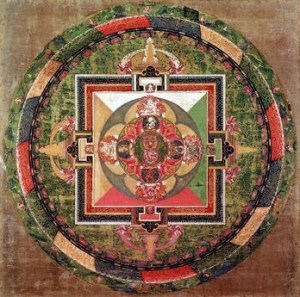
“A labyrinth, of course, is a scrambled mandala, in which you don’t know where you are. That’s the way the world is for people who don’t have a mythology. It’s a labyrinth. They are battling their way through as if no one had ever been there before.” – Joseph Campbell, Pathways to Bliss

labyrinth
My clinical depression is a scrambled mandala.

The formerly clear road has twisted itself into a labyrinth. The air has become more dense than water. I can’t breathe, nor do I want to.

I once believed I was either too smart or too stupid to become clinically depressed. My journey (way, pilgrimage, path) appeared so clear to me that the next step was always apparent whether it came to me out of logic or intuition. Where I was going didn’t matter, for I was en route. Perhaps these was a certain arrogance to such certainty in spite of the fact that—Kabbalistically speaking—certainty is what each of us requires to manifest our highest dreams.

But logically, we’re easily addicted to trends, small, but negative ripples in the force, so to speak, that when they follow upon one another cause us to doubt our certainties, our passions, and even the road itself. Experience has taught me, though, that when the mandala becomes scrambled, it only becomes more scrambled if I fight it. And, depression itself is the same in this respect. What one resists, persists, we are told. When I fight those moments when the air has become more dense than water, I find myself sinking deeper into the ocean of hopelessness where the pressure and the darkness are greater.

The more scrambled the mandala becomes, the more difficult it is to find Ariadne’s linen thread that will lead me away from the dreaded Minotaur to the light-hearted safety of the world outside the labyrinth. When depression is deep, I have neither the willpower nor the energy to search for that thread, much less build wings like Daedalus, the labyrinth’s designer, and fly out of the maze of twisted roads.

Getting Above the Fray

Mandala
I like the title of Kris Jackson’s 2009 novel about the Civil War era balloonist Thaddeus Lowe, “Above the Fray.” It was so apt, for it described exactly the service Professor Lowe was offering Union commanders. He showed them what they couldn’t see on the ground from what—in my perspective—might also be called the labyrinth of the battlefield.

Like both Lowe and Daedalus, there are times when I want to rise above the fray and get my bearings. Lowe was an advocate of tethered balloons, and shortly after reading Kris Jackson’s novel, I had an opportunity for a brief ride in a tethered balloon. How light the air was and how fine the view of the fields and woodlands below. What might have appeared scrambled from within, now was clear, even orderly.

Like Daedalus, I am the creator of my own labyrinth and—on days when the air is denser than water—my own scrambled mandala. I have been there many times because, I suppose, it meets a need I do not consciously know. I’m lost into the clutches of deep lunar mysteries and the dark worlds of the underworld that my subconscious mind has led me to experience. Truth be told, I’m embarrassed to be there, to have to admit that my apparent certainty about the clear road ahead as led me into the forest primeval where I wander blindly as though there is no road at all.

Once my shame passes, I see that there is much of value here in the scrambled mandala I have built and the hopelessly dense air I have placed with its clutches. I know better than to fight it. Fighting it makes me too heavy to fly above the fray and too sleepy to see Ariadne’s thread.

I have escaped from my labyrinths many times. Though there should be a fair amount of certainty in that, I never remember it while I’m staring into the Minotaur’s eyes. My goal is the goal I gave protagonist Robert Adams in my novel “The Sun Singer,” and that is to survive the journey and to return to the known world with something of value for myself and others.

The scrambled mandalas are my nightmares, the places where the road has become twisted, the places where I think I’m awake even though I’m asleep. But when I wake and see the morning sunlight, and it’s “whew, that’s over,” and for now I’m not depressed and I see my reasons again for wanting to be on the journey I have chosen to take.

Copyright (c) 2010 by Malcolm R. Campbell, author of “The Sun Singer,” a mandala masquerading as a novel.

Each purchase benefits the Glacier Park Centennial Committee

Note to Interviewers talking to Writers

Every writer and his/her half brother is taking a blog tour these days.

Tours are designed around the following premise: If an unknown author with a new book to talk about answers a series of canned questions on a series of unknown blogs, s/he will experience something or other.

Perhaps something or other is the knowledge that, “hey, I gave the publicity thing a shot.”

Unfortunately, that something or other doesn’t often include sales unless the author has conned Uncle Jim from Peoria and Aunt Thelma from Grand Rapids into buying a copy and posting a 5-star review on Amazon because that’s what family is all about.

Lousy Questions

If you’ve ever read one of these blog “interviews,” there’s a good chance you’ve read them all. Why? Because every author sees the same series of canned questions. Why? Because the person serving as the host doesn’t want to go to the trouble to learn anything about the author or the book and ask the kind of questions a good reporter might ask.

The first question is usually this: So, tell us, Zeke [or whoever] when did you first know you wanted to become a writer?

LORD HAVE MERCY. Nobody cares. Nobody wants to hear that Zeke was staring out the kindergarten window one fine spring day and though, holy crap, I’m destined to be a writer.

This is not only boring, but it gives absolutely nothing to the suffering prospective reader. Just what, in a gushy rendering of that kindergarten experience, will make the reader buy Zeke’s book?

Nothing.

While blog tour hosts aren’t pimps for authors or a PR flaks for the books, the least they can do is ask a question that’s interesting enough to tempt the reader into reading the answer.

Homework

Get a fact sheet from the author and then write the questions. If Zeke wrote his book while digging graves in a cemetery, ask something like: “Is it true that dead men tell no tales?”

If Zeke’s book is a true story about his quest to find the giant green lizards in the Sierra Madres of the northern Philippines, ask something like, “Why did you spend a year of your life looking for a lizard?” Or, “Once that green lizard got a hold of your leg, did you begin thinking right then how you were going to tell your story?”

My premise: If I enjoy reading the interview with the author, I’m more likely to go find out more about the book.

It stands to reason that is Zeke’s book is called EATEN BY LIZARDS IN THE SIERRA MADRE, then we might want to skip over his kindergarten experience and get right to the good stuff.

Copyright (c) 2010 by Malcolm R. Campbell, who doesn’t even remember kindergarten, much less what the hell possessed him to become a writer.

Campbell is author of “Jock Stewart and the Missing Sea of Fire,” a novel that mixes sex and satire into a sweet story about murder and theft.

Clip Art Copyright (c) 2010 Jupiter Images

Glacier Centennial: Heavens Peak Fire Lookout

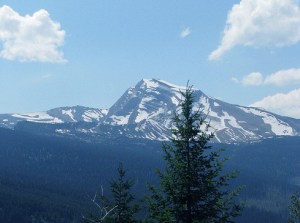
Heavens Peak - Rachel Zinger photo
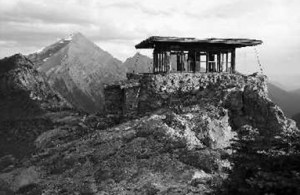
A fire lookout constructed of wood, stone and glass perches at the tip of the north ridge of Glacier National Park’s Heavens Peak. Built on the prominent, often-photographed 8,994-foot mountain in 1945 at a cost of less than $5,000, the structure once served as an integral link in the park’s network of manned fire lookouts. The lookout was added to the National Register of Historic Places in 1986.

Calling the rustic lookout “the most enduring legacy of the Civilian Public Service (CPS) Camp in Glacier National Park,” The Glacier Park Fund has taken on the building’s restoration as one of its Glacier Park Centennial Legacy Projects. The proposed work involves stabilizing the roof, repairing and reconstructing shutters, repairing and painting exposed exterior wood surfaces, and masonry stabilization.

Fire Lookout - Gary Ludwig photo
The Glacier Park Fund projects funding needs of $36,000 of for the lookout’s rehabilitation. (Click here to make a donation.) The planned restoration work will slow down the accelerating deterioration so that the historic structure can withstand the harsh alpine conditions in harmony with the landscape.

While air observation allows a more comprehensive coverage of the park
and has replaced the manned lookout almost entirely, the Heavens Peak fire lookout once provided observers with a marvelous panoramic view including the Livingston Range, the Lake McDonald Valley, Logan Pass and the Garden Wall. Typically, observers used an Osborne Firefinder (aligning the sites rather like aiming a rifle) to pinpoint the exact location of any observed smoke on a circular park map.

The construction of the Heavens Peak lookout was one of many projects completed by conscientious objectors assigned to Glacier Park’s World War II Civilian Public Service Camp (CPS). The camp housed 550 men.

The Glacier Park Fund’s overall goal for multiple, short-term legacy projects is $250,000. According to the fund, the Heavens Peak Lookout restoration, in consultation with the park’s historic architect, is part of a 2010 birthday gift to the park. In 2009, restoration work on a 1913 ranger cabin was completed providing space for a winter school programs. More accessible trails, a wildlife viewing platform and upgraded Logan Pass visitor center exhibits are also on the wish list.


My Glacier National Park Centennial posts can be found on Twitter by searching on the #glaciercentennial tag.

Purchases of this adventure novel benefit Glacier Park