Authors who connect with readers

“Funny how people are. Known for books that can make people pass out from nausea, Chuck Palahniuk in person is a gracious, sweet guy who really connected with the crowd at our event last Tuesday. He spent two to three minutes with each person who was getting a book signed, asking them questions and posing for pictures.” — Tom at RiverRun Bookstore in Portsmouth, NH

Don’t you wish it were always like this?

Not passing out from nausea while reading a novel, but meeting an author at a book signing who is genuinely glad you’re there.

After all, you’re giving up an afternoon or an evening. Perhaps it took you 30-40 minutes to get to the store and it will take you another 30-40 minutes to drive home.

Maybe you planned to buy the book anyway or maybe you heard something during the reading that caught your interest and you fished out a credit card and bought the book on an act of faith. At this point, I think you deserve more than an assembly-line book signing experience. We’ve all been to these and we’ve seen them on TV.

Sure, if 1000 people are lined up and the end of the line is five blocks away, the author–or, the store, at least–can’t afford a five minute chat per person. But how about a smile, a handshake, and a few questions about you? That shows an author is glad you’re there as contrasted with those who take you, your book reading experience, and your credit card for granted.

Good show, Chuck Palahniuk and RiverRun Bookstore.

Read the book, then visit Glacier and discover the magic again.

Book sales to help Breton Wildlife Refuge

from Vanilla Heart Publishing:

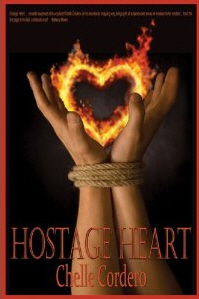
Chelle Cordero and Vanilla Heart Publishing are donating 25% of publisher proceeds on sales of Hostage Heart to aid recovery and cleanup efforts of damages to Breton National Wildlife Refuge caused by Deepwater Horizon oil spill disaster.

This offer applies to all copies of the book sold between May 8 and June 8, 2010 in print, e-book, and Kindle formats.

Chelle’s romantic suspense, Hostage Heart, published by Vanilla Heart Publishing in July, 2009, is a suspenseful romance deeply rooted in the Louisiana delta, and Chelle and VHP will be donating to a local Louisiana organization involved in the recovery and cleanup of the Chandeleur Islands, barrier islands that are part of the Breton National Wildlife Refuge, teeming with birds, marine life, and plant life that will be affected by the oil slick, tarballs, and more from the oil spill.

The Breton refuge is an important breeding and nesting area for many endangered and threatened bird species. “Oiled birds, including a gannet and brown pelicans, Louisiana’s state bird, have been found on the islands,” said Jeff Dauzat of the Louisiana Department of Environmental Quality.

Order books online from Amazon, Smashwords and other booksellers or stop by your favorite store.

Click here to find an independent book store near you.

A beautiful bookstore in Dubuque

I love locally owned independent bookstores. They’re not only great for a city’s economy–as websites like IndieBound will tell you–they are also a reflection of the local culture, people, reading habits and thought.

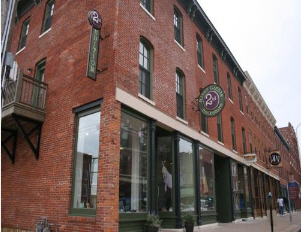
River Lights Bookstore Photo
When I reached handwritten postcard number 100 in the stack I’m sending out to bookstores telling them about “The Sun Singer,” I was curious about the store getting the postcard. It’s River Lights Bookstore, 2nd Edition on Main Street in Dubuque, Iowa. They have a website and a Facebook page, so it was easy to learn more about the store.

They also have something else that chain stores can’t match: a wonderful historic building. The “Second Edition” in the store’s name comes from the fact that when the original store closed, some of the folks involved created a new store down town.

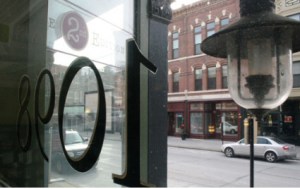
On June 1st, 2007, the new River Lights Bookstore opened in a beautifully renovated historic downtown building at 1098 Main Street. The wooden floors and tin ceilings of this 1870’s building offer an inviting atmosphere in which to browse or connect with fellow booklovers.

River Lights Bookstore photo
As the former chairman of my town’s Historic Preservation Commission (HPC), I was happy to see the “adaptive reuse” of the old building. I wish the store would include a note on its site saying what the building originally housed. By the look of it, it could have been a small manufacturing operation. According to Dubuque’s website, the city has an HPC that oversees the historic districts and historic properties. Doing this is also good for the local economy; and, of course, it strengthens a community’s sense of its own past history and architecture.

River Lights looks like what a bookstore ought to look like: a vibrant operation with excited book people in the perfect setting. If I lived in Dubuque–a three-hour drive from Batavia, the small town where my father was born–I would be shopping at this store every week.

I have no idea how many weeks it will take my postcard to travel from northeast Georgia to 1098 Main Street in Dubuque. Probably several weeks. Chances are, the card will be swept into a stack of Baker & Taylor, Ingram and other catalogues where it might sit for another several weeks. Somebody might actually see it, pause, and think, “hmmm.”

“Hmmm” is fine with me, assuming they can read my handwriting which, suffice it to say, was getting a bit sloppy when I reached card #100. Otherwise, I’m glad I looked up the store where the card is headed. For a preservation-minded writer, the website is a real treat, and imagining what it would be like to shop or attend book club meetings in River Lights 2/e is wonderful to imagine.

Each copy sold benefits Glacier National Park!

I had high hopes for literary monkeys

“Remember the old adage about how an infinite number of monkeys typing on an infinite number of typewriters will eventually type something beautiful? Well, the Internet disproves that.” — Kurt Vonnegut

I’ve had high hopes a monkey or two would make it onto the New York Times bestseller list. Figuratively speaking, these hopes have been realized many times over.

But literally, literary monkeys have been a disappointment, though the odds (I thought) were good that sooner or later, out of all the gibberish and all the jammed keyboards, a monkey would finally type: “Call me Ishmael” or “Lolita, light of my life, fire of my loins.”

Some say that the opening line to Finnegan’s Wake would have been better if a monkey had co-authored the book with James Joyce, starting with: “riverrun, past Eve and Adam’s, from swerve of shore to bend of bay, brings us by a commodius vicus of recirculation back to Howth Castle and Environs.”

As far as I know, there aren’t currently any Federally funded monkey typing and literature experiments even though finding out once and for all whether an infinite number of monkeys typing on an infinite number of typewriters will eventually type something beautiful is a typical usage of tax dollars.

I mean no disrespect to monkeys: there’s nothing better than a barrel if them for a lot of laughs, and I’m talking about higher quality laughs than I’m hearing on most ABC network sitcoms which, quite possibly, may have been scripted by monkeys to a greater extent than we know.

Monkeys get a lot of bad press, bless their hearts, for you seldom hear anyone say that something or other is more fun than a barrel of laughing hyenas or that an infinite number of wharf rats typing at an infinite number of typewriters will ultimately write a novel that begins “Once upon a time and a very good time it was there was a moocow coming down along the road and this moocow that was coming down along the road met a nicens little boy named baby tuckoo.”

Most wharf rats are looking for something better than the lowly life of a writer: Congressman, for example, or IRS agent.

Most logical people think that monkeys will never amount to anything, but that if they did, they would find their true calling in show business rather than the writing business. Hollywood has proven to us that this is true since an above average number of celebs either claim to be monkeys’ uncles or act like them.

“I wish either my father or my mother, or indeed both of them, as they were in duty both equally bound to it, had minded what they were about when they begot me; had they duly considered how much depended upon what they were then doing.” Such thoughts have occurred to many people, especially to Hollywood agents, Congressmen and IRS operatives because, when it comes down to it, even if a monkey had accidentally typed it, it’s not a monkey sentiment.

Of course, to some, Tristram Shandy might have been a better book had it been improved with either monkey business or rat droppings. My theory has always been that no self-respecting money will type everything it can just because it can, meaning that some of the worst possible fiction has yet to be created.

Thousands and thousands of monkeys are sensible enough not to ape everything a human under the pressures of riches and deadlines might type on a single typewriter in a single day. That’s my theory, anyway, and I’m sticking to it.

–Malcolm, author of “Jock Stewart and the Missing Sea of Fire,” a satirical thriller that pokes fun at the real or imagined monkeys in government and newsgathering.

Alligators, bullies and becoming a writer

My life began at a Gulf Oil Service Station at Immokalee, Florida, back in the days when the attendants came out with a whisk broom and swept the beach sand out of your car while they pumped your gas for you.

Papa at work
Word is, I was swept out of the back seat of our 1949 Nash even though I didn’t look like beach sand. Since authorities were certain that even though I was an ugly five-week-old baby, somebody would claim me sooner or later, they put me in the service station window with a sign that said IS THIS YOUR BABY?

An aging alligator couple took pity on me and raised me as one of their own. They taught me to swim and they taught me to lurk in the water with only my eyes showing so that I could grab hapless ducks in my teeth and bring them home for Duck a la Orange.

Mugsy Walters Requesting Lunch Money
When I got to high school, playground bullies made fun of my swamp dialect and taunted me with phrases like “see you later alligator” and “after while crocodile.” That’s what they said after they stole my lunch money.

Papa Gator said, “Son, you’re never going to bring home the bacon with your teeth like your brothers and sisters. You’re going to have to use your wits.” That advice has served me well.

I convinced the playground bullies of several truths: (1) When I grew up, I was going to be a famous writer and would put all of them in my books for better or worse, (2) Looking good in a novel was a good way to pick up chicks, something they needed to think about since their teeth weren’t large enough to grab anyone at the prom, (3) Papa Gator knew where they lived.

No doubt, truth number one (1) got their attention; that, along with my weekly column in the school newspaper called “Alligator Alley Gossip.” Everybody read it, but nobody wanted to be in it: Is that hickey on a certain red-haired girl’s neck a true love bite or did somebody forget their lunch again? Once again, a lover’s lane romeo with the initials W. S. forgot the distinction between “Jail Bait” and “Gator Bait.” Note to S. T.: old lady Anderson doesn’t keep the test answers in her drawers any more.


The world has moved on from the Immokalee I once knew. The Gulf Oil Station was torn down years ago. Seaboard closed down the rail line. Most of the gators, including many who still remember my name, have retreated deeper into the swamps. And now, the people coming to town aren’t there for the fishing, but for the Zig Zag Girlz Blackjack at the Seminole Casino.

The basic truth comes down to this. If you can’t earn a living with your teeth, you need to go out and find an occupation that fits your station in life, one that honors how you were brought up. Even those who don’t know my first adult meal was a pine warbler on toast or that I still make slaw with swamp cabbage, walk carefully around any writer who just might put them in his books.

Papa Gator would be proud.

Malcolm R. Campbell is the author of the comedy/thriller novel “Jock Stewart and the Missing Sea of Fire,” a novel where poor Jimmy Pew met up with Papa Gator and became a believer.

Glacier Centennial: The first ranger

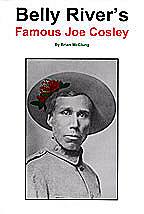
Hikers in the Northern Lewis Range area of Glacier National Park following the trail above Lake Elizabeth northeast along the Belly River are walking in a world once favored by the park’s first ranger Joe Cosley (1870-1944). To the west of Lake Elizabeth is Cosley Ridge (shown as Crossley on some maps), one of several landforms Cosley named after himself.

He wrote poetry and short stories, often wore a red sash, named nearby lakes after his lady friends, and carved initials and hearts on the sides of trees. Some say he was more poacher than ranger. As a trapper and guide, he knew the country well and was easily the last of the park’s true mountain men.

Appointed in 1910 by the park’s first administrator Major William R. Logan, Cosley served in the Belly River District. As C. W. Buchholtz writes in Man in Glacier, rangers were stationed around the periphery of the park: “These early rangers were directed to prevent poaching, illegal grazing, fires, ‘defacing of natural features,’ ‘obnoxious persons entering,’ and any other incongruous activities which might endanger the park.”

Of French, Spanish and Indian ancestry, the Ontario-born Cosley was known by the Indians Paeaushka for his long flowing hair. He served with distinction as a sharpshooter in France during World War I with the 13th Canadian Mounted Rifles.

When he returned to the Belly River area after the war, he no longer worked as a ranger, though it’s said that rangers on both sides of the US/Canadian border constantly sought him out on suspicion of smuggling. Where, many asked, was his cache of furs? He was ultimately caught and arrested when he was 60 years old by Glacier Ranger Joseph Heimes.

He was tried, fined and then escaped, purportedly heading on snowshoes through the mountains for the border. In 1944, he was found by the RCMP in his trapping cabin near Isle de la Crosse, Alberta, where he had died of scurvy.

Joe Cosley Collection

On July 24, a collection celebrating the life and legends of Joe Cosley will open in Glacier Discovery Square in Columbia Falls, Montana. The Hungry Horse News said in “Cosley collection bound for Columbia Falls,” Cosley was a true renaissance man of the late 1800s. He was both a lawman and an outlaw. The story of Cosley’s Great Escape — when he snowshoed over the top of Ahern Pass to escape capture by the law — is truly an astounding tale of intrigue, athleticism and adventure. Cosley represents an era in the West that was rough, rustic and ever-changing.

Re-dedication of Glacier National Park

The public is invited to the re-dedication ceremony for Glacier National Park at the Community Building, Glacier National Park, MT, on May 11 between 10 a.m. and 4 p.m.

Set in Glacier, including Lake Elizabeth and the Belly River

One positive person makes my day

Truth be told, I experience blue days in spades.

Call me cynical, but the sugary tweets on Twitter (WHO CAN I HELP TODAY) and (LEARN TO LOVE ONE ANOTHER) just don’t help. I applaud the person who approaches each day with a WHO CAN I HELP ATTITUDE. But when a person says that, alarm bells go off.

I wonder, why are they saying that on Twitter? It’s marketing, I think, for clearly getting their help will cost me a lot of money. Maybe I would trust them more if they would just say something that helps me without flaunting the fact that they want to do it.

In contrast to this, I attended a book signing at Hall Book Exchange in Gainesville, Georgia yesterday afternoon for hypnotherapist Melissa Watts. She didn’t sit down and say WHO CAN I HELP TODAY or read a string of tweet-length platitudes off a prepared script. She sat there and was genuinely and infectiously herself: positive, giving, sharing.

Her words changed the tone of my weekend and inspired me anew to look within, to listen, to set aside doubts and to remember that what I see in the mirror is, using her words, like an overcoat, and that I am more than that and so is each of us who sat with her for two hours and shared our beliefs about past lives, energy, vibrations, and the big picture.

I may not know exactly why I drove 22 miles to sit in that room with Melissa Watts and five other people, but I know I was led there. I’m led everywhere I end up. The why of yesterday afternoon is probably summed up in answers I already know subconsciously. Short term, I walked in feeling blue and dark and I walked out with a sunny mood.

One positive person per day is all I need to keep my life and my emotions on track. I’m always looking for that person, hoping that through “chance” and “circumstance” I will be led to that person and that they will say what I need to hear and that, just maybe, I will say what they need to hear.

A transcendent novel set in Glacier National Park

Book Review: ‘Love and Synergy’

Love and Synergy: Words Dedicated to Family and Friends Love and Synergy: Words Dedicated to Family and Friends by Rebecca Loyd

My rating: 4 of 5 stars
“Rev. Jimmie Ray Loyd, age 61 of Jacksboro, died June 27 at his home. He was an Ordained Baptist Minister in 1980 and was founder and pastor for the past 25 years of the Pioneer Baptist Church. He was loved by family, friends & all who knew him.” — The LaFollette Press, Lafollette, TN, July 3, 2004

Obituaries are news carefully written in an age-old, one-size-fits all style, that informs readers about what happened without—in most modern newspapers—conveying the full emotional import of the event and the days leading up to it from the perspective of family and friends.

When Jimmie Ray Loyd was diagnosed with acute myelogenous leukemia, he asked his daughter to share his story. In “Love and Synergy,” Rebecca Loyd accomplishes this request in a straight-forward, heartfelt manner that honors her father and family while offering comfort to others facing a terminal illness.

“Love and Synergy” is a story about the last year of a man’s life, and it begins with a memory of Jimmie and his wife Beatrice building a fire in the potbelly stove of the church that Loyd founded while their children Yvonnia, Jimmy and Rebecca play nearby and try to ignore the cold.

During the first fifteen years of his ministry at the Pioneer Baptist Church, the Reverend Loyd continued his day job in the construction business. However, the congregation wanted him available on a full-time basis. Rebecca Loyd writes that “when Dad was first diagnosed with acute myelogenous leukemia, we became angry that his retirement has been taken from him. In retrospect, he had been given the opportunity for ten glorious years to focus on what he loved most—serving as pastor of Pioneer Baptist Church.”

The journey Jimmie Loyd and his family took during his last year moves quickly from old memories to a doctor’s appointment to learn why he looks and feels so tired. After his physical, Loyd says he’s okay and that he will check in with the doctor again after they get back from a trip to Oregon to visit his son Jimmy and his wife Amy.

Once in Oregon, it’s obvious Loyd is more than simply tired. Hospital tests show he has leukemia and more testing shows that the form of leukemia he has is “a vicious disease…that affects red blood cells, platelets, white blood cells, and bone marrow.” The family fathers, an aggressive treatment program is prescribed, and remission comes and goes on a hope-against-hope roller-coaster ride of emotions during good days and bad days.

Known up and down the hall as “the preacher man from Tennessee,” Loyd fights his vicious disease with a positive attitude and determination that endears him to the hospital’s staff and volunteers. The staff sees the love and support of his family as they face each turning point and hard decision including the one to go home to Tennessee when there is nothing else the hospital can do. His doctors and nurses give him a standing ovation on the day he is discharged.

“Love and Synergy” is a story about the Reverend Jimmie Loyd, and his faith runs through it like a deep river. “Love and Synergy” is also a story about a family’s unconditional love and support for each other, and it ends as an inspiration to all who face similar journeys. The author’s father would like that.

View all my reviews >>

Malcolm R. Campbell is the author of “The Sun Singer” and “Jock Stewart and the Missing Sea of Fire.”

Glacier Centennial: Glacier Fest in Minnesota

from glacierfest.org

City: St. Paul, MN
Date: Saturday, May 15th
Location: Rice Park
Time: 10:00 a.m. to 4:00 p.m.

A touch of Glacier in downtown Saint Paul. Glacier comes to life through exhibnits, vendors, and live music featuring Montana’s Troubador Jack Gladstone and local bluegrass band Pickin’ up Steam. Activities for kids; Glacier Education Specialist Laura Law will be on hand. In addition, a 1930s Red Jammer bus will be on display.

Glacier Fest is free and families are welcomed. Commemorative buttons will be available for a $5.00 donation to that support the Glacier Park Fund.

See Glacier Fest for informational exhibits and presentations including LOSING A LEGACY: DISAPPEARING GLACIERS, 100 DAYS OF GLACIER, and LAND OF MANY STORIES.

$5.99 Kindle purchases support the Glacier Centennial

A few writing resources.

VHP Author Blog: In this new blog, the authors from Vanilla Heart Publishing focus on writing tips, techniques and ideas.

Interesting Links: I finally got around to adding a links page to my website. If you’re a writer, you might find a few things to check out here.

Promo Day: This network and learning event is aimed at writers and publishers who want to promote their books while learning more about the promotion process. This year’s event is May 15. There’s also a Promo Day Blog with additional information.

C. Hope Clark’s Blog: Clark, who maintains the popular Funds for Writers site, offers tons of advice in her blog for writers and editors. See Funds for Writers for information about writing grants, contests and markets; while there, check out the newsletters.

Pub Rants Blog: Writing and publishing from an agent’s perspective.

Writer Beware: What to watch out for in the world of publishing, agents, and writing.

Open Directory Project: More writers’ resources than you can shake a stick at.