Man plus Woman equals What?

“As soon as a man and woman of almost any age are alone together within four walls it is assumed that anything may happen. Spontaneous combustion, instant fornication, triumph of the senses. What possibilities men and women must see in each other to infer such dangers. Or, believing in the dangers, how often they must think about the possibilities.” – Alice Munroe

If the Yahoo home page is even remotely accurate in suggesting what people wonder about, then people appear fixated on revealing dresses and bathing suits, who celebrities are sleeping with, and older people who’ve “still got it.”

“It” is the danger of a man and a woman alone in a room.

If novel sales are even remotely accurate in telling us what we like, then we like speculating about what might happen in that room (car, forest, castle, swamp) when a man and a woman are alone. According to the Romance Writers of America (RWA) Romance was the top-performing category on the best-seller lists in 2012, generating $1,438 billion in sales.

“Romance” in novels is often linked to the danger of “Man plus Woman.”

Like many other authors who read a lot of books, I am variously amused, excited, disgusted, bored and curious about the what the reporter says s/he will tell me about in his/her celebrity story or what the author promises to reveal between the covers of his/her novel. As an author, I usually care a lot more about how the writer/reporter tells the man+woman story than what happens when the man and the woman are together. Not much is new on that score, but I guess we like hoping there might be.

There are times when I think the cynics are wrong about the $ sign being our defining symbol. Perhaps it should be a bed.

The old newspaperman Horace Greeley once said that the thing most readers are interested in the most is themselves. I know a lot of us are interested in having money, friends, security, good food, successful children, great health and long lives. A lot of that involves the $ sign.

Yet, when reading habits come into play, a lot of us apparently want to be in the bed when–as celebrity journalists’ would say–somebody arrives in a jaw-dropping outfit and asks, “How about a night of spontaneous combustion?” Or, if we can’t be there, we like hearing about people who are.

I’m not a romance novelist or a celebrity journalist, so I try very hard not to focus my writing on the sexual what that happens in the “Man plus woman” equation. But, as I look at the importance of the bed in our culture, I sometimes wonder if I need more beds in my books.

Malcolm

On Location: in St. Louis for a Ghost Story

Forest Park
Forest Park

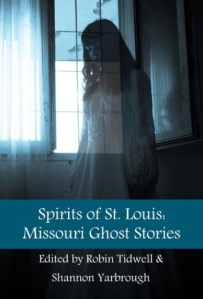
While working on a ghost story set in St. Louis for an anthology of Missouri stories, I had to face three realities:  (1) I hadn’t been in St. Louis for a long time, (2) I didn’t have a budget that would allow me to rent a plane and fly up there to do research, (3) My setting had to be believable to people who lived in St. Louis.

The story features a modern-day student and a a real historical figure, Patience Worth, channeled years ago by Peal Curran. I was vaguely aware of Patience Worth and the sensation she created a century ago as she turned out books and poems that were quite well received.

I knew what I wanted the story to do. But I needed to familiarize myself with the writings of Patience Worth so that my ghost in the story sounded like the “real” spirit. Fortunately, her writings are accessible on the Internet, and a kind expert in the subject gave me many wonderful pointers.

Settings

The Skinker-DeBaliviere neighborhood.

While it was crucial to “get Patience right,” the settings were also important. It took a while for me to nail down whether the house where Pearl Curran channeled Patience was still standing. Once I found it, it didn’t take long to discover a picture of it using Google’s Street View. I also looked at the adjacent streets in the historic neighborhood where the house still stands.

While I don’t reveal the address of the house in the story, I needed to see it online so that when my young, modern-say protagonist drives down the street, she’ll see something that not only is real, but that sounds real to anyone who knows the area.

Kennedy Forest

spiritsanthologyNear the historic house is Kennedy Forest, a part of the city’s Forest Park, the seventh largest munipal park in the nation. While there are a lot of pictures and descriptions online and while Google Street View showed me what it looked like, a forester helped me make sure I had the tree types correct. Why? I wanted my character to go to that forest and see what is really there.

I also found major streets so that my character could drive from the Patience Worth house to the park on real streets with accurate descriptions. The descriptions add ambiance to the story and bring the real setting into believable focus.

A lot has been written about Patience Worth, the historic district where the channeling too place, and the nearby landmarks. All of this greatly helps a writer while s/he is working on a story set in a town s/he hasn’t seen for a while. The age of the house and the park fit my needs perfectly: I wanted something very old to appear in a modern world, and the locale itself helped me tell my story “Patience, I Presume.”

My approach is always to research settings and subject matter extensively and then let the story tell iself once I’ve immersed myself into the time and place where it unfolds. If you’re a writer, you probably approach your stories quite differently. We never know when we think of a story what we’ll need to do to get it down on the page the way we imagine it. I start with my atunement to place and work outward from there.

You May Also Like: How I Researched a Ghost Story – Filed under “writing tips,” this provides a step-by-step approach to the online research that worked for me.

Malcolm

Looking Deeper into Who You Are

“Behind each and every interpretation of the tale is the tale. The tale provides the invisible backdrop against which all analyses parade their brilliance. Myth lies behind every account we give of it, and it gives no account of itself. Myths fall back on invisibility.” –James Hillman, “The Soul’s Code.”

sunandmoonIn “The Soul’s Code,” James Hillman writes that each of us has a calling, a mission or objective we are here to accomplish. This calling cannot be documented or measured by mainstream science. Instead, it calls back on “invisibles” as Hillman calls them–the “something more” behind the empirical facts and hard science the mainstream world knows and loves.

In Lawrence Durrell’s novel “Balthazar,” one of the characters states that we live our lives based on selected fictions.

One might suggest that these fictions–the invisible things we deeply sense and believe about ourselves but cannot necessarily prove in the harsh light of day–when looked at all at once may provide clues about our calling. Behind everything we do, there is not only a series of stories, but a profound, personal myth.

If we are accustomed to reading mythology as pseudo-history, an approximation or fanciful version of historical events, or in any other literal way, we are missing the tale behind the tale. In looking deeper into the each tale, one finds–whether through the commentaries of experts, one’s own study of symbols and cosmology, or our personal intuition–a grander story that imparts a cosmic lesson.

Unless you are a teacher and/or student of mythology, the discovery of the lessons that are important in your life and that impact your calling–the secret and invisible knowledge–will happen in part by pondering the myths that keep drawing you back into the books in which you find them.

That is to say, your calling is always calling you to the things you need. If you need to know what’s important about Pandora or Theseus or the Argonauts, you will be drawn to these myths. When you acknowledge that you are constantly intrigued by one myth or another, you have an opportunity for looking deeper and discovering clues about where your path lead.

October Give-Away: Leave a comment on this post on my Sun Singer’s Travels blog for a chance to win a free audio copy of Jock Stewart and the Missing Sea of Fire.

Malcolm

seekercover1

Hero’s Journey Resources

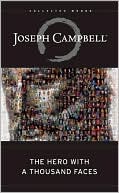
herothousandfacesThose of us who write novels using the hero’s journey often keep several books about the journey on our desks, referring to those above all others.

While a lot of writers turn to Vogler’s The Writers Journey: Mythic Structure for Writers, I still turn to Campbell’s The Hero With a Thousand Faces and then to Houston’s The Hero and the Goddess. Our preferences often depend on which book we discovered first. I discovered Joseph Campbell’s writing when I was in college, so I rely on his interpretations for most things except the heroine’s journey.

It’s a mistake, I think, to say either that there is no heroine’s journey or that it’s simply a woman following the structure of the hero’s journey. For the heroine’s journey, I turn to Murdock’s The Heroine’s Journey, followed by Perea’s Descent to the Goddess.

Some see these journeys unfolding in the seasons, in patterns of life, in the Tree of Life, and in the progression of a seeker through the Tarot trumps. Others look at the steps (degrees) at a mystery school and find the journey there, while others look at traditional patterns of initiation as we find them in the “Lesser” and “Greater” Mysteries. In many ways, these are all one in the same, but as seekers, we tend to feel more attuned to one description of the path rather than another.

Whether you’re adapting the journey to your life, your writing, or your approach to subjects where it easily applies (literature, psychology), the pathway is fascinating. The minute you think you know many things about the path, you discover a new angle, symbol or interpretation.

If you like on-going discussions about the journey–and myth, in general–you might enjoy the web site of the Joseph Campbell Foundation. (You have to join as an “associate” to take part in the  discussion boards.) You can also find interesting articles on the Harris Communications site.

Once you start looking for it, you’ll find the hero’s and heroine’s journeys everywhere.

Additional Hero’s Journey Resources

Malcolm

Malcolm R. Campbell is the author of “The Sun Singer,” a hero’s journey novel.

Write sloppy, then cut

penBeginning writers often lack the confidence to write sloppy, anything-goes first drafts. Veterans will tell you these writers have an internal editor that judges every word before it reaches the page or screen.

Sometimes the internal editor looks like Mom, Dad, Reverend Johnson or Professor Smith in the English department. These people have opinions about writing, right and wrong and what you ought to do with your life. If you can hear them saying “tisk tisk” while you write your first draft, that draft is probably going to be anal.

Neither your imagination nor your flow of words needs to be restricted when you write the first draft.

It also takes confidence to cut words. Veteran writers refer to a writer’s favorite scenes and sentences as “your darlings.” These are wonderful in the wrong way. They’re funny, tragic or the best poetry you’ve ever seen. The problem? They don’t fit the story.

Many students in a creative writing or basic news reporting classes are shocked when their short stories and practice news reports come back marked with a red pen. Instructors cut unnecessary words we use in conversation but shouldn’t be using when we write.

Adverbs have a bad reputation. Adjectives are next on the list of suspects. So are weak verbs. Look at each one while you’re cutting words and see if it adds anything to the sentence.

On Facebook these days, it’s rather a fad to say “I’m totally addicted to this TV show.” The word “totally” adds nothing because addicted is addicted. Many TV news reporters didn’t get the message when they took basic reporting in college and heard the instructor say “stop using the words ‘totally destroyed.'” A destroyed condition is already total.

Saying “so totally addicted” might sound “in” on Facebook and at the local mall, but the words slow down your writing. Worse yet, they date your writing; by that I mean, once they do out of style, your story will go out of style, too.

Consider this exercise: Look for short story and creative nonfiction writing competitions with strict maximum word counts. Think of a plot or subject and then write the first draft with the idea that you’re going to have twice as many words as you need. Now cut the first draft so it fits the competition’s requirements. You’ll be amazed at how much stronger the work becomes when the unnecessary words are polished away.

Sculptors have said that creating a statue out of a block of marble is a process of taking away the unwanted stone. You’re doing this when you delete the words you don’t need.  The resulting writing sings just as the sculptor’s best work looks like stone that lives and breathes.

Your first-draft sloppiness gets all the ingredients in place. Editing smooths away everything that will get in the way of the final story.

Malcolm

LandBetweenCoverMalcolm R. Campbell is the author of contemporary fantasies, folktales and paranormal short stories. His latest three-story set, “The Land Between the Rivers,” was released on Kindle September 29.

Shifting from Vacation Mode to Work Mode

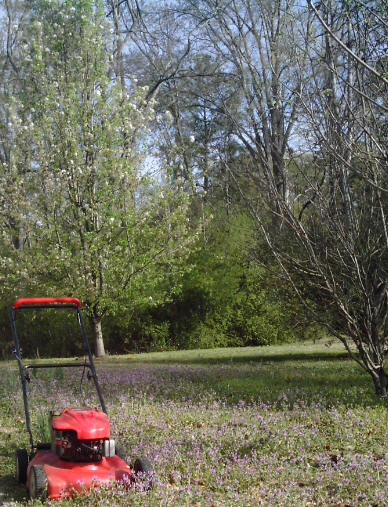
mower2People often say they need time to recuperate from their vacations before going back to work. Yeah, my knees and ankles hurt after walking miles and miles between airport gates in order to travel from Georgia to Montana and back. But really, it’s mental relaxation I’m needing. (My brain doesn’t have a automatic transmission, so I have to manually shift from vacation mode to work mode.)

Oh, so we can’t get meals delivered to our table without going to a grocery store first?

Oh, are you telling me there’s no yard crew keeping the flowers happy and the grass green and well-mowed like there was at Glacier Park Lodge?

But, without missing a beat, the credit card bill arrived a few moments after we got home. Naturally, there was nothing in the mail from Hollywood telling me they want to pay me 100 grand to make The Seeker into a blockbuster movie. But the credit card people didn’t waste any time telling me it’s time to fill their collection plate.

As a contemporary fantasy author, I try to keep reality to a minimum, but so far, I haven’t found the right magic formula for limiting the amount of reality in real life.

Oh, so those prescription meds don’t jump into the bottles automatically unless I call them in first and then drive down to the pharmacy and pick them up?

ParkThere’s a plus side to work mode reality. Even though work mode includes chores, it’s cheaper than vacation  mode. And really, work mode food is gentler on our digestive systems.

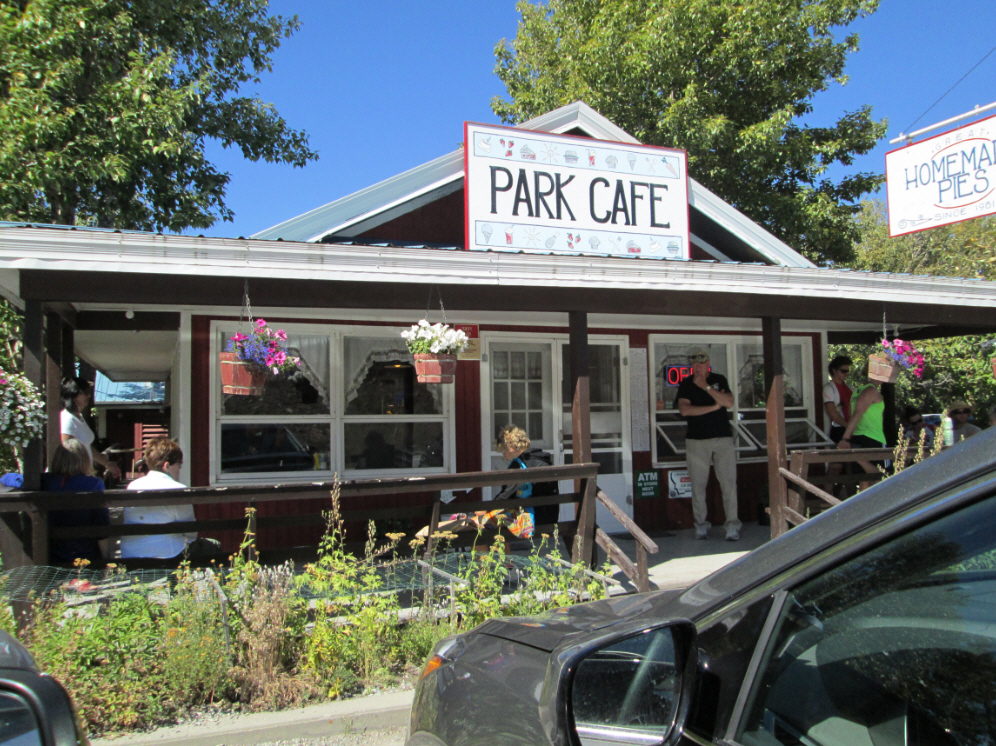
I’m glad we could catch a few Montana meals at the Park Cafe, Bison Creek Ranch, Luna’s, and the Whistle Stop cafe because the chefs at both Many Glacier Hotel and Glacier Park Lodge have a preoccupation with overly spicy food. Can’t you put a few plain dinners on the  menu to give our stomachs a break?

Since I’m writing this post instead of working, you can tell I’m not completely out of vacation mode. Shifting gears is a work in progress.

Coming Soon: An interview with Scott Adams, the specialist in voices and dialects, who narrated the new audio edition of Jock Stewart and the Missing Sea of Fire.

Malcolmseekercover1

Moose Drool without the Moose

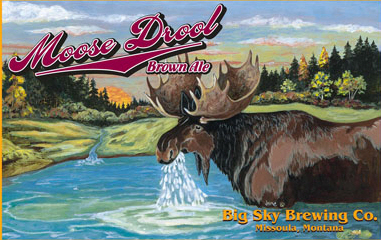
moosedroolThe closest my wife and I came to a moose during a ten-day trip to Glacier National Park with my brother Barry and his wife Mary was an ice cold can of Moose Drool brown ale. For the most part, the critters were absent.

We discussed photo shopping this picture and saying, “Hey, guys, we saw this moose in Lake Josephine, but frankly the scenery doesn’t look much like Lake Josephine.

We did see several grizzly bears, ground squirrels, a coyote, a flash of brown that was purportedly a wolverine, and an osprey.

We were assured by the bartender at Many Glacier Hotel that Moose Drool isn’t made with actual drool. Most of the drool during the vacation was caused by various renditions of huckleberries: huckleberry water, huckleberry ice cream, huckleberry margarita, and huckleberry pie.

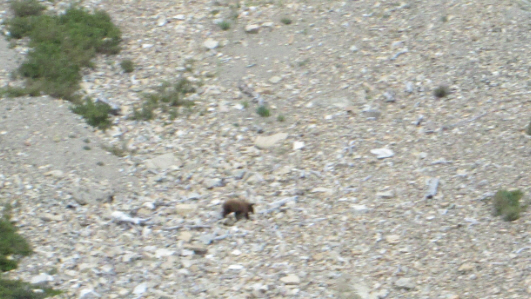
Grizzly bear near Many Glacier - Photo by Barry Campbell
Grizzly bear near Many Glacier – Photo by Barry Campbell

One of the grizzly bears was on the talus high above the road between Many Glacier and Babb. We saw it several times and  began to wonder if the National Park Service was paying it in huckleberries to pose there for tourists.

Seeing the cars and buses stopped for this bear–with everyone pointing–reminded me of similar scenes with black bears in the Smoky Mountains.

In spite of the lack of wildlife, we had a good trip. Well, we could have done without the cold rain and the hail storm we got into on during a hike near Hidden Falls. So far, four of my novels are partially set in Glacier. With another novel on the drawing board, it was nice to see many of the settings I plan to use.

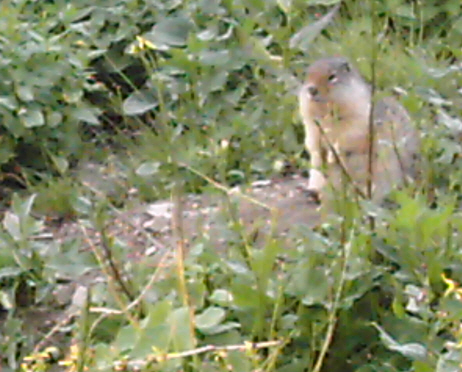
Ground Squirrel at Logan Pass - Photo by Lesa Campbell
Ground Squirrel at Logan Pass – Photo by Lesa Campbell

I have a lot of location choices. Plenty of places for action, battles, people sneaking up on other people, and the other kinds of things that happen in contemporary fantasy novels.

Coming soon, The Betrayed, the third novel in my “Garden of Heaven” series named after a Glacier Park Valley near Hidden Falls.

Next year, Aeon will complete the trilogy that includes The Sun Singer and Sarabande, both of which are partly set in Glacier Park’s Swiftcurrent Valley.

So far, I haven’t thought of a way to include Moose Drool in one of my books other than to suggest that an ice cold glass of it goes very well with the stories.

They’re books to drool for.

Malcolm

Asking for your readers’ time

clockWhen new authors offer free books on their blogs and on Amazon, they sometimes find there are very few takers. “It’s free, for goodness sakes,” they say and begin to wonder if there’s something wrong with their post, their Amazon page listing or the Internet.

In an era where readers expect free and/or cheaper books, let’s set aside the argument that people don’t really value what they don’t pay for.  That’s a thorny question for another day.

The first problem an unknown author has with free books is simple: prospective readers don’t even know the books exist, much less that they’re free. Obviously, if J. K. Rowling or Stephen King make their books free for a weekend, everyone will know about it. News travels fast.

But, if you’re unknown, “free” doesn’t make you known. So, before you start with “free,” the stage must be set via blogs, Facebook and other networking sites. If you have a following, people will see your posts about an upcoming “free book weekend.” If you don’t have a following, find a subject related to the book to draw people to your post. People who don’t know about you won’t search for your book and your name, but they will be searching for trending topics that might relate to your book.

Okay, what if you have a huge following and few people download your free book? There are probably a lot of reasons. One of them is, of course, that people who follow each other are doing it primarily to get their names out there, not to buy anything.

More importantly, though, is the matter of the reader’s investment. “Free” might bring a book into a reader’s house when they already know about it and already want to read it. Or, if you’re writing nonfiction–where author’s name recognition is less important than fiction–people may download “free” when it’s about their hobby, career, favorite vacation spot, or a national issue they follow.

The primary reason “free” doesn’t work for unknowns who haven’t already created a lot of buzz is very simply this: the reader doesn’t want to spend the time to read the book. Readers expect a lot of bang for their buck; more to the point, while they may waste many hours a day playing games on the Internet or watching silly television shows, they’re more protective of their time when it comes to reading books.

Mental Algorithm: DO I PURCHASE THIS BOOK?  DO I DOWNLOAD IT IF IT’S FREE?

Most readers have a figurative decision tree inside their heads…how long is the book…have I heard of the author…what’s it about…are other people reading it and saying nice things about it…is there already talk of a movie deal…how many stars and how many reviews does it have on Amazon…are Kirkus, Publishers Weekly, The Huffington Post, Flavorwire, Slate, Salon and the nearest metro newspaper talking about either the book or the author?

You see where that’s going. Each time the reader says “no” in the decision tree, the book becomes less likely to be downloaded for free, much less purchased.

We can argue all we want that the reader spends time and money on other things, things that may seem frivolous when compared to the book. The thing is, those other things are known things. On Facebook, Candy Crush Saga provides a certain kind of fun within known time frames. A Happy Meal at McDonalds provides a known eating experience.

What an unknown book, free or marked down, provides for the amount of time it will take the average reader to read it, is unknown. As long as it is, “free” will mean very little to prospective readers who are already zoned out and maxed out by the thousand other prospective free/cheap books they can download today, tomorrow and for the rest of their lives.

“Free” may be nice, but it isn’t magic. You need better than free to tempt your readers.

Malcolm

Book Review: ‘Mister Max’ by Cynthia Voigt

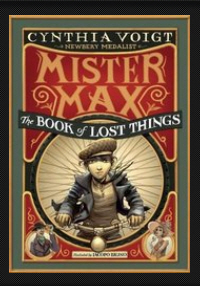
mistermaxNewbery medalist Cynthia Voigt (“Kingdom,” “Tillerman” and “Bad Girls” series) brings her considerable storytelling experience to an inventive adventure with a unique and resourceful protagonist. Intended for readers from 8-12, Mister Max: The Book of Lost Things is the first in a planned trilogy about the likeable and realistically drawn twelve-year-old Maximilian Starling.

Day to day, he’s just Max, a schoolboy who doesn’t quite fit in with his peers because his parents are larger-than-life and excessively flamboyant theater people who find drama in everything. Just Max is just “different.” Max’s has a nagging problem: his parents are lost. They’re lost as in missing, misplaced, misunderstood, potentially kidnapped, or enacting a drama without due regard to Max who’s been left behind in an empty house.

Fortunately, his grandmother lives nearby. Unfortunately she is, in Max’s opinion, inclined to be bossy. They agree, however, that it’s better for Max’s school to assume Max is on a trip with his parents. After all, that was the plan before William and Mary Starling of the Starling Theatrical Company disappeared. Grammie and Max also agree that the authorities, whoever they may be, need not know about Max’s mostly empty house.

Readers will identify with Max because, like any twelve-year-old with lost parents, Max is a bit overwhelmed by the questions and emotions racing through his head. However, he is determined to meet the challenges of independence head on. He needs money and that means he needs a job even though nobody seems to be hiring twelve-year-old applicants without experience.

Voigt has blessed her protagonist with a skill he doesn’t immediately see has having any value outside the walls of the Starling Theatrical Company: he knows about roles and costumes. While he doesn’t really want to call himself a private detective, the world of roles and costumes and his preoccupation with that which is lost make him adept at helping others–at a reasonable fee–find what they need to find.

The story is filled with memorable characters, humor and a series of lost and found adventures that will stir up the imaginations of young readers who might speculate about what they would do if their parents were lost. Voigt’s words, which (figuratively, of course) dance and sparkle on the page, are supported by Iacopo Bruno’s magical illustrations.

The illustrations and plot twists bring a heady 19th-century daring-do to a story that sweeps toward a suitably over-the-top cliffhanger ending that should satisfy readers while Voigt decides how Max is going to find his way out of his next dilemma. Young readers will find that Mister Max is filled with wonder, mystery and plenty of adventure.

Malcolm R. Campbell is the author of contemporary fantasy short stories and novels including “The Seeker” and “Emily’s Stories.”

On location: Glacier Park’s Iceberg Lake

I used Glacier National Park’s Iceberg Lake in “High Country Painter,” of the three short stories in my family-oriented e-book/audio book Emily’s Stories.

Where Is It?

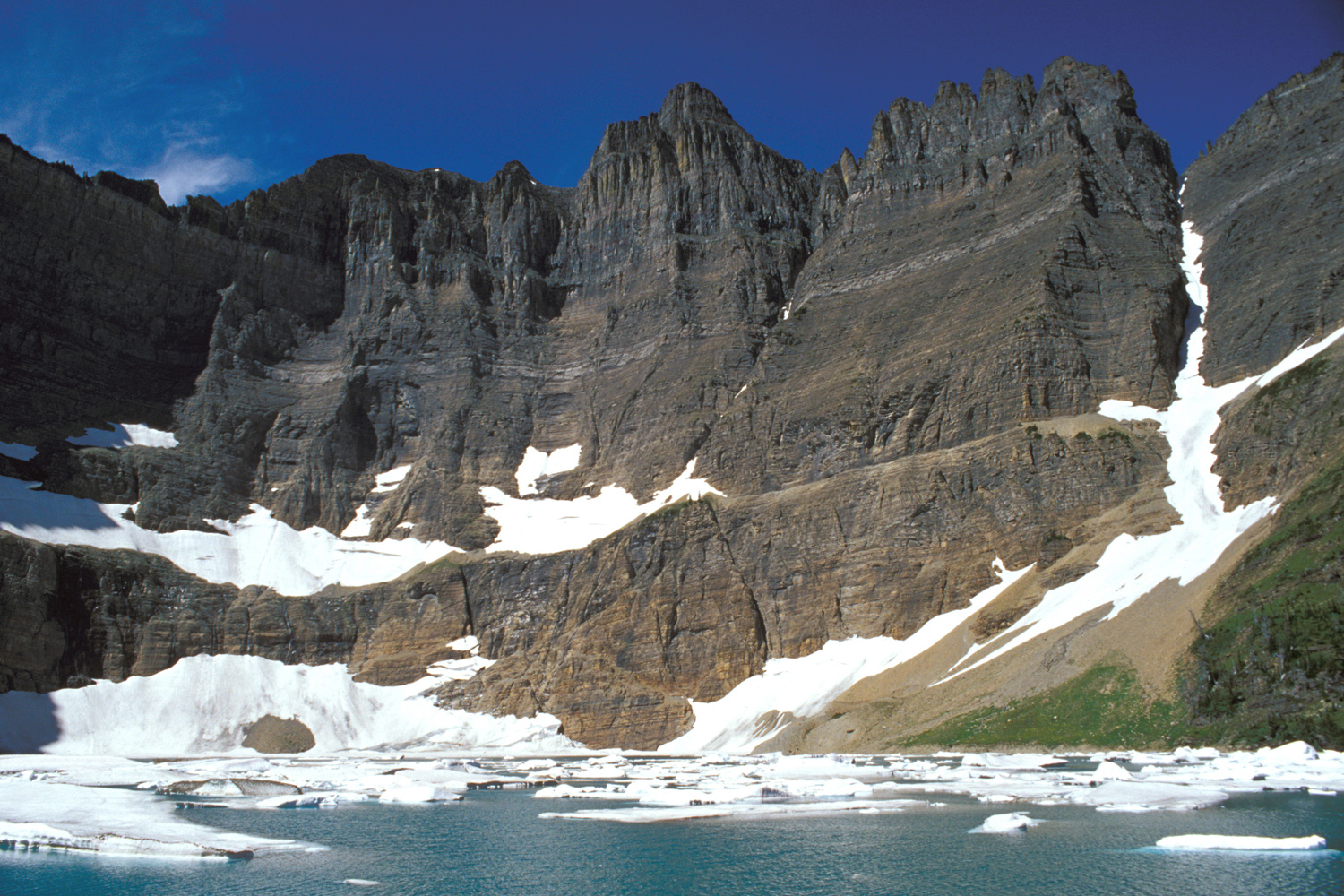
icebergmapIceberg Lake is a 5.9- mile hike from Many Glacier Hotel on the east side of Montana’s Glacier National Park. The lake, which is frozen over during the winter months, is named for the chunks of ice that float in it throughout the summer. It’s one of the most popular trails in the area.

En route to the lake from the hotel, the elevation increases 1,200 feet, however most of the uphill sections of the trail are gradual. For those who haven’t yet gotten used to the elevation or long walks, the hike provides a half-day of exercise.

In his book The Best of Glacier National Park, Alan Leftbridge lists Iceberg Lake as one as one of Glacier’s seven best day hikes. His level of difficulty for the hike is moderate. Hiking in Glacier calls the hike strenuous. (I guess it depends of whether or not one is out of shape!) If you don’t have a hiking guidebook, this web site provides a good overview of the trip.

How I Used it In the Story

Trail to Iceberg Lake - Photo by GlacierGuyMT
Trail to Iceberg Lake – Photo by GlacierGuyMT

Young Emily Walker and her family travel from Florida to Glacier National Park for a family vacation. She accompanies her father on the hike while her mother spends the day around  the hotel. Since she occasionally talks to birds and spirits, she knows something unusual will happen at the lake.

Why I Used the Lake

Iceberg Lake
Iceberg Lake

Emily and her father are used to the sinkhole lakes and blackwater rivers in the Florida Panhandle. I wanted to put them into a new environment. The arête in the picture is called the Garden Wall and it not only provides a lot of ice and snow to look at, but frequent mountain goats as well.

The lake sits in a cirque, a carved-out bowl left by ancient glaciers, and since it’s such a popular spot, hikers will  almost always find ground squirrels and chipmunks there begging for food. The lake sits in bear country, so it’s always good to check with the rangers for to see if there have been any grizzly bears in the area before you begin your hike.

The hike also features many wild flowers as well as some very different views of the mountains than one sees from the hotel. There are good views of many rock formations and other features of glaciation,

The first mile of the hike is on the paved road that connects the hotel complex to the camp store and the campground; park your car at the store to save a bit of walking.

Excerpt from Emily’s Stories

Available on Kindle and as an audio book

The horizon was hidden by a grey wall of rock which, according to the pack, also concealed incoming storms; now, carrying rain jackets on a sunny day made sense. By the time they passed the noisy waterfall and strolled through lacey-white bear grass (without bears) and scattered Indian paintbrush that gentled the grey rock (“limestone,” her dad said, descriptively), Emily was ready for lunch.

Deep snow lay hard-packed around the lake’s far shore where the limestone wall created a playground for mountain goats running across their grey and white world as nimbly as Southern chameleons ran along the Walters’ brick house. Sunny Florida was, as advertised, sunny and hot, but here deep summer had only melted the ice off half of the lake’s surface.

“I am astonished,” said Emily, dropping her knapsack on the ground and running down to the water. The water was as cold as it looked.

“Punkin, ‘astonished’ is a new word for you,” her dad said. He knelt down and splashed water over his
face.

Summing Everything Up

My teenaged protagonist talks to birds and spirits, so her stories are always set outdoors. Like other visitors to the hotel, the hike to the lake is one she would probably take. It provides great scenery for Emily to experience with her father as long with the possibility a bear might appear.

I worked at the hotel as a bellman for two summers and walked up to this lake many times. Using it in the story is an example of a writer writing what he knows.

Malcolm