Those of us who delivered Western Union telegrams on our bicycles occasionally got stuck with a singing telegram: usually “Happy Birthday.” While Western Union, mostly associated these days with transferring money, brought back the service in in 2011, telegrams as they had been known for many years cased in 2006.
I delivered telegrams in the 1960s when the service was still in demand due to the high prices of long distance calls in those days. There were Candygrammes, of course, and messages that required WU to sing. Frankly, I preferred it when the telegraphers at the local office–who looked like character actors out of “Medicine Woman” or “Gunsmoke” or “High Noon”–gathered around a telephone and sang “Happy Birthday” to the person receiving the message.
I didn’t care for singing telegrams when I had to deliver one, stand there on the doorstep, and sing “Happy Birthday” to the recipient. Oddly enough, I got more applause in African American neighborhoods than White Neighborhoods because: (a) I was the only white boy who ever came there, and (b) because I was signing on somebody’s front porch to a growing audience of neighbors who were amused at such an uncommon sight.
They liked my spunk, I think, for pretending to be able to sing. My singing has always been marginal, and I think the telegram’s recipient (and all those in adjoining houses) always knew that. But I gave it a shot and, over time, was more or less a fixture of the neighborhood on my old three-speed bike and my yellow Western Union badge.
Those who seldom got telegrams assumed they brought bad news. I enjoyed handing over a Candygram because it wasn’t a frightening thing. Singing, I could do without. When the telegram brought bad news, I was often asked to read it and sometimes write down the recipient’s reply. Those intensely personal encounters with strangers were almost too intense to carry home at the end of my shift.
I was a ham radio operator in those days and wished most of those getting telegrams would communicate with their family and friends directly and leave me out of the loop–especially when the news wasn’t good. Plus, Morse code was so much easier than signing for those of us who were tone deaf.
Most people are scared to answer that question. In fact, they’re down right superstitious about even hearing the question.
Those who do answer the question tend to say either: (a) I would smite so and so, or (b) I would create world peace. Smiting a bad guy is easy. Creating world peace is easier said than done because there are too many variables involved for a mere human to deal with.
Okay, here’s where you find out that’s a trick question.
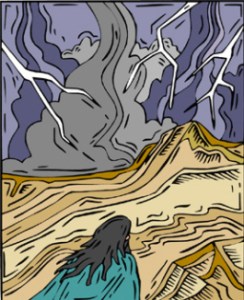
Those who aren’t writers often say that within any given novel, the author is a god. S/he can smite everyone who needs smiting and decree world peace without having to worry about the mechanics of it.
There are risks of acting too God like while writing a novel or a short story. Presumably, God (Himself and/or Herself) doesn’t have to worry about bad press whenever He or She manifests and Act of God. Human beings, being what they are, tend to believe that if an Act of God occurs and it’s bad, it must be their fault. They sinned, and so an Act of God paid them back.
If a writer puts an Act of God into his/her story, chances are nobody will believe it and the author will be paid back with a slew of one-star reviews on Amazon, and God help him or her if the book sells well enough to attract the attention of critics who will say, “The book was a wondrous sweeping saga until the last chapter when the good guys were trapped and suddenly–without warning or proper foreshadowing–a tsunami kills all the bad guys.”
Critics and readers alike will say, “I hate it when that happens.”
Basically, critics and readers don’t want the author to play God as s/he writes because the resulting story is unsatisfying, outside the reality of the novel, an example of the author writing himself/herself into a hole and cheating to get out of it, and other nasty criticisms.
Readers, frankly, are never willing to say that the author moves in mysterious ways and let it go at that. Authors who move in mysterious ways are variously bad, experimental, sinful, crazy, or tetched. Critics and readers typically want more order than authors want. They want the books they read to be safe and to fit within the world as they see it.
The bottom line is, the author can’t play God and has to let the story unfold however it unfolds. If you–as the author–step in and take any action whatsoever, it has to be sneaky and impossible for critics and readers to detect.
So, the author’s answer to the question “If you were God, what would you do next?” is “Little to nothing.”
That’s the reality of being an author. You have the power, but you can’t use it.
Splattering probably makes most people think of the crime writer’s ever popular “blood splattered room” or the seaside bombardments of sea gulls. However, I slightly altered the title (Smatterings) that author J. T. Ellison (I like her books) uses on Sundays for a potpourri overview of the previous week.
I don’t think this post will live up to any of that. (You’ve been warned.)
Those who follow my personal profile on Facebook know that my wife does a lot of quilting and that in the evenings I sit in the sewing room while she works and watch old movies. On Facebook, I refer to these as our quilting movies.
Wikipedia Photo
Recently, we watched an old navy movie called “Destroyer” starring Glen Ford and Edward G. Robinson about an ex-navy man (Robinson) who works in the shipyard building a new destroyer and then rejoins the navy as a chief petty officer. He quickly finds out he’s out of touch. Since I was in the navy, I have fun watching these old ships-at-sea movies, though in this one, it was weird seeing tough-guy Robinson as a navy chief rather than a mobster. I saw a few accuracy problems with the film, including non-commissioned personnel saying “aye aye sir” to other non-commissioner personnel and the crew of the ship wearing navy dress whites once in a while at sea. Fun movie.
Our discussions on the new Literary Forum are slowly drawing in more people who like to talk about the books they’re reading or the books they’re writing. I hope you’ll stop by and join the discussion.
Finally, the three Thursday night shows my wife and I watch have returned after being on hiatus during the holidays: “Grey’s Anatomy,” “Scandal,” and “How to Get Away With Murder.” “Grey’s” is getting a bit worn out by now since it’s been around a while, and “Scandal” and “How To Get Away with Murder” are ending after this season. “How to Get Away With Murder” has such a tangled plot that my wife and I believe we know less about what’s going on with each new episode.
If you haven’t been watching the series up to now, forget it. You’ll never catch up.
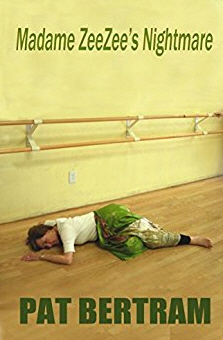
I had fun reading and blogging about the mystery/thriller Madame ZeeZee’s Nightmare this past week. I started reading the book before I went to sleep one night and continued reading it the following day–all day, as it turns out. I was supposed to be working on Lena, the third book in my Florida Folk Magic series, but was reading Pat’s book instead. My story–and I’d sticking to it–is that I reserved a break. Time well spent!
I’m drinking a glass of red wine right now because, frankly, I don’t care whether it’s 5:00 o’clock anywhere. I urge you to do the same because red wine is a medicine that makes us better persons.
If you’re taking a dance class and its members find out you’re a writer and ask you to write a murder mystery about the class, what will you do? I happen to know author Pat Bertram has been taking a dance class or two or three and that her friends thought such a novel would be a real hoot.
That said, I’m surprised that Pat’s publisher didn’t put a disclaimer at the beginning of the novel that claimed “No dance class members were killed during the writing of this book.” But, Pat and her publisher Indigo Sea Press threw caution to the winds, so one wonders where the fiction begins and the truth ends–and vice versa.
The result is a very readable hoot.
When the students at a small town’s studio class find out that one of them is an author, they think it would be fun for her to write a novel about their classes in which one is killed and everybody else is a suspect. A superstitious person would know such games lead to real trouble; so would anyone who suspects the fates have a dark sense of humor. But they don’t stop to think about consequences. One of them even volunteers to be the victim. The rest of them talk about motives and murder methods.
But then somebody dies and the book thing is no longer a game. Suffice it to say, the cops are not amused by the book idea and think the writer is the killer. In this dandy mystery, everyone has a secret, a reason for covering it up, and a possible motive. The characters are well developed, the introspective protagonist wonders if she inadvertently set the stage for a murder by agreeing to write a murder mystery based on the dance class, and the cops tell her that in real life, most amateur sleuths and up dead or worse.
Readers who love mysteries will enjoy this book. Writers who write mysteries will consider being more careful when pretending to kill off their friends in a novel. And those who’ve been thinking of taking a dance class will see the story as a cautionary tale.
Pat (More Deaths Than One, Daughter I Am) has, with Madame ZeeZee’s Nightmare, written another compelling story.
Washington, D.C. January 19, 2018, Star-Gazer News Service–Angry about the looming government shutdown, Congress passed a wordy new law that imposed strict limits on the number of words Representatives and Senators are allowed to use each year.
Called the “Sit Down and Shut the Hell Up Law” by supporters, the bill restricts all members of Congress to 10,000 words per year, with 5,000-word bonuses for each co-sponsored bill that actually becomes a law instead of getting “bogged down in squabbling.”
“This is a results-oriented law,” said Senator John Doe (Whig-Florida), “because it forces people who are not popes to stop pontificating at taxpayer expense.”
According to informed sources, Congress passed the legislation in a snit over years of gridlock and now they’re stuck with it.
“Most Senators are playing a ‘mum’s the word’ game with reporters because the new law was unclear about which words count and which don’t count in the annual tallies,” said John Doe’s chief of staff Sally Doe since her words are not limited by the law.
A whitepaper released by Acme, a Washington, D. C. think tank that emerged after ten years of thoughtlessness, said that a longitudinal study of lawmakers’ words and deeds showed that most Senators and Representatives “obfuscated the issues by talking out of both sides of their mouths at the same time.”
“The general public is paying high salaries with lavish benefits packages to these clowns (AKA Senators and Representatives) to help govern the nation, not to talk about governing the nation,” said Acme CEO Bill Smith. “We will have a safer, more-effectively managed country by issuing sticks and stones to lawmakers rather than providing a forum for endless ‘pick a little, talk a little’ debate.”
Word-counts will be posted daily in the Congressional Record, including the sources of the words, that is, speeches on the floor, committee debates, quotes given to reporters, leaks of all kinds, and notes scribbled on bar napkins.
–
Story by Jock Stewart, Special Investigative Reporter
“I love blogging and blogging has loved me back. I’ve been offered paid freelance writing gigs and paid speaking engagements because of my blogs and I’ve used the See Jane Write blog to grow a small women’s writing group into an award-winning business. A blog can also be a great way to build an audience for the book you want to write.
“Make 2018 the year you finally launch (or relaunch) your website and blog. Here’s a guide to get you started.”
From time to time, people see that I’ve been blogging for many years and ask me how to start a blog. Seriously, folks, I’m not the one to ask because I break too many of the rules and/or some aspects of blogging don’t interest me.
However, Javacia Harris Bowser does know how to blog and offers one of the best overviews about getting started. She begins with domain name and theme considerations and works her way through the steps to having consistent content. (I’m inconsistent, but I see that consistency is better for most bloggers.
If you’re serious about writing a blog, See Jane Write before you do anything else.
I don’t know whether writing is an addiction, a calling, or just one job out of the many we could have chosen. The down side to writing novels is that if one doesn’t become famous or sort of famous, there’s no money in it. I often wish I’d become a freelance writer with a lot of magazine and newspaper writing opportunities.
I’d be earning a living with my words even though it wouldn’t be James Patterson, Dan Brown or Nora Roberts kind of money. Since I write contemporary fantasy and magical realism, it’s a paradox that the money I did make from writing came from writing computer documentation and help files. I can be intensely logical when I want to, so my user manuals were always well thought of.
The thing is, being intensely logical isn’t the real me. In fact, though I often rely on it, I’m not a fan of logic because I think it gives us an inaccurate picture of the world. While I was working on my novel-in-progress today, I thought of all this. I thought, “why do writers have to write” and “There must be another occupation that pays better.”
Like being a grave digger, maybe.
I thank the writing gods and the muses that I don’t want to write poetry. Good Lord, there’s a thankless task, more thankless than writing novels. I admire poetry, but really, I can’t write it and don’t ever buy books and magazines filled with it. I grieve for the poets.
But I also mourn the fact that writing novels is partly skill and craft and partly a popularity contest. If your name is James Patterson or John Grisham, you make money no matter what you do. Everyone else is ignored by reviewers and bookstores and don’t really want to tell friends they write novels because they’ll say they’ve never heard of them.
Early on, I wanted to work for the railroads. That would have been a much safer choice. I like trains, I really do. I was once a volunteer at a railway museum. Most of us there were jealous of the people who worked for Amtrak or the freight railroads. Whether they loved their jobs or not, they made a living wage. Writers don’t. But we keep writing because, in many ways, writing is not only a lot of fun, it’s a career we can’t do without.
So, maybe writing is an addiction.
But, it’s a fun addition once you realize there’s not going to be any money in it anymore than few of those who play little league baseball are going to end up playing for a major league team and being selected for the All Star Game.
If you’re an aspiring writer, I know this post doesn’t sound very encouraging. As Patti Smith acknowledged in M Train, writers are bums. So, it’s best to know that’s the reality of the biz at the outset.
There’s so much writing advice on the Internet that I’m often cynical about it, viewing much of it as being like those bottles of patent medicine that used to be sold from the backs of wagons years ago. But sometimes I find something worthy passing along. (See item 1.)
Writing Tip: How to Grow as a Writer, by Eva Deverell – “I firmly believe that as long as you’re willing to put in the work and play the long game, you can improve your writing – just like you can improve any other skill – and grow into a great writer. Here are some areas you might want to focus on…” Eva Deverell
News: Author Of The Other ‘Fire And Fury’ Book Says Business Is Booming, by Ari Shapiro and Kelley McEvers – “Hansen’s book is Fire And Fury: The Allied Bombing Of Germany 1942-1945. The beginning of that title “Fire and Fury” is the same as that of journalist and author Michael Wolff’s new exposé about the Trump administration, Fire And Fury: Inside The Trump White House.” (Suddenly, it’s selling well.) NPR
Essay: Man As God: ‘Frankenstein’ Turns 200, by Marcello Gleiser – “Perhaps Frankenstein’s 200th anniversary should be celebrated with a worldwide effort to build safeguards so that scientific research that attempts to create new life, or to modify existing life in fundamental ways, gets regulated and controlled. This includes CRISPR, a new technology capable of editing and modifying genomes. As with so many scientific developments, it has great promise and the potential for good and evil. At the most extreme, it offers the possibility of modifying the human species as a whole, a sort of final Frankenstein take over.” – NPR
Wikipedia photo
Interview: Natasha Trethewey: Say It, Say It Again, with Rob Weinert-Kendt – “Poet Natasha Trethewey’s Pulitzer-winning 2007 collection Native Guard, which partly memorialized an African-American Civil War soldier protecting a Union-captured fort on Ship Island, Miss., was first turned into a stage work in 2014 at the Alliance Theatre. It returns Jan. 13-Feb. 4. Trethewey was U.S. poet laureate from 2012 to 2014.” American Theater
Quotation: “But to speak strictly as a writer, I wouldn’t be where I am if not for independent bookstores. My first book, Drown, stayed alive, and in turn kept my career alive, because independent booksellers continued to put the book in people’s hands long after everyone else had forgotten it. For 11 years, I had no other book and yet indie booksellers kept their faith in me. To them, I owe very much. I’ll definitely be in a lot of indie bookstores on this tour, as many as will have me.” – Junot Díaz in Shelf Awareness
Review: THE ALICE NETWORK: The story of a spy, by Kate Quinn, reviewed by Matthew Jackson – “Historical fiction is all about blending the original with the familiar, about those delicate new stitches woven into the tapestry. The best practitioners of this often subtle art can sew those new threads without ever breaking the pattern, until the new and the old, the real and the fictional, are one and the same. With her latest novel, Kate Quinn announces herself as one of the best artists of the genre.” Book Page
Essay: Has Ann Quin’s time come at last? by Jonathan Coe – “The experimental writer, who committed suicide aged 37, was disregarded in her lifetime. But her strange staccato style now seems quite in vogue.” The Spectator
Review: The Forgetting Tree: A Rememory, by Rae Paris, Reviewed by Bruce Jacobs – avored with both vulnerable hesitation and uncompromising resolution, poet and essayist Rae Paris’s debut, The Forgetting Tree, is the memoir of a young black woman’s search to understand her personal and racial past. In a journey of backwards migration, Paris leaves her past in the Los Angeles streets south of Compton on a road trip into her family’s roots in New Orleans. From there she crisscrosses the South to uncover the raw truth of slavery, segregation and racism at former plantations, cemeteries, Klan meeting houses, civil rights battlegrounds, lynching trees and graves of both famous and unnamed black ancestors.” Shelf Awareness
“If I write in the present yet digress, is that real time? Real time, I reasoned, cannot be divided into sections like numbers of the face of a clock. If I write about the past as I simultaneously dwell in the present, am I still in real time. Perhaps there is no past or future, only the perpetual present that contains this trinity of memory.”
– Patti Smith in “M Train”
Writers are seldom in real time. We’re writing about yesterday or years ago and we’re writing about tomorrow and aeons into the future, creating time machines with words. If I’m sitting in a room in the purported here and now and you walk in and sit down in a vacant chair, you may soon observe that I’m not really there; I’ve gone deep into the past where time and space are so real that I can taste her breath in my mouth while noticing that the color of her lipstick matches the color of the dawn’s “sailor take warning sky.”
Patti Smith follows–figuratively speaking in her own time–the gurus who postulate an “eternal now.” Interesting, perhaps true, but that concept doesn’t help us get to work on time or remember when to feed the cats. Time used to be all mixed up before the railroads created time zones at high noon on November 8, 1883. Before that, time was a roll-your-own approximation of the sun, moon, stars and custom. But, you cannot run a railroad–other than the Polar Express–through roll your own or the eternal now.
As the New York Times said looking back at the date and time in 1983, “Some citizens grumbled about ‘railroad tyranny’ and tampering with ‘God’s time.’ The Mayor of Bangor, Me., deplored the change as an ‘attempt to change the immutable laws of God Almighty.’ The Indiana Sentinel lamented, ‘The sun is no longer boss of the job.'”
I’m reminded of the verse in Isaac Watts’s old hymn “Our God, Our Help in Ages Past”:
A thousand ages in Thy sight Are like an evening gone, Short as the watch that ends the night Before the rising sun.
That verse made quite an impression on me the first time I sang it in church. I felt small, awash in an almost-timeless universe, awash in the power of my own thoughts and words to take me away from the “now”–as defined by the railroads–into fluid moments so far away most people have forgotten them or not yet imagined them.
When a writer writes, the time is always now or, if not now, whatever we say it is. From time to time, I ask people, “Is it yesterday yet?” Nobody seems to know. They haven’t yet noticed that the right creative thought and/or the well written book will take them into yesterday with or without clocks and time zones.
I guess people notice the eternal now when they read and become lost in the story. Writers are always lost in the story, and I think that’s a blessing even though it plays hell with temporal appointments ruled by clocks.
1960 movie poster
When I read H. G. Wells’ novel The Time Machine, I thought what a wonderful invention that would be, this long before “Star Trek” invented the “temporal prime directive” stating that the people in our time couldn’t tamper with the people in another time. Science fiction writers love playing with the notion that if a person simply strolls through the past, his/her presence there might change the world. What would happen to you if you accidentally killed your great great grandfather?
If there really is an eternal now, then the answer to that question is probably “nothing.” For years, writers have wondered if a time machine might make it possible to “go back” and save President Lincoln. Some say that, had he lived, reconstruction wouldn’t have become the hellish mess that it was. A character in Stephen King’s 11/22/63 figures out how to return to Dallas on the date in question and save President Kennedy. The world resulting from that was a horrible mess, darker than the dark ages. As it turns out, playing God is dangerous because we don’t know what God knows in the “evening gone” since Lincoln and Kennedy were shot.”
Yet, when we write, we are playing God. Sometimes I wonder if our play is confined to the pages of our novels. Perhaps our stories have impacts we can’t imagine and will never know. Best we can do is hope that our muses keep us on the straight and narrow so that we always write the right thing when the time is right.
–Malcolm
Malcolm R. Campbell is the author of magical realism and contemporary fantasy novels, a fact that shouldn’t surprise you after reading this post.
“Interior monologue, in dramatic and nondramatic fiction, narrative technique that exhibits the thoughts passing through the minds of the protagonists. These ideas may be either loosely related impressions approaching free association or more rationally structured sequences of thought and emotion.” – Encyclopaedia Britannica
True stream-of-consciousness fiction can yield a lot of exciting passages about a character’s inner life (which s/he may or may not confuse with reality) as well as plot-advancing impressions that mesh well with the story line.
When I think of “too much interior monologue,” I’m not bashing well-written stream of consciousness techniques in spite of the fact that readers who don’t like literary fiction will hand out one- and two-star reviews for such novels on Amazon. When an author’s protagonist thinks about the situation s/he is in, that’s interior monologue.
Naturally, it’s normal and relevant to think about the situations we’re in. On the other hand, when this thinking does on for hundreds of words in multiple places in a novel, then it is likely to ruin the story. Writers are told that most of what they put in a novel should advance the plot. Overused interior monologue doesn’t advance the plot: instead it puts the plot on hold.
I just finished reading a novel with an interesting plot. A protagonist with a history of panic attacks which s/he manages with prescription medication (as much as possible) undergoes a traumatic experience before being put into an unrelated but more dangerous situation where her life and the lives of others is at risk.
I’m not going to identify the novel or even count the number of words in it and compute what percentage of it is plot-stalling interior monologue. My impression, though, is that 40% of the novel is interior monologue along the lines of. . .I need to keep my self from screaming. . .I need to relax. . .maybe I didn’t see what I think I saw. . .can I trust person XYZ. . .maybe if I told my story and/or got certain people to trust me, they would believe me and/or help me.
Stop Talking to Yourself and Do Something!
A little bit of this is fine. But when it goes on and on and on, there’s really nothing happening. Yes, maybe this would happen in real life, but writers are also told that writing fiction that copies real life–as a 24/7 video camera might view it–is bad because a lot of that real life stuff is trivial. In the novel I just finished, the character’s fight to keep her panic under control and her considerations about what may or may not be happening can be conveyed to the reader much faster.
When I see excessive amounts of interior monologue, my first thought is that the writer doesn’t really have enough depth in the plot to make a novel. That is, there are two few events and dialogue passages to sustain a book-length story. So, the interior monologue pads the length of the book out to the minimum number of words the author or publisher feels are necessary to call the book a novel rather than a short story, novelette, or novella.
I liked the plot of the novel I just finished. I liked the satisfactory ending and the fact that the protagonist’s experience ended up making her a stronger person ready to take stock of a lot of decisions about her life that had been stalled. I think it’s a shame, though, that the story was dragged down by the interior monologue instead of being pushed forward with a greater number of plot elements.
Dan Brown’s “Teaching Moments” Come to Mind
Dan Brown and others who write novels about ancient secrets with a modern twist to them are often criticized for stopping the action through the insertion of a lot of exposition in which one character tells another character what the ancient secrets are all about. This is a slick way of telling the reader what those secrets are about. If you were going to write a spoof of such books, you’d have one character pull a knife on another character and then–so to speak–freeze the action while the character tells somebody else why all this matters (for, say, a thousand words) and then go back to the knife fight.
That really tears apart the pacing of the action. It’s also very frustrating to the reader. Excessive interior monologue has the same negative impacts.
–Malcolm
Malcolm R. Campbell is the author of “Conjure Woman’s Cat,” “Eulalie and Washerwoman,” and other magical realism and fantasy novels.
 I delivered telegrams in the 1960s when the service was still in demand due to the high prices of long distance calls in those days. There were Candygrammes, of course, and messages that required WU to sing. Frankly, I preferred it when the telegraphers at the local office–who looked like character actors out of “Medicine Woman” or “Gunsmoke” or “High Noon”–gathered around a telephone and sang “Happy Birthday” to the person receiving the message.
 Those who aren’t writers often say that within any given novel, the author is a god. S/he can smite everyone who needs smiting and decree world peace without having to worry about the mechanics of it.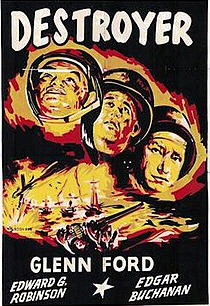


 Called the “Sit Down and Shut the Hell Up Law” by supporters, the bill restricts all members of Congress to 10,000 words per year, with 5,000-word bonuses for each co-sponsored bill that actually becomes a law instead of getting “bogged down in squabbling.”
 From time to time, people see that I’ve been blogging for many years and ask me how to start a blog. Seriously, folks, I’m not the one to ask because I break too many of the rules and/or some aspects of blogging don’t interest me.
 I’d be earning a living with my words even though it wouldn’t be James Patterson, Dan Brown or Nora Roberts kind of money. Since I write contemporary fantasy and magical realism, it’s a paradox that the money I did make from writing came from writing computer documentation and help files. I can be intensely logical when I want to, so my user manuals were always well thought of.
 There’s so much writing advice on the Internet that I’m often cynical about it, viewing much of it as being like those bottles of patent medicine that used to be sold from the backs of wagons years ago. But sometimes I find something worthy passing along. (See item 1.)


 As the New York Times said looking back at the date and time in 1983, “Some citizens grumbled about ‘railroad tyranny’ and tampering with ‘God’s time.’ The Mayor of Bangor, Me., deplored the change as an ‘attempt to change the immutable laws of God Almighty.’ The Indiana Sentinel lamented, ‘The sun is no longer boss of the job.'”
 When I think of “too much interior monologue,” I’m not bashing well-written stream of consciousness techniques in spite of the fact that readers who don’t like literary fiction will hand out one- and two-star reviews for such novels on Amazon. When an author’s protagonist thinks about the situation s/he is in, that’s interior monologue.
 Malcolm's Round Table