Some of my favorite ending lines from novels.

Some novels end with a bone-crushing final line that drives the story home. Other novels’ final lines seem to be a simple slice of life, reminding me of Woody Allen movies where the screen goes black and he rolls the credits. Huh? Did we lose a reel? How is the show over? While I don’t think novels need to end with anything akin to the punch line of a joke that–were it missing–the rest of the thing would fall away, I do like something memorable.

When I did first lines several posts ago, I made it a quiz. Well, heck, it’s the weekend, so I’ll just tell you straight out where these gems came from. I think that’s more than fair.

  • So we beat on, boats against the current, borne back ceaselessly into the past. –F. Scott Fitzgerald, The Great Gatsby
  • He loved Big Brother. –George Orwell, 1984
  • Before reaching the final line, however, he had already understood that he would never leave that room, for it was foreseen that the city of mirrors (or mirages) would be wiped out by the wind and exiled from the memory of men at the precise moment when Aureliano Babilonia would finish deciphering the parchments, and that everything written on them was unrepeatable since time immemorial and forever more, because races condemned to one hundred years of solitude did not have a second opportunity on earth. –Gabriel García Márquez, One Hundred Years
    of Solitude
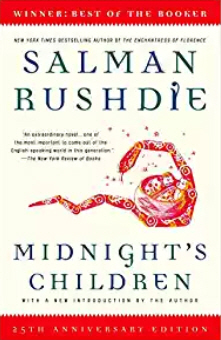
  • Yes, they will trample me underfoot, the numbers marching one two three, four
    hundred million five hundred six, reducing me to specks of voiceless dust, just as,
    in all good time, they will trample my son who is not my son, and his son who will
    not be his, and his who will not be his, until the thousand and first generation, until
    a thousand and one midnights have bestowed their terrible gifts and a thousand
    and one children have died, because it is the privilege and the curse of midnight’s
    children to be both masters and victims of their times, to forsake privacy and be
    sucked into the annihilating whirlpool of the multitudes, and to be unable to live or
    die in peace. –Salman Rushdie, Midnight’s Children
  • The creatures outside looked from pig to man, and from man to pig, and from
    pig to man again; but already it was impossible to say which was which. –George
    Orwell, Animal Farm
  • But wherever they go, and whatever happens to them on the way, in that
    enchanted place on the top of the Forest, a little boy and his Bear will always be
    playing. –A. A. Milne, The House at Pooh Corner
  • Go, my book, and help destroy the world as it is.” –Russell Banks, Continental Drift
  • But that is another tale, and as I said in the beginning, this is just a story meant to be read in bed in an old house on a rainy night. –John Cheever, Oh What a Paradise It Seems
  • Tomorrow, I’ll think of some way to get him back. After all, tomorrow is another day. –Margaret Mitchell, Gone With the Wind
  • . . . and then he asked me would I yes to say yes my mountain flower and first I put my arms around him yes and drew him down to me so he could feel my breasts all perfume yes and his heart was going like mad and yes I said yes I will Yes. –James Joyce, Ulysses

I’m ending with the last line of Ulysses because Joyce is my favorite author and I especially like the way this line brings the story to a very suitable conclusion. We all know the last line of Gone With the Wind. And, even if we don’t remember reading Animal Farm, that ending will make us cringe. Márquez and Rushdie are a bit long-winded, but in both cases, by the time you get to the ends of their stories, you see that these lines are fitting.

If you were writing this post, what last lines would you have included?

–Malcolm

Malcolm R. Campbell is the author of Conjure Woman’s Cat and Eulalie and Washerwoman.


Writers on the lookout for local color

Authors like me who infuse local color–legends, myths, ghost stories, oral history–into their stories are always on the lookout for books and sites that lead them to more good stuff

Historian Dale Cox who lives in the Florida Panhandle has done more than his fair share of capturing local history and local color in books and websites. This book Two Egg, Florida: A Collection of Ghost Stories, Legends and Unusual Facts is a good example of the kind of resource I look for. 

I grew up near Two Egg, saw it numerous times, and knew about half the tales and facts in this book before I bought it. But Cox’s research helps nail everything down, providing new wrinkles I wasn’t aware of as well as tales I hadn’t heard.

Since I write magical realism, I see the location and its legends almost like one of the characters. Of course, my human characters treat the myths and legends as real because that’s how magical realism works.

They really believe Bellamy Bridge has a ghost, that there might be some truth in the notion that the bluffs along the Apalachicola north of Bristol might have been the Biblical Garden of Eden, and that Two-Toed Tom and the Swamp Booger are out there in the dark waiting for an ignorant person to stumble into their clutches.

My library includes many books like this one by Dale Cox, and for the realism side of my novels, books about north Florida’s flora and fauna and history. Sometimes the research is even more fun than the writing.

Malcolm

Soon, I’ll release a new novel (“Lena”) to go along with “Conjure Woman’s Cat’ and “Eulalie and Washerwoman.”

How many of these famous first lines do you know?

This is a pop quiz. Sure, you can copy and paste these lines into a Google search or look at the answers at the bottom of the page. But you won’t will you?

  1. In my earliest memory, my grandfather is bald as a stone and he takes me to see the tigers.
  2. A screaming comes across the sky.
  3. It is a truth universally acknowledged, that a single man in possession of a good fortune, must be in want of a wife.
  4. It was a queer, sultry summer, the summer they executed the Rosenbergs, and I didn’t know what I was doing in New York.
  5. Mother died today. Or maybe yesterday; I can’t be sure.
  6. It was a bright cold day in April, and the clocks were striking thirteen.
  7. The sky above the port was the color of television, tuned to a dead channel.
  8. Ships at a distance have every man’s wish on board.
  9. There was a boy called Eustace Clarence Scrubb, and he almost deserved it.
  10. We started dying before the snow, and like the snow, we continued to fall.
  11. The snow in the mountains was melting and Bunny had been dead for several weeks before we understood the gravity of our situation.
  12. Once upon a time, there was a woman who discovered she had turned into the wrong person.
  13. I was born in the city of Bombay…once upon a time. No, that won’t do, there’s no getting away from the date: I was born in Doctor Narlikar’s Nursing Home on August 15th, 1947. The time matters, too.
  14. Granted: I am an inmate of a mental hospital; my keeper is watching me, he never lets me out of his sight; there’s a peephole in the door, and my keeper’s eye is the shade of brown that can never see through a blue-eyed type like me.

–Malcolm

Annual Noxious Weed Blitz at Glacier National Park

Date: June 25, 2018
Contact: Lauren Alley, 406-888-5838

West Glacier, MT – Join the Crown of the Continent Research Learning Center and Glacier National Park’s restoration and integrated pest management biologist, Dawn LaFleur, for the park’s annual Noxious Weed Blitz. The Weed Blitz is scheduled for Tuesday, July 17, 2018 from 10 am – 4 pm. Participants will meet at the Glacier National Park Community Building in West Glacier.

Participants will learn about the ecological impacts of noxious weeds and how to identify and remove five targeted invasive plant species. Bring your muscles, gloves, appropriate footwear, and drinking water.

Lunch will be provided by the Glacier National Park Conservancy. Please RSVP by July 12, 2018 by emailing glac_citizen_science@nps.gov or calling (406) 888-7986.

If I lived near the park, I’d do this every year to help get rid of weeds, get some exercise, and meet other people who care about the park.

Malcolm

Review: ‘Paris in the Present Tense’ by Mark Helprin

Paris in the Present TenseParis in the Present Tense by Mark Helprin
My rating: 5 of 5 stars

With great love, there is often great loss. Musician, composer and teacher Jules Lacour has, at age seventy-four, experienced both and will continue to do so as long as he can draw breath and hear music. As Helprin’s “In Sunlight and in Shadow” is a love song to New York City,” “Paris in the Present Tense” is a love song to the City of Lights (la Ville Lumière).

Like “In Sunlight and in Shadow,” this novel is non-linear, atmospheric, and a sprawling immersion into the location as viewed by the protagonist, in this case, a man who not only hears music in everyday sights and sounds, but who believes the listener is experiencing the Divine:

“The world had courage, faith, beauty, and love, and it had music, which, although not merely an abstraction, was equal to the greatest abstractions and principles – its power to lift, clarify, and carry the soul forever unmatched.”

Physically fit from daily runs and swims that give him more stamina and a more athletic physique than men half his age, Lacour is pragmatic about health and has a laser-focus on the need to raise money to save his terminally ill grandson. Yet he has a complex past that haunts him to great distraction, an unusual and somewhat chaotic approach to his music students, and the romantic’s ability to fall deeply in love with a woman at a moment’s notice. He owes allegiance to his past and to the here and now and must learn how to juggle memories and defining moments.

This complex character provides more focus and a tighter plot to this novel than what we saw in “In Sunlight and in Shadow” as well as a more satisfying conclusion. The story is beautifully told with shimmering prose that is almost music.

View all my reviews

Malcolm

When did you first know you wanted to be a writer?

Interviewers, especially those who aren’t very creative, inevitably ask emerging writers that question. I don’t think readers care.

Since I don’t like the question, my flip answer is, “When I got too old for the gigolo business.”

My wife and I have seen so many 1940s movies where the characters, when asked why they did something stupid, said, “Well, there was a war on,” that that has become our standard rationale for just about everything.

My father, Laurence, teaching journalism at Florida State University – (State Archives of Florida/Kerce)

I guess that’s my real excuse. Those were desperate times and people did desperate things, blew their savings in a poker game, married somebody in Vegas whom they’d known for twenty minutes, wrote the words “once upon a time” on a scrap of paper grabbed from the clutches of an ill wind on a dark street corner.

Truthfully, I could say that both of my parents were teachers and writers and that they passed the curse down to me. I’m sure a sophisticated DNA test would prove that. They both read a lot of books, and passed that mixed blessing down to me. It’s mixed because it leads to a house full of books.

My folks, who didn’t know anything about the gigolo business or the fact that my life’s work started because there was a war on, were a bit pushy about my writing. When I called home, Mother asked, “Have you been keeping up with your writing?” before she asked how I was or if this was just another call for bail money.

Maybe she knew my distrust of straight answers made me unsuitable for other careers such as the ministry, police work, or counseling. Years before the movie “Fargo” was released, she worried that I’d throw my principles into a wood chipper and become a used car salesman.

She had good reason to worry: I made my worst grades in school in English classes. That never went over well when report cards came out. “My teachers hate me because they think I think I know more than they do.” Mother acknowledged that I might, but said, “I think those teachers are like dogs. They can smell fear.”

She was right about that.

My teachers also smelled lack of interest. I told them I was already fluent in English and shouldn’t have to take it.

Chances are, I have a negative attitude about all this.

Malcolm


This and that, including a cover reveal

  1. When out-of-town people threaten to stop by for a visit, we clean up the house. I just spent an hour cleaning the hall bathroom. Now, it smells like Clorox, Formula 409, Windex, and Lysol. If all that doesn’t give out an inviting aura of cleanliness, I don’t know what does.
  2.  One of the guests, and I won’t mention her name, drinks some kind of fru-fru white wine that can only be purchased in this area at Publix. Frankly, I think the stuff tastes like Kool-aid. But, I drove a hundred miles to the Publix to make sure we have the stuff in stock.
  3. My publisher and I are waiting for the printer’s proof copy of the paperback for Lena so we can figure out when the release date will be. Lena is the third novel in the Florida Folk Magic Series. The artist who did the covers for the first two books wasn’t available for this one. So, we’re quite pleased that our new artist was able to capture the look and feel of the series.
  4. We have fun watching the TV series “Who Do You Think You Are” that involves well-known people tracking down their ancestors. The TV show plus their fame gets these people access to archivists and historians around the world, and that makes us a bit jealous. What’s amusing is that the genealogist always starts the person out with a search on Ancestry.com, something the person seemingly could have done at home before they came on the show. That part ain’t that difficult.
  5. My last post on this blog taught me one thing. Nobody wants to read about James Joyce, much less Finnegans Wake. Okay, I guess I won’t be talking about that any more. <g>
  6. Anyone else here reading Jim Butcher’s Dresden Files series about a wizard who runs a big city detective agency? In a way, once you’ve read one, you’ve read all of them. Nonetheless, they’re addictive: thrills, chills, gore, and humor.
  7. I look forward to the day when real-life politics stops sounding like satire. Jock Stewart, my alter-ego who satirizes politics from time to time on this blog has nothing to write about because “he” can’t come up with anything more outlandish than what the two major parties are saying and doing.

On that note, I think I’ll go back to cleaning up the house.

Malcolm

Briefly noted: ‘A Skeleton Key to Finnegans Wake’

“They lived and laughed and loved and left.” 
― James Joyce, Finnegans Wake

James Joyce is my favorite author, most especially his novels Ulysses and A Portrait of the Artist as a Young Man. With a minor in English, it was only natural and expected that I would study both of these books in school. School didn’t assign Finnegans Wake; perhaps they saved it for English majors and those working on a masters or doctoral degree. Or, perhaps the faculty was scared of the book.

I love the book, possibly for the language and the historical and cultural references and its endless puns and other humor. I also love chaos, and because of this, I suggest that people reading it for the first time should just go with the flow, setting aside worries or concerns about what it all means for a subsequent journey through the masterpiece.

If you want help, there’s help out there. If you want industrial-strength help, one option is Roland McHugh’s Annotations to Finnegans Wake. If you want getting-started help, then the 1944 A Skeleton Key to Finnegans Wake by Joseph Campbell, Henry Morton Robinson, and editor Edmond Epstein will save most of your sanity. Before this book was published, I don’t think readers–or English department professors–thought it was possible for anyone to understand, much less explain Finnegans Wake.

Publisher’s Description: “Since its publication in 1939, countless would-be readers of Finnegans Wake — James Joyce’s masterwork that consumed a third of his life — have given up after a few pages and dismissed it as a ‘perverse triumph of the unintelligible.’ In 1944, a young professor of mythology and literature named Joseph Campbell, working with poet Henry Morton Robinson, wrote the first key or guide to entering the fascinating, disturbing, marvelously rich world of Finnegans Wake. The authors break down Joyce’s abstruse book page by page, stripping the text of much of its obscurity and serving up thoughtful interpretations via footnotes and bracketed commentary. A Skeleton Key was Campbell’s first book, published five years before he wrote his breakthrough Hero with a Thousand Faces.”

In her June 2018 MythBlast| Mythic Mavericks essay on the Joseph Campbell Foundation website, Leigh Melander writes that “For years I have been intrigued with what I perceive as a particularly Celtic sensibility, an ability to dance on the knife’s edge between insight and nonsense, tragedy and comedy, sacred and profane. Not to say that only those of Celtic antecedents have this ability, of course, but there seems to be a profound and specific love for this dance in Celtic myth, story, and literature.”

An apt phrase as the foundation celebrates James Joyce this month, the man–whom I believe–knew how to dance on that knife’s edge. Skeleton Key, says Melander, “Has lasted as the bedrock unlocking of Joyce’s profanely sacred nonsensical insights for generations of scholars and readers.” To be sure, more intensive books have been written in the last 74 years to help readers decypher the the enigma people perceive in this novel, but Campbell’s and Robinson’s work is a sound first step to breaking the code.

Susan G. Hauser wrote in her her “‘Finnegans Wake’ Breakdown,” in Salon that “We had come to realize that reading Finnegans Wake without assistance was akin to crossing the Sahara without a camel.” That’s not a surprising assessment inasmuch as some of the purported best critics in the known universe proclaimed before the ink was drying on the novel’s first edition that it was unintelligible, and later, that it is “the greatest book that nobody’s ever read.”

Hauser says that the group of friends who came together to read, discuss, and understand Joyce’s novel “Began with the same resolute spirit displayed by Stephen Dedalus at the end of ‘A Portrait of the Artist as a Young Man.’ We felt we were doing a noble and brave thing, though we never dared to compare ourselves to the Wake’s first readers. To our mind they were just as courageous as the first people who ever tried eating lobster.”

Perhaps you should read Hauser’s article before you try reading Finnegans Wake. If you are brave–and not one of these people who tends to ask “what’s the worst that could possibly happen?”–and decide to tackle the Wake, you’ll probably order a copy of Skeleton Key after reading the first several pages.

Blind luck might suffice, but I doubt it.

Malcolm R. Campbell

Campbell is the author of the magical realism Florida Folk Magic Series of novels that includes Conjure Woman’s Cat” and “Eulalie and Washerwoman.” Coming soon, the final novel in the trilogy, “Lena.”


Thanks for trying out the free copies

I appreciate everyone who grabbed up a free copy of my Kindle short story “Waking Plain.” There used to be a TV bit called “Fractured Fairy Tales;” I suspect I got brainwashed by that so that I take sweet old stories and turn them upside down.

Meanwhile, my soon-to-be released novel Lena has made it past the editor. One always worries about hearing something like, “Malcolm, you know that guy who dies on page 23? How did he come back to life on page 97?” Oops.

Lena is the third and final book (you can quote me on that) in the Florida Folk Magic Series published by Thomas-Jacob. With luck, we’ll be able to show you the cover soon and then announce a release date.

Meanwhile, we have another late afternoon thunderstorm roaring through northwest Georgia. This is getting tedious because the low barometric pressure impacts both our (my wife and I) sinus conditions while all that water makes the grass grow faster than we can keep it mowed.

Fortunately, I have beef stew to warm up in the Dutch oven for supper, so no cooking required tonight. And, the cats have been fed; that means they’ve stopped hovering around my desk and bothering me.

My brother and his wife and grandson will be stopping here briefly next week. Oh hell, that means we have to clean up the house. We’ll have fun while they’re here, though.

Malcolm

Writing is like living in a fixer-upper house

“You know those people who buy fixer-upper homes, move into them, and live there while they renovate them? That’s what a story is like. You move into the story, you occupy it like a house, and you live there until it’s completely done.” –Thrity Umrigar

In an earlier post called About Waiting for Inspiration, I noted that serious professional writers work every day rather than sitting around waiting for inspiration to strike. That post suggested things writers can do to make inspired story ideas more likely.

Likewise, there are things writers can do once they have a story idea that will make it more likely the plot will unfold. Better to let the plot and characters come to mind naturally rather that sitting down, staring at a blank screen, and waiting for something to happen.

I like author Thrity Umrigar’s fixer-upper house analogy. First, it paints a very accurate picture about what goes on during an author’s waking hours while s/he is actively working on a short story or novel. Second, it suggests one reason why authors often stare off in space or seem not to be listening while they’re around others. They’re physically in the room, but mentally they’re conversing with their characters or chasing bad guys through a bad section of town.

Unrigar adds that when you’re committed to a story, “That means you’re thinking about your story all the time, living with it, never letting it wander too far away from you. A story is like a newborn–you have to tend to it, feed it, be aware of it all the time.”

When you’re living in a house white renovating it, you’re on the scene 24/7. You not only notice what needs to be done, but think of new ideas that didn’t occur to you when you first walked in the front door. A story is like that. Authors don’t see every detail of every character, scene, description, and plot twist when they first think of an idea.

When you’re living in a fixer-upper house, it’s easier to see potential traffic flows, floor plan changes, and value-added features than it was while the house was something you might buy. When you see what your fictional characters see–or might see–it becomes more apparent whether they’re moving in the right direction or not, wearing the clothes that suit them, or adding to the prospective reader’s excitement by doing this or that or something else.

Seriously, when you’re committed to a story, it never goes away until you finish it–and maybe, not even then. Like the fixer-upper house that’s ready to sell, you have to resist the urge to tinker after it’s time to send your story or novel off to an agent, magazine, or publisher. It takes self-confidence to know when the story is truly finished and when the fixer-upper house is ready to list with a realtor.

Either way, living in the story and the fixer-upper house is a necessity.

–Malcolm