 That’s my favorite song title, an oldie but a goodie that premiered in Duke Ellington’s Jump for Joy review in 1941. While the review never made it to Broadway, this song (which is jazz) was sung by dozens of singers.
Those of you who’ve read any of the novels in my Florida Folk Magic series, know that I’m partial to the blues. Jazz was a close second, followed by folk songs and a smattering of country music. Rock usually didn’t speak my language.
In yesterday’s post (Rainy Day Memories), I wrote about the kinds of events that add fuel to an author’s work over and over. We often write a story or a poem because we got it bad and that ain’t good. When an author’s feeling the blues (and great jazz), s/he’s connected to himself/herself at a deep level and assuming s/he’s not drunk, can often write some very good stuff. The emotion and power are there, and they fuel the story even if the story has nothing to do with the song the author is listening to.
Rainy day memories work that way, too. We replay them again and again. They may never appear in a story as they happened, but–happy or sad–they are the power that connects us to what our characters are feeling and living through. The memories in my previous post have snuck into many of my stories. When we return to such memories, we return for a reason, I think. As Dr. Phil might say, they were often defining moments. So they have power. So they’re something within us we still need to figure out, perhaps solve or get past. Our fiction helps us to that.
As an author, I often hope that when “I’ve Got It Bad (And That Ain’t Good,” that my fiction or nonfiction finds people who are feeling that way and helps them get past it–or, at least, understand it. You’ve probably heard stories out of Hollywood where child actors were told their dog had died in order to get them to shed real tears for the scenes they were about to film. I don’t think most authors need to conjure up the worst that’s even happened to them in order to write. When we connect with the characters as “real people,” we feel what they feel.
Nonetheless, rainy day memories often help us get to that point whether we feel like we got it bad or we feel like jumping for joy.
 In addition to magical realism and contemporary fantasy, Malcolm R. Campbell is the author of the recently released satirical mystery “Special Investigative Reporter.”
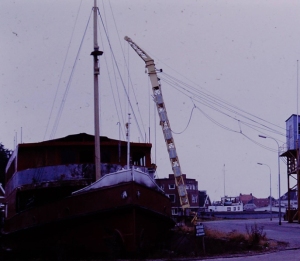
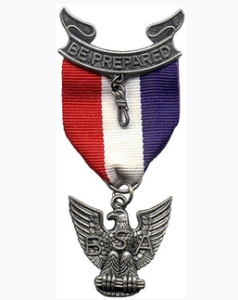 While growing up, I was part of a Boy Scout troop sponsored by my church. Many meaningful experiences came out of this, not the least of which were camping trips in the Florida Panhandle that would later serve as raw material for the novels I would write. At some point, long after I left town for college and the navy, the church gave up its sponsorship. I didn’t find out until many years later. When I e-mailed the church, nobody seemed to know that it had ever sponsored the troop and, if it had, why the relationship ended. This always bothered me. I kept wanting to find the culprit and ask what the hell they were thinking.
 My grandparents thought radio and then TV and then Elvis were signs of a degraded populace. Every generation seems to point at some habit or phase of the next generation that spells doom. As we get older, we find out that not only our parents’ generation but our parents themselves were wilder when they were kids than they would acknowledge when we were growing up and pushing various envelopes.
 When I mentioned on Facebook a week ago that my 40 days of radiation therapy had begun, one of my long-time online friends wrote, “Thank you for not giving up.” She’s a feisty New Yorker and deals with issues and events that are quite foreign to me–as I’m sure my Georgia farm life is to her–so we don’t communicate often. But this comment was almost too much for me to take in and to process.
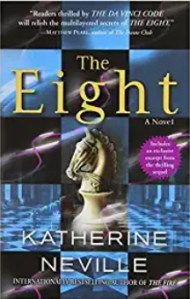
 While I do review books that I like and that I want to draw to others’ attention, I really don’t like discussing books. Other than the introvert thing, I think this comes from being turned off with book discussions in lit classes where the prof had a view of the book and its symbolism that the rest of us were expected to kowtow to (or else).
 Malcolm's Round Table