Only the fates know which posts will attract the most readers

So far this year, my posts have had 15,506 views, the most popular post being an old one Barebones Structure of a Fairy Tale with 2,086 views and my navy slang post Heave out and Trice Up with 923 views. It’s also an old post.

For a while, my post about the White House Boys, the survivors from Florida’s nasty Dozier School and its transgressions received many views. Those began to fade as the story about the search for graves on school property fell out of the daily news. I thought some of those readers might find yesterday’s post about the school and Colson Whitehead’s bestselling novel The Nickel BoysColson Whitehead’s ‘The Nickel Boys’ Takes Kirkus Prize for Fiction) that was based on the school. So far, only three views. That surprises me.

After all these years posting on this blog, which began on Blogger and was moved to WordPress in 2008, you’d think I’d know what I was doing. But I don’t. The posts I think nobody will notice get lots of views and the posts I think everyone will notice are slim to none in the popularity category. In “real life,” I don’t believe in fate, much less in the fates of Greek mythology (Clotho, Lachesis, and Atropos, et. al.). Yet, sometimes I wonder.

Are three ladies truly spinning thread that represents our lives, measuring it, and then snipping it off? Gosh, I hope not. Yet, “fate” is a popular notion even in our age of science and technology about things that happen for no discernible reason. Others are more comfortable saying “God moves in mysterious ways.” (I don’t mean to imply that God reads my blog. <g>)

Why anything happens when it happens is usually tangled up in so many variables that understanding all but the most simplistic parts of it are beyond human ken. We might say that a person was injured in a car accident because somebody ran a stop sign. The police report usually covers that part. What they don’t cover is why the two cars involved happened to arrive at that intersection at the same moment. There are lots of theories about what “Why” but most of them don’t sync up with our consensual logic about the world so all we can do is ponder them.

Many newsletters these days have within them the code (often within a pixel) which the sender can use to see who reads them. If you don’t read them for a while, sooner or later you’ll get a message that asks if you will want the newsletter. Usually, I do. But I have to logical reasons for why I read it some days and skip it on other days. Sure, there are obvious reasons: I was sick, I was out of town, &c. But then there are the times when my brain is shorted out already and I don’t have the patience for reading something I normally like.

I don’t think that’s fate, but I can’t prove it. I’m happy that so many of you keep coming back to this rather eccentric blog and are reading so many posts. So thank you for being fated to read what you read <g>.
Malcolm

Excerpt from Widely Scattered Ghosts: “On the band bus ride home, the stunning, first chair flute player Melinda Wallace sat beside him. She had no clue how he felt about her, not that he’d said anything. The empty aisle seat next to a clarinet was, he guessed, preferable to sitting in the back with the band’s borderline criminal element of raucous drums and tarnished brass. Melinda smelled like wildflowers and her unruly light brown hair smelled like the wind. When the band played ‘The Stars and Stripes’ Forever’ in concert and Melinda stood up into the light for her piccolo solo—the sweetest banshee cries the world has ever known—her blue eyes were frozen into ice for thirty-two measures of leaps and trills, while her hair could not be restrained.” – The Lady of the Blue Hour in “Widely Scattered Ghosts”
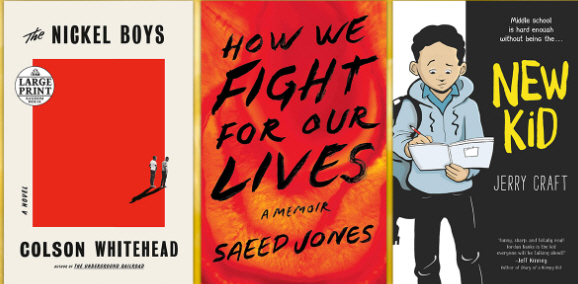


Colson Whitehead’s ‘The Nickel Boys’ Takes Kirkus Prize for Fiction

Colson Whitehead’s The Nickel Boys evokes race in America not as a concept but as a condition of being. In this modern historical novel, Whitehead exposes the Nickel Academy and the fate of its boys. With profound compassion and the elegance of a skilled craftsman, he reveals the tragedy of our not-too-distant past, which is also the tragedy of our present. Like all classics, the book works on many different levels: a significant social drama, it is direct, accessible and unrelenting both as allegory and as cautionary tale. This is our history. It is our story. – Kirkus Reviews.

Click on graphic for info about Nonfiction and Yong Readers prizes.


The Nickel Boys is a powerful and well-written novel, all the more chilling for those of us who grew up in the Florida Panhandle and heard horror stories about the Dozier School on which this story was based. (You can learn more about the Dozier School’s survivors on the White House Boys website.)

Looks like a safe campus, doesn’t it? – Wikipedia graphic

When I reviewed the book, I gave it three stars because I thought Whitehead used a point of view trick to make for a more powerful ending. I thought the trick could have been easily avoided by a simple edit without detracting from the ending of the novel. Since nobody else has mentioned this trick, it’s possible that I misread the section, though I looked at it several times and still thought I was seeing a flaw.

Florida failed its population as well as those sentenced to the Dozier School, some for very minor “infractions.” There were rumors about the school for years, covered over by a code of silence by those involved and others who knew the truth.

This novel helps call attention to the kinds of abuses that were born during the Jim Crow era–I suspect we haven’t found them all.

Malcolm


Where Should I Buy My ISBNs?

“But wait a minute,” you say. “I saw a site on the internet selling really cheap ISBNs. Why can’t I buy one of those?

”You can, but I wouldn’t. While Bowker does have a very select few legitimate ‘Channel Partners’ with whom they work, such as Amazon, those fly-by-night companies you see all over the internet selling cheap ISBNs are almost certainly not affiliated with Bowker, and thus are not authorized to sell you an ISBN. So why do they do it?

Source: Where Should I Buy My ISBNs? | Celebrating Independent Authors

Look before you leap; there are a lot of scammers out there targeting aspiring writers who are trying to cut costs. Yet, those authors might actually be cutting their throats.

I’m happy to have a publisher who writes for Indies Unlimited. She does a lot of research and that saves us money. ISBNs don’t grow on trees. So, if somebody is selling them cheaply, there’s a reason and it probably ain’t good. If you’re into self-publishing or are running a small press for your books, this is a must-read article.

–Malcolm

Sunday Potpourri – 11/17/19


This space between our house and yard and Lesa’s folks’ former house and the yard is a lot to mow. The fence is there to keep any rogue cattle from trampling septic tank lines in the area.
  • The fatigue caused by the radiation treatments for cancer is slowly starting to dissipate. After supper yesterday, I was finally able to now a big stretch of non-yard grass on our property. I couldn’t have done that a couple of weeks ago. I have a checkup with the oncologist tomorrow–to talk about what, I don’t know. The hormone therapy continues at least into January. It makes it more difficult for the cancer to return. It also keeps us from running the only test that shows the status, if any, of the cancer cells since the hormones mess up (a medical term) the test.
  • If you’re a fan of Native American Author N. Scott Momaday (who won a Pulitzer Prize in 1969 for his groundbreaking novel “House Made of Dawn,”) you might enjoy the documentary about him which is airing Monday night on PBS stations. Click here for more information.
  • Even though my physical strength is returning, my muse has yet to reappear. I’m not working on anything except this blog and my website. My short story “Shock Treatment,” which appears in the Tulip Tree Publishing anthology Stories that Need to be Told was written before the cancer treatments began.
  • I’ve added several more excerpts from my novels on my website. Stop by and see if you’re tempted.
  • My wife and I are enjoying the third season of the Netflix series “The Crown.” Rather than ageing their actors as their characters grew older, the producers opted to start season three with a new cast. This was jarring and I wish they hadn’t done it. My wife said, “Well, I thought you’d be happy to see Helena Bonham Carter taking over the role of Princess Margaret.” She was right. I do like the actress and see her as a great match for the feisty, outspoken princess. The segment in which the princess meets the rough-and-tumble, profane President Johnson is wonderful and, I suspect, true.
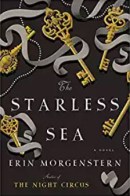
  • I have high hopes for author Erin Morgenstern’s new novel The Starless Sea. I’m wondering if it will live up to the creativity and wonder of The Night Circus, my favorite novel in 2012.  The novel sort of came out of nowhere like Susanna Clarke’s 2008 novel Jonathan Strange and Mr. Norrell. This was my favorite novel that year. Her next novel, Piranesi, is due out next year. I’ll be waiting for it like a teenager waiting for the latest Harry Potter novel. So, The Starless Sea is on my Christmas list. I’m sure Santa will be obliging because he knows that–like Mary Poppins–I’m practically perfect in every way.
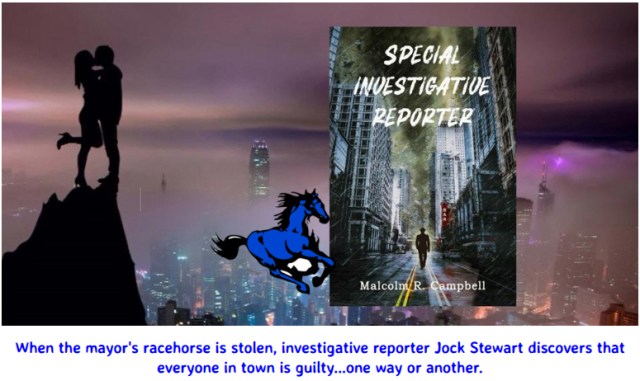
  • Otherwise, I continue to promote my latest novel from Thomas-Jacob Publishing, Special Investigative Reporter. I debated coming out with a new release of this novel which was originally published under another name because it’s a departure from my recent magical realism novels and short stories set in the Florida Panhandle. It’s written in a film noir style (my favorite kind of film) about an investigative reporter who doesn’t fit into the current style of today’s journalism. Actually, I don’t either. That’s why I see my Jock Stewart protagonist as my alter ego.

So there it is, the stuff going on in my life. How about you? Are you reading some wonderful novels this weekend?

–Malcolm


Survivor: Island of the Idols

This is Survivor’s 39th season with two seasons per calendar year. I’ve watched every season except for the first two or three. My wife watched those and then somehow I got lured into watching the program.

Like other reality shows, we know that what we see on the screen isn’t exactly what happened. The same is true for shows like “Chopped” and “House Hunters.”

Even though we’re not watching reality, we’re still watching players acting and reacting in a fishbowl. Watching this is an interesting experience for a writer whose stock in trade is people watching.

One interesting facet of the show is the contestants’ views of truth vs. lying. If you have no deception in your game at all, you probably won’t last. Nonetheless, some players maintain they’ve never lied to anyone during the game in spite of the fact that viewers see that those players’ games haven’t been totally pure.

In this season, a female player complained that a male player was improperly touching her. What he did was on tape. These complaints led to the producers getting involved and talking with contestants individually and in groups. The issue was discussed at Tribal Council and there have been some recent comments by contestants now that the two episodes have aired. What surprised me was that the woman who made the complaint was voted off the show and, while the man received votes, he appears to have survived the uproar.

What’s true, what’s not? Some contestants say during conversations on the show that the show is a microcosm of what’s happening in society. Do they truly think so? How can we know? Yet, they may be right to some extent for the “touching controversy” brought out a variety of emotions and viewpoints just as the “Me, Too” movement has been volatile in our lives of late. Not that I see Survivor as a true forum for discussing major issues, but what the contestants say is interesting.

It’s been fun seeing how the producers have tinkered with the show over the years to keep it from getting boring and to constantly introduce new options/rules that surprise the contestants. Then, too, we’ve seen a variety of programs featuring former winners, some of whom–over time–have appeared on several seasons. I begin to wonder how many of them will one day say that their career was appearing on Survivor.

There’s probably no good excuse for watching this show more than any other. We tend to watch NCIS, Grey’s Anatomy, How to Get Away with Murder, and some other shows every week. It’s relaxing. It’s time away from writing and chores. We tape everything and then watch it later (minus the commercials). With Survivor, we’ve had to watch the show before the night it airs is over because people will be talking–either on the news or Facebook–about what happened. That’s less true today than it was during the show’s first years on the air.

Is this just another addiction, a sensible way to relax, or a legitimate way of learning more about people? I have no idea.

Malcolm


Amazon Reducing Orders to Publishers

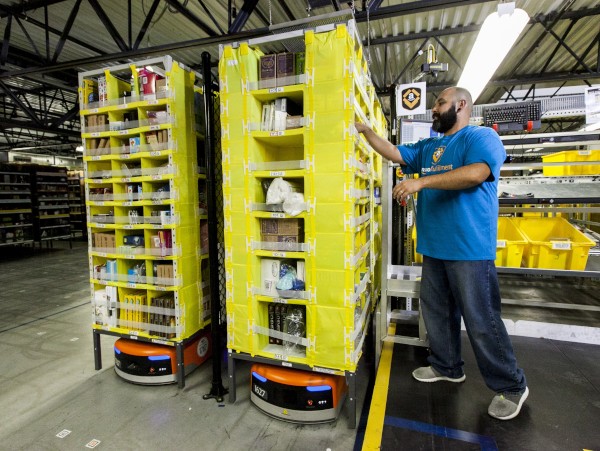
In order to deal with congestion issues at its warehouses, Amazon has been cutting book orders to publishers over the last several weeks. It isn’t clear how widespread the reduction in orders is, but several independent publishers contacted by PW reported cuts in their weekly orders since late October. One publisher reported that an order placed last week was about 75% lower than an order placed last year at this time. “It’s a nightmare,” the head of one independent publisher said.

Source: Amazon Reducing Orders to Publishers

Amazon has caused a fair amount of talk and concern amongst small publishers, and rightfully so. Publishers who need holiday sales to “make their year” worry those sales won’t happen if Amazon lists the books as out of stock.

We have alternatives, but for many readers, buying a new book automatically means logging onto Amazon’s website. It’s a habit that’s hard to break, yet every time it happens it makes Amazon bigger and makes us more dependent.

We could just as easily log on to the Barnes & Noble site where prices are similar. Or we can buy directly from IndieBound. Powells claims it’s the world’s largest independent bookstore. Its website is just as easy to use as B&N’s site, though the prices are a bit higher. On the plus side, they sell a lot of used books and those prices are pretty good.

A fair number of local bookstores operate websites like Powells where we can order even if we live on the far side of the country.

These are some of our options. I appreciate what Amazon has done for self-publishers.

However, they are a business and have to make decisions that work for them (as in making sure bestsellers are in stock rather than buying something from a publisher who may only sell 25 books during the holiday season), so I try to buy from other places from time to time. I’m sure Amazon doesn’t care, but it keeps me from developing too strong an addiction to the A-to-Z people.

–Malcolm


New Pages: a great resource

NewPages.com is news, information, and guides to literary magazines, independent publishers, creative writing programs, alternative periodicals, indie bookstores, writing contests, and more.New Pages

Literary magazines and writing contests have been a traditional training ground for aspiring writers for years. Some magazines pay. Some don’t. Contests usually pay, but sometimes offer publication and author’s copies. Either way, they give writers a way to practice their craft and potentially earn a few dollars and some writing references.

If you look at the website of a successful author, you will often see a long list of literary magazines where his/her work has appeared; so, too, grants and fellowships. Traditionally, mainstream/large press publishing has found these credentials more important than some of the newer small presses because the “resume material” helped show an aspiring writer had already received some validation elsewhere. While those who self publish don’t need a resume to publish a Kindle or CreateSpace book, magazine credits and awards still look nice on the website.

Many writers rely on the Poets & Writers database of upcoming writing competitions, grant opportunities, and fellowships. As a writer, I think more is more when it comes to keeping up with resources. So, I highly recommend New Pages. They offer multiple resources in addition to information about literary magazines, bookstores, competitions, as well as book reviews.  One unique feature is their publication of the titles of books received for review. This is kind of nice whether your book is reviewed there or not.

They also review literary magazines and keep readers up to date on news magazines. This feature helps authors choose where to submit as well as an easy way to learn more about the magazines before sending in an MS.

This is a writer-friendly site with multiple menu selections, options, and resources. It’s been around for a while and has a good handle on the subjects it presents.

Malcolm

Malcolm R. Campbell’s short story “Shock Treatment” appears in the Tulip Tree Publishing’s 2019 anthology “Stories That Need to be Told.”


Withhold judgement about your characters

With fiction [as opposed to writing a column], the process is different because I don’t know where the story is going. I’ll know that I want to write, say, a story about a young woman whose father dies. And I’ll know I want that story to explore grief. But I never exercise any moral judgment on the characters. To me, they are just characters. By withholding judgment, I can look at the world, through their eyes, with humility. I don’t judge them as “good” or “bad”; they are all flawed human beings. I would say this kind of writing uses a different muscle—it relies much more on the powers of empathy.  – Laila Lalami in an interview here.

Wikipedia Photo

I’ve been following this author’s works for ages, beginning years ago when she had a blog called Moorish Girl. The blog’s archives may still be out there, but she more or less stopped writing it when she published her debut novel Hope and Other Dangerous Pursuits in 2005.

Most of us cannot replicate the prose, much less the intelligent world view of this award-winning Moroccan-American novelist and college professor. Yet, when I read her ideas about literature and especially the writing of fiction, I see goals worth striving for. In general, I try not to judge my characters, that is to say, to give the reader an author’s view about which of them are good and which of them are bad.

To the extent that we can withhold judgement, we increase our ability to create a memorable story because we let the characters speak for themselves and form their own opinions without allowing our beliefs intrude into the story from the outside. I found this difficult to do when writing my Florida Folk Magic Series because my longtime hatred of the KKK made it almost impossible for me to treat them objectively.

Lailami believes that “the development of empathy is crucial to personal growth as a human being but also as a writer.” I agree though I’m not sure I can achieve it. Yet it seems to me that everything from world peace to family harmony depends on the empathy we have for others. That empathy makes us more real and accepting and does the same for our fiction.

–Malcolm


Lots of people talk ‘funny’ – get over it

Why do people constantly say “Southerners talk funny.” Worse yet, when we’re portrayed on TV shows, our accents are twisted into caricatures that don’t sound real.

When it comes to “talking funny,” you people in North Dakota, Maine, NYC, and Boston really shouldn’t be pointing fingers at us. But here’s the thing, even though y’all talk funny, I don’t assume you’re stupid. Sure, some of you are: I mean, let’s face it, everyone in the South sure isn’t a rocket scientist even though we have more of those per capita than the rest of the nation.

The South is blamed for a lot of things, so saying that we talk funny and are ignorant is just another way to libel everyone on this side of the Mason-Dixon Line.
I thought of all this after reading a writer friend’s post from the Florida Panhandle. She and another writer friend heard two men at an adjacent table in a cafe talking about books. They were impressed and thought, how refreshing, a conversation that’s not about football. The men caught there eye on their way out, and when my friend said she hadn’t meant to eavesdrop and loved their discussion, and then said she’s a writer, the men scoffed and said, “We never read anything Southern.”

If that’s true, they’re missing some of the best literature on the planet. But their comment is typical of the kind of slander those of us in the South are getting tired of hearing even though your accents make it sound almost like gibberish.

I don’t have a Southern accent unless I want to have one. When my family moved to the Florida Panhandle when I was in the first grade, my speaking patterns were already formed from life in the northwest. So, I can talk to all kinds of bigotted people and they have no clue I grew up and still live in the South. Sometimes they ask me where I was born. I say, Berkeley, California, which is true, and since that place is ground zero for all the strange things going on in California, they nod approvingly and treat me like a god. That’s when I wonder if I know enough hexes to smite them.

I once walked into a store somewhere in London and tried out my Southern accent to see what would happen. “Oh, God,” she said, “you must be from Glasgow.” I said that I was from the U. S. “Probably Boston,” she said. “Bostonians talk funny and don’t like our tea.” It never occurred to her that I came from the purportedly illiterate redneck region of the U. S. However, it was refreshing to be slandered for somebody I wasn’t.  I said, “Dinnae gimme ony trauchle aboot cuppa,” and she gave me a free cup of tea. (I’m of Scots ancestry and everybody thinks we talk funny.)

Sometimes, people think accents are variously quaint, vibrant, and a joy to hear. Sometimes, they think accents are a sign of stupidity. Same goes for the place you live. Some day, perhaps we’ll be viewed by others as individuals rather than the denizens of a region where people “talk funny.”

Malcolm

Malcolm R. Campbell is the author of “Lena,” a Florida Folk Magic set in the wondrous panhandle where he grew up.


Veterans, I think, suffer more than the dead


“Thank you for your service.” Veterans appreciate hearing that.

Some people mix up Veterans Day and Memorial Day. I know this because official ceremonies for November 11 often occur in or near cemeteries. Photographs often feature gravestones. While well-intentioned through their inadvertent odes to the dead, these mixed-up commemorations are a faux pas because–to the cynical viewers like me–they show that people are too busy shopping and otherwise enjoying a holiday to get the reason behind the holiday right.

Today is for those who came back, not those who didn’t.

In my fiction about war, I have said that the dead are often the lucky ones, for those who come home to be thanked for their service once a year often have physical and mental wounds that will never heal. They often live under bridges, suffer through years of PTSD, lose sleep for the nightmares of war that cannot be erased from their memories, create dysfunctional families when they cannot re-acclimate into civilian life, and–if they fought in a war after WWII and Korea–they will hear that nobody wanted what they fought for and that it would have been better for them if they’ never come home.

Personally, I would rather my family see my name on the Vietnam War Memorial than on any list of heroes or in any photographs of soldiers receiving awards. Why? The survivors pay too much for having served. Death is so much better, so much more peaceful, and so much more blessed than being condemned by fate to become a living casualty whose dreams remind him/her of the worst human being can do to each other.

I salute the veterans who have triumphed over their memories of war, memories that will never be fixed by the words, “Thank you for your service.” They are braver and stronger than I am.

On this day, we support our troops, the ones who came home who will forever hear the sounds of artillery and rifle file in their nightmares and who will forever see the dead in the field in their mind’s eye. The dead in the field are, in my view, luckier than those who came home with memories of what they saw and what they heard in the war.

In spite of my anti-war cynicism, I’m glad the country steps aside from the more mundane moments of life long enough to celebrate a Memorial Day and a Veterans Day. These days remind us of the sacrifices of the living and the dead.

–Malcolm

Malcolm R. Campbell is the author of the anti-war novel “At Sea”