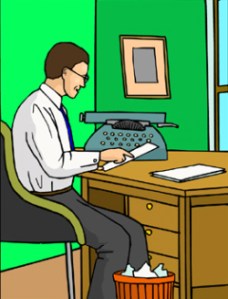
Woman ticked off at friends who won’t buy her a new washing machine

Junction City, TX, January 18, 2020, Star-Gazer News Service–Joyce Carlton admits she made a mistake when she sought help from her neighbors when she needed a Maytag 6.0 CU. PT. extra-large capacity top load agitator washing machine for $1,399.

“I got mixed up and told all my friends I was starting a crow funding event to raise the money and needed to know how to do it because I’m not Internet savvy,” Carlton said. “The response was tepid, presumably because a lot of people don’t like crows.”

According to Carlton’s husband, Bill, the 12-year-old kid, “what’s his face,” next door took pity on her and not only told her the correct term was “crowdfunding,” but showed her how to set up the event and announce it via e-mail and Facebook.

“Joyce said, ‘Don’t tell anybody this, honey, but I feel like a real ninny having all my Facebook friends thinking I was raising money to support crows,'” Bill Carlton told reporters after the house was covered with instructive graffiti such as, “Need a washing machine, get a job” and “How many men are you doing laundry for, slut?”

Carlton’s next-door neighbor Wanda James said that she had a heart-to-heart talk with Joyce over three cups of badly made coffee in Joyce’s kitchen.

“I explained that crowdfunding is generally intended as a way to raise money for a favorite charity or for a truly needy family that needs help,” said James. “She told me she was truly needy because she was struggling with an ancient washing machine without all the bells and whistles people need in today’s world.”

Police said they have yet to catch the person or persons who spray-painted graffiti on the white stucco of the Carltons’ house. An informed source, who is not authorized to speak for publication, said that everyone in the neighborhood with an old washing machine is a suspect.

“My daughters sell Girl Scout cookies and Joyce never bought any. My other next-door neighbor’s son sold band candy and Joyce never bought any. The homeowners association held a fundraising drive to help the Sweeneys after their house burnt down, and Joyce and Bill couldn’t spare a dime,” James said.

Joyce and Bill Carlton acknowledged that they were both cheapskates when it came to helping others, but thought that their beautifully appointed lawn–compliments of Hanson’s Lawn Care Service–would show the community that they were entitled to more respect.

“I guess we’re going to be chipping into to every clown who rings our doorbell whining for money for one dirtbag cause or another,” Bill Carlton said.

Story filed by Jock Stewart, Special Investigative Reporter
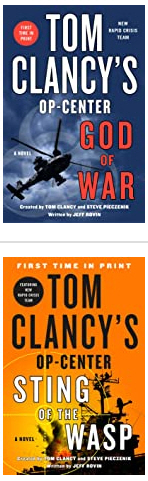
The cheapness of human life in black ops novels

Surprisingly, black ops novels give me a sense of closure in a world where’s little closure. Another pacifist friend and I discovered that we both watched the TV show “24” because, while “real life” often made us feel powerless in the face of all the issues with seemingly no answers or bad answers, Jack Bauer’s actions on the show brought us a feeling that sometimes bad guys are caught and threats are neutralized.

I feel the same way when I’m reading “Tom Clancy,” James Patterson, and other series in which the good guys see a threat, analyze it, and then put a stop to it. Like Jack Bauer, these good guys operate in groups that are out from under any umbrella of legalities that (as they say) “hampers” black ops.

What bothers me, though, is how cheap life seems to be in these books. If you watched “24” you know there were car chases in which dozens of vehicles (driven by every day innocent people) were shown blowing up, turning over, falling off bridges, etc. in the background. Any police force conducting that kind of chase in “real life” would be on the carpet in minutes. But it “24” those people are collateral damage and (apparently) not so bad a price to play for Bauer catching a notorious bad guy.

While black ops novels seldom have those signature car chases that have been popular in the James Bond movies, a lot of cardboard characters always get blown away with little notice or regret en route to “a more-important goal.”

I’m sure ISIS, Al-Qaeda, and other terrorist groups see mass numbers of civilian casualties as a sign of success.  Fortunately, the good guys in over-the-top novels, movies, and TV shows aren’t trying to create massive civilian casualties. In fact, in these stories, most of the cardboard characters killed are bad guys with no names who stepped ou from behind a building with blazing Kalashnikovs and got taken out by the good guys. No harm, no foul, right?

Perhaps bad guys and good guys really feel this way in “real life,” and by that I mean, operations that fall into the category of black ops rather than war.  If so, this bothers me more than the deaths in fiction; with fiction, I have plausible deniability since I know none of those deaths really happened.

In “real life,” I’m against black ops, but that doesn’t mean that novels about black ops aren’t serving as addictive painkillers against the insanity of the world.

Malcolm

Malcolm R.. Campbell is the author of “Conjure Woman’s Cat,” “Eulalie and Washerwoman,” “Lena,” “Special Investigative Reporter,” and “Sarabande.”


‘They’ say the first step is always the hardest.

“Whatever we believe about how we got to be the extraordinary creatures we are today is far less important than bringing our intellect to bear on how we get together around the world and get out this mess we’ve made. That’s the key thing now. Nevermind how we got to be who we are.” – Jane Goodall

When quotations like this appear on Facebook or in news stories and articles, they get a huge number of LIKES and positive comments. I want to ask, “So, after you clicked LIKE or wrote ‘so true,’ what did you do next?”

Likewise, when people encounter charities and various crowdfunding initiatives that are collecting money for programs that will make a better world, I’m curious what people did after donating their $25 or $50. The same thought comes to mind about what people do after signing petitions that are trying to raise the public’s (or an elected official’s) awareness about a problem.

Many people appear to believe that talking about an issue is the same thing as actively working to “fix” whatever needs to be fixed. Being concerned about something, while commendable, isn’t the same thing as putting your money where your mouth is or putting your brains and brawn where your money is.

Needless to say, some people who donate $50 to one group and sign a petition in support of another group really think they’ve done their bit.

I don’t have a list of the things people ought to be doing, but joining nuts and bolts volunteer groups is one place to begin. Once you join, you’ll see an old truism governs how much gets done: 20% of the members usually do 80% of the work.

In churches, the concept of the tithe usually refers to money. Yet, we can also apply it to time, as in, giving 10% of one’s time toward fixing the mess we’re in. Even though some government officials, corporations, and lobbying groups are giving 100% of their time to make the mess worse, if enough people chipped in enough time to thwart those who are destroying nature and freedom and equality and peace, then we might have a chance of actually fixing something rather than talking about fixing something.

One way or the other, we need to take that first step toward action.

Malcolm

Malcolm R. Campbell is the author of “Special Investigative Reporter,” “Conjure Woman’s Cat,” “Eulalie and Washerwoman,” “Lena,” “Sarabande,” “Mountain Song,” “At Sea,” and “The Sun Singer.”


“Emily’s Stories” AudioBook: Thanks for the great reviews

I never know what combination of good luck and synchronicity brings a batch of nice comments and reviews to one book and not to another. Bottom line, whenever a reader leaves a review on Amazon or on Audible, I’m thankful they took the time to say what they thought (especially when they liked the book).

Emily’s Stories has some great reviews on Audible, for the story and for the audiobook’s narration. Seeing this makes my day.

Here’s what people are saying:

  • I recommend this audiobook more than any other
  • What a beautiful, beautiful story
  • A sweet YA paranormal fantasy story
  • An excellent book for young adults and others
  • Touching, great fantasy/paranormal stories

And those are just the titles for the reviews.  At present, Emily’s Stories has a 4.5 average rating.

Here’s the review from AudioFile Magazine:

Kelley Hazen’s spirited delivery enhances Campbell’s descriptive writing in these three stories about 14-year-old Emily Walters. “High Country Painter” present a talkative Emily and a realistic-sounding bird that directs Emily to magically draw obstacles to divert a grizzly bear. In “Map Maker,” Emily meets an eerie-sounding ghost who helps her save a sacred forest from developers. In “Sweetbay Magnolia,” Hazen captures Grandma Walters’s elderly voice as well as her persistence and wit to perfection. Young listeners will enjoy hearing Emily explain about TMI–too much information. Hazen’s skill at creating believable bird and ghost voices adds to the listening pleasure. S.G.B. © AudioFile 2017, Portland, Maine [Published: DECEMBER 2017]

Perhaps the young adults in your family will enjoy the stories as well.

Malcolm


Review: ‘The Sinister Mystery of the Mesmerizing Girl’ by Theodora Goss

The Sinister Mystery of the Mesmerizing Girl (The Extraordinary Adventures of the Athena Club, #3)The Sinister Mystery of the Mesmerizing Girl by Theodora Goss
My rating: 5 of 5 stars

The first whisperings of the three novels in “The Extraordinary Adventures of the Athena Club” series can be found in Theodora Goss’ doctoral dissertation “The monster in the mirror: late Victorian Gothic and anthropology.” In fact, the members of the club–Mary Jekyll, Diana Hyde, Beatrice Rappaccini, Catherine Moreau, Justine Frankenstein, Lucinda Van Helsing, and Lydia Raymond–often call themselves monsters because they were created by amoral mad scientists.

Athena club members and other primary characters in the series are drawn from (or inspired by) the works of H. G. Wells, Bram Stoker, Robert Lewis Stevenson, Arthur Conan Doyle, Mary Shelley, Nathaniel Hawthorn, Arthur Machen, and Oscar Wilde. The genius behind these multi-layered novels comes not only from their accuracy of the Victorian era and its literature but from the fact that Goss has taken characters from multiple books and fit them hand-in-glove into a delightfully inventive and readable series.

Several years ago, Goss told an interviewer, “What really inspired me was reading the original texts for my Ph.D. in English literature. I wrote a doctoral dissertation on late-19th-century gothic fiction and started noticing that there were a lot of mad scientists running around in the 19th century — and that a lot of those mad scientists either thought of creating or actually created female monsters.”

The monsters of the Athena Club–who often quibble with each other in specially formatted bits of conversation–about the progress of “The Sinister Mystery of the Mesmerizing Girl” solve mysteries using (somewhat) the approach of Mary Jekyll’s friend and mentor Sherlock Holmes. While their powers of deduction aren’t as pure as Holmes’, their special powers provide them with talents Holmes doesn’t have. (Inspector Lestrade doesn’t like them and they don’t like him.)

They react to bad things that happen; this time it’s the simultaneous disappearance of their household maid Alice, Sherlock Holmes and Dr. Watson and, as it turns out, a threat against the British empire. Near the end of the book, when the women in the club are admonished to stay out of of mischief, Mary Jekyll says, “We don’t get into mischief. It sort of happens to us, or around us, or in our general vicinity.”

Most readers will see that comment as an understatement and as part of the charm of the books. The Athena Club is not a covert black ops group but a family of good monsters who often finds itself trying to thwart the plans of evil monsters. In this series, the women prevail as those who are setting things to rights. On the way to saving the day, the Athena Club’s debates tend to keep everyone grounded, such as when Catherine Moreau, who’s ostensibly recording the group’s adventures, says, “You realize that to a puma, you’re all just meat?”

Sure, they can all kill each other, but going after the bad guys is more fulfilling.

View all my reviews

Your writing: business or hobby?

Gurus–and, let’s face it, they’re a dime a dozen–are always telling writers to decide whether we want a career or just want to tinker. In part, we don’t always have a clear choice.

Most authors aren’t living off their writing income. They have 9-5 jobs doing something else, often teaching. Many also have families with the usual responsibilities that implies. So writing often gets shunted into the hobby category where it’s wedged into the weekly schedule by hook or by crook.

Clark is the author of “The Edisto Island Mysteries” and “The Carolina Slade Mysteries”

In her latest Funds for Writers newsletter, Hope Clark wrote, “You’ve decided you are a writer. Like any profession, part-time or full-time, you have to map out your days, weeks, and months for better efficiency. Same goes for writing. ” In part, she focuses on realistic goals and organization. So, in one respect, writing is like any other business: you can’t just wing it.

As far as I can see, the more successful we become at the writing part of our career, the more we’re going to need to treat it as a growing business–or, at least, as a money-making portion of our multiple careers.

Clark suggests that we stay away from what she calls “pie-in-the-sky goals that are, in essence, fluffy resolutions.” Instead, look at what’s possible in your schedule as it is now. Can you write and publish one book a year and possibly submit five short stories to competitions? If so, that can be the foundation for a sound business plan.

Without that plan, it will be hard for any of us to evolve into full-time authors, in part, because we don’t really see what it takes to make that happen or we treat our writing as a hobby and allow everything else in our lives to take precedence over it.

Like a lot of things, becoming successful depends on how badly we want it.

Malcolm

P.S. Thank you for the ideas for solving my POV problems with my work in progress. I’m tending toward an omniscient narrator who sees everything that happens but who doesn’t know anyone’s thoughts.


Telling a story from the point of view of a sickening character

I’m not going to tell you how to do it because I can’t force myself to do it. In my work in progress, somebody is shooting KKK members. At the outset, I don’t want the reader to know who’s doing it. Yet, if I tell the story from the point of view of the person who is doing it, I won’t be able to hide what they know.

Unless they were hypnotized or have random bouts of amnesia or I resort to some combination of trickery and/or bad writing, their thoughts are otherwise transparent to the reader.

I catch writers doing this all the time. They’re “inside the head of one of the characters” who has just done something important. But, since the author doesn’t want the readers to know what that character did, s/he simply doesn’t allow the character to think about it.

Not possible (other than the amnesia or brainwashing thing) and yet it happens do often, I wonder why editors don’t catch it.

One alternative (in my work in progress) would be to tell the story from one or more of a KKK members’ POV. I saw too much of the KKK when I was growing up, and looked up more about them while working on Conjure Woman’s Cat and its two sequels. It’s one thing to know the organization’s history, rituals, and symbols, but quite another to know the workings of a member’s heart and soul.

I don’t want to know that because I’m not strong enough to know.

I once wrote a story from the POV of a woman (Sarabande) who was assaulted. It seemed to work. But I never could have written those scenes from the POV of the bad guy. I cannot go inside the head of a rapist any more than I can go inside the head of a KKK member.

It’s one thing to tell a realistic story. It’s another to jeopardize one’s sanity. I’ve read some nasty things in novels and whenever they are told from the POV of the perpetrator, I wonder how the author survived the experience.

Some clinical psychologists have told me they take a shower when they get home from work and, while doing it, visualize the disturbing things heard during the day being washed down the drain. Would that work for a write? I’m not willing to find out.

What about you? Do you ever wonder how authors handle some of the hideous things in their novels, especially when told from the perp’s POV?

Malcolm

Note: I announced on my website today that I need a break and will discontinue the site by February 20. This blog will remain as will my author’s page on Facebook.


‘The Founding Fortunes: How The Wealthy Paid For and Profited From America’s Revolution’

In times of war, the rich usually do get richer and the poor are still poor, yet free. Somewhat.  This well-researched telling of the well known and not so well known who put their money into biting the very hand that was feeding them. In order to have control over what they grew and who they sold to this young country and its leaders were far from perfect and often put their own interests above the country.

Source: THE FOUNDING FORTUNES: How The Wealthy Paid For and Profited From America’s Revolution by Tom Shachtman ‹ Pirate Patty Reviews ‹ Reader — WordPress.com

I love reading history, especially carefully written books that are intended for a general audience and don’t sound like PhD dissertations. So, I’m pleased to find one of my favorite book bloggers writing about a history book–and tempting me to take a look at it.

While this blogger’s reviews are usually short and sweet (or, as needed, caustic) I wish this review had had a little more depth, possibly showing a list of chapter titles and/or an example a founding father or two who got rich.

We can often give readers an idea of a novel with a review that sounds like a positive or negative elevator pitch. But I think nonfiction requires a bit more, in part because if your blog isn’t dedicated to history, most readers won’t be familiar with the authors and may need a little more pizazz to grok both the review and the book under consideration.

Malcolm


Today’s stunning Potpourri of stuff

In no particular order. . .

  • I listened to Trump’s speech this morning. It was more low key and measured than I expected. Having said that, I’ll probably wake up tomorrow and read that we bombed something in Iran. I hope we don’t.
  • I tend to agree with Melinda’s comment on yesterday’s post about writer weblogs. She thought people tended to visit after buying a little-known author’s book (or hearing about them) just to learn something more about them rather than to buy a book. I haven’t cancelled my website yet, but I did get rid of a pricey add-on that I really don’t need.
  • My ex-wife and I haven’t spoken (or written) for years, but we both hear about each other via our daughter. I learned yesterday that my ex-wife’s older brother died two days ago. I messaged my daughter that I was sorry to hear the news. That’s all I can do since leaving a message on his Facebook profile or any of his family members’ profiles would probably be seen as a very unwelcome intrusion. He was a great guy.
  • Homemade chilli is simmering in the Dutch oven. Maybe some of it will be around later in the week when the bad weather hits the Southeast. Right now, our low temps here in north Georgia are in the high 20s.
  • I’m currently reading and enjoying Dora Goss’ The Sinister Mystery of the Mesmerizing Girl. It’s the third in her Athena Club series. The club looks into mysteries and other weird stuff. Club members are reading the manuscript as it unfolds, so we frequently have comments and dissenting opinions about the way the story is being handled.
  • It’s been fun watching the special “Jeopardy” competition this week between three all-time winners. Even when we know the answers, the champs say them before we do.

Malcolm

Gurus say authors need websites

In previous posts, I’ve noted that sites for name authors and sites for little-known authors are often quite different. The main difference is that prospective readers are searching for name authors’ sites and, I suppose, stumbling across little-known authors’ sites. Name authors can do less to promote their sites because people are coming there anyway.

Little-known authors seem to do better with sites featuring non-fiction than fiction because non-fiction usually focuses on subjects people are trying to learn more about and, in fact, are often just a portion of a larger site that promotes the business itself.

Fiction is a bit harder to sell because it’s tied so strongly to author name (or evolving notoriety), to reviews from major sites, and genre. Little-known authors seldom get reviews from major sites, so nothing “out there” is providing any help for their sites.

I’ve never sold books directly off my website because I don’t have time to handle a business where time spent getting paid and then driving to the post office with a book isn’t worth it. Non-fiction sites seem to be better equipped to deal with direct sales.

Some years ago, I gave up my original website provider because they had two versions of their website publishing software, ultimately keeping the version that was probably easier for them to support, but that had fewer features. The provider offered enough analysis of visitors’ behavior for me to see that the website also wasn’t earning its keep. By that, I mean, that there were too few click-throughs to my books’ links on Amazon and elsewhere.

My current site’s software is cheaper but has no analysis. But, based on the visitor counts (which aren’t too bad), I see little evidence that people are being influenced enough by the information on the site to buy the books.

So now, as the time approaches for me to decide whether to renew or delete the site, I’m leaning toward deleting it because Amazon algorithms and associated book advertisement newsletters have made it harder to sell books; I find that keeping the site is likely to cause me to run at a loss in 2020.

If you’re an author, do you have a website? If so, can you tell whether it’s helping you sell books or not? If it isn’t, do you keep it because it’s rather expected for authors to have a site–or for some other reason?

Just wondering,

Malcolm