This and that on a rainy afternoon

  • The picture of our weather RADAR shows why–once again–we had to postpone mowing our yard. Supposedly, Fescue grows .5 inch per month. Ours seems to be growing faster. At our previous house, we had Centipede grass. It’s growing season starts later and it grows slower. I wish we had that here.

  • I just finished reading the sequel to Michael Crichton’s 1969 novel The Andromeda Strain which I read when it first came out. Written by Daniel H. Wilson, The Andromeda Evolution, fits nicely into the style and plot of the original, though potentially with a more unlikely ending. Still, I had fun reading it. If you haven’t read the original, you may be a little lost.
  • Earlier this year, I held a sale for my Vietnam War novel At Sea. Somebody left a comment, saying they would be happy to write a review. I was looking at my Amazon author’s page yesterday and noticed the review was there. What a great review. The reviewer’s name was listed as Robin. If you’re the person who left the comment here several months ago, I wanted you to know that I appreciate the review.
  • For those of you keeping score <g>, I did finish reading Madame Bovary.
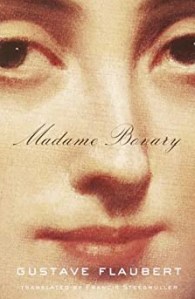
    Currently available Steegmuller translation published in 2013.

    The book was well written, though I have to say, it was strange reading a novel that was hit with obscenity charges when it came out that didn’t have an overt sex scene in it. For today’s readers, other than those who enjoy experiencing the classics, the book will read very slowly.

  • Yes, I know, I’m supposed to be cleaning out the garage today–that is, editing my novel in progress. Some gurus say a novel should sit for a bit before an author starts editing. Since I didn’t really feel like editing today anyhow, I’ve decided to follow that advice. I wonder how long I can use that excuse.
  • During our quarantine days, my wife has been making cherry pies and blackberry pies. Unfortunately, the standard Oregon Brand of pie cherries/berries has disappeared from the stores around here in favor of some goofy brand of pie filling. However, we just went online last year and started ordering our Oregon favorites in bulk.

Besh wishes for the month of July which we all hope goes more smoothly than the previous months of the year.

Malcolm

Editing is like having your spouse say, ‘Let’s clean out the garage.’

We all know what Let’s clean out the garage means.

In case you don’t, it means that the person making the suggestion wants to get rid of a lot of stuff the person hearing the suggestion wants to keep.

I edit while I write. I know that’s wrong, but I don’t care. For one, it keeps stuff out of the garage that somebody else will one day tell me to throw away.

Otherwise, editing begins when your manuscript is on the home stretch. At this point, you’re the one telling your characters it’s time to clean out the garage.

Basically, they don’t want to do this unless it means giving them more lines. Usually, it means giving them fewer lines or (worse yet) fewer scenes.  They (the characters) like the garage as it is because that’s all they know about each other and themselves unless you’ve used them in previous books.

Characters become restive, even combative when you bring out an editor’s broom and a toll of trash bags (the novelist’s “cutting room floor”). They want to story to stay the way it is, go to a publisher, show up on the bestseller list, and make them as famous as Madame Bovary and Captain Queeg even if readers think they’re crazy.

The madame and the captain had some great lines, they’re in a box somewhere, but they probably don’t belong in my book. If I find anything remotely resembling either character’s habits or lines, they need to go.

Gandalf had some great scenes, such as when he fought the Balrog in The Fellowship of the Ring. If anything like that’s in this garage, it’s got to go.

One of the mysteries of editing is that you’re not simply throwing away trash, you’re throwing away some darned good stuff. Goodness knows, your characters want to keep that good stuff. So do you, probably, but if you ponder it long enough, you’ll know its not a good fit for your story.

(What you don’t want is reviews that say “Snoopy’s Sopwith Camel vs Fokker dogfights with the Red Baron sure were exciting, but why were they happening in a small town in the Florida Panhandle in 1955?”)

So, this is where I am with my novel in progress. The characters are saying, “Let’s blow this joint!” (and we’re not talking about marijuana here) while I’m offering them a bigger share of the $10000000000 adance if they stay around and play nice while we get this manuscript ready for the publisher.

Plus, I keep telling them that my publisher goes flat nuts if I send in something that belongs in the garage sale bin, and “trust me, you don’t want to be around when that happens.”

Basically, I think cleaning how the garage is the worst part of homeownership and editing is the worst part of writing a novel. Others’ opinions may vary

Malcolm


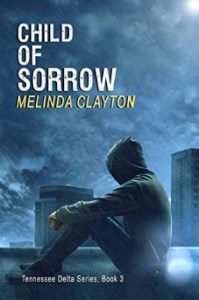
New title: ‘Child of Sorrow’ by Melinda Clayton

Thomas-Jacob Publishing has released the third title in Melinda Clayton’s “Tennessee Delta Series,” Child of Sorrow. Currently available as an e-book, the novel will appear in additional formats as soon as printer supply chains return to normal.

Prior books in the series are: Blessed are the Wholly Broken (2013) and A Woman Misunderstood (2016).

From the Publisher

When fourteen-year-old foster child Johnathan Thomas Woods is suspected of murder, an old letter and a tacky billboard advertisement lead him to the office of attorney Brian Stone. Recognizing the sense of hopelessness lurking under John’s angry façade, Stone is soon convinced of his innocence. When John offers up his lawn-mowing money as payment, Stone realizes this is a case he can’t refuse.

In the face of overwhelming evidence assembled by the prosecution, Stone and his team find themselves in a race against time to save an angry boy who’s experienced more than his fair share of betrayal, a boy who more often than not doesn’t seem interested in saving himself.

I was a beta reader for this novel and enjoyed the experience and the story.

–Malcolm

Hardcover edition woes

The pandemic has screwed a lot of supply chains as various manufacturing and retail operations shut down.

The shutdown problem is impacting my hardcover books, all of which are listed on Amazon (and possibly elsewhere) as out of stock. These come from a different printer than the paperback editions which are still available. The Kindle editions are also available.

I apologize for the inconvenience to those of you who have been perplexed about the missing hardcover editions of Conjure Woman’s Cat, Eulalie and Washerwoman, Lena, Sarabande, and Special Investigative Reporter. Let’s hope they return soon.

Malcolm

A daughter’s questions

My daughter was born in 1976, is married, and lives with her husband and two children in Maryland. My wife and I planned to visit them this spring, but the pandemic nixed our travel plans.

On Father’s Day, she sent me a Facebook message with a series of “Questions for Dads” that read as follows:

  1. Can you tell me about your best friend when you were a kid and one of your adventures?
  2. What is the oldest story you know about our ancestors?
  3. Can you describe a favorite memory of a family member? Do you have a favorite snack, song, television show, recipe, comedy?
  4. What is your first memory?
  5. Did you ever get in trouble as a kid? What happened?
  6. If there were a biography of you, how would you want to be described?
  7. What is the best advice you remember from your father?
  8. Is there anything you wish you had said to someone but didn’t have a chance?
  9. What do you wish you had spent less time worrying about?
  10. What is the best part of your day?
  11. What is the last thing you changed your mind about?
  12. What things helped you get through a difficult time in your life?
  13. What trip or place is most special to you and why?
  14. What would you like to re-experience again because you did not appreciate it the first time?
  15. Can you tell me something about yourself that I don’t know that you think would surprise me?
  16. What habits served you the most through life?
  17. What is the best mistake you made and why?

Typically, when asked questions like these, I respond with flippant answers. But, as I told my wife, I didn’t want to do that because these questions were a gift that–if I answered truthfully–would bring us closer together. So, I poured a glass of red wine and started typing.

I did the best I could. I suspect most of my answers were things she didn’t know. When I printed them out, they became four single-spaced pages that I mailed to her via the USPS this morning.

When I was in college, my father sent me a series of letters about his life during high school and college. It was the kind of stuff that didn’t come up in conversations around the dinner table. I was happy to get it because it shed new light on just who my father was. I hope my daughter will feel the same way.

Most of my life is a mystery to my daughter because it happened before she was born, and even before I met her mother. I don’t know where she found the questions, but it made my day to see them. Will my answers surprise her? Yes, I think they will.

Malcolm


Okay, I guess I’ll read ‘Madame Bovary’

I bought a copy of Madame Bovary in 1991 just before my wife and I became involved as nearly full-time volunteers at a museum near Atlanta. All of my reading time switched over to museum-related research. So the novel sat–even after we left the museum and moved all my books from one house to another twice.

I am near the beginning of the novel now, a few pages past the time when Dr. Charles Bovary marries Emma Rouault, the daughter of one of his patients, so none of Emma’s indiscretions that led to Flaubert’s obscenity trial in 1856 have happened yet.

Flaubert was acquitted and, as usually happens after such trials, the book became a bestseller, and subsequently considered a masterpiece. Most Flaubert commentators mention that he was a perfectionist, agonizing (apparently for hours) over every word.

I can see this clearly even through the 1957 translation by Francis Steegmuller. The description of the farm where Emma lives reminds me of the exuberant care of Hillary Mantel’s Wolf Hall.  The scenes are so perfectly set in both novels, that it’s easy to feel like a time traveler back to 1827-1846 (Madame Bovary) and  1500-1535 (Wolf Hall).

Currently available Steegmuller translation published in 2013.

Steegmuller (1906-1994) translated quite a few of Flaubert’s works, so he was familiar with the author and his style. The novel has been translated into English at least 19 times, the first one coming from Karl Marx’ daughter Eleanor in 1886.

The critics argue about which translation is best, some chiding translations for using the current American slang of the day in their work. Steegmuller’s is among the better known, but–having been around for a while–his version gets sniped at by subsequent translators such as Lydia Davis’ 2010 comment in New York Magazine: “You’d think, working from one text, that the translations have got to be fairly similar. But it’s amazing how different they all are. Some are fairly close, but then they’ll add a metaphor that Flaubert doesn’t have. And some are outrageously far away. Two of the most popular, Steegmuller and Hopkins—they’re not bad books. They’re well written in their own way. But they’re not close to what Flaubert did.”

As some commentators have said, those of us who aren’t French, or aren’t fluent in French, will never know exactly what Flaubert did. As we say, “The map is not the territory,” we might also say “The translation is not the novel.” As for me, I’ll keep the translation I have–with no intention whatsoever of comparing it with the others.

Now, I’m waiting to see whether or not I’ll be shocked and scandalized!

–Malcolm

Senate Passes Bill to Fix National Parks and Public Lands 

Washington, DC – Today, the United States Senate passed The Great American Outdoors Act, historic legislation that would provide dedicated funding to reduce the National Park Service’s deferred maintenance backlog – nearly $12 billion in needed repairs across the National Park System – and provide full funding for the Land and Water Conservation Fund (LWCF). For five years, the National Parks Conservation Association (NPCA) has urged lawmakers to fix national parks’ crumbling roads, worn-out recreational trails, failing water and sewer systems, and other critical maintenance issues. Today’s momentous vote brings us one step closer to protecting our parks now and for generations to come.

Source: Senate Passes Momentous Bill to Fix National Parks and Public Lands · National Parks Conservation Association

Anyone who visits and/or keeps up with national parks news knows that park infrastructure has been underfunded and in trouble for a long time. This legislation has been a long time coming. I hope it makes a difference.

Many parks are experiencing overcrowding. Solving this problem might take additional funds as park management plans are reviewed and discussed. Personally, I would restrict or limit visits and ban cars from more areas. As I see it, protecting the parks takes presence over their use for recreation.

–Malcolm

If change were as simple as a witch’s ladder

Witches ladders are made by tying a series of knots in thread, yarn, or some other material and that include, at each knot,  a feather, a strand of human hair, leaf, jewelry, pine cone or object that symbolizes the purposes of the ladder. The purpose is generally the creation of a spell or a meditation.

The ladders are known to have been around since the 1870s, but I suspect practitioners of the craft have used them for centuries. Typically, one sings, chants, or recites a specific of general spell element with the tying of each knot. A “simple” ladder often has nine knots and often uses this chant:

By knot of one, the spell’s begun.
By knot of two, the magic comes true.
By knot of three, so it shall be.
By knot of four, this power is stored.
By knot of five, my will shall drive.
By knot of six, the spell I fix.
By knot of seven, the future I leaven.
By knot of eight, my will be fate.
By knot of nine, what is done is mine.

Anyone with patience or the slightest affinity for arts and crafts can make a witch’s ladder, though the example shown here from the Wikipedia article probably shouldn’t be the first one attempted. However, a properly done witch’s ladder is not really simple because for the spell or meditation to manifest, the creator of the ladder must have strong faith/conviction the spell/mediation will work, must maintain a powerful focus upon each knot, and then do nothing to doubt the power of the ladder and the intentions behind it once it’s been completed.

Those who have read this blog for years know that I’m not a big fan of affirmations, statements one repeats daily with the belief that this repetition will bring changes into their consciousness and then into our consensual reality. Émile Coué (1857-1926) was a proponent of this so-called “self-suggestion” and is probably best known for the affirmation “Day by day, in every way, I’m getting better and better.”

Yes, I think affirmations–like the steps in a witch’s ladder–can work if they are not recited more or less by rote and if we live the affirmations after making them. That is, we activate them by doing something in our lives (even symbolically) in support of the statements. That is, if–in the moments before you fall asleep–you say “Day by day, in every way, I’m getting better and better,” then you aren’t really living that self-suggestion if you continue to smoke a pack of Marlboros and drink a quart of whiskey every day while thinking little or nothing about what you would look like or act like or think like if you became better.

So much of what we say and do when confronted with the need for change–as protests around the nation are bringing to our attention–is often (as people have said) little more than lip service to new ideas or a BAND-AID® applied to an old and festering problem.  Saying to the protesters (in person or figuratively), “my thoughts and prayers are with you” is meaningless unless you focus your intent and will power on those thoughts and prayers and then take positive action to back up your intentions.

The real witch’s ladder is not simple, though it need not be considered too complex to utilize effectively. Yet, the ladder is simple if the alternative is doing nothing. The trick, if there is one, is living as though the spell/mediation has come to pass even before you see it with your physical eyes.

Malcolm

Malcolm R. Campbell’s novels include magic because that’s how he sees and lives in the world.


Looking back at Pat Conroy’s ‘Beach Music’

Beach Music (1995), Conroy’s sixth book, is the story of Jack McCall, an American who moves to Rome to escape the trauma and painful memory of his young wife’s suicidal leap off a bridge in South Carolina. The novel is wide-ranging in its historical and geographical scope, and in its treatment of the Holocaust, Russian pogroms, and southern poverty, among other themes; it is generally recognized as Conroy’s ambitious—and perhaps darkest—work.Pat Conroy Web Site

Beach Music began as a 2,100-page manuscript which his publisher’s staff trimmed down. My mass market paperback is 800 pages. By today’s “standards” of shorter and shorter novels, this book is huge.

Like Conroy’s other novels, Beach Music focuses on a broken southern white male who’s the product of a dysfunctional family that grows up in the beautiful–and lyrically presented–South Carolina Lowcountry.

Excerpt: “It enclosed us in its laceries as we watched the moon spill across the Atlantic like wine from an overturned glass. With the light all around us, we felt secret in that moon-infused water like pearls forming in the soft tissues of oysters.”

The novel’s length comes, in part, from the backstories of many of the other characters as well as childhood reminiscences between protagonist Jack McCall and his brothers.

If we were to extract a basic plotline, it would be this. McCall leaves the Lowcountry with his two-year-old daughter Leah and moves to Rome after his wife Shyla commits suicide by jumping off a bridge. McCall is, of course, blamed for this; his wife’s parents claim McCall is unfit to raise Leah, but fail to prove their case in court. He severs his relationships with his family to the point of keeping his address and phone number secret. Slowly, family members work their way back into his life and communications begin to open up.

Part of his understanding of his extended family comes from considering their dark backgrounds, including the Holocaust. His mother’s background is especially bleak and is almost too horrible to comprehend. My belief is that these divergences, while well written and very dark, are too long.

The darkness is balanced out somewhat by the fact that McCall and his brothers take a devil-may-care approach to life. They’re likely to say or do almost anything, proper or not. On McCall’s first trip back to the states, somebody asks him who’s watching his daughter in Rome while he’s gone. His response is that Charles Manson got paroled and needed the work.

While sitting with his brothers in the hospital room where their mother is in a coma, somebody mentions that they should be careful what they say because people in comas can hear what’s being said at one level of the mind or another. Jack responds by saying something like, Mama, this is Jack. I’m the one who loves you. My brothers think you’re trash and don’t care about you at all. When it comes to your children’s love, it’s always Jack.

My favorite Conroy novel remains Prince of Tides, also filled with Lowcountry beauty and a family’s dysfunctions. I’ve read Prince of Tides multiple times. This past week was the first time I re-read Beach Music since it came out. It remains in my view, a stunning book in part because of its flaws.

Malcolm