Why do I write?

Why do I write?

The short answer to that question is, “I don’t know.”

When asked, I usually respond with:

Why do you read?
Most people have trouble answering that question other than listing the reasons other people read and using them to make people go away.

I know why I read: so I have less time to write. I was actually a writing mentor once and gave it up after a while when I realized I was teaching my mentees all my bad habits. My bad writing habits have saved me from a life in an institution, a university or a mental institution, places like that.

When people ask me why I write, I usually tell them that as I got older the gigolo business wasn’t supporting the lifestyle to which I’d become accustomed. As it turns out, writing isn’t supporting that either.

Storytelling, perhaps.

We’re told by gurus that we read and write stories because they tell us the important things about the world. I think I’ve learned more from reading fiction than from history books or the nightly news. I’ve probably discovered a lot more from writing than I have from any other journey. But then people ask me why I write, I can’t really say that because it sounds crazy.

Writers who sound crazy tend to earn more and find more readers than writers who sound sane. I think this is because sanity is boring. Books that are boring don’t end up on the New York Times bestseller list. Or in Oscar-winning movies.

What’s Important?

I think we all want to know. We see that the world appears to be in a mess: War. climate change. Murder. One religion vs. another. BS on the evening news every night.

Most of us want to know the truth, the real truth behind all the BS. We learned early on that stories, especially old stories that we linked to ancient legends and myths, might have clues for us. I think that’s why I read and write.

The clues I’ve found, or think I’ve found, don’t make sense if I discuss them at the local Waffle House. People say, “Well, that’s just crazy.” I know it sounds crazy, but then that’s why I think it’s true. That’s the great paradox of living in this world, I suspect. The truth always sounds like it isn’t the truth.

Yet, we continue to believe that while reading and writing, we catch glimpses of the truth. So, we keep on playing our games with words. It’s like a journey into the unknown. When I start reading or writing, I have no idea where I’ll end up. Yet, I see a pattern to what I’m doing as I read books with a common theme that support each other and as I write books with common themes that support each other.

When people ask me why I write, I give them the short answer: “It beats driving a truck.” The real answer is too difficult to pin down just as the real answer for why I read what I read is hard to fathom. What about you. Do you have a short (and true) answer for why you read an/or write?
Malcolm

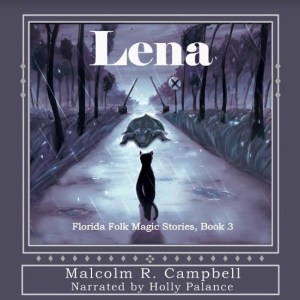
Malcolm R. Campbell is the author of “Lena.”
I Just Published a Book: Why Am I Depressed?

But back home in Maine, after the rush of congratulatory e-mails dwindled and my modest book tour ended, the dark chill of fall descended and a depression set in. For years, I’d been laser-focused on writing during the hours my son was in school. Now I drifted around the house in my gray sweatpants, refreshing Twitter and Instagram, and reading Knausgaard and Cusk. I felt despondent. Rudderless. Tired. Inexplicably, I felt like a failure. Rather than feeling gratitude for what had happened, I obsessed over what hadn’t. My book hadn’t become a bestseller, received a rave (or any) review in the New York Times, or landed me my ever-since-girlhood fantasy interview with Terry Gross. I judged myself for the brass rings I hadn’t grabbed. As much as my memoir mattered to me, to the rest of the world it was just another book.


Source: I Just Published a Book: Why Am I Depressed? | Poets & Writers

Jessica Berger Gross talks honestly about a common problem many writers share, the depression that often follows the release of a new book. Bestselling authors may be too busy to be depressed, or possibly the depression takes longer to arrive. Finishing a book is a personal triumph, all the work from A to Z, that one’s expectations are high, not so much expectations of fame and fortune, but of euphoria or at least quiet satisfaction.

As Gross writes, it’s not so much what happened, but what didn’t happen. After the initial hoopla, the author goes back to his or her desk, plays a few games–or maybe a lot of games–of Angry Birds or Words With Friends, and starts wondering whether or not they have it in them to go through the process again.

It’s like climbing Mt. Everest and realizing nobody noticed. It was a dangerous thing to do, especially Alpine style without oxygen or ladders or fixed ropes, but back on Facebook where it seems like somebody might want to hear about it, there’s mostly silence. Fortunately, the depression keeps one from caring about that even though that is one component of the depression.

Small-press and self-published writers have the added burden of realizing that their yearly website fees are costing them more than they’re earning.

I don’t think vanity leads to this depression, that is, thinking one should be famous, should be talking to movie studios, should be recognized on the street, or be receiving invitations to speak at book fairs and panels. It’s more that one finds himself/herself fretting about lack of satisfaction, lack of happiness, and the lack of all the feelings s/he thought would be center stage in his/her consciousness.

After a while, the muse screams, “Suck it up; you felt all those wonderful things while you were writing and now you’re not writing.” You protest this for a while until you give in and say, “Okay, I’ll climb K2 solo via the famous ‘Magic Line Route’ and if I don’t come home dead, I will have had a wondrous time.”

Or you say, “I’m thinking about 75,000 words of storytelling about a man and a woman who discover they’ve ended up married after a drunken Vegas weekend and God wants them to figure out whether they’ve been cursed or blessed.”

Authors are trying to figure out the answer to that question all the time. The answer is “both,” but don’t quote me on that.

Malcolm

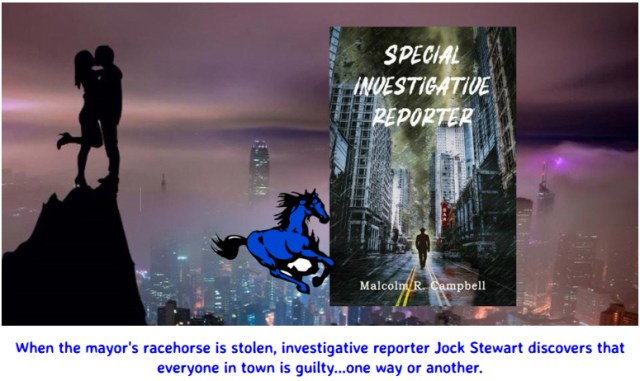
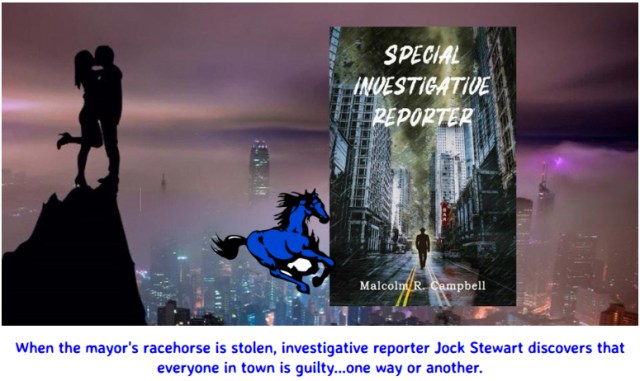
Malcolm R. Campbell is the author of the satirical mystery “Special Investigative Reporter.”

If you’re writing a novel about a slaughterhouse. . .

then you need to tour a slaughterhouse. Or, at least read a lot about slaughterhouses, what happened inside then and what became of the people who worked there. In his essay in “The Writers Chronicle,” Colson Whitehead suggests writing what you don’t know, otherwise, you’ll and up writing the same book over and cover. So, you probably don’t need a slaughterhouse career to craft a novel about them. Frankly, that’s the last place I want to work.

Many things fall into the category of research that makes writers sick. Researching the KKK for my novel in progress fits into that category. And yet, since I never belonged to the KKK, I need to find out what happened in their meetings or my scenes and descriptions won’t be correct. I could say, “who will know?” Well, I would know. So here’s a selection of KKK books you’ll find on Amazon if you go looking. Fortunately, I found what I needed on free sites and didn’t have to buy any of these.

In addition to those, older books have been captured by Google or reside in various libraries and archives. If you look on state-operated photo archives (such as Florida Memory), you’ll find photographs of KKK fliers, pamphlets, parades, and posters. I grew up in an area with an active KKK presence, so I have a sixth sense when it comes to tracking down the filth.

Looking at this shit is about like being forced to eat a food you detest, like turnips, for example. Do you eat the entire crock of turnips in one sitting, do you eat one bite every week smothered in something that disguises the taste, or do you say to hell with the turnips—or the KKK–and give up on your book? I think that historically accurate novels that mention the KKK are important to our understanding of the Jim Crow years of our past and (sadly) to the deluge of white supremacy groups we’re seeing around the country today.

When I was in high school, I got physically ill reading All Quiet on the Western Front. Later, I felt the same way when I read Hiroshima. I wondered how the authors were able to suffer through the facts and put words on the page. Such questions are a consideration, I think, for anyone writing a novel with horrifying sweeps or history and the bad guys responsible for them.

Anger is good motivation, and suffice it to say, I feel plenty of anger about the KKK. I researched the KKK when I wrote the Florida Folk Magic Series. My work-in-progress novel follows up on that trilogy, so that means reading more about the KKK than I want to know. You might find yourself in a similarly uncomfortable research situation. if you decide to write a novel about the prison at Guantanimo, the rape culture, terrorist attacks, or even a tour of duty in the House of Representatives.

When it comes down to it, you have to learn about it before you can write about it.

Malcolm


If you’re an author, why’s your online stuff out of date?

Presumably, part of an author’s platform is composed of a Facebook page, a blog, a website, and a Twitter account. Letting these go out of date seems about as silly as a bricks-and-mortar store publishing an old phone number on a billboard. So, why does it happen? Better things to do, perhaps. Or, tired of social media, perhaps. Or dead, perhaps.

Reasonable excuses, perhaps. Yet, I feel a bit discouraged when:

  • I try to follow an author on Twitter and find that the author’s Twitter link in their Facebook about page or their website leads to a message telling the account doesn’t exist.
  • I click on the blog menu selection on the author’s website and find no new posts for four or five years.
  • I notice that an author’s Twitter profile touts a NEW BOOK that was new a year ago.
  • An author’s Facebook page or profile sits there for months with no activity.

Nobody asked, but it seems to me it would be better to delete these out-of-date references and accounts until the author needs them again. In the old days, misspelling a source’s name in a newspaper was considered especially egregious sin, partly because it was sloppy and partly because one figured that if the name was wrong, perhaps other “facts” in the story were also wrong. At best, an out-of-date platform is a similar bad sign to prospective readers, agents, and publishers.

I get it. Promotion via blogs, websites, Twitter, and Facebook tends to ramp up when a new book comes out. Makes sense, I suppose. However, a continuing presence of up-to-date online material will be vital if an author starts looking for a new agent or publisher and discovers the platform has fallen into disuse for five years. That tells an agent the platform isn’t a positive factor in the decision about representing an author.

Really, it’s not that hard to delete links to Twitter accounts and blogs that are no longer active. Worse yet, authors are disappointing their readers by letting a blog sit there with nothing new to read.

By the way, if you find out-of-date links on any of my sites, please let me know. Seriously, I like to practice what I preach even though I’m as disorganized as anyone can be. (I just updated my Twitter profile picture before writing this blog.)

Malcolm

Are you taking the plunge into NaNoWriMo this year?

“National Novel Writing Month began in 1999 as a daunting but straightforward challenge: to write 50,000 words of a novel during the thirty days of November.” – NaNoWriMo

A lot of writers and aspiring writers ask themselves one important question every year about now: “Am I going to commit to writing 50,000 words in November?”

According to the organization’s website, 306,230 said “yes” in 2017. The organization has grown since 1999 and runs multiple programs year-round. It’s larger and more influential than most of us know. Explore its website and you’ll find that there’s a lot more going on there than writing 50,000 words in November.
Yet, 50,000 words is how it began and making the commitment November 1 after all the Hallowe’en candy as worn off isn’t easy to do even though the decision is often made on a dare or during a transcendent moment of infallibility without realizing what it means to say “yes.”

I’ve been writing for a long time. Sitting here on my PC are the first two chapters of a novel that I havent touched for the last forty days and forty nights. Will NaNoWriMo help me get it moving again? It helped me finish a prior novel, though I won’t tell you which one.

Of course, one has to sign up with the organization to make it official and then tell everyone you did it. That alone makes the yes/no decision about as daunting as telling everyone on the first day of the month that by the end of the month you will have stopped smoking, given up booze, or completed a rehab program for hard drugs.

I can look at the entire process as a positive kick in the pants or as writing under the bright spotlight of a lot of peer pressure. So, if were to take the plunge this year–don’t quote me on this because I’m not saying I going to do it–maybe it’s better to do it unofficially and quietly so that if things go wrong, nobody will know. That’s how I finally stopped smoking. I didn’t tell anyone that on day X I was going to be making my one-hundredth attempt. I just stopped. After a while, people began to notice. By the time they did, I had several weeks under my belt without the pressure that I had the strength to continue.

I could do that with NaNoWriMo. Yes, I know. If I don’t tell anyone that I’m trying it out again, nobody will be around to say, “Well, Ace, so you only wrote 2,000 words by the end of the month, then?” At least everyone on Facebook won’t know. Of course, I’ll know. That’s the real problem, isn’t it?

But you, if you’re feeling brave this year, can fire off rockets, chart your word count on a daily blog, and shout to everyone who knows you on December 1, “I did it.”

Are you game?

Malcolm

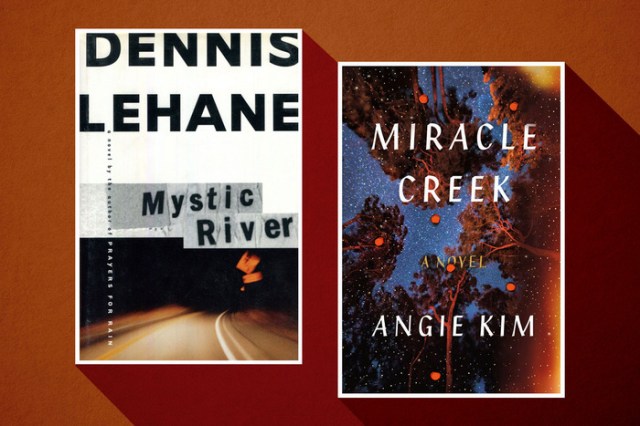
Angie Kim: Learning from ‘Mystic River’ to Write ‘Miracle Creek’

What I really wanted was a Dennis Lehane master class, which he sometimes teaches, though nowhere near me and not at that moment. So I made one for myself: I sat in my tiny writing nook and reread Mystic River from cover to cover, multiple times, and dissected it down to its component scenes. I created a detailed outline, color coded by character, and used it to make timelines, chronologies, and charts to figure out the book’s structural skeleton — the major evidentiary discoveries, the twists and the red herrings, the whodunit reveal to the readers and the various characters. Eventually Miracle Creek took shape, and along the way, I learned a few key lessons.

Source: Angie Kim on Using ‘Mystic River’ to Write ‘Miracle Creek’

Most of us don’t have the time or money to take a master class from one of our favorite authors, much less attend an MFA program where that author is part of the core faculty.  If the author’s writing in the genre you want to attempt, you have an alternative. Read and re-read one of your favorite books.

In fact, that might be better than the class, as inspiring as the class will be. Many of us learnt more about plotting, character development, and dialogue from reading the kinds of books we wanted to write. In my case, it was Dune and Earth Abides. Ultimately, I would change my mind about what I wanted to write, but the lessons and discoveries made while reading those novels were of lasting value.

It’s a choice, we all grapple with: learning through lecture and discussion OR learning by seeing a final product that illustrates how it was done by the master.

–Malcolm

Writing Fru Fru

As an author, I feel so far off the beaten track of techniques, theories, movers and shakers, and writing schools, that I must confess I have no idea what’s going on in terms of best practices and goals. Furthermore, I don’t think I care.

I subscribe to several writing magazines. Some of the material is interesting. Most of it makes my eyes glaze over. And that includes the 1000000 ads per issue about MFA programs. These ads list their faculty. I’ve never heard of 99.9% of them. Of course, they haven’t heard of me either, so that’s no a condemnation of those running the show.

My brand of heresy is that I think many writing programs kill off more students than they help. My English minor in college just about killed me. Courses in taxidermy and underwater basket weaving would have been more helpful.
Yes, I’m a rebel when it comes to how writing and literature are taught. Yet, I think most prospective writers will do much better if they are left to figure out how to find their own voice and style without prompts from a professor. Sure, there are plenty of good tips out there about practical matters.

If you want to write, then write. You alone know what interests you, what kinds of stories are haunting your dreams to be told, and how words best spill from your brain onto the printed page. It’s a natural thing. Programs and rules tend to disrupt that natural thing: writing as only you can do it.

While you may not know a dozen theories your 300- or 400-level college course wants to impart to you, you do know yourself and how you see the work you wish to do. The drummer or song or inspiration behind your work always comes from within, not somebody standing behind a lectern who says ABC is good and XYZ is bad.

I always picked XYZ and made it work as my way of mocking silly writing theories. As Mark David Gerson says in his popular writing books, “There are no rules.” Every time a guru says don’t, I can show them a successful author who did it. We always need something fresh and innovative, and sticking to ancient rules ensures we’ll never find it. Which is not to suggest we need pure chaos, though a little bit of chaos in writing can be energizing.

Good writing, I think, comes from people who thought it was more important to know themselves rather than to know the substance of an MFA program. Why? They chose life over conformity.

Malcolm


Savoring where you are

“When my students finished a draft, all I wanted them to do was sit inside of it for longer than was comfortable. To acknowledge and celebrate what they’d accomplished. To not let their brains yet look toward what it must become for it to have worth.” – Lynn Steger Strong in “So, You’ve Finished Your Book”

There’s so much to think about when the first draft of a story or novel is finished.

Unfortunately, we often dive right into thinking about the next draft, our writer’s platform, our submission list, potential reviewers, and the whole publishing thing before we allow ourselves to enjoy what we’ve done already. We’ve taken a ream of paper or an empty DOC file and created the seed of a story. To think about where that seed might go at this moment would be like a husband and wife hearing the news that the wife was pregnant and immediate thinking about what graduate school the child should go to instead of living in the moment of that news and what its like to hear it and know it and feel it.

The reader savors your work if your work is true.

Publishing, if not the world, has made us this way. We have short attention spans with little time for savoring where we are right now. To get ahead (of what or whom, I don’t know) we have to intuit or logically plan the future before the lessons of the current experience can be sorted out and enjoyed and–as Stong says–“celebrated.”

I can’t prove it, but I think our lack of savoring this moment not only spoils where we hope we’re heading but–if we’re writers–also tends to dumb down the material we’re working on so that it fits prospective sales demographics rather than becoming more true and whole within itself when we begin subsequent drafts of the story.

In fact, some marketing gurus boldly tell us to figure out our niche, its demographics, and its movers and shakers before we even begin writing a new story. They want us to write for a specific group/fad/genre before we even pick up a pen. I have little use for those people because I believe the art is more important than the selling of the art.

You may remember an old expression, “you can’t make a silk purse out of a sow’s ear.” I don’t believe that, actually. But the gurus who want to sell to an audience think it’s easier to simply sell the sow’s ear because, well, people will be brainwashed into buying it and, worse yet, won’t know the difference between it and the silk purse.

I’m discouraged when I think of such things and fear they’re truer than I know.

If you celebrate your beginnings and your first drafts and your hopes, I believe that sooner or later you’ll not only have art that’s true to itself but a genuine “silk purse” that people will be drawn to without marketing trickery. And, you’ll be happy with what you’ve accomplished.

Malcolm


Ken Burns’ Documentary Brings Back Many Memories

Like most people my age, I listened to the primary performers covered in Ken Burns’ Country Music documentary as well as the stars who were 15-20 years before my time. Our popular American music is a mix of blues, jazz, folk, gospel, bluegrass, country, ragtime, and rock. I liked everything but rock when I was in high school, but tended toward folk, though it’s hard to say where one form began and another ended.

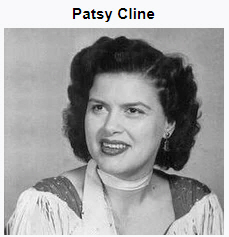
I liked Joan Baez and Patsy Cline, among others. The episode of Burns’ documentary that ended with the death of Patsy Cline was difficult for me to watch, especially with her voice over the closing credits. I remember when it happened. I took it hard then, and Burns’ documentary brought it all back. When Cline sang, it felt like she was in the room with me. Yes, I know, a million other people thought the same thing because her voice was personal and perfect.

As I watched the documentary, I knew we were leading up to the 1963 plane crash that killed Cline. I hoped they would leave that until the next episode. And I hoped maybe knew evidence would show the crash never happened or, if it did, that everyone survived. No such luck.

No, I didn’t have a crush on Patsy Cline. I just liked her music from her recordings to the shows we heard on the clear-channel radio station WSM from the Grand Ole Opry. My wife and I once heard Gordon Lightfoot sing from Nashville’s Ryman auditorium. He’s a favorite of mine, too. As we sat there in those church-pew style seats, I could imagine what the place would have been like in the days when the Opry originated there.

I’ve listened to the music of almost every performer who’s appeared in Burns’ documentary. Seeing it all again has been a trip back in 4/4 time.

Malcolm

This and That and ‘Shadow of the Wind’

  • Our heatwave continues. (It’s time for y’all to say “there there.”)
  • Our lack of rain continues. The grass keeps growing because I think the house was built on an old kryptonite mine, but the small trees need to be watered a couple of times a week. We got out both riding mowers this past weekend and cut the grass before it looked like a hayfield.
  • I’m half-way through my radiation therapy (43 days in a row not counting weekends) for prostate cancer. Other than feeling more tired than usual, I haven’t experienced any ill effects.
  • On Facebook, people are going through a phase of posting the covers of their favorite books for 17 days in a row. When a friend tagged me to do it, I told her I don’t have the energy to post that many covers. But today, I posted the cover of Shadow of the Wind. It’s one of my favorite books. It has three follow-up books, the first of which was ok, but nothing like this one. I never got around to books three and four.
  • As for my own writing, I posted this on my Facebook author’s page today: Sparrow, who pushes a shopping cart around Torreya, is currently sitting in a diner eavesdropping on a conversation between two cops at a nearby table. They think she’s ancient, frail, deaf, and demented, so they aren’t watching their words about last night’s attempt on the life of the local KKK leader.Sparrow has been sitting there for quite some time, on hold as I go through radiation and hormone therapy to get rid of this cancer. She wants to move on with her story. So far, she’s been patient. She’s the protagonist in my next North Florida story. I hope she doesn’t run amok and change the plot while I’m temporarily away from the manuscript.Meanwhile, I hope y’all are enjoying my change-of-pace comedy/satire, “Special Investigative Reporter.”
  • There’s a nice review of Special Investigative Reporter on Big Al’s Books and Pals.

–Malcolm