Don’t forget YouTube when researching a book

When YouTube first showed up in 2005, I thought all it was good for was as a place to watch old band concerts, book promotion trailers, and old TV shows. Over time, my wife (who likes to repair stuff) found that almost anything you want to fix–from a complex shower faucet to a riding mower carburettor–has a how-to video on YouTube. My granddaugher, who’s into crafts, showed me that almost anything she wanted to make had step-by-step YouTube instructions. Heck, YouTube is now hooked up to our TV so we can watch old episodes of our favorite old shows.

I’m the last person in the family to embrace YouTube.

Case in point. When I realized I needed more info about the harness used in a packtrain, my print-oriented brain first led me to articles and then a couple of books about saddles, harnesses, knots, and panniers (for cargo). These articles/books had great drawings and were put together by people who still lead packtrains into roadless areas.

One thing that just wasn’t making sense to me was tailing a packtrain, that is, connecting each horse in the train via a rope to that tail of the horse in front of it. I couldn’t believe that in 2021 there would be a YouTube video showing how to do this. Now it makes sense. No, it doesn’t hurt because the rope leads rather than pulls the following horse.

Seeing multiple videos about packtrain harness has made it much easier to write the book even though I know the pros will realize I’m a tenderfoot with a recipe. I don’t know why people make these videos. Maybe they’re showing off their knowledge or maybe they honestly have skills that are fun to pass along. Whoever they are, I’m glad they show and tell the rest of us how to do what we need to know how to do.

So, guess what? If you need to know how to do something for a novel, there just might be a how-to video.

–Malcolm

Malcolm R. Campbell
Publisher: Thomas-Jacob Publishing

Website

Facebook Author’s Page

Amazon Author’s Page


The yearly kumquat argument

Kumquat.jpegSince I grew up in Florida, I know that kumquats are harvested between October and February. Yet every year, my Georgia grocery stores have (a) never heard of kumquats, (b) don’t really know when the season is so they make something up, and (c) had one grower a year or two ago who shifted over to something else and so just wrote off ordering them from somebody else.
And apparently, my name is on some list of expat Floridians who hound grocery story produce departments every year. Can I buy a white grapefruit instead on the overly sweet pink? No. Can I find a satsuma anywhere? Er, we don’t know what that is, check at Home Depot.

And then there are kumquats, as far as I know, the only citrust fruit with edible peeling. They’re only an inch or two in size, so peeling them would be tedious. They have a wonderful tart/sweet taste. They make great marmalade.

So here’s what I want you to do starting inn October. Ask the produce manager of your favourite grocery store if the kumquats are in yet. If not–or if s/he doesn’t know what theyt are–ask when they will be in. Maybe this pressure will force more grocers to ask for them and more growers to keep growing them.

And just maybe, the produce manager you ask will have them and you’ll feel obliged to buy a sack. This could be a turning point in your life–discovering just how wonderful kumquats are.

–Malcolm

Malcolm R. Campbell

Publisher: Thomas-Jacob Publishing

Website

Facebook Author’s Page

Amazon Author’s Page

Set in Florida where it’s relatively easy to find kumquats.

Those old maligned Christmas letters

The families who didn’t send Christmas letters poked fun at the people who did send Christmas letters.

One joke was that the Christmas letters never told the straight skinny–as we called the real truth in the navy–but presented a fantasy version of the family’s activities. Jail time, divorces, bad grades on report cards, and acne never made it into th Christmas letter. It was all good news, creating world peace, saving people from poverty, and receiving various honors and awards.

My parents added new people to their Christmas letter list at every stop in the road of my father’s advancement up through the faculty ranks. Every new college added people we would know the rest of our lives through cards and letters even though we knew them on a day-to-day basis for a few months or a year.

When my parents passed away, I sent their last letter letting everyone know they were gone and thereafter received cards and letters every year from people I hadn’t seen for half a lifetime.

In later years, the family Christmas leters–collected in a three-ring binder–became my memory. If I couldn’t remember what year we visted Niagara Falls or Fort Ticonderoga or Mammoth Cave, I’d pull out the Christma letter diary and look it up. It’s been a handy resource. On the curiosity side, since my folks put their current address in the letters, I’ve been able to use Google Maps and look up all the houses where we lived back into the 1940s. They’re still there. There have been a few times, though, when I wanted to write the current owners and say, “You really screwed up the front yard.”

I don’t send out Christmas letters. But I do send snail mail cards. It’s a way of staying in touch, old fashioned as it may be. A few friends still send us Christmas letters, some interesting, some tedious. As people get older, they often spend a lot of time traveling: so what we get really isn’t a letter, but an intinerary. We skim those because we really don’t need to know the details of every roadtrip.

Frankly, it would ramp up our interest if letters said stuff like, “Laura spent more time this year in county for turning tricks on Tenderloin Street” and “Bob got caught with his hand in the till at work and had to move to a new church” and “Sam’s had syphilis most of the year again while Megan is hanging out with a bad crowd.”

I’ve been tempted to say such things, but my wife thought it was a bad idea. Probably so.

I often wonder if people under 30 these days care about family continuity whether it’s coming from Ancestry.com or saving old letters. It bothers me to think more and more people don’t care who their grandparents were/are or where they lived. All of that past family history seems to play a role in creating the people we’ve become–even if we joke about it by saying, “Acccording to the Christmas letter of 1983. . .”

–Malcolm

Malcolm R. Campbell

Publisher: Thomas-Jacob Publishing

Website

Facebook Author’s Page

Amazon Author’s Page

Blank sheets of paper made us happy for hours

Our father had tons of ditto and mimeographed sheets of paper that had been used on one side that he recyled, from the office and brought home to my two brothers and me.

When he was young, he invented and/or  his father invented two used-paper games that were perfect for people with a lot of imagination. Both games began on multiple sheets with paper stapled or taped together so that they formed a large square or rectangle. When the played Colonies, we drew the outline of a large island on the resulting huge sheet of paper and then lined if off in a cross-hatch pattern on one-inch squares.

Crayons and colored pencils made our games works of art.

We took terns claiming squares which, of course, were our cologies. You had to claim each new square in a block that was continguous to a square you already had. Once territories began to develop, we added railroads, ports, towns, lakes, roads, mountains, and other features.

A stimilar game was called Town. Instead of drawing an island, we drew a crossroads in the center ot the giant sheet of taped-together paper. Those represented the Town’s major highways. Then we preceded to add smaller streets, schools, homes, factories, parks, offices and other features. Inevitably, each of us would use a section to present the bad part of town, filling it with narrow and wisted streets with bars, shady warehouses, and hotels that were obvously houses of ill repute. Whenever a section got too horrible, we’d do urban renewal projects which simply consisted of slapping a fresh sheet paper over a portion of the map and starting fresh. When my youngest brother became a city planner, he quickly saw that real urban renewal projects required laws, lawyers, forms, and a stacak of regulations.

In  addition to those two games, we used our recyled paper to add extra streets to the Monopoly game. This provided us with new properties and higher profits as well as an exercise in what causes inflation since we had to keep creating more money to keep the bank solvent.

Oh, and we used to play outside in the dirt, too. Inside or outside, I think a few sheets of paper or a pile of sand in the yard taught us more about our imaginations than most of the games we could buy in a box. 

–Malcolm

Malcolm R. Campbell

Publisher: Thomas-Jacob Publishing

Website

Facebook Author’s Page

Amazon Author’s Page

Nook or Kindle, harcover or paperback, you have multiple ways to enjoy this novel.


In Praise of Scouting

Frankly, I don’t know where so many scout leaders went wrong in order to lead the organization into disrepute. Will the organization survive? I hope to. In spite of the problems–which are attrocious–the BSA has, over time, done a lot of good. Not just wilderness skills, but a code of life based based on service, a moral life, and skills that have been applicable in multiple environments and situations.

Our family was heavily involved from cub scouts to explorer scouts. My two brothers and I were eagle scouts as well as God and Country recipients. One was a member of the Order of the Arrow. My father as a pack leader and later an explorer post leader and my mother was a den mother. They were also involved at the council level.

Our Tallahassee, Florida troop 101 was sponsored by the First Presbyterian Church. Then later, after I grew up, they dropped their sponsorhip and when I wrote to ask, nobody seemed to know why. What a shame.

Fellowship and working together toward common goals were always part of the mix. I feel we’ve lost the spirit of that has young people grow up glued to their cell phones rather than something that matters.

It’s not so much that you need to know how to survive in the wilderness, to tie a dozen knots, to make camp furniture out of scrub okay, practice first aid, and learn whet the world offers and what it will ask of you as you become and adult after applying yourself to the BSA ranks and merit badges. Will I ever need to know how to tie a timber hitch or a bowline? Perhaps not,  but knowing how (should the need arise) is a large part of being self sufficient. 

We knew how to identify what we found in the woods, whether it had beneficial uses or was harmful, and how to stand on our own two feet should danger arise. Sometimes I wonder if today’s youth are learning to survive or just to get by on a wing and a prayer.

Will Scouting itself survive? If so, I think it will have to change in a lot of ways, and I’m not just talking about all the injury suits brought by boys and their families against warped Scout masters. Yes, that must be part of it. But there’s more, I think, and a great part of that is learning to take responsibility for what you do and learning how to step in and lead others out of danger who, unlike Scouts, do not follow the “Be Prepared” motto.

The skills that have grown out of Scouting have been a life long part of growing up to be the kind of person you are glad to have become. We need more of this.

–Malcolm

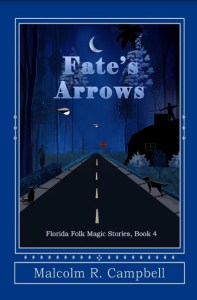
Fate’s Arrows is available on Kindle and Nook, in paperback and hard cover, and an audiobook edition. 

Staying just ahead of your characters

Teachers who are suddenly assigned to teach a course they’ve never taught before, often say that they use the course’s text book to stay just ahead of their students.

Writers often do the same thing. Let’s say my character hitches a ride and is let out next to a Florida swamp when the driver comes to a fork in the road and that’s the end of the ride. What does the character see? I don’t know. Well, I partly know because I grew up around Florida swamps. But that’s been a while. So, I get out a couple of my flora and sauna books about Florida and learn that the character can see. That includes things he can’t see that might hurt him.

So, I’m like the teacher, except in each case, I’m writing my way through locations and incidents that are new to me. In my novel in progress, a major character is at a livery stable, one owners by his two partners in a pack train operation. While I’ve ridden a fair amount, I’ve never run a pack train, much less had to know anything about the pack horse’s harness, how to load up, and what to expect a;pmh the trail.

Pack trains are still used in National Parks and other wilderness areas. However, tracking down working packers seemed like it would be more time consuming than reading books and following up with Google searches to fill in the gaps. So, now you know why there’s a book pictured here.

This book, like the earlier clasic by packer Joe Black, Horses, Hitches, and Rocky Trails: The Original Guide to Packing, Camping, and Getting Along with the Wilderness, has all the detail a neophyte needs to stay ahead of his characters. If the whole novel centered on a packtrain, I would interview people who run them after eading the books.

Both books are written by people who know horses, know tack, have plenty of packing experience, and can draw highly detailed and accurate illustrations. In reading these, I decided to change from mules to horses in the book since the books focus on horses and I’m more comforable staying within the authors’ specialties rather than trying to apply them to mules. Either one works in the novel.

Unlike people taking courses or receiving technical instruction in order to do a specific job, an author isn’t researching the subject in order to go out and do it. S/he just needs to be able to create an accurate representation of the work. Needless to say, this approach wouldn’t work if I were training student pilots and I’d never flown a plane. But for fiction writing, it works fine. And, like a reporter, I always try to find multiple sources. So, I can’t claim to be able to picket break a horse, but I can say I know (and my character knows) why you’d want to do it for horses on your pack train.

Research is always the aspect of the muse what stays with me throughout the writing to make sure I.m not writing without a figurative paracute.

–Malcolm

Malcolm R. Campbell

Publisher: Thomas-Jacob Publishing

Website

Facebook Author’s Page

Amazon Author’s Page

Experience the audio edition!

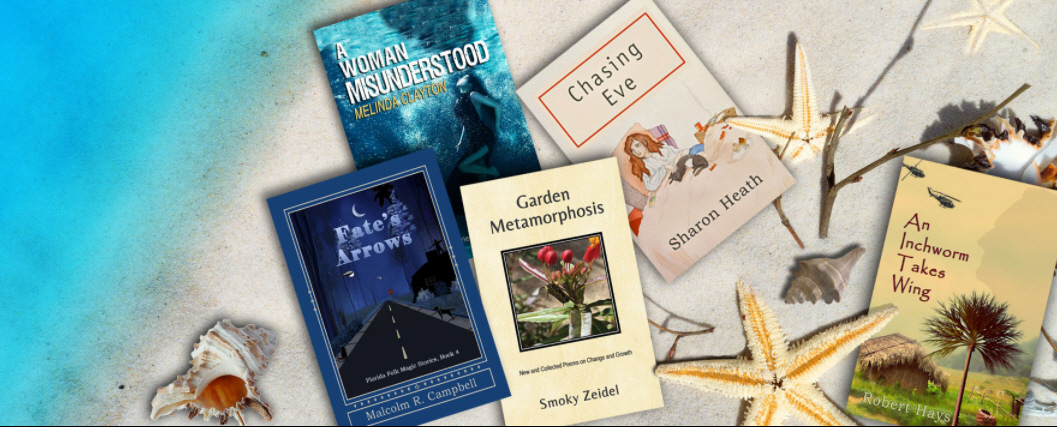
A cool selection of fiction

From my colleagues at Thomas-Jacob Publishing

Child of Sorrow by Melinda Clayton

When fourteen-year-old foster child Johnathan Thomas Woods is suspected of murder, an old letter and a tacky billboard advertisement lead him to the office of attorney Brian Stone. Recognizing the sense of hopelessness lurking under John’s angry façade, Stone is soon convinced of his innocence. When John offers up his lawn-mowing money as payment, Stone realizes this is a case he can’t refuse.

In the face of overwhelming evidence assembled by the prosecution, Stone and his team find themselves in a race against time to save an angry boy who’s experienced more than his fair share of betrayal, a boy who more often than not doesn’t seem interested in saving himself.

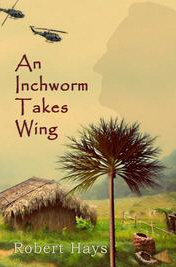
An Inchworm Takes Wing by Robert Hays

In the tranquil solitude of a darkened Room 12 in the ICU on the sixth floor of Memorial Hospital’s Wing C, a mortal existence is drawing to an end. His head and torso swathed in bandages, his arms and legs awkwardly positioned in hard casts and layers of heavy gauze, he’s surrounded by loved ones yet unable to communicate, isolated within his own thoughts and memories.

He does not believe himself to be an extraordinary man, simply an ordinary one, a man who’s made choices, both good and bad. A man who was sometimes selfish, sometimes misguided, sometimes kind and wise. A man who fought in a war in which he lost a part of his soul, who then became a teacher and worked hard to repair the damage.

When faced with the end, how does one reconcile the pieces of an ordinary life? Does a man have the right to wish for wings to carry him to a summit he believes he doesn’t deserve to reach?

Chasing Eve by Sharon Heath

Everyone expected big things from Ariel Thompkins. Wasn’t she the girl who’d roped her friends into one madcap adventure after another, who’d met the challenge of losing both parents before turning eighteen, who’d gone on to graduate summa cum laude from UCLA? So how did this livewire end up delivering the day’s mail for the U.S. Postal Service, hunkering down each night with her half-blind cat in front of the TV, ruminating over the width of her thighs? It looked as though it would take a miracle to get her out of her rut. Who knew that miracle would come in the form of an acutely candid best friend and a motley crew of strangers—a homeless drunk once aptly nicknamed “Nosy,” a lonely old woman seeing catastrophe around every corner, a shy teenager fleeing sexual abuse, a handsome young transplant from the Midwest with a passion for acting and for Ariel herself? Not to mention the fossil remains of a flat-faced crone who just might have been the ancestress of everyone alive today? Chasing Eve takes us on a funny, sad, hair-raising adventure into the underbelly of the City of Angels, where society’s invisible people make a difference to themselves and to others, and where love sometimes actually saves the day.

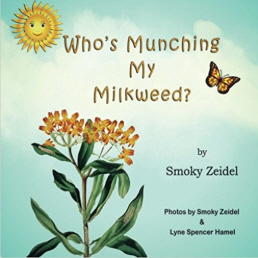
Who’s Munching by Milkweed? by Smoky Zeidel

When Ms. Gardener discovers something has been munching on her milkweed plants, she embarks on a fun and educational monarch butterfly journey that enchants both children and adults. 

With Photographs. Zeidel is a Master Gardener.

Briefly Noted: ‘Waltzing Montana’

Mary Clearman Blew grew up on a small cattle ranch in Montana, on the site of her great-grandfather’s 1882 homestead. Her memoir “All But the Waltz: Essays on a Montana Family,” won a Pacific Northwest Booksellers Award, as did her short story collection, “Runaway.” – Author’s Website

Waltzing Montana, University of Nebraska Press, March 1, 2021, 294 pp.

A refreshing and original story by an author who knews the territory. Blew is a writing professor at the Univerfsity of Idaho.

From the Publisher:

Midwife Mildred Harrington is riding back home one evening after checking on one of her pregnant neighbors when she stumbles upon an injured stranger. She soon realizes it’s her old sweetheart, Pat, from country school—and he may not be telling the full truth about how he was injured.

Set in rural Montana in 1925, Waltzing Montana follows Mildred as she grapples with feelings for Pat while also trying to overcome the horrific abuse she suffered as a young teenager. Ultimately Mildred must decide whether to continue her isolated life or accept the hand extended to her.

Inspired by the life of midwife Edna McGuire (1885–1969), who operated a sheep ranch in central Montana, Blew has turned the classic Western on its head, focusing on rural women and the gender and diversity challenges they faced during the 1920s.

Editorial Review:

“What we need most right now are stories that are down-to-the-bone authentic, and Mary Clearman Blew gives us one with her new novel, Waltzing Montana. The women and men in this book are not only resilient but find their true meaning in forging through challenge: drought, war, and the Spanish flu pandemic. And yet Blew artfully nods to their limits too. There’s only so much brutality a person can endure, and the ravages of pain and abandonment Blew portrays in these pages stir acts of forgiveness, patience, and abiding friendship, which allow the deepest wounds to finally heal.”—Debra Gwartney, author of I Am a Stranger Here Myself

The book has an apt and lovely cover; my only concern here is that the title and author’s name need to be more visible.

–Malcolm

Malcolm R. Campbell

Publisher: Thomas-Jacob Publishing

Website

Facebook Author’s Page

Amazon Author’s Page

Available on Nook from B&N


Mountains. . .before I got too old to climb them

Now as I was young and easy under the apple boughs
About the lilting house and happy as the grass was green,
The night above the dingle starry,
Time let me hail and climb
Golden in the heydays of his eyes. . .

from “Fern Hill” by Dylan Thomas

When I first explored the mountains of Glacier National Park, “time let me hail and climb golden in the heydays of his eyes.” I thought those trails and those days would go on forever even though I had read the Dylan Thomas poem many times and knew how it ended. Even though grandparents are around us when we are young, we still think we will always be young and, that if we won’t, old age is eons away in a future too far away to fathom.
When we’re young, it’s hard to imagine being old. When we’re old, it’s easy to remember being young just as I remember the first time I read “Fern Hill” and was concerned about the words: “ In the sun that is young once only, time let me play and be golden in the mercy of his means.”

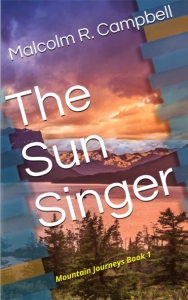
As I write a novel now about a character following a trail near Piegan Mountain, I must rely on the videos and descriptions of younger men and women, those who are still healthy in time’s golden era. If I’d only known, some 50 years ago, that I’d be writing this novel, I would have taken a hundred photographs along the trail that led from Going to Sun Road to Many Glacier Hotel. But I was too enchanted within the moment to create a photographic diary on Ektachrome film. (Regrets, I’ve had a few.)

If there’s a learning experience in all this, it’s to push on with the writing using the resources I can find rather than wishing (a) I could be young again, (b) took 1000 photographs of everything, and (c) ruined my life experiences by slavishly documenting them for those old-age years when they would be beyond reach.

When we have finally followed time out of grace, our memories must suffice, all the more sweet because they are so tangled and unclear rather like a dream of once walking the high country when knees and ankles and breath were strong and the sky was blue and full of endless promise from side to side.

–Malcolm

Malcolm R. Campbell

Publisher: Thomas-Jacob Publishing

Website

Facebook Author’s Page

Amazon Author’s Page


Dear consultant, you want me to pay you to tell me about the software I don’t want?

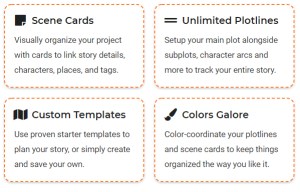
Perhaps you saw this e-mail. A writing/marketing consultant sent me an e-mail “offering me a seat which wasn’t free” to an upcoming webinar about novel-plotting software. He did give recipients a free tip: after analyzing multiple programs, he liked Plottr best. Plotter’s slogan is Plan Your Books The Way You Think.

I cruised through the website and what I saw reminded me of the note cards, outlines, and other annoyances that English teachers used to force on us every time we wrote a paper. My answer to Plottr is the same as my answer to English teachers 50 years ago: Nobody thinks like this.

Perhaps a programmer using C, COBOL, or assembly language thinks like that, but writers certainly don’t. I’ve written computer programs and noted the difference between their structure and the structure of a story.

So, after seeing what the consultant wanted me to learn more about, my mood went from pleasant to bad. It got worse when I saw that the way to learn more was through a webinar. Holy hell, I thought, that’s about the slowest possible way to impart information. Very linear. Much slower than a booklet with headings and subheads that let me go directly to the points I want to know more about. With a webinar, I have to suffer through the whole darn thing to get to the points I care about. I have no idea why this is such a popular method of dispending information. It’s probably cheap.

Now, if the webinar came with a transcript I could refer to later, I might give its creator a little slack.

While on the Plottr website, I kept seeing mini-testimonials flashing on my screen from people who loved the application. I didn’t see any testimonials from well-known novelists. Joe Doaks says Plottr is great. Okay, wonderful. What’s the name of a novel he wrote using the program?

You can see, I think, that I’m not in favor of this kind of software. If it helps a writer, that’s fine. Nevertheless, I tend to see it as a detrimental approach that gets in the way of a story’s development. For goodness sakes, I don’t need a thousand-word dossier on every character before writing the words “Once upon a time.”

Enough, already. I’ve said most of this before.

–Malcolm

Malcolm R. Campbell

Publisher: Thomas-Jacob Publishing

Website

Facebook Author’s Page

Amazon Author’s Page