Shaara Bench at Richmond’s Hollywood Cemetery

Richmond’s Hollywood Cemetery, a lovely place in the garden style, has 18,000 Civil War dead buried there including well-known generals and Presidents James Monroe and John Tyler. When my wife and I visited Richmond in 2017, we included the cemetery and spent a considerable amount of time walking past huge memorials and simple graves. It’s hard not to feel the presence of the dead in this sacred ground, especially the row upon row of enlisted men who died at Gettysburg.

The name “Hollywood” comes from the Holly trees on this former estate from which the cemetery was created in 1847.

I was surprised to find a memorial bench dedicated to my former teacher and friend Michael Shaara there. Some people think it doesn’t belong. Others disagree, including me.  The bench is there because of Shaara’s coverage of the battle of Gettysburg in his Pulitzer Prize (1975) winning novel The Killer Angels.

The inscription reads: “Dedicated to Michael Shaara. Author, who so poignantly reminded us of the mortal sacrifice made by the soldiers who valiantly fought at Gettysburg, Pennsylvania. July 1st-3rd 1863.”

The bench was placed there next to General Pickett’s monument by the Pickett Society.

Malcolm

Mystery/Thrillers with ancient secrets

Looking at the novels by James Rollins, Dan Brown, and Katherine Neville, one finds a common thread that includes ancient secrets, modern-day conspiracies, hypothetical explanations for gaps in recorded history, and experts with a lot of knowledge to explain to the reader and many of the characters the significance of what is being found and how dangerous it is for the world if the secrets turn out to be worse than we thought.

The Last Odyssey: A Thriller (Sigma Force Novels Book 15) by [James Rollins]James Rollins The Last Odyssey focuses on Homer’s stories and suggests that the events really happened and, worse yet, that the powers of the gods were actual and, if found, would tip the balance of power today.

While I enjoy reading these novels and playing “what if” on a huge, global scale, the research involved just to nail down the known facts is more than I want to tackle.

Consider the research you woul have to do if your “what if” is “What if Leonardo Da Vinci drew a preliminary version of today’s F-150 pickup truck and that ‘the bad guys’ stole these plans and made a protetype that used Greek Fire as for fuel”?

Typically, the story might begin when a mechanical genius who is researching old records of the Ford Motor Company and uncovers “something odd about” the F-150’s predecessor truck, the 1950 model F-3. Let’s say that its revelopment moved along faster than it should, based on the scienceof the times. This leads the researcher to the personal libraries of the truck’s designers and one of them had a passion for Da Vinci.

As you’ll see after reading many of these novels, thbe minute somebody finds about about the designer’s passion for Da Vinci, massive forces and organizations will appear to steal the records, destroy the records, or use them as the basis for negative technology that might alter the universe. There are gun fights, people are captured, reseachers travel to Rome and gain entrance to the Vatican library, etc. Needless to say, finding the true nature of the Ford F-150 and its predecessor  Bonus Built trucks is a race against time.

Feel free to take this idea and run with it. If you end up writing a successful novel with a title like “Found On Road Dead,” good for you. Please mention me in the acknowledgements. It’s all yours because I just don’t have the patience to do the research. Goodness knows, my four hoodoo books set in the 1950s Florida Panhandle required more fact finding than anyone might guess.

I can see, though, why books in this genre (whatever it might be called) are popular. People love conspiracies, knowing secrets, and being the first to solvce old mysteries. Especially those that show us that old myths really weren’t myths.

Malcolm

Sunday miscellany

  • FloridaCurrently Reading: I’ve finally gotten around to reading Lauren Groff’s Florida (2018), a collection eleven well-crafted stories set in the state where I grew up. I like the stories’ strange characters. The New York Times called the stories “haunting,” and they certainly are that. 
  • Are We Learning Anything in School? Jesse Watters, a conservative commentator, interviewed a bunch of people on the street for Veterans Day in a manner similar to what Jay Leno used to do on the Tonight Show. He asked such questions as “Who did we fight in World War II,” “Who bombed Pearl Harbor?” “Who did we fight in the revolutionary war?” and othe facts that seem basic to understanding the country from a history and civics point of view. There were a lot of wrong answers. Too many. Watters and I don’t agree on many things, but my take on this poor showing of knowledge is that it demonstrates one of the reasons everything is so polarized: we don’t seem to have a common base of information.
  • May be an image of 5 people, people standing and outdoorsLiving Jackson Magazine. This short-lived Georgia magazine brought great articles with high production values and crisp writing to the readers of Jefferson, Georgia in the northeast section of the state. I wrote most of the magazine’s book reviews, focusing on local and regional authors. I felt a bit of nostalgia when I came across this old photograph that appeared with an article on Georgia writers, “A Truck Load of Authors” published in 2006. When I posted this picture on Facebook this past week, that 1961 Studebaker pickup truck got more attention than the people.
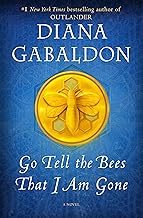
  • Go Tell the Bees That I Am Gone: A Novel (Outlander Book 9)Diana Gabadon: When Diana published the first of the nine novels (counting the one about to be released) in 1991, we were both members of the CompuServe Literary Forum. She posted snippets of Outlander (the first novel) on the forum and these created a lot of discussions about writing. The books are long, detailed, and require a great deal of research. However, I don’t think any of us thought then that the series would still be in progress thirty years later. Go Tell The Bees That I’m Gone comes out on November 23. I appreciate her work as well as the fact that as long as the forum was active, the help that she offered the aspiring writers there was a godsend. I was lucky to meet her once at a book signing in Atlanta. Plus, she wrote a blurb for one of my novels!

Have a great week.

Malcolm

Gift ideas for your smart, discerning friends and family

Books Make Great Gifts

My family makes Christmas lists because we live so far apart, it’s hard to keep up with what we’re reading. So, we go out to Amazon or Barnes and Noble and find suggestions for each other. In addition to that, here are a few ideas:

My books are published by traditional publisher Thomas-Jacob and are all available in paperback, hard cover, e-book, (Kindle and Nook) and audiobook. Ingram tells us that supply chain problems may impact the delivery of hard cover editions, so if you want those, order them earlie rather than later.

Satire

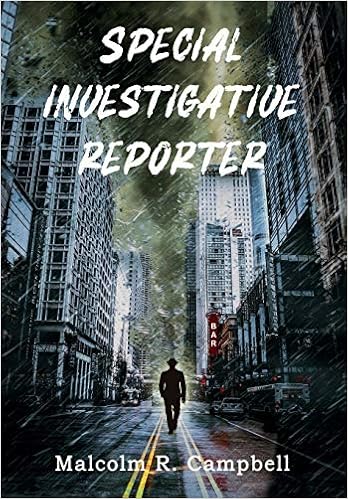
  • Special Investigative Reporter. For your friends who like satire, puns, and who may be a little bit weird. Reporter Jock Stewart doesn’t respect authority, especially when it’s inept, so he says and writes what most of us wish we could get away with.  He writes all the news that’s fit to print–and some that isn’t.
  • A riveting great read from first page to last, “Special Investigative Reporter” showcases author Malcom R. Campbell’s impressive narrative storytelling talents. Certain to be an immediate and enduringly popular addition to community library Contemporary General Fiction collections. – Midwest Book Review

Mystery

  • Fate's Arrows (Florida Folk Magic Stories Book 4) by [Malcolm R. Campbell]Fate’s Arrows. For your friends who like mystery/thrillers. Pollyanna is a bookkeeper at the mercantile in a small Florida town in the 1950s. Quite possibly, she’s more than she seems. The KKK has been a problem in this town for years. Now, somebody is fighting back with one calling card: an arrow with a hunting head.
  • The plot moves at a nice pace and the twists and turns pack lots of surprise. Tension runs high as the Klan exerts their power over the town of Torreya. The archer is an unknown entity fighting the good fight but never killing. Pollyanna is a different story, she can be deadly when pushed to her limits. – Big Al’s Books and Pals

Magic

  • Conjure Woman's CatConjure Woman’s Cat. For your friends who like magic and sneaky–and often deadly–ways of teaching the bad guys a lesson. A conjure woman and her cat in this small Florida Panhandle town in the 1950s represent two forces to be reckoned with, especially for the Klan and its supporters. When they set a spell, they don’t look back.
  • Wanda J. Dixon’s warmth and gorgeous singing voice are superb in this story about Conjure Woman Eulalie, which is told through the voice of her cat and spirit companion, Lena. Dixon zestfully portrays Eulalie, who is “older than dirt” and is kept busy casting spells, mixing potions, and advising people–that is, when the “sleeping” sign is removed from her door. – AudioFile Magazine earphones award winner.

See my page in the Thomas-Jacob catalogue for more ideas.

Thank you for your service

May be an image of 2 people, people standing and text that says 'VETERANS DAY HONORING ALL WHO SERVED'

Facebook and other online venues were filled with Veterans Day graphics yesterday. Some people went further and told of their parents’ and grandparents’ service. I like seeing those graphics and stories because they give me hope that a fair number of people see the holiday as more than a day off work and appreciate the work service members do on their country’s behalf.

One poll from 2019 shows that 49% of the veterans surveyed don’t like being thanked for their service. Basically, they feel awkward about it and don’t really know how to respond. I don’t mind if people say that to me, but in a way it’s become a cliche like saying “I’m sorry for your loss” to the family that’s experienced a death.

The consensus seems to be that armed forces composed of volunteers end up with better (and/or more committed) people and less turnover; and then , too, those who serve get help with college and with or without college bring their skills training back into the workplace. Perhaps Veterans Day discussions remind us that while there are many health and related issues suffered by veterans that need to be better addressed, most veterans are not living on the street with PTSD and substance abuse problems.

This day also reminds us that more and more women are being permitted to serve in areas that used to be off limits to them. Personally, I think that everyone who volunteers should have the same rights and opportunities. Reading stories about female fighter pilots and admirals is a positive thing.

Veterans Day focuses our attention on the needs we have for a military as well as on the beliefs of those who feel called to serve.

Malcolm

‘Don’t look back. Something might be gaining on you.’

I’ve always liked this quote from Satchel Paige. I’m sure he applied it to many situations, though folks often say he was speaking of fear in general or worry that one isn’t doing the task at hand properly. In baseball, of course, looking over your shoulder probably helps the competion more than anything else.

A similar point of view applies in conjure. As Catherine Yronwode writes in her online overview of hoodoo practices, “One of the basic aphorisms passed along from teachers to students is, ‘Lay your trick, walk away, and don’t look back.’ Looking back can have the effect of undermining the careful deployment of curios meant to set the trick to working. It demonstrates as lack of faith or will.”

Personally, I think what’s gaining on a person who constantly looks back is doubt and that those who look back, literally or figuratively, have fallen into an obsessive compulsive (OCD) set of habits in relation to their faith–whether it’s magic, nondenominational spirituality, or a mainstream church approach.

“Faith” implies that a person trusts God and/or his/her spiritual practices. All of us may experience doubts about the way we have chosen from time to time, but generally faith–for me–implies a general certainty about one’s methods and practices (to borrow a phrase from the intelligence community).

For a baseball pitcher, doubting that one will throw a successful pitch is probably going to make it less likely that he/she will do so. This has nothing to do with jinx thinking; it’s more like saying one needs to smoothly throw the ball without clutching up while doing it.

Can we say the same thing about making the law of attraction work? Perhaps. Personally, I think one’s thoughts are vibrations and that negative, unfocussed, and uncertain thoughts produce results we don’t consciously want. 

Practitioners of positive thinking and meditation approaches suggest relaxing and meditating several times a day. If you do that with a high amount of belief in, let us say, an “every day in every way I’m getting better, better, and better,” outlook, then all of that gets rather undone if one takes a negative approach to his/her life during the time between meditation periods. I don’t mean to be flip, but if one is positive about his life and health for 30 minutes twice a day and negative and doubtful the rest his/her waking hours, what kind of emphasis results? 

In a mainstream religion, does one “undo” a prayer by praying for something more than once? I don’t know. However, I’m supersitious about going so. One time a minister asked if I was praying for my mother’s recovery again. When I said “yes,” he responded, “Do you think God didn’t hear you the first time?” Oops.

I tend to believe that thoughts are things and that constantly thinking something one way olr another way is going to manifest in the way one has chosen. I often think a general universal wisdom keeps us being so powerful that one thought would ever work like a Harry Potter spell. If so, we’d think something nasty in anger and see an entire city blow up. Can our faith move a mountain? Probably, but thank goodness it doesn’t move the mountain all at once or we might find a mountain sliding out of control onto the prairie.

What a trangled business all this is: understanding how life and our thoughts actually work. Maybe real life his actually real or maybe it’s an illusion. But either way, looking back and letting doubt take over our thoughts and actions is probably not going to serve us well.

So, I try to follow Satchel Paige’s wisdom and that’s to avoid looking back.

Malcolm

My conjure woman in “Conjure Woman’s Cat” definitely knows better than to look over her shoulder to check on the trick she just placed on the ground.


What’s wrong with the last drop?

I grew up on Maxwell House coffee and still use it today. It outsold everyone else until the 1980s and now has become the brand everyone likes to make fun of. When I was a kid, it was made in a percolator. Now I use a drip coffee maker. (A Mr. Coffee, if you must know.)
I won’t touch a French press (too much trouble) and think Keurig coffee tastes awful. As for Starbucks, the prices are absurd and the culture of the whole shebang has elite written all over it. Barista? I think not. Just pour the damn coffee out of a Cory coffee maker rather than making a religion out of it.

Okay, I’m out of sync with the times, coffee-wise, and darned proud of my Maxwell House and Golden Cup (Waffle House) heritage.

My brothers and I always thought Maxwell House had a catchy slogan in “Good to the last drop.” Yet, we perceived a flaw. To us, saying “good to the last drop” implied that the coffee was great UNTIL you got to the last drop. We presumed the last drop was in some way swill. Otherwise, the slogan would have been “Good to and including the last drop.”

Or, maybe cultured people never drank the last drop because doing so looked greedy and needy and was frowned upon. If that was the case, they never had any idea what–if any–evils lurked in the last drop.

Now that Maxwell House is part of the giant Kraft Foods conglomerate, the question of the safety and goodness of the last drop will probablty never be answered and I’m not going to start licking the bottom of my cup to find out. When we were kids, we were told not to lick the bottom of our cup/glass/stein/tankard/Mason jar. Doing so was unseemly, almost as bad as loudly crunching up the ice from a sweet tea glass.

Teddy Roosevelt, who purportedly was the first person in the universe to say Maxwell House is good to the last drop was probably too busy to ever drink that last drop. So, everything else in the cup was all he knew. Well, bully!

Malcolm

Malcolm writes his novels while drinking Maxwell House coffee and certifies that his books are good to the final word.


I’m tired of springing forward and falling back

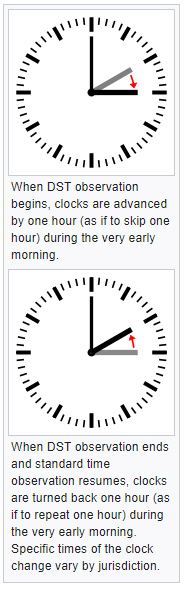
If I were king of the United States, I’d get rid of daylight savings time and mandate standard time for everyone all year. I’m trying to sail against the wind on this, I know, as more states are shifting to permanent daylight savings time.

I guess that means people are more willing to put up with dark mornings than dark afternoons.

Every darn thing in the house has a clock on it. Other than the phone and the TV, that means wasting a  lot of time changing everything forward and back. As for the car, forget it since (on our cars) there’s no “set clock” function, so we have to push various unrelated buttons on the radio to change the time.

I know some of you are thinking that time is an illusion anyway, so who cares? A lot of people care, apparently, since DST is apparently more popular than standard time.  I guess if we actually left our houses for after-work shopping, we’d want that “extra” daylight to be after work. But, we’re all shopping online these days, so we don’t need more after-hours sunshine.

Since more people are quitting their jobs these days, they can go shopping whenever they want.

And, no matter what time we’re using, most people are late anyway.

Life would be much easier if we embraced the darkness.

Malcolm

Malcolm R. Campbell is the author of novels based on magic.

DOJ files an antitrust suit to block the purchase of S&S by Penguin Random House

“The U.S. Department of Justice has sued to block Penguin Random House parent company Bertelsmann’s proposed acquisition of Viacom CBS subsidiary Simon & Schuster, arguing that it “would result in substantial harm to authors.” The lawsuit was filed in the United States District Court for the District of Columbia on November 2. With it, the DoJ alleges that the proposed acquisition would “enable Penguin Random House, which is already the largest book publisher in the world, to exert outsized influence over which books are published in the United States and how much authors are paid for their work.” (Penguin Random House is the world’s third largest publisher, but its largest trade publisher.) The full lawsuit can be read here.” – Publishers Weekly

I wish things were as simple as the 15th century Gutenberg letter press shown in the graphic.
I hope the merger is successfully blocked because consolidation reduces competition and is generally viewed as harmful to authors and readers. Among other things, media conglomerates (books, news, films) reduce options, a negative scenario in any era but especially bad at a time when public sentiment is leaning toward diversity in both news coverage as well as entertainment. And,  of course, the corporate home of the proposed company remains Bertelsmann, placing more U.S. media assets under the control of a multinational German corporation.

Franklin Foer, writing in The Atlantic, believes that “as book publishing consolidates, the author tends to lose—and, therefore, so does the life of the mind. With diminished competition to sign writers, the size of advances is likely to shrink, making it harder for authors to justify the time required to produce a lengthy work. In becoming a leviathan, the business becomes ever more corporate. Publishing may lose its sense of higher purpose. The bean counters who rule over sprawling businesses will tend to treat books as just another commodity.”

The big five already control 80% of U.S. book sales. If the DOJ suit fails, we’ll have the big four and, some say, we’ll lose a few more small presses and a few more publishing jobs.

Foer believes that the real problem in the mix is Amazon, and I agree. But that’s a discussion for another post other than to say that publishing conglomerates believe size will make then less vulnerable to Amazon control.

Writing for the New Republic (Pretty Soon There’ll Be Just One Big Big Book Publisher Left),  Alex Shephard says, “Further consolidation won’t just lead to layoffs, it will also likely put authors in a worse position, as they have fewer potential buyers to negotiate with. Though it is not solely responsible, the bottom has fallen out of the market for midlist books over the last decade, creating a system in which bestselling authors are making millions, while publishing’s middle class has been decimated. The conglomerate publishing industry’s increasing obsession with bestsellers has also left many more adventurous projects to wallow.”

I’m not sure who to blame for this mess.

Malcolm


‘The Seven Pillars of Wisdom’

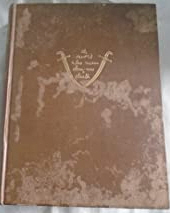
One of the more interesting books on my shelf is The Seven Pillars of Wisdom by T. E. Lawrence. The first edition, which came after the manuscript was lost multiple times, was privately published in 1926. My copy, from Doubleday, was published in 1935 and fortunately looks better than the copy shown in the picture.
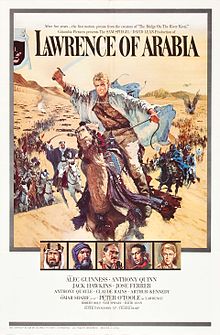
The book, was used as a resource for the 1962 film “Lawrence of Arabia,” winner of seven Oscars including Best Picture and Best Director. This is my favorite film.

The book is an autobiographical account of Colonel T. E. Lawrence’s work as an military advisor to the Bedouin forces during the Arabs’ revolt against the Turkish Empire between 1916 and 1918.

Penguin describes its edition of the book as follows: “In his classic book, T.E. Lawrence—forever known as Lawrence of Arabia—recounts his role in the origin of the modern Arab world. At first a shy Oxford scholar and archaeologist with a facility for languages, he joined and went on to lead the Arab revolt against the Ottoman Turks while the rest of the world was enmeshed in World War I. With its richly detailed evocation of the land and the people Lawrence passionately believed in, its incisive portraits of key players, from Faisal ibn Hussein, the future Hashemite king of Syria and Iraq, to General Sir Edmund Allenby and other members of the British imperial forces, The Seven Pillars of Wisdom is an indispensible primary historical source. It helps us to understand today’s Middle East, while giving us thrilling accounts of military exploits (including the  liberation of Aqaba and Damascus), clandestine activities, and human foibles.”

Lawrence of arabia ver3 xxlg.jpgLike others, I’ve been fascinated by Lawrence’s introductory poem which may have been focused on the region or on an individual (nobody seems to know):

I loved you, so I drew these tides of
Men into my hands
And wrote my will across the
Sky in stars
To earn you freedom, the seven
Pillared worthy house,
That your eyes might be
Shining for me
When I came

Death seemed my servant on the
Road, ’til we were near
And saw you waiting:
When you smiled and in sorrowful
Envy he outran me
And took you apart:
Into his quietness

Love, the way-weary, groped to your body,
Our brief wage
Ours for the moment
Before Earth’s soft hand explored your shape
And the blind
Worms grew fat upon
Your substance

Men prayed me that I set our work,
The inviolate house,
As a memory of you
But for fit monument I shattered it,
Unfinished: and now
The little things creep out to patch
Themselves hovels
In the marred shadow

Of your gift.

Since Lawrence kept extensive notes about the revolt against the Turks, this book is probably the definitive resource about the military action. According to Wikipedia, Sir Winston Churchille said, “It ranks with the greatest books ever written in the English language. As a narrative of war and adventure it is unsurpassable.”

Lawrence refused his knighthood because the British government renegged on its promise to create an autonomous Arab state once the Ottoman Emptire collapsed. In this book, we see the seeds of many problems that occured later in the region.

Malcolm

Florida Folk Magic Stories: Novels 1-4 by [Malcolm R. Campbell]Malcolm R. Campbell is the author of multiple novels, including the four-book Florida Folk Magic Series. You can save money by purchasing the novels in a group as shown here.