I try to write 100 words a day come hell or high water.
 If I were to write more words, my writing career would be compromised. Why? I wouldn’t be pacing myself. I’d be like an old Chevy racing at Daytona and that would mean the engine would soon be toast. Well, not actual toast, but you know what I mean. A blown engine in a Chevy is a bad thing. A worse thing is a blown engine in oneself that happens if you work harder than you should. I’m very superstitious and so I won’t tempt fate by writing 101 words.
I did NaNoWriMo some years ago. I wrote all the words I needed but was a nervous wreck, fast-tracked to boot hill. After doing it, I wondered just what was the rush anyhow. If you take years to complete a novel you have years in which you can hope that reviewers and readers will love it, somebody will nominate it for a Pulitzer Prize, and the movie will bring in $100000000 and a truckload of glamorous movie stars.
If you don’t pace yourself, the book will come out sooner, and all the hope you could have had by writing slowly is suddenly toast. Not actual toast, but you know what I mean. Nobody reads the book and those who don’t read it refuse to write loving but fictitious reviews that say the novel is the best thing since sliced bread.
Another problem with writing too fast is discovering 50,000 words into the book that you’ve written past what your muse told you to write. Now your book–and probably you–is stuck in an Area 51 status which, as we have seen, brings the Feds to your house, and let me clue you in that in these woke times, they’re no longer whistling Dixie. They (the Feds) have hard questions like “when did you realize the novel you were writing was being beamed down from the mother ship?”
You better not respond by saying you just thought your muse had been drinking too much Jolt Cola. Truth be told, a lot of writers drink too way too much Jolt Cola because they think anonymity might be gaining on them. And they’re right because excessive use of Jolt Cola causes them to write really bad stuff like, “I’ve kissed a prince, Mom. I hope it doesn’t turn into a frog.”
Suffice it to say, writers should never exceed the posted speed limit because the grammar police are always hiding behind billboards for Rice Krispies and other innocent products waiting to pull over anyone who seems to be powered by Jolt Cola, a mother ship, delusions of grandeur, or bad writing advice from the dark web.
If you pace yourself, you’ll always be in the clear. That’s my story and I’m sticking to it until I hear a more expedient story.
–Malcolm
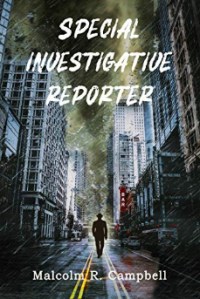 My only NaNoWriMo book was “Jock Stewart and the Missing Sea of Fire” (now titled “Investigative Reporter”) and the AudioFile Magazine reviewer said, “a vehicle for sex, cigarettes, steak, and zinfandel.” All good, but it sounds like a review for “Fifty Shades of Grey.”
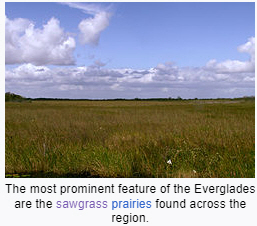 “A particular place in the land is never, for an oral culture, just a passive or inert setting for the human events that occur there. It is an active participant in those occurrences. Indeed, by virtue of its underlying and enveloping presence, the place may even be felt to be the source, the primary power that expresses itself through the various events that unfold there.” – David Abram
 “Collard greens are a staple vegetable in Southern U.S. cuisine. They are often prepared with other similar green leaf vegetables, such as spinach, kale, turnip greens, and mustard greens in the dish called “mixed greens”. Typically used in combination with collard greens are smoked and salted meats (ham hocks, smoked turkey drumsticks, smoked turkey necks, pork neckbones, fatback or other fatty meat), diced onions, vinegar, salt, and black pepper, white pepper, or crushed red pepper, and some cooks add a small amount of sugar. Traditionally, collards are eaten on New Year’s Day, along with black-eyed peas or field peas and cornbread, to ensure wealth in the coming year. Cornbread is used to soak up the “pot liquor”, a nutrient-rich collard broth. Collard greens may also be thinly sliced and fermented to make a collard sauerkraut that is often cooked with flat dumplings.” Wikipedia
  If you grow up in the South, sooner or later you’ taste collard greens. I love them, just as I also love spinach and mustard greens. My mother never cooked them because she grew up in the midwest and was familiar with midwestern foods. I always wanted to try new things and was the first (and only) person in the family to become addicted to boiled peanuts and stalks of sugar cane we chewed while walking down the street.
 And yet, most people appear to accept the fact that there’s something “wrong” with Friday the Thirteenth.” The darned movie strengthened people’s fears but didn’t cause them. The movie’s plot reads like the scary stories we used to tell around the campfire on Boy Scout camping trips. The movie, I think, is best viewed on a dark and stormy Friday the Thirteenth when, if the force is against you, the power will go off and you’ll hear the serial killer in the basement waking up from his/her nap.
 Those who know me (poor dears) know that I believe we create our own reality. So, if you don’t want anything “bad” to happen, then it won’t. Others who know me do not like my “number’s up theory,” which is that if your number isn’t up, nothing untimely will happen on the 13th. If it is up, well, you’re not safe in your own house.
 I guess I’m sadistic because I love messing with people’s minds by saying the last thing they expect to hear. This began as a nasty habit: if you’re somewhat psychic, you can “read” a person who’s been surprised by an unsuspected comment, including my favourite of twisting a common cliché into something that either makes no sense or means something quite different than the original version. Now I do it for fun.
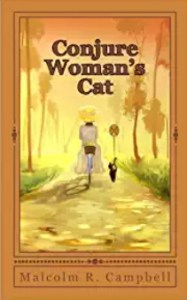 Malcolm R. Campbell is the author of “Conjure Woman’s Cat,” available on Nook, Kindle, paperback, audiobook, and hardcover. There are three more books in the series.
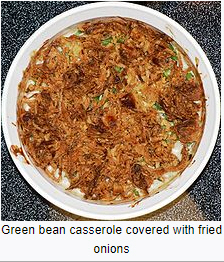 I remember when this casserole first showed up. It was a big hit. Then it was a fad. Then, it became a joke. So I was surprised to see Campbell’s TV commercials advertising mushroom soup this fall that showed people serving the casserole and then to see in the Wikipedia quote that 40% of the company’s mushroom soup goes into this dish.
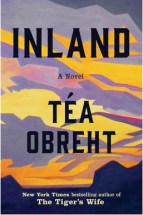 Téa Obreht’s Inland reminds me of the prose style of Cormac McCarthy. She uses two overlapping timelines and that makes reading a challenge. As you read, you may well wonder how so many well-meaning people come to ruin.
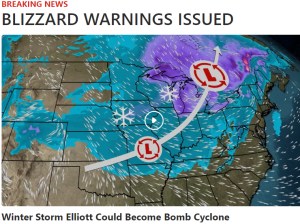 As look at today’s national weather stories about the possibility of a bomb cyclone, I’m really happy I no longer live on the Illinois/Wisconsin border. You’ll notice that the graphic shows a few flakes drifting across the state line into Georgia. We’re promised little to no accumulation.
 Our nearby horse/dog/cat rescue and retirement farm is fighting higher and higher prices this year from maintenance to bales of hay. If you’re looking for a great organization to support, directly or via Amazon’s smile program, please consider
 Look, when I lived on the Illinois/Wisconsin border, I expected this kind of thing–and worse. But I don’t expect it here in North Georgia. We already have snow in the forecast for Thursday night.
 Malcolm's Round Table