This is a sensual book, filled with logic-numbing regrets, dreams, desires, wines, culinary extravagances, books that heal broken hearts and knit together shattered souls, and dreams larger than the imaginations of people who keep life in check or feel safer walling up their most excessive hopes.
Some say the book is pure sugar. Those who say that have never truly danced the tango as Paris bookseller Jean Perdu was taught to dance the dance by his long-lost lover Manon whom he has mourned for twenty years. (She simply left him one day without a word.) Now he sits on his “Literary Apothecary” barge–long tied up tight against a Paris pier rather than moving like a dancer on the river as boats are intended to move–and almost psychically “reads” the hidden away words of his customers’ stories so accurately that he can recommend the books they need to heal and, perhaps, to dance unfettered.
Unfortunately, he cannot prescribe for himself. Yes, he has danced the tango and set aside thinking for pure feeling and unchained inhibitions. So why has he chained his boat and his total self to a Paris pier when he knows what life can be if he let go of everything but the yearnings of “right now”? The answer is not mine to give you.
I can say that Jean Perdu finally unties his boat and motors down river to find out why he’s been held fast by memories. He meets other people who need but who don’t quite know what they need. Borrowing Hemingway’s words, the journey becomes a “movable feast” and the plot turns upon the question of whether or not Monsieur Perdu will prescribe for himself the charity and clarity he needs to enjoy it.
Like a rare evening meal when the best red wine, the best lamb cutlets with garlic flan, and the best conversation with people who know low to listen with their eyes conjure an experience that memory will often doubt could have been real, “The Little Paris Bookshop” takes its characters–and its readers–into the heart of bliss that will ever seem too unlikely to be possible.
The best way to dance the dance while reading this exuberant novel is to unchain yourself from whatever logical rules and proprieties bind you. Doing that is the book’s prescription.
“For you. You’ll soon. You’ll give her name. In the stitches of her skin she’ll hear your say. Mammy me? Yes you. Bounce the bed, I’d say. I’d say that’s what you did. Then lay you down. They cut you round. Wait and hour and day.”
Riverrun of words, past church and family and worse, from swerve of hope to bend of knee, you might think you’re reading “Finnegan” again as you start Eimear McBride’s streamOFconsciousness novel A Girl is a Half-Formed Thing. James Joyce leaves early on, though when you reach the novel’s final words, you might agree this story is a wake.
It’s also a mental letter of sorts, an interior monologue, from a rebellious sister to a brother with a brain tumor, within.the.tight.confines of a dysfunctional household, abuse and other perversions, rape and WorseThanRape, and the protagonist’s desperately destructive behavior. We are INside her head. Too much for simple syntax there, though sin is a constant theme, and prayers, too, so when James Joyce leaves the book by the back door, Virginia Woolf arrives at the front door. Figuratively speaking. You should be afraid, for this book will wreck you as though you yourself are violating the protagonist page by heartbreaking page, you bastard.
It’s also a raw poem, laced with the worst muck of life, the flotsam any free-flowing river carries along with sunlit ripples of lyr(within lyrics)ics more beautiful than anyone other than the doomed brother deserves to hear. The flow of words, blood, semen, vomit and other prayers are dAZZling to experience. The book’s un-named characters lead sad lives that would be sad if McBride had told the story through a conventional approach. Yet the fractured prose fits all that’s broken in the story and the poetry of the riverrun of words accentuates every vile UNformed and 1/2Formed thing.
Mammy is a single parent who is randomly holy.past.all.understanding, loving, vicious, and blind to everything but her son in her unkempt house in this small Irish town. Daddy is absent, resting in hell or elsewhere. Uncle is perverted. Schoolkids are cruel. Men have one thing on their minds. Brother is slow. Sister is wantonly searching for herself. And fate is relentless. Life inside this story, and inside the protagonist’s head, is difficult, difficult to read in half-formed thoughts, and impossible to set aside.
You won’t forget this story even though you will try.
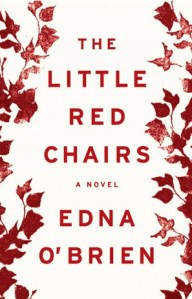
“On the 6th of April 2012, to commemorate the 20th anniversary of the start of the siege of Sarajevo by Bosnian Serb forces, 11,541 red chairs were laid out in rows along the 800 meters of the Sarajevo high street. One empty chair for every Sarajevan killed during the 1,425 days of siege. Six hundred and forty-three small chairs represented the children killed by snipers and the heavy artillery fired from the surrounding mountains.” – from “The Little Red Chairs”
What do the fairy tale setting in a remote Irish town and Radovan Karadzic, the Butcher of Bosnia, have in common? In a sane world, nothing. In her alternate history, 85-year-old Edna O’Brien combines what begins as an apparent folktale with the chilling angst of an Irish woman, Fidelma, who stumbles beneath the butcher’s spell before she knows he’s the butcher. As a stranger in her small town, Vlad is an event, a hypnotizing holy man and trickster with wisdom and danger in his eyes, the kind of man every mother warns every daughter about.
As the story begins with all the charm of “The Music Man,” it’s easy to fall beneath the steel wheels of O’Brien’s spell and hope against hope tht her words are leading toward something perhaps a bit scandalous, something that might leave the townspeople–and especially Fidelma–with a few bittersweet scars of the kind that aren’t really cut that deep. But O’Brien’s tale goes where it must, to graphic and unspeakable horror from which Fidelma cannot quite escape. None of those 11,541 chairs was for her, but–if she had lived and breathed outside of fiction–destiny owed her a chair and, perhaps, absolution.
The Butcher of Bosnia is, in some mysterious way, the air which this story needs in order to breathe, and yet in other ways who he is and what he did are not the novel’s focus. The focus is Fiedelma, her suffering, her acts which were a curse to her village, her misplaced innocence that brought her, as naivete often does, to a hell from which there was no escape.
This novel is not for the faint of heart. As Joyce Carol Oates wrote in her New York Times review, “O’Brien is not interested in sensationalizing her material, and ‘The Little Red Chairs’ is not a novel of suspense, still less a mystery or a thriller; it is something more challenging, a work of meditation and penance. How does one come to terms with one’s own complicity in evil, even if that complicity is ‘innocent’? Should we trust the stranger who arrives out of nowhere in our community? Should we mistrust the stranger? When is innocence self-destructive? Given the nature of the world, when is skepticism, even cynicism, justified? Much is made of innocence in fiction, as in life, but in O’Brien’s unsentimental imagination the innocent suffer greatly because they are not distrustful enough.”
When we consort with the devil, by whatever name he identifies himself, should we not expect betrayal? It’s not an easy question, spells being what they are and innocence being what it is. Is there a message in this book? Yes: trust ensures our doom.
Oates’ questions are ever on our minds these days when terrorism comes out of nowhere and visits pleasant communities and exuberant celebrations in large cities. I wonder if we can afford to be innocent these days. If not, what a pity. Suffice it to say, Fidelma will find little pity because those who (we often say) should have known better are seldom afforded the compassion granted the skeptical or the ignorant.
Yes, this novel is a masterpiece. Yes, it is well told, dark and deep. But it should carry on its cover a warning: “Abandon all hope, ye who enter here.” You cannot read this novel without being forever changed. I dealt with the book quickly here because I am too faint of hear to speak about it at length.
This mystery, narrated by three London-area women, is tightly written with multiple who-dunnit style twists and turns. Rachael takes the train into London every day and has gotten into the habit of fantasizing about the lives of two people she’s never met in a house near the tracks several doors down from the house where she used to live. She builds a perfect life for the unknown couple in the house and almost comes to believe she knows them–until the woman who lives there ends up missing.
The interesting plot is dulled to some extent due to the fact that Rachael, Anna and Megan seem some hopelessly inept in maintaining any order and purpose in their lives other than, perhaps, a focus on their relationships with men.
The author brings a nice touch to Rachael’s chapters because her excessive drinking makes her an unreliable narrator. The police–and the readers, as well–won’t be sure until near the end of the book what she saw and what she did during a black-period on the night “it happened.”
The train imagery is pitch perfect and the ending is satisfying.
Salt to the Sea, Ruta Sepetys, (Philomel Books: February 2016), 400pp, young adult
Between January and May, 1945, Germany evacuated two million people from the advancing Soviet army in the Polish and East Prussian corridors via Operation Hannibal, the largest sea evacuation in modern history. Over 25,000 of them died in the Baltic Sea when 158 of the estimated one thousand merchant vessels were lost, many to enemy fire.
Among the lost were 9,400 of the German, East Prussian, Lithuanian, Latvian and Polish refugees on board the Wilhelm Gustloff that was sunk at 9:15 p.m. January 30th by three torpedoes from Soviet Submarine S-13 at 55°04′22″N 17°25′17″E, nineteen miles off the Polish shore.
Ruta Sepetys’ superb young adult novel traces the flight of Joana (Lithuanian), Florian (Prussian), Emilia (Polish) and Alfred (German) from the advancing Soviet army. Alfred is a sailor sent to the port of Gotenhafen for duty on board the Wilhelm Gustloff to help evacuate those escaping from the Soviet advance. Joana, Florian, and Emilia have a more difficult trek to Gotenhafen because they are also running from the German army.
The story is told in one-to-three-page chapters from the viewpoints of the four major characters. By the end of the novel, readers know each of these characters like family for they will have heard an unforgettable story of brutality, death, guilt, fate, shame and fear from every angle that matters.
Joana is a compassionate nurse, Emilia is a pregnant teenager, Florian is a young man with secrets, and Alfred wants to receive a medal for small, self-important deeds. And then there are Eva, who is tall and gruff; Heinz, a cobbler who knows people by their shoes; Ingrid, a blind girl who sees better than many, and the other seemingly doomed but hopeful souls along the way.
As they walk through the snow, Joana thinks: We trudged farther down the narrow road. Fifteen refugees. The sun had finally surrendered, and the temperature followed. A blind girl ahead of me, Ingrid, held a rope tethered to a horse-drawn cart. I had my sight, but we shared a handicap: we both walked into a dark corridor of combat, with no view of what lay ahead. Perhaps her lost vision was a gift. The blind girl could hear and smell things the rest of us couldn’t.
Sepetys’ great success with this novel comes from many factors over and above her research. The story, including the sinking of the Wilhelm Gustloff, is told in pointed, straightforward, often graphic language with well-chosen details and no authorial editorializing or sentimentality. If the refugees reach the ships in Gotenhafen, they may not be given a boarding pass: the Germans can easily find reasons for and against each of the characters. And, the subplot of secrets ultimately linking Joana, Florian and Alfred adds tension.
It’s difficult to imagine a more perfect story about the tragedy of civilians in wartime or a better historical introduction to the plight of the Lithuanian, Prussian, Polish and German refugees caught between the opposing, but equally brutal World War II regimes of Hitler and Stalin.
Salt to the Sea is the novel no reader will forget.
“Although Urrea has stitched a seamless end to the saga initiated in The Hummingbird’s Daughter, Queen of America lacks the clarity of vision of its prequel. Having left behind Mexico’s rich landscape and languages, the Urreas — Tomás and Teresita, and the author as well — grasp for inspiration.” – New York Times 2011 review by Mythili G. Rao
If Urrea’s powers as an author of magical realism and his great-aunt Teresa’s powers as an inspiring healer reach their apex in The Hummingbird’s Daughter, they become a lingering, bittersweet denouement in Queen of America. Urrea writes in the novel’s notes and acknowledgements that “The story is not the history.” Writing a novel rather than a non-fiction account of his family’s history led Urrea on a twenty year journey to pull together myths and stories and facts into a cohesive whole that is whole as an impression of what happened rather than–as he says–a textbook.
After she flees Mexico at the end of The Hummingbird’s Daughter, Teresa is carried by multiple tides more powerful than even her imagination can grasp. Initially, she settles with her father in a variety of locations in the Southwest. It’s closer to what they know, but it’s also dangerous inasmuch as the Mexican government still considers her an enemy of the state and persists in sending assassins to put an end to it. Until her father manages to land on his feet and start a profitable life in the States, finances are in short supply.
After suffering through an assault, Teresa leaves her family behind and looks for a way to continue her healing work elsewhere. Unfortunately, her upkeep and life are taken over by a consortium that primarily seeks profit out of her fame. Her life becomes, in today’s terms, a lengthy tour where she is at once visiting royalty and a caricature of her former self.
She experiences many wonders on this journey, including a prospective chance for love, companionship and normality. And she experiences many heartbreaks. In these highs and lows, readers will find her to be wonderfully human. Urrea knows his character and brings out her soul in this sequel.
By the time she frees herself from the sweep of events controlled by others, she has spent her capital. In many ways, it’s a well-deserved rest, one that she’s ultimately at peace with.
Urrea has handled her story with humor, more of his rich language, and a deep look into the psyches of the major characters. The story is told well and Teresa emerges as a complete person. While Urrea did not write a textbook and was free to interpret events (perhaps more truthfully as fiction than as facts) he is nonetheless constrained by the realities of Teresa’s life. No doubt, he would disagree. Suffice it to say, the historical Teresa did not lead a revolt against the Mexican government or become a catalyst for Indian rights and freedom while on tour, nor go on to accomplish great and mythic deeds in the U. S. If she had, Queen of America might have reached the stunning heights of its predecessor.
Teresa bloomed in The Hummingbird’s Daughter and faded as all flowers must in Queen of America. It is still a must-read for everyone who began the journey in The Hummingbird’s Daughter–for closure.
–Malcolm
Malcolm R. Campbell is the author of the magical realism novella Conjure Woman’s Cat
The Improbable Wonders of Moojie Littleman, by Robin Gregory ( Mad Mystical Journey Press, December 14, 2015), 294 pp.
Moojie has so many strikes against him that survival of any kind seems improbable. He’s born with physical disabilities; is slow to talk and when he finally does, he stutters; he loses his mother and his father won’t have him; almost everyone taunts him; and he’s sent to live with a cantankerous grandfather at a place called St. Isidore’s Fainting Goat Dairy. If being named “Moojie” was the first curse, being sent to the dairy was just about the last straw.
But were more last straws to come.
His grandfather drinks, curses, works Moojie hard in spite of the young man’s weak legs and weak arms, constantly threatens to send him to an orphanage, and passionately has it out for the so-called “hostiles” who live in the surrounding forests.
While the hostiles first appear to have come from the land of faerie, Moojie discovers they’re a magical race tasked with demonstrating harmony in our world. He hopes their clan will accept him because, among other things, he has no true family to call his own. But will they trust him? He can scarcely trust himself. But he’s learning, and the realism of this process is well handled by the author.
Moojie, his grandfather, his meddlesome aunt, the clan members, and the townspeople are defined in spot-on detail. They have depth, though Moojie believes he’s shallow and inept at the beginning of this well-crafted and beautifully told tale. The book’s magical realism accentuates the abilities of the off-world clan family as well as the dormant gifts Moojie has been blessed (or possibly cursed) with.
Many will call this a coming-of-age novel. Yes it is. But that assessment is much too stale for such a fresh, rich story. The story is about making choices and the probable transformations that follow them. Other than a bit of sentimentality at the end, Robin Gregory’s novel is a wonder about wonders and highly recommended.
–Malcolm
Malcolm R. Campbell is the author of magical realism and contemporary fantasy novels and short stories.
Downwind: a People’s History of the Nuclear West, by Sarah Alisabeth Fox (Bison Books: November 2014), 304 pp.
The opening lines of this book begin a frightening story: “By the time five-year-old Claudia returned to her swing set, a strangely colored cloud was all that remained of her flying saucer. Years later, she leaned the apparition she had seen in the sky was not a UFO but the mushroom cloud of a nuclear explosion. Her childhood home in southern Utah was about a hundred miles east of the Nevada Test Site.”
Author Sarah Fox goes on to say that the site which was operational between 1951 and 1992 was one of the world’s most heavily used nuclear weapons testing areas.
From the Publisher
Downwind is an unflinching tale of the atomic West that reveals the intentional disregard for human and animal life through nuclear testing by the federal government and uranium extraction by mining corporations during and after the Cold War.
In chilling detail Downwind brings to light the stories and concerns of these groups whose voices have been silenced and marginalized for decades in the name of “patriotism” and “national security.”
With the renewed boom in mining in the American West, Fox’s look at this hidden history, unearthed from years of field interviews, archival research, and epidemiological studies, is a must-read for every American concerned about the fate of our western lands and communities.
From the Reviewers
“Comprehensive and incisive, Downwind also adds heart and soul to an epic story of resilience in the aftermath of reckless arrogance. Sarah Fox gives the history of the nuclear age back to the people who had it written in their bones. The testimony she captured is both shocking and inspiring.” – Chip Ward, author of Canaries on the Rim: Living Downwind in the West
“Fox’s narrative forces the reader to choose whether to accept the official version of events or to believe the people who lived downwind of the nuclear tests and who worked in the uranium industry. There is no middle ground in her argument. According to Fox, repeated nuclear tests led to cancers and other diseases and to the deaths of innumerable people.” – David Mills in “Montana: The Magazine of Western History,” Winter 2015.
In both the blog and the book’s introduction, she says that the proceeds from the sale of the book are being donated Heal Utah, “an environmental non-profit that promotes renewable energy and protects Utah’s public health and environment from nuclear, toxic, and dirty energy threats.”
In an era when the United States’ nuclear weapons program is supposedly a relic of the past, Downwind reminds us that the sins of the past are very much still with us even if we never again use a nuclear weapon. The book has a 4.3 review rating on Amazon with five five-star reviews and one one-star review. The one-star reviewer states that Fox’s stories are not only not new, but that her information about reported illnesses and deaths isn’t accurate. If the author has refuted this claim, I haven’t found it. It’s worth noting that a commenter believes this review is based a less-than-accurate, self-published book.
On balance, the book has stories we should know about if we haven’t heard them already. If readers follow this up by looking at the Heal Utah site, they’ll see that the past is a warning to those currently mining uranium in close proximity to the Grand Canyon.
Welcome to Night Vale, by Joseph Fink and Jeffrey Cranor, (Harper Perennial, October 2015), 416pp.
Look at how this book begins:
Pawnshops in Night Vale work like this.
First you need an item to pawn.
To get this, you need a lot of time behind you, years spent living and existing, until you’ve reached a point where you believe that you exist, and that a physical item exists, and that the concept of ownership exists, and that, improbable as all those are, these absurd beliefs line up in a way that results in you owning an item.
Good job. Nicely done.
I’m hooked already because this is something different, a unique way of getting this humorous contemporary fantasy underway, and–one hopes–as s/he reads further that the authors will be able to maintain the style and tone of their opening. They do.
From the Publisher
“Located in a nameless desert somewhere in the great American Southwest, Night Vale is a small town where ghosts, angels, aliens, and government conspiracies are all commonplace parts of everyday life. It is here that the lives of two women, with two mysteries, will converge.
“Nineteen-year-old Night Vale pawn shop owner Jackie Fierro is given a paper marked “KING CITY” by a mysterious man in a tan jacket holding a deer skin suitcase. Everything about him and his paper unsettles her, especially the fact that she can’t seem to get the paper to leave her hand, and that no one who meets this man can remember anything about him. Jackie is determined to uncover the mystery of King City and the man in the tan jacket before she herself unravels.”
We’re a not visiting the History Channel’s “Pawn Stars,” aren’t we? There’s no handy expert standing by a few minutes away who can drop by to analyze the item. Fink and Cranor have a jump start with this book, drawing from the popular “Welcome to Night Vale” podcast that The Guardian says is like a local news Twin Peaks.
From the Reviewers
Welcome to Night Vale has an average Amazon reviewer rating of 4.6 with 75% or the reviewers awarding it 5 stars.
Kirkus Reviews starred review sums up, I believe, the general view of professional reviewers: “All hail the glow cloud as the weird and wonderful town of Night Vale brings itself to fine literature…A delightfully bonkers media crossover that will make an incredible audiobook.” I think of Jim Butcher’s “Dresden Files” series as somewhat bonkers and Douglas Adams’ A Hitchhiker’s Guide to the Galaxy as totally bonkers. I don’t think it’s heresy to say Welcome to Night Vale will remind readers of the best of each–in addition to the “Twin Peaks” thing. Oh, and a dash of “Twilight Zone.”
We’re a long way from Harry Potter. In fact, I’m not quite sure where we are. Cory Doctorow seems to know: “They’ve done the unthinkable: merged the high weirdness and intense drama of Night Vale to the pages of a novel that is even weirder, even more intense than the podcast.”
For my money, both “Twin Peaks” and “Lost” ultimately fell apart because the writers added so much weirdness that they had no place left to go. Fink and Cranor don’t let things get that far out of hand, and that’s good, because it would have been a real shame to let the promise of the opening lines become lost in, say, a dark Marx brothers/Three Stooges comedy.
If you enjoy a drink, pour yourself several fingers of something good, for Welcome to Night Vale is a delightfully bumpy ride.
–Malcolm
Malcolm R. Campbell is the author of the contemporary fantasy novel “The Sun Singer” which is free on Kindle December 17-20, 2015.
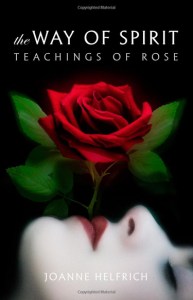
The Way of Spirit: Teachings of Rose, Joanne Helfrich (NewWorldView December 7, 2014), 218pp.
The publisher of The Way of Spirit says this spiritual self-help book will help you discover your life’s purpose and the means of achieving your soul’s deepest fulfillment. Whether or not the book is successful in doing that depends on the reader’s point of view about who Rose is and how Joanne Helfrich received Rose’s guidance.
Helfrich describes Rose as “an energy personality essence–a multidimensional being who exists primarily outside out physical world of space and time.” Her guidance was received by an energy exchange method of meditation more commonly known as channeling.
Jane Roberts’ popular Seth books of the 1970s introduced the general public to energy personalities, channeling, and a body of metaphysical information summed up by the phrase “you create your own reality.” Helfrich’s book complements Seth’s teachings.
While many readers intuitively felt that Seth’s non-mainstream, impossible-to-prove view of reality was correct, they often had trouble putting his concepts into actual practice in their lives. Subsequently, teachers such as Lynda Dahl (Seth Talk) and channelers such as Vicki Pendley (Elias) and Serge Grandbois (Kris) have explained and/or added to the information Jane Roberts provided via 1,500 trance sessions between 1963 and 1984.
Practical Approach
Helfrich has written a joyful and very practical guidebook for those seeking “big picture” knowledge and personal transformation. Students of Seth will find some overlap here between the concepts in The Way of Spirit and those they already know. Others are likely to become enchanted by Rose’s positive, no-nonsense approach to who you are and what you can accomplish.
Original Seth book – click on cover for current edition
Unlike some of the “Law of Attraction” books that focused on acquiring fame, fortune and other material world gains, The Way of the Spirit focuses on inner transformation and a compassionate approach to others. Rose sets the tone for the book by saying, “Since you create all of your reality, it stands to reason that when you become heroes pf your own lives, you change yourself and your world for the better.” The approach echoes Joseph Campbell’s (The Hero With a Thousand Faces) admonition that you cannot have a positive impact on the world until you “fix” yourself first.
Rose focuses on the individual: discover who you are, find your purpose and the bedrock intention of your life, own your own reality, interact with others with love and compassion, and understand that transformation comes from alignment with the universe, not by using brute force logic or pushing others aside to get what you desire.
Naysayers will be quick to point out that, like many other spiritual books focused on meeting goals and desires, this book says you don’t automatically get what you want; you get what the universe thinks you need. Many see this fact as a “kings-X” rule that negates of the rest of the books, allowing the authors to say, “well, your law of attraction meditation didn’t work, not because the system is flawed, but because you were trying to attract what you weren’t supposed to have.”
That point is well taken and the “mechanics” of whether or not the workings of “you create your own reality” should be interpreted as “you create your own reality when the universe consents.”
Quite clearly, The Way of the Spirit is about the way of the spirit, not the way of the transitory, illusory physical world of success and failure, rich and poor, or fame and anonymity.
Helfrich – click on photo for author’s web site
One strength of this positive and enchanting book is the section called practices. These are not recipes or A-to-Z formulas for making reality (or yourself) change before your eyes. As Rose explains it, “Practices are small, regular actions that help you live a happier life. They may be things you already do, but wish to do in a different way. When they become habits, they will transform your life.” These practices are:
Access Alternatives – Breaking away from closed thinking patterns
Intent Practices – Discovering and expressing your inate abilities
Souter – Finding a new way to visualize your breathing
Rest in Rose – Finding ways to relax and experience ones essence
IDEA – Discovering your foundation beliefs and their alternatives
Addressing Fears – Learning the role of fear and an appropriate response to it
Vespers – Meditating and exploring ways to channel your essence in day ahead
Evening Prayers – Calming your mind and staying connected as you fall asleep
The Way of the Spirit–like Jane Roberts’ Seth books–presents a vastly different view of reality than we are taught in school. Everything we “know” about time and space, physical reality, and cause and effect is challenged here. It’s a lot too take in and it cannot be taken in with an effortless leap of faith no matter how right it sounds in the reading of it.
Joanne Helfrich has created a thought-provoking approach to making things better in our lives. The practice sections give us a way to test drive her ideas without having to throw away the world view that has sustained us for better or worse up to now. This inspirational book is highly recommended.
Malcolm R. Campbell is the author of contemporary fantasy and magical realism novels and short stories that focus on characters making transformational journeys.
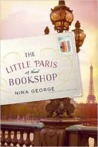 The Little Paris Bookshop by Nina George
 Ruta Sepetys’ superb young adult novel traces the flight of Joana (Lithuanian), Florian (Prussian), Emilia (Polish) and Alfred (German) from the advancing Soviet army. Alfred is a sailor sent to the port of Gotenhafen for duty on board the Wilhelm Gustloff to help evacuate those escaping from the Soviet advance. Joana, Florian, and Emilia have a more difficult trek to Gotenhafen because they are also running from the German army.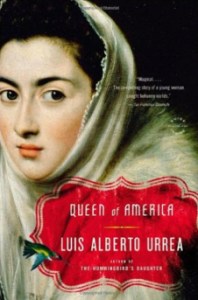







 Malcolm's Round Table