Review: ‘The History of My Body’ by Sharon Heath

“The Bible says that in the beginning was the void, and it hasn’t escaped me how fast the Lord moved to take care of His own particular vacuum—dividing day from night, spitting out vast oceans, carving out competing continents that would one day have the power to blow each other up. What an inspired series of creations to keep the devil of boredom at bay. No wonder God kept seeing that it was good.”

So begins the story of Fleur Robins.

Fleur Robins is called creepy child, poor child, little monster, odd duck, space cadet and assorted other synonyms for “weird” by almost everyone who notices her existence and tries to figure out whether she is gifted, autistic, simply hopeless or hopelessly simple. Fleur’s imagination contains many worlds because—as she explains life as the fifteen-year-old narrator of The History of My Body—positioning her body and mind “just this side of the lurking pit of nothingness” requires constant vigilance and ingenuity.

Whenever the void looms too large for her to handle, Fleur flaps her arms, bangs her head, pinches herself, emits strange noises and makes oddly literal pronouncements that simultaneously appear to miss the point and contain cosmic truths. No school will take her. An alcoholic mother loves her, but spends her days drunk or asleep. A mean-spirited father dislikes her, but fills his days with a pro-life crusade while filling an entire nursery wing of the family’s large house with children rescued from the “devil abortionists.” An odd-duck household/nursery staff cares for her, but is too busy to overtly save her from the void.

Fleur is her own teacher. She makes lists, keeps diaries, consults the dictionary frequently, and assembles the often-confusing puzzle pieces of information from others to make sense of the external world. She listens to the voices of her heart and her infinite imagination to define her internal world and to explore far-flung probabilities beyond the ken of “normal people.”

When she’s told that a woman who walks down the street every day in a bathrobe has lost her mind, Fleur falls into a figurative pit considering the ramifications:

“What kind of God would let people lose their minds? And was there some kind of cosmic Lost and Found where He kept them? I tell you, it gave me a serious case of the heebie-jeebs, thinking of God feeling so empty and alone that He needed to steal people’s minds to stuff into His own unfillably huge one.”

In her wise, superbly crafted debut novel, author Sharon Heath connects a series of highly improbable events into a tightly knit story about a self-taught young girl who believes her coming of age is a wonderful example of the butterfly effect: or, as Fleur came to understand nonlinear systems, a personal development with a sensitive dependence on initial conditions. Potential events spin off in all directions when Fleur finds a dying baby bird in the garden; while those that ultimately manifest as her body’s history could never have been predicted, they represent a meaningful synchronicity if not harmony.

Fleur’s phases of growth (incarnations, to her way of thinking) unfold as a metamorphosis out of the chaos of her childhood. Her progress isn’t ugly duckling to swan. It’s more like a butterfly transitioning from egg to larva to pupa to adult, or like the unfolding of the beloved David Austen roses she tended on the grounds of the childhood home of her first incarnation.

In The History of My Body, Sharon Heath masterfully combines darkness and light, tragedy and comedy, and the sublime and the ridiculous into a dazzling and beautifully ironic dance of opposites that create an unusual and endearing protagonist with an unforgettable tale to tell.

Malcolm R. Campbell is the author of four novels, including the recent contemporary fantasy “Sarabande.”

Review: ‘The Infernal Republic’ by Marshall Moore

The Infernal Republic, collected short storeis by Marshall Moore, 228 pages, Signal 10 Media Inc (2/14/2012)

Marshall Moore’s seventeen short stories in The Infernal Republic not only push the envelope, they destroy it. Endlessly inventive and varied, these twisted tales tend to focus on strange—and potentially warped—characters who are often in lose-lose situations that resolve (more or less) in ironic twists of fate. For readers who love outside-the-box storytelling, each normal, abnormal and paranormal gem in this book is a surprising flight of fancy into regions that are portrayed in straight-forward and hauntingly explicit detail.

The collection begins with Liesl and Joanna in “Urban Reef (or, It’s Hard to Find a Friend in the City)” enjoying wine and small talk in a Portland, Oregon restaurant while watching a potential suicide jumper on an adjacent building. If he jumps, how much of a mess will it make. Not for the squeamish, this one, nor many of the other offerings either as the book wends it devious way through incidents and conversations that we watch, rather like Interstate car wrecks, in spite of the fact that we’re really good people who are not in any way part of Moore’s world or his imagination.

The book ends with “The Infinite Monkey Theorem” in which Yaweh and Lucifer make a bet about whether or not a large number of monkeys at a large number of typewriters will or won’t ultimately produce the complete works of Shakespeare. The protagonist in this story gets to manage the operation off in a special pocket of temporary space that is described as “near Hell but not quite in it.” In spite of the space and the deities involved, there are logistical matters to attend to as well as issues of trickery and the wager’s true intent.

En route to “near Hell” via Portland, readers will encounter a building that ejects an apartment “like an enormous video-cassette,” a “well-mannered boy” named Jason who doesn’t want to go home, heroes who compete as Prime Combatants with remarkable (and not always pleasant) paranormal powers, a house that wakes up and suddenly becomes sentient, a boy with detachable body parts, a motivational speaker who’s been kidnapped by a cruelly benevolent organization that wants her to grasp the errors of her ways and then accept a punishment of hero own choosing.

Marshall Moore’s seventeen stories will take you where you’ve never been before and—in some case—where you might prefer not too have gone (had you known at the outset just how strange things were going to get).  The Infernal Republic is rather like a smorgasbord of dishes that you didn’t even know could be consumed as food in polite society. You won’t be able to walk away.  And when you finally learn who won the bet about the monkeys and the typewriters, you’ll be glad you kissed your normal reading habits goodbye and hung on for the ride.

Malcolm

Malcolm R. Campbell is the author of magical realism, contemporary and fantasy novels, including “Sarabande.”

What do you expect from a book review?

A recent article in The Guardian, YA novel readers clash with publishing establishment, focuses on a recent book review flame war that raged across GoodReads and Twitter about reader reviews and author and agent responses. In the court of public opinion—which can be both a slippery slope and a bumpy ride—authors, publishers and agents risk a great deal by responding directly to negative reviews that have been published by readers on blogs, Amazon, GoodReads and other sites.

Regardless of subject matter, the consensus across the Internet seems to be that all opinions are equal. In one sense, this is true. Under our guarantees of freedom of speech and press, each of us has the right to say what we think about anything. When it comes down to basics, we all matter.

The confusion—and book reviewing is not the only place where this happens—is that when we say all opinions are equal, we then lose the distinction between the viewpoints of professionals and nonprofessionals. When you go to a doctor and get his opinion about your health, you expect his or her viewpoint to have more credibility than the mechanic at the local auto dealership. Same goes for almost any field we can name: except reviewing (as the term is used on GoodReads and Amazon).

Suddenly, many people are maintaining that anyone can say what they want about a book and label it a review, and then equate his or her best-intentioned assessment of a a book with that of a professional book reviewer who knows the genre, the subject matter, and the writing profession.

When my friends tell me they think I’ll like a certain book, they do that because they know the kinds of books I read and the subjects I care about. This counts for a lot. When they make such suggestions, the last thing I worry about is whether they’re an English professor or an expert in the themes and subjects in the novel. But, when it comes to a real review, I expect credentials and facts as well as opinions.

Opinions vs. Reviews

One of the hardest things to get across in an introductory journalism class is the best-practices standard that newspaper and magazine editorials are not only supposed to have verifiable facts in them, but are expected (by readers) to have been written by somebody with the credentials for offering an opinion in a publication.

If I get along with my auto mechanic and if we have similar views, I’ll probably enjoy hearing his impressions about the latest political debates or a book about one of the candidates. While some people claim friends talking to friends are an example of “preaching to the choir,” most of us value sharing our views with those we interact with day to day.

When something is put into writing and called an “editorial,” we expect (or traditionally have expected) something more. Basically, we expect an informed opinion. Perhaps it comes from a veteran journalist whose opinion is based on having covered hundreds of stories; or perhaps it comes from a long-time political analyst, corporate president, or teacher who has studied the field for years. His or her credentials, when coupled with verifiable facts in the editorial or editorial column, give weight to their opinions or analyses.

Book Revews are Journalism

Traditionally, book, movie, theater and other reviews have been considered journalism. As such, they are expected to meet the same standards as any other newspaper, magazine or broadcast media opinion piece. Some of the uproar behind the article in The Telegraph comes from the fact that the Internet now gives all of us a means of publication whether it’s a book we uploaded via Lulu or CreateSpace, a blog such as mine, or a review posted on Amazon or GoodReads. Those expressing their opinions about books have a right, I believe, to say their opinions matter.

I question whether those opinions should really be called reviews. Perhaps we need another terminology here that somehow distinguishes between the honest-to-goodness “man of the street” opinion about a book and the opinion written by somebody with many years of reviewing, journalistic training, or experience and education in the field the book is about. Perhaps Amazon, GoodReads and other sites should stop calling reader opinions “reviews.” While they are valid within the scope of the sites’ invitations to “speak our piece” about a book, a fair number of these “reviews” aren’t real reviews.

Perhaps we should call them Reader Commentaries or Reader Responses or Reader Dialogues. This way, we honor the readers and their opinions without discounting the work of professional reviewers whose work is supported by credentials, long-time experience with the book’s genre or subject matter, and a broad-based knowledge of the art/science/business of writing and publishing.

Most of Us Appreciate Reader Reviews

As a reader and a writer, I appreciate the reader opinions I find on Amazon, GoodReads and blogs. Talking about books on line is a good thing: it shows me that people are reading and that what they read has an impact on them. I do wish some of those opinions could be stated with a bit more care. It’s one thing to tell your best friend in private that author XYZ doesn’t know his head from a hole in the ground. It’s another thing to pick up a book you thought was a page turner, discover it’s literary fiction, and then go on a rant about it because it wasn’t (and wasn’t intended to be) your cup of tea. That’s not a review.

When the opinion is called “a review,” authors as well as readers should be getting something better than either a mean-spirited tantrum or a gushy splash of unwarranted praise.

Malcolm

Review: ‘The Devil’s Elixir’ by Raymond Khoury

Reading Raymond Khoury’s The Devil’s Elixir can be hazardous to your sleep cycle! You won’t be able to put the book down until you reach the last page.

Once again, Khoury pairs up FBI agent Sean Reilly and archeologist Tess Chaykin whom long-time Khoury fans already know from their tangled and dangerous destinies in The Last Templar and The Templar Salvation. (See also my review of The Templar Salvation.) In this high-energy thriller, Reilly and Chaykin shift their focus from Templar and Vatican mysteries to a potentially more dangerous secret extracted and resynthesized out of the South American rainforest.

Eusebio, the priest who learned about a psychoactive alkaloid from a tribal shaman in 1741, viewed the “sacred brew” as a catalyst that could lead a seeker toward mystical enlightenment. Álvaro, his Jesuit brother at the mission, called the drug the devil’s elixir. In the hands of a present-day drug lord named El Brujo the drug represents not only a belief-changing experience but a chance for unlimited profits with a potion more powerful than meth, cocaine and heroine combined.

Reilly is is drawn away from New York into the high-body-count world of drug cartels and kidnappings when a former girlfriend calls to report her life is in danger. Former DEA agent Michelle Martinez’s story is so compelling that Reilly packs his bags and heads for San Diego immediately. Soon, his life will be at risk as will Chaykin’s. One way or another, sparks fly when Reilly and Chaykin are involved in a case. This time out, there are a couple of additional complications, one being that Reilly never told Chaykin about his earlier relationship with the “seriously hot” Martinez.

Khoury’s story moves briskly with alternating chapters from the perspectives of El Brujo, southwestern FBI operatives, the drug lord’s foot soldiers, Reilly and Chaykin. This approach heightens the intrigue by showing the reader thrills, chills and plot twists that the primary characters have yet to discover. Reilly is a strong-willed, indefatigable FBI agent who gives everything he has to keep his loved ones safe while keeping the devil’s elixir out of the black market supply chain. At the same time, his conscience constantly asks him whether the ends justify his means.

Readers new to Khoury’s fiction may think as they finish each chapter in The Devil’s Elixir, “certainly things can’t get any worse than this.” Those who have  read The Last Templar and The Templar Salvation know things never get better until the story’s over because following a Khoury plot is similar to riding a snowball through hell.

The Devil’s Elixir is a delightfully breath-searing ride.

Book Details

The Devil’s Elixir by Raymond Khoury

Hardcover: 384 pages

Publisher: Dutton Adult (December 22, 2011)

Language: English

ISBN-10: 0525952438

ISBN-13: 978-0525952435

Malcolm R. Campbell is the author of four novels, including the recent contemporary fantasy Sarabande.

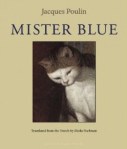
Book Review: ‘Mister Blue’ by Jacques Poulin

In Jacques Poulin’s Mister Blue, the novel’s protagonist, lives in a ramshackle house on the Île d’Orléans with his cat Mr. Blue. Jim’s world is defined by the bay, the St. Lawrence River, the beach and the novel he’s writing and not writing in the attic room where he works. As a novelist, he refuses to intrude into the lives of his characters; he watches and waits for them to fall in love on their own while he watches and waits for his chance to meet a mysterious young woman who has suddenly taken up residence in a small cave near his house.

Jim and Mr. Blue have seen her anchored sailboat, her footprints in the sand and a few possessions in the cave including a copy The Arabian Nights inscribed with her name, Marika. Yet, he refuses to overtly intrude into her life, certain that he will ultimately meet her by slightly nudged chance. When he cautiously visits the cave, the sees her bookmark’s progress through Scheherazade’s fanciful stories for the Persian king, but Marika is never home. Jim’s life suddenly shifts from that of an aging, divorced man dwelling in solitude with a cat to to an awakening writer in a shifting world of daydreams and obsession that mirror the fits and starts of a manuscript in the attic.

Before his obsession begins, he wonders if he’s picked the wrong subject for his novel. A former Hemingway scholar, Jim sees that he has broken Papa’s first rule: write what you know best.

“I had to acknowledge that I’d broken this rule. I was trying to write a love story without being in love myself. I’d probably chosen this subject because, as I felt myself growing older, I was afraid it was too late to fall in love one last time.”

Poulin’s compassionate story about a man searching for himself flows from beginning to end as smoothly and effortlessly as the river outside Jim’s attic window. The 150-page novel appears deceptively modest because the prose is just as unadorned as the protagonist’s gentle life of promising days and lonely blue days.

On days of hope, Jim’s novel moves forward and he almost finds Marika. Though he is forever just missing her, the marching bookmark in The Arabian Nights, the movements of her sailboat and other hints of her presence nourish him. On blue days, he sees no sign of her and loses himself in memories of the past and mourns the fact that his haunting, off-stage muse eludes him like words in his book.

“Words are independent, like cats, and they don’t do what you want them to do. You can love them, stroke them, say sweet things to them all you want – they still break off and go their own way.”

Poulin’s novel is a powerful masterpiece of understatement. What is real and what is dream? Neither Jim nor the reader can be sure in a story where seemingly disparate elements—an idealized woman, tennis games with a brother, the friendship of young girl who suffered an abusive past, and Mr. Blue—rise and fall like the tides in the bay without the heavy handed intervention of novelists and their characters.

This novel rubs up against a reader’s emotions with a soft, but persistent purr.

Mister Blue (Archipelago Books, January 3, 2012) originally appeared in 1989 as Le Vieux Chagrin (old sorrow) and in a subsequent English edition Mr. Blue, in 1993. Like the 1993 edition, this new edition comes to English readers through the work of the award-winning translator, Sheila Fischman. The novel has won Prix Québec-Paris, Prix Molson of the Académie des lettres du Québec, and the Prix France-Québec.

–Novelist Malcolm R. Campbell is the author of magical realism and contemporary fantasy including “Sarabande” (Vanilla Heart Publishing, August 2011).

contemporary fantasy for your Nook

My Book Reviews of 2011

Like most book reviewers who aren’t paid by a newspaper or a magazine to read 24/7, finding the time to read a book and then say something helpful about it is difficult. I could use an extra hour or two ever day just for reading. I don’t review all of the books I read. I currently have three books in the queue:

  1. Mister Blue by Jacques Poulin – I read and enjoyed this book and will post the review this year.
  2. Cinder by Marissa Meyer – Next on my reading list.
  3. The Devil’s Elixer by Raymond Khoury – Book on the way to my house.

Nonetheless, it was a good year for reviews. Here’s a look back at the books I reviewed or noted in 2011 for those you might have missed:

Next Review

Malcolm’s Round Table

Literary Aficionado

 Malcolm R. Campbell is the author of novels filled with fantasy and magic.

For a glimpse into the flavor of “Sarabande” (Vanilla Heart, August 2011) see his post: an assault where willow creek carries water away from the mountains

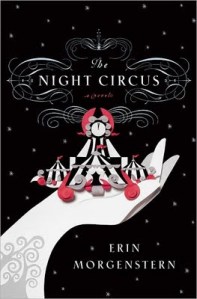
My 2011 Favorite: ‘The Night Circus’ edges out ‘The Tiger’s Wife’

In April, I began my book review of The Tiger’s Wife with the following: Gather around, my friends, and I will tell you the story of the man who could never die, who, some say, still walks the streets of our village at night, and then—if most of you are still awake—I’ll tell you the story of the tiger Shere Khan whose eyes burn brightly in the night when he prowls near campfires like this looking for his wife.

As a storyteller, I’m drawn to stories that sparkle with probabilities, magic, a sense of mystery, and a raw potential for being real beneath the guise of the novelist’s art. In April, I didn’t think anyone would do better in 2011 than Téa Obreht. Then I started seeing the hype for Erin Morgenstern’s novel of fantasy and magical realism The Night Circus. Hype bothers me because it smacks of money-fed, well-oiled machines churning out literary propaganda for those favored authors who get the rare treatment of a real, book-selling campaign. As a storyteller and author, I am jealous of those authors and that alone kicks in a nasty attitude of bias against whatever it is they are selling.

Yet, when it came to The Tiger’s Wife and The Night Circus, my intuition told me I was going to like these books in spite of my bias and in spite of the fact that I really wanted my 2011 favorite to come from a small press. Perhaps The Night Circus edged out The Tiger’s Wife because I finished reading it later in the year. Or perhaps it was because the magic of two dueling magicians in the Le Cirque des Rêves in Morgenstern’s novel reminded me of the dueling magicians in Susanna Clarke’s Jonathan Strange & Mr Norrell, my favorite novel in 2004.

Complete Worlds

Both Susanna Clarke and Erin Morgenstern paint rich pictures of complete worlds, worlds where there is room to experience the magic in depth and to believe that it fits there and really did happen or could happen. Booklist saw this complete world in Jonathan Strange & Mr. Norrell in its starred review: The brilliance of the novel lies in how Clarke so completely and believably creates a world within a world: the “outside” world being early-nineteenth-century England, as Napoleon the eagle looms over all of Europe; the “inner” world being the community of English magicians.

Likewise, Library Journal saw an equally complete world in Morgenstern’s novel this year: To enter the black-and-white-striped tents of Le Cirque des Rêves is to enter a world where objects really do turn into birds and people really do disappear…Debut novelist Morgenstern has written a 19th-century flight of fancy that is, nevertheless, completely believable. The smells, textures, sounds, and sights are almost palpable. A literary “Mr. Toad’s Wild Ride,” this read is completely magical.

Mysterious Plot

In The Night Circus, two young illusionists, Celia and Marco, are magically bound by their mentors into an endless competition without rules or time limits that is destined to play itself out in a mysterious circus of dreams that arrives in towns with no advance notice and is only open from sunset to dawn. Celia and Marco use real magic, but because the public doesn’t believe in such things, they pretend to be illusionists.

Neither magician knows when or how his or her illusions will be judged or when or how a winner will be declared, but only that they are not allowed to tell the outside world about the competition. In fact, the competition itself influences how the circus is maintained, what the patrons see or think they see, and creates a rather dream-like realm where it’s difficult for readers and circus visitors to know where the fantasy of it all begins and ends.

While most of the reader reviews for The Night Circus are positive (three to five stars), as of today, the novel’s 64 one-and-two-star reviewers saw no plot in the book at all. Generally, they found the book to be boring and pointless. One way or the other, these reviewers’ expectations were not met. I suspect they were looking for an overt storyline more like Harry Potter’s battles with the evil Voldemort throughout J. K. Rowling’s popular series. Rowling has also created a very complete world, yet what happens in it happens faster and with more splash and consequence and that garners more happy readers.

Storytelling Itself

Near the end of The Night Circus, one of the two devious mentors tells a circus performer about the imporance of stories themselves and how they connect writer and reader in intersting ways and spin out consequences outside the control of either of them:

Someone needs to tell those tales. When the battles are fought and won and lost, when the pirates find their treasures and the dragons eat their foes for breakfast with a nice cup of Lapsang souchong, someone needs to tell their bits of overlapping narrative. There’s magic in that. It’s in the listener, and for each and every ear it will be different, and it will affect them in ways they can never predict. From the mundane to the profound. You may tell a tale that takes up residence in someone’s soul, becomes their blood and self and purpose. That tale will move them and drive them and who knows what they might do because of it, because of your words. That is your role, your gift. Your sister may be able to see the future, but you yourself can shape it, boy. Do not forget that…there are many kinds of magic, after all.

I love blurring reality and fiction together in my writing. My wont to do this, as a trickster and storyteller, led me to enjoy reading both The Tiger’s Wife and The Night Circus. Both Téa Obreht and Erin Morgenstern have created believable worlds with strong characters that can move and drive readers. Even though I have always loved tigers and have always disliked circuses, Le Cirque des Rêves has manged nonetheless to connect with my blood and self and purpose.

Coming Soon: a review of Mister Blue by Jacques Poulin, to be released later this month by archipelago books. Published in 1989 as Le Vieux Chagrin, the novel first appeared in English in 1993.

You May Also Like: Yesterday, I announced an end-of-the-year book give-away challenge for my contemporary fantasy Sarabande. If you enter, you might just win a free copy.

Malcolm

Review: ‘The Uncertain Places’ by Lisa Goldstein

“A long time ago there lived a poor woodsman. One day he was walking in the forest when a man came out of the trees and hailed him. ‘Good day,’ the man said. ‘And how are you doing today?’

“‘Very poorly,’ the woodsman said. ‘My family and I have not eaten for three days, and if I do not find food for them soon I fear we will all die.’

“‘I can help you,’ the man said. ‘But you must promise to give me the first thing you see when you return home today.'”

All long-time readers of fairy tales are familiar with stories that begin like this, or similar to this, and they all involve people who are down on their luck who are mysteriously offered a great boon. The boon isn’t free because it involves a bargain that may change the lives of a family throughout time forever.

Just stories, of course, with morals in them about getting something for nothing, being too quick to give away something not clearly specified, and trusting anything that happens at crossroads, boundaries and other undertain places.

In Lisa Goldstein’s wonderful contemporary fantasy “The Uncertain Places,” protagonist Will Taylor looks back on the events that occurred after his college roommate Ben introduced him to Livvy Feierabend in 1971. Will is smitten with Livvy; Ben is smitten with Livvy’s sister Maddie. Livvy and Maddie live with their mother Sylvie and younger sister Rose in an odd and rambling house in the Napa Valley.

Will notices on his first trip to Napa that Sylvie is rather scattered. On subsequent visits, it becomes more and more obvious that the house and the family are, in ways that cannot be pinned down, also scattered as though they aren’t quite living in the here and now, or that if they are present in the here and now, that the line between the family’s house and vineyard on one hand and their secrets on the other hand is not altogether well defined.

Will and Ben slowly discover that stories they always believed were “just stories” might be more than that. How exactly did the Brothers Grimm come by old fairytales about woodsmen and witches in their famous books of “Children’s Tales” published in multiple editions beginning in 1812? Growing up, the Feierabend sisters were not allowed to read fairytales. How odd. But Will finds out why, and that “why” has to do with the kinds of fortune and fate that befall those who find themselves confronted by friendly helpers in the uncertain places.

The consequences of decisions made in such places are forever. There’s good fortune, to be sure. But it comes at a price, one that Will doesn’t want Livvy to pay. All of this happened in California during the rather abnormal times of the 1960s and early 1970s, and Will narrates the events that followed the weekend when he became smitten with Livvy Feierabend as though he’s telling a fairytale that contains fairy tales.

Will’s telling of the story is one of the novel’s greatest strengths, but also a lingering weakness. Looking back, as he is, Will places Ben, Livvy, Rose, Maddie and Sylvie into the world of “once upon a time,” and this adds to the ephemeral nature of “The Uncertain Places.” The Feierabend sisters’ world is vague in all the secret ways magic and boundary areas are vague, and that makes them all the more plausible and delightful.

The flasback structure of the novel also blurs the impact of the story because there periods of normal reality in between the odd events Will is telling us about. Readers who are more accustomed to constantly forward-moving plot might say, “get back to the story.” While these gaps filled with normacy are not large, they are somewhat distracting.

Nonetheless, the novel sparkles like stars and faerie lights in the woods and old secrets on the cusp of revelation, and is highly recommended for all lovers of fantasy whose ancestors didn’t make long-term bargains with those they met in uncertain places.

Update, August 2012: Novel wins 2012 Mythopoeic Fantasy Award for Adult Literature

Malcolm R. Campbell, author of contemporary fantasies. including the “Sarabande”

a young woman’s harrowing story in multiple worlds

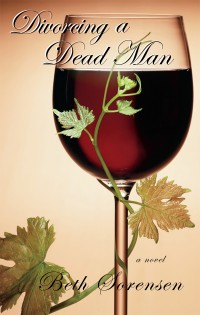
Review: ‘Divorcing a Dead Man’ by Beth Sorensen

In her fine-vintage debut romantic mystery Crush at Thomas Hall (Chalet, August 2010) Beth Sorensen introduced readers to Cassandra Martin who buried an abusive husband Tony, left home to see the world and ended up in northern Virgina running a small winery and deeply in love with the son of Thomas Hall’s owner, Edward Baker. In spite of murder and embezzlement, Cassandra and Edward appeared destined to lead a charmed life at the end of the novel.

The title of Sorensen’s sequel, Divorcing a Dead Man, is the first clue to the fact there may be more than grapes to be crushed at the winery—potentially, hearts and lives, as Cassandra discovers that Tony faked his death and wants to control her life again if he doesn’t kill her first. As a rich, successful CEO, Edward is used to getting his way, and to him that means controlling Cassandra’s life as well.

In my review of Crush at Thomas Hall, I noted that while former college professor Cassandra Martin was an intelligent protagonist when it came to running the winery, she was indecisive about personal matters, especially emotional commitments. She remains indecisive in Divorcing a Dead Man.

But, she has cause:  two men want to control her life, one out of hate and love; one man makes threats while the other keeps secrets; she is a devout Catholic who must now contemplate filing for divorce while her wedding is approaching as a potential train wreck; and, since Cassandra’s life is in danger, those closest want to hover even closer when she would prefer to run the winery (or run away) and have some unfettered time to think.

While Divorcing a Dead Man is not quite as tightly written as Crush at Thomas Hall, this contemporary romance successfully develops the character of Cassandra Martin in an environment of danger and betrayal. Meanwhile, Cassandra is not without doubts. While Tony was a mistake, she wonders as she accuses Edward of trying to run their relationship like a corporation, if marrying him will be another mistake.

Sorensen has written a compelling story about relationships and how easy it is for them to come into question and come under fire during times of great stress. From the outset, it’s clear that Cassandra and Edward are deeply in love and want only the best from each other. It’s also clear, whether fate plays a deadly hand or not, that they’re facing a steep learning curve in how to make a relationship work with very little time to do the necessary homework.

Malcolm R. Campbell is the author of four novels, including the recent contemporary fantasy, “Sarabande.”

Commentary: ‘The Help’ by Kathryn Stockett

Kathryn Stockett’s bestselling novel The Help focuses on a secret project (fictional) in Jackson, Mississippi (real)  in the early 1960s put together by an idealistic white girl named Skeeter and a group of black maids led by the stable Aibileen and the sassy Minny. Other primary characters include Skeeter’s young peer group for whom the maids work, Hilly and Elizabeth and Celia.

In those days, there were lines one did not cross when it came to the acceptable and unacceptable interactions between white employers and their black (this term wasn’t in general use in those days) domestic help. Skeeter, who is somewhat naive and hopeful about the future, crosses those lines. She takes risks and so do Aibileen and Minny. They fictionalize their names and call their town Niceville. If they are caught sharing stories with each other (much less writing them down), they might be beaten or killed. And then there’s the matter of trust, the trust the maids must put in a white woman who’s not acting like the other white women do.

I liked the book.

The Book Has Already Been Thoroughly Reviewed

Yet, there are already 4,523 Amazon reader reviews of The Help, and numerous articles and reviews of both the movie and the novel in the press. It’s unlikely that I have anything new to add to the discussion at this late date. In general, the book has been well received by readers and reviewers. Its controversial nature has brought out the usual kinds of dissatisfaction about miscellaneous errors of fact, the realism or lack of realism of some of Stockett’s characters’ viewpoints and actions, whether or not Jackson as characterized in the book approximates Jackson as it was almost 50 years ago. Some of the critics have forgotten that The Help is a work of fiction and not an anthropologist’s treatise about Southern race relations and domestic help of the 1960s.

On top of the controversy is, perhaps, one issue: denial. Because the picture of black and white relationships painted in The Help isn’t pretty and because it depicts bigoted (though usually nothing like the overtly nasty Hilly Holbrook in the novel) whites hiring generally accommodating blacks in a complex mix of discrimination and trust, most people want to hide this picture under the rug. Understandably, nobody wants to focus on it, much less applaud it. My view is that pretending that it didn’t happen doesn’t really help us move forward as a homogenized people.

In addition to being a well-told story, The Help brings to light what those of us living in the South saw day to day, but seldom hear talked about. As Stockett portrays in her book, whites did not see blacks as their equals, yet they trusted them as integral members of the household to cook, clean and look after the children. My family moved to the South when I was six years old, to a town I’ll call Nicetown, that was much smaller than Jackson but that featured some people who acted like most of the characters in Stockett’s novel. Very few people acted like Skeeter, or, if they did so, they kept it quiet. The closest person to Skeeter in the book was my mother who was fairly outspoken (as was my father) against segregation.

1960s Nicetown Fact of Life

Maids in our white neighborhood were a fact of life. They came on the city bus which let them out in front of our house, and from there they fanned out to nearby streets where they worked. My best friend’s family had a maid who was, while the parents were gone, the surrogate parent figure in the house. She was more stern than the parents, but also much loved as long as no lines were crossed. She did not eat with the family, ride in the front seat of their car, go to their church, or talk with them friend-to-friend.

Like Skeeter’s Niceville, my Nicetown provided separate schools for blacks and whites, separate swimming pools and restaurants and neighborhoods, restrooms labeled men, white and colored, and drinking fountains labeled white and colored. There were separate churches, too, until our minister said our church was open to everyone; those who didn’t like it left and started another church. Like them or not, the lines were hard to cross because “separate but equal” made certain that interaction was minimized. Stockett gets this right in her book.

My grandparents had a maid who kept their house spotless even though she was older than they were. She treated us, my brothers and I, as the surrogate grandparent when she was left in charge of the house. Like my best friend’s maid, she was friendly and talkative until one started to cross a line and act like we were black or she was white. It wasn’t done, and if you tried to do it, the maids grew quiet and their employers talked about how we’d get in trouble—the same kind of trouble Skeeter risks in the novel—if we didn’t act with proper decorum.

The picture Stockett paints in her novel is a picture I saw, though naturally (as a boy growing up) I wasn’t privy to either the adult conversations of the maids or to the discussions of the Skeeter Phelans or those few in my neighborhood what most resembled The Help’s pretentious Hilly Holbrook, more moderate Elizabeth Leefolt, or the redneck Celia Foote. While I can say that I saw Minny, Aibileen, Elizabeth, and Hilly in my neighborhood, I don’t see these characters in The Help either as stereotypes or as representatives of everyone else in 1960s Jackson.

Dialect, Southern Accents and Anger

Some have criticized Stockett for her use of black dialect. Her fictional maids speak the same way the real maids in my neighborhood in Nicetown spoke. Stockett’s use of this dialect in the book is not only accurate but works as an excellent means of showing the otherness with which whites saw their black help as well as how the black help felt about themselves. Language is a part of one’s culture, not the stereotyping put down of a white author writing about black characters.

I do think Stockett should have included the Southern accents of her white characters as well. She said, I believe, in an interview that she never thought of her own family when she was growing up in Jackson as having an accent. When I moved into the South, most of those I met thought I was the one with the accent. Perhaps Stockett saw it this way, and grew up believing that the Southern accent, while meanly ridiculed by people from other parts of the country was, in fact, Standard Speech. The book would, I think, have been a truer painting if Skeeter, Hilly, Elizabeth and Celia also spoke in their own dialect.

I also would have liked seeing a little more anger expressed by the maids when they talked amongst themselves, though maybe not even in Skeeter’s presence. In reality, of course, anything approaching anger would have been a difficult passion to hold onto in those days because feeling anger led people to say and do potentially dangerous things. The emotions tended to have calluses over them, for self preservation and perhaps sanity. Even so, readers will leave The Help knowing how the help feels about whites in general and their employers in particular.

These are my impressions, then, of The Help, rambling as they may be. Stockett has done a difficult piece of writing, trying to accurately portray another time and place to an audience who will for the most part judge everything in the book by today’s norms. Stockett is a bit like Skeeter, hopeful and undaunted by the likely criticism. There’s a lot to admire in The Help, and part of what I like about it is that it makes the painting of how we were out from under the rug so that we can no longer deny it.

Malcolm

Malcolm R. Campbell is the author of four novels, including the recently released contemporary fantasy Sarbande. He grew up in Florida and currently lives in northeast Georgia.