Briefly Noted: ‘Rosemary: The Hidden Kennedy Daughter’

Rosemary: The Hidden Kennedy Daughter, by Kate Clifford Larson (Houghton Mifflin Harcourt (October 6, 2015), 320pp.

If you remember the era when John F. Kennedy was President, you probably don’t remember his sister Rosemary. There’s a reason for this. The first daughter of Rose and Joseph P. Kennedy, Sr, was confined at 23 to a mental institution in Wisconsin where she would remain until she died at 86 in 2005.

Kennedy - Wikipedia photo
Kennedy – Wikipedia photo

At birth, a nurse held her in the birth canal for two hours while waiting for the doctor, fearing the doctor would lose money if the delivery occurred before he arrived. Potentially deprived of oxygen, she was developmentally disabled. Rose and Joe concealed this, even from her siblings. Her IQ was judged to be a 70. A gorgeous child, she even met Queen Elizabeth and other dignitaries. However, as she grew older, she became rebellious, causing Joe to send her to a hospital for the lobotomy that almost succeeded in turning her into a vegetable.

In a review titled The Saddest Story Ever Told, the Wall Street Journal, calling Larson’s book a “heartbreaking biography,” says while lobotomies did modify behavior, there was no evidence that they cured mental deficiencies. “The American Medical Association warned of its dangers. Nevertheless, Joe went ahead.”

rosemarykennedyShe was left crippled, speechless, and quiet with a substantially lower IQ. As The Wall Street Journal puts it, “The operation had been botched.” That seems to be a contradiction in terms, but nonetheless apt.

Larson old NPR, of Rose and Joe, “I have sympathy for their position, but given their wealth, there were other alternatives, and they only had one vision of an alternative, and that was convent schools. And there were alternatives for Rosemary at the time — and he chose this radical, radical choice. At the time, it was still very experimental, so as a father, would he have experimented on his sons? I don’t think so.”

Kirkus calls the book “well researched,” author Will Swift calls it “a poignant story,” and author Marya Hornbacher calls it “an engrossing portrait of Rose and Joe Kennedy’s tragic misunderstanding of their oldest daughter’s capabilities, and of how her fate changed the Kennedy family forever.”

I call it an American tragedy about (as Larson calls her) a “lovely, lovely child, [who] grew to be a lovely adult woman” who was ruined by health care professionals and then hidden by negligent co-conspirators named Rose and Joe.

–Malcolm
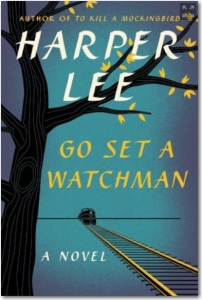
Review: ‘Go Set a Watchman,’ by Harper Lee

“One learns one’s mystery at the price of one’s innocence.” ― Robertson Davies

The mockingbird dies again in Go Set a Watchman.

watchmanIn To Kill a Mocking Bird, Jean Louise “Scout” Finch, Jeremy Atticus “Jem” Finch and Charles Baker “Dill” Harris are among the innocent mockingbirds who suffer when the cruel realities of life intrude into their childhoods after Atticus is appointed by the court to defend a Black man accused of raping a white woman.

The trial and its aftermath represent a defining moment for the fictional Maycomb, Alabama; establish Atticus as the watchman who sees the truth and crusades for justice; and solidifies for young Scout, her faith in a wise and loving father who can do no wrong.

In Go Set a Watchman, the twenty-six-year-old Jean Louise who lives and works New York returns to Maycomb to visit her ailing father at a time when there are increasing tensions in the South after the Supreme Court’s Brown v. Board of Education (1954).

Lee paints a clear picture of the concerns many small town residents had about the ramifications of desegregation. Some reviewers have skewed the point of the book by looking at these not-unusual 1950s beliefs through a 2015 microscope.

While this makes for sensationalistic headlines, it inaccurately clouds the realities of the time period for prospective readers.

Scout, who is basically color blind, believes what she grew up thinking Atticus believed: “Equal Rights for all, special privileges for none.” When it comes to matters of law, he has not wavered. Daily life, though, isn’t the law to his way of thinking. When Scout discovers Atticus thinks Blacks are not yet ready for the full rights of a desegregated society, her world is shattered. The man who wants to marry her has similar views and, along with her father, is attending political meetings aimed at finding ways to fight the Supreme Court’s ruling, The mysterious wonders of her childhood under the patient guidance of her father are suddenly at risk as everything she thought was true is potentially false.

Lost innocence and fallen gods are central themes in this book.

Like many debut novels, Go Set a Watchman contains a fair amount of back-story of “remember-when” discussions and reminiscences. While these passages inform the reader about what was, they also slow the pace of a novel. However, readers of To Kill a Mockingbird will probably also find these passages nostalgic as they shed more light on Mockingbird’s beloved cast.

After Scout learns what she learns about her father and his colleagues, she has a decision to make. She can run back to New York filled with hatred for the family and friends who have destroyed the remains of her innocence and her childhood memories with views she abhors. Or, she can stay in Maycomb, fight for what she believes, and as a watchman tell others the truths she sees among them.

Harper Lee deftly handles Scout’s dilemma in a wonderful novel that will, I hope, survive the perils of the misguided critics who have been shouting that the sky is falling.

–Malcolm KIndle cover 200x300(1)

Malcolm R. Campbell is the author of “Conjure Woman’s Cat,” a novella set in the Jim Crow 1950s of the Florida Panhandle in which granny and her cat fight racial injustice with folk magic.

Reviews for ratings or to explore something new?

The reviews on this blog have been a mix of new or unknown authors and books by recognizable names. Since this blog isn’t Beatrice or Bookslut, I don’t kid myself into thinking that my opinions about authors and their books will have an earthshaking impact in the scheme of things.

Since I’m not Beatrice or Bookslut, much less The New York Times or the Washington Post, I worry less about the impact of ratings. If I work for a widely known media outlet, I’lll be handed most of the books I review and most of those will be books that are probably doing well enough not to need a review.

On the other side of the coin, new authors need the exposure that reviews give them whether they come from readers on Amazon or bloggers like myself. I know how authors feel when they ask me to review their books and the next thing they see here is a review of a bestselling author.

I know because I’ve been there. My books have also gone to review sites that chose instead to review, in some cases, books that were several years old and already famous and already reviewed by everyone and their brother. I know, I know, that famous book is better for ratings, especially if you have advertisers that watch our market influence like hawks.

I’m not oblivious to ratings here. I don’t suppose this is a secret, but I do hope some of those who stop by this blog will like what they see and buy one of my books.

The BIG BOOKS I review here are books I bought, read, likely and felt like talking about. The authors won’t know I reviewed their book 99% of the time. But, like others who enjoy talking with their friends about the latest books “everybody’s reading,” it’s fun to toss in my two cents about J. K. Rowling or Dan Brown from time to time.

But I feel guilty when I do it. I see a lot of visitors with those posts, but I wasn’t bringing them anything new–just more talk about a book or an author that’s been reviewed everywhere else. I feel better, I think, when I can tell you about a book you haven’t heard of, but might like. Those posts get fewer visits and that’s discouraging.

I wasn’t born yesterday, so I know that people tend to read books everyone else is reading rather than experimenting with books none of their online and off-line friends have heard of.

A new author is always a risk. But there could be gold there even though The New York Times and Book Page and Publishers Weekly will never give that author a chance. But what an adventure it is to read something wonderful from a debut author. That’s part of the fun of reviewing books and deciding to go with something nobody’s ever heard of instead of the BIG BOOK has already sold 100000000000 copies.

So, how experimental in your reading are you?

Do you wait to see which books grab the mainstream reviewers’ and public’s attention and create your reading list from that group? Or, do you read descriptions of self-published and small press books and give them a try from time to time?

Curiously,

Malcolm

AudioFile Review of ‘Jock Stewart and the Missing Sea of Fire’

SOFaudibleI had a good time writing my comedy/satire about an old-time reporter caught in the modern age of journalism. It was even more fun listening to the audio version of the book because the narration worked so well.

Amazon readers “got” the book, seeing it as just as wild and crazy as it really is…

…as in Elise’s comment: “Plenty of memorable characters reside in Jock’s home town, like a perpetually doughnut-eating cop by the name of Kruller. Those kind of little word plays and the intentional use of old clichés will make you laugh out loud. Jock projects himself as a hard core kind of guy, but deep down he’s a softie. ”

AudioFile magazine thinks so, too:

“Narrator R. Scott Adams’s rapid-fire delivery mirrors the speech of fast-talking old-style newshound Jock Stewart. Listeners need all their skills of concentration, or they’ll miss the story’s wit and even the occasional clue. Sea of Fire is a missing racehorse, but the mystery of his whereabouts sometimes seems merely incidental. The story is high on humor but light on plot–a vehicle for sex, cigarettes, steak, and zinfandel. Stewart, a print journalist, is a likable dinosaur in a changing world. Adams’s timing is perfect, but a second listen is recommended to catch what is missed first time around.”

audiofile

–Malcolm


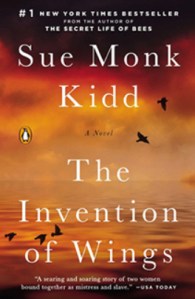
Thoughts on ‘The Invention of Wings’

“Alternating between Sarah’s and Handful’s contrasting perspectives…allows Kidd to generate unstoppable narrative momentum as she explores the troubled terrain that lies between white and black women in a slaveholding society… The novel’s language can be as exhilarating as its powerful story… By humanizing these formidable women, The Invention of Wings furthers our essential understanding of what has happened among us as Americans – and why it still matters.”
—The Washington Post

Sue Monk Kidd’s powerful historical novel The Invention of Wings returns to the public’s consciousness the effective, famous and infamous abolitionist and feminist orators/authors, sisters Sarah Moore Grimké (1792-1873) and Angelina Emily Grimké Weld (1805 – 1879). (See PBS’ People & Ideas: Angelina and Sarah Grimké.)

inventionwingsBorn into a Charleston slaving-holding family that was widely known in the city’s upper levels of society, both girls would–in spite of a stern mother and a resolute father–evolve into outspoken ladies who would ultimately defy their kin, city, and church to speak out against slavery and discrimination against women.

As the PBS article notes, “The sisters’ public speaking and involvement in the political sphere drew condemnation from religious leaders and traditionalists who did not believe that it was a woman’s place to speak in public. The sisters soon found themselves fighting for equality of the sexes and women’s rights, following women like Sojourner Truth in linking the rights of blacks and women.”

The Invention of Wings shows the sisters’ (and Sarah’s Black maid Handful’s) struggles at a close, personal level as the women’s views about themselves and their places in the world evolve during the novel’s 1803 to 1838 time frame. This is the novel’s first great strength.

From Sarah’s perspective: “All things pass in the end, even the worst melancholy. I opened my dresser and pulled out the lava box that held my button. My eyes glazed at the sight of it, and this time I felt my spirit rise up to meet my will. I would not give up. I would err on the side of audacity. That was what I’d always done.”

From Handful’s perspective: “Goods and chattel. The words from the leather book came into my head. We were like the gold leaf mirror and the horse saddle. Not full-fledge people. I didn’t believe this, never had believed it a day of my life, but if you listen to white folks long enough, some sad, beat-down part of you starts to wonder.”

Its second great strength comes through the seamless blend of historical facts and characters and fictional characters and events. You realize how expertly this hand-in-glove fit was accomplished when you read the author’s note at the end of the book. (Kidd also provides a list of references.)

dissidentdaughterI became a fan of Sue Monk Kidd in 1996 when I read her The Dance of the Dissident Daughter: A Woman’s Journey from Christian Tradition to the Sacred Feminine. I thought of that book again as I read The Invention of Wings. I does not surprise me that an author who wrote about her own escape from religious patriarchy would be drawn to two historical sisters who also took strong issue with the organized church, sexism and racism.

The Invention of Wings is a testament to a wonderful writer’s ability to put herself into the shoes of two unfortunately obscure civil rights and feminist leaders and bring them to back life again in a highly readable story.

–Malcolm

KIndle cover 200x300(1)Malcolm R. Campbell is the author of “Conjure Woman’s Cat,” a novel about small-town racism in the Florida Panhandle during the Jim Crow era.


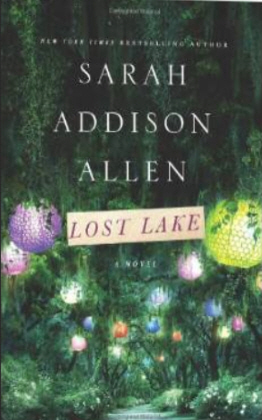
Review: ‘Lost Lake’ by Sarah Addison Allen

Lost Lake, Sarah Addison Allen (St. Martin’s Press, hardcover, January 21, 2014, paperback January 6, 2015), 304 pp.

lostlakeKate Pheris is waking up after the worst year of her life, the year she lost her husband and almost lost herself while her young daughter Devin waited for life to begin again and her mother-in-law Cricket orchestrated their future like a puppeteer with an agenda stronger than love.

But older ties are stronger even though they might have seemed forever lost.

Kate and Devin serendipitously discover a fifteen-year- old postcard in the attic while getting ready to move to Cricket’s house where neither of them wants to be: Greetings from Lost Lake, Georgia: a Magical Experience. Sent by Kate’s great-great-aunt Eby after Kate’s best summer ever at the ramshackle cabins our of another era in South Georgia, the card stirs up old hopes and memories.

Kate’s never seen the card before. Her mother, who had a falling out with Eby that summer, hid it away along with its message, “You’re welcome to come back anytime you’d like.”

It’s too late, isn’t it? Lost Lake and Eby are probably long gone. Yet, Lost Lake really isn’t that far from Atlanta. What if Kate and Devin drive down there and look?

While Cricket organizes the future she wants with indomitable and merciless force, Lost Lake suggests possibilities with a gentle touch, one that pulls on the heartstrings of those who have come back for one last summer before Eby sells the place she can no longer afford to keep and flies away to see the world.

The book features a cast of memorable characters and–inasmuch as this novel is magical realism–a magical setting. Everyone who arrives to say goodbye to Eby and Lost Lake is looking for something, and they all have their secrets and their losses.

Like an oasis that’s almost visible for one moment and gone the next, the magic and the synchronicity of the setting are deftly handled by Allen (Garden Spells The Sugar Queen, The Girl Who Chased the Moon, The Peach Keeper), adding mystery and, perhaps, a sense of hope that a seemingly lost future is not altogether lost.

One cannot read Lost Lake without noting a certain predictability in the plot and the syrup of sentimentality it the developing themes and coming-out-of-hiding histories of the characters. One can say the same thing about It’s a Wonderful Life.  Nonetheless, movie viewers return to It’s a Wonderful Life every year at Christmas just as the faithful, if not aging, guests return to Lost Lake every summer.

Lost Lake gives those guests what they’re looking for even though most of them are too stubborn to admit it. Readers may know, or think they know, how Kate’s and Devin’s summer at Lost Lake will end. They may be right. Even so, the book casts a spell that’s impossible to resist.

–Malcolm

KIndle cover 200x300(1)Malcolm R. Campbell is the author of the magical realism novella “Conjure Woman’s Cat,” set in the Florida Panhandle where folk magic lives deep in the piney woods.


Review: ‘Causing Chaos’ by Deborah J. Ledford

Causing Chaos (Inola Walela/Steven Hawk Suspense Series Book 4), by Deborah J. Ledford, IOF Productions Ltd (March 31, 2015), 308 pp.

causingchaosDeborah J. Ledford follows Staccato (2009), Snare (2010) and Crescendo (2014) with another powerful mystery/thriller set in the western North Carolina world of the Smoky Mountains and the Eastern Band Cherokee trust lands of the Qualla Boundary.

The story begins in blood, “Red streaks on the lower cabinets, an overturned chair, the oven door. An arc of crimson, the entire height of one wall.”

While Cherokee artist Paven Nahar works in his studio, his wife Shellie argues with two art dealers in the couple’s house who insist on acquiring the sculpture in progress. When Paven returns to the house later, he finds a bloody kitchen, a shattered pottery urn and no sign of his wife.

Paven, who is soon on the run, quickly becomes the prime suspect in his wife’s disappearance and presumed murder. Inola “Hummingbird” Walela, the only Cherokee in the Bryson City police department is tasked with the capture of the man who was her closest childhood friend.

The story is also defined by blood, blood as represented by the often conflicting love and drama within a family, and blood as a force of heritage and loyalty for members of the Cherokee Nation. Walela’s case is potentially related to an unsolved series “Qualla Ghosts” cases of missing women on tribal lands. This increases the pressure on Walela while ramping up the suspense for readers.

While each novel in this very cohesive series has developed the characters of Walela and her boyfriend Steven Hawk, Causing Chaos belongs to Hummingbird in every possible way. While the novel is aptly categorized as a police procedural and thriller, it is also a deeply personal story for Walela as multiple layers of her past and her family/tribal relationships come to light. Among these is a childhood incident, a source of nightmares and latent fears, that may somehow be related to the fate of Paven and Shellie and to the puzzling Qualla Ghost cases.

Causing Chaos is a cop story with great depth and a heartbreaking psychological undertow.

On a personal note, I have been hiking and vacationing in western North Carolina since childhood and have a deep fondness for the Smoky Mountains, the Blue Ridge Parkway and the sacred waters of the Oconaluftee River. Ledford’s novels not only fit hand-in-glove within this setting, but enhance it for those of us who know it well.

–Malcolm

Malcolm R. Campbell is the author of contemporary fantasy and magical realism fiction, including “Conjure Woman’s Cat.”

Review: ‘Dance of the Banished,’ a story of WWI Turkish ethnic cleansing and Canadian hysteria

Dance of the Banished, by Marsha Forchuk Skrypuch, Pajama Press (February 1, 2015), young adult, 288 pages. In her sixth book set during the Armenian Genocide, Marsha Forchuk Skrypuch’s Dance of the Banished brings young adult readers a heartbreaking account of the World War I-era ethnic cleansing in the Anatolia region of Turkey and the Canadian paranoia that sent thousands of purportedly dangerous immigrants to internment camps.

banishedArmenians, who are traditionally Christian, and Alevi Kurds, whose religious views differ from those of Sunni Kurds, predate the arrival of the Turks in Anatolia. The discord brought into the region by the Turks is a centuries-old fight. “Dance of the Banished” begins in 1913 on the brink of Turkey’s entry into World War I on the side of the Central Powers with the story of two betrothed Alevi Kurds who are soon separated by hard times and a very wide ocean.

Ali chooses to go to Ontario, Canada where jobs are available. He plans to send money home to his family and to save enough to ultimately pay for Zeynep’s passage to Ontario. She views his departure as a betrayal, as practical as it may be, and wonders if they will ever see each other again.

Subsequently, Zeynep also leaves town to work in a hospital in a Harput, a city between the Tigris and Euphrates rivers, where she is swept up into the horror of revolution, war and poverty. Ali begins work in Canada only to find himself rounded up on trumped up charges and sent to a prison camp where he’s pressed into service at a minimal age. Both wonder why they don’t hear from each other.

The book’s sections, which alternate between Zeynep’s and Ali’s stories, are presented as journal entries written in the form of letters to each other. In time, she learns that the Armenians who have been allegedly drafted to fight in World War I are being exterminated and he learns that he is part a growing group of imprisoned Ukrainians, Turks and others who came to Canada for freedom only to end up without it.

The power of this novel comes in part from the age of its two protagonists and how their view of the world is forced to change. Young and in love, they see life through a different lens than their parents and grandparents. While their focus is on being reunited with each other, their journal entries begin with typical day-to-day activities and then change from initial disbelief at the persecution around them into grim accounts of their own involvement and means of survival.

Their growing horror and their continuing hope and perseverance during the cruel years of 1913 to 1917 combine for a poignant love story and a stark account of genocide close up and very personal.

The book is enhanced by the inclusion of internment camp pictures and an author’s note about the story’s historical background.

–Malcolm Malcolm R. Campbell is the author of the upcoming novella “Conjure Woman’s Cat.”

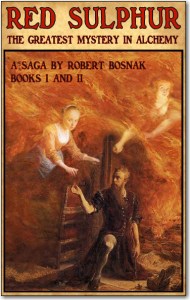
Briefly noted: ‘Red Sulfur’ by Robert Bosnak

Man is a thinker.redsulfur
 He is that what he thinks.
When he thinks fire
he is fire.
When he thinks war,
he will create war.
Everything depends
if his entire imagination
will be an entire sun,
that is, that he will imagine himself completely
that what he wants.
— Paracelsus

Red Sulphur: The Greatest Mystery in Alchemy [Kindle Edition], by Robert Bosnak, Red Sulphur Publications (December 8, 2014), 508pp

As I read this book, I cannot help but think of author Katherine Neville (The Eight, The Fire) who popularized the magical saga long before Dan Brown took the form to even larger audiences. I also cannot help but note that Robert Bosnak is a long-time Jungian analyst with widely-read nonfiction books to his credit who has studied alchemy for years. Jung was also a student of alchemy, seeing it as widely applicable to the understanding and development of the self. The heritage behind Red Sulphur brings great promise to this novel.

From the Publisher: It is 1666, the Year of the Beast, seen by many as the moment the Devil will appear on earth.

Science is in ascendance, crowding out other systems of thought. The ancient art of alchemy is in retreat. No one has been able to make the Philosophers’ Stone for over a hundred years, but many of the best minds of the age are still in a desperate search for it. Stories vividly abound how alchemists of yore had created a powerful stone of sorcery, rejuvenating all it touches — turning decrepit old lead into precious fresh gold. A universal medicine known to the alchemists by its true name: Red Sulphur.

From the Novel’s Epigraph: “This saga is based on the last verified historical reports by credible withesses about a mysterious transmutation. It follows the lives of a great alchemist and the two extraordinary women he loves. The last in the world in possession of the miraculous Red Sulphur, the source of all creative powers, they are pursued by dark forces and powerful world leaders. This is a visionary tale spanning two generations in the last days when magic was strong. It is the story of the final embers of the long gone days when the Magi could still do what we, children of science, hold to be impossible.”

Editorial Reviewer Comment: “A book both compelling and haunting. Robert Bosnak’s saga Red Sulphur traces the history of the split between alchemy and science in a tale of lust, greed and abiding passion.” – Penny Busetto:

Bosnak
Bosnak

From the author’s Amazon Page: “ROBERT BOSNAK grew up in Holland, trained in Switzerland, and has studied alchemy for over 40 years. He is a noted Jungian psychoanalyst specialized in dreaming with a practice in Los Angeles, and is the author and editor of 7 books of non-fiction in the fields of dreams, health, and creative imagination. His bestselling A Little Course in Dreams was translated into a dozen languages. He developed a method called ’embodied imagination’ used widely in psychotherapy and applied worldwide to a variety of creative endeavors. The Red Sulphur saga is his first published work of fiction. He lives in the mountains of Santa Barbara.”

You have to be an alchemist, a Jungian or a mystic to love this book. That’s the beauty of it as a saga. You don’t need footnotes; instead, you need simply to love a story. The story might change you in ways you don’t expect, but then reading always has that kind of power over those who resonate with the characters, plots and themes.

Malcolm

Seeker for promo 1Malcolm R. Campbell is the author of magical realism and contemporary fantasy novels including “The Seeker.”

Book Review: ‘Shadow Days’ by Melinda Clayton

Shadow DaysShadow Days by Melinda Clayton

My rating: 4 of 5 stars


“Shadow Days” is a delightful addition to Melinda Clayton’s popular “Cedar Hollow” series, featuring in this novel protagonist Emily Holt who suddenly leaves her home in Florida and runs away on the anniversary of her husband’s death.

She ends up by chance and destiny in Cedar Hollow. The sheriff wonders if she’s crazy when he finds her and her broken-down car a few miles from town.

After she finds a place to stay, she begins to learn about the town and its people. Readers who’ve been with the series since it began with “Appalachian Justice,” will recognize just about everybody. Those who read “Shadow Days” first will, like Emily Holt, learn who’s who as the plot unfolds.

Emily has to come to terms with her husband’s death, the remnants of her life in Florida, her two sons who are off at college and don’t know where she is, and just who she is now in this off-the-beaten track town in West Virginia.

This is a well-told story with a cast of characters that increases in depth and scope as each new novel in the series is released. There are nice touches in the memories of characters such as collecting calendar towels and saving S&H Green Stamps. Very satisfying and hopefully not the end of the story.

Malcolm

View all my reviews