“Four thieves vinegar (also called thieves’ oil, Marseilles vinegar, Marseilles remedy, prophylactic vinegar, vinegar of the four thieves, camphorated acetic acid, vinaigre des quatre voleurs and acetum quator furum is a concoction of vinegar (either from red wine, white wine, cider, or distilled white) infused with herbs, spices or garlic that was believed to protect users from the plague.” – Wikipedia
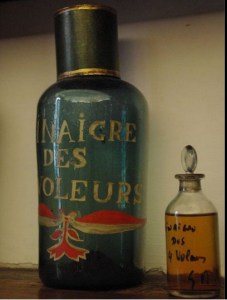
Over the years, vinegar has been used for a variety of health reasons, but none has attracted more attention than the purported blend of vinegar that kept people from getting the plague. It seems that four thieves were robbing the homes of the dead during the plague without getting sick. Supposedly, this vinegar and herbs mixture was their protection, possibly because it kept fleas–the carriers of the plague–away from people who use it.
Ultimately, the thieves were caught and–to save their lives–said they were using a special vinegar as protection. The recipe itself has been elusive, with various versions arising out of the mists of time here and there. Today, some witches and hoodoo practitioners use their own versions of the vinegar for a variety of health and protection needs.
According to Nourished Kitchen writes that “Four Thieves Vinegar is the stuff of legends and of kitchen magic – a beautiful combination of rosemary, sage, mint, and raw vinegar that combines for a vibrantly herbaceous and slightly floral concoction that may or may not protect your family from the rigors of medieval plagues, but will definitely enliven plates of sweet lettuces and other summer greens.”
The Farmers Almanac traces the original recipe back to French chemist and scholar René-Maurice Gattefossé [who] published the “original” recipe that hung in the museum of Old Marseille, France in his 1937 book, Gattefossé’s Aromatherapy: “Take three pints of strong white wine vinegar, add a handful of each of wormwood, meadowsweet, wild marjoram and sage, fifty cloves, two ounces of campanula roots, two ounces of angelic, rosemary and horehound and three large measures of champhor. Place the mixture in a container for fifteen days, strain and express then bottle. Use by rubbing it on the hands, ears and temples from time to time when approaching a plague victim.”
They note that modern recipes include garlic, rosemary, clove, and sage–one herb for each thief. Some people add juniper, thyme, and cinnamon. It’s best to let it steep a while and then use it in diluted form–one tablespoon in a glass of water daily. Or, on your salads.
I don’t care about the plague at the moment but have found that various combinations of this recipe are a great salad dressing and that if they keep the plague and/or bad guys away, that’s an extra benefit.
–Malcolm

 I have no idea whether or not anyone actually uses either Florida Water or Hoyt’s as colognes. I suppose so. I became aware of these colognes while researching my
  Praise the good Lord, as the deacon would say, for Pollyanna chose that moment to drive her grey Ford truck through the busted section of the wrought iron fence into the back yard. She wore her favorite green capri pants, black blouse, black slingback sandals, and a wide smile that showed off her new black lipstick and matching nail polish.





 Thomas-Jacob Publishing
 “Congressmen and women are dropping like flies as the spell flows through the Capitol building like left over green slime from an old horror movie,” said Washington station agent Charles W. Chesnutt.


 Malcolm's Round Table