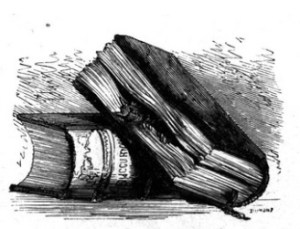
Re-Reading Les Misérables at My Age: I Must Be Nuts

During the summer and fall, I’ve been re-reading a lot of the novels on my shelves. It’s been fun. Re-reading Les Misérables has not been fun. I think all the radiation treatments have not only left me feeling fatigued, but they’ve disrupted my ability to concentrate on long books.

When I bought this paperback edition in the 1980s, I read the whole thing, including the longer-than-necessary descriptions, political diversions, character background, and interior monologue. I was pleased that I stuck with it then just as I was pleased when I once completed mountain climbs to 14,000 feet and hikes of 25 miles or more without needing to go to the hospital afterwards. Like most people, I was younger then.

I still like the plot, many of the descriptive turns of phrase, and the snarky wit. But when it comes down to it, trying to read this novel today is about as absurd as trying to hike the Appalachian Trail without getting in shape first with neighborhood walks and shorter hikes. I’m on page 283of 1,463. If this were the Appalachian Trail, I’d be dead by now or lying at the bottom of a steep slope waiting to hear the welcome sounds of rescue helicopters.

To use an old phrase, I think I’m going to “cry uncle” on this attempt and put the book back on the shelf where it will impress all who see it rather like a photo of me standing at the summit of Mt. Everest or K2.

As Wikipedia notes, “More than a quarter of the novel—by one count 955 of 2,783 pages—is devoted to essays that argue a moral point or display Hugo’s encyclopedic knowledge, but do not advance the plot, nor even a subplot, a method Hugo used in such other works as The Hunchback of Notre Dame and Toilers of the Sea.” Yes, I suppose I could push forward and scan those sections, but the type is small (note the smaller page count on my version when compared to the original) and that seems like more trouble than it’s worth.

My attention span at present is more suited for watching Survivor or NCIS on TV or a Clancy/Patterson style novel that moves along with large print, lots of action, and is over before you know it. To use a Survivor tradition, if some of Hugo’s characters had gotten voted out of the novel at tribal council, it would be a lot easier to read now.

Sure, I feel disappointed just like any other beer-drinking couch potato who spends a ton of money to get to Mt. Everest and learns that s/he doesn’t even have the stamina to make it up to base camp.

Have any of you read this novel? If you did, how much of it did you skim through? (Asking for a friend.)
Malcolm

I’m very appreciative of the wonderful reviews from listeners who found this audiobook, enjoyed the story, and loved actress Kelley Hazen’s narration. 
Excerpt: ‘LOCAL AUTHOR APOLOGIZES FOR MAKING VIXEN IN NOVEL TOO MUCH LIKE NEIGHBORHOOD VIXEN’

Here’s a brief excerpt from Special Investigative Reporter:

“When he got to the office, the clerk at the information desk told him Marcus wanted him to cover the Cane Molasses press conference over at the Main Street Book Emporium. He (Jock) would know that already if he bothered to answer his phone. Cash had, apparently, left for the day when a police officer located the pickup truck at his house. (The receptionist said she didn’t know whose house she was talking about.)

“After the press conference, he went home and slapped together a news story while waiting for a goat cheese and anchovy pizza to arrive:


LOCAL AUTHOR APOLOGIZES FOR MAKING VIXEN IN NOVEL TOO MUCH LIKE NEIGHBORHOOD VIXEN

Cane Molasses apologized at a hastily called press conference here this afternoon to “any and all women” who believe they are or might be the Judy Miracle character in his prize-winning 2008 novel Miracle on 35th Street.

Molasses called the press conference and book signing at the Main Street Book Emporium after an unidentified woman accosted him at his home this morning and accused him of basing the Miracle character on secrets she told him when they stopped for drinks on the way home from an AA meeting.

“I’m involved with dozens of women a year for research purposes,” said Molasses, “and all of them are well compensated. Miracle is a composite character based on Carl Jung’s reformed hooker archetype which is extensively described in his collected works.”

Molasses told the crowd of some 500 adoring fans and one heckler that Miracle is a beautiful fictional character who sees the light just in time to be buried in a high-brow cemetery on 35th Street. While many of his fans purportedly model their lives on Miracle’s story, it was not his intent to suggest Miracle is either every woman or any specific woman.

According to Police Sergeant Wayne Bismarck, nobody was seen leaving the Kroger Store on Edwards Street wearing a sack over their head “any time in recent memory.”

-30-


As he finished the story, the pizzeria called and apologized for not sending out the pizza he wanted. Apparently, everyone who tried to make such a thing got sick. He thanked them for their trouble, canceled the order, and ate two diet TV dinners with a glass or two (he lost count after two) of Cabernet.

It was the kind of wine a restaurant like the Purple Platter bought in 55-gallon drums, then used for filling bottles with an “estate bottled” Purple Platter label.

Copyright © 2019 by Malcolm R. Campbell

Review: ‘Only Charlotte’ by Rosemary Poole-Carter

Only CharlotteOnly Charlotte by Rosemary Poole-Carter
My rating: 5 of 5 stars

Rosemary-Poole-Carter, an adept within the Southern Gothic genre, brings us a deliciously tangled post Civil War novel in Only Charlotte in which three intertwined lives–Leonore James, her brother Dr. Gilbert Crew, and Charlotte Eden–rise and fall like storm-tossed lily pads in the brackish waters of the swampy morals of New Orleans.

Thrice-married Lenore (who is now alone again) opens up her house to her younger brother who uses it as a base for establishing a medical practice. In sections narrated by both Lenore and Gilbert, we see that the young doctor has become infatuated with Charlotte while treating her children. At the outset, Lenore sees nothing less than catastrophe coming out of this while Gilbert sees a young wife whose troubles go deeper than is generally known.

Lenore and Gilbert grow in sense and sensibility throughout this novel. Lenore, who sees herself somewhat in the role of Paulina in Shakespeare’s The Winter’s Tale, is especially cautious about the problems Charlotte may or may not face because she is older than her volatile brother and well-schooled in the society’s rules and traditions. In a sense, Gilbert has a “damn the torpedoes, full speed ahead” approach that might be based on his obvious love for Charlotte more than on the actual dangers she faces.

The novel is perfectly paced in a manner befitting a southern gothic novel, brings us multi-dimensional characters who have the capacity for change in an era in which “stagnant” and “corrupt” are watchwords, and a twisted mystery that is like a spiderweb in the dark. The prose is lyrical and exceptional and historically well-grounded in this highly recommended novel.

View all my reviews

Malcolm

Potpourri – June 2019

Notice: If this post contained any real potpourri, you’d be sneezing by now.  Come to think of it, I don’t know why well-meaning people thrust potpourri on innocent people who walk into a bathroom, living room, bookstore, Wicca supply shop, or auto supply store and then start sneezing their asses off.

Moving to Juneau?

If so, there’s work. I’d take this job in a New York minute (whatever that is) if I lived there:

The Sun Singer

If you’re one of the wonderful people who downloaded a free Kindle copy of The Sun Singer during the recent giveaway, thank you! If you like it, you may also like its gritty sequel Sarabande:


The Strand Bookstore

Since I have worked in historic preservation, I’m a fan of the National Register because it draws attention to a historic site or object and imposes no restrictions on the owner’s use of the property. Not so, the government overreach in forcing landmark status on New York City’s famous Strand Bookstore. The bookstore fought against the designation because it comes with rules that impact how the slim-profit-margin store can use the building it owns. I signed the petition against this kind of nonsense.

Medical Update

I posted this medical update on Facebook and since I’m too lazy to write a fresh medical update, I’ll just paste it into the blog:

Darn it, rain

I was planning to mow the yard after supper until I noticed that it’s getting a bit dark outside (at 2 p.m.). The weather RADAR indicates that I might not be cutting grass even though we just got one of our riding mowers back from the shop and it’s ready to go.


Fried chicken for dinner tonight, but there’s not enough for you, so don’t stop by unless you stop at the KFC on hightay 27 before you get here.

Malcolm


If you read too much, you’ll pay for stuff you’ve already read

One of the problems of reading a lot of throw-away novels in between the high-quality novels you talk about on Facebook and Goodreads is discovering the book you’re reading suddenly looks familiar.

This seems to be a problem with thrillers (where there’s a lot of violence) and romances (where there’s a lot of sex) where everything is the same until you come to a pivotal scene where the author opted for a blast of creativity and did something unique with the action.

It’s a bit disconcerting to be 100 pages into a book when suddenly you realize, “Crikey, I’ve read this book already.” Not only did I not recognize the title, but for 99 pages everything seemed new. I guess that means that either nothing memorable happened or that I skimmed through a lot of words.

Women’s fiction seems to be a problem in this regard because novels are often re-issued with new titles and new author pseudonyms, so there’s no way to know the book you just bought is already in a box in the attic or garage.

At least Amazon tells you that you already bought the book, but this doesn’t help if you buy some books from Powell’s, B&N, Indies Unlimted, and at bricks and mortar stores. Apparently, the quantity of words obscures the fact that a reader has seen all this before. As an author, I wonder how another author can write so many pages in so many books that I don’t recognize the plot and characters before I get to the weird scene where the deja vu occurs.

I wonder how often this happens. I hope it happens often because otherwise, it’s just me.

Malcolm

Almost time to release two more hardcover editions

My publisher Thomas-Jacob and I have been waiting for the proof copies for the upcoming hardcover editions of Eulalie and Washerwoman and Lena. (The hardcover edition of Conjure Woman’s Cat came out about a week ago.)

Waiting for proof copies is like waiting for Christmas. We know what they look like on the screen, but we have to approve the physical book before the books can appear on online sites or in bookstores.

The proof copies arrived today and they look great. They might need a tweak or two, but they’re about ready to go. Next, Thomas-Jacob will be working its way through books by authors Smoky Zeidel, Sharon Heath, Robert Hays, and Melinda Clayton.

Hardcover editions survive the wear and tear of readers checking them out from a library. Many readers, including me, like hardcover editions of books we consider “keepers.” They last longer.

I’m happy that I have a publisher that can worry about all the details of turning a manuscript into a book. I’ll let you know as soon as the hardcover editions of Eulalie and Washerwoman and Lena are available.

Malcolm


Review: ‘Temptation Rag’ by Elizabeth Hutchison Bernard

Temptation RagTemptation Rag by Elizabeth Hutchison Bernard
My rating: 5 of 5 stars

Temptation Rag immerses readers into a historical novel set during the heydey of ragtime (1895-1919) and vaudeville (1880 – 1920) with a cast of real and fictional characters grappling for love, freedom, and artistry in New York City. Ragtime gave way to jazz and vaudeville gave way to the cinema so, like almost every period in music and theater, the times were short, competitive, and bittersweet as talents and fortunes rose and fell depending on the inequalities imposed by the rich and famous, public taste, and racial/gender barriers.

Bernard’s story has a large cast of characters all of whom come across as multi-dimensional in her well-researched tableau. May Convery is a young woman from a rich family, who’s briefly smitten with vaudeville theater musical director Mike Gilbert at the beginning of his rise to fame as a ragtime composer and performer. Their lives criss-cross throughout the novel as they did in history in a soap opera basket of emotions that manages to haunt both of them forever.

As May finally comes into her own as an author and a volunteer in many causes, Mike’s life while seemingly larger and financially richer appears more brittle. Among all the vicissitudes of a musical career in the public eye, Mike is constantly compared with the popular performer Ben Harney who claims to have originated ragtime itself. Scott Joplin (“Maple Leaf Rag” and “The Entertainer” both brought back to public attention in the 1973 movie “The Sting”) is in the stratosphere of rag, talked about in the novel but not a character.

May’s friendship with African-American singer Abbie Mitchell and African-American composer J. Rosamond Johnson gives strength to a primary theme of the novel: racial/gender inequalities. While the barriers were historically real and are well-shown in the novel, some of May’s feelings appear to have been slightly influenced by contemporary attitudes about race relations.

The characters are strong enough and complex enough to pull readers through this well-written story almost as though we’re watching their lives play out in modern times on the television news. When the novel’s last lines scroll past its readers’ eyes and Temptation Rag is stowed away on the bookshelf, May will remain in mind one way or another.

View all my reviews

Malcolm

Having fun with my research

Now that I’ve finally promised my publisher a new novel and floated the general premise past her (she liked it), it’s time to do some research.

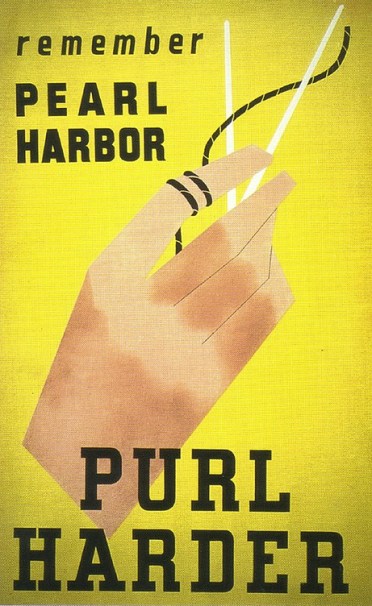
Typical poster used to get the public to do their own knitting and donate a lot of it to the cause.

Like the Florida Folk Magic Stories, this novel will be set in the Florida Panhandle, so I already know the area. This is one of the benefits of writing a series, or doing a standalone novel that uses the series as a starting point: you have a lot of location information on file that wasn’t used in the previous novels.

Since my main character is a bag lady in 1955, I’ve been looking at clothing manufactured during the 1940s. Needless to say, a bag lady isn’t going to be wearing the latest thing from Paris or even from Sears Roebuck. There’s a lot of material available about 1940s women’s clothing inasmuch as it was greatly influenced by rationing and shortages.  A lot of people were mending old clothes, making do with fewer fabric selections, and knitting socks for the troops (and themselves).  So, I think I know what my bag lady’s going to wear.

While the novel isn’t historical, I want the cultural references to be right. So, what was happening in Florida in 1955? I already know that the KKK was strong in those years. And I know that educator and activist Mary McLeod Bethune died in 1955 in Daytona Beach. My bag lady would know that because even though 1955 is part of the Jim Crow era, the story would be covered by the press.

My bag lady is–for reasons I won’t divulge now–an expert bow hunter. This means checking on the kinds of bows and arrows used by hunters in those days. I had good luck with this. I found information about the most widely known brand of bow at the time along with a selection of arrows.

Now, since this novel starts where the series ends, I have to make sure that I don’t contradict anything that happened in the series. So, I’m researching my own stuff to make sure there aren’t any continuity problems. For example, if a bad guy was killed in the series, I don’t want him showing up in the new book fit as a fiddle. By the way, “fit as a fiddle” is the kind of thing my bag lady would say–checking the slang of an era is part of the process. I’m surprised at the number of TV series that have characters from years ago using modern slang such as “whoa!” (meaning “wow!”) and other phrases that nobody said twenty or thirty years ago.

When Diana Gabaldon (Outlander) and I were both in an ancient CompuServe literary forum, we found that we had one thing in common that a lot of writers weren’t understanding. The research has an impact on the story the writer is about to tell because it tips him/her off to things s/he didn’t know and is responsible for altering the plot of a novel in ways the writer wouldn’t have considered before the research phase began.

I didn’t care for research projects in school–often for the purpose of writing “themes” as they were called in those days–but I enjoy them now. I once read that writers like Nora Roberts have a staff that includes researchers. While there are times when I wish I could pick up the phone and ask an assistant a question and get an immediate answer, I feel much more in touch with my characters and my story when I have to look up all the stuff myself.

Malcolm


Tempting you with words and tambourines

Like Gordon Lightfoot’s “Minstrel of the Dawn” and Bob Dylan’s “Mr. Tambourine Man,” storytellers are always tempting you to follow them, as though through faerie rings, to the farthest reaches of tall tales, music, and imagination. We can’t promise you’ll return the way you were when you left the everyday land of logic, but you’ll find yourselves reborn in just the way the god of your heart intended.

For temptations from my website, I invite you to click on this picture:


–Malcolm