Karen Lord’s debut novel Redemption in Indigo (Small Beer Press, July 2010) was this year’s winner of The Mythopoeic Fantasy Award for Adult Literature at Mythcon 42 in July. The novel also won the William L. Crawford Fantasy Award and Frank Collymore Literary Competition. The awards are a testimony to the book’s creative storytelling.
Writing in the Los Angeles Times, reviewer Jayna Brown, said that “Lord’s strengths as a writer are her witty, often satirical understatement and her ability to juxtapose folk- and fairy-tale devices with modern idioms and cultural references.” Brown noted Redemption in Indigo’s Senegalese, Caribbean, and European influences.
Publishers Weekly said that Lord’s “retelling of a Senegalese folktale, packs a great deal of subtly alluring storytelling into this small package.”
Publisher’s Description
Karen Lord’s debut novel is an intricately woven tale of adventure, magic, and the power of the human spirit. Paama’s husband is a fool and a glutton. Bad enough that he followed her to her parents’ home in the village of Makendha—now he’s disgraced himself by murdering livestock and stealing corn. When Paama leaves him for good, she attracts the attention of the undying ones—the djombi— who present her with a gift: the Chaos Stick, which allows her to manipulate the subtle forces of the world. Unfortunately, a wrathful djombi with indigo skin believes this power should be his and his alone.
Excerpt
A rival of mine once complained that my stories begin awkwardly and end untidily. I am willing to admit to many faults, but I will not burden my conscience with that one. All my tales are true, drawn from life, and a life story is not a tidy thing. It is a half-tamed horse that you seize on the run and ride with knees and teeth clenched, and then you regretfully slip off as gently and safely as you can, always wondering if you could have gone a few metres more.
Thus I seize this tale, starting with a hot afternoon in the town of Erria, a dusty side street near the financial quarter. But I will make one concession to tradition…
…Once upon a time—but whether a time that was, or a time that is, or a time that is to come, I may not tell—there was a man, a tracker by occupation, called Kwame. He had been born in a certain country in a certain year when history had reached that grey twilight in which fables of true love, the power of princes, and deeds of honour are told only to children. He regretted this oversight on the part of Fate, but he managed to curb his restless imagination and do the daily work that brought in the daily bread.
Today’s work will test his self-restraint.
–Malcolm
contemporary fantasy about a woman's trials and choices
How do you see the world? Looking at the major issues we face—global warming, AIDS, terrorism, overpopulation, unemployment, renewable energy, the environment—do you view the world as “too broke to fix” or still within our capabilities to drastically improve and correct?
The books writers write are often impacted by their world views. Some agree with Jean-Paul Sartre’s statement that “Man is a futile passion.” In fact, looking at most of the fiction published during the last hundred years or so, I suggest that most authors either agree with Sartre or think the public agrees with Sartre and wants to read stories that corroborate this world view.
In my latest post on Sarabande’s Journey, World of Wonder finding ‘Life in Truth,’ I wrote that “a lot of mainstream fiction has fled from wonder, pulled by science, technologies and difficult-to-solve world issues into realism, powerlessness, despair and alienation.” Some of this fiction gives us happy endings, but they’re usually small endings in a sea of troubles. That is to say, the lovers who will live happily ever after will do so as long as the screwed-up world allows it.
The alternative proposition to readers and writers who agree with Sartre is neither naiveté nor the false believe that life will save warring factions from themselves if only the parties involved will sit down and sing “Kumbayah” together. While naiveté and “Kumbayah” bring their adherents many positive moments and, perhaps the illusion of positive action, they are—I believe—taking a bury-your-head-in-the-sand approach to the problems of the world and, worse yet, to their own personal development.
In my novel Garden of Heaven: an Odyssey, my protagonist—who is trying to create a magical cloud inside his apartment—is advised to close his eyes. Why? Because as long as he sees that the cloud isn’t there yet, he’ll become more and more convinced he can’t create it. When he stops looking, he’s successful.
Now, I would never suggest that we stop being aware of the world’s problems and thereby give up on all the logical, science-and-techology-based approaches to solving them. Instead, I prefer the approach advocated by mythologist Joseph Campbell: “We’re not on our journey to save the world but to save ourselves. But in doing that you save the world. The influence of a vital person vitalizes.” As long as we, as individuals, focus on the huge problems of the world for which we see no viable solutions, we not only feel more alone, but more powerless as well.
Whether or not you were around or not during the 1960s, you’re probably aware that Washington, D. C. and/or the Kennedy administration was often referred to as “Camelot.” Rightly or wrongly—and regardless of political viewpoint—the Camelot we hoped for was on a par with the heroic dreams of the legendary King Arthur and his noble knights. Perhaps our hope was based on all the wrong reasons and perhaps it had too much “Kumbayah” and “Make Love Not War” in it, but it was hope. Hope has, it seems to me, become a rare commodity in both our lives and our fiction.
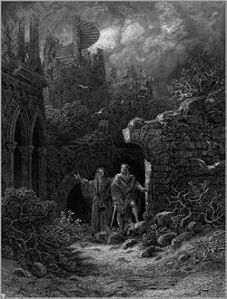
Looking at the rhetoric, few people believe that America as either a dream or a hope or a goal will ever become the Camelot of our imagination. Variously, it’s too late, too broke to fix, or too besieged by problems no man or woman or group can solve. In the minds of many, America is rather like the tragic world of King Arthur in Tennyson’s epic poem Idylls of the King. Epic fantasy author Stephen R. Donaldson summed up Camelot, as viewed by Tennyson like this:
Tennyson’s technique is to take a genuine, honest-to-God “epic” character (Arthur) and surround him with normal, believable, real human beings who lie and cheat and love and hate and can’t make decisions. So what happens? The normal, believable, real people destroy Arthur’s epic dream.
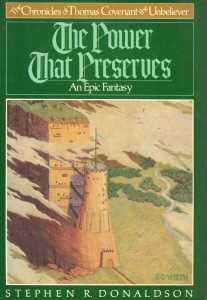
Donaldson suggests that many of us think we’re not capable of doing anything else because we believe that since “man is a futile passion” that we are powerless and incapable of creating a living, breathing real Camelot. He writes fantasy, in part, to demonstrate that man is capable of being an effective passion.
An Alternative to Sartre
I quoted storyteller Jane Yolen in my latest Sarabande’s Journey post, so those of you who read that will, I hope, forgive the repetition. In her book Touch Magic, she says that Life in Truth (as opposed to the world we see with our eyes) “tells us of the world as it should be. It holds certain values to be important. It makes issues clear. It is, if you will, a fiction based on great opposites, the clashing of opposing forces, question and answer, yin and yang, the great dance of opposites. And so the fantasy tale, the ‘I that is not you,’ becomes a rehearsal for the reader for life as it should be lived.”
My philosophy of life does not include the viewpoint that men and women are powerless or that they don’t matter or that “evil” and “blame” are independent forces out there in the real world. As an individual, I believe in Life in Truth; that is, among other things, both a Joseph Campbell approach and a Jane Yolen approach. In my contemporary fantasies, The Sun Singer and Sarabande as well as in my magical realism adventure Garden of Heaven: Odyssey, I focus on stories with intense—and sometimes horrible—personal trials. And yet, my characters also find answers, answers that focus on themselves rather than on those who would destroy them or the world they believe in.
While I write contemporary fantasy rather than epic fantasy, I agree with Donaldson’s point of view about the value of fantasy fiction. His characters look within for answers, and this allows them to see the “real world” just the way it is while simultaneously seeing their dreams; that is to say, the world as it should be.
Paradox or not, I can reconcile Life Actual (the so-called real world) and Life in Truth, and understand clearly that while I don’t have what it takes to solve the large issues of the day, I am learning all that I need to know to solve the problems of myself. One day, as long as I don’t stare too intently at the problems themselves, the worlds of reality and of imagination will become one.
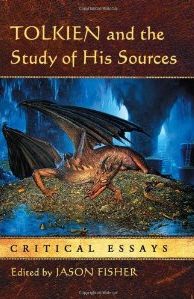
Authors and readers of epic fantasy who see Tolkien as the avatar of imagined worlds, will find an in-depth look at the master of the genre in Tolkien scholar Jason Fisher’s recently released Tolkien and the Study of His Sources: Critical Essays. (McFarland, July 22, 2011). In this 240-page volume Fisher and other experts analyze Tolkien’s abundance of source materials. You can find an excerpt from the book here.
In addition to his own contributions, Fisher has drawn together essays from Tom Shippey, Nicholas Birns, E. L. Risden, Kristine Larsen, Judy Ann Ford, John D. Rateliff, Mark T. Hooker, Diana Pavlac Gilyer, Josh B. long, Thomas Honegger, and Miryam Libran-Moreno.
When asked in an interview about the popularity of Tolkien, Fisher said that “One reason Tolkien has been so popular is that his works contain ‘elements in solution’ of so many other works, authors, folktales, legends, and myths, that there is something immediately welcoming and familiar about his works, even when it is buried well beneath the surface. We feel as if we’ve been here before somehow, or in some other life. In a very real sense, we have. This, of course, does nothing to diminish Tolkien’s imagination or craftsmanship. If anything, it gives us that much greater reason to appreciate them.”
Verlyn Flieger, author of Splintered Light: Logos and Language in Tolkien’s World calls Fisher’s book “The most exhaustive examination yet published of demonstrable, probable, and conjectural sources for Tolkien’s legendarium.”
This book is for the most serious of Tolkien fans and students of literary criticism. Tolkien, of course, might be turning over in his grave because he thought his work should be attracting our attention rather than how he did it and what might have influenced him. Nonetheless, the J. R. R. Tolkien Copyright Trust allowed Fisher to include some previously unpublished materials.
You can read more from Fisher on his blogLingwë – Musings of a Fish, focusing on “J.R.R. Tolkien, C.S. Lewis, the Inklings, J.K. Rowling, and fantasy literature in general; language, linguistics, and philology; comparative mythology and folklore — and more.”
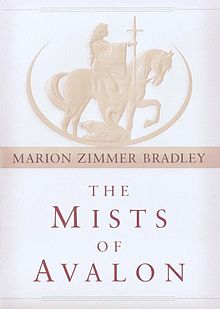
When the late Marion Zimmer Bradley’s The Mists of Avalon was published in 1983, Bradley (1930 – 1999) had already made a splash in the public’s fantasy reading consciousnous with her Darkover Series which she introduced in The Planet Savers in 1958. For a less experienced, less widely known author, tackling and re-imagining the legends of King Arthur and the Round Table from a femine perspective would have been a great risk.
After all, whoever writes about King Arthur is not only up against Thomas Mallory’s “Le Morte d’Arthur” (1485), Edmund Spenser’s epic Elizabethan poem ”The Faerie Queene” (issued in 1590 and 1596) and Alfred, Lord Tennyson’s twelve-part Victorian series of poems “Idylls of the King” (issued between 1856 and 1885), but some well-received modern versions of the story as well. Nobel Prize winner John Steinbeck’s “The Acts of King Arthur and His Noble Knights” (posthumously published in 1976), Mary Stewart’s Merlin Trilogy (1970, 1973, 1979) and T. H. White’s “The Once and Future King” (1958) probably top the list. Based on White’s novel, the musical “Camelot” had already made a hit on Broadway in 1960 and as a film in 1967.
In her 1983 New York Times review of “The Mists of Avalon,” Maureen Quilligan wrote, “Of the various great matters of Western literature – the story of Troy, the legend of Charlemagne, the tales of Araby – none has more profoundly captured the imagination of English civilization than the saga of its own imperial dream, the romance of King Arthur and the Round Table.” We continue to be fascinated with versions and off-shoots of the story whether they surface in nonfiction accounts such as “The Holy Blood and the Holy Grail” (1982), “The Da Vinci Code” (2003, film in 2006) or the continuing novels in the Avalon Series written by Diana L. Paxson.
The myths, whether you see them as illustrations of the hero’s or heroine’s journeys or as tales of struggling peoples of a bygone era, feature larger-than-life personages fighting the powers of darkness and opposing armies in quests focused on personal transformation and/or an ideal society. Merlin’s teachings appear and re-appear in various guises (such as Deepak Chopra’s “The Way of the Wizard: Twenty Spiritual Lessons for Creating the Life You Want”) as lessons for seekers on the mystical path, while King Athur and his knights have been presented—through tales of glory and folly—as archetypes to follow after or to be wary of.
Quilligan, in noting that Bradley looked at the Arthurian legends from the perspective of the women involved, said, “This, the untold Arthurian story, is no less tragic, but it has gained a mythic coherence; reading it is a deeply moving and at times uncanny experience.”
The stories of Arthur, his Knights, Merlin, Viviane, Gwynyfar, Morgaine, Igraine, and old Uther Pendragon come to us with such strength that it’s difficult for lovers of fantasy—perhaps even the general public—not to suspect there is a truth or a reality to them that cannot quite be proven. We react to the stories as though the authors are interpreting real events. Perhaps we’ll never know whether there was or wasn’t a King Arthur who had anything in common with the stories we read and rell about him, but we hope there was.
What great myths, though! They bring us the best and the worst we can be as humans with hints of the kind of magic many of us hope in our heart of hearts exists alongside our technological world of science and logic. The myths are a part of our shared vision of the world and humankind, waiting, ever waiting for more interpretations, versions and re-imaginings.
“As you review the list in search of your favorite book or series, it may help to keep in mind that, despite its rather grandiose name, the Top 100 Science Fiction/Fantasy Novels of All Time Summer Readers’ Survey isn’t, of course, a measure of literary quality, or boldness of ideas, or richness of detail — it’s a popularity contest.” — Glen Weldon in Monkey See
If you enjoy science fiction and fantasy, you’ll find a lot of old favorites on NPR’s list of the top 100. This list came about as a result of an NPR poll in which some 60,000 people voted for their favorites. The book sitting on the top of the list is The Lord of the Rings published between 1937 and 1949. Perhaps it’s popularity in the voting is due in part to Peter Jackson’s well-received trilogy of featue films released between 2001 and 2003. It’s a good choice, though, with over 29,000 votes in the poll. (The poll did not include young adult books; if it had, you can be sure J. K. Rowling’s Harry Potter series would have made the list.)
Lord of the Rings isn’t the only old book on the list. Weldon notes in his blog post that “only four titles in the top 20 have been published in the past ten years: George R. R. Martin’s A Song of Ice and Fire series at #5; Neil Gaiman’s American Gods at #10; the last few volumes of Robert Jordan’s The Wheel of Time series at #12; and Patrick Rothfuss’ Kingkiller Chronicle series at #18.”
#11
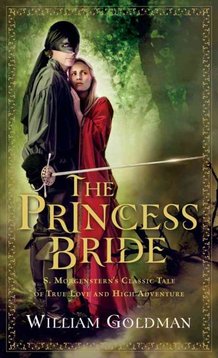
I’m somewhat surprised by this. Definitely, the older books on the list have staying power even if they got a boost in the poll in part from Hollywood–as was the case with William Goldman’s 1973 The Princes Bride that was adapted for the screen in 1987 by Rob Reiner. Rounding out the top five in the poll were The Hitchhiker’s Guide to the Galaxy (Adams), Ender’s Game (Card), The Dune Chronicles (Herbert), and A Song of Fire and Ice Series (Martin).
For me, the results for fantasy are somewhat skewed because the poll included science fiction. While there’s often a lot of overlap between the fantasy and science fiction genres that makes it difficult to categorize some novels as either one or the other, I would have enjoyed seeing the poll separated into two. That might have produced more representative results. For example, the inclusion of science fiction in the mix is partly responsible for the fact that The Mists of Avalon (Bradley) is sitting at 42 and that The Chronicles of Thomas Covenant (Donaldson) didn’t even make the list.
Nonetheless, the list is interesting. If you’re in the mood for a popular fantasy or a popular science fiction novel, it’s a good place to look. Next year, NPR plans to run a survey looking for people’s favorite young adult novels. I wonder how many times a Harry Potter book will make the list.
As the August 31st release date approaches for my concemporary fantasy novel Sarabande, I am celebrating with a book give-away on GoodReads. Three free copies are available. All you have to do is surf over to GoodReads, click on the ENTER TO WIN button and fill out the form. (If you’re not a member of GoodReads, registration is free.)
Sarabande is the 80,000-word story about Sarabande’s journey from her alternate-universe home deep in the Montana mountains to central Illinois in search of the once-powerful Sun Singer. She needs his help to rid her of the haunting ghost of her sister Dryad whom she killed in self-defense three years ago. She knows she has a 1,650 trip ahead of her. She does not know that the journey itself will be just as perilous as confronting the evil temptress Dryad.
Released by Vanilla Heart Publishing, Sarabande can be read as a stand-alone novel or as a sequel to The Sun Singer. The e-book edition of Sarabande was released August 13 and is already available on Kindle.
Best of luck in the give-away. The entry deadline is October 1.
After her sister, Dryad haunts her from beyond the grave for three long and torturous years, Sarabande undertakes a dangerous journey into the past to either raise her cruel sister from the dead, ending the torment…or to take her place in the safe darkness of the earth.
Sarabande leaves the mountains of Montana for the cornfields of Illinois on a black horse to seek help from Robert Adams, the once powerful Sun Singer, in spite of Gem’s prophecy of shame. One man tries to kill her alongside a deserted prairie road…one tries to save her with ancient wisdom… and Robert tries to send her away.
Even if she persuades Robert to bring the remnants of his magic to Dryad’s shallow grave, the desperate man who follows them desires the Rowan staff for ill intent… and the malicious sister who awaits their arrival desires much more than a mere return to life.
Welcome to the world of fantasy. My name is Malcolm, and I’ll be your server this evening.
Today’s special is Sarabande, a bone-chilling new adventure about a young woman named Sarabande who risks a dangerous journey into her own past. With the help of the Sun Singer, she plans to raise Dryad from the dead so that her cruel sister’s ghost can no longer cause pain and suffering throughout a peaceful mountain valley.
Fantasy is a Dangerous Place
You’ll be reasonably safe in the world of fantasy while I am here to guide you. Otherwise, may I suggest that you read Sarabande during the daylight hours in the company of others. Do not read the novel at night unless the doors are locked.
Like abandoned mines, fantasy leads deep into the heart of strange landscapes, forbidden worlds and dreams, places where everyday reality fears to tread. Be careful and do not wander off alone, for the mysterious world of fantasy can be dangerous. That’s why I’m posting a warning sign here just like the one I saw recently in Virginia City, Nevada where gold and silver were once extracted from the earth.
Mining Fantasy Novels for Gold and Silver
While growing in a house full of books, I discovered high-quality ore in such fantasies as The Once and Future King and Lord of the Rings. Recently, others have discovered gold and silver in the Harry Potter books. The gold of dreams and the silver of mystery are not only exciting—they jump start the imagination.
I hope you’ll enjoy Sarabande. It’s available today in multiple e-book formats at Smashwords. Other editions will follow soon, including paperback. Dig deep, enjoy the ride, but please, read safely in well-lighted places.
 Karen Lord’s debut novel Redemption in Indigo (Small Beer Press, July 2010) was this year’s winner of The Mythopoeic Fantasy Award for Adult Literature at Mythcon 42 in July. The novel also won the William L. Crawford Fantasy Award and Frank Collymore Literary Competition. The awards are a testimony to the book’s creative storytelling.







 Malcolm's Round Table