A writer’s influences

Yesterday afternoon, I enjoyed a wonderful conversation about writing, fiction and the hero’s journey via a speaker phone with professor Melissa Studdard and her English 2341 students in “A Study of the Journey in World Literature” at Lone Star College in Texas. Readings for the course included my 2010 contemporary fantasy The Sun Singer.

When one student asked whether the novel’s supporting character Grandfather Elliott was based on a real person, I had a ready answer. No, but I was strongly influenced by my Grandfather Joe Gourley who lived in Decatur, Illinois where the initial parts of the novel are set.
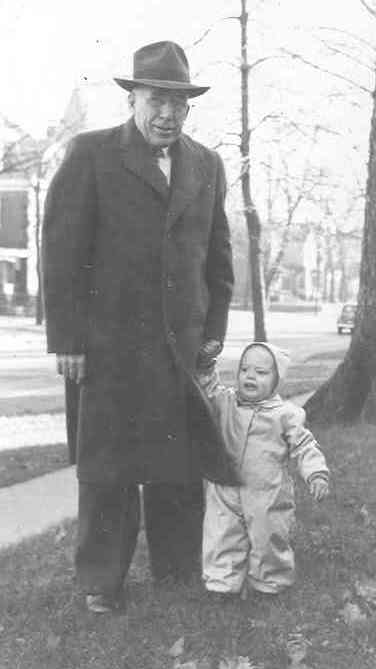
My grandfather and me

Imagination With  Dash of Reality

After the Q&A session was over, I started thinking about what I would say about characters’ role models in fiction if I were teaching a creative writing course. First, I would clear away the misconception some readers have that novelists can’t possibly dream up characters from scratch, that characters must be based on real people.

That commonly held belief is a long way from the truth. Characters are created out of authors’ imaginations with a dash of reality. In the case of Grandfather Elliott in The Sun Singer, my fictional character is not my grandfather with a pseudonym. If my grandfather had been alive when the novel was published, he wouldn’t recognize himself in the character.

What he would see is a character who, as he did, took his grandson on a day trip to the nearby Allerton Park where they saw wooded trails, formal gardens, and sculpture including the famous bronze Sun Singer statue. Joe Gourley would also see that my novel was set in the house he owned when I was a child and that the characters visited the parks where I once played.

Everyone is fair game

Joe Gourley in Decatur in the 1940s

I think there’s even a tee shirt out there that says something like “if you aren’t nice, I’ll put you in my next novel.” When novels focus on real towns, the author’s neighbors try to find themselves in the book. They did it with Peyton Place and when The Help was released, they were still doing it. Since I tend to “meet” my characters as I write in much the same way all of us see people in our dreams that we didn’t know before, I seldom think of real people as role models. My grandfather Gourley played a role because, like my character, he visited the Sun Singer, lived in a neighborhood that made a strong impression on me from the time I was born through junior high school, and loved practical jokes.

When I’m writing about a character with certain traits, I often think of people I know who have those traits. The title character in Sarabande is a good-natured individual who expects the best from other people and loves learning new things and traveling to new places. She shares these qualities with a co-worker I knew forty years ago. If my former co-worker read the book, she might like seeing those qualities in Sarabande, but she wouldn’t for a moment think I was writing about her.

Those old familiar places

Buses and street cars came and went from this transfer house in Decatur's Lincoln Square when I was a child.

Decatur, Illinois made an impression on me because our family was there so often during my formative years. The Florida Panhandle made an impression on me because I lived there from the first grade through college. Glacier National Park made an impression on me because I worked there while I was in college. So, I know these places. They influence me whether I consciously think of them or not. The same is true of family and friends. Since I like blurring the line between fiction and “real life,” I take the influence of places one step further and put real places in my books.

The Sun Singer is set in Decatur and Montana. So is Sarabande. My magical realism novel Garden of Heaven: an Odyssey is also set in those locations as well as north Florida and the places I saw when I was in the Navy. The three short stories I’ve written so far this year are also set in those places, perhaps because Decatur, North Florida, and Glacier National Park fit me like old shoes.

My memories influence what I do, just as they influence everyone else. When I write, most of those memories are part a figurative vat of stew. As I dream up characters, they often remind me of people I knew—or know now. Bob Hope’s signature song was Thanks for the Memories. If I wore tee shirts with slogans on them, they might say “Thanks for the Influences.”

Malcolm

Review: ‘The Uncertain Places’ by Lisa Goldstein

“A long time ago there lived a poor woodsman. One day he was walking in the forest when a man came out of the trees and hailed him. ‘Good day,’ the man said. ‘And how are you doing today?’

“‘Very poorly,’ the woodsman said. ‘My family and I have not eaten for three days, and if I do not find food for them soon I fear we will all die.’

“‘I can help you,’ the man said. ‘But you must promise to give me the first thing you see when you return home today.'”

All long-time readers of fairy tales are familiar with stories that begin like this, or similar to this, and they all involve people who are down on their luck who are mysteriously offered a great boon. The boon isn’t free because it involves a bargain that may change the lives of a family throughout time forever.

Just stories, of course, with morals in them about getting something for nothing, being too quick to give away something not clearly specified, and trusting anything that happens at crossroads, boundaries and other undertain places.

In Lisa Goldstein’s wonderful contemporary fantasy “The Uncertain Places,” protagonist Will Taylor looks back on the events that occurred after his college roommate Ben introduced him to Livvy Feierabend in 1971. Will is smitten with Livvy; Ben is smitten with Livvy’s sister Maddie. Livvy and Maddie live with their mother Sylvie and younger sister Rose in an odd and rambling house in the Napa Valley.

Will notices on his first trip to Napa that Sylvie is rather scattered. On subsequent visits, it becomes more and more obvious that the house and the family are, in ways that cannot be pinned down, also scattered as though they aren’t quite living in the here and now, or that if they are present in the here and now, that the line between the family’s house and vineyard on one hand and their secrets on the other hand is not altogether well defined.

Will and Ben slowly discover that stories they always believed were “just stories” might be more than that. How exactly did the Brothers Grimm come by old fairytales about woodsmen and witches in their famous books of “Children’s Tales” published in multiple editions beginning in 1812? Growing up, the Feierabend sisters were not allowed to read fairytales. How odd. But Will finds out why, and that “why” has to do with the kinds of fortune and fate that befall those who find themselves confronted by friendly helpers in the uncertain places.

The consequences of decisions made in such places are forever. There’s good fortune, to be sure. But it comes at a price, one that Will doesn’t want Livvy to pay. All of this happened in California during the rather abnormal times of the 1960s and early 1970s, and Will narrates the events that followed the weekend when he became smitten with Livvy Feierabend as though he’s telling a fairytale that contains fairy tales.

Will’s telling of the story is one of the novel’s greatest strengths, but also a lingering weakness. Looking back, as he is, Will places Ben, Livvy, Rose, Maddie and Sylvie into the world of “once upon a time,” and this adds to the ephemeral nature of “The Uncertain Places.” The Feierabend sisters’ world is vague in all the secret ways magic and boundary areas are vague, and that makes them all the more plausible and delightful.

The flasback structure of the novel also blurs the impact of the story because there periods of normal reality in between the odd events Will is telling us about. Readers who are more accustomed to constantly forward-moving plot might say, “get back to the story.” While these gaps filled with normacy are not large, they are somewhat distracting.

Nonetheless, the novel sparkles like stars and faerie lights in the woods and old secrets on the cusp of revelation, and is highly recommended for all lovers of fantasy whose ancestors didn’t make long-term bargains with those they met in uncertain places.

Update, August 2012: Novel wins 2012 Mythopoeic Fantasy Award for Adult Literature

Malcolm R. Campbell, author of contemporary fantasies. including the “Sarabande”

a young woman’s harrowing story in multiple worlds

Recent Small Press Fantasy

I like finding fantasy from small presses. One place I check regularly is the “Small Press Bookwatch” on the Midwest Book Review site. Their capsule reviews give bookstore owners and readers a quick look at each book along with the name of the publisher and the publisher’s web site. The following recently reviewed books are all available on Amazon. Click the book covers for the links.

The Guardians of Time by Damian Lawrence

  • Kirkus: This is a compelling, detailed read, and one that offers its audience something solid to chew on. Lawrence does a masterful job of drawing readers into his fully realized, morally complex vision of the future.
  • Midwest: When the world is out of time, anything to buy some would be very much welcomed. “The Guardians of Time” is a fantasy by Damian Lawrence as he constructs a tale of the world on the brink of destruction faced with the environment revolting. With the assistance of time travel, Mark Lawson tries to buy the world much more but in the process may only expedite the process. Blending the history of Greece into a tale of balance, “The Guardians of Time” is a choice and much recommended read for fantasy readers.

Remember Me To Paradise by Amy J. Benesch

  • Publisher: A Shapeshifter from a planet known as Paradise, comes to Earth on a mission to rescue other Shapeshifters who may have become trapped in Earth shapes and are unable to return to their home planet. During his time on Earth the Shapeshifter becomes a dog, a duck, a pigeon, a human male, and a human female. It is as a human female that the Shapeshifter begins to forget his true identity. Although her dreams terrify her (she can’t understand why she dreams of flying and of making love to women), she keeps working to put the pieces of the puzzle together and recover her memory, although with each passing day she becomes more identified with her current shape and less likely to believe the truth of who she really is.
  • Midwest:  It is hard to remember what we truly are at times. “Remember Me to Paradise” is a fantasy telling of Shapeshifters and their efforts to return to their home planet of Paradise. Trapped in earthly forms with little memory of their true identity, they feel disconnected as humans and must slowly come to terms with their true nature. “Remember Me to Paradise” is a fun and much recommended pick for fantasy collections.

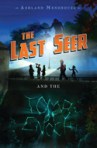
The Last Seer and the Tomb of Enoch by Ashland Menshouse

  • Publisher: Aubrey Taylor’s quaint and cozy life in the subdued, Appalachian town of Lake Julian had never been exceptional. Shouldered by his lifelong friends, Buzz Reiselstein and Rodriqa Auerbach, he quietly endured the puerile punishments of a persistent pack of pesky bullies that included the most-feared kid in school, Magnos Strumgarten, and his own obnoxiously, well-accomplished brother, Gaetan. Comfortable in his humdrum niche of the absolutely average, Aubrey never pushed back. Until…fate dug a little too deep…and the unseen darkness of unspoken places rattled his mediocrity. When spurious specters and elusive mountain men battle for a tomb of Watchers, buried in ages past, only those who choose to look beyond the surface feel the grip of the ancients’ revenge. Unusual disappearances, a colorful cadre of insightful townsfolk and a whirlwind of blunders and mishaps exposes the struggling forces that transform Aubrey and his friends into more than spectators amidst the oldest war of all.
  • Midwest: Trapped in a conflict of time, the world struggles to squeak through. “The Last Seer and the Tomb of Enoch” is a science fiction and fantasy epic from Ashland Menshouse as he spins a tale of angels and watchers looking over the fate of the world as our traditional world is torn apart by its march to the future and the pull of the past legends and mythology. “The Last Seer and the Tomb of Enoch” is an excellent pick for fiction fans looking for a massive overreaching and unique tale, highly recommended.

Finding Magic by Ray Rhamey

  • Publisher: Annie is a gifted healer in the Hidden Clans, descendants of a Celtic ancestress with a genetic inheritance of mental abilities that enable them to do magical things. She can slow aging, cure disease, heal a heart from the inside . . . or crush an enemy’s as it beats. They hide to escape persecution that has haunted them through the ages, and they’ve moved safely among us since the Salem witch trials. But a Homeland Security agent penetrates Annie’s disguise, and she’s forced to flee. On the run as a suspected terrorist, Annie is desperate to protect her kin from discovery. Then a greater threat arises when a clansman bent on avenging the murder of his son creates an unstoppable killer plague. Annie is the only hope for billions of people . . . if she can evade capture. With high-stakes conflict and human drama, Finding Magic explores loss, prejudice, family, and the human magic within each of us.
  • Midwest: When something is not understood, it is feared. “Finding Magic” follows Annie, the latest in a long line of a priestess clan with the power to save or destroy lives. When a government agent finds that her clan has this power, she finds her people under the gun as terrorists, and with the outbreak a new plague that could end humanity, she finds that more than ever she must live and be free or else there will be nothing to protect. “Finding Magic” is a riveting work of modern fantasy, highly recommended.

Malcolm

Malcolm R. Campbell is the author of two contemporary fantasies from Vanilla Heart Publishing, “The Sun Singer” and “Sarabande.”

contemporary fantasy - a woman's trials

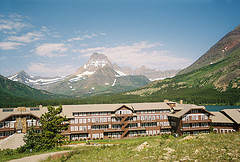
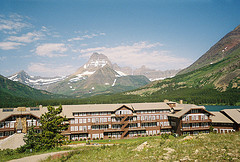
Many Glacier Hotel 1963, where the fantasy began

In June, the management of Many Glacier Hotel in Glacier National Park figures out a way to pose the entire staff in front of a photographer for the summer picture. I no longer remember how many takes it took to make the photographer happy. And, though I thought I would always remember the names, home towns, and colleges of all the students in this picture, the details have long since become hazy.

We came from all around the country during the last week in May and spent the summer in the fantasy land of  the Swiftcurrent Valley working as cooks, waiters, desk clerks and bellmen until mid-September. A lot of us came back the following summer, and some the summer after that, as has been the custom with the concessionaire’s summer help since the days when the Great Northern Railway (now, BNSF) owned and managed the facility.

For a Florida boy who had always wanted to see the mountains, Glacier Park’s horn-shaped mountains, stair-step valleys, cool summer nights, and old Swiss-style hotels were a fantasy land in spite of the hard work. We carried luggage, cleared dining room tables, mopped the floors, made the beds, and told guests yarns about the mountains.

Our summer included bridge games, long hikes, fresh fish, romances, twisted ankles, mountain climbing, boating, broken hearts and a lot of pictures more personal than this old black and white that doesn’t quite fit on my scanner.

I studied writing in high school and college and the craft I learned there was well worth the time. While I spent less time in the park, my total of  seven months there over the span of several summers shaped my life and work more than any college course. Perhaps I was more impressionable than most or perhaps it is a writer’s natural focus on experience that has made this place loom larger than life.

For a writer, time neither steals away old joys nor heals old wounds, and I came away from the park with my fair share of both. For better or worse, they have sustained me and defined my outlook, while becoming the setting for my magical realism (Mountain Song) novel and two contemporary fantasies (The Sun Singer and Sarabande).

Virginia Woolf once wrote that all of a writer’s secrets loom large in his work. I think that might be true because this setting impacted me just as much as Hogwarts impacted Harry Potter and “The Land” impacted Thomas Covenant. So it is that this faraway place flows out onto the page in my storytelling as a true love of mountains, wildflowers, bears and all the events that did happen or might have happened in the shining mountains.

Malcolm

Malcolm R. Campbell is the author of paranormal short stories and contemporary fantasy adventure novels, including “The Sun Singer,” and “Sarabande,” both of which are set in Glacier National Park.


Blurring Reality and Fiction

Many Glacier Hotel

As the author of two contemporary fantasies and one magical realism novel, I enjoy blurring the line between the real settings in my novels and the stuff I make up.

Real settings provide a foundation for the magic of my imagination whether they’re well-known locations such as Glacier National Park or personal locations such as the house my parents owned in Eugene, Oregon when I was in kindergarten.

However, the trickster in me wants the reader to always be in doubt where reality begins and ends. When people tell ghost stories around a camp fire, the stories often begin with: “Many years ago in these very woods on a summer night just like this one, a monster watched a patrol of Boy Scouts cooking their evening meal.”

Suddenly, everyone around the camp fire starts hearing strange noises in woods—perhaps it’s just the wind, or perhaps it isn’t. When I set my contemporary fantasy novels Sarabande (2011) and The Sun Singer (2004) in Glacier Park, I not only had a lot of photographs and reference materials helping me make my descriptions accurate, but also the benefit of knowing that many of my readers will have been there or seen pictures or TV programs about the area. (I also had my memories of hiking a good many trails in the park.)

So, is there magic at Many Glacier Hotel in Swiftcurrent Valley? Maybe yes, maybe no.

Garden of Heaven

In Garden of Heaven: an Odyssey (2010), I used well known locations in Glacier National Park such as Chief Mountain and Many Glacier Hotel. For my own personal amusement, I also used the starter-house my parents owned on Alder Street in Eugene. While I barely remember the house, I do have pictures of it. My readers, of course, don’t know anything about an obscure street in Eugene, but they have heard of the town. That’s why I used the name in this stream-of-consciousness, vision quest sequence in the novel:

My mother at the house in Eugene

He woke up in the centre of the prairie where the land lay like a calm sea and the black mountains were small in the west. On his mind there was a predominant thought, ‘I am east of the sun and west of the moon,’ and though that was true, for it was sometime past noon, the thought was on his mind in a strange déjà vu way, pulling him he knew not where.  His memory danced like a frail aspen leaf in the north wind until he was carried southwest by south on more or less a straight course past the grey ice of Api-natósi, the north fork of the Flathead, the Kootenai National Forest, the Bitterroots, south of Couer d’Alene Lake, the boiling confluence of the Columbia and Snake, the Cascades, to Eugene and Alder Street, to the little buff-coloured house with the blue roof and white picket fence and a snowman to the left of the driveway, and then inside to a room bluer than the roof where an inviolate circle of light from the lone lamp encompassed mother and child, she in a chair reading aloud from an old tan book of stories, he sleepy-eyed beneath covers hearing about trolls, witches, winds that talked, a castle, and a prince, the stuff that dreams and futures are made of before seasons matter and life hardens the soul.

In a vision quest, the real and the unreal are often tangled up. I always want the reader to wonder which is which. In this passage, most readers will recognize the real places such as the Snake River and the Cascades even if they’ve never been to the area. I added “Alder Street” just for me because I’m a spinner of tall tales that are occasionally true.

Malcolm

The allure of doorways

“Edward Hopper found stillness in motion and geometry in light. His simultaneously strong and subtle images of houses, streets and intimate rooms invite us to quiet our minds and open our eyes to the beauty of the commonplace as revealed by shadow, sun and the warmth or artificial lights.” — Charley Parker

Walk through an exhibit of Edward Hopper paintings and you’ll immediately see he was drawn to windows from both sides and in every  magnitude of light. He is best known for his painting of a brighly lit diner as viewed from the dark street outside called “Nighthawks.” Painted in 1942, the original can be found at the Art Institute of Chicago. If I were an art collector, most of the rooms in my house would be filled with the work of Jamie Wyeth and Andrew Wyeth, but hidden away in my den in the company of paintings of mountains and mountain trails would be Nighthawks.

Nighthawks by Edward Hopper

I am a nighthawk. I like lonely diners where nighthawks can stop for coffee or a piece of pie. I wrote somewhere that in the days before gasoline was expensive, my best ideas came from driving at night, and there was a time when I knew every waitress and fry cook in a one hundred mile radius around Tallahassee, Florida, where I grew up.

Doorways and Supersitions

While windows draw me to look in or out, figuratively or literally, I cannot resist the allure of doorways. Of the many sounds our four cats hear throughout the week, the doorbell causes the greatest disruption. Their response is a mixture of excitement and foreboding until they see who is there and what they want. There are so many doorway-related symbols and superstitions, I won’t even begin to list examples, but most of them come down to the fact that a threshold is a portal between worlds or areas of activity.

The front door to my house separates, in terms of custom and use, inside from outside. Doors separate rooms from each other and often define the activities on one side or the other. The doorway itself is where the danger lies because, as anthropologist Victor Turner observed, the space within the entryway is “betwixt and between.” It reflects both inside and out, but is—in fact—neither.

Doorway superstitions revolve around the spirits and tricksters that are said to lurk, live and cause mischief or bad luck at the undertain spaces between rooms, zones, worlds, and realms. Doorways themselves can make us feel welcome or unwelcome, hopeful, fearful or inspired. They can symbolize the steps in a project, rites of passage, personal development and transcendent expirences.

Shamanistic journeying often begins with a portal, door, or cave entrance. The children in The Chronicles of Narnia fantasy novels by C. S. Lewis enter another world through a doorway in an old wardrobe. Alice’s Adventures in Wonderland by Lewis Carroll uses a rabbit hole to link our world with a world of magic. In my contemporary fantasies The Sun Singer and Sarabande, I use arches, a waterfall cave and a special door in a cabin to connect the world of Glacier National Park with a look-alike universe.

Liminal Space

In myth and psychology, thresholds such as those between worlds and those encountered during rites of passage ceremonies and meditation, are referred to as liminal space. The term comes from “limin,” Latin for threshold. It’s considered an intermediate state, rather like the twilight zone, dusk and dawn, a sleeper’s focus as they begin to awake, and transitional in nature.

Personally, I am drawn to doorways because my point of view about the world is very much shaped by what happens or what can happen in liminal space. As an author, I find that doorways and the boundaries between worlds, either hinted at or utilized, literal or figurative, with or without a guardian entitity or ritual of passage, are among the important tools of the art and craft of fantasy.

Doorways not only open up worlds for my protagonists Robert Adams (The Sun Singer) and Sarabande (Sarabande) to find and step into, but a vast amount of symbolism relating to stages of life or development. In Sarabande, for example, a plunge into a cold mountain lake can be seen as just what it is (a wet and cold experience) as well as a figurative dive into the unconscious and/or a realm of dream and magic:

Her laugh had the rare quality of a wolf’s howl. She flung the dryas flower at Sarabande, then swam or somehow moved closer and playfully pushed her sister’s head under water like she did when they were children playing in Turquoise Lake. Then the light or the clouds changed and Dryad vanished.

Sarabande rubbed the water out of her eyes. The mare’s tail clouds were gone along with the sun and—from growing shadows within the spruce and fir forest in lower valleys—most of the day. She waded ashore, cold. There was no time to change.   She ran down the valley’s long steps, wishing she could fly. Gem—what must she think?

The surface of the lake is the perfect place for fantasy authors and other tricksters to move a character in and our of dream or magic. The liminal space where rooms meet, where night and day come together at the blue hour, and where sleep and dream snuggle up next to each other is the place where things happen. Sometimes those things are obvious and filled with wonderment or terror and sometimes they are more intuited than visual.

Give a fantasy author a doorway (or even an everyday window) and he or she will build you a world, a place where the imagination is unfettered and where change itself is the order of the day.

Malcolm

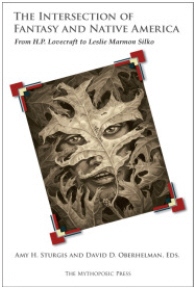
Book of pioneering essays explores fantasy with Native American influences

In 2006, author Amy Sturgis  presented a paper at the  Mythopoeic Society’s Mythcon 37 in which she suggested that specialists in fantasy studies and Native American studies have a lot to offer each other. In an August 2009 interview, Sturgis said, ‘Both sides I think are missing out on great opportunities to talk about and share the remarkable — and remarkably similar — literature in their respective fields. In my talk I recommended ways of bringing together those who love fantasy and those who love Native America.”

After her Mythcon talk, Sturgis was approached by the Mythopoeic Society Press and asked to edit a book of essays that would use her paper as a catalyst for exploring: (1) Native American mythology in literature, (2) Native American authors writing works with fantasy elements, (3) non-Native fantasy authors incorporating Native America into their own work.

As an author interested in the cultures and stories of the native nations traditionally associated with the locations in which my novels are set, I’m was happy to see the publication of The Intersection of Fantasy and Native America: From H.P. Lovecraft to Leslie Marmon Silko (Mythopoeic Society Press, October 2009) with pioneering work about the long-neglected impact of native themes in fantasy genre novels.

Publisher’s Description

A number of contemporary Native American authors incorporate elements of fantasy into their fiction, while several non-Native fantasy authors utilize elements of Native America in their storytelling. Nevertheless, few experts on fantasy consider American Indian works, and few experts on Native American studies explore the fantastic in literature. Now an international, multi-ethnic, and cross-disciplinary group of scholars investigates the meaningful ways in which fantasy and Native America intersect, examining classics by American Indian authors such as Louise Erdrich, Gerald Vizenor, and Leslie Marmon Silko, as well as non-Native fantasists such as H.P. Lovecraft, J.R.R. Tolkien, and J.K. Rowling. Thus these essayists pioneer new ways of thinking about fantasy texts by Native and non-Native authors, and challenge other academics, writers, and readers to do the same.

Author’s Comments

In an April 2009 interview in which she was asked about myth, fantasy and science fiction, Sturgis said, “All three are involved in the project of answering the question of what it means to be human: the nature of humanity; the nature of humanity’s relationship to the earth, the cosmos, the infinite; and other questions like these. The very first storytellers, through their mythological stories, parables, and other tales, were trying to come to some sense of the world and to figure out their place in it. I see mythology as a “mother figure” out of which the other two have grown.”

Reviewer Opinions

  • “With excellent and accessible scholarship, this book opens wide the door of Native American mythology and fantasy by connecting it with the fantasy many of us already know and love.” — Travis Prinzi, Author of Harry Potter and Imagination and editor of Hog’s Head Conversations.
  • “The essays in Sturgis and Oberhelman’s The Intersection of Fantasy and Native America open our eyes to the kinship between families of literature hitherto seen as separate-fantasy and Native American fiction-showing their interconnections in subject matter, in techniques of dream and trance and magical realism and post-modern meta-narrative, and most importantly, in their ability to penetrate appearances in search of underlying truths. The result is that we see each in light of the other and both as parts of the larger, so-called mainstream, and as essential to our understanding of literature, its  writers and readers, in the 21st century. –Verlyn Flieger, Professor of  English, University of Maryland at College Park, Author of Interrupted Music, A Question of Time, and Splintered Light.

The myths flowing out of classic Greek and Roman mythology and the impact of fact and fiction about kings and queens and elves and faerie folk from faraway worlds have, I believe, partially obscurred the role of Native American folktales and belief systems in creating both our world view and the fantasy fiction given birth by our imagionation in the place where we live. By examining the work of widely known authors, The Intersection of Fantasy and Native America helps interpret the rich landscape we may not have noticed just outside the front door.

–Malcolm

contemporary fantasy with native themes

Walking My Future Novel’s Setting

While I was working as a seasonal, college-student employee at Glacier National Park, my father said, “One day you’ll write a book about this.” As I walked the mile between the hotel and the camp store for Cokes, candy bars and other “health foods,” I visualized long nature articles about the park for National Geographic Magazine that would combine with proposed climbs of K2 and Mt. Everest and canoe rides down the Amazon into a hiker’s guide to exotic trails.

Little did I know I would one day set three novels in the park.

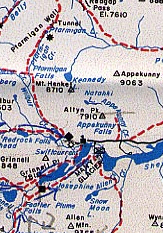
Like most college students, I was used to walking—and sometimes running—across a campus to get from one class to another. While working at the park, I not only walked around every lake near the hotel, but hiked to every waterfall, tunnel, mountain pass, and alpine meadow. Why? For a lot of reasons. For a Florida boy, the mountains were an exciting new environment. Plus, in those days, seasonal employees weren’t allowed to bring cars into the park. So, we talked. Going to the camp store was child’s play. By the end of the summer, a 25 mile hike as an easy stroll.

A Sack of Guidebooks

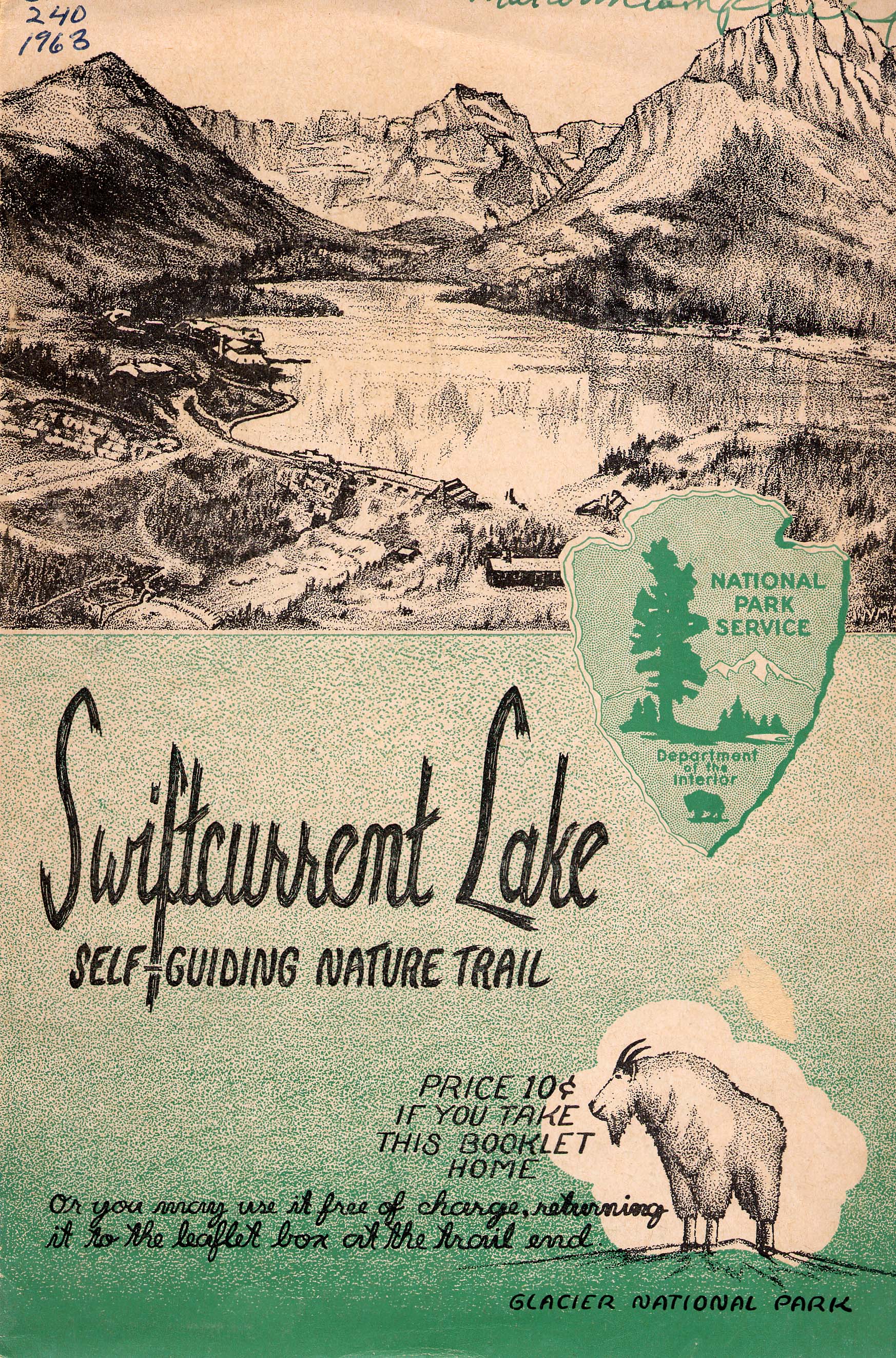
There used to be a wood box on a post near Many Glacier Hotel with a handfull of walking guides for tourists taking their first hike around Swiftcurrent Lake. If you wanted to keep the guide, you put a dime in a slot. If not, you put the guide into a similar box where the trail neared the camp store. I kept mine and along with it, brought home a sack full of guidebooks.

These materials are a writer’s dream. They allow me to merge my imagination and memories of the trails and mountains with specific factual information about the trees (subalpine fir, willow), wildflowers (fireweed, beargrass), and mountains (Grinnel, Allen). Even though I write contemporary fantasy, I want the setting to be as realistic as possible, and while I didn’t know it when I was a hotel bellman, all thosde after-work hikes were taking place in a world that would one say be part of The Sun Singer, Garden of Heaven: an Odyssey, and my new novel Sarabande.

I never wrote those National Geographic Magazine articles, much less climbed K2 or Everest, but I did write a few articles and essays about the Swiftcurrent Valley in Glacier National Park. Looking at the valley from a journalist’s or feature writer’s perspective helped me collect my thoughts for the fiction I would set there later.  Unfortunately, I haven’t been back to the park for many years, but all that time walking around in the setting of my future novels rather engraved the sights and sounds in my memory.

Sarabande Excerpt – from a Fictional Cabin at the Park’s Lake Josephine

Lake Josephine and Mt. Gould - twbuckner photo

The bright yellow of a late morning sun filled the bedroom when Sarabande awoke. She felt the light move before she opened her eyes and pulled the tangled folds of the quilt away from her face. A summer breeze followed the light, fluttering the blue curtains with a breath that smelled of fir trees, larkspurs, gentians, and stones from snow-melt streams. Pine siskins chirped to each other amongst the ferns and mosses, olive-sided flycatchers pipped from tree-top perches, and children laughed. The laughter came and went with the coming and going of a rumbling, technology-sounding hum. Sensing no threat in the sound, she projected outside and found that a boat traveling up and down the lake with visitors was powered by whatever made the pervasive hum. The visitors got off the boat, looked around, laughed, and then got back on the boat and went away.  They surrounded the cabin with their smells of strange soaps and fabrics, completely unaware of the magic in their midst. Whether it was the good night’s sleep or the rhythms of the water in the box of warm rain, her normally sharp senses intensified while she slept. Within the quilt of interlocking rings, she acquired—or was acquiring—Bear’s sense of smell, Eagle’s sight, and the quivering alertness of chipmunks and butterflies.

–Malcolm

an exciting adventure for only $4.99 on Kindle

Briefly Noted: Cor Blok’s LOTR paintings collected in ‘A Tolkien Tapestry’

Dutch artist Cor Blok was fascinated with J. R. R. Tolkien’s The Lord of the Rings when it was published and subsquently created a series of 140 paintings that he hoped might accompany an illustrated version of the epic. Tolkien met Blok, liked his work, and even purchased some of the paintings.

Now, Pieter Collier  from the Tolkien library has tracked down these paintings and worked with Blok to create A Tolkien Tapestry: Pictures to accompany The Lord of the  Rings (HarperCollins, September 2011). While the illustrated version Tolkien and Blok hoped to see never materialized, this new book provides LOTR fans with a strong dose of the magic such volume might have contained.

According to Collier, “The approximately 100 full-colour paintings in this new book are presented in story order so that the reader can enjoy them as the artist intended. If one looks at the art works one by one you can easily tell the complete tale of The Lord of the Rings. So all the paintings are accompanied by extracts from The Lord of the Rings and the artist also provides an extensive introduction illuminating the creation of the series and notes to accompany some of the major compositions.”

From the Publisher’s Description: This brand new full-colour art book reveals in sumptuous detail more than 100 paintings based on The Lord of the Rings by acclaimed Dutch artist, Cor Blok, many of which appear here for the first time. Fifty years ago, shortly after The Lord of the Rings was first published, Cor Blok read the work and was completely captivated by its invention and epic storytelling. The breadth of imagination and powerful imagery inspired the young Dutch artist, and this spark of enthusiasm, coupled with his desire to create art that resembled a historical artefact in its own right, led to the creation of more than 100 paintings. Following an exhibition at the Hague in 1961, JRR Tolkien’s publisher, Rayner Unwin, sent him five pictures. Tolkien was so taken with them that he met and corresponded with the artist and even bought some paintings for himself. The series bears comparison with the Bayeux Tapestry, in which each tells an epic and complex story in deceptively simple style, but beneath this simplicity lies a compelling and powerful language of form that becomes more effective as the sequence of paintings unfolds.

Some of Cor Blok’s paintings from this book will also appear in the official 2012 Tolkien Calendar from the Tolkien Library. His work was also featured in previous Tolkien Calendars. A Tolkien Tapestry can be purchased directly from Amazon.UK and through associated sellers at Amazon.US. Blok, who was born in 1934, is a retired professor of art history. He lives in Amsterdam where he is at work on a graphic novel.

In an interview about the paintings. Blok was asked what it was like to meet the author. “Nothing very exciting,” he said. “Unknown young artist visits Famous Author, that kind of thing, though the Famous Author behaved amiably enough.”

Malcolm

contemporary fantasy with a sharp edge


The Magic of Harry Potter

from Sarabande’s Journey:

J. R. R. Tolkien is credited with bringing epic fantasy back into the lives of mainstream readers. We can also claim that J. K. Rowling’s popular Harry Potter books not only fired up the reading public’s love of contemporary fantasy, but introduced the concept of books to people who seldom read novels at all.
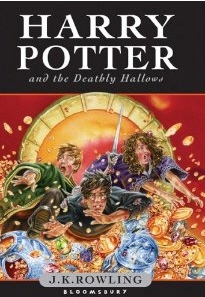
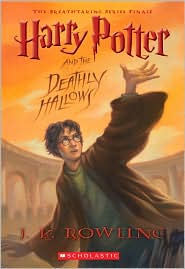
Fourteen years after her U. K. publisher (Bloomsbury) released the first, tentative thousand copies of  Harry Potter and the Philosopher’s Stone (renamed in the U.S.), her fans continue to wait for word, any word, that there might be another Harry Potter novel. In 2007, the release of Harry Potter and the Deathly Hallows sold a record 8.3 million copies in the United States in the first 24 hours.

Any other author would have been told not to use the word “hallows” in a book title since the term wasn’t in the public’s consciousness. But Potter fans lined up and bought the book while debates raged on about what “hallows” might be.

The popularity of  Rowling’s books has been called a “black swan event.” Developed by Nassim Nicholas Taleb and explained in his book The Black Swan: The Impact of the Highly Improbable, the theory examines rare events that could never have been predicted or planned and that even in hindsight, usually cannot be duplicated. Taleb himself considered Harry Potter, as a publishing event, a black swan.

Journalist Will Hutton believes Rowling’s success transcends the quality of the books themselves. “Rowling is repeating the Da Vinci Code effect – but much more shrewdly,” he writes. “In the creative industries success always begets more success, but in an era of globalisation the success can be very big indeed, as both Rowling and Dan Brown can testify.”

Hutton, and others, think globalization and the viral phenomenon of ideas, books, movies songs suddenly becoming popular seemingly everywhere is more responsible for Harry Potter’s popularity than the quality of Rowling’s books.

Is Harry Potter’s Success Simply Books Going Viral Around the Globe?
U.K. cover

Based on Hutton’s theory of why a Da Vinci Code Effect book does so well we could, let us say, create a look-alike universe without television, cell phones, satellites providing news in real time, and the Internet, and then display the Harry Potter books (one person at a time) to 8.3 million readers. Hutton would say that Rowling’s sales in that universe would be a fraction of what they are here. He may be right.

But that still leaves us with the question of: “If the outside influence of millions of people saying the books are great is what caused each reader to pick up a Harry Potter book, what caused them to enjoy it so thoroughly and read and re-read it so passionately?”

While peer influence is a powerful thing, reading is a solitary act. Top ten songs are easy to share in a way that further leads to their enjoyment and popularity. People listen to them together in cars and break rooms and parties and hear them in large groups at concerts. While the Harry Potter movies were shared by theater audiences in real time, the books were not. Each reader had to choose to sit in a chair, curl up in a hammock, or prop up in bed and read the book by himself and herself. Like all reading, Harry Potter represented an investment in time.

Many have said that in addition to Rowling’s creative and imaginative mix of characters, themes, and settings, the books’ success comes in part through their believable account of a rather geeky (yet lovable) underdog becoming so empowered, he was able to effectively battle against the adult, experienced and highly skilled bad wizards in the book. Noticeably, the good adult wizards teaching magic at Hogwarts had very little to do with the triumph of good over evil in each book.

In a world where most of the news is bad and most of the global issues seem impossible to solve, the prospective readers of the Harry Potter books found a wonderful antidote in Rowling’s books to the negativity, hopelessness and alienation prevalent in so many people’s lives and world views. Rowling’s stories are inspirational: even the most hard-hearted and logical adult can read them with a sense of wonderment and empowerment.

Far from being escapist reading that captures readers’ imaginations while they are reading, the Harry Potter books—through some we-don’t-really-understand-it mix of Rowling’s genius and a black swan publishing event—continue to delight and inspire readers after they finish the books.

In Fantasy, Magic is a Positive Symbol for What You Can Do in the Everyday World

While J. K. Rowling’s Voldemort is just as nasty as the bad guys found it occult horror books, the Harry Potter series illustrates one important difference between fantasy and other so-called paranormal books. In fantasy, magic is viewed as normal and a capability that the book’s protagonist can become allied with and even learn. This is the case even when there are Voldemort-type characters who are using the magic for evil reasons. In occult horror books, the magic, whether its seen as a typical component of the location or not, is something that is nonetheless alien and evil and to be feared. In supernatural horror stories and most mainstream fiction, the occult is considered abnormal, evil and threatening.

In fantasy, magic is seen as normal, as a talent both good guys and bad guys can utilize, and as something to be embraced. In many respects, the acceptance of and learned proficiency with magic represents a character’s personal transformation either figuratively or literally. Transformation is an important theme in fantasy. As such, we view it in fantasy fiction as symbolic of the non-magical transformations we can seek out an attain in our non-magical real world.

This is part of the empowerment one feels, I think, when they read Rowling’s books. The books stimulate the readers’ imagination, and they begin to feel the first inklings of wonderment about the prospects for their own success in becoming the best people they can be. They may still have a “Heart of Darkness,” as Joseph Conrad suggested in his novella published in 1902, but they can transcend it.

The Harry Potter books weren’t written as guides for living or as recipes for personal success. However, the magic (real and figurative) that readers discover in them and then internalize is a large part of their power.

–Malcolm

a contemporary fantasy of the dark moon