What do you do when—and I know other authors will hate this phrase—you run out of “factory fresh books”?
Suddenly, all the books on the nightstand have been read, all the Amazon boxes opened, and the other nooks and crannies emptied of new reading material. I try not to let this happen often.
When it does, I either rummage through the books on my wife’s shelves or re-read a favorite. I tend to return to the same books over and over rather than adventurously taking equally great books off the shelf that aren’t (for me) the kind of book-comfort-food I’m seeking.
This Christmas holiday, my wife and I visited non-WiFi relatives and—without the distractions of the Internet—I knew I’d need a good book. I chose Terri Windling’s “The Wood Wife.” I like this book for its visceral portrayal of the desert and for it’s magical realism. I think Carlos Castaneda would have liked this book because Windling focuses on some of the same kinds of ephemeral, or potentially ephemeral, spirit entities that we found in Castaneda’s Don Juan books.
Like Castaneda’s work, this book takes me outside my comfort zones of mountains, forests. swamps and coastlines. I’m used to Mother Nature as I find her within my comfort zones. Though beautiful, the desert and its spirits are very alien. I find it exciting from time to time to confront “the other” in the desert that is so very different from “the other” in mountains and woods.
More Favorites
I often return to Katherine Neville’s “The Eight” and “The Fire” because they are long, complex and feature plots that are so intricate that I cannot remember all the ins and outs until after they come and go in each re-reading.
Pat Controy’s books, most especially “The Prince of Tides,” draw me back again and again. I like Conroy’s descriptions of his place settings.
Though a lot of people do not remember “The Great Gatsby” fondly, I find it compelling enough to draw me back again and again. Perhaps it’s the look into a very different time and place that I like.
“The Shadow of the Wind” has always been a favorite for its depth and its magic.
What about you? Do you have four or five favorites you can easily read again and again when you’re waiting to make a trip to the bookstore or simply need something old and familiar?
–Malcolm
Malcolm R. Campbell is the author of contemporary fantasy novels, including “The Sun Singer”
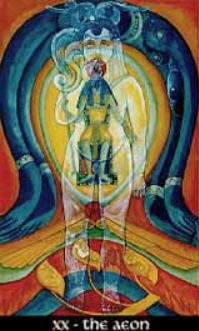
“The Aeon is the symbol for the Rise of Phoenix, it stands for a time of insight, the true understanding of the circle of life, of growing and fading.” – Raven’s Tarot Site
When author T. K. Thorne (“Noah’s Wife”) invited me to participate in a “blog chain” that focuses on the working title of our next book, I faced the same problem she did when she sat down to write her post. Which book do I want to talk about? Should I talk about the collection of short stories or my next Glacier Park Fantasy novel in the series that includes “The Sun Singer” and “Sarabande”?
I’ve decided to talk about the novel.
What is your working title of your book? “Aeon”
Glacier Park’s Chief Mountain – M. R. Campbell photo
Where did the idea come from for the book? When I wrote “The Sun Singer,” I knew the book’s Grandfather Elliott character would eventually return to a mirror-image universe (set in another time period) hidden within the mountains of Glacier Park Montana. “The Sun Singer” was his grandson Robert Adams’ story. Now it’s time to tell Tom Elliott’s story.
What genre does your book fall under? Contemporary fantasy.
Which actors would you choose to play your characters in a movie rendition? I’ve been waiting for Clint Eastwood to call and say he wants to play Billy, an Indian medicine man, in a movie version of “Sarabande.” So far, nothing. Maybe he’s been waiting for the Tom Elliott role to be ready. There’s a role for Mila Kunis and another for Angelica Huston.
What is the one-sentence synopsis of your book? An aging avatar returns to the land of Pyrrha to fulfill the ancient prophecy, overthrow the evil king and neutralize the traitorous sorcerer, and prepare the land for the arrival of the goddess.
Will your book be self-published or represented by an agency? Neither. I will submit the novel to the publisher directly.
How long did it take you to write the first draft of your manuscript? I am still working on it.
What other books would you compare this story to within your genre? Although I write contemporary fantasy and Stephen R. Donaldson writes epic fantasy, Tom Elliott’s quest has some similarities to that of Thomas Covenant in Donaldson’s “Chronicles” cycle. Needless to say, “Aeon” can best be compared to “The Sun Singer” and “Sarabande.”
Who or what inspired you to write this book? I wrote “The Sun Singer” based, in part, on my own psychic experiences and my love of magic and Glacier National Park. “Aeon” is the logical next step in the cycle. As the title suggests, I also like the meaning behind the trump #20 in the Tarot deck.
What else about your book might pique the reader’s interest? The story is going to be a wild ride that begins on a Harley Davidson FXE Superglide Shovelhead. After that, what’s the worst that could possibly happen? Among other things, that means the production company for a movie version will have to spend a truck load of money on special effects.
I’ll keep you posted. By that I mean, don’t call me (unless you’re Clint, Mila, or Angelica), I’ll call you.
Now, for the next installment of THE NEXT BIG THING blog chain during the week of November 26th, check out the blogs of authors Melinda Clayton, L. E. Harvey and Pat Bertram.
Fairy Tales from the Brothers Grimm: A New English Version, by Philip Pullman, Penguin (11/8/2012), 400 pp
Best known for his Dark Materials trilogy (The Golden Compass, The Subtle Knife, The Amber Spyglass) Philip Pullman turns his attention to the now-classic fairy tales published by Jacob and Wilhelm Grimm in 1812. Most of us were brought up on one retelling of these stories or another, including the Disney versions. Pullman’s retelling focuses on his favorites with an imaginative approach that honors the originals.
From the Publisher: Philip Pullman, one of the most accomplished authors of our time, makes us fall in love all over again with the immortal tales of the Brothers Grimm. Pullman retells his fifty favorites, from much-loved stories like “Cinderella” and “Rumpelstiltskin,” “Rapunzel” and “Hansel and Gretel” to lesser-known treasures like “The Three Snake Leaves,” “Godfather Death” and “The Girl with No Hands.” At the end of each tale he offers a brief personal commentary, opening a window on the sources of the tales, the various forms they’ve taken over the centuries and their everlasting appeal. Suffused with romance and villainy, danger and wit, the Grimms’ fairy tales have inspired Pullman’s unique creative vision—and his beguiling retellings will draw you back into a world that has long cast a spell on the Western imagination.
Frontispiece of first volume of Grimms’ “Kinder- und Hausmärchen” – Wikipedia
From Ron Hogan (founder of Beatrice): Right away, you get a sense of the comic earthiness to Pullman’s characters–and since, as he notes in his introduction, the characters in Grimm’s tales don’t have psychological motivations or interior lives as such, dialogue becomes the chief instrument through which a storyteller can give them personality. It’s a tool Pullman uses to masterful effect. Even a simple, 16-word exchange between the protagonist of “Lazy Heinz” and his equally slothful wife can reveal volumes about the characters.
Pullman includes notes, sources and information about each tale’s variations. This one looks like a good read for cold Winter nights.
–Malcolm
Malcolm R. Campbell is the author of the contemporary fantasy novels “The Sun Singer” and “Sarabande,” both of which are available in trade paperback, Kindle and Nook from Vanilla Heart Publishing. His paranormal short story “Moonlight and Ghosts” was released for Kindle and Nook in September.
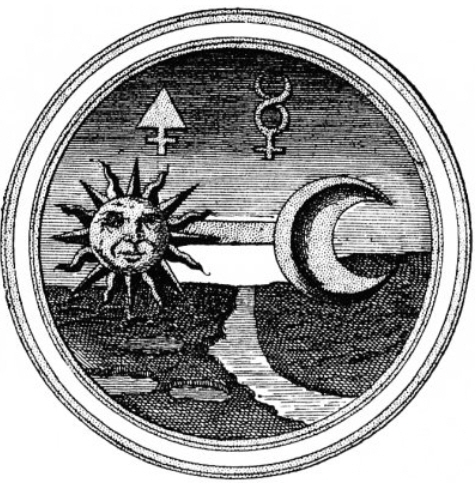
When the Sun and the Moon are viewed within the arena of Western esoteric traditions, including alchemy and the Tarot, they represent opposites that approach and retreat from each other even though they are destined to be merged into one. In these traditions, the Sun represents fire, masculine, positive (polarity), rational, visible world, and the consciousness mind. The Moon represents water, feminine, negative (polarity), intuition, hidden world, and the unconscious mind.
It is said that the enlightened being, often called The Wonder Child or viewed as the Philosopher’s Stone, is born from the merging of these apparent father/mother, king/queen opposites as depicted in the old art work shown here.
One of the many ways of illustrating the steps on the path to enlightenment, the goal of the hero’s and heroine’s journeys, is through the sequence of Major Arcana (trumps) cards in a Tarot deck. The Major Arcana cards begin with “0 The Fool,” who is considered the innocent initiate at the beginning of the journey/quest and end with “21 The Universe,” which represents ascension. En route, the seeker finds “18 The Moon” and “19 The Sun.”
I like the description of the Moon and Sun cards in the ancient quests of knights for the Holy Grail. The Moon, then, is the Grail in the lake (beautiful water symbolism here) and the Sun represents the Grail lifted up into the pure light prior to completing the quest. Afterwards, the initiate/seeker reaches “20 Aeon” which is viewed as the rising of the Phoenix from the ashes prior to ascension.
Many Paths = One Destination
There are multiple layers of symbols here when we overlay the hero’s/heroine’s journey paths with all their traditional associations, including the Lesser Mysteries and Greater Mysteries, the cycles of the seasons around “the wheel of the year,” the Tree of Life, Tarot, alchemy and astrology. One need not study all of this, or even any of this, to understand seeker’s journey. The journey is who we are and what we are about. All of the paths to enlightenment are pointed toward the same end: transformation. Each of us focuses on the symbols we’re most comfortable with and attuned to.
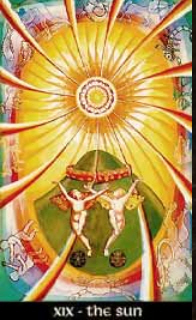
Some experts say that we’re impacted by these symbols even if we are not consciously aware of them or understand the little we may have heard about them. I am a novice in using Tarot and understanding the cards’ many connections to the Tree of Life, spiritual alchemy and the cycles of the seasons. Generally, though, I like the symbolism of the Thoth Deck of Cards. The Moon and Sun cards shown here are from that deck and have a fair amount of symbolism.
Moon: The overall tone here is night. In the Book of Thoth, the Moon is called the “Gateway of Resurrection.” During night and Winter, the waiting Sun is diminished or absent. The landscape here is severe and the stream is mixed with blood. The sacred scarab holds the sun in its darkness while the moon occupies the mind and cosmos.
Sun: The overall tone here is light, with the twelve major rays standing for the signs of the zodiac. The light emanates from a rose-like sun, standing for the flowering of the solar influence. The children above the green and fertile earth are forever young and innocent. They represent the seeker’s and/or humankind’s next stage.
The Writer’s Raw Materials
moon
As a writer, I love the relationship of symbols and story ideas. They can strongly impact plots, themes and characters. There are many ways to characterize a journey. For example, readers of my hero’s journey novel The Sun Singer will find numerous references to light and the other aspects of the so-called solar journey. For more information, see the Journey Page on my website and explore the information on the Joseph Campbell Foundation site. The book’s Glacier Park setting reminds park visitors and fans of “Going to the Sun Road” and the expanse of light one sees from high mountain trails.
Likewise, readers of my heroine’s journey novel Sarabande will find numerous references to water and the other aspects of the so-called lunar journey. The Heroine’s Page and the Sarabande Page on my website have more details. While the book’s story begins in the mountain high country, the plot (which is oriented around the moon’s phases) becomes more focused on rivers, dreams and the so-called “Underworld.”
sun
For more information about Tarot cards in general, you might enjoy exploring one of my favorite sites: Raven’s Tarot Site. Here you’ll learn more about the Major Arcana (trumps), Minor Arcana (suits), and their correspondences with the Tree of Life, the classic elements, and astrology.
My first intention in both of these books is telling an exciting story. Both stories have many associations with myths and symbols. Those who know the myths and symbols will, perhaps, smile when they see the references. Those who do not consciously know the myths and symbols will still be subject to their spells.
As Rumi said, “What you seek, seeks you.” So, perhaps when you’ve finished reading the stories, you’ll be drawn into the “inner stories” behind the actions of Robert Adams (The Sun Singer) and Sarabande (Sarabande). When that happens, you’ll find that what you are looking for will begin to appear more often in your life in the form of books, websites and links, things you see on the way to work or on a hike, people who are interested in these subjects, and your dreams.
Meanwhile, as you read the novels, I hope you’ll enjoy the action while you are dancing with the Sun and the Moon—as they dance with each other.
“The Twa Corbies”, Illustration by Arthur Rackham to Some British Ballads – Wikipedia
In Part 1, I suggested that magical animals in fantasy, magical realism and folktales should start out on your imaginary drawing board as factually accurate as possible. Real-world facts make your animal believable.
Whether your animal can perform overt acts of magic, such as my flying horse Sikimi in The Sun Singer and Sarabande, or mysteriously appears on the scene when important things happen to the characters, such as the crows in Verlyn Flieger’s The Inn at Corbies’ Caw, you can add great depth by linking it to traditional myths and superstitions, American Indian creation myths and real or imaginary local stories and beliefs. When you do this, you are building either on what the reader already believes (ravens hang out in grave yards and bring bad luck) or you are layering the story with information that, while probably new to the reader, helps make your magical animal three dimensional.
In a recent short story about the rare Florida panther, I noted that according to Seminole myth, the creator placed all the animals into a birthing shell from which they emerged when the time was right. The first animal to come into the world was the panther, and she had certain qualities that made her special. Since my story is set in a long-ago time period before humans arrived, the animals view the birthing shell as real. They mention it in an off hand way because my short story is not retelling the myth; the mythic backstory gives my panther a larger than life ambiance.
Many writers turn to Nature-Speak and/or to Animal-Speak: The Spiritual and Magical Powers of Creatures Great and Small by Ted Andrews for a comprehensive introduction to a large number of animals as they are seen in myth and folklore. The books are especially valid for stories set in the United States since they have an American Indian flavor. I prefer to find out about my prospective magical animals before I start writing so I can build their characterizations and actions around the myths and superstitions rather than pasting a “surface-level” set of qualities on top of an otherwise realistic creature.
The Internet is an amazing resource as long as one double checks everything from multiple sources to: (a) insure the myth or legend is widely known rather than being one writer’s imaginary story or religious belief, (b) locate enough detail to keep your account (including the adjectives and phrases you use) from sounding too much like the one source you located. When setting a story in a real location, a you can start with such online searches as creation myths of the Seminoles (insert appropriate tribe for the region) , panther (insert appropriate animal) myths and legends, and Florida (insert state, city, park, forest or resort) animal legends.
How Magic Do You Want Your Animal to Be?
Magic has to be used carefully, for if you make your main character (human or animal) all powerful, then you won’t have a way to build an exciting story. When your animal is all powerful, then you can build in understood “rules” that keep it from solving all the challenges in the story the minute it arrives. My flying horse, for example, is on the scene to transport my human characters from place to place. But he allows them to decide where they’re going and what they’re going to do when they get there. While he occasionally takes strong action, he generally doesn’t interfere in the fate, destiny or logical plan of the humans.
You can, of course, make all of the magic indirect. That is, if an character’s totem animal is the raven, the raven need not have Superman-like powers to play a role. He can appear in dreams and visions with cryptic messages, can be seen flying in a certain direction as a hint to the characters to go that way, and can be placed in trees or in flight overhead when things are beginning to get frightening. This approach works well in contemporary fantasy and magical realism where your magical animals generally don’t have the capabilities of science fiction and fantasy animals in other worlds where the rules are different.
In “real life,” an overtly magical animal would attract attention. Of course, if that attention and how the human and animal deal with it, is important to your story, then hiding the animal’s abilities wouldn’t be an issue. Otherwise, magical animals tend to be more overt when they appear in parallel worlds, spooky uncertain regions, and deserted places. You can also blur the level of reality by opening up the possibility that the magical things a character saw and/or took part in, might have been the stuff of his imagination and dreams. You will see when you do your research into animal superstitions and tales, that magic tends to happen in places where the whole world cannot see it. This not only makes the magic potentially more frightening (it happens at midnight where two roads cross, for example), but keeps it from getting out of control in your story.
If your protagonist is a human, the rules of storytelling (depending on the genre) generally call for him or her to have more control over the direction of the plot than the animal. When placed within a dangerous situation, you character—knowing or not knowing the magic that’s “available”— will make choices to run, to hide, to fight, to be heroic, to find hidden strengths, or perhaps to fail. The magical animal cannot run in out of nowhere and “fix” all of the character’s problems. If so, the story become very anticlimactic.
In most fantasy, there are various “rules in place” in the parallel universe and in adjoining or overlay worlds that contain or restrict all the magic. This also makes stories more suspenseful and mysterious and keeps them from ending on the first page. Even Superman can’t do everything and be everywhere at once: the fact that he can’t, is what makes the story a story. The same is true for your magical animals.
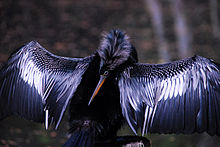
I grew up seeing Anhingas in Florida swamps. A bit of Internet research told me why they dry their wings before flying.
Animals in fantasy, folktales, faerie, and magical realism often have the ability to perform magic, change shapes, influence human events, know the future, or serve as guides between realms or worlds. While the needs of these genres are not the same, it helps to start off with as much knowledge as you can about real animals in their natural habitats. Once you know what an animal eats, how and where it sleeps, what its habits are, and what it looks like, you can branch off from there.
While most readers cannot recite the same specifics as a wildlife biologist, they do have a sense about how animals move around in their environments, and what kinds of animal habits in a work of fiction come across as true or apparently true, and what is blatantly impossible. If you’re writing faerie tales or folktales or creating animals “from scratch” like those we saw in the Harry Potter books, you have more latitude than you do in contemporary fantasy or magical realism.
My feelings about this are somewhat based on my own manner of writing, insisting on accuracy to a fault. For example, in a recent story my two main characters were driving between two real-life towns while listening to a real-life CD. My accuracy thing while writing this is to see how many miles the people will travel at normal speed and then look at the playing times of the cuts on the CD. It doesn’t have to be exact: but personally, I don’t want my characters to purportedly listen to 30 minutes of music during a ten-minute drive.
Likewise, even in fantasy and folktale, I don’t want my animals eating or sleeping in places they never eat or sleep in real life. Sure, magical powers can account for a lot of differences between real animals and fantasy or folktale animals. But the wider the gap you have between the animal in your story and the animal in real life, the less viable your story is and the greater the odds the readers won’t go along with it.
If I had the time and money, I would go into the field with a wildlife biologist and listen while s/he describes the animal behaviors and habitats we’re looking at. Like most writers, I can’t invest in $100 worth of highly specific books from Amazon just for a short story. This means relying on dozens of websites to find the foundation facts for my story.
I was trained as a journalist, yet as a novelist I believe in magic. That means I dislike and have trouble following stories or novels where everything is totally fabricated. If nothing in the story is real, it will probably not attract an audience.
I anchor my stories with verifiable facts about the animals and the settings. Perhaps you will anchor your stories in some other way. But when it comes to creating magical animals in fiction, it won’t hurt to know what your animals do and don’t do, eat and don’t eat, and are capable of and not capable of in “real life” before you start adding the fantasy elements, animal totem qualities, traditional myths and legends involving the animal, superstitions and the stuff you imagine as you put yourself in the animal’s self and walk around a bit.
If you place magical powers on top of a totally unrealistic animal, your story is going to be very difficult to write, much less keep a reader’s attention. A little careful research into your animal in nature will improve the magical animal in your story.
Speaking of myself now in the third person, Malcolm R. Campbell is the author of magical realism, contemporary fantasy and satire published by Vanilla Heart Publishing of Washington State. While my noir satire, Jock Stewart and the Missing Sea of Fire, is set in a fictional Texas town with a really screwed up fictional newspaper, my three other novels are set in Glacier National Park, Montana and other places where I have lived or visited.
Last summer brought the release of Sarabande, a harrowing heroine’s journey and contemporary fantasy about a young woman who is haunted by the ghost of her sister. Sarabande seeks the help of a young man who has, on one previous occasion, bent time to “raise the dead.” The solution to the problem is not without its nasty down side.
Satire for your Nook
In 2004, I came out with the first edition of my novel The Sun Singer, the story of a young man whose psychic dreams ultimately lead him into a dangerous mountain world where it will take all of his skills to survive. First things first: he had to figure out who the good guys are and who the bad guys are and, as it turns out, who exactly he is. The second edition of The Sun Singer was released in 2010. College students at Lone Star College, Texas, read and discussed the novel this past Spring as part of a Wayfaring Heroes course.
Garden of Heaven: an Odyssey (also released in 2010) is magical realism about a man who grows up on a Montana ranch who loses his way when a failed love affair sends him down dangerous roads along which is is betrayed multiple times by those he cares about the most. The book is also available as an $4.99 e-book from OmniLit.
Where To Find Malcolm R. Campbell on the Internet
The Sun Singer, Sarabande and Jock Stewart and the Missing Sea of Fire are available at multiple online booksellers, including the paperback and Kindle/Nook editions at Amazon and Barnes & Noble.
Gem pulled her hands away and stood up so quickly she knocked over her spinning wheel. She didn’t appear to notice. She walked to the window and leaned out as though making sure no one else would hear her words.
“I was shamed by the king.” Gem pulled up her left sleeve to reveal the letters SJ in a bold pink scar that contrasted with her walnut-colored skin.
“Your strike brand!”
“I bore Justine’s mark as well as his child. Both were conceived in pain in a dark cell covered with urine and rat droppings.” Sarabande went to her, but Gem rolled down the sleeve, covering the ugly mark that signified Sovereign Justine. “No, my friend, I cannot abide your seeing it close at hand. My daughter, though, this doting mother will speak of her at great length if allowed to do so.”
“Cinnabar has shown me her brand,” said Sarabande.
“Discretion is a lesson I was never able to teach her. But listen: on your journey to Osprey’s house, you won’t walk through the domains of kings.”
Sarabande gasped and sat down, suddenly lightheaded when she understood why Gem showed her the scar.
“If there are no kings, what dangers have you seen?”
Gem put her hands on Sarabande’s shoulders and kneaded out the growing knots. Her touch always felt like a touch of power, and she wondered if she shared Osprey’s way with healing magic.
“I have seen a dark creek beneath a bridge on a foggy night. I have heard screams and howls outside my comprehension. I don’t understand it,” said Gem, holding their eye contact as though she understood more than she would say. “Sarabande, you know without my lecturing at great length about the ways of the world. A a woman on a lonely road can be a target. Travel with a sharp knife.”
The impromptu massage felt good. The unclear warning did not. Vague predictions were worse than silence. They stirred up what did not need to be stirred up.
“Yes, I know that, Gem. I will carry a knife and take care to have it handy.”
“With due care, you can avoid your fate, but destiny is the way you’ve already written your life’s story.”
“I wanted to walk the sixteen hundred and fifty miles to Osprey’s house long before it occurred to me I would ever do so. If there is to be shame in it, then I will live or die with whatever I find on that lonely road.”
–
Thank you for stopping my Malcolm’s Round Table today!
Vandana Saxena has done a careful and credible job surveying themes of fantasy fiction and adolescence in The Subversive Harry Potter: Adolescent Rebellion and Containment in the J. K. Rowling Novels (McFarland, April 2012). Substantiated by the source materials, her approach views the years between childhood and adulthood as a time of testing, experimentation and rebellion that society allows and/or tolerates with the expectation that youth will ultimately enter “normal” adult society within the confines of generally accepted social and cultural values.
Saxena demonstrates that, paradoxically, young adult novels—such as the Potter series—not only facilitate the rebellious and experimental mindset of their expected readers (and protagonists), they also serve to contain it. J. K. Rowling, for example, leans heavily on the hero monomyth (hero’s journey) theme which, no matter how strange the journey, envisions the hero joining “normal society” once the quest is complete. Saxena correctly notes that the monomyth always arises on a foundation of the norms and beliefs of the culture or country where the story is set.
Rowling also draws heavily on the tradition of English Boarding School fiction that echoes what such schools were intended to do in society: mold raw, undisciplined youths into model citizens. Harry and the other students at Hogwarts are expected, by the powers that be at the Ministry of Magic, to play by the rules after they leave school in spite of their love of pranks and disobedience prior to graduation.
“The school story, as a narrative emerging from a specific cultural context and being situated in a socio-cultural institution like a school,” writes Saxena, “is doubly bound to the ideas and ideologies of its epoch.”
Hero, Schoolboy, Savior and Monsters
In addition to its focus on the literary and cultural traditions of hero and school themes, The Subversive Harry Potter explores Harry’s role as the savior of his magical world as well as that world’s marginalized monsters (giants, house-elves, werewolves) whom he and Hermione befriend out of their humanity and their defiance of societal norms.
Saxena points out that while Rowling’s books have often been criticized for their positive approach to magic and witchcraft, the series has two strong Christian themes. First, Harry becomes the savior who accepts death, not as a fearful end, but as a grace he receives while offering up his own life on behalf of his friends, fellow students and magical world. Second, love is called the strongest magic of all with a power so great that Lily Potter’s love for her son Harry lives on long after her sacrificial death on his behalf.
The hero, schoolboy and savior themes are not only skewed outside their normal linear evolution by the friendship and help of such outcasts as Hagrid, Dobby and Lupin, but by the presence of magic itself. Saxena’s study portrays adolescents—from the viewpoint adults—as “other,” that is to say, alien. However, within our consensual mainstream reality, magic, witchcraft and anything else regarded as supernatural, are much more alien.
The Subversive Harry Potter shows that, like Philip Pullman’s His Dark Materials trilogy, Rowling’s use of magic not only makes for exciting reading, but introduces elements that impact the protagonist’s expected evolution from adolescent/other to mainstream adult. It’s as though society is saying, “You can play with fantasy during your teenage years, but we expect you to grow out of it.” Yet, what if the supernatural is too strong and too compelling to leave behind? This is a “danger” society perceives in wildly popular fantasy literature as well as an interesting counterpoint to the hero, schoolboy and savior themes in the Potter series itself.
The Influence of “Queer Theory”
Saxena’s view of magic and fantasy within adolescent fiction is strongly influenced by her study’s reliance on “Queer Theory” as a means of exploring potentially discordant themes and values. As a post-structuralist critical theory that defines everything outside of society’s norms as “queer,” the theory would suggest that the hero/savior who exhibits a larger-than-life performance of his role is not exhibiting normal behaviors. The study suggests that magic further “queers” the functions of the monomyth, the boarding school theme, and the savior roles within the series.
While the words “queer” and “queer theory” in context within an academic study illustrate society’s view of everything different (including fantasy and magic), the tightly focused 1990s terminology is in my view unfortunate and out of date when extrapolated upon in 2012 for a wider research project.
“Queer analysis,” writes Saxena, “of the narrative of boyhood therefore reveals the essentially performative aspect of boy-to-man growth. The elements of fantasy and magic denaturalize this cultural project. The narrative of fantasy revolves around the power of magic, an illegitimate force whose presence in society has been characterized by simultaneous ubiquity and secrecy.”
The author’s role?
Unfortunately, the fantasy author’s role (if any) in either orchestrating or intuitively utilizing the hero, schoolboy, savior, monster and magical themes to facilitate/contain adolescent rebellion through instructional or inspirational storytelling was outside the parameters of the study. This leaves an open question about whether the themes explored in the study are overt elements of authorial intent or simply part and parcel of fantasy and hero’s journey fiction. Saxena shows that Rowling knew very well the traditions—within British society—of school fiction, the evolution of a hero, and of giant and elf folklore. But she doesn’t explore whether Rowling intended for her fiction to impact adolescent needs within society in the manner viewed by theorists.
The Subversive Harry Potter grew out of a doctoral dissertation and, as such, is a formal academic study intended for literary theorists, psychologists, sociologists and other scholars. The retail price ($40 for a 218-page paperback) is within the realm of scholarly and professional publication pricing rather than that of general nonfiction.
For an academic audience, The Subversive Harry Potter meets its goals while providing fantasy authors and fans with some very interesting food for thought.
Malcolm R. Campbell is the author of magical realism and contemporary fantasy novels, including the hero”s journey “The Sun Singer” and the heroine’s journey “Sarabande.”
“The world’s first love story, two thousand years older than the Bible—tender, erotic, shocking, and compassionate—is more than a momentary entertainment. It is a sacred story that has the intention of bringing its audience to a new spiritual place. With Inanna, we enter the place of exploration: the place where not all energies have been tamed or ordered.” – Diane Volkstein in “Inanna, the Queen of Heaven and Earth: her Stories and Hymns from Sumer”
Inanna, as envisioned by nikkirtw123 on Photobucket is strikingly close to my vision of Sarabande
As an author, I view my characters through a high-powered microscope and present the results of what I see as part of my stories. I will put you into the characters’ shoes if I can because—as Diana Volkstein writes—this is where the energies haven’t been tamed or ordered.
In my hero’s journey adventure Garden of Heaven: an Odyssey, I describe that place like this: “He knew him at the binary level where the line between matter and energy is barely discernible and often non-existent: Where urges pull at their chains, where drives push dumbly and drip sweat, where instincts race unchecked, where a horrifying sadness lies buried, where a raw pulse drums a cadence for the primitive rites of changing seasons, where white-hot impulses leap synapses in a shower of elemental fire.”
I wanted a similar, up-close focus in my heroine’s journey novel Sarabande. So, for the story of a woman seeking wisdom and wholeness, I could think of no better model than the myth of Inanna, a graphic dramatization of a woman’s inner journey to find herself outside the traps and trappings of a masculine world that has–as Sylvia Brinton Perera (“Descent to the Goddess”) wrote–forced the binary level of feminine power into dormancy for 5,000 years.
Or, as the late Adrienne Rich said, “The woman I needed to call my mother was silenced before I was born.”
Sarabande’s Heroine’s Journey
The journey in “real life”
In today’s terms, Sarabande was a tomboy. She was an expert with a knife, bow and arrow, a fishing pole, and everything she needed to know to survive in the wilderness. She learned all this from her father because her her mother believed women should only learn to keep a good home and not question society’s norms for women. However, Sarabande will never truly become herself as long as she is a disciple of either her late warrior father or her misguided, preachy mother. She is being taunted by a ghost that she must approach face to face in the ghost’s world.
Early on in her quest to rid herself of the ghost of her dead sister Dryad, Sarabande learns to see the world at a binary level: The lake, surrounding mountains and the cloud-draped sky broke apart into millions of colored specks. Sarabande leaned against Sikimí, even though he was no longer solid, and saw that her own light-pink hand was not solid either. In spite of her sudden dizziness, she did not fall. In fact, when her fingertips touched Sikimí’s side, a swarm of pink specks flew, like bees, into the permeable yellow gold of the horse, and when they did, their color changed to match the specks in their new environment.
But she doesn’t know what it means. So it is, that her quest to find and confront her sister follows the pattern of Inanna’s Heroine’s journey to confront her sister Eriskigal, Goddess of the Underworld. The underworld, in this case, is not the world of mobs and crime or “hell” in the Christian view, but the more dangerous world of the unconscious. Like Inanna, Sarabande will be broken, shamed and close to death before she learns who she is.
This is the heroine’s journey, to be buried in mother earth like a seed where she will be reborn with the spring into a new creation that finally has the freedom to follow the original injunctions of her destiny and her gender.
Few questions are more important to a writer. So, what if Harry Potter bought the house next door and wasn’t shy about who he was and what he could do? Really, Harry Potter himself, not Daniel Radcliffe.
Of course, the real Harry Potter—if there is one—is part of a secret world that “in real life” we would never know anything about. There’s a reason for that: people who are different are usually shunned, persecuted or worse.
The first traditional rule for the adept—alchemist, psychic, shaman, wizard—is KEEP SILENT. If he lived next door to any of us, the real Harry Potter would probably appear as unassuming as Clark Kent in the Superman stories.
But, as long as we’re playing WHAT IF?, let’s say Harry is sick and tired of staying in his figurative closet. (Actually, he did stay in a closet at his foster parents’ house—what a nice touch of symbolism on Rowling’s part).
Time for the Welcome Wagon
When a new family moves into a neighborhood, people are curious. They drop by with pies and casseroles partly as a way of starting things off with a friendly “hello” and partly as a way of getting a look at the new folks to assess how they’re going to fit in. Times might be changing, but even today there are many neighborhoods in which the “welcome committee” will be displeased if a Black, Jew, Muslim, or Gay answers the door. In other neighborhoods, Whites, Catholics, and Japanese “don’t belong.”
In scholarly literature, those who don’t belong are often referred to as The Other. They are outside the mainstream. In the Harry Potter books, witches, elves, wizards and giants are outside the mainstream of English society. Even within the magical world itself, there’s a hierarchy about who’s “in” and who’s “out.”
Fantasy offers readers unlimited opportunities to come to terms with what’s different, what goes against the mainstream scheme of things, and to consider whether the consensus reality of “real life” must be engraved in stone or not. Fantasy lets us safely question “what is.” While reading a Harry Potter book or watching a Harry Potter movie, it’s easy to feel simpatico with Harry, Ron, Hermione, and Dumbledore, and perhaps even to feel a bit sorry for the everyday people in London who don’t know anything about the magic in their midst. Just think of all they’re missing!
But What Happens When We Get to the End of the Book and the Last Movie?
Here come Harry’s friends!
Picture this. The moving van has pulled away and the new family—who looked normal enough while carrying boxes into the house—has gone inside. So, you put together your best cherry pie or your favorite Hamburger Helper meal (depending on your skill in the kitchen), and you go next door and ring the bell.
A dark-haired guy comes to the door. He’s wearing well-aged dungarees and a polo shirt. He smiles and says “Hello.” But, before you can introduce yourself, his son—whom you can see down the entry hall in the living room—shouts Avis! and a flock of pigeons appears out of nowhere and flies past you en route to the wide open sky.
What happens now?
The guy who answered the door says, “Hi, I’m Harry,” and acts like the thing with the birds didn’t happen.
You ask, “How did he do that” and Harry says, “No big deal, it’s just James Sirius having a bit of fun.”
It’s not quite like seeing it in the movie, is it? As I play with this WHAT IF question, I like to think that the world has progressed a lot between the time when TV viewers were watching Rob and Laura Petrie at 148 Bonnie Meadow Road in the Dick Van Dyke Show and all the Wisteria Lane families on Desperate Housewives. We are more likely to welcome Harry today than we were in the 1960s, aren’t we?
What do you think happens if Harry Potter moves in to your neighborhood and, along with his wife Ginny, makes no secret of his skill with spell casting and potions? Will the neighbors accept him with open arms the way they did while reading Rowling’s books, or will they stay away?
This is not a WHAT IF question I plan to use for the plot of my next novel. If I were Dan Brown, I might show that Rowling’s books weren’t fiction at all and that the guy next door is probably attracting the wrong kind of attention from, say, Homeland Security, the mob, and various terrorist groups. If I were Katherine Neville, I might show that in spite of his skills, Harry needs the help of my protagonist, say, Bill Smith, who has to go on a search for the real Nicholas Flamel to save the neighborhood. Or, if I were Tom Clancy, I’d probably have a couple of CIA operatives show up to assess “which side” Harry was planning to help “win” with his most powerful spells.
Do We Want the Fantasy Characters to Just Stay in Their Books Where They Belong?
We love fantasy whether it’s epic, contemporary, urban, steampunk, heroic or another sub-genre. In the books, Harry Potter was viewed as the hero who saved the magical world and (by readers) as one of the most-loved characters in fiction.
But WHAT IF Harry, Ginny and the kids moved into your neighborhood. Would it all become one happy family with baseball games on Saturdays and Quidditch matches on Sundays? Or, would Harry, Ginny, and their friends from Hogwarts and Diagon Alley remain separate in their house and yard as The Other?
What I think would happen and what I would like to see happen don’t match up here. Even so, I like asking the question WHAT IF?
 What do you do when—and I know other authors will hate this phrase—you run out of “factory fresh books”?








 Malcolm's Round Table