E. B. White and a swan named Louis

“Even today, White’s book continues to foster the conservation efforts he deeply believed in. Each year, the Red Rock Lakes National Wildlife Refuge receives numerous letters from young readers who inquire about Louis and seek information about the refuge and the trumpeter swans.” – Marcia Melton, in “E. B. White’s Montana and ‘The Trumpet of the Swan,'” Montana – The Magazine of Western History, Spring 2012
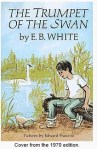
Most of us remember E. B. White (1899 – 1985) primarily for his children’s books Stuart Little (1945), Charlotte’s Web (1952) and as co-author (with William Strunk, Jr.) of The Elements of Style (1959). But a book that grew out of his 1922 trip to Montana in a Model T Ford when he was 22 is not only equally notable but demonstrates how well-told stories about the natural world can influence young readers to help protect the treasures they first discover in fiction.

“Montana made a lasting impression on White,” writes Marcia Melton in her feature article in the current issue of Montana – The Magazine of Western History. Fifty years later, that impression was still strong enough to lead to The Trumpet of the Swan about a young cygnet who had no voice. Even though White worked for a while on a Montana ranch and saw a lot of scenery, he never saw a swan and never visited the Red Rock Lakes National Wildlife Refuge where his story is set. (He knew how to do research.)

Red Rock Lakes NWR photo

Founded in 1935, the refuge is in the greater Yellowstone area near the Centennial Mountains and the headwaters of the Missouri River. According to the refuge’s website, “A very shy bird by nature, the trumpeter swan is the subject of intense study in an attempt to learn how to ensure their survival. Rescued from near extinction, trumpeters breeding in the Greater Yellowstone Ecosystem, including Red Rock Lakes, have grown in number from a low of only 200 birds in 1932, to a success of more than 500 in recent years.”

As Melton notes, the swans were heavily hunted in the 19th century and early 20th century for meat, quills, down, and feathers. Fortunately,  by the time White’s book was published inn 1970, the insanity of hunting wild creatures into extinction kept us from losing the swan. However, the bird still faces threats, as The Trumpeter Swan Society informs us, from illegal shooting, power lines, lead poisoning, and habitat loss. The Society, with the help of numerous volunteers, is one of the trumpeter’s strongest allies.

When White accepted the National Medal for Literature for The Trumpet and the Swan in 1971, he said “Only hope can carry us aloft, can keep us afloat. Only hope, and a certain faith that the incredible structure that has been fashioned for this most strange and ingenious of mamals cannot end in ruin and disaster.”

Reading Melton’s article about the man who wrote a story about a young swan named after Louis Armstrong who finds his voice in the form of a trumpet at a store in Billings, Montana, reminds me of the strength of a writer’s “act of faith,” as White calls it, and how that faith can be carried far and wide on the winds on white wings.

Malcolm

Contemporary fantasy set in Montana

If you ask me what I’m reading, you’re on your own recognizance

A writer friend of mine once told me she looks at my book reviews here as prospective To Be Read books for her Kindle. “You have never steered me wrong, Malcolm,” she said. Perhaps he fingers were crossed behind her back.

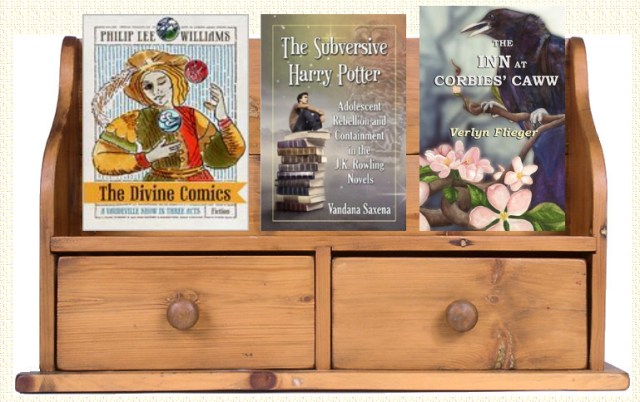
Take a look at my current reading shelf. It should be a warning. I say that because I am probably the only person in the known universe who has these three books on his shelf at one time. Or at any time. My reading tastes are both wide-ranging and eccentric. (Not always because, hey, I can enjoy a good Nora Roberts or John Grisham novel like anyone else.)

People sometimes note that most of my reviews on GoodReads and Amazon end up with four or five stars and suggest that I’m just trying to be nice. No, I’m doing that because I usually only review books I like a lot—well, unless I read something that really ticks me off.

However, five stars from me doesn’t mean the book will get give stars from you.This was proven conclusively several years ago when I gave  Dow Mossman’s novel The Stones of Summer a glowing review. People told me I was crazy. Possibly so even though I was one of 30 people who felt that way.

Consider the Source

So, when I tell you what I’m reading, you need to consider the source (me) and remember that even though I often read mainstream bestsellers, I probably read them for the wrong reasons. The other books on my shelf are going to have a very strong flavor of magical realism, speculative fiction, fantasy, folktales, literary fiction, and stuff that—for the want of a better words—is just plain weird.

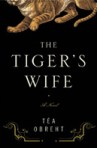
Now, my writer friend hasn’t told me directly that I inadvertently steered her wrong on a book last year, that one being The Tiger’s Wife by Téa Obreht,  but I noticed she gave it three stars on GoodReads. Sigh. After The Night Circus, that was my favorite novel of the year. I think both of these novels are Pulitzer Prize level novels, though I doubt either one was nominated (or seriously considered) since the rules say the novels must be truly American stories and neither of these books were.

Your Own Recognizance

As it turns out, this post is a disclaimer, meaning that I am often drawn to stories that mesh one way or another into my sense of wonder and my world view of real life and fiction. Before spending your money on anything on my To Be Read shelf, you better get a second opinion.

What’s on your shelf these days?

Malcolm

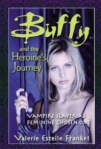
Briefly Noted: ‘Buffy and the Heroine’s Journey’ by Valerie Estelle Frankel

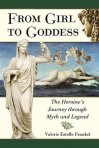
In February 20121, McFarland released a new book for authors and readers interested in the heroine’s journey in fiction and myth and for fans of the Buffy the Vampire Slayer movie (1992) and the subsequent television series (1997 – 2003).  A well-researched book, Buffy and the Heroine’s Journey is a natural extension of Valerie Frankel’s work in From Girl to Goddess: The Heroine’s Journey through Myth (McFarland, 2010).

On her website, Frankel writes that “Though scholars often place heroine tales on Campbell’s hero’s journey point by point, the girl has always had a notably different journey than the boy. She quests to rescue her loved ones, not destroy the tyrant as Harry Potter or Luke Skywalker does. The heroine’s friends augment her natural feminine insight with masculine rationality and order, while her lover is a shapeshifting monster of the magical world—a frog prince or beast-husband (or two-faced vampire!). The epic heroine wields a magic charm or prophetic mirror, not a sword. And she destroys murderers and their undead servants as the champion of life. As she struggles against the Patriarchy—the distant or unloving father—she grows into someone who creates her own destiny.”

A new era in film and fiction for three-dimensional female action characters?

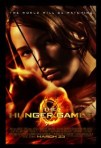
Frankel’s new book appears at a time when readers, authors and reviewers are discussing whether or not Lisbeth Salander (in Stieg Larsson’s Millennium series) and Katniss (in Suzanne Collins’ The Hunger Games series) represent a positive trend in the development of female protagonists that are more than male-gaze eye candy. That is, can authors and film makers step away from the patriarchal idea that women—whether they kick ass or not—are little more than sex objects?

Unfortunately, Frankel—along with author Maureen Murdock (The Heroine’s Journey)—appear to represent a minority view. Most film makers are still trotting out female characters in mini-skirts and bikinis fighting alongside male counterparts who are dressed in normal uniforms or SWAT team gear, while many authors and screenwriters are arguing that the heroine’s journey is no more than a female character following Joseph Campbell’s hero’s journey sequence.

As the author of a contemporary fantasy novel featuring the hero’s journey (The Sun Singer) and another that features the heroine’s journey (Sarabande), I find it refreshing to find another author/researcher who sees a difference between solar and lunar journeys. While I think my heroine’s journey story would make a great film, I don’t want Hollywood to turn my title character into a male-gaze Lara Croft-style protagonist transported to the mountains and plains of Montana in a tight and/or skimpy outfit.

Publisher’s Description: The worlds of Percy Jackson, Harry Potter, and other modern epics feature the Chosen One–an adolescent boy who defeats the Dark Lord and battles the sorrows of the world. Television’s Buffy the Vampire Slayer represents a different kind of epic–the heroine’s journey, not the hero’s. This provocative study explores how Buffy blends 1990s girl power and the path of the warrior woman with the oldest of mythic traditions. It chronicles her descent into death and subsequent return like the great goddesses of antiquity. As she sacrifices her life for the helpless, Buffy experiences the classic heroine’s quest, ascending to protector and queen in this timeless metaphor for growing into adulthood.

The paperback edition, for reasons that are not readily apparent, is priced considerably higher ($35.00) than other paperbacks of a similar length (226 pages ). However, at $9.99, the Kindle edition is more in line with today’s prices.

I bought the Kindle edition even though I didn’t see the Buffy the Vampire Slayer television series or feature film. I liked From Girl to Goddess: The Heroine’s Journey through Myth and am finding Buffy and the Heroine’s Journey to be another very readable and credible look at the heroine’s journey.

Malcolm

contemporary fantasy on Kindle at $4.99

No Pulitzer for Fiction: Disappointing

Major book awards focus attention on what we hope are the best and the brightest of books. They also create controversy when the winner and/or the named finalists don’t meet the expectations of the public and/or the critics. This year, no novel received a Pulitzer Prize, and that has focused public attention on the process.

The process includes a three-person panel of book-savvy jurors who, for this year’s prizes, spent the second half of 2011 reading over 300 nominated books. In December, they presented the Pulitzer Prize board with the names of three books. The 18-person board’s job was to select, by vote, the winner and two named finalists.

The jurors’ recommendations were Train Dreams by Denis Johnson, Swamplandia! by Karen Russell and The Pale King by the late David Foster Wallace. While the first two of these books are on my to-be-read list, I have no knowledge about any the selections other than what I’ve read in the reviews and news stories.

Since the conversations and procedures in the board room are confidential, we don’t know what happened there. We don’t even know if the board votes like a trial jury, has a discussion, and then votes again. We also don’t know if, after the first vote, no book has a majority, the book with the fewest votes is eliminated prior to another vote.

Prospective Improvements

Many suggestions have been made about the process:

  1. The jurors should pick the winner. Reasonable, but unlikely, since boards have the final say and cannot give away their responsibilities.
  2. The board should have more than one author on it. Reasonable, but with the Pulitzer Prizes’ focus on journalism, adding an author might be seen as diluting the journalist knowledge base.
  3. Include provisions that allow the board to call for a back-up list of recommendations if it doesn’t like the first group. This has potential but if the board can’t reach a majority decision on a winner, it might not be able to reach a majority decision to call for the backup list.
  4. Add another board member so that ties are impossible. This makes sense, primarily because no board is ever supposed to have an even number of members unless an otherwise non-voting chairman is permitted to vote in the event of a tie.

Many commentators have spoken eloquently on behalf of this year’s recommended books while others have suggested reasons why one or more of them may have been unacceptable. In my view, presenting no award due to the lack of a board majority for any one book is not acceptable. So what happened to make 2012 the first time since 1977 that no award for fiction was given? We may never know.

If I were to speculate, I would say that possibly nine people on the board held out for The Pale King because they considered the book superior to the others and/or viewed Wallace as a great writer who shouldn’t play second fiddle to anyone else. If this happened, the only vote the board could arrive at—due to its ill-advised even number of members—would be a tie.

The powers that be probably have the power to prevent hung juries in the future. It’s too late for 2012, and that’s disappointing.

–Malcolm

Review: ‘The Comrades’ by Lynne Sears Williams

Lynne Sears Williams’ beautifully told historical romance “The Comrades,” carries readers back into Medieval Wales when the post-Roman Kingdoms of Powys and Gwynedd were at odds with each other while contending with ongoing threats from the English and the Norse.

In Williams’ 9th century tale, Evan, King of Powys, responds to a nasty cross-border raid from Gwynedd by ordering his commanders to kidnap Gwynedd’s princess Morleyna to use as leverage in negotiations with the neighboring kingdom. Carefully planned and boldly implemented, the successful abduction brings consequences the king and his warbrothers aren’t prepared for: a shrewd, highly intelligent “guest” at the castle who is also blessed with The Sight.

“The Comrades” is a stirring romance, graced with memorable characters, historically accurate place settings and customs, a first-rate writing style, and a rousing good plot. The interplay between Evan and his men, his aunt, his concubine and the princess is believable and flows easily between humor, statecraft and crisis. The story unfolds as the kingdom waits for a response from Morleyna’s brothers. Will they bring an army, a ransom or both?

Williams’ decision to tell the story from multiple points of view was a wise one. Readers see castle life and the world of Powys from the from the perspectives of Evan, Morlenya and other principal characters. While that world is long ago and far away, it shines clearly and brightly in “The Comrades.”

The story is supported by a helpful map and glossary.

–Malcolm

The Sandwich Generation

Today’s guest post is by Rhett DeVane, author of “Mama’s Comfort Food,” “Evenings on Dark Island” (with Larry Rock), and “Accidental Ambition” (with  Robert W. McKnight). Her new novel “Cathead Crazy”  is the “story of one woman’s determined journey through love, loss, and the surprises of mid-life.” Rhett’s post gives us a glimpse of the realities and inspiration behind the novel.

The Sandwich Generation

Over 10 million Americans are part of the “sandwich generation,” caring for both children and elderly family members. This group falls between ages 34-54, and are of all cultures and ethnicities. Caretaking brings a crash course in legal and financial matters, difficult medical decisions, and questions about housing. Add to that, finding time for the caretaker to rejuvenate before his or her own health and relationships suffer. Wow.

As the years pass, I realize what a charmed childhood I led— raised in the gentle rolling hills of North Florida with two outstanding parents, fresh air and homegrown vegetables, and always more than enough dogs, cats, chickens, and the occasional rescued tortoise, squirrel, or rabbit. My parents were my my biggest cheerleaders, especially my mom. As she put it, I served as “her caboose,” until her later years when I became “her engine.” After my father’s death at 79, Mom stayed in that big farmhouse on Bonnie Hill until her late 80s, when she decided to move close to my home in Tallahassee.

My brother lived a few towns distant, and my sister in Tennessee, so I became the go-to, go-get, go-crazy girl. The one who gets called at 2 a.m. when the ambulance is on the way. The one who dries tears. The one who occasionally thinks of steering her car one-way out of town and not leaving a bread trail.

Mom and I did the typical “girly” things: we shopped, enjoyed the monthly mani-pedi, tried new local eateries, and gossiped on the front porch. I got caught up in the goings-on at her assisted living facility and never visited that I didn’t end up laughing, or at least in a much better mood. It wasn’t all nirvana; there were times when we stomped all over each other’s last nerve. We kissed and made up, then pressed on.

Cathead Crazy follows one woman’s similar bumpy journey. But it could be anyone’s. The anecdotes are based on truth, either personal or those shared with me. Though Mae has many of my mother’s traits, Hannah’s mother is much more cantankerous. Nor did I have two teenaged kids to add to the mix. Fiction demands drama, so I went all-out to torment Hannah. Poor dear.

In our reality, my family faced the sudden death of my sister Melody, six months before my mother “left for Home.” Both women are reportedly doing well on the Other Side (as my brother and I have been shown in dreams); my mother drives a bakery food truck and my sister sings to those nearing death. They stay busy. No huge surprise.

The draft for Cathead Crazy idled in my computer’s hard drive for over two years before I could bring myself to revisit it. And how grateful I felt that I written it as I rowed my leaky caretaker canoe upstream. The memories flooded back, and I healed as I slugged through the revisions.

I think Mama D would be proud. She’d say, “Sugar, this one’s a keeper.”

Cathead Crazy Launch Party

While paperback and Kindle editions of Cathead Crazy are already available on on Amazon, the party is yet to come. If you’re in Tallahassee, Florida on April 26, stop by the Mockingbird Cafe from 5:30 till 8:00 pm to meet Rhett and enjoy the excitement that’s part of the official launch of a new book.

“This one will make you smile, make your eyes leak, and make you want to rush to the kitchen to bake a batch of fresh ‘catheads.'” – Rhett DeVane

A writer’s influences

Yesterday afternoon, I enjoyed a wonderful conversation about writing, fiction and the hero’s journey via a speaker phone with professor Melissa Studdard and her English 2341 students in “A Study of the Journey in World Literature” at Lone Star College in Texas. Readings for the course included my 2010 contemporary fantasy The Sun Singer.

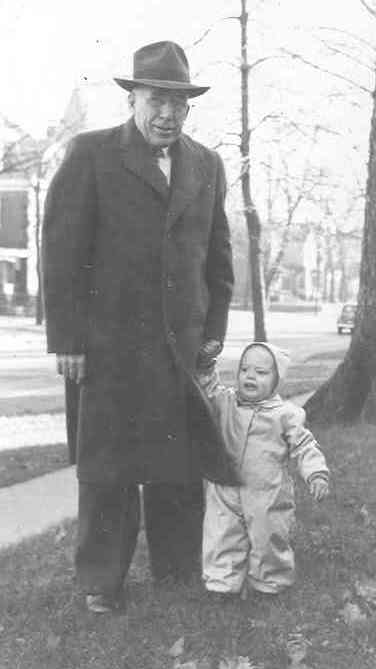
When one student asked whether the novel’s supporting character Grandfather Elliott was based on a real person, I had a ready answer. No, but I was strongly influenced by my Grandfather Joe Gourley who lived in Decatur, Illinois where the initial parts of the novel are set.

My grandfather and me

Imagination With  Dash of Reality

After the Q&A session was over, I started thinking about what I would say about characters’ role models in fiction if I were teaching a creative writing course. First, I would clear away the misconception some readers have that novelists can’t possibly dream up characters from scratch, that characters must be based on real people.

That commonly held belief is a long way from the truth. Characters are created out of authors’ imaginations with a dash of reality. In the case of Grandfather Elliott in The Sun Singer, my fictional character is not my grandfather with a pseudonym. If my grandfather had been alive when the novel was published, he wouldn’t recognize himself in the character.

What he would see is a character who, as he did, took his grandson on a day trip to the nearby Allerton Park where they saw wooded trails, formal gardens, and sculpture including the famous bronze Sun Singer statue. Joe Gourley would also see that my novel was set in the house he owned when I was a child and that the characters visited the parks where I once played.

Everyone is fair game

Joe Gourley in Decatur in the 1940s

I think there’s even a tee shirt out there that says something like “if you aren’t nice, I’ll put you in my next novel.” When novels focus on real towns, the author’s neighbors try to find themselves in the book. They did it with Peyton Place and when The Help was released, they were still doing it. Since I tend to “meet” my characters as I write in much the same way all of us see people in our dreams that we didn’t know before, I seldom think of real people as role models. My grandfather Gourley played a role because, like my character, he visited the Sun Singer, lived in a neighborhood that made a strong impression on me from the time I was born through junior high school, and loved practical jokes.

When I’m writing about a character with certain traits, I often think of people I know who have those traits. The title character in Sarabande is a good-natured individual who expects the best from other people and loves learning new things and traveling to new places. She shares these qualities with a co-worker I knew forty years ago. If my former co-worker read the book, she might like seeing those qualities in Sarabande, but she wouldn’t for a moment think I was writing about her.

Those old familiar places

Buses and street cars came and went from this transfer house in Decatur's Lincoln Square when I was a child.

Decatur, Illinois made an impression on me because our family was there so often during my formative years. The Florida Panhandle made an impression on me because I lived there from the first grade through college. Glacier National Park made an impression on me because I worked there while I was in college. So, I know these places. They influence me whether I consciously think of them or not. The same is true of family and friends. Since I like blurring the line between fiction and “real life,” I take the influence of places one step further and put real places in my books.

The Sun Singer is set in Decatur and Montana. So is Sarabande. My magical realism novel Garden of Heaven: an Odyssey is also set in those locations as well as north Florida and the places I saw when I was in the Navy. The three short stories I’ve written so far this year are also set in those places, perhaps because Decatur, North Florida, and Glacier National Park fit me like old shoes.

My memories influence what I do, just as they influence everyone else. When I write, most of those memories are part a figurative vat of stew. As I dream up characters, they often remind me of people I knew—or know now. Bob Hope’s signature song was Thanks for the Memories. If I wore tee shirts with slogans on them, they might say “Thanks for the Influences.”

Malcolm

Review: ‘Lowcountry Bribe’ by C. Hope Clark

Authors often ask “What if” when they have an idea for a plot. When C. Hope Clark first thought about a civil servant at the Department of Agriculture reporting an attempted bribe by a farmer, she must have asked “what’s the worst that can possibly happen?”

Carolina Slade (and you don’t call her “Carolina” unless you’re her mother) is a USDA official who plays by the rules. While others might have overlooked hog farmer Jesse Rawlings’ offer of a bribe in hopes he would never bring up the matter again, Slade tells her superiors. After that, the dust never settles.

C. Hope Clark’s protagonist in the dazzling debut mystery/thriller “Lowcountry Bribe,” is a Charleston County manager who coordinates federal loans and their repayment by farmers. When she leaves her desk, it’s to inspect a farm, not to carry a gun and catch bad guys. Yet, as a Cooperating Individual (CI) she has no choice but to help agents Wayne Largo and Eddie Childress prove Rawlings tried to bribe her.

The case is getting a lot of attention from Atlanta. Slade wonders why. Perhaps there’s more to the bribe than she knows, a greater level of fraud that might implicate her former boss who disappeared last year or a co-worker who shot himself in the office last week. Slade can’t even be sure Largo and Childress aren’t investigating her. A supposedly easy “Get Jesse to repeat what he said Friday” turns into a dangerous crash course in crisis management where the stakes are much higher than missed loan payment or a reprimand from the boss.

Some publishers would have categorized “Lowcountry Bribe” as a mystery/thriller/romance because the novel includes romantic elements as well as Slade’s feelings of approach/avoid, trust/distrust insofar as agent Largo and his motives are concerned. Regardless of the book’s official genre(s), the danger and intrigue Slade is drawn into are industrial strength, requiring a CI who is tough enough to view blood on an office wall as “O-positive primer,” savvy enough to think a like federal agent and experienced enough to apply humor and sarcasm to methods and practices that don’t measure up to her high standards.

Clark knows the territory. She lives in South Carolina, has a degree in agriculture, has worked with the USDA for 25 years, and is married to a former federal agent. This information appears on the novel’s back cover. By the time readers finish the novel and find out the worst that can possibly happen, they will have discovered that Clark also knows the territory of deftly plotted fiction, realistic dialogue and place settings, and how to tell a story that burns like a stiff drink with a touch of sugar.

Clark is now writing the next novel in the Carolina Slade Mystery Series. For readers who like great storytelling, that’s the best that can possibly happen.

Malcolm R. Campbell is the author of contemporary fantasy, magical realism, and paranormal stories and novels, including “Conjure Woman’s Cat” and “Eulalie and Washerwoman.”

Review: ‘An Uncertain Age’ by Ulrica Hume

At the beginning of Ulrica Hume’s metaphysical and spiritual novel An Uncertain Age, Justine meets Miles Peabody on the Eurostar en route from London to Paris. While they appear to meet by chance, it’s more likely destiny is involved. An aspiring artist, Justine is looking for certainty and stability after losing her job and her fiancé. A retired librarian, Miles is focused on twilight of life issues. They are drawn together despite their differences of age and lifestyle and end up site seeing together while Miles considers making the traditional Santiago de Compostela pilgrimage. He wants Justine to accompany him; before she can decide what to do, Miles disappears on a routine errand in Chartres.

Miles is fascinated to the point of obsession with the tragic love story of the 12th century French philosopher Peter Abelard and his student Héloïse d’Argenteuil. In fact, it’s nearly impossible for Justine to converse with him about anything without hearing what Abelard and Héloïse thought or did under similar circumstances. Abelard founded a monastery called the Oratory of the Paraclete. Some years after the powers that be forced Abelard and Héloïse into separate lives (both in religious orders) after their illicit affair was discovered, she ended up at the Paraclete as its abbess. In their honor, Miles’ house in London is named The Paraclete.

The relationship between Justine and Miles takes on some of the overtones of Abelard and Héloïse’s relationship. Inasmuch as destiny seldom presents its happenings with a definitive guidebook, it’s impossible to say whether Miles and Justine are drawn together and then separated from each other because Miles wants to mimic Abelard’s life as part of his own search for meaning or because their spiritual quests cannot move forward on the same path.

While much of Abelard’s work was considered heresy by the church, he did convince the Pope to accept his doctrine of limbo. The irony here is that Miles’ Abelard-like disappearance casts Justine into an ongoing temporal limbo. First, the nature and direction of their relationship could not be pinned down to Justine’s satisfaction. When Miles disappears, the French police won’t allow Justine to leave town until they are satisfied she is innocent of potential crimes that might explain his absence. When Miles isn’t found and she is free to leave Chartres, Justine is uncertain what to do next because other than working on her art, her specific plans aren’t well defined.

Wherever Justine is, she knows she will be waiting for Miles to return, perhaps as Héloïse longed for Abelard. Drawn to spiritual ideas, she seeks out a safe haven where she can ponder religious writings, work on her art and share her days with others of like mind. Those she ultimately meets on are missing something and are on their own quests based on the tenets of their diverse faiths.

The strengths of An Uncertain Age include the many layers of meaning flowing through the steps Justine, Miles and the other rather eccentric characters take while seamlessly sharing prospective routes to fulfillment that are traditionally at odds with each other. Hume’s novel is well plotted, well crafted and well researched. Some readers may be turned away at Hume’s characters’ heavy reliance on quoting and pondering scholars and religious leaders. To some extent, the philosophy delays the story.

At the same time, the philosophy drives the story. An Uncertain Age has the depth and power to inspire readers to ponder their own choices while waiting for the moment when each of Hume’s characters moves forward in faith or certainty instead of doing what Abelard and Héloïse would do. Hume’s prose makes this journey a rewarding trip.

Malcolm R. Campbell is the author of four novels, including the contemporary fantasy “Sarabande.”

contemporary fantasy for your Nook

If you’re not a reader, for Pete’s sake, stop trying to be a writer

When I taught college-level journalism, I was convinced that some of my reporting and feature writing students never read newspapers.

Other than wondering what the hell they were doing in my classroom, it was clear to me that those who didn’t read the news would probably never learn how to write it. News and feature stories have a noticeable organization and style.

Long-time journalists can hear the cadence of a “properly written” news story inside their heads. Stands to reason, then, that reading—in this case, the news—will help you learn the fundamentals of reporting much faster in a classroom and on the job than being clueless about it.

Aspiring poets and novelists who don’t read poems and novels

Author and editor C. Hope Clark (“Lowcountry Bribe”) wrote in a February 28th post at read.learn.write that in her consulting and speaking work, she finds a lot of aspiring writers who seldom read:

The world abounds with writers. Everyone wants his name, photo and title on a bookstore shelf, as a minimum on Amazon. But amazingly enough, most of them are not voracious readers. They are spitting out words, but taking few in. It’s like using a shotgun instead of a high-powered rifle. The result isn’t very refined, the results less satisfactory.

Some years ago, when desktop publishing programs made it easier to create newsletters, brochures, and posters on a PC screen, a lot of big corporations cut the writers from their staffs because—the bean counters seasoned—anyone could use the software and create something that looked like a newsletter, brochure or poster. Who needed actual writers? The results were a mess, and since the bean counters never read anything anyway, they didn’t know the results were a mess.

The Internet is (perhaps) today’s desktop publishing

The Internet has not only reduced our attention spans, it’s given all of us the power to create materials that look like e-zines, blogs, books, magazine articles and poems. No experience necessary. Simply log on and create.  Clark says that “The slogan ‘reading is fundamental’ is remarkably accurate. Somewhere along the line, however, between elementary school and college, reading falls by the wayside. Teaching to tests, however, and not enticing children to fall in love with words, has stolen their ability to perform later in life.”

As a writer, I’m biased: I think all of us need to learn how to read and then not let the skill get away from us. And, we’re talking novels, essays, commentaries, features and criticism here, not just the back of the cereal box or the “Trending Now” links on the Yahoo screen. Having worked in corporate America, I can testify to the fact that a lot of stuff got screwed up because the people reading the reports and white papers and trade magazine article weren’t really getting it. They skimmed and/or couldn’t follow a logical argument in print.

What do I have to do to become a writer?

The Internet, and that includes a few well-known print-on-demand book publishers, gives the impression the answer is nothing. Just put one word after another until you reach the required word count for a short story or a book, format it, and you’re done. And when nobody reads it, the first thing you’ll hear from “the writer” is the accusation that there’s a conspiracy out there. Amazon, BIG PUBLISHING, the government, the search engines, the service providers and the reviewers had nothing better to do that get together in a bar and decide to stomp down some a book that otherwise would have won the Booker, Nobel, and Pulitzer prizes.

The speculation about “What the hell happened to my book?” seldom includes any need to learn the art and craft of writing first. And this goes back to something very fundamental: Reading. That’s where becoming a writer starts, and it never stops.

Malcolm